
A Guide to the Amphibians
and Reptiles of California
Click on a picture for a larger view

Identifying California Lizards

This is not a scientific key to identifying lizards found in California. It is meant to be used as a basic tool for the novice who wants to identify a lizard primarily by appearance and the location in California where it was seen.
Look Here First: Commonly Encountered California Lizards (based on email sent to me asking me to help identify them.) There is a very good chance you'll find your lizard here, and you can skip the rest of this section. In order to help you to identify a California native lizard, the different species have been separated into some basic groups. Since many lizards look similar, they are grouped by type, rather than appearance. Look at the thumbnails (click on them to see a larger version) and read the brief descriptions until you find something similar to the lizard you are trying to identify, then click on the link. Keep in mind that many species look alike, and that there are other factors that can help you identify a lizard besides appearance, such as geographical location, behavior, and habitat. Juveniles often do not look exactly like adults. If you are trying to identify a juvenile, look at the body shape, and try to find a picture of an adult with a similar appearance, not necessarily the same colors or patterns. Also keep in mind that any kind of lizard can vary in appearance and can look much different in motion than it does in a still photo. Sunlight and shade can also change the apparent color of a lizard, and lizards will change in color depending on their temperature. Be aware that a lizard you find may not be native, but an introduced animal, such as an escaped pet, especially if it is found in or near an inhabited area. Currently there are few reproducing populations of introduced lizards in California, but that can change, and some of these populations, such as the Mediterranean gecko, are spreading. You might also want to check the California Lizards Range Maps page to find what lizards occur in the area where your lizard was observed. There is also a California Lizards Photo Index page with one picture of all forms of lizard found in the state that might also be helpful. The only dangerously venomous native lizard found in California is the Gila Monster, which is extremely rare and has only been found in a few locations in the eastern Mojave Desert. If you find one - send me pictures! If you cannot find a lizard here, you can also look at the page of Escaped Pets which lists some common escaped pet herps that have been reported to me as found in the state. |
||
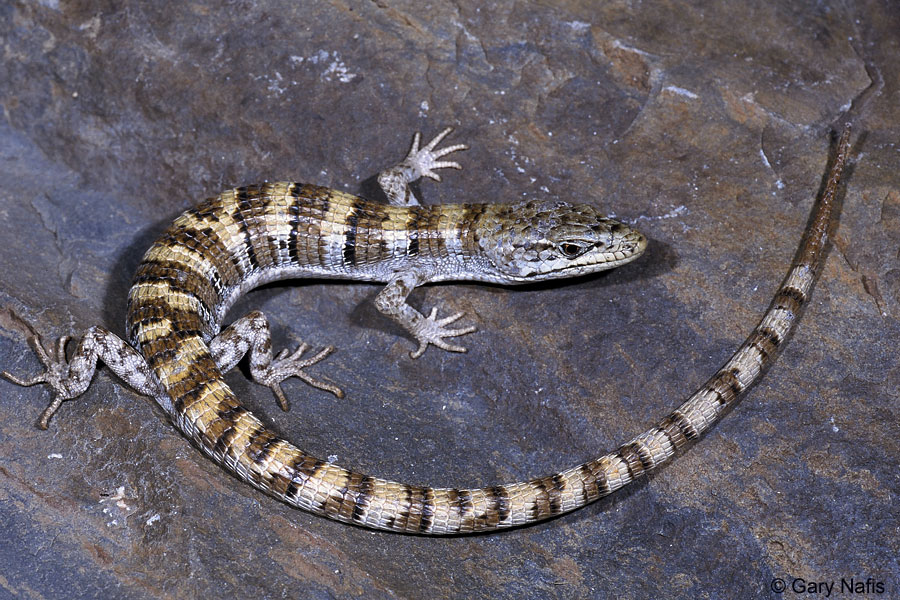
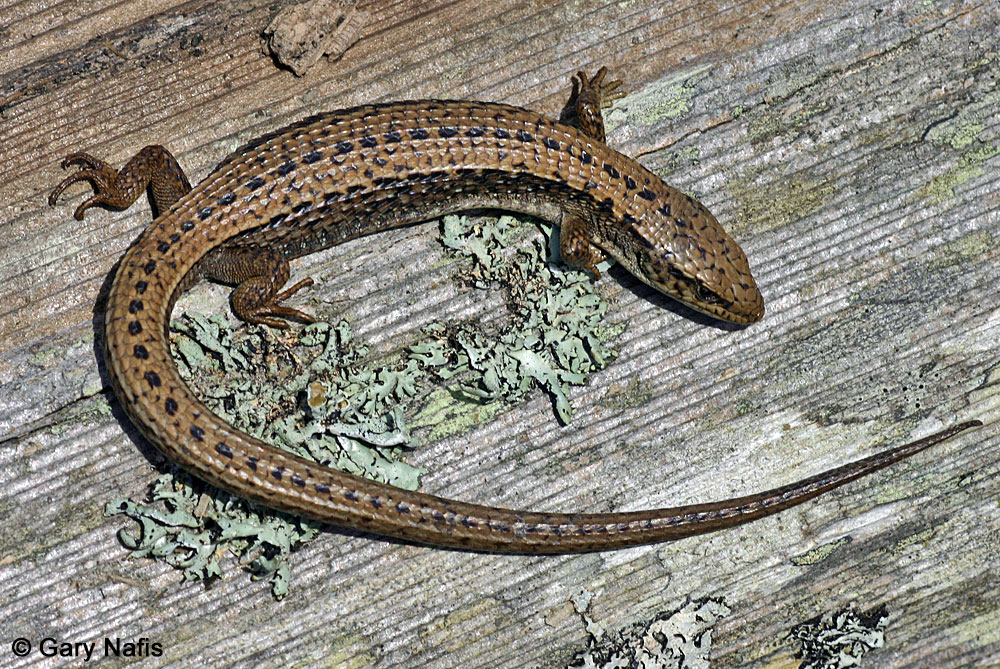
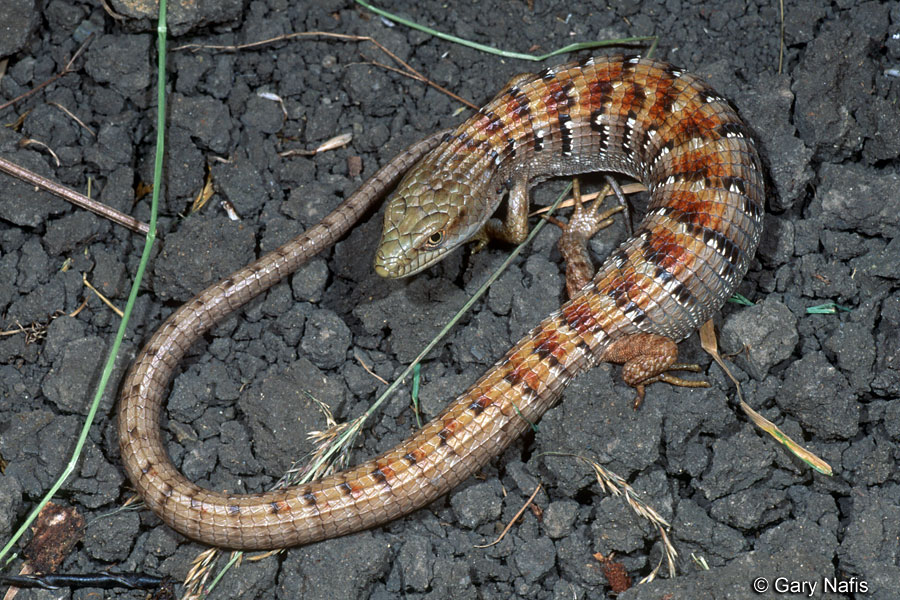
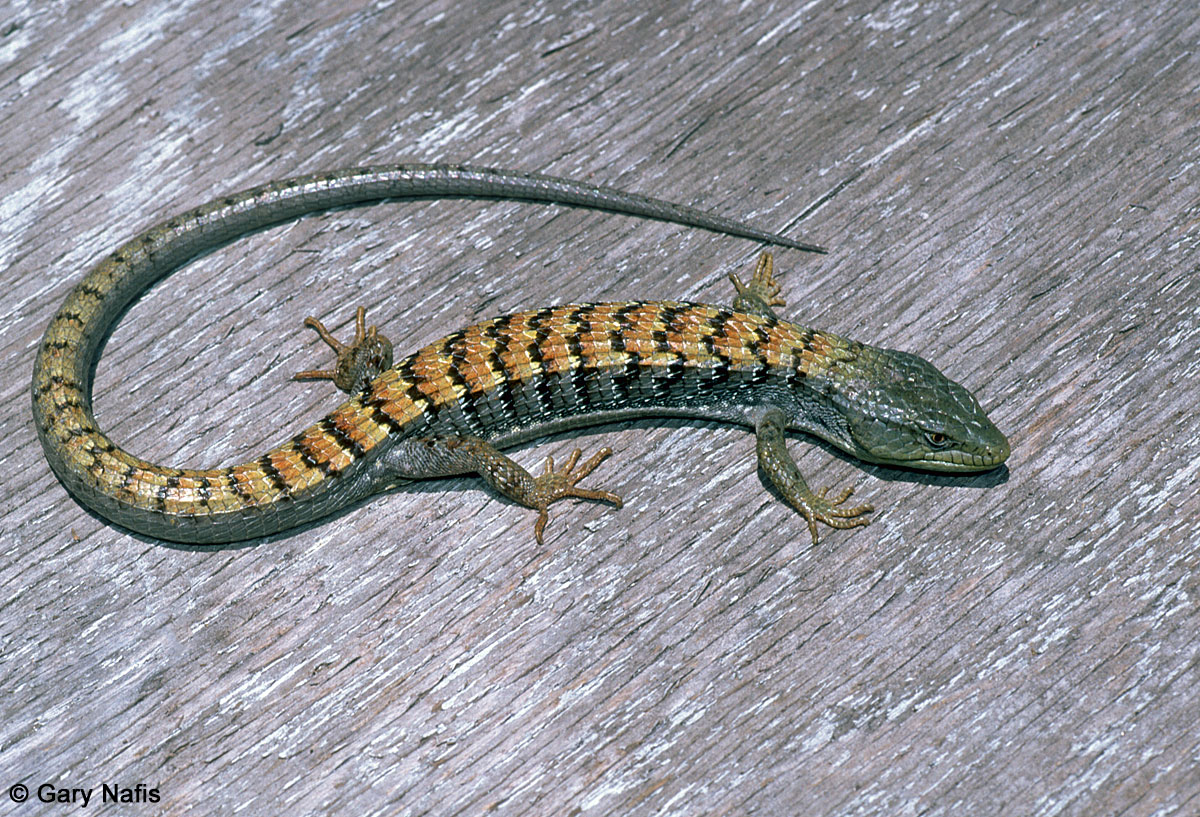
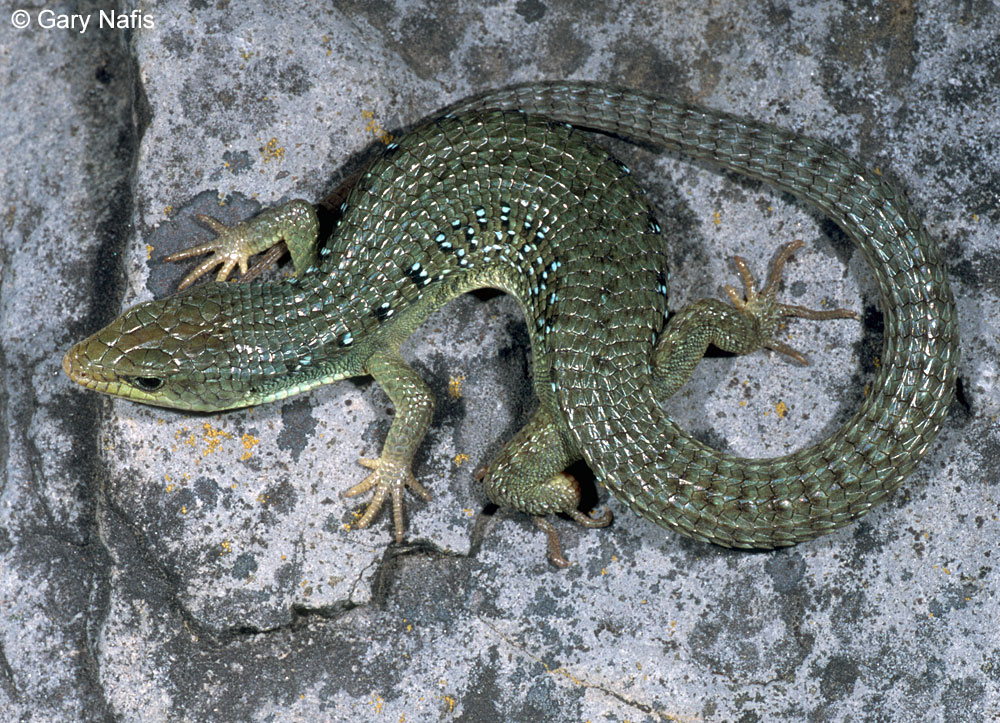
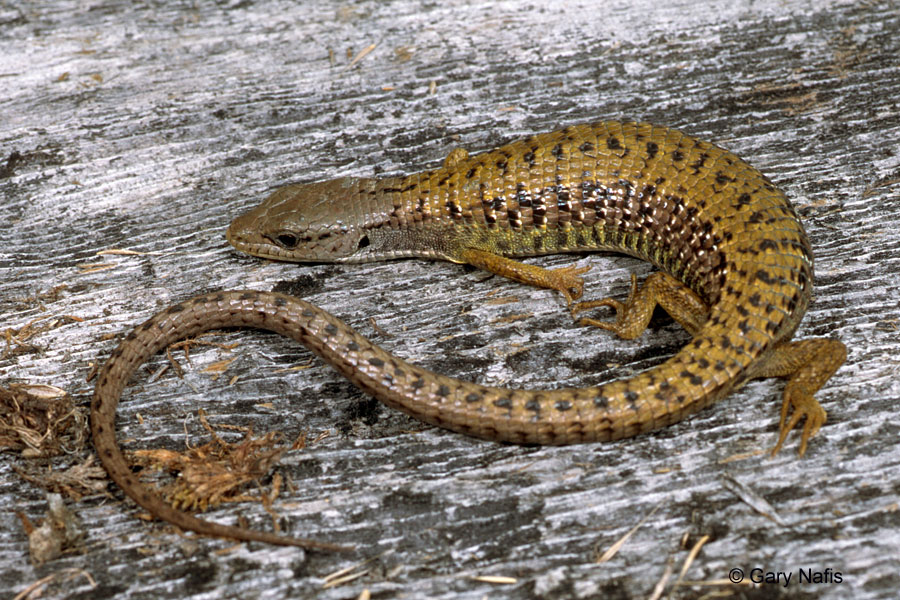
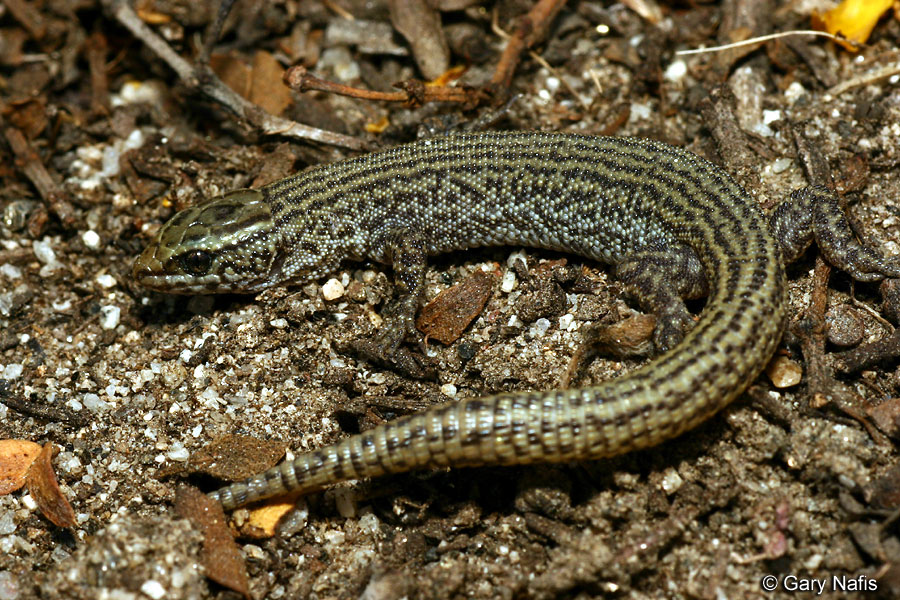
Alligator Lizards Large smooth scales, and a long alligator-like snout. Found almost anywhere except in the deserts, mostly during daylight. Frequently found underneath debris. Commonly found in suburban yards, especially in Southern California. If the lizard you want to identify resembles one of the lizards shown below, go here to continue your search. |
||
 |
 |
 |
 |
 |
 |
 |
 |
 |
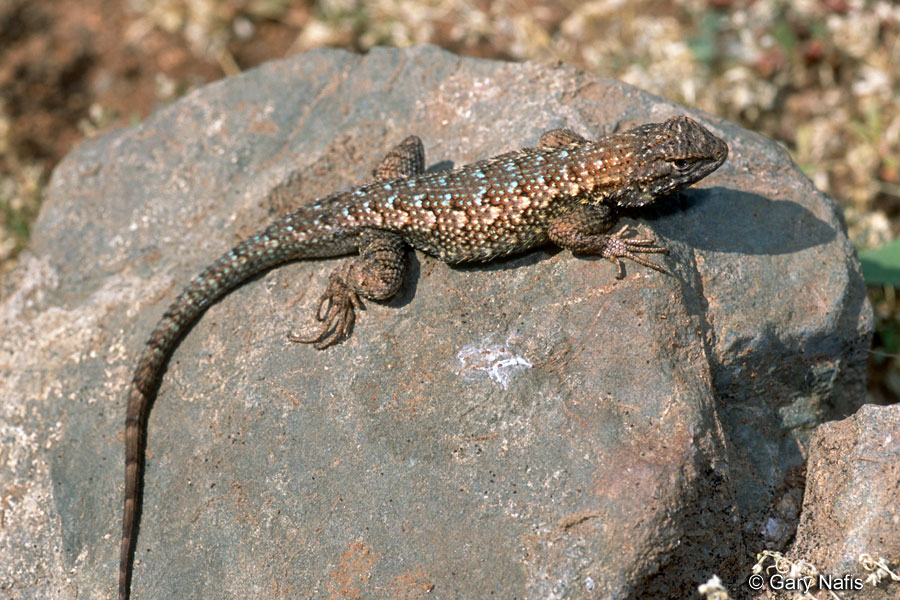
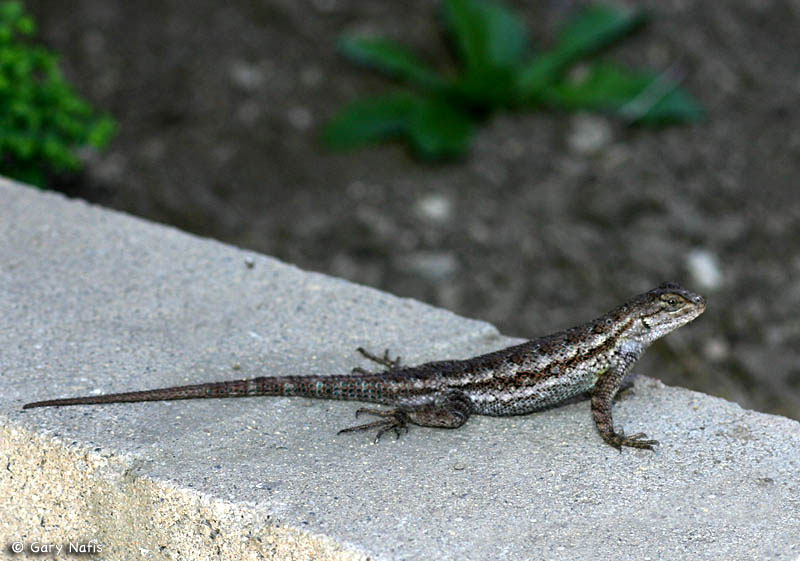
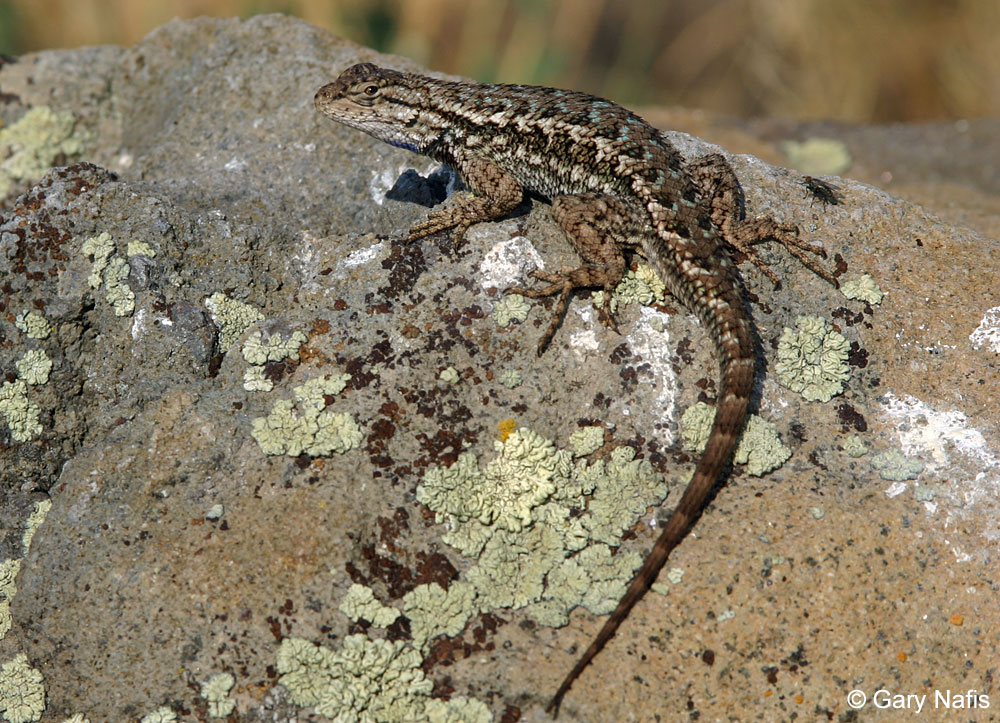
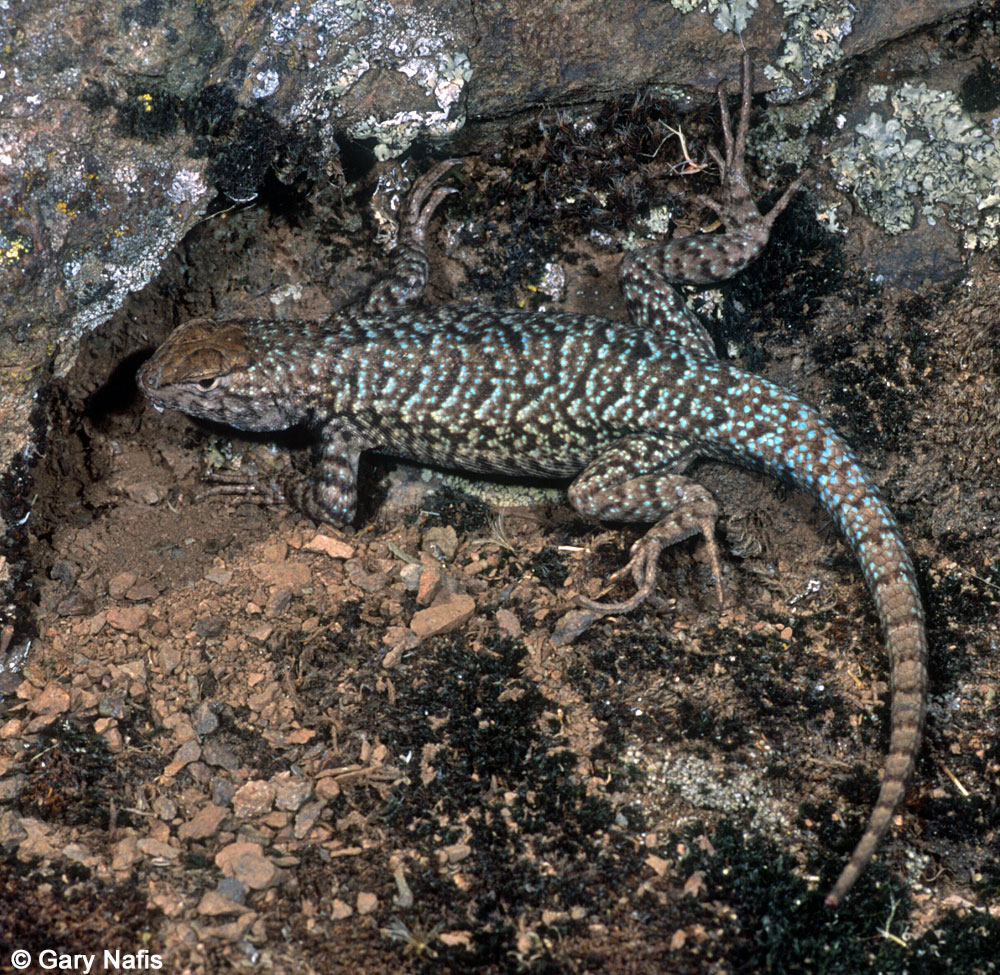
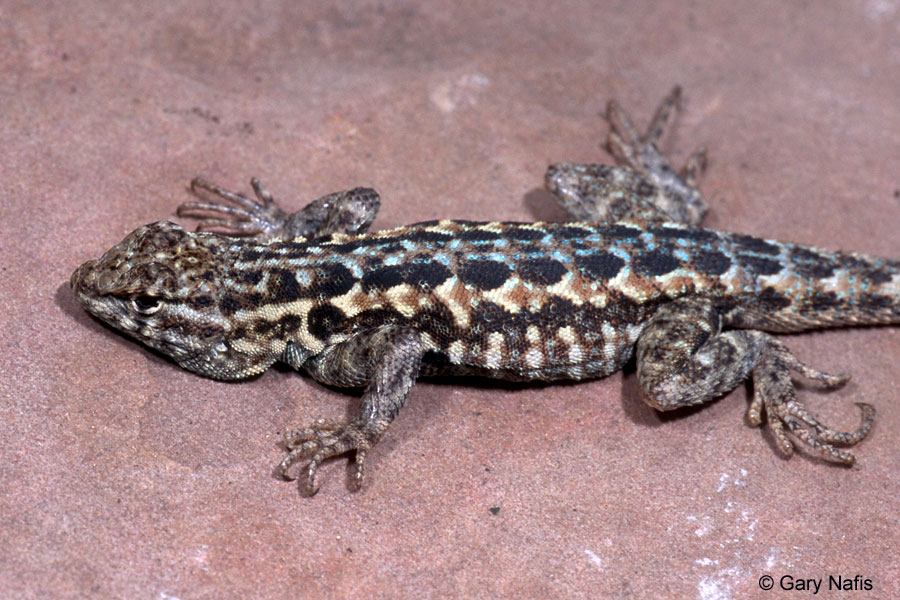
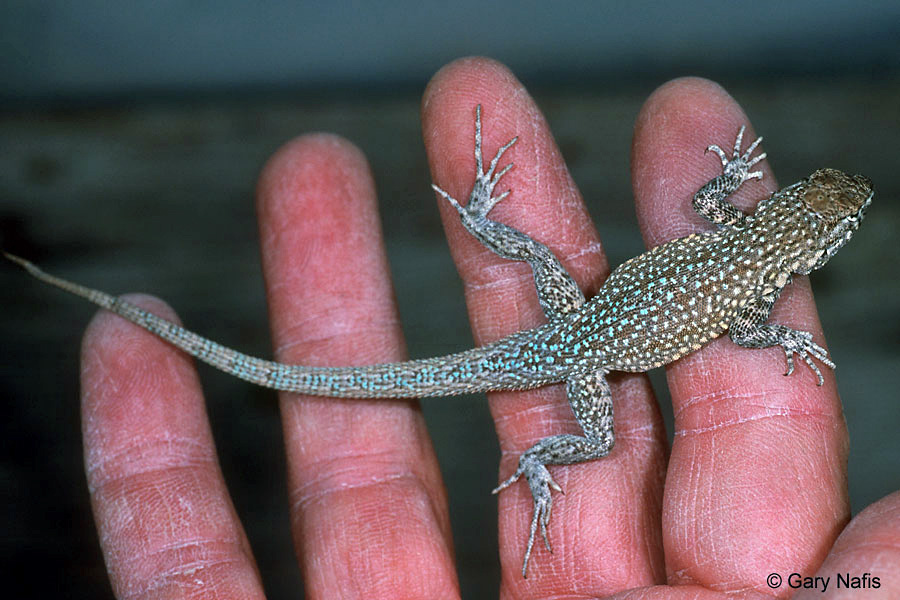
Western Fence Lizards and Sagebrush Lizards Small, diurnal lizards with large spiny scales. Western fence lizards (also known as swifts or bluebellies) are very common, found in a variety of habitats. Sagebrush lizards have slightly smaller scales and are generally found at higher elevations. If the lizard you want to identify resembles one of the lizards shown below, go here to continue your search. |
||
| Western Fence Lizards | ||
 |
 |
 |
 |
 |
 |
| Sagebrush Lizards | ||
 |
 |
 |
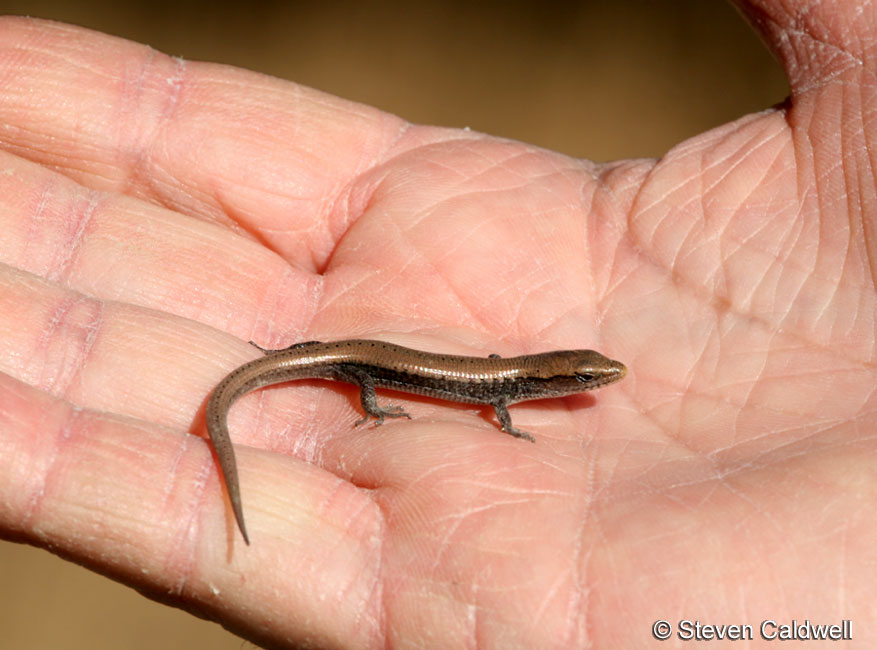
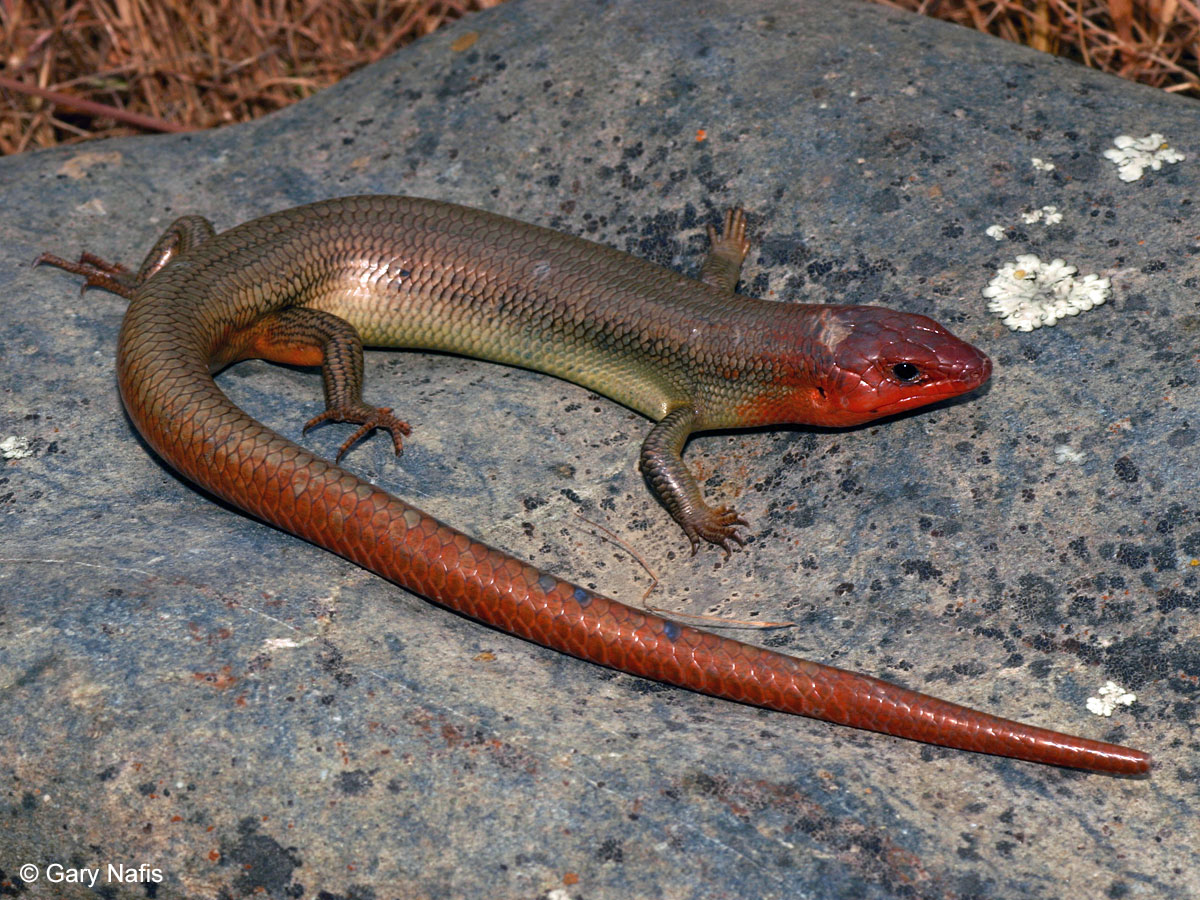
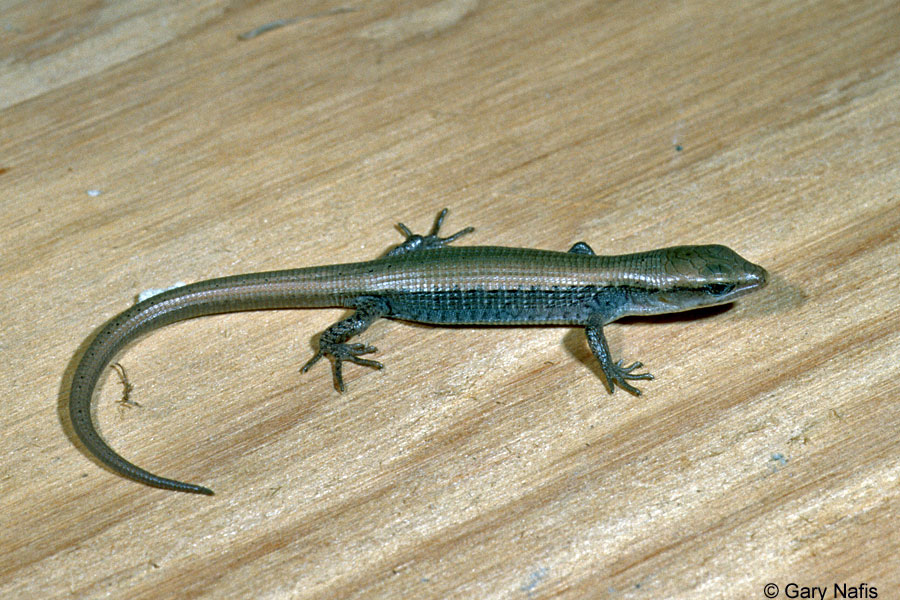
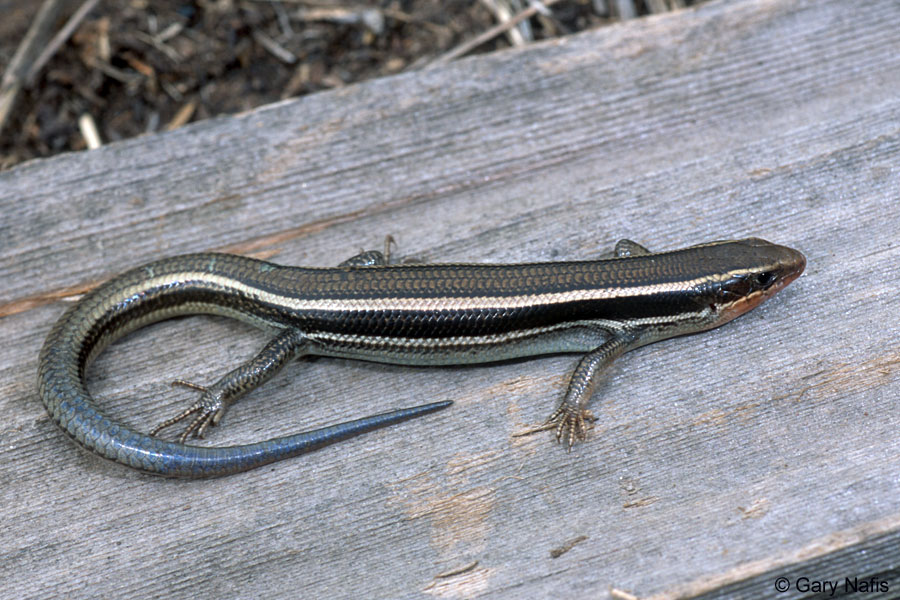
Skinks Smooth, shiny skin, snake-like movement. Can be solid color or striped. Juveniles can have stripes and blue or pink tails. Generally fond of moist habitats. During daylight, most often found underneath rocks and other debris. If the lizard you want to identify resembles one of the lizards shown below, go here to continue your search. |
||
 |
 |
 |
 |
 |
 |
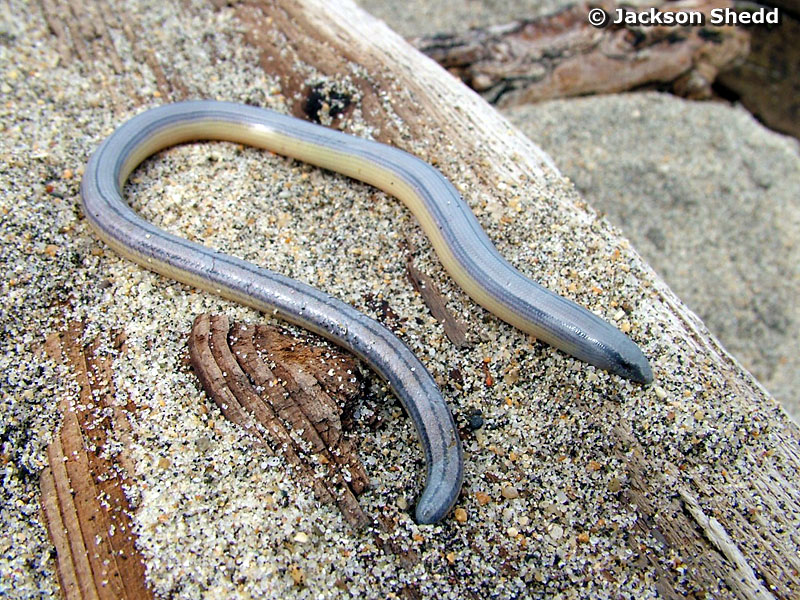
California Legless lizards Resemble small snakes. Rarely found crawling in the open, except at night. Typically found under objects or leaves, often in gardens in Southern California. Not commonly seen. If the lizard you want to identify resembles one of the lizards shown below, look at the range map below to find which species it is, then click on the species link for more information. (This is difficult now that there are several species.) |
||
 |
 |
 |
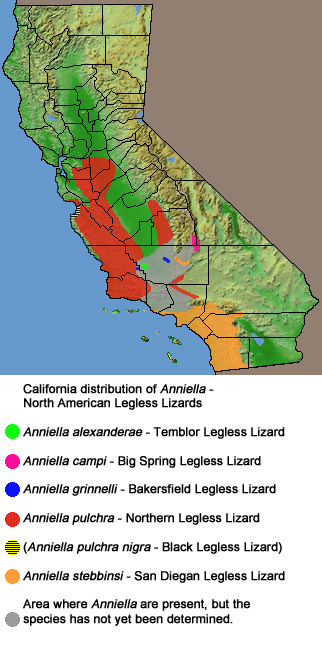 |
||
| Red: Anniella pulchra - Northern California Legless Lizard Yellow/Black: Anniella pulchra nigra - Black Legless Lizard Green: Anniella alexanderae - Temblor Legless Lizard Pink: Anniella campi - Southern Sierra Legless Lizard Blue: Anniella grinnelli - Bakersfield Legless Lizard Orange: Anniella stebbinsi - Southern California Legless Lizard Gray: Area where Anniella are present but the species has not yet been determined. |
||
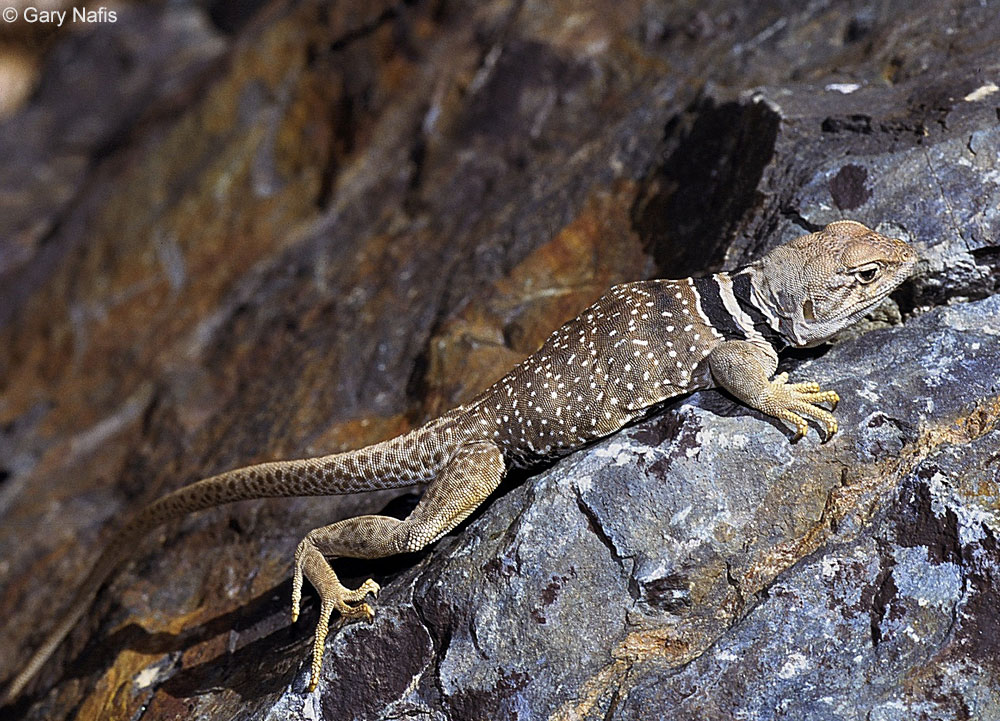
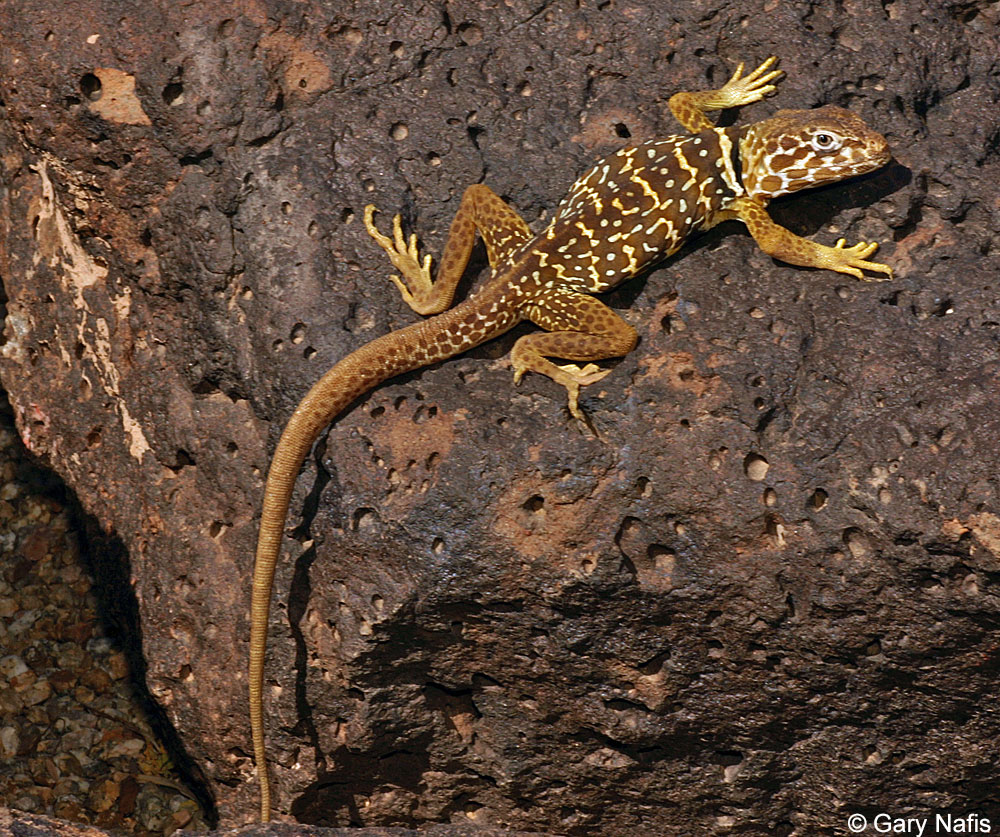
Collared Lizards Large, diurnal, rock-dwelling desert lizards with large heads and a dark collar around the neck. Usually seen sitting on top of desert rocks. If the lizard you want to identify resembles one of the lizards shown below, go here to continue your search. |
||
 |
 |
 |
 |
 |
 |
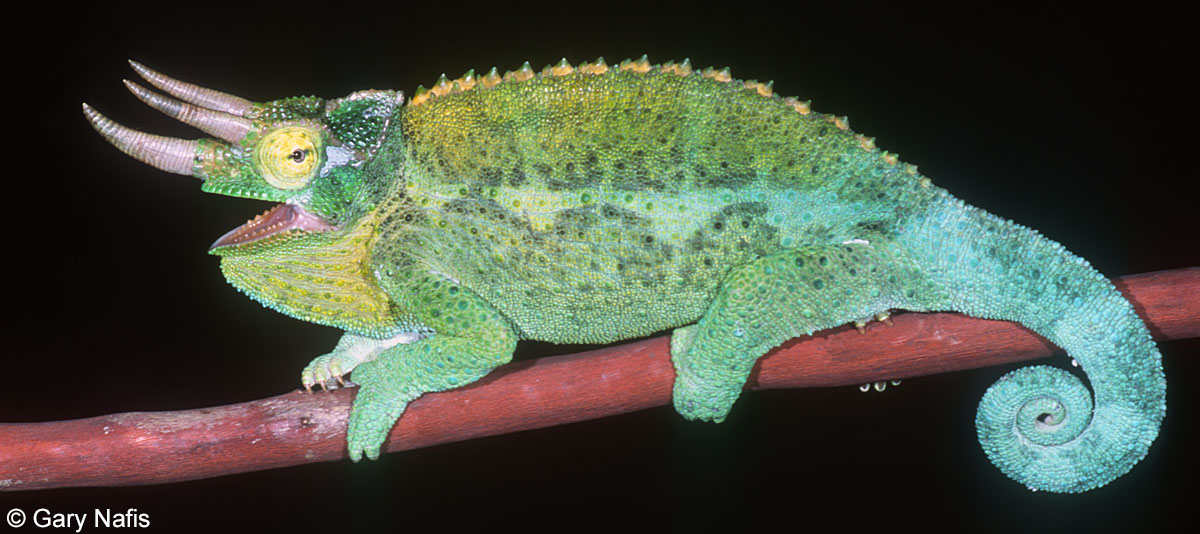
Jackson's Chameleon Introduced to Morro Bay and Laguna Beach, and possibly more a humid locations along the southern coast. Mostly seen on shrubs and trees, occasionally on the ground. |
||
 |
 |
|
Peninsular Banded Gecko (aka Barefoot Gecko) Very rarely encountered. Found only in a few rocky locations in the desert near the Baja California border. |
||
 |
 © Jason Jones © Jason Jones |
 |
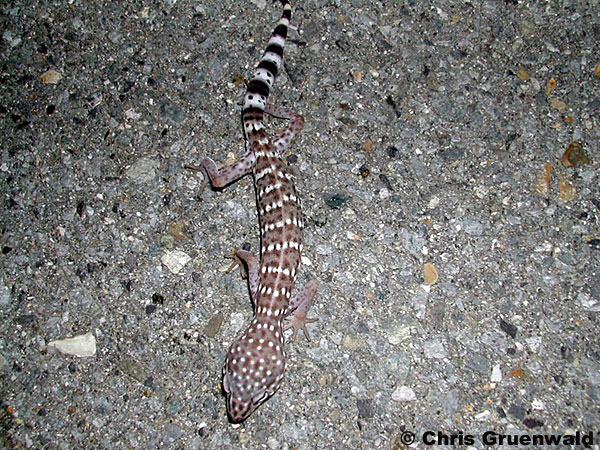
Western Banded Gecko Commonly seen running across desert roads at night. If the lizard you want to identify resembles one of the lizards shown below, go here to continue your search. |
||
 |
 |
 |
Peninsular Leaf-toed Gecko Not commonly seen. Found on desert rocks at night in a limited area in the southern peninsular range. |
||
 |
 |
 |
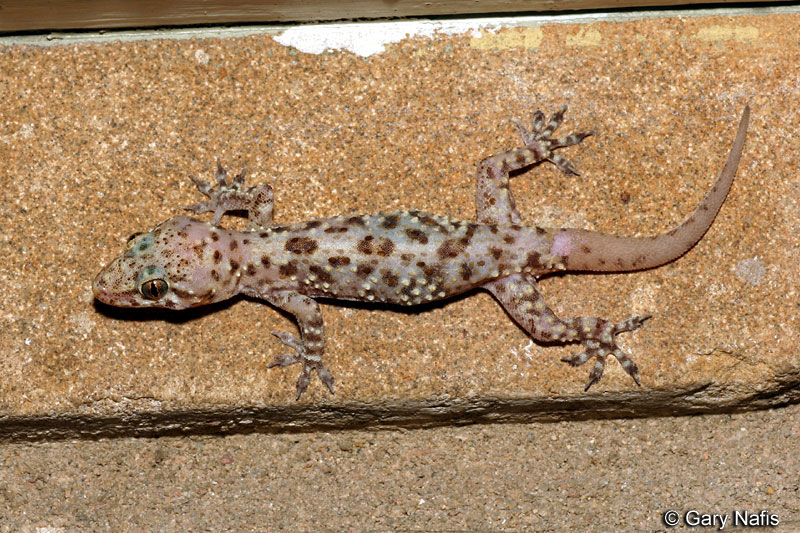
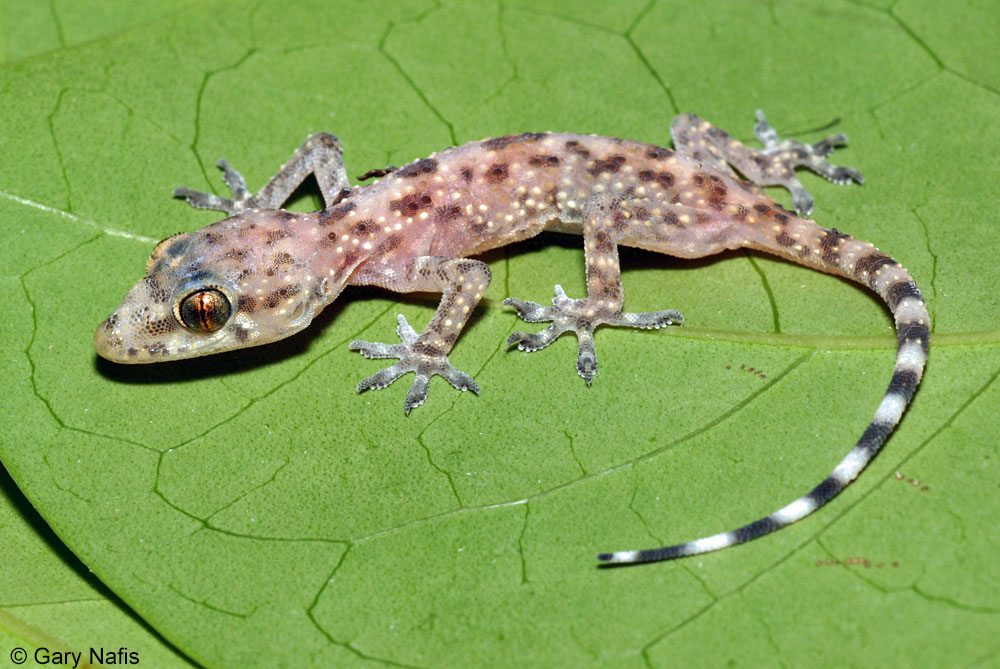
Mediterranean Gecko Active in and around human dwellings, especially under lights at night. Introduced into the southern deserts and quickly spreading throughout southern California and the Central Valley and elsewhere. |
||
 |
 |
 |
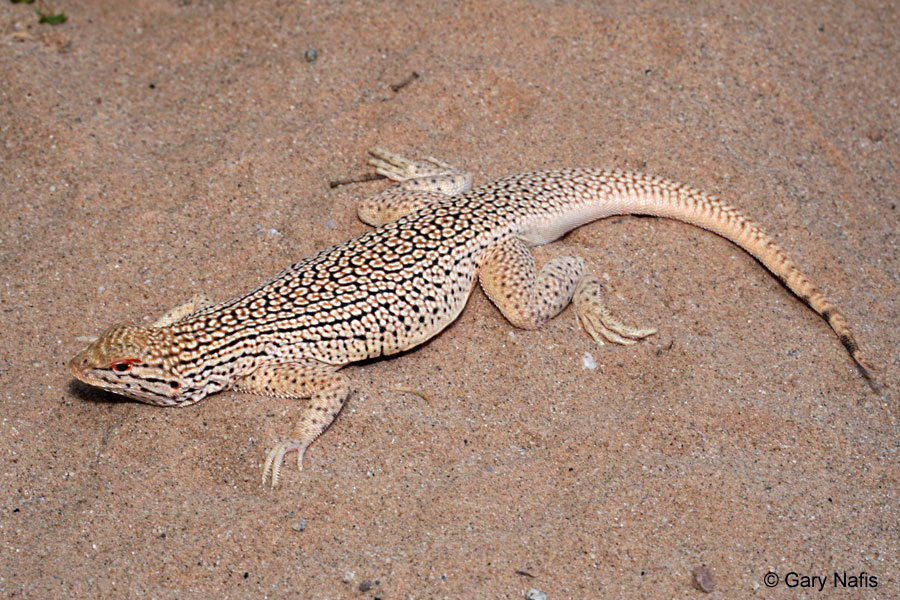
Fringe-toed Lizards Found in areas of the southern deserts with fine wind-blown sand, especially large dunes. Will run under a bush or dive into the sand to escape. If the lizard you want to identify resembles one of the lizards shown below, go here to continue your search. |
||
 |
 |
 |
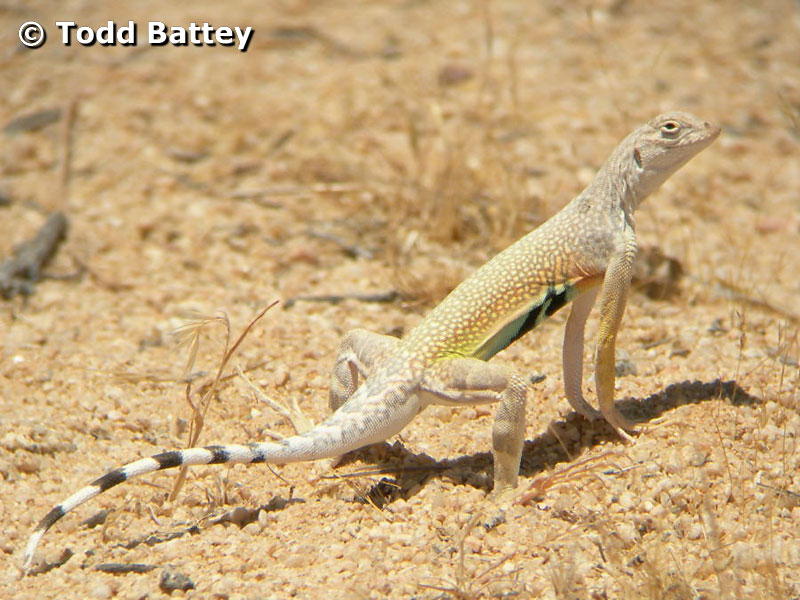
Zebra-tailed Lizard Typically found on the ground in hot, flat, sandy desert locations, such as dry washes. Often seen sitting on low rocks when the temperature is very high. Active in daytime. |
||
 |
 |
 |
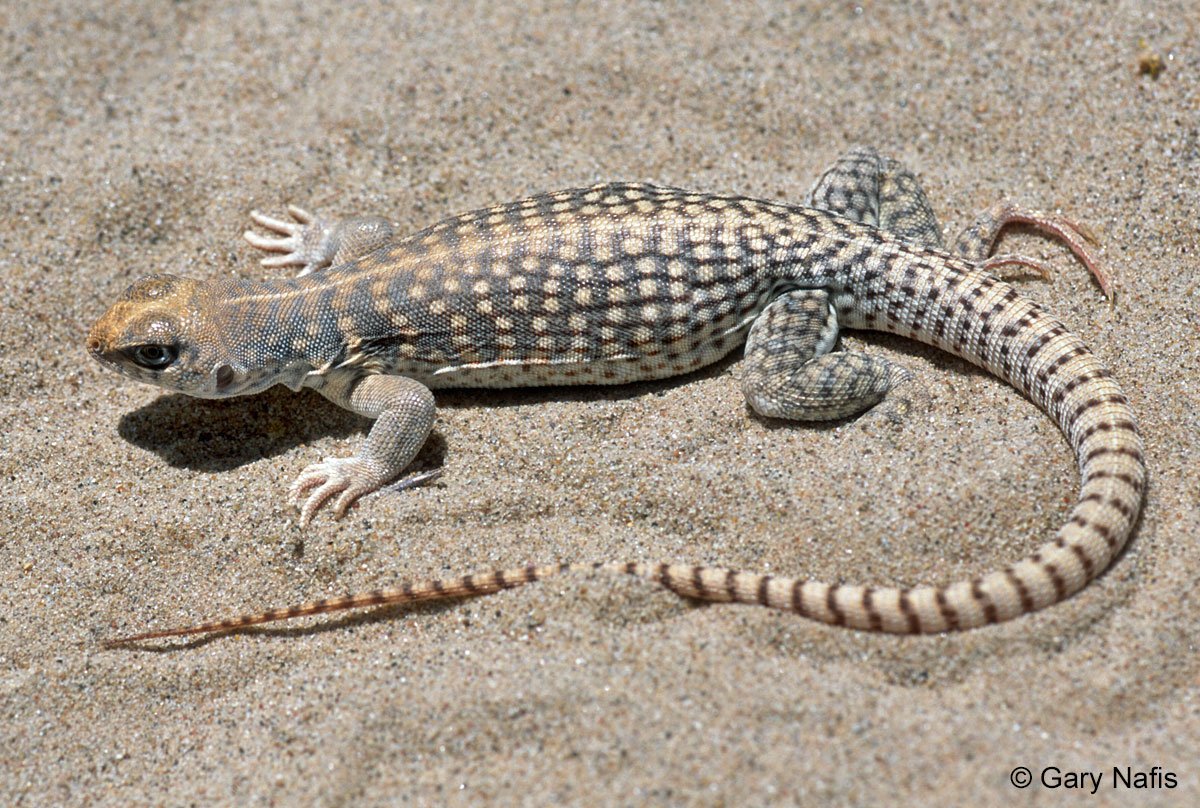
Desert Iguana Diurnal. Typically found on the ground in hot, flat, sandy desert locations, such as dry washes and dunes. Occasionally seen basking on low rocks or other objects. Able to continue activity during extreme heat. |
||
 |
 |
 |
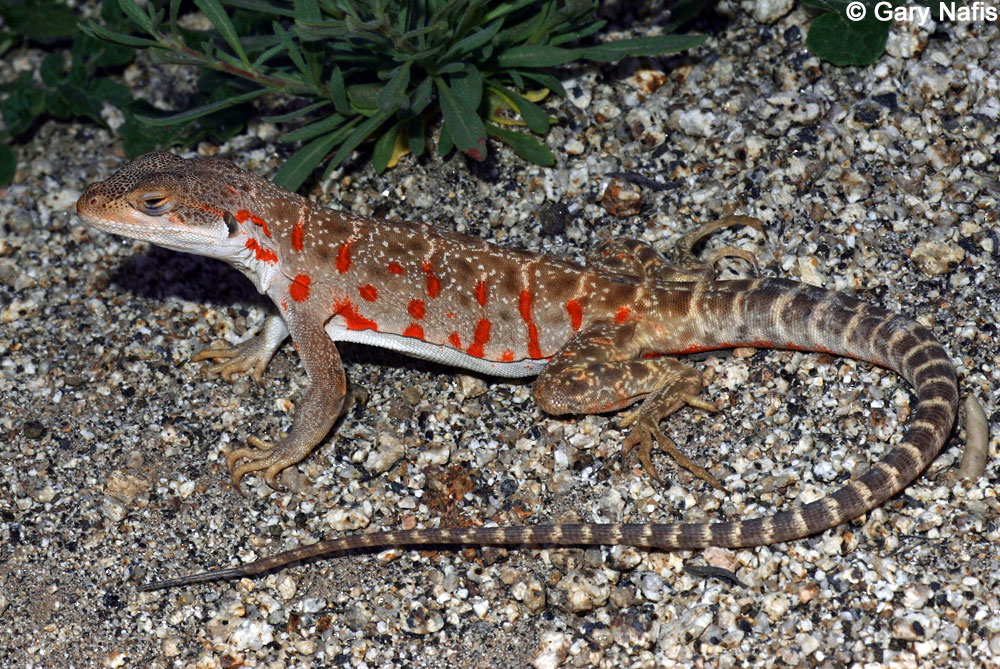
Leopard Lizards Large, diurnal lizards, preferring open desert or semi-arid habitats. If the lizard you want to identify resembles one of the lizards shown below, go here to continue your search. |
||
 |
 |
 |
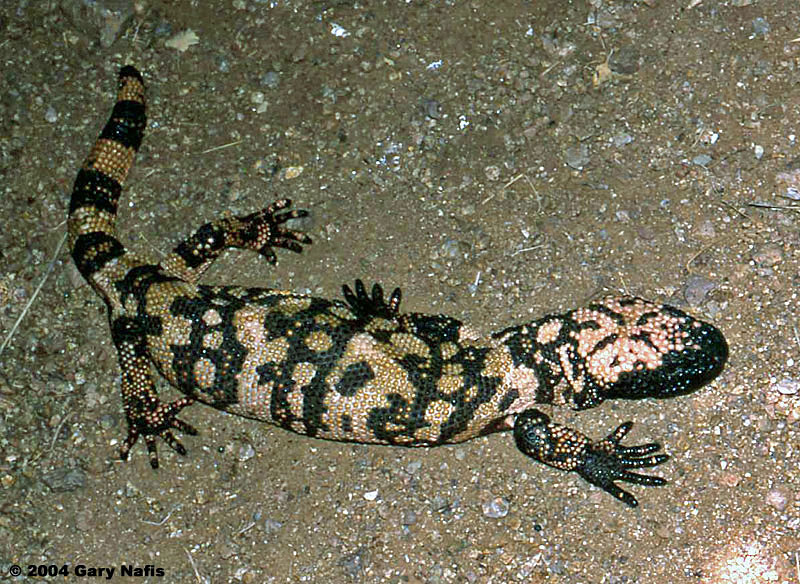
Gila Monster Extremely rare in California. Venomous. Found only in the extreme eastern Mojave Desert near the Nevada border. |
||
 |
 |
 |
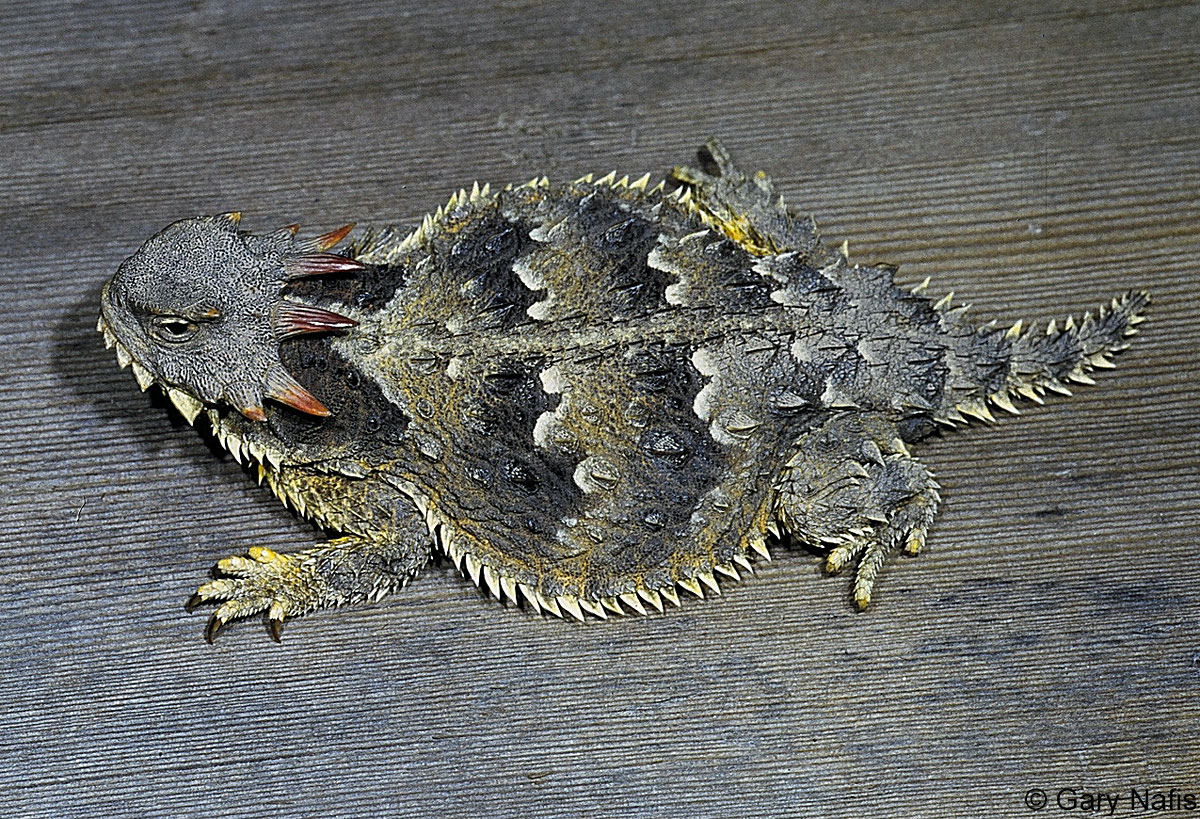
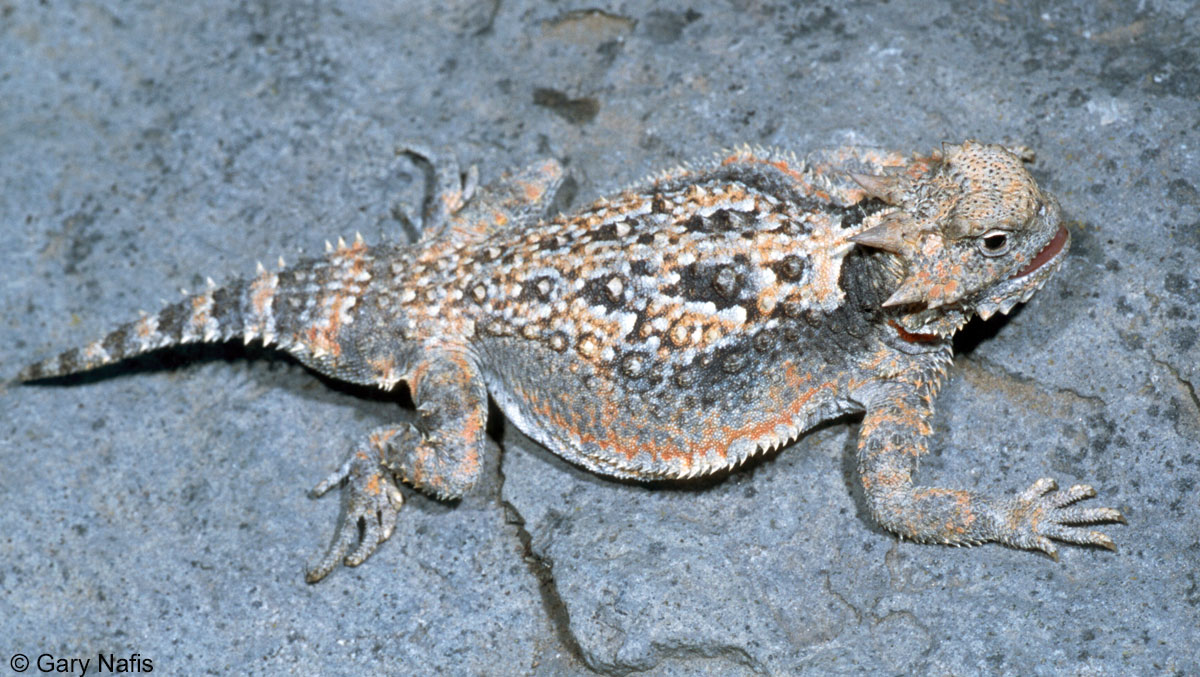
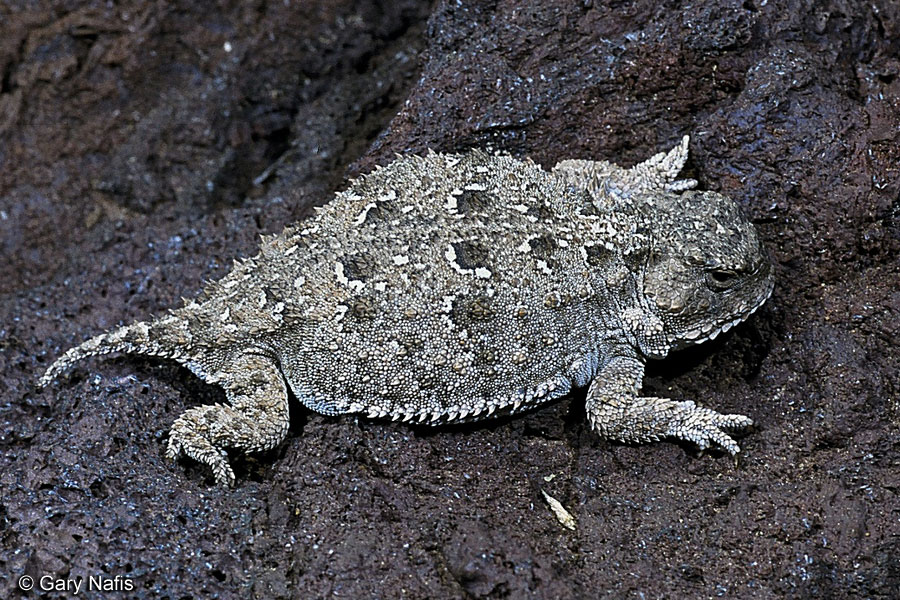
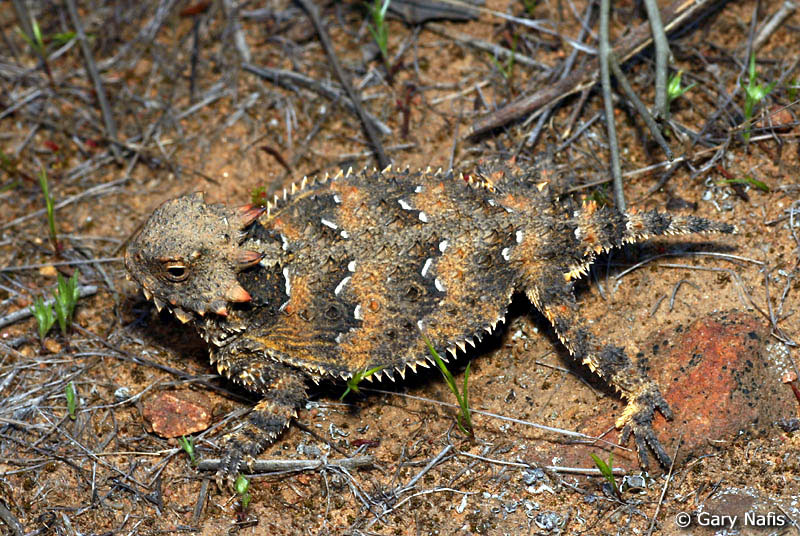
Horned Lizards Small, wide, flattened, with many spikes, and horns surrounding the head. Diurnal. Typically found in open sandy areas in deserts, chaparral, grassland. If the lizard you want to identify resembles one of the lizards shown below, go here to continue your search. |
||
 |
 |
 |
 |
 |
 |
Banded Rock Lizard A medium-sized greenish lizard, found on large rocks in the peninsular range, from the Baja California Border to near Palm Springs. Usually found near creeks and oases. Diurnal. |
||
 |
 |
 |
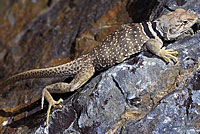
Chuckwalla A very large, conspicuous lizard, seen on large rocks in rock outcrops and boulder piles in the deserts. Active during the day. |
||
 |
 |
 |
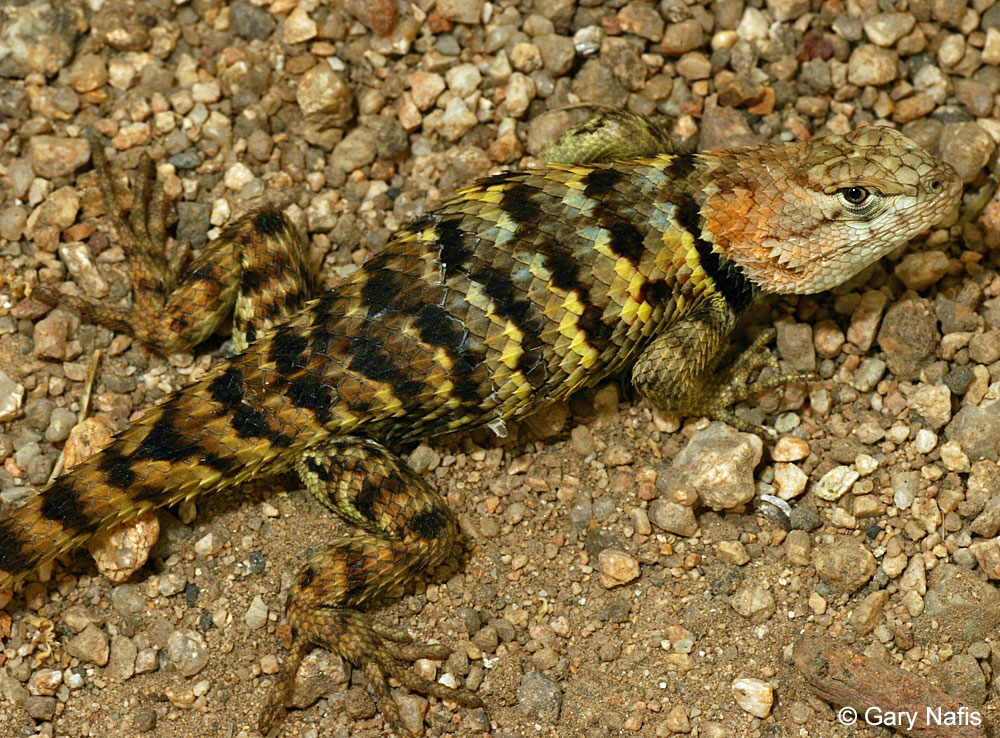
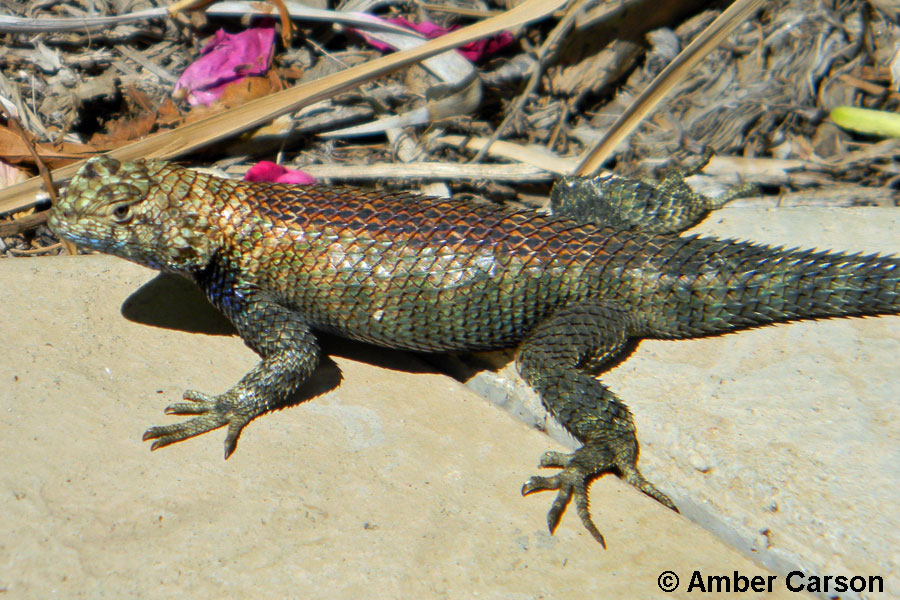
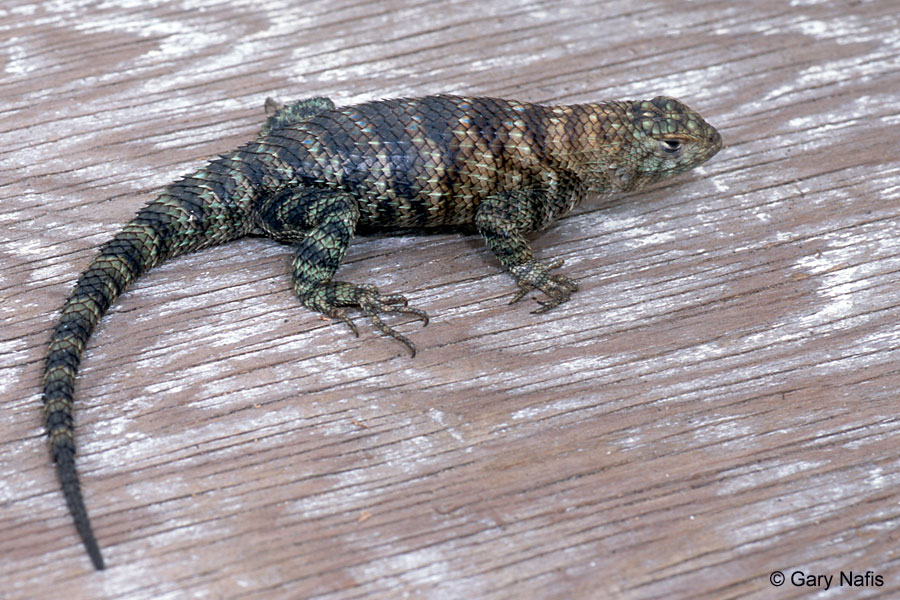
Large Spiny Lizards Large lizards with large visible spiny scales. Found in desert and semi-arid habitats and in coastal southern California and the transverse ranges. Usually seen on rocks or trees. Diurnal. If the lizard you want to identify resembles one of the lizards shown below, go here to continue your search. |
||
 |
 |
 |
 |
 © Mike X Macrae © Mike X Macrae |
 © Amber Carson © Amber Carson |
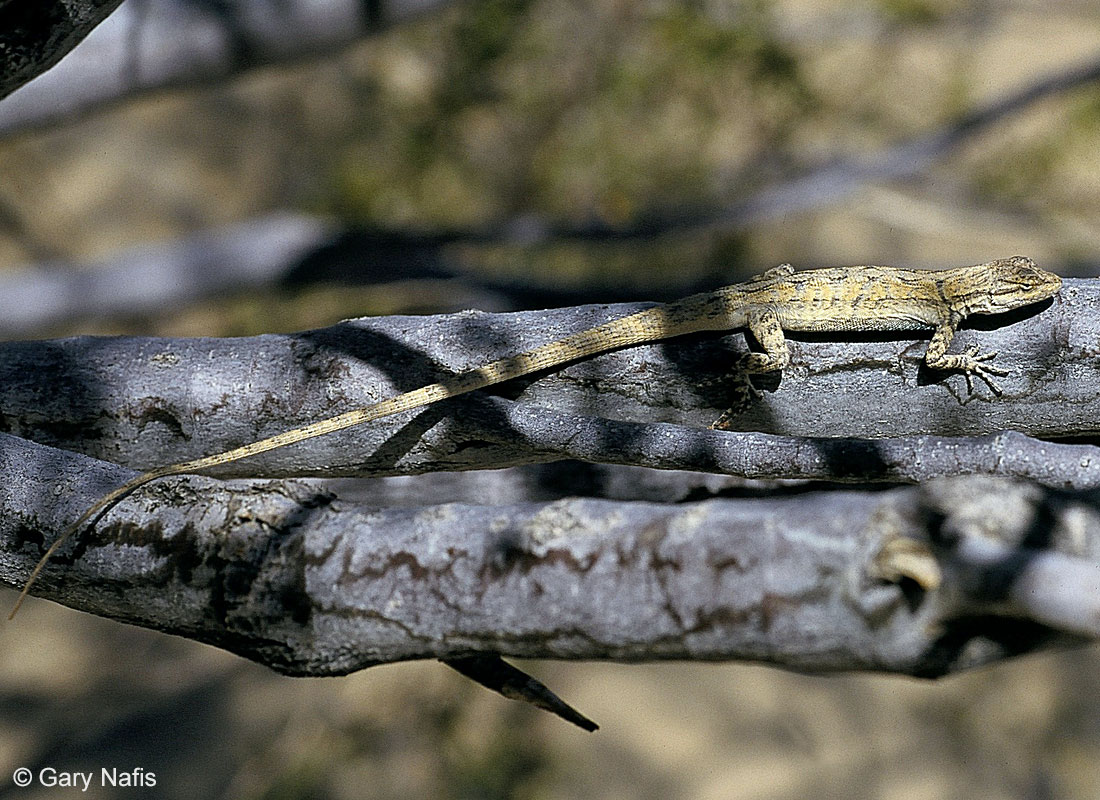
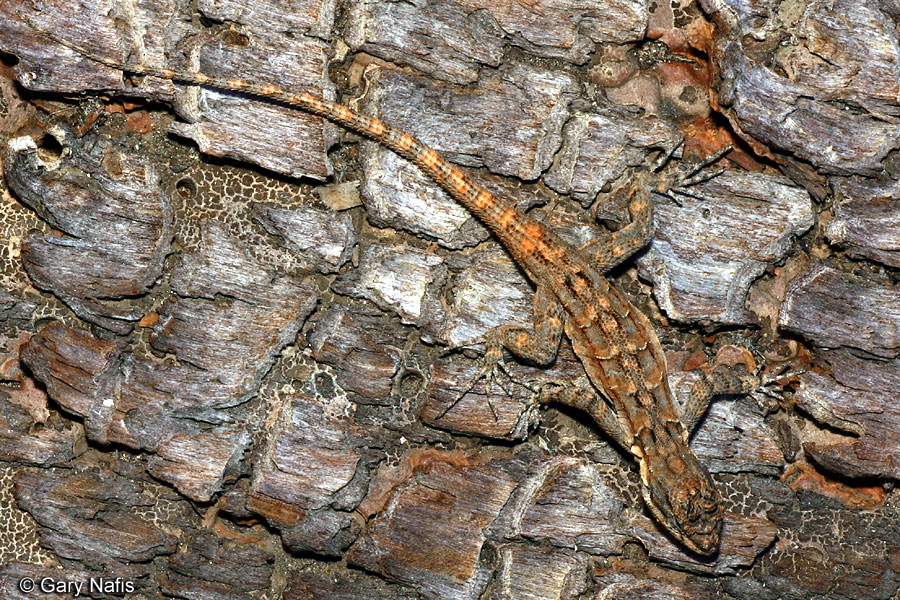
Brush and Tree Lizards Brush lizards are diurnal desert-dwellers. Tree lizards are only found near the Colorado River in the extreme southeast. Typically found on trees, bushes, and rocks. If the lizard you want to identify resembles one of the lizards shown below, go here to continue your search. |
||
 |
 |
 |
 |
 |
 |
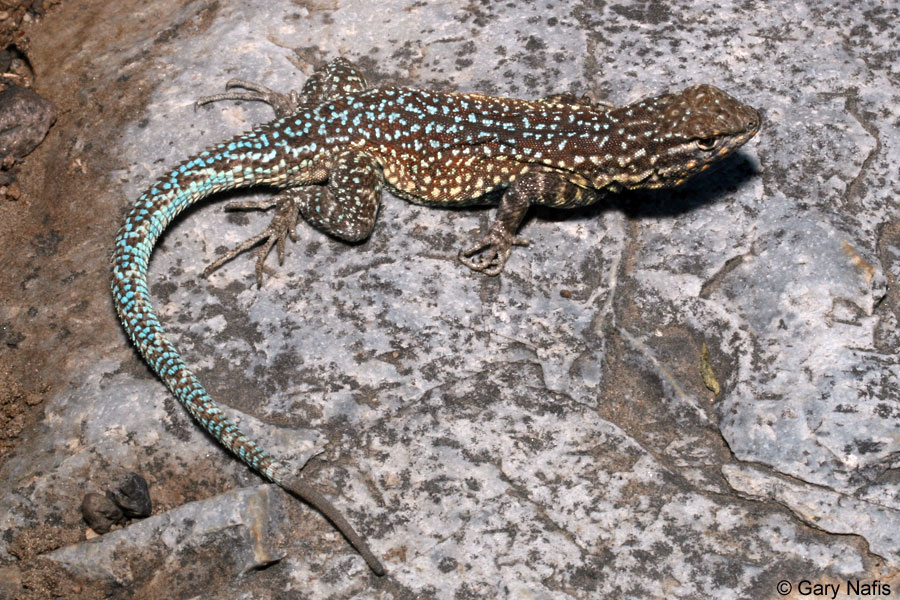
Common Side-blotched Lizard Small lizards inhabiting deserts, grassland, or other hot, dry open locations. Very commonly seen during daylight. This lizard can be abundant where it occurs. Probably the most commonly seen lizard in the desert. |
||
 |
 |
 |
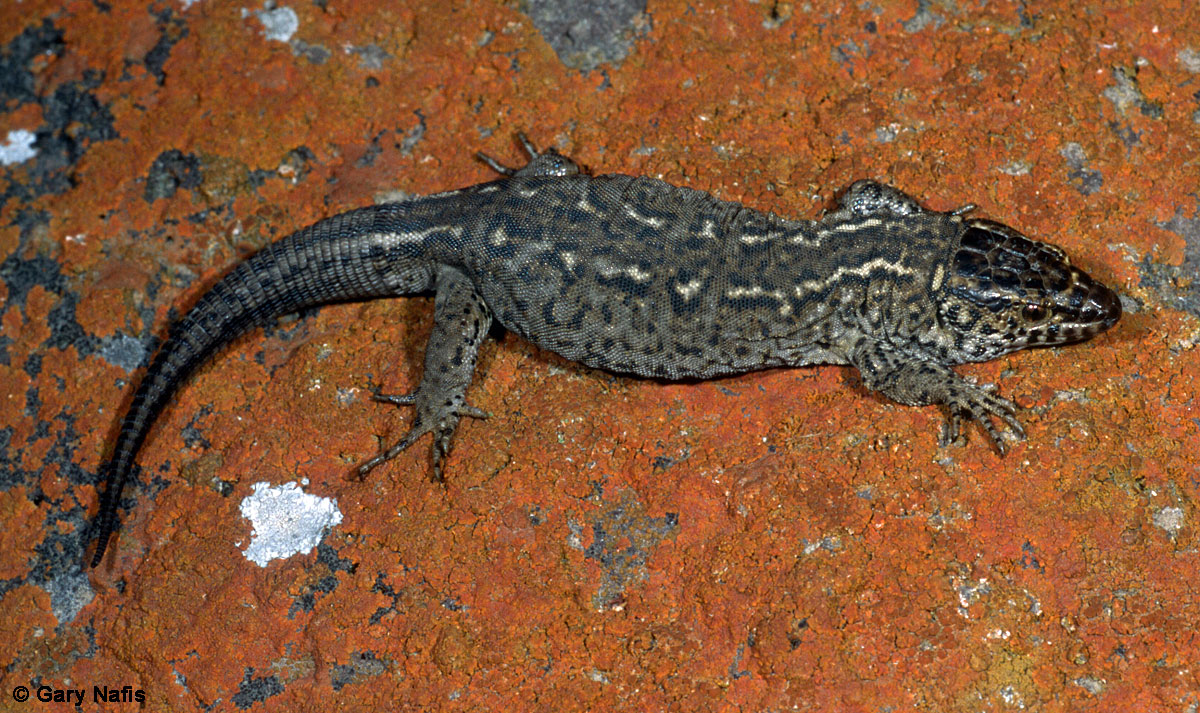
Night Lizards Active day and night in deserts, semi-arid, and mountainous habitats south of the Bay Area, and a few of the Channel Islands. Common, but rarely observed. During the daytime they are typically found only underneath objects or in rock cracks. If the lizard you want to identify resembles one of the lizards shown below, go here to continue your search. |
||
 |
 |
 |
 |
 |
 |
 |
||










Return to the Top
© 2000 -