
A Guide to the Amphibians
and Reptiles of California
Click on a picture for a larger view

Identifying Alligator Lizards in California
(And the West Coast of North America)
| Alligator lizards are found in almost any natural habitat in California (except most of the deserts and very high elevations.) They can be fairly large in size. Active during daylight, they are frequently seen moving on the ground, and occasionally up in bushes. They are also often found underneath debris, beach driftwood, and near human settlements. Alligator lizards do not typically bask in the sun out in the open or on top of a rock like many other lizard species. They seem to prefer sunny spots with some cover nearby. This is a lizard that is often seen in yards and garages in Southern California. Some characteristics of Alligator Lizards: |
||
 |
 |
 |
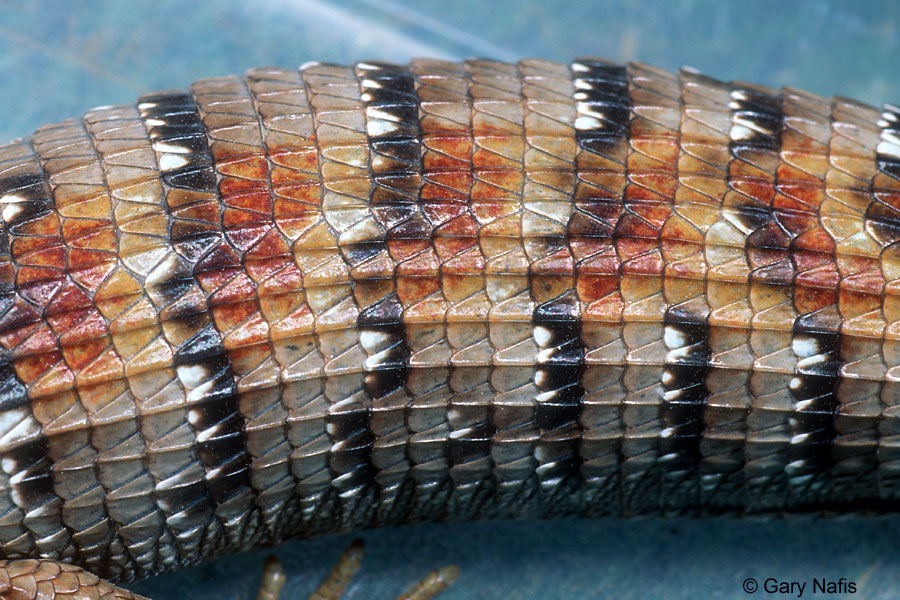
| Large scales | Long alligator-like snout | Longitudinal folds on the lower sides of the body |
 |
 |
 |
| Large belly scales with dark markings on or in-between the scales. | Juveniles do not look like adults | The small legs are sometimes pulled up against the sides which makes them hard to see and can make a lizard appear to be a snake. |
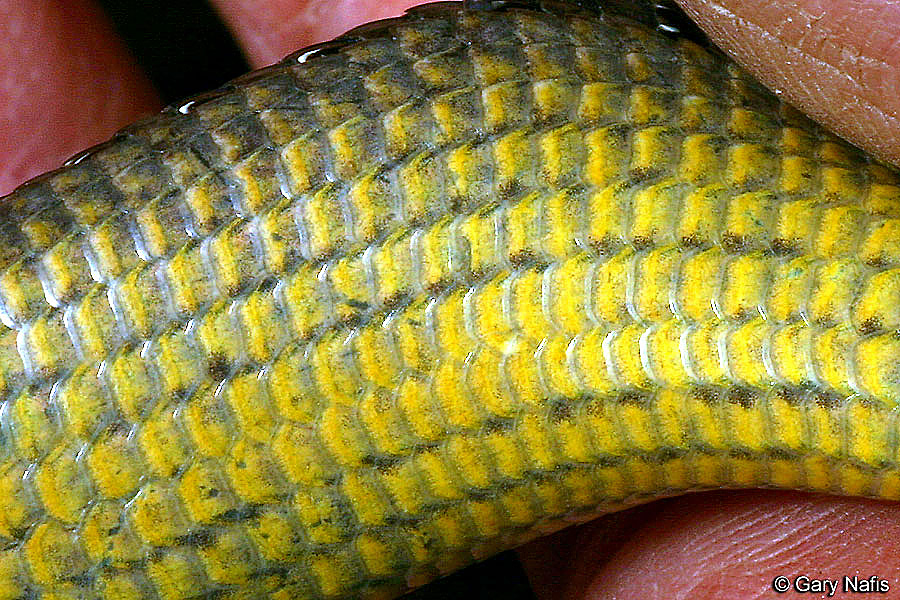
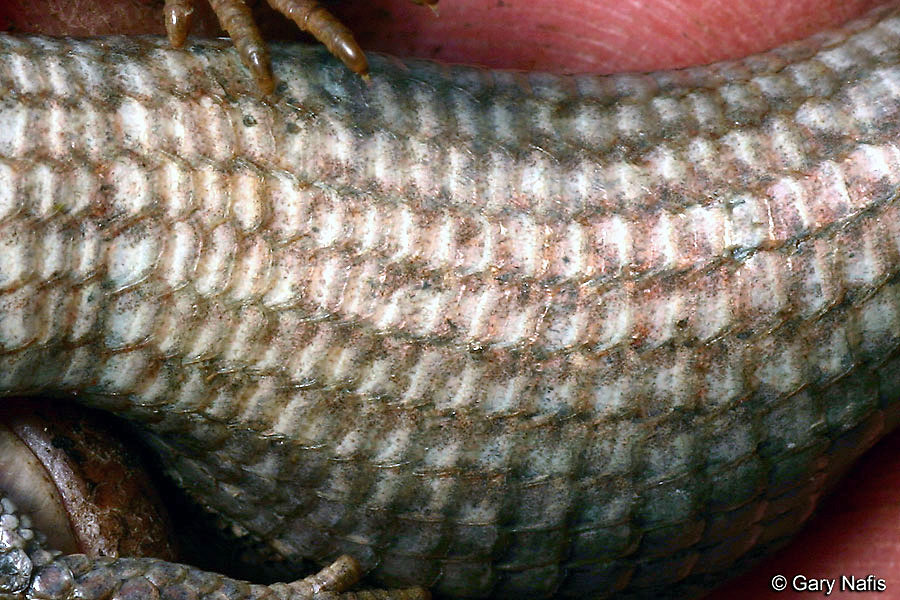
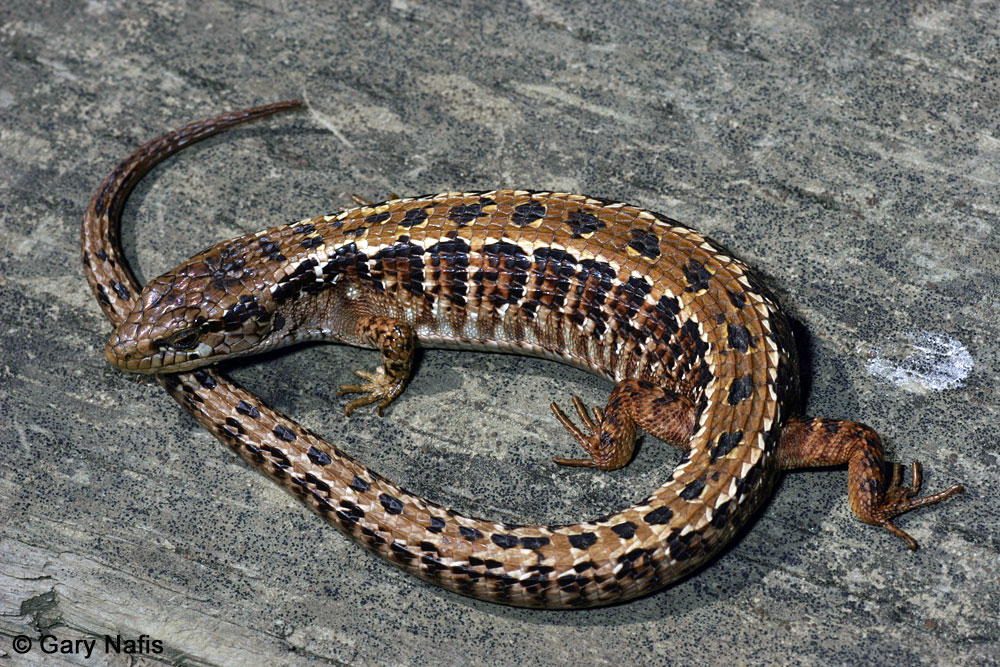
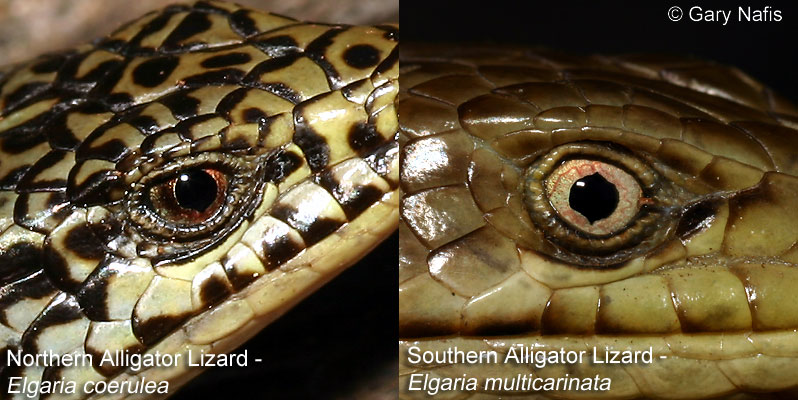
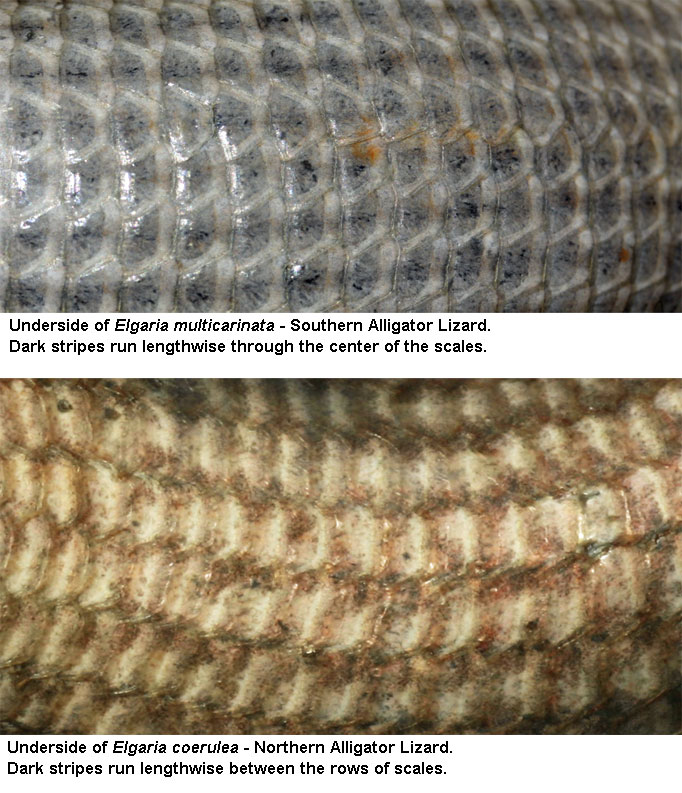
Three species of Alligator Lizards can be found in California: * Southern Alligator Lizard - Elgaria multicarinata (found throughout the state) Two or Three subspecies are sometimes recognized: California (Forest) Alligator Lizard; San Diego (Woodland) Alligator Lizard; Oregon Alligator Lizard * Northern Alligator Lizard - Elgaria coerulea (found only from the Monterey Bay north, and in the Sierra Nevada mountains.) Four subspecies are recognized: 1. Elgaria coerulea coerulea - San Francisco Alligator Lizard 2. Elgaria coerulea palmeri - Sierra Alligator Lizard 3. Elgaria coerulea principis - Northwestern Alligator Lizard 4. Elgaria coerulea shastensis - Shasta Alligator Lizard * The Panamint Alligator Lizard - Elgaria panamintina (found only in Inyo and Mono Counties.) Juvenile alligator lizards are often mistaken for a different kind of lizard (usually a skink) so they are included here separately. Northern and Southern Alligator lizards are very similar in appearance, but observing the color of the eye and the position of the dark stripes on the belly can help you differentiate them. Check the range, also. There are no Northern Alligator lizards in most of Southern California. |
||
| Juvenile Alligator Lizards |
||
 |
|
 |
 |
 |
 |
 |
 |
 |
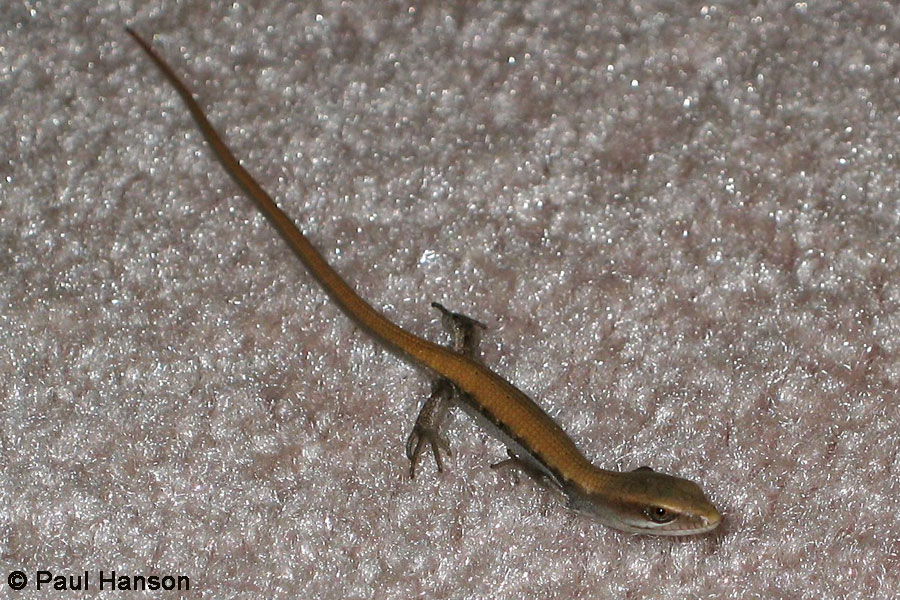
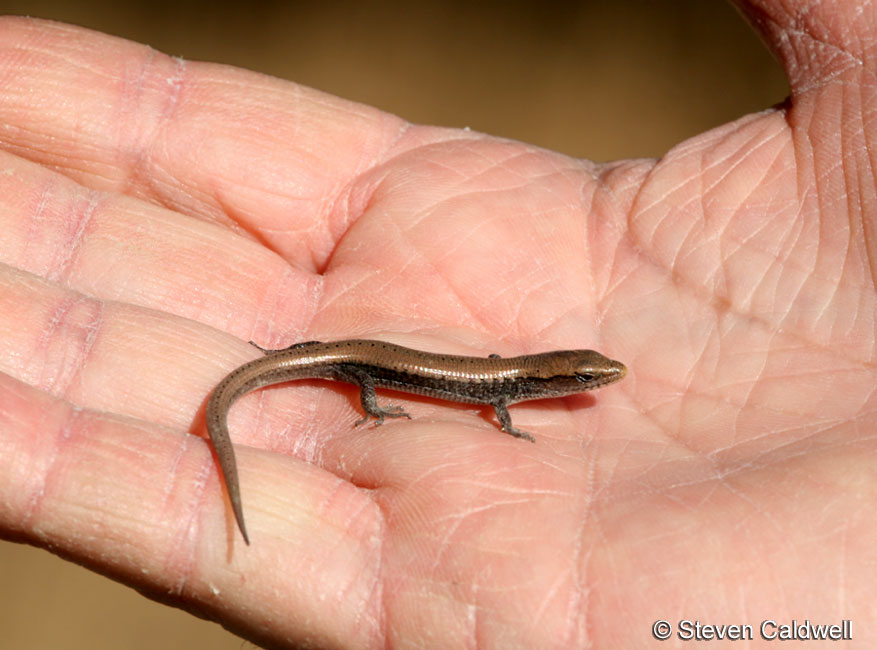
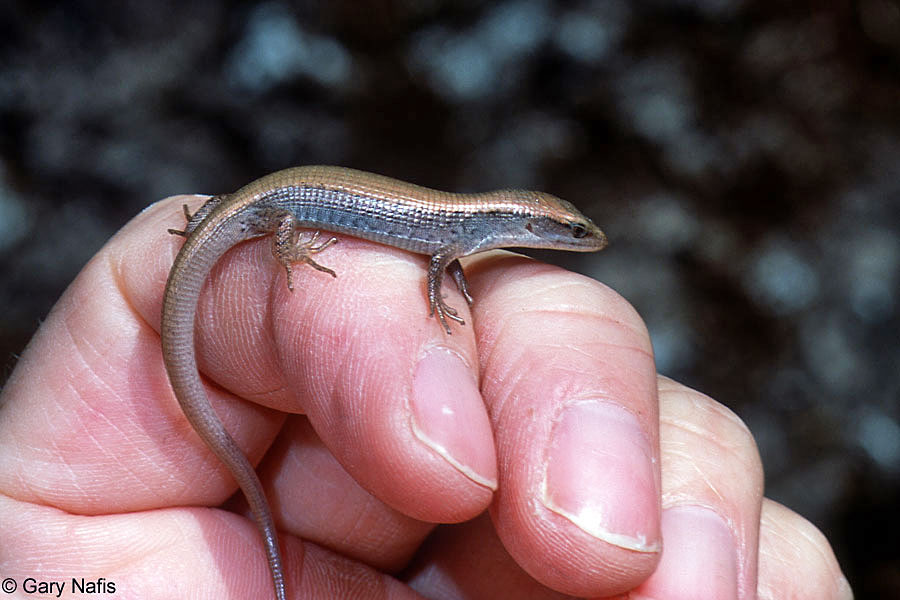
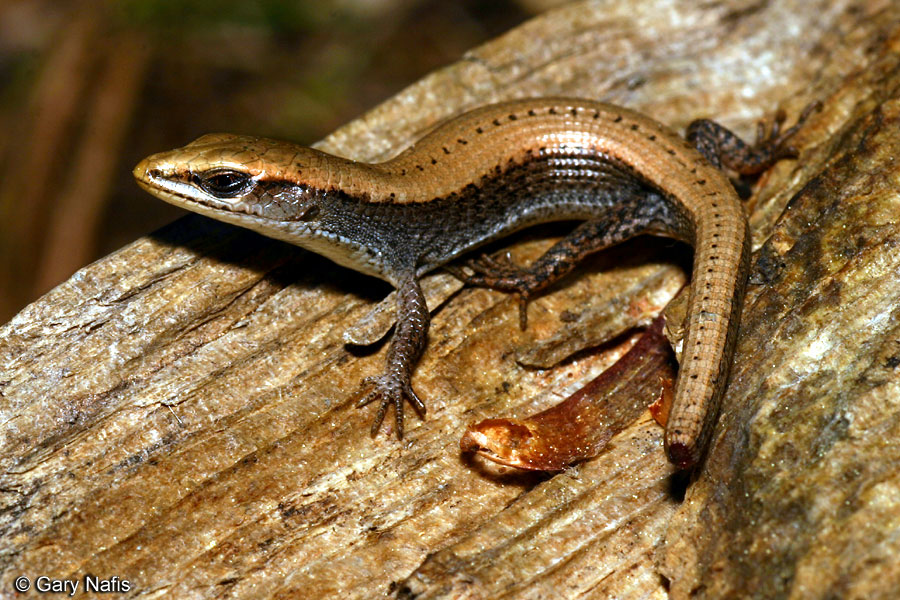
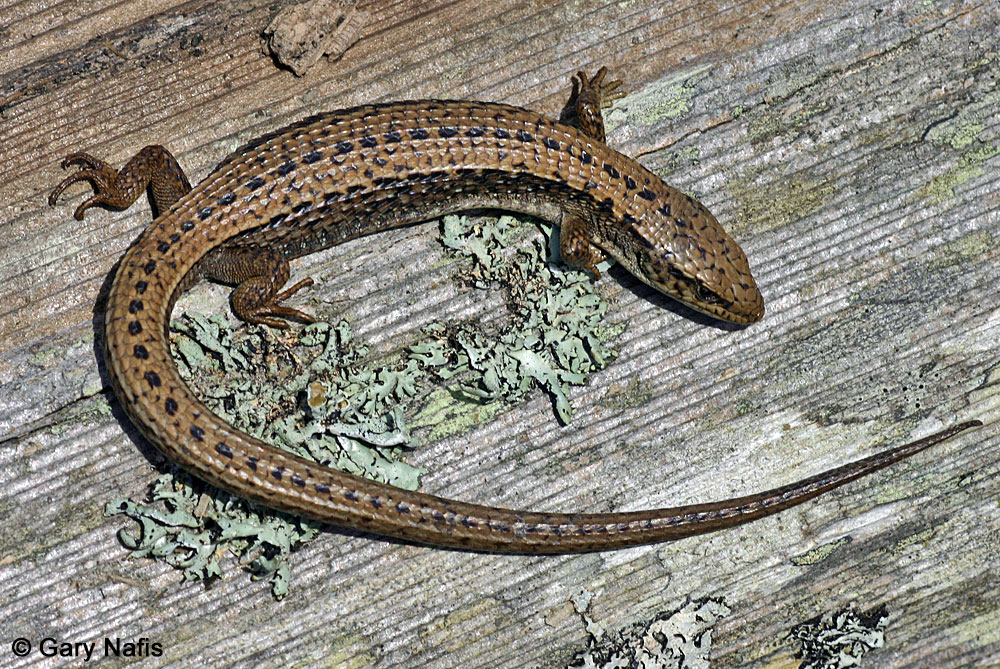
| Juvenile alligator lizards are often mistaken for skinks, (especially by those from the Southeast where similar-looking Ground Skinks are common). Hatchlings or newborns are very thin and small, roughly 4 inches long, with smooth shiny skin with a plain tan, light brown, or copper colored back and tail. The sides are darker and sometimes mottled or barred as they are on adults. Juveniles gradually develop the large scales and heavy dark barring found on the back and tails of adults. |
||
| Southern Alligator Lizards - Elgaria multicarinata |
||
|
 |
 |
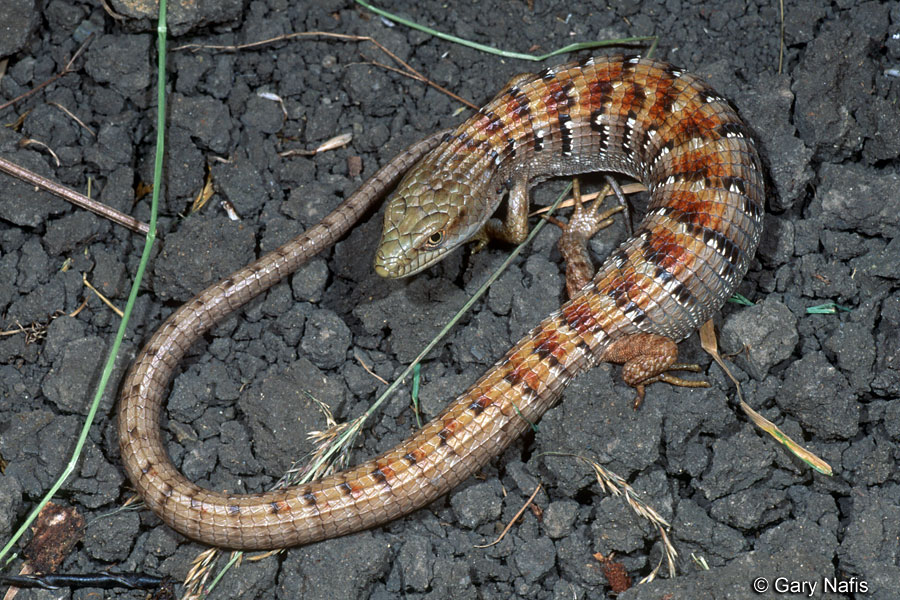
| Dark marks or stripes run lengthwise through the center of the scales on the belly. Compare with the dark belly stripes of the Northern Alligator Lizard which occur between the scales here and here and below. |
||
|
 |
 |
| Southern Alligator Lizards have yellow or light eyes compared with the darker eyes of Northern Alligator Lizards, seen below. |
Male alligator lizards have a large, broad, almost triangular head. | |
 |
 |
 |
 |
 |
 |
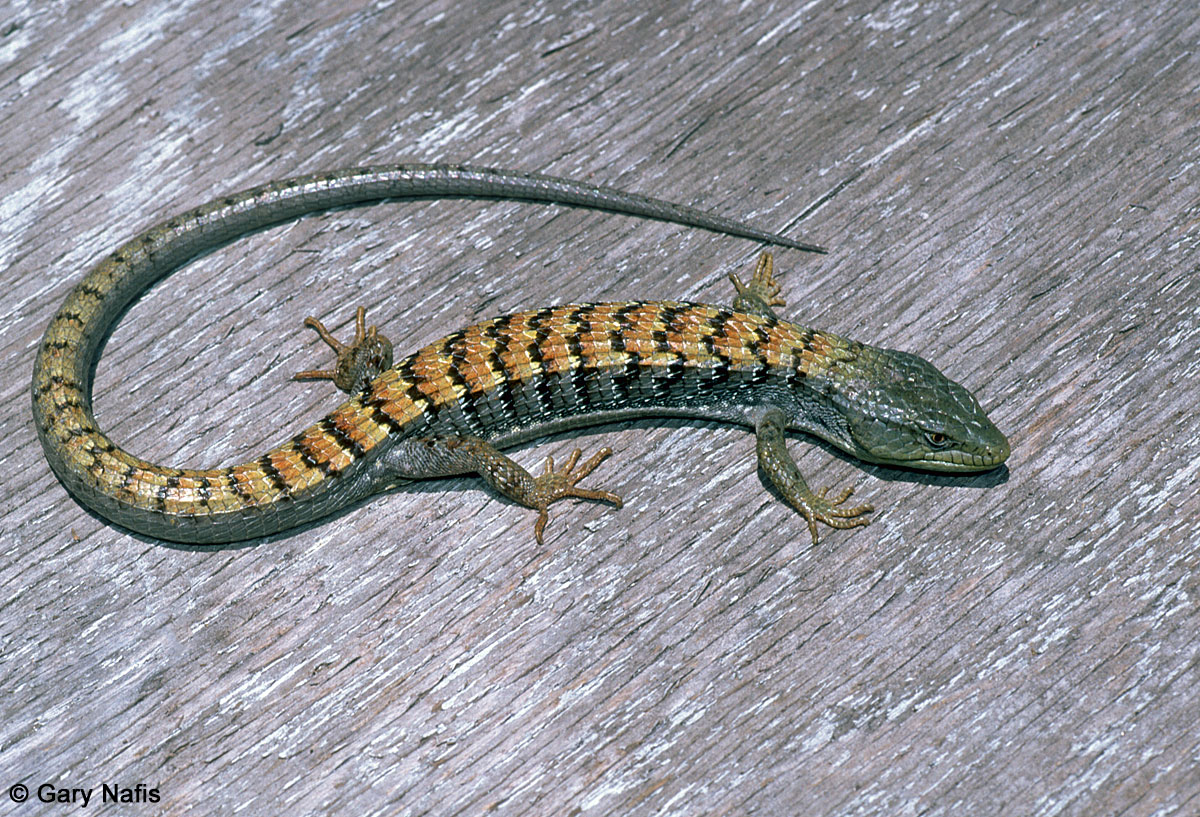
| Southern Alligator Lizard E. multicarinata |
(Adult missing most of its tail) | |
 |
||
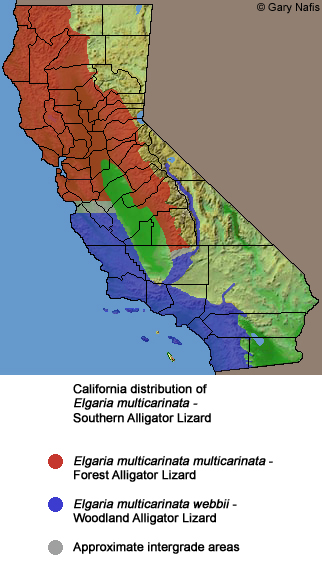
| Red: Southern Alligator Lizard | ||
| Northern Alligator Lizards - Elgaria coerulea |
||
 |
 |
 |
| Dark marks or stripes run lengthwise between the rows of scales on the belly. Compare with the dark belly stripes of the Southern Alligator Lizard which occur in the center of the scales. Compare above. |
||
 |
 |
 |
| Northern Alligator Lizards have darker eyes compared with the lighter eyes of Southern Alligator Lizards, seen above. |
||
 |
 |
 |
| San Francisco Alligator Lizard E. c. coerulea |
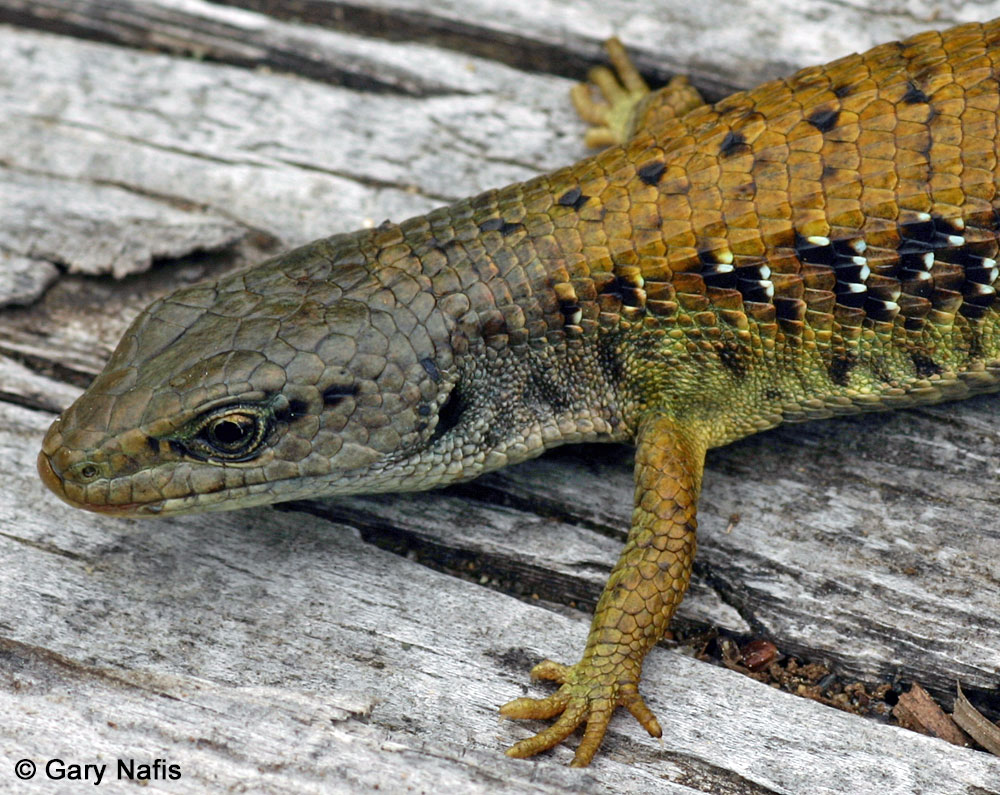
Sierra Alligator Lizard E. c. palmeri |
|
 |
 |
 |
| Northwestern Alligator Lizard E. c. principis |
Shasta Alligator Lizard E. c. shastensis |
|
Look at the range map below to determine which of the subspecies shown above occurs the area where the lizard you are identifying was found. |
||
 |
||
| Red: San Francisco Alligator Lizard Blue: Shasta Alligator Lizard Orange: Sierra Alligator Lizard Purple: Northwestern Alligator Lizard Gray: Approximate intergrade areas where more than one subspecies can be found |
||
| Panamint Alligator Lizard - Elgaria panamintina |
||
 |
 © Brad Alexander © Brad Alexander |
 |
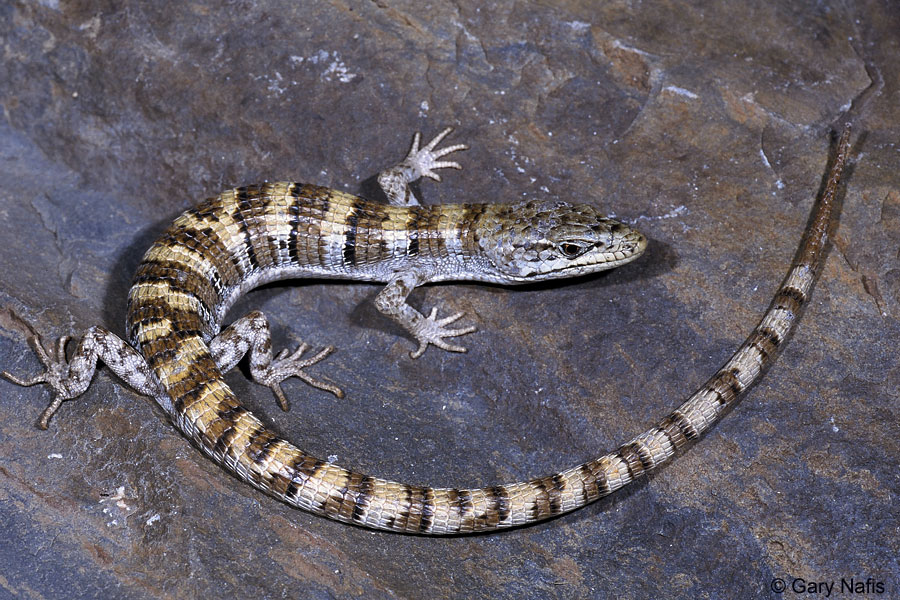
| The Panamint Alligator lizard is found only in a small area east of the Sierra Nevada mountains and the Owens Valley. It appears to be most common in riparian areas. No other alligator lizards inhabit the same area (the Southern Alligator Lizard occurs nearby just west of the Owens Valley on the lower slopes of the Sierra Nevada mountains) so its identification should not present any challenges. |
||
 |
||
| Red: Distribution of Elgaria panamintina - Panamint Alligator Lizard |
||


Return to the Top
© 2000 -