
A Guide to the Amphibians
and Reptiles of California

Living With Rattlesnakes

Rattler
Crotalus
Cascabel
Buzzworm
Hissy Stick
Nope Rope
Slither String
Shake Snake
Murder Ribbon
Danger Noodle
Venomous Vine
Satan's Spaghetti
Regretti Spaghetti
Devil's Tape Measure

 |
||||||||||||||||||||||
|
||||||||||||||||||||||
|
||||||||||||||||||||||
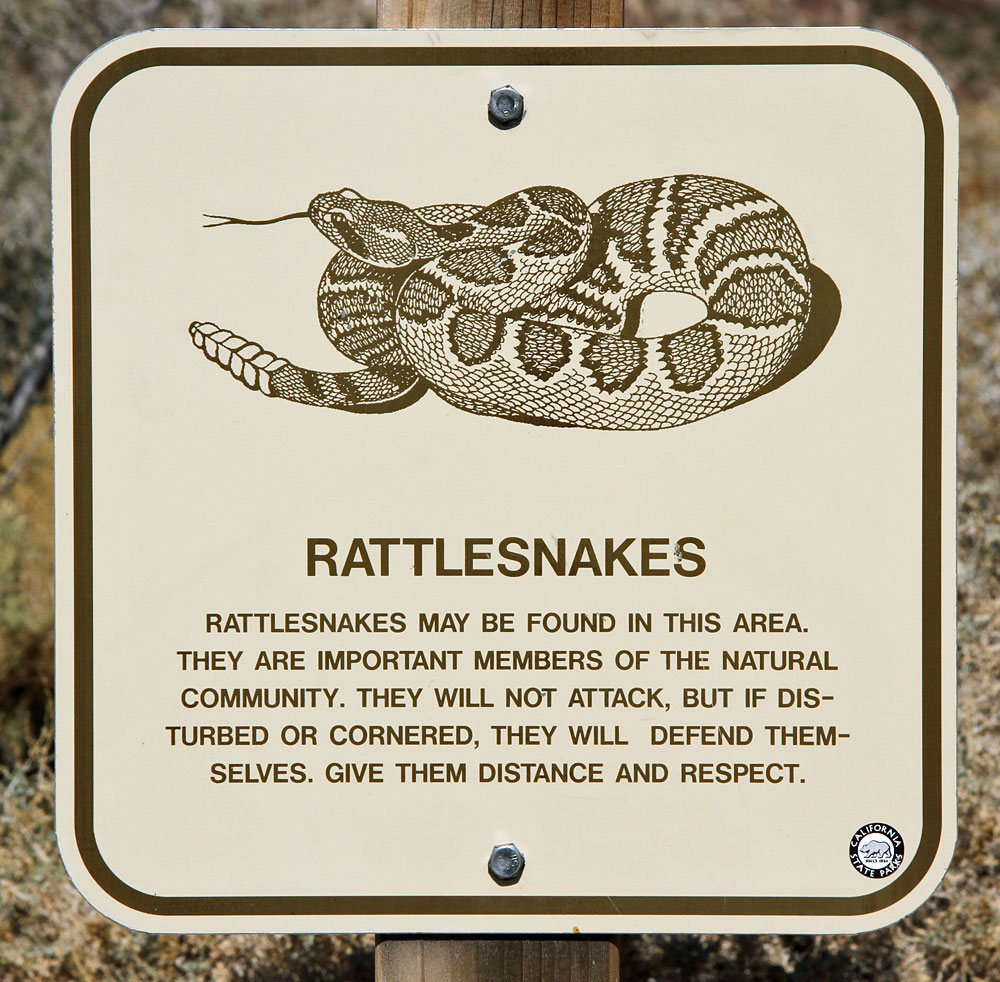
| According to the Centers for Disease Control and Prevention page about venomous snakes (accessed 4/23/2015) "It has been estimated that 7,000–8,000 people per year receive venomous bites in the United States, and about 5 of those people die." According to data from the Centers for Disease Control and Prevention from 2014 shown in an article on the Natural History Museum of Los Angeles County web site titled "Misplaced Fears: Rattlesnakes Are Not as Dangerous as Ladders, Trees, Dogs, or Large TVs" (accessed 7/16/21) falling from ladders, mammal bites, falling from trees, stings from venomous hornets wasps and bees, dog bites, lightning strikes, venomous spiders, and fireworks all kill more people every year than venomous snakes, and that includes all of the venomous snakes found in all of the U.S.A., not just rattlesnakes. Of course, this statistic does not address the thousands of people who have suffered physically (and financially) as the result of a venomous snake bite. A 1988 USC Medical Center study (L.A. Times "Rattling the Snakebite Victim" January 23, 1988) resulted in a profile of the average American snakebite victim. It found that 44% of snakebites were accidental, more than half resulted from the victim handling a snake, 28% of the victims were intoxicated, and 90% of the victims were male, most of whom were in their 20s. Many of the victims were trying to feed captive snakes. This profile of the typical American snakebite victim as an intoxicated young man who is handling a snake may not be entirely accurate, considering that it only dealt with snakebite victims taken to one southern California hospital, and it does not consider any other part of the country or any other venomous snake other than rattlesnakes, but it has become a standard profile that is frequently cited. I suspect that many of the snakebite victims who were feeding the snakes were experienced snake handlers who were not intoxicated, but just accidentally did something careless. Most snakebites can be avoided if you leave the snake alone - don't try to catch, kill, handle, or otherwise provoke a rattlesnake into acting in self-defense and strike at you. And always watch where you are walking and where you put your hands when you are in areas where rattlesnakes are present because any motion within their striking range might trigger them to strike, either to defend themselves or because that's how they catch their food. |
||||||||||||||||||||||
| Living With Rattlesnakes / Rattlesnake Bites | ||||||||||||||||||||||
Living With Rattlesnakes California Department of Fish and Wildlife: Rattlesnakes in California University of California: Rattlesnakes Management Guide Florida Museum of Natural History: How to Safely Coexist With Snakes The Tucson Herpetological Society: Living With Venomous Reptiles Washington Department of Fish and Wildlife: Living With Snakes Centers for Disease Control and Prevention: Venomous Snakes Anapsid.org: Melissa Kaplan's Rattlesnake Information Page Southwestern Field Herping Association: Venomous Snake Safety The Rattlesnake Conservancy - Advancing the protection of rattlesnakes and their habitat through research and education Snake Bites California Poison Control System (search for "rattlesnake bite") UCI Health - What to do if you're bitten by a rattlesnake Snakebite Safety! How to Effectively Avoid, Identify, and Treat a Snake Bite (Includes all of the U.S.A.) Don't Use Snakebite Suction Devices : Snakebite Suction Devices Don't Remove Venom: They Just Suck (Sean P. Bush, MD - Annals Of Emergency Medicine 43:2 pages 187-188 February 2004.) Bay Nature Magazine - Are Baby Rattlesnakes the Most Dangerous Biters? The Amazing Story of Andy Cat - a very lucky pet cat who was bitten by a rattlesnake and survived, thanks to the smart actions of its owners. Wikipedia List of Fatal Snake Bites in the United States |
||||||||||||||||||||||
| Handling Rattlesnakes - Don't Pin Them By the Neck! | ||||||||||||||||||||||
| Pinning rattlesnakes - holding them down with force at their necks - can be harmful to them and may traumatize them, and that can be dangerous to you, if you're the person pinning them. There are better ways to handle them if you must, including using snake hooks, snake tongs (at midbody), snake bag sticks, and putting the head end of the snake in a clear plastic tube. Herpetologist, snake expert, and author Harry Greene has this to say about pinning rattlesnakes: "...while reviewing anti-predator mechanisms in reptiles, I learned that predators mainly attack their necks and heads. Heavy restraint, I concluded, by mimicking a terrifying natural encounter, might therefore be both psychologically and mechanically traumatic to a snake. ... I had to acknowledge having pinned venomous snakes out of a misguided sense of necessity, but also because I liked picking them up, especially when others admired my skills: manhandling snakes entailed what naive bystanders regarded as charismatic prowess. Now, however, I had to admit snakes could be studied in the field, collected as specimens, and kept captive without our doing that to them…. For me the deal breakers were realizing that pinning is potentially traumatic and that the appearance of risk and bravery on the part of those doing it, as a matter for bragging, is misleading. Once I'd faced up to those truths I couldn't keep pinning snakes, let alone do it for the sake of showing off." Harry W. Greene. Tracks and Shadows - Field Biology As Art. University of California Press, 2013. |
||||||||||||||||||||||
| Relocating Rattlesnakes | ||||||||||||||||||||||
| Some people choose to have a rattlesnake removed from their property by an expert instead of trying to remove it themselves. Often the snake they found is harmless, but they are not sure of that so they want it removed. There are reptile relocators in many parts of the state where rattlesnakes are found that you can contact. There is a list available here: Melissa Kaplan's List of Venomous Snake Relocators in California, though the last time I checked it has not been updated since 2016, so you might be better off Googling snake relocators in your area. |
||||||||||||||||||||||
| Venom Evolution | ||||||||||||||||||||||
| Is rattlesnake venom rapidly evolving and becoming more dangerous to humans? Some argue that rattlesnake venom is more potent than now than in the past because the venom has evolved to deal with the evolving immunity to rattlesnake venom by rattlesnake prey. --------------------------------------------------------------------------------------------------------------------------------------------------------------------------- A 2009 National Wildlife Federation article "Venom Emergency!" by Michael Tennesen reports on this subject: According to Dr. Roy Johnson, a private physician who has treated more than 700 rattlesnake bites: "The reason rattlesnake venom appears to be getting more toxic is that more people are getting bit by southern Pacific Rattlesnakes, and they are one of the most toxic rattlesnakes in the country." According to Dr. Sean Bush, professor of Emergency Medicine at the Loma Linda University Medical Center: "...the increase in serious bites has more to do with greater numbers of people pushing into snake territory than with the snakes getting more toxic." He does not rule out the possibility that snake venom could evolve greater toxicity in response to prey resistance, but, he says, "this is something that has happened over the millennia, not in the last few years." --------------------------------------------------------------------------------------------------------------------------------------------------------------------------- A 2010 study states that there is no published evidence proving that rattlesnake venom toxicity is rapidly evolving to cause more severe reactions in humans and claims that such reports are the result of sensationalistic journalism and a lack of knowledge by attending physicians. (Hayes, W. K., and S. P. Mackessy. 2010. Sensationalistic Journalism and Tales of Snakebite: Are Rattlesnakes Rapidly Evolving More Toxic Venom? Wilderness & Environmental Medicine. 21:35-45.) |
||||||||||||||||||||||
| Are Rattlesnakes Rattling Less and Losing Their Rattles? | ||||||||||||||||||||||
| There has been a lot of discussion online about rattlesnakes that have evolved to remain silent instead of using their rattle as a warning. This is usually accompanied by hysterical comments about how horrible it will be to live in a world where rattlesnakes no longer warn us where they are located so we won't step on them and get bitten and die horribly. Some commenters are going so far to say that rattlesnakes are actually losing their rattles or their ability to rattle. I have seen no evidence to support the fact that rattlesnakes are evolving away their rattles, but this NPR News article from All Things Considered, 8/29/13, contains an interview with a herpetologist in South Dakota who claims to have found many rattlesnakes whose tail muscles have atrophied to the point where they can no longer shake their tails to make a rattling sound. I don't know if a study has been published about this phenomenon yet, but without one, it's not wise to take this too seriously. There are good arguments from snake experts on both sides of the issue: Some claim that rattlesnakes that remain silent to remain undetected are less likely to be discovered and killed by humans, and that this trait is passed on to succeeding generations. That could be true. It's how evolution works. But I doubt that evolution works as fast as they claim. Others believe that rattlesnakes have never rattled a warning all of the time or even most of the time, so really nothing has changed and there is no reason to believe that snakes that don't rattle are a new development. I'm inclined to agree with this view because it is consistent with my experience. I've seen rattlesnakes in areas where they could not have had much contact with humans that did not rattle when I encountered them and I've seen others in the same areas that did rattle. The one thing that experts on both sides of the issue agree on is that it is always important to be careful and alert and rely on all of your senses, not just your ears, to detect rattlesnakes when you are in their territory. Don't expect a rattlesnake to always rattle a warning. Here are a couple more links regarding this topic. Google can show you even more. Rattlesnakes evolving, losing their rattles, expert says: ABC Arizona, 2013 (accessed 4/21/16, link is now dead) UrbanLegends.about.com: Rumor: Rattlesnakes Not Rattling Anymore (accessed 4/21/16) |
||||||||||||||||||||||
Lifespan |
||||||||||||||||||||||
| Nobody really knows how long rattlesnakes can live the wild, and it's probably different for each of the many species of rattlesnakes in the world. To know the answer, researchers would have to follow a lot of rattlesnakes from their birth to their death, and then average their ages, and they'd have to do that for all rattlesnake species, then average them all together. That's just not possible. Some researchers do radio tag wild rattlesnakes so they can find them again over the years, and it's possible they have gathered some useful lifespan information, but I'm not aware of any such studies. (If you know of any, let me know.) Most rattlesnake lifespan information comes from captive rattlesnakes. In the 1982 condensed version of his two-volume 1956 book "Rattlesnakes," Laurence Klauber estimates the lifespan of a Western Diamond-backed Rattlesnake at the San Diego Zoo to be "...not less than twenty-one years. ... I should presume that rattlesnakes in the wild occasionally attain an age in excess of twenty years, longer than either their prey or competitive mammal and bird predators." (pp 48-49) If you search the web you'll find various estimates of rattlesnake longevity, with most stating that rattlesnakes can live up to somewhere between 20 and 25 years of age, similar to Klauber's estimate. Captive rattlesnakes are estimated to live up to 30 to 35 years. |
||||||||||||||||||||||
| Snake Repellents, Snake Traps, and Snake Fencing | ||||||||||||||||||||||
| There are several types of snake repellents on the market. Some plug into the ground, claiming to make vibrations that snakes will avoid. Some are powders or liquids that you pour onto the ground, with names such as Dr. T's Snake-A-Way, SerpentGuard, Sweeney's Snake Repellent, Hi-Yield Snake Repellent, Snake Stopper, and Liquid Fence. These typically guarantee to get rid of venomous and non-venomous snakes and keep them from coming back. They claim to be eco-friendly, and use ingredients such as cinnamon, cloves, and fuller's earth, or sulphur and naphthalene (moth balls.) I can't recommend any of them because I have not tested them nor heard from anyone who has had success with them. It would be hard to determine if it works anyway, since snakes are secretive and often nocturnal, so you have no way of knowing that it is working unless you see snakes, which means it isn't. There are YouTube videos claiming to prove that repellents work and others showing that they don't work, which makes a very good case against one particular brand, showing that 3 venomous species and one non-venomous snake that were placed inside a wide band of repellent applied in a large circle on the ground, did not hesitate to crawl through the repellent. There are also snake traps on the market, such as Snake Guard Snake Trap and Cahaba Sake Trap. These are similar to "roach motels," being open-ended flat boxes with a sticky bottom. When the snakes crawl into the box, because it looks like shelter, they will get stuck. You can then kill the snake, if you find it before it hasn't died from starvation, exposure, or from being eaten by scavengers, or you can release it after spraying it with non-stick cooking oil. I have not tested these traps, but I suspect they do work, as long as a snake crawls into the trap. That's the problem, since there is nothing inside to attract the snake. It can also be an inhumane method of capture unless you check the trap daily, and will also trap and kill any other kind of animal or invertebrate that enters the box. I've seen Snake Fences for sale, which consist of synthetic netting on small posts about a foot high that you stake to the ground. If a snake tries to crawl through the net, it will get caught. This will probably also work, if you use enough of it, but it is a terribly inhumane method which leaves a snake to suffer, die, and rot or get eaten by a scavenger. You can see more about this subject on my Living With Wild Reptiles and Amphibians page. The Tucson Herpetological Society - LIving With Venomous Reptiles - includes a small diagram that shows how to build a solid snake fence. |
||||||||||||||||||||||
| Rattlesnake Avoidance Training For Dogs | ||||||||||||||||||||||
| Some dog owners pay to have their dogs trained to avoid rattlesnakes. Some people think this is cruel to the dogs because it uses electrical shock collars to shock the dog when it gets near a snake, and even cruel to the snakes. The training does not always appear to be effective on all dogs. Organizations like the Humane Society offer the training for a price. Natural Solutions is an online company that also sells this training service (in Southern California, at least.) I can't recommend any of these training programs since I have no personal experience with them, but I have heard from dog owners whose dogs were trained but failed to avoid rattlesnakes, and from others who say the training works. More than one training may be necessary. I have heard animal experts recommend that once the training is completed, dog owners should not automatically assume that their dog will always avoid snakes, but should watch the dog carefully to make sure the training worked. One person whose dog seemed to fail its first training had his dog trained a second time by Natural Solutions with more positive results. |
||||||||||||||||||||||
| Rattlesnake Vaccines For Dogs | ||||||||||||||||||||||
| There are a number of companies that offer vaccinations for dogs in order to protect them from rattlesnake venom. I have not researched the validity of their claims so I can't endorse them or tell you to avoid them. You will need to figure that out on your own. I chose one site Rattlesnakevaccinations.com [Sorry they changed the link. Try searching for it.] to illustrate the claims about what these vaccines will do. Keep in mind that while it looks like unbiased scientific information this site is basically just an advertisement for a particular product. (A product which may work very well, I don't know for sure.) They state that "Rattlesnake vaccine is designed to reduce the likelihood of death, permanent injury, and severe pain caused by rattlesnake bites. The vaccine stimulates the dog's immune system to produce antibodies against rattlesnake venom." They also state that the vaccine doesn't contain the sheep or horse proteins found in antivenom which can cause severe allergic reactions. One vaccine is given, then another is given 30 days later, and then a booster is given every 6 months to a year. Another company that offers information about vaccines is Rattlesnake Vaccines for Dogs. [Sorry they changed the link. Try searching for it.] |
||||||||||||||||||||||
| Rattlesnake Roundups | ||||||||||||||||||||||
| Some opponents feel that they promote animal abuse and slaughter for amusement and that they use collecting practices that destroy natural habitat. Some supporters believe that a Rattlesnake Roundup is a part of their cultural tradition and is beneficial because it brings money into the community, it educates people about rattlesnakes, and it provides venom for the manufacture of antivenom. Here are some Rattlesnake Roundup opponents' views: Anapsid.org Kingsnake.com Biologicaldiversity.org (You can find much more online about this controversial topic.) |
||||||||||||||||||||||
| Giant Rattlesnake Pictures on the Internet | ||||||||||||||||||||||
| There are no gigantic 10 foot plus rattlesnakes. Anywhere. The snakes in the pictures look gigantic due to camera trickery called "forced perspective." It's the same trick fishermen have used for ages to make their fish look bigger. Basically, if a person holds the snake on a long stick out towards the camera, the snake will look much larger than it really is in relation to the person. When someone looks at the picture, they automatically compare the size of the snake to the size of the person and then assume that the snake is enormous. Here's a good illustration of using forced perspective to make a snake look larger: Forced perspective or: Giant Rattlesnake shots Rattlesnake Solutions also talks about this. |
||||||||||||||||||||||
| Pit Viper Perception | ||||||||||||||||||||||

Click on this picture to see an illustrated interpretation of the various ways pit vipers (including rattlesnakes) perceive their prey, using their eyes, their sense of smell, their ability to detect vibrations, and their ability to sense heat. © Frank Buchter |
||||||||||||||||||||||
| Rattlesnake Lists and Illustrations From This Website | ||||||||||||||||||||||
List of the different types of Rattlesnakes found in California |
||||||||||||||||||||||
Rattlesnake Sounds and Video including animals that mimic rattlesnakes. |
||||||||||||||||||||||
| Rattlesnake Links | ||||||||||||||||||||||
|
||||||||||||||||||||||
| Recognizing the Differences Between Rattlesnakes and Gophersnakes | ||||||||||||||||||||||
   |
||||||||||||||||||||||
|
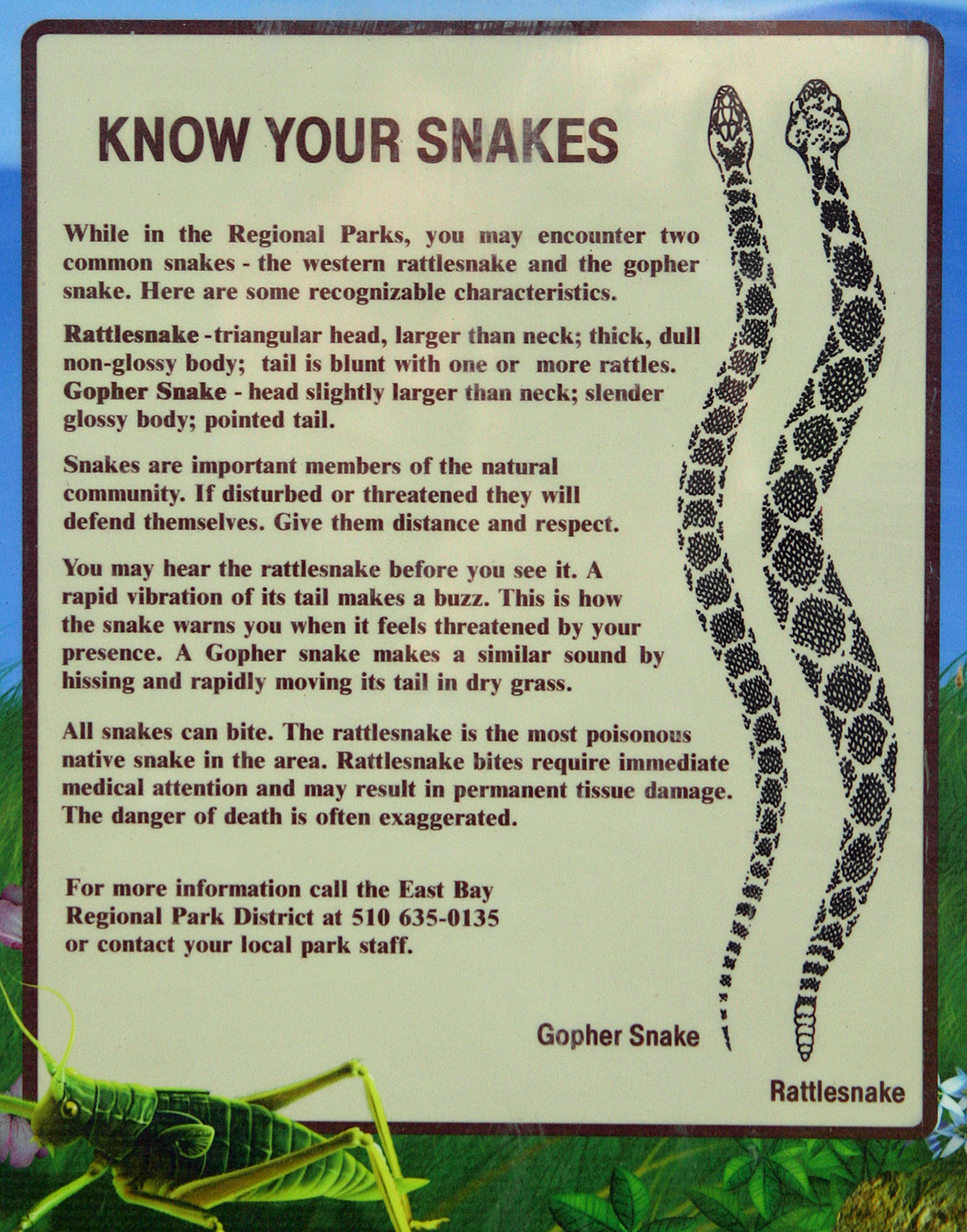
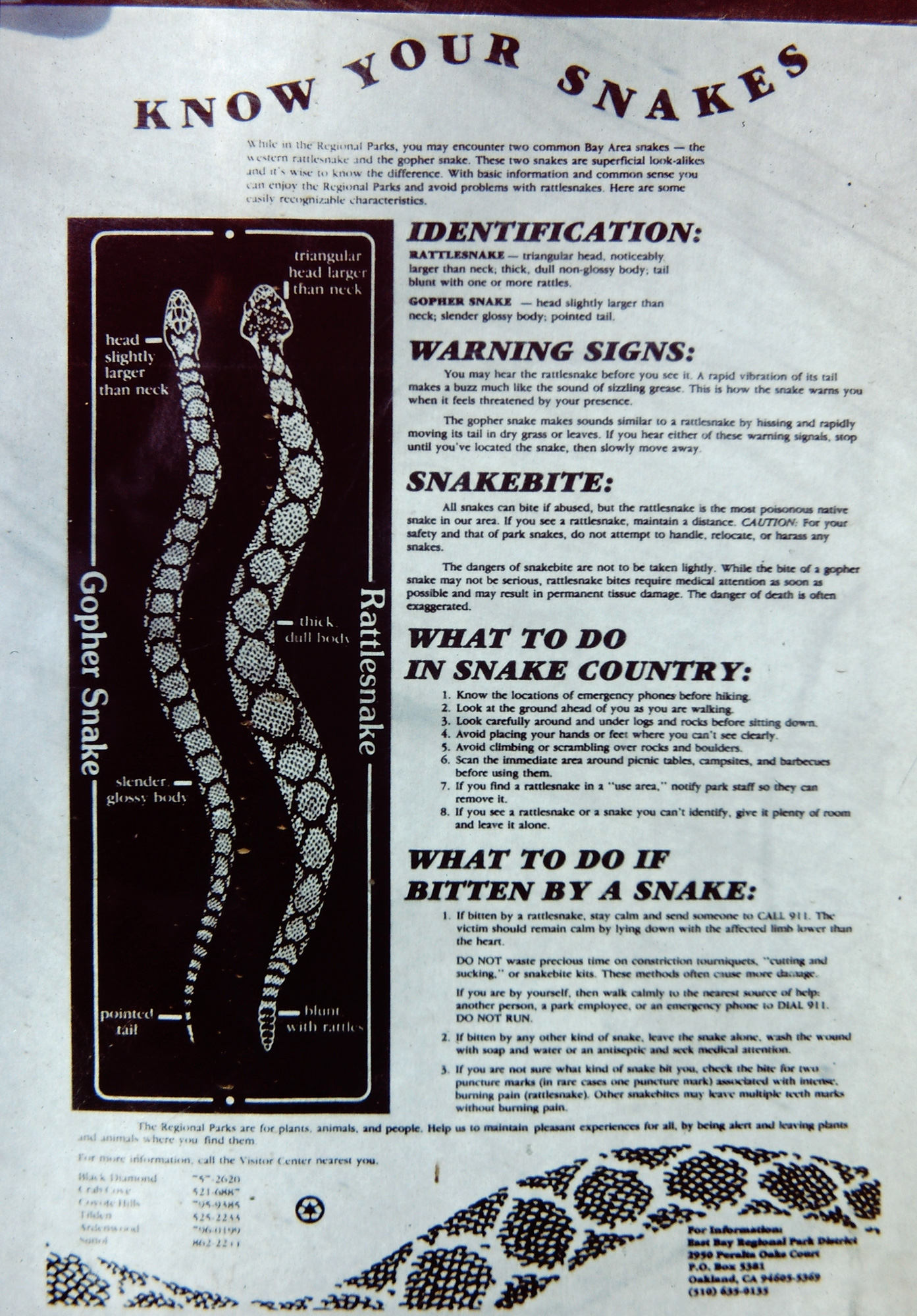
Harmless and beneficial gophersnakes are sometimes mistaken for dangerous rattlesnakes. Gophersnakes are often killed unnecessarily because of this confusion. (It's also not necessary to kill every rattlesnake.) It is easy to avoid this mistake by learning to tell the difference between the two families of snakes. The informational signs shown above can help to educate you about these differences. (Click to enlarge). If you can't see enough detail on a snake to be sure it is not a rattlesnake or if you have any doubt that it is harmless, leave it alone. You should never handle a snake unless you are absolutely sure that it is not dangerous. |
||||||||||||||||||||||
| Identifying Venomous Snakes Including Rattlesnakes | ||||||||||||||||||||||
| The Army Public Health Center published a new poster of Venomous Reptiles of the U.S. & Canada in May 2016. You can download it here. Along with pictures and tips on identification, it includes information about snakebite prevention, snakebite first aid, dog and pet safety, and reptile venoms and their effects. |
||||||||||||||||||||||
| Books about Rattlesnakes | ||||||||||||||||||||||
Ernst, Carl. H. Venomous Reptiles of North America. Smithsonian Institution Press, 1999. Hayes, William K., Kent R. Beaman, Michael D. Cardwell, and Sean P. Bush, editors. The Biology of Rattlesnakes. Loma Linda University Press, 2009. Hubbs, Brian R., & Brendan O'Connor. A Guide to the Rattlesnakes and other Venomous Serpents of the United States. Tricolor Books, 2011. Klauber, Laurence M. Rattlesnakes. University of California Press. (Abridged from the 1956 two volume Rattlesnakes: Their Habits, Life Histories, and Influence on Mankind.) University of California Press, 1982. Rubio, Manny. Rattlesnake - Portrait of a Predator. Smithsonian Institution Press, 1998. Walls, Jerry G. Rattlesnakes: Their Natural History and Care. T. F. H. Publications, Inc., 1996. |
||||||||||||||||||||||
 |
 |
 |
||||||||||||||||||||
| Klauber, Laurence M. Rattlesnakes. University of California Press. (Abridged from the 1956 two volume Rattlesnakes: Their Habits, Life Histories, and Influence on Mankind.) University of California Press, 1982. |
Klauber, Laurence M. Rattlesnakes: Their Habits, Life Histories, and Influence on Mankind. University of California Press, 1956. (Hardcover 2 volume set.) (Second Edition, 1997.) |
Hubbs, Brian R., & Brendan O'Connor. A Guide to the Rattlesnakes and other Venomous Serpents of the United States. Tricolor Books, 2011. |
||||||||||||||||||||
| This is the classic guide to rattlesnakes by the great California Herpetologist, available in two volumes or in one abridged volume. |
The original 2009 guide to the rattlesnakes of the United States has been expanded to cover all of the venomous serpents of the United States, including Rattlesnakes, Coral Snakes, Copperheads, and Cottonmouths, with 170 color pictures and 42 range maps. |
|||||||||||||||||||||
 |
 |
 |
||||||||||||||||||||
| Ernst, Carl H. and Evelyn M. Ernst. Venomous Reptiles of the United States, Canada, and Northern Mexico: Crotalus (Volume 2) Johns Hopkins University Press. 2011 |
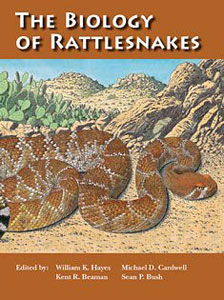
Hayes, William K., Kent R. Beaman, Michael D. Cardwell, and Sean P. Bush, editors. The Biology of Rattlesnakes. Loma Linda University Press, 2009. |
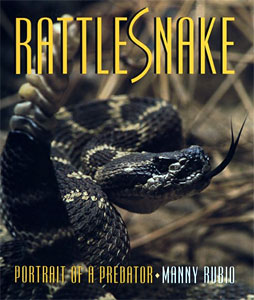
Rubio, Manny. Rattlesnake - Portrait of a Predator. Smithsonian Institution Press, 1998. |
||||||||||||||||||||
| This is an updated version of the landmark reference Venomous Reptiles of North America which has been split into two volumes and now covers northern Mexico. Volume two covers all of the Crotalus species in North America north of Mexico's twenty-fifth parallel. | "Due in part to the toxic nature of their venom, rattlesnakes comprise the most popular and well-studied group of snakes in the world. The Biology of Rattlesnakes showcases the finest research to date by investigators encompassing an enormous breadth of expertise. With 50 original contributions from 98 authorities covering a diverse range of topics, this landmark volume will be looked upon as authoritative for years to come. The beautiful, full-color plates depicting many of the more than 30 rattlesnake species add a tasteful touch." |
Lots of good pictures and information about rattlesnakes in this nicely-designed book. |
||||||||||||||||||||
 |
||||||||||||||||||||||
Return to the Top
© 2000 -