|
 |
 |
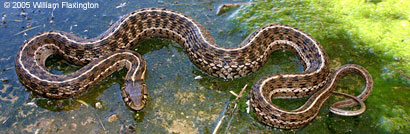
| Adult, Imperial County © 2005 William Flaxington |
Adult, Imperial County
© 2005 William Flaxington |
| |
 |
|
| |
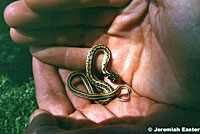
Juvenile, Riverside County
© Jeremiah Easter |
|
| |
|
|
| Marcy's Checkered Gartersnakes From Outside California |
 |
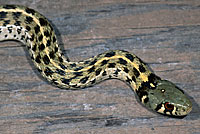 |
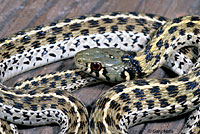 |
| Adult, Cochise County, Arizona |
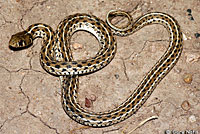 |
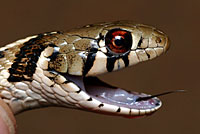 |
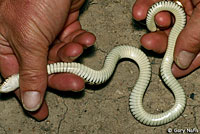 |
| |
Adult, Cochise County, Arizona |
|
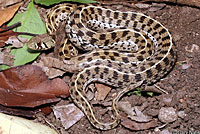 |
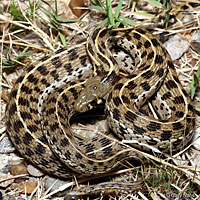 |
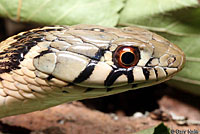 |
| |
Adult, Starr County, Texas |
|
| |
|
|
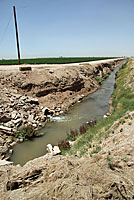
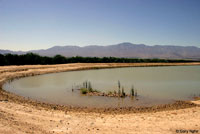
| Marcy's Checkered Gartersnake Habitat in California |
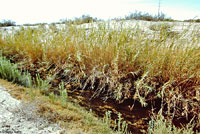 |
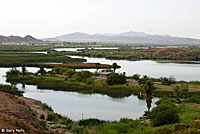 |
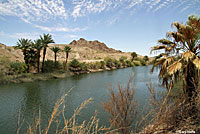 |
Habitat, agricultural drain,
Imperial County
|
Habitat, Colorado River,
Imperial County |
Habitat, Colorado River,
Imperial County |
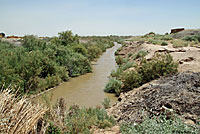 |
 |
 |
Habitat, agricultural drain,
Imperial County
|
Habitat, agricultural drain,
Imperial County
|
Habitat, agricultural irrigation pond, Riverside County |
|
|
|
|
Description |
Not Dangerous - This snake may produce a mild venom that does not typically cause death or serious illness or injury in most humans, but its bite should be avoided.
Commonly described as "harmless" or "not poisonous" to indicate that its bite is not dangerous, but "not venomous" is more accurate since the venom is not dangerous. (A poisonous snake can hurt you if you eat it. A venomous snake can hurt you if it bites you.)
Long-considered non-venomous, discoveries in the early 2000s revealed that gartersnakes produce a mild venom that can be harmful to small prey but is not considered dangerous to most humans, although a bite may cause slight irritation and swelling around the puncture wound. Enlarged teeth at the rear of the mouth are thought to help spread the venom.
|
| Size |
13 - 42 inches long (32 - 107 cm). Normally found from 20 - 28 inches (51 - 71 cm).
Neonates from 6.5 - 9.5 inches (17 - 24 cm).
|
| Appearance |
| A medium-sized snake with a head barely wider than the neck and keeled dorsal scales. |
| Color and Pattern |
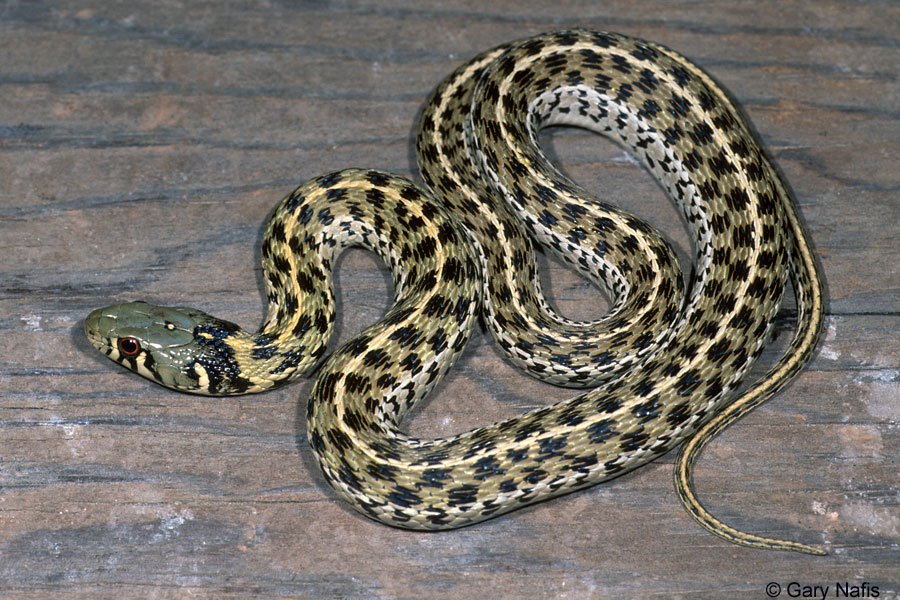
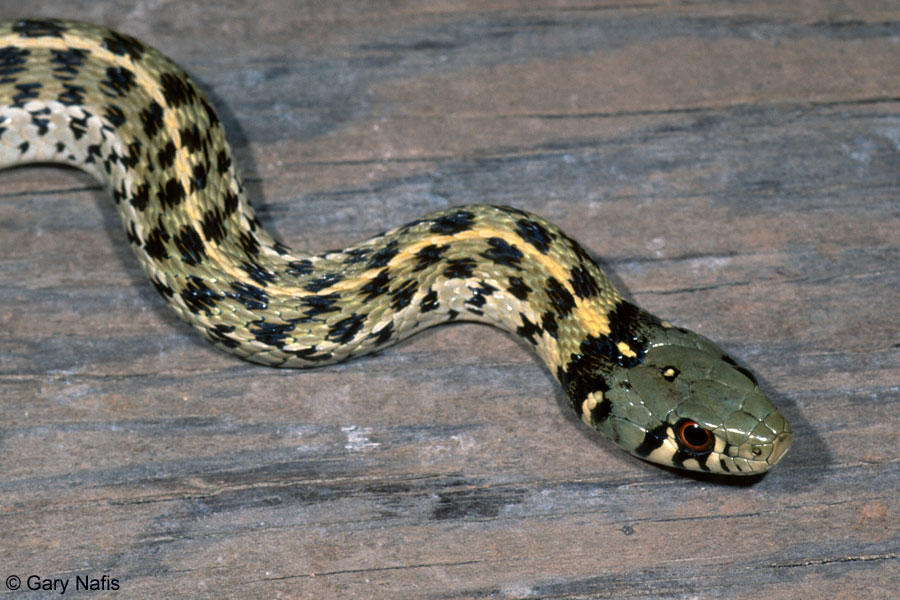
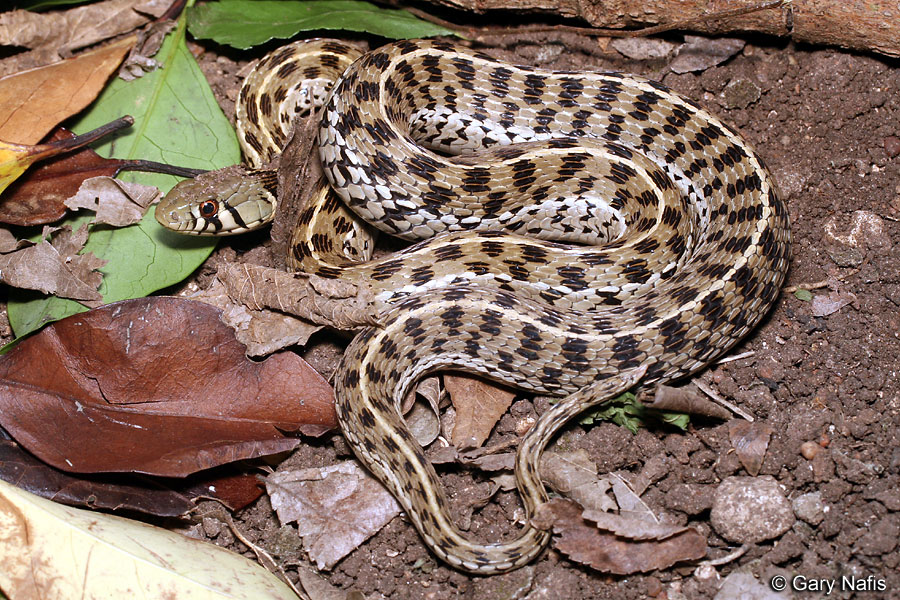
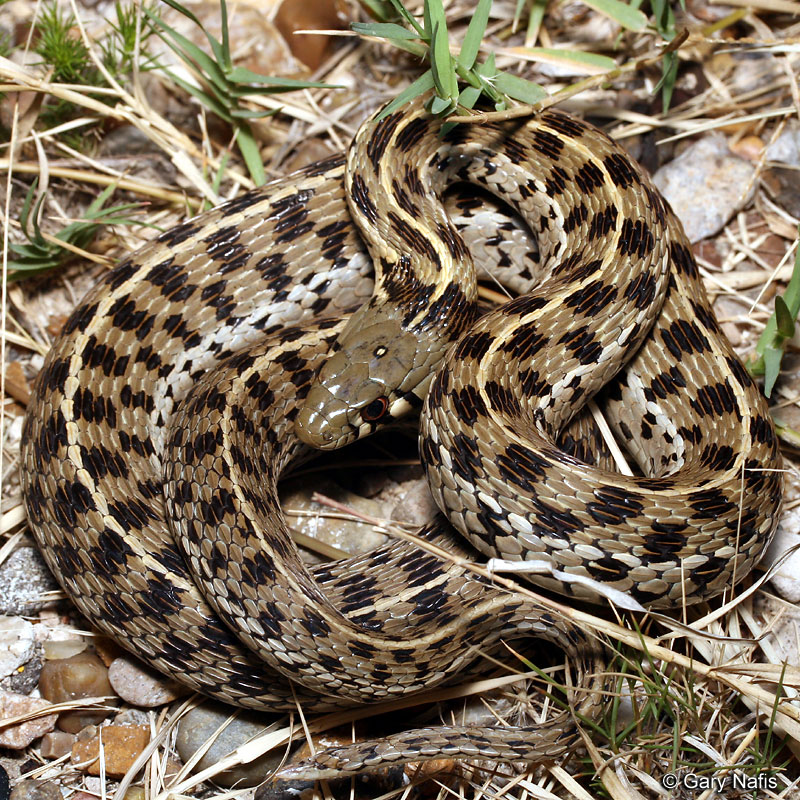
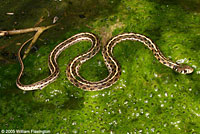
Tan, brown or yellowish brown with rows of large alternating black blotches arranged in a checkered pattern on the sides, and distinct yellowish stripes on the back and lower sides.
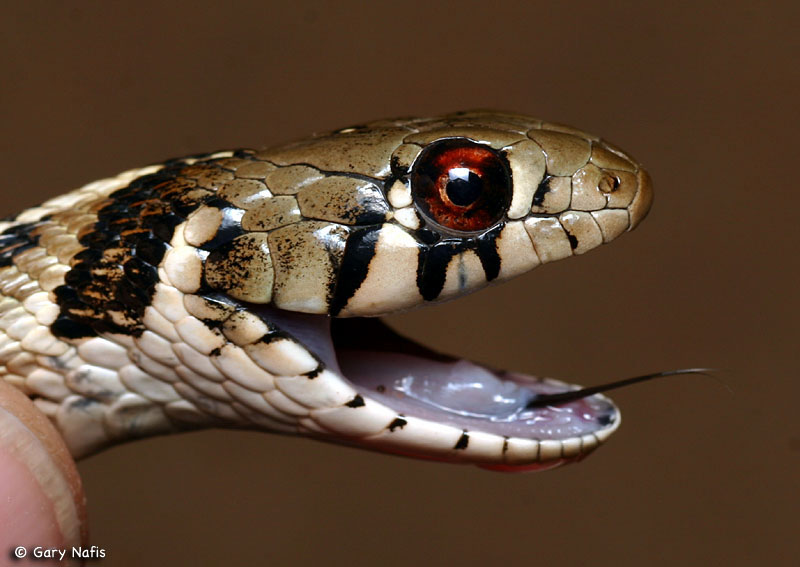
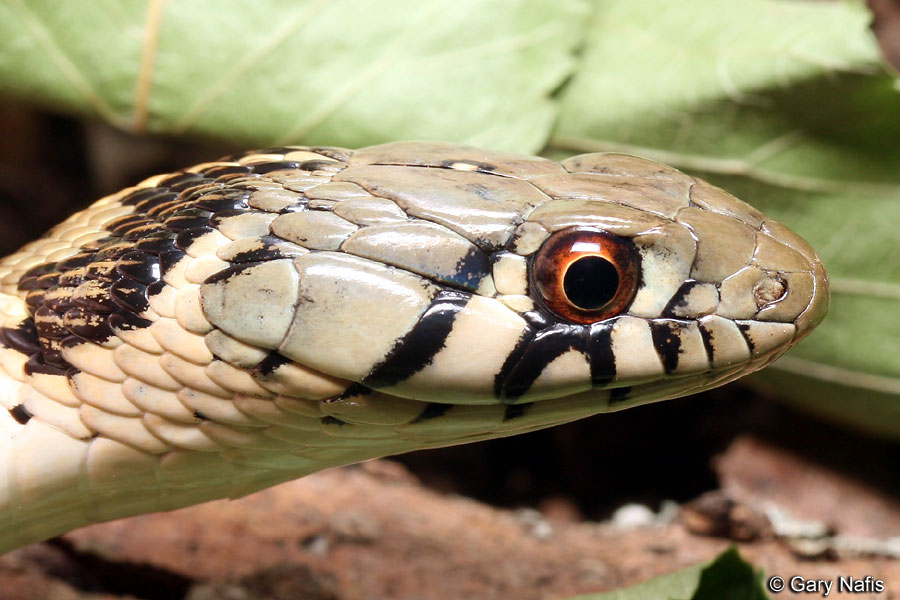
There is a dark blotch on the back of each side of the head with a light area between the dark blotch and the corner of the mouth.
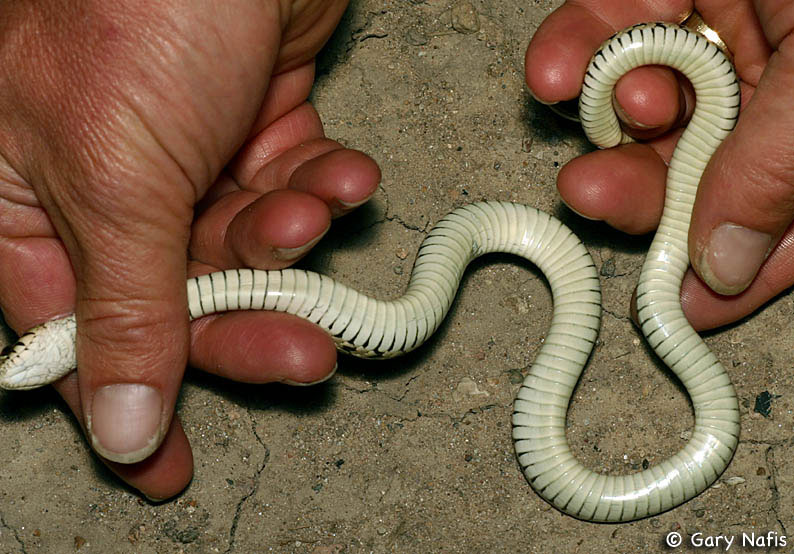
The underside is pale and unmarked or smudged with dark pigment. |
Key to Identifying California Gartersnake Species
|
| Life History and Behavior |
Activity |
Can be diurnal, crepuscular, and nocturnal, especially in hot weather.
A good swimmer. May dive when startled. |
| Defense |
| Like most gartersnakes, when picked up, this snake will often release its cloacal contents and musk. |
| Diet and Feeding |
| Checkered Gartersnakes consume mostly amphibians, but they also eat invertebrates, fish, snakes, mammals, and lizards, including whiptails, one of which was found in the stomach contents of a Checkered Gartersnake in New Mexico. (Herpetological Review 38(1), 2007) |
| Reproduction |
Females are ovoviviparous. After mating with a male they carry the eggs internally until the young are born live, from May to October. Sometimes gives birth two times in one year - in early and late summer. (Taylor, 2024)
Obligate parthenogenesis (when a female reproduces only asexually - without mating with a male) is extremely rare in snakes, and is thought to be limited to the Brahminy Blindsnake. Reynolds et al discuss examples of parthenogenesis in Thamnophis marcianus.
(Reynolds RG, Booth W, Schuett GW, Fitzpatrick BM, Burghardt GM. 2012. Successive virgin births of viable male progeny in the checkered gartersnake, Thamnophis marcianus. Biological Journal of the Linnean Society 107: 566–572.)
|
| Habitat |
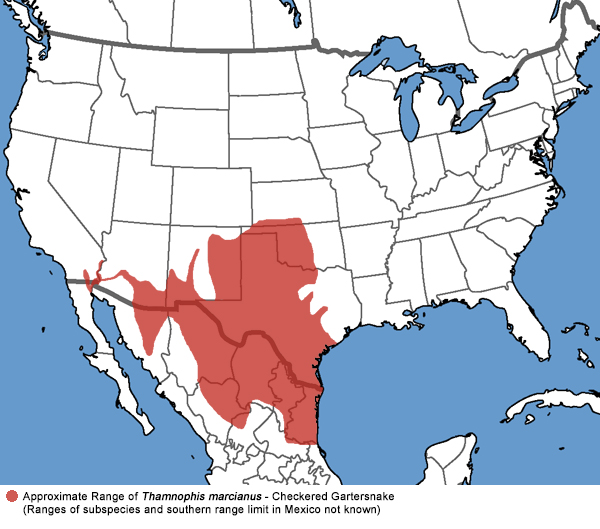
Found in grassland, semi-arid land, and deserts, typically near water. In California, inhabits areas near streams, rivers, irrigation ditches, and irrigated croplands, in the desert.
|
| Geographical Range |
Found in southeast California along the Colorado river and in the Imperial Valley in Imperial and Riverside counties. Ranges north of the Salton Sea in irrigated areas as far north as Mecca.
"It appears to be established but uncommon in suitable habitat in the southernmost agricultural part of the Coachella Valley." (David M. Goodward and Michael D. Wilcox. The Rio Grande leopard frog (Lithobates berlandieri) and other introduced and native riparian herpetofauna of the Coachella Valley, Riverside County, California. California Fish and Game 105(2):48-71; 2019)
Outside of California, ranges into extreme northern Baja California, southern Arizona, much of New Mexico, Texas, Oklahoma, southern Kansas, and northern Mexico.
|
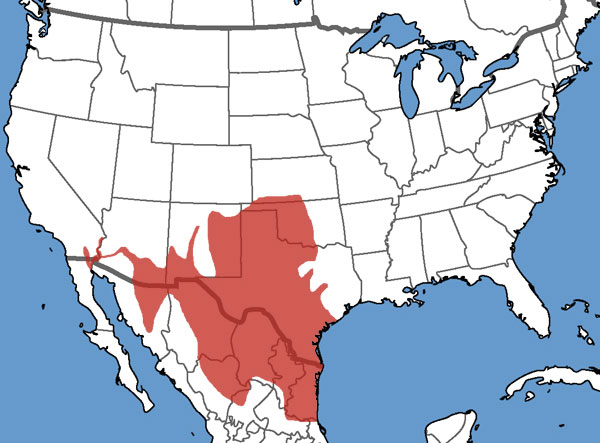 |
Red: Thamnophis marcianus marcianus - Marcy's Checkered Gartersnake
Two other subspecies have been described, ranging in to southern Mexico and Central America, but I don't know their common names or ranges:
Thamnophis marcianus bovalli
Thamnophis marcianus praeocularis
|
| Notes on Taxonomy |
Three subspecies of Thamnophis marcianus have been identified. In addition to T. m. marcianus, the other two occur in southern Mexico and south to Costa Rica but I can't find out much about them:
Thamnophis marcianus bovalli
Thamnophis marcianus praeocularis (Bocourt 1892)
---------------------------------------------------------------------------------------------------------------------------------------------------------------------
"Myers et al. (2017, Journal of Biogeography 44: 461–474), using mtDNA data, detected divergence between Chihuahuan and Sonoran Desert populations, which correspond to a previous taxonomic split based on morphology determined by Mit- tleman (1949, Bulletin of the Chicago Academy of Sciences 8: 235–249). However, with genome-scale data, Myers et al. (2019, Molecular Ecology 28: 4535–4548) showed that this divergence was unclear at the intersection of those deserts."
(Nicholson, K. E. (ed.). 2025 SSAR Scientific and Standard English Names List)
---------------------------------------------------------------------------------------------------------------------------------------------------------------------
Alternate and Previous Names (Synonyms)
Thamnophis marcianus - Checkered Garter Snake (Stebbins 1954, 1966, 1985, 2003, 2012)
Thamnophis marcianus - Marcy Garter Snake (Eutainia Marciana; Eutaenia elegans marciana) (Grinnell and Camp 1917)
Thamnophis marcianus nigrolateris (Brown 1889)
Sonoran garter snake;
Marcy's garter snake
|
| Conservation Issues (Conservation Status) |
| Possibly increasing their range due to irrigation in the desert. Apparently not negatively affected by introduced Bullfrogs. |
|
| Taxonomy |
| Family |
Colubridae |
Colubrids |
Oppel, 1811 |
| Genus |
Thamnophis |
North American Gartersnakes |
Fitzinger, 1843 |
| Species |
marcianus |
Checkered Gartersnake |
(Baird and Girard, 1853) |
Subspecies
|
marcianus |
Marcy's Checkered Gartersnake |
(Baird and Girard, 1853) |
|
Original Description |
Thamnophis marcianus - (Baird and Girard, 1853) - Cat. N. Amer. Rept., Pt. 1, p. 36
from Original Description Citations for the Reptiles and Amphibians of North America © Ellin Beltz
|
|
Meaning of the Scientific Name |
Thamnophis - Greek - thamnos = shrub or bush + ophis = snake, serpent
marcianus - honors Marcy, Randolph B.
from Scientific and Common Names of the Reptiles and Amphibians of North America - Explained © Ellin Beltz
|
|
Alternate Names |
Thamnophis marcianus - Checkered Garter Snake (no subspecies recognized)
Northern Checkered Gartersnake
|
| Other California Gartersnakes |
T. a. atratus - Santa Cruz Gartersnake
T. a. hydrophilus - Oregon Gartersnake
T. a. zaxanthus - Diablo Range Gartersnake
T. couchii - Sierra Gartersnake
T. gigas - Giant Gartersnake
T. e. elegans - Mountain Gartersnake
T. e. terrestris - Coast Gartersnake
T. e. vagrans - Wandering Gartersnake
T. hammondii - Two-striped Gartersnake
T. ordinoides - Northwestern Gartersnake
T. s. fitchi - Valley Gartersnake
T. s. infernalis - California Red-sided Gartersnake
T. s. tetrataenia - San Francisco Gartersnake
|
|
More Information and References |
California Department of Fish and Wildlife
Rossman, Douglas A., Neil B, Ford, & Richard A. Siegel. The Garter Snakes - Evolution and Ecology. University of Oklahoma press, 1996.
Hansen, Robert W. and Shedd, Jackson D. California Amphibians and Reptiles. (Princeton Field Guides.) Princeton University Press, 2025.
Stebbins, Robert C., and McGinnis, Samuel M. Field Guide to Amphibians and Reptiles of California: Revised Edition (California Natural History Guides) University of California Press, 2012.
Stebbins, Robert C. California Amphibians and Reptiles. The University of California Press, 1972.
Flaxington, William C. Amphibians and Reptiles of California: Field Observations, Distribution, and Natural History. Fieldnotes Press, Anaheim, California, 2021.
Nicholson, K. E. (ed.). 2025. Scientific and Standard English Names of Amphibians and Reptiles of North America North of Mexico, with Comments Regarding Confidence in Our Understanding. Ninth Edition. Society for the Study of Amphibians and Reptiles. [SSAR] 87pp.
Samuel M. McGinnis and Robert C. Stebbins. Peterson Field Guide to Western Reptiles & Amphibians. 4th Edition. Houghton Mifflin Harcourt Publishing Company, 2018.
Stebbins, Robert C. A Field Guide to Western Reptiles and Amphibians. 3rd Edition. Houghton Mifflin Company, 2003.
Behler, John L., and F. Wayne King. The Audubon Society Field Guide to North American Reptiles and Amphibians. Alfred A. Knopf, 1992.
Robert Powell, Roger Conant, and Joseph T. Collins. Peterson Field Guide to Reptiles and Amphibians of Eastern and Central North America. Fourth Edition. Houghton Mifflin Harcourt, 2016.
Powell, Robert., Joseph T. Collins, and Errol D. Hooper Jr. A Key to Amphibians and Reptiles of the Continental United States and Canada. The University Press of Kansas, 1998.
Bartlett, R. D. & Patricia P. Bartlett. Guide and Reference to the Snakes of Western North America (North of Mexico) and Hawaii. University Press of Florida, 2009.
Bartlett, R. D. & Alan Tennant. Snakes of North America - Western Region. Gulf Publishing Co., 2000.
Brown, Philip R. A Field Guide to Snakes of California. Gulf Publishing Co., 1997.
Ernst, Carl H., Evelyn M. Ernst, & Robert M. Corker. Snakes of the United States and Canada. Smithsonian Institution Press, 2003.
Taylor, Emily. California Snakes and How to Find Them. Heyday, Berkeley, California. 2024.
Wright, Albert Hazen & Anna Allen Wright. Handbook of Snakes of the United States and Canada. Cornell University Press, 1957.
Joseph Grinnell and Charles Lewis Camp. A Distributional List of the Amphibians and Reptiles of California. University of California Publications in Zoology Vol. 17, No. 10, pp. 127-208. July 11, 1917.
|
|
|
The following conservation status listings for this animal are taken from the July 2025 State of California Special Animals List and the July 2025 Federally Listed Endangered and Threatened Animals of California list (unless indicated otherwise below.) Both lists are produced by multiple agencies every year, and sometimes more than once per year, so the conservation status listing information found below might not be from the most recent lists, but they don't change a great deal from year to year.. To make sure you are seeing the most recent listings, go to this California Department of Fish and Wildlife web page where you can search for and download both lists:
https://www.wildlife.ca.gov/Data/CNDDB/Plants-and-Animals.
A detailed explanation of the meaning of the status listing symbols can be found at the beginning of the two lists. For quick reference, I have included them on my Special Status Information page.
If no status is listed here, the animal is not included on either list. This most likely indicates that there are no serious conservation concerns for the animal. To find out more about an animal's status you can also go to the NatureServe and IUCN websites to check their rankings.
Check the current California Department of Fish and Wildlife sport fishing regulations to find out if this animal can be legally pursued and handled or collected with possession of a current fishing license. You can also look at the summary of the sport fishing regulations as they apply only to reptiles and amphibians that has been made for this website.
This snake is not included on the Special Animals List, which indicates that there are no significant conservation concerns for it in California.
|
| Organization |
Status Listing |
Notes |
| NatureServe Global Ranking |
|
|
| NatureServe State Ranking |
|
|
| U.S. Endangered Species Act (ESA) |
None |
|
| California Endangered Species Act (CESA) |
None |
|
| California Department of Fish and Wildlife |
None |
|
| Bureau of Land Management |
None |
|
| USDA Forest Service |
None |
|
| IUCN |
|
|
|
|