|
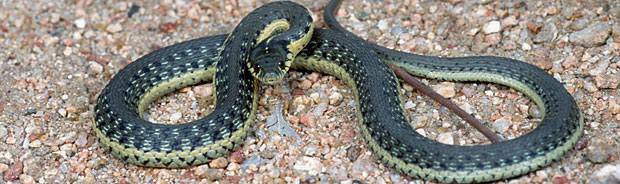 |
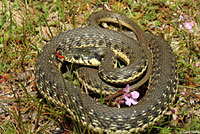
| Sub-adult in defensive pose, San Diego County |
 |
 |
 |
 |
| |
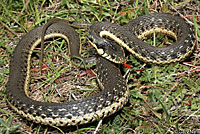
Sub-adult, San Diego County |
|
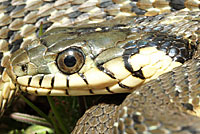
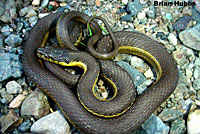
Adult, Santa Barbara County
© Brian Hubbs |
 |
 |
 |
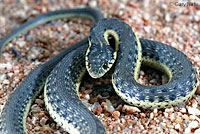 |
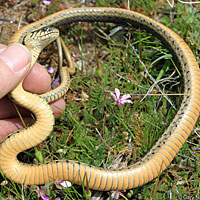
| Sub-adult, San Diego County |
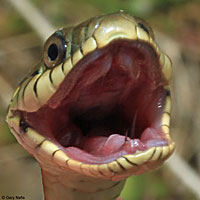
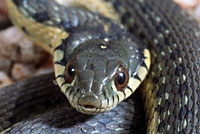
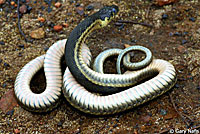
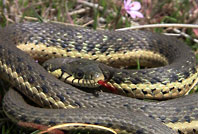
Sub-adult in defensive posture, San Diego County. This snake has flattened its head into a triangular shape to mimic a venomous snake to scare me away. |
 |
 |
 |
 |
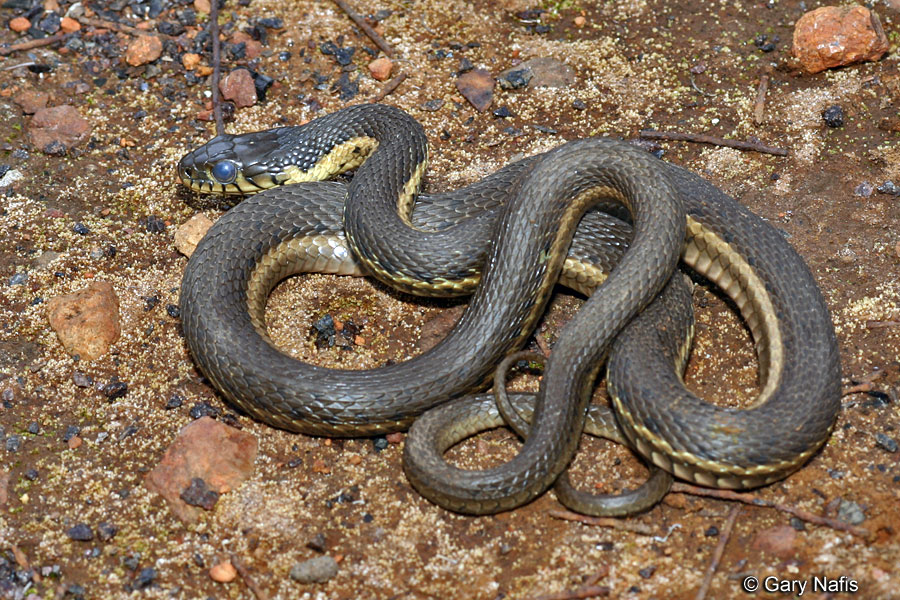
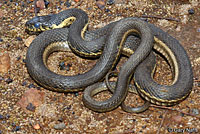
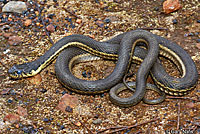
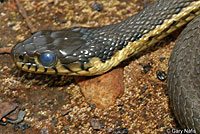
| Adult, coastal San Diego County. Milky blue eyes and dull appearance show it is in the process of shedding its skin. |
 |
 |
 |
 |
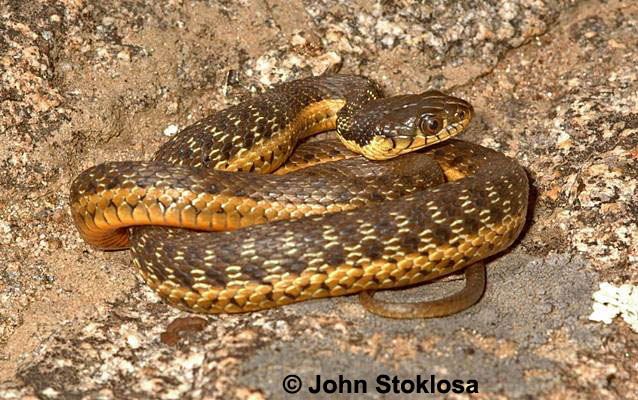
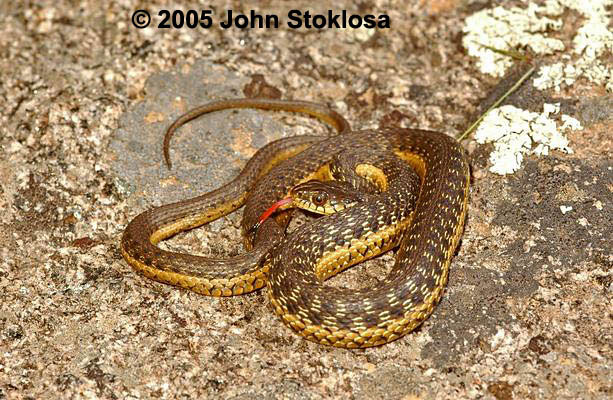
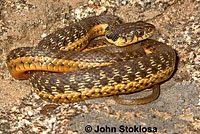
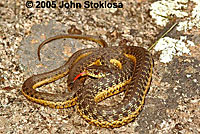
Adult, Laguna Mountains,
San Diego County © John Stoklosa |
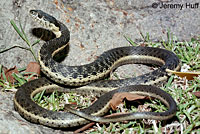
Adult, Ventura County
© Jeremy Huff |
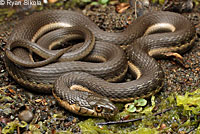
Adult, Santa Barbara County
© Ryan Sikola |
 |
 |
 |
 |
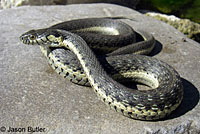
Adult, Santa Barbara County
© Jason Butler |
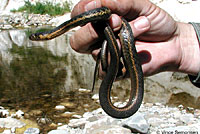
An adult snake with a reddish stripe from just west of the Piru River in Ventura County. © Vince Semonsen |
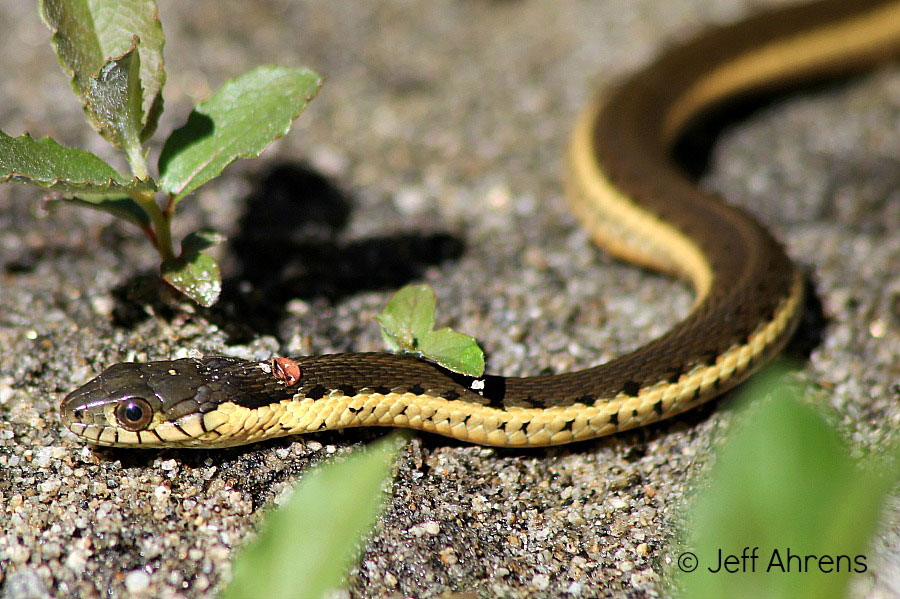
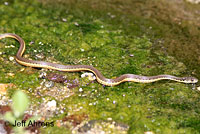
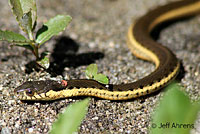
Adult, San Bernardino County © Jeff Ahrens |
 |
 |
 |
 |
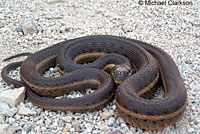
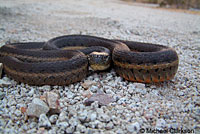
Adult from the Mohave Desert at Victorville,
San Bernardino County © Michael Clarkson |
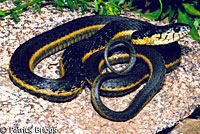
Adult, Ventura County
© Patrick Briggs |
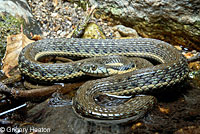
Adult, coastal San Gabriel Mountains, Los Angeles County © Grigory Heaton |
 |
 |
 |
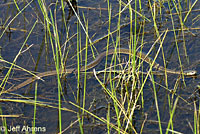 |
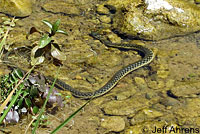
Adult in creek, Orange County
© Jeff Ahrens |
Adult in creek, Orange County
© Jeff Ahrens |
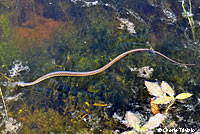
Adult swimming in a flooded meadow in in the San Diego County mountains
© Cherie Trivizo |
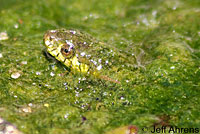
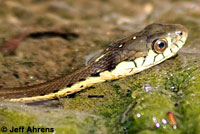
Adult, Riverside County
© Jeff Ahrens |
 |
 |
 |
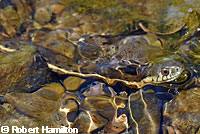 |
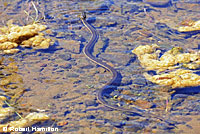
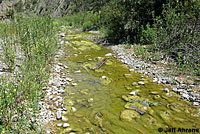
| Adult in creek, San Bernardino County © Jeff Ahrens |
Adult in an Orange County creek © Robert Hamilton |
 |
 |
 |
 |
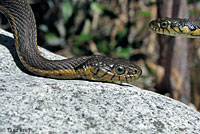
Adults, Santa Ana Mountains,
Orange County © Tadd Kraft |
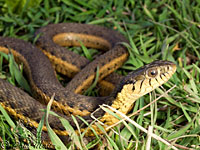
Adult, San Diego County
© Paul Maier |
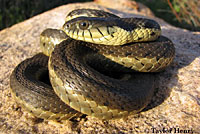
Adult, San Diego County © Taylor Henry |
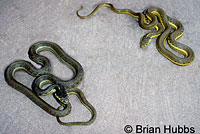
Sub-adults, two color phases,
Ventura County. © Brian Hubbs |
 |
 |
 |
|
Adult, Santa Barbara County
© Ryan Sikola |
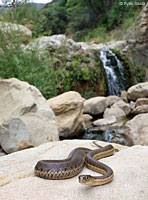
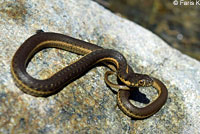
Juvenile, San Benito County © Faris K |
Adult, Santa Barbara County with a broad pale lower stripe similar to a Queen Snake. © Ryan Sikola |
|
 |
 |
|
|
| The Two-striped Gartersnake typically has a single light stripe low on each side of the body but lacks the light stripe on top of the back which is present in most other species of gartersnake found in California. |
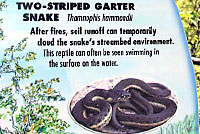
Sign, San Diego County park |
|
|
| |
|
|
|
| Aberrant Snakes - Dark Morphs, Unstriped, Unusual Pigmentation, Unusual Patterns |
 |
 |
 |
 |
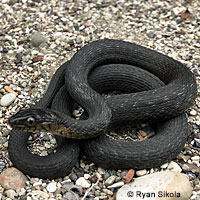
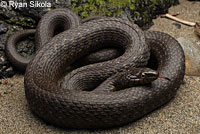
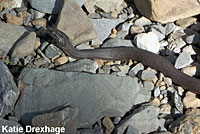
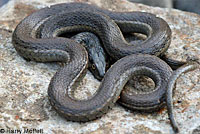
| Melanistic adult without apparent stripes, San Luis Obispo County © Ryan Sikola |
This melanistic adult without stripes Two-striped Gartersnake was observed in San Luis Obispo County. © Ryan Sikola |
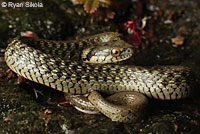
Juvenile, San Luis Obispo County without stripes. Juvenile snakes in this area start out lighter in color with a light belly then get darker with age.
© Ryan Sikola |
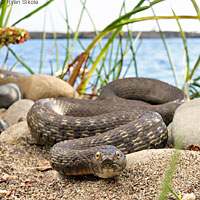
Brown adult without stripes, San Luis Obispo County. © Ryan Sikola |
 |
 |
 |
 |
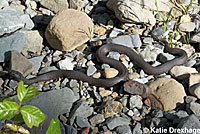
| Melanistic adult without stripes, San Luis Obispo County © Katie Drexhage |
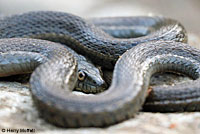
Very dark striped adult, Monterey County © Harry Moffett |
 |
 |
 |
 |
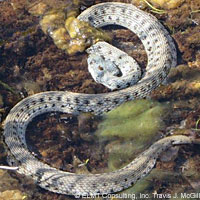
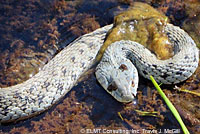
This unusually-pigmented spotted morph was found in Riverside County. It's not an albino, because the eyes are dark, but it is missing some of its normal dark pigment. © ELMT Consulting, Inc. Travis J. McGill
This snake has defensively flattened its head into a triangular shape to make it appear to be venomous. |
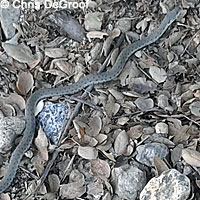
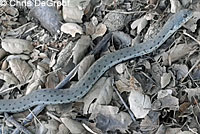
Spotted morph adult from Los Angeles County © Chris DeGroof |
 |
 |
 |
| Brown adult without stripes, Santa Catalina Island, Los Angeles County © Matthias Lemm |
Brown adult without stripes, Santa Catalina Island, Los Angeles County
© Jeff Lemm |
 |
 |
|
|
Brown adults without stripes, Santa Catalina Island, Los Angeles County
© Jeff Lemm |
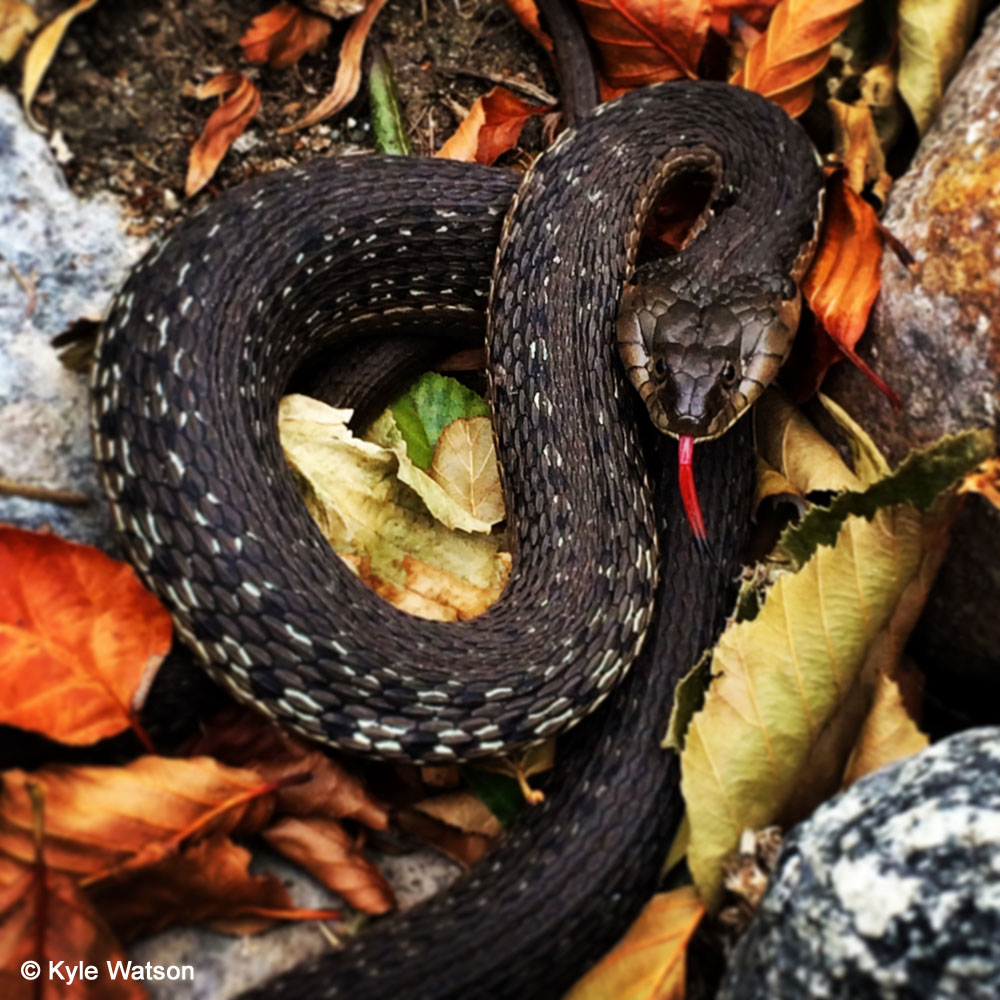
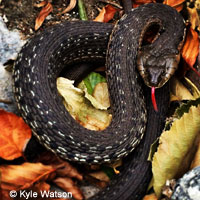
A very dark adult without stripes from the San Gabriel Mountains in San Bernardino County © Kyle Watson This snake has defensively flattened its head into a triangular shape to make it appear to be venomous. |
|
|
| |
|
|
|
| Hybrids |
 |
 |
|
|
Adult, Santa Barbara County
© Ryan Sikola |
Adult, San Luis Obispo County
© Ryan Sikola |
|
|
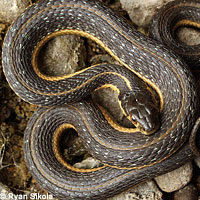
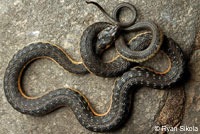
These snake are unusual hybrids of the Two-striped Gartersnake and the Diablo Range Gartersnake, Thamnopis atratus zaxanthus. Note the thin yellow vertebral stripe that is not present on T. hammondii which is much thinner than the stripe found on T. atratus. T. atratus is so scarce at the edge of its range in San Luis Obispo and Santa Barbara counties that they breed with T. hammondii which is more abundant in the area.
|
|
|
| |
|
|
|
| Two-striped Gartersnakes Feeding and Predation |
 |
 |
 |
 |
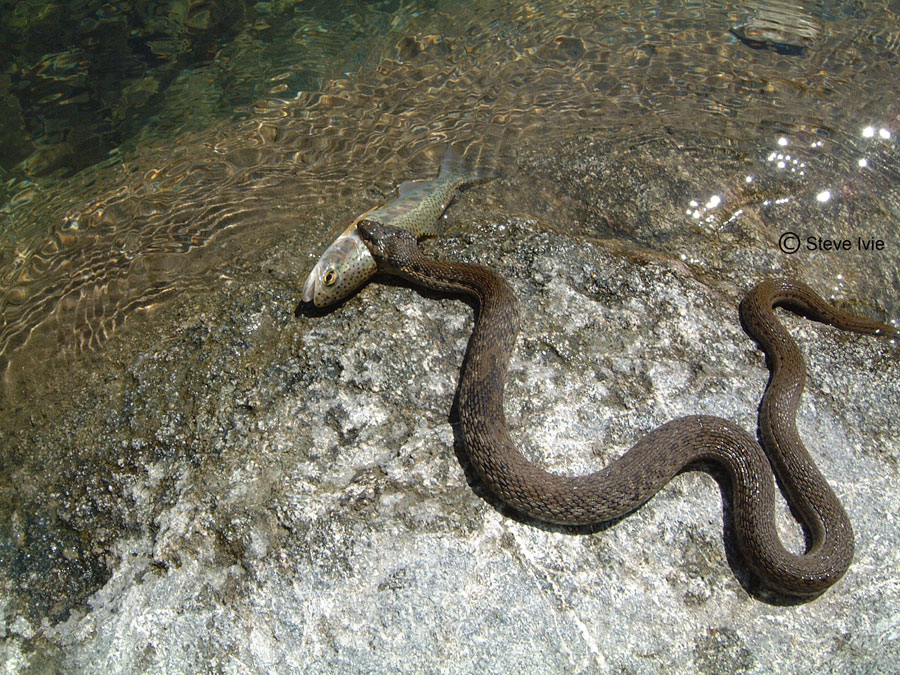
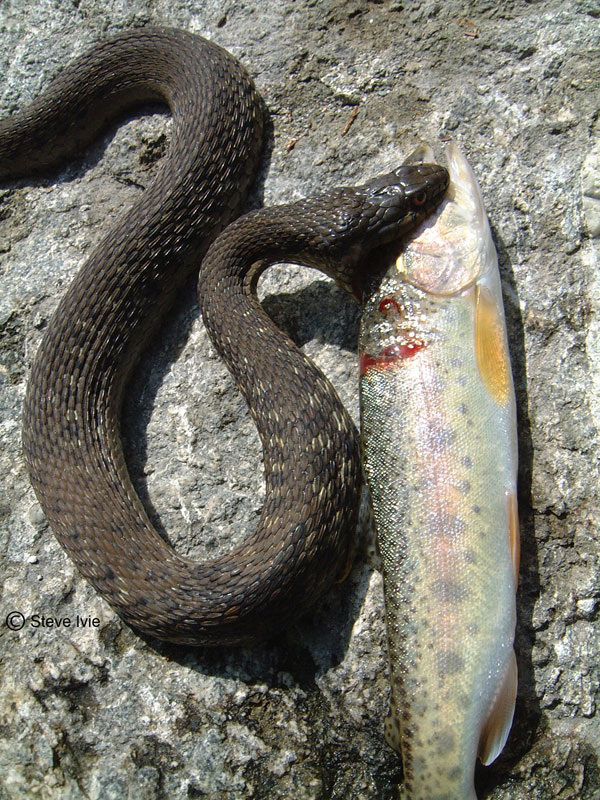
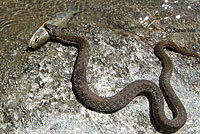
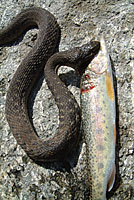
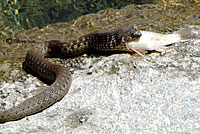
Steve Ivie and his Cub Scout troupe saw this gartersnake enter a river in the San Gabriel Mountains of Los Angeles County. They watched the snake swim upstream and grab a trout about 8 or 9 inches in length, then drag the trout onto a rock at the edge of the river, and eat it, as you can see above. © Steve Ivie
|
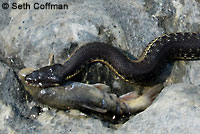
Adult eating a sucker on a rock next to the San Gabriel River, Los Angeles County. © Seth Coffman |
 |
 |
 |
 |
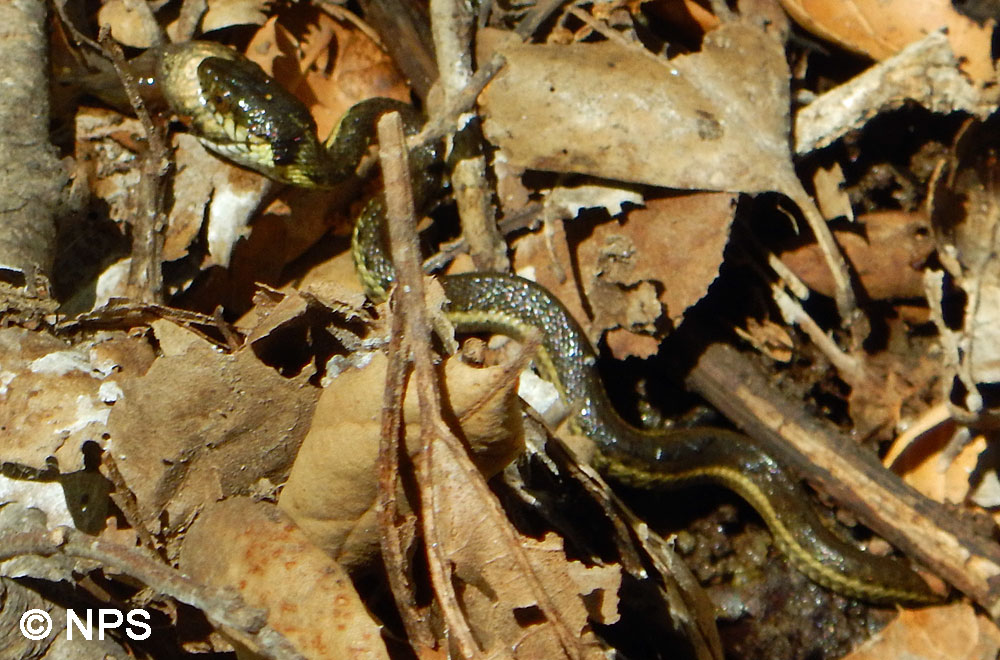
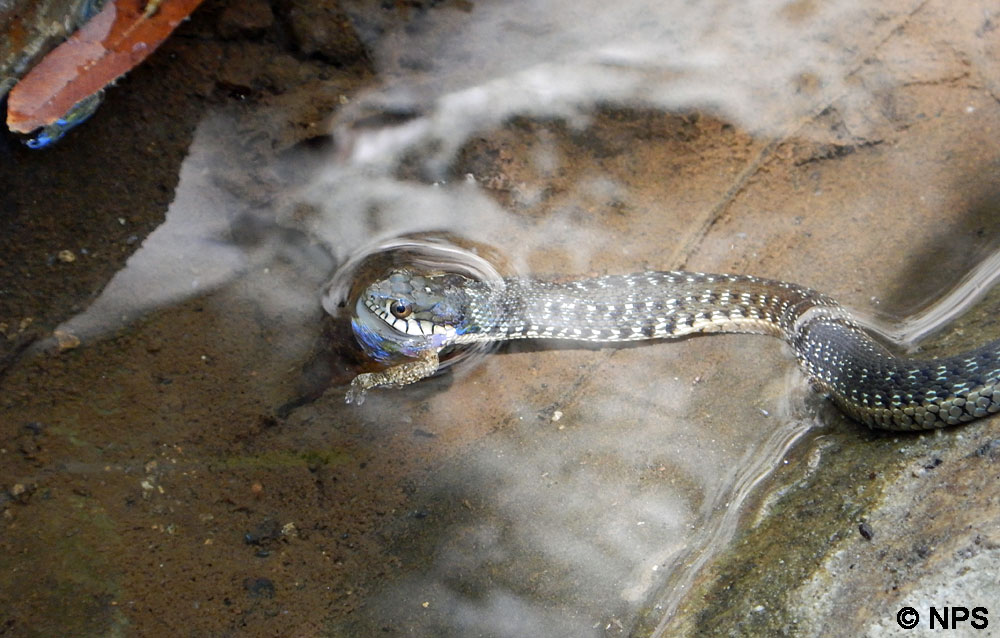
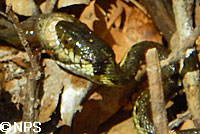
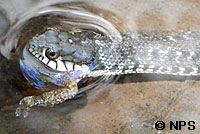
This juvenile snake is eating a Baja California Treefrog tadpole in the
Santa Monica Mountains of Los Angeles County. © NPS |
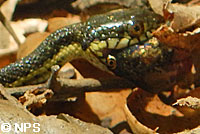
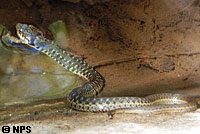
This juvenile snake is eating a young California Treefrog in the Santa Monica Mountains of Los Angeles County. © NPS |
 |
 |
 |
|
 |
 |
 |
|
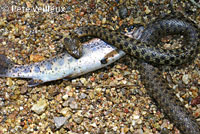
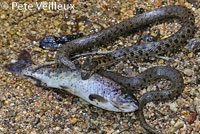
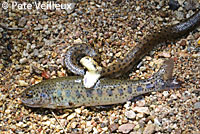
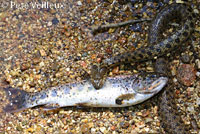
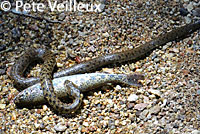
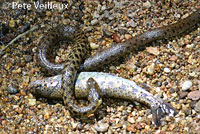
Adult spotted morph T. hammondii eating a trout pulled from a pool in a Monterey County
creek that dried up during the summer of 2014 due to the drought. © Pete Veilleux |
|
 |
 |
 |
 |
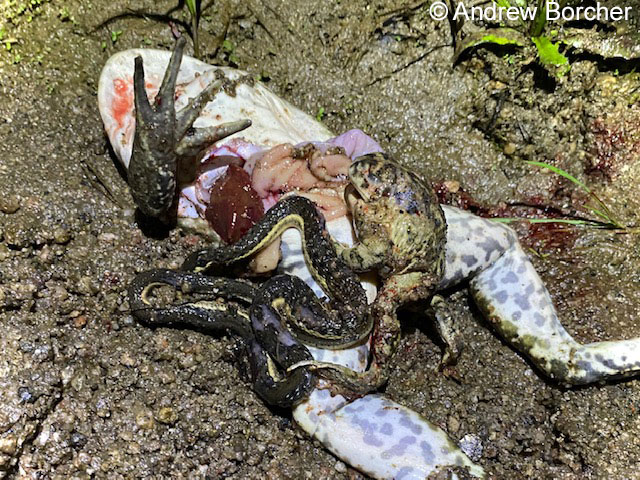
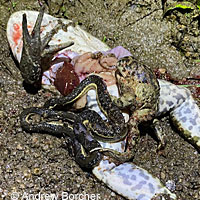
This dead Two-striped Gartersnake was found in San Diego County inside the belly of an American Bullfrog along with an Arroyo Toad which was alive. When put back in the creek, the toad hopped away. © Andrew Borcher
Animals captured and handled under authorization by the California Department of Fish and Wildlife. |
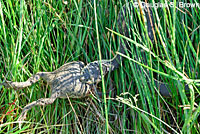
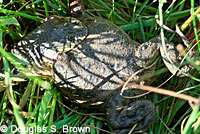
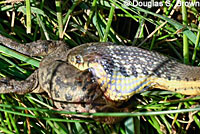
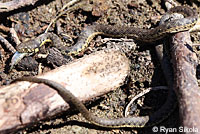
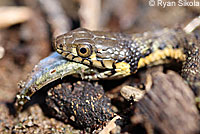
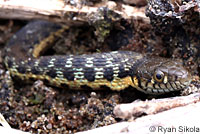
This adult Two-striped Gartersnake was observed eating a California Toad in San Diego County. It took the snake almost 45 minutes to completely swallow the toad, which had puffed its body up to make itself harder to swallow. You can also watch a YouTube video of the event:Two Striped Garter Feeds on a California Toad
© Douglas S. Brown |
 |
 |
 |
|
| A Two-striped Gartersnake eating a Threespine stickleback, Gasterosteus aculeatus, in San Luis Obisp County © Ryan Sikola |
|
| |
|
|
|
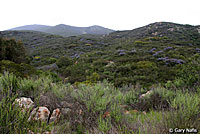
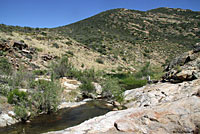
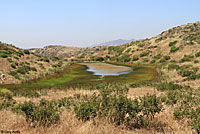
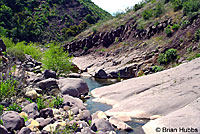
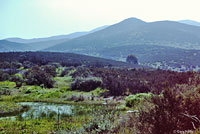
| Habitat |
 |
|
 |
 |
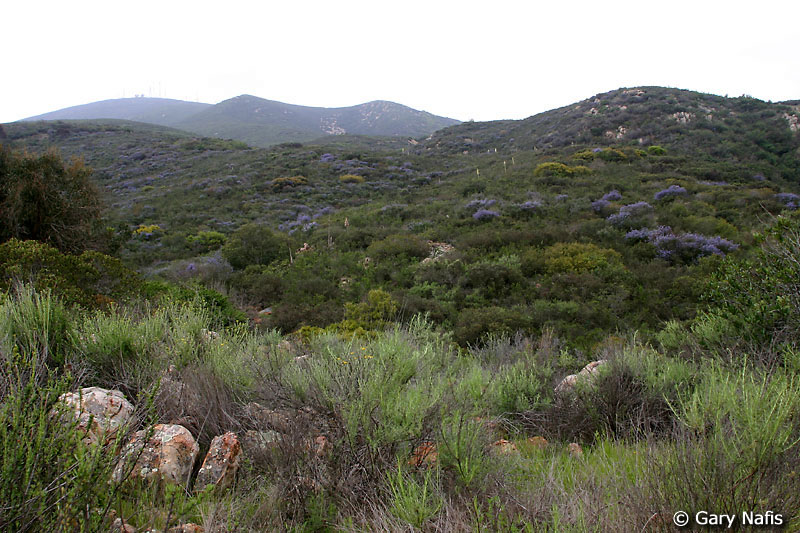
Habitat, coastal sage,
San Diego County |
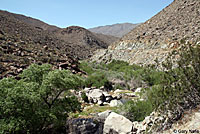
Habitat, desert creek,
San Diego County
|
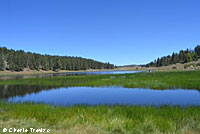
Habitat, flooded meadow in Spring, San Diego County mountains
© Cherie Trivizo |
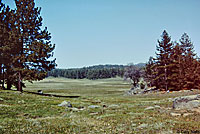
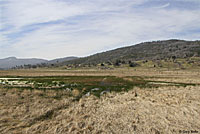
Habitat, San Diego County
mountain meadow |
 |
 |
 |
 |
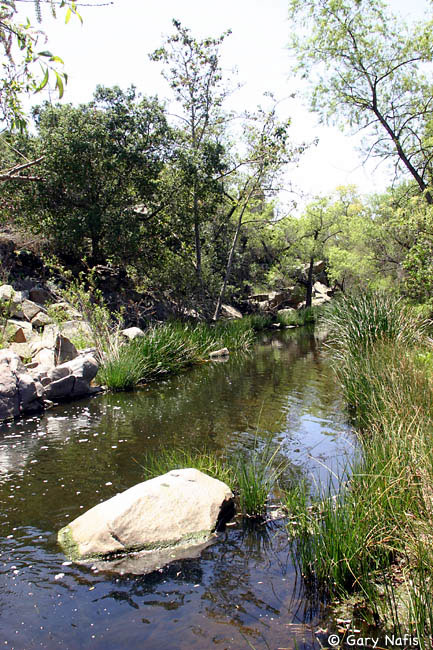
Habitat, coastal stream,
San Diego County
|
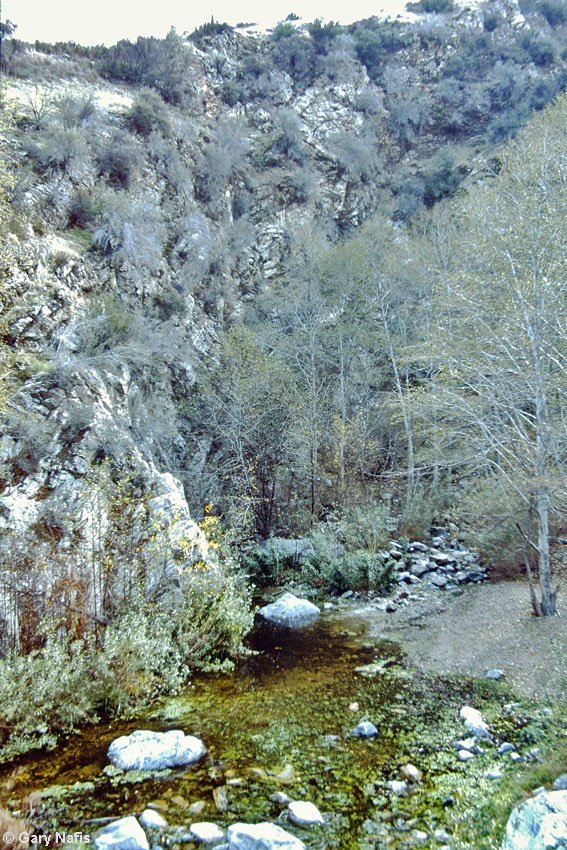
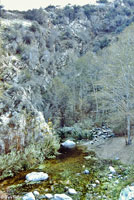
Habitat, San Gabriel Mountains,
Los Angeles County |
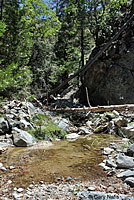
Habitat, creek, 5,200 ft., San Gabriel Mountains, Los Angeles County
|
Habitat, small creek, Orange County
© Jeff Ahrens
|
 |
 |
 |
 |
Habitat, lake edge, 4,600 ft.
San Diego County |
Habitat, mountain creek,
San Diego County |
Habitat, seasonal pond,
San Diego County |
Riparian habitat, Ventura County.
© Brian Hubbs |
 |
 |
 |
|
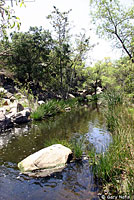
Habitat, small creek,
San Diego County |
Santa Catalina Island © Matthias Lemm |
Santa Catalina Island © Matthias Lemm |
|
| |
|
|
|
| Short Video |
 |
|
|
|
A Two-striped Gartersnake
filmed in San Diego County. |
|
|
|
|
|
|
|
|
Description |
Not Dangerous - This snake may produce a mild venom that does not typically cause death or serious illness or injury in most humans, but its bite should be avoided.
Commonly described as "harmless" or "not poisonous" to indicate that its bite is not dangerous, but "not venomous" is more accurate since the venom is not dangerous. (A poisonous snake can hurt you if you eat it. A venomous snake can hurt you if it bites you.)
Long-considered non-venomous, discoveries in the early 2000s revealed that gartersnakes produce a mild venom that can be harmful to small prey but is not considered dangerous to most humans, although a bite may cause slight irritation and swelling around the puncture wound. Enlarged teeth at the rear of the mouth are thought to help spread the venom.
|
| Size |
24 - 40 inches long (61 - 102 cm). Most often 18 - 30 inches long (46 - 76 cm).
Neonates are 7.5 - 9 inches (19 - 23 cm).
|
| Appearance |
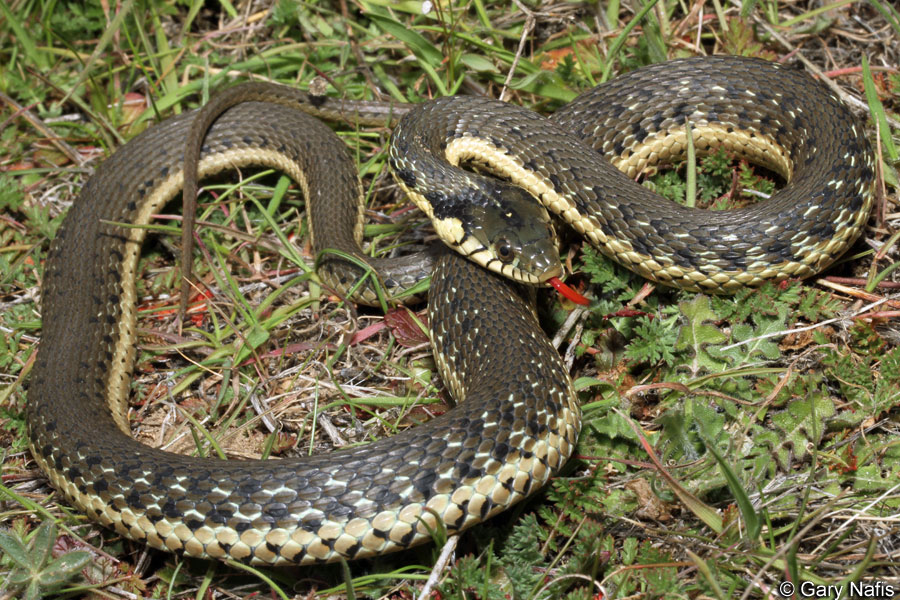
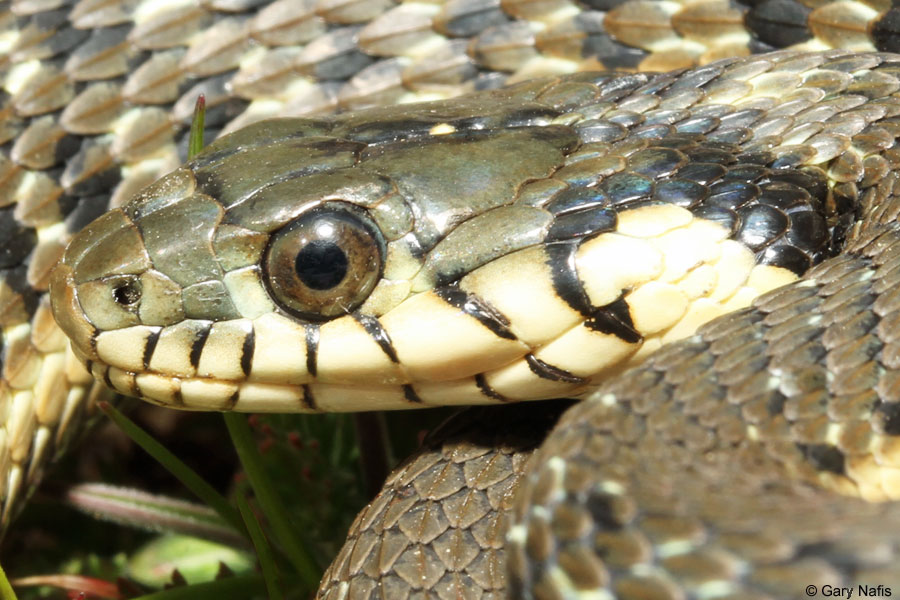
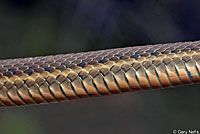
| A medium-sized snake with a head barely wider than the neck and keeled dorsal scales. |
| Color and Pattern |
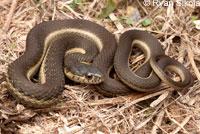
Appearance is variable - there are two basic pattern morphs - striped, and spotted.
Both have a drab olive, brown, or dark gray ground color, with no dorsal stripe, except for a partial stripe on the neck.
The striped morph has a yellowish to gray lateral stripe on each side, and a fairly uniform dorsal coloring, with only faint spotting.
The spotted morph has two rows of small dark spots on each side and lateral stripes are often not present.
Light areas between the scales between the rows of dark spots can create a checkered appearance.
The underside is pale yellow or orange, unmarked, or with dark smudging.
"Black individuals, sometimes with obscure or without laterals stripes, or even spots..." are found along the outer coast in San Luis Obispo County, and can be expected from Monterey Bay to Santa Barbara County. (Stebbins, 2003)
A dark green and a reddish color morph occur along the Piru River in Ventura County. (Stebbins, 2003)
A melanistic population occurs on Catalina Island. (See info below)
|
Key to Identifying California Gartersnake Species
|
| Life History and Behavior |
Primarily aquatic.
Diurnal.
Also active at night and at dusk during hot weather in some areas.
Can be active most of the year depending on weather conditions. Has been found from January to November.
|
| Defense |
Like most gartersnakes, when picked up, will often strike repeatedly and release cloacal contents and musk.
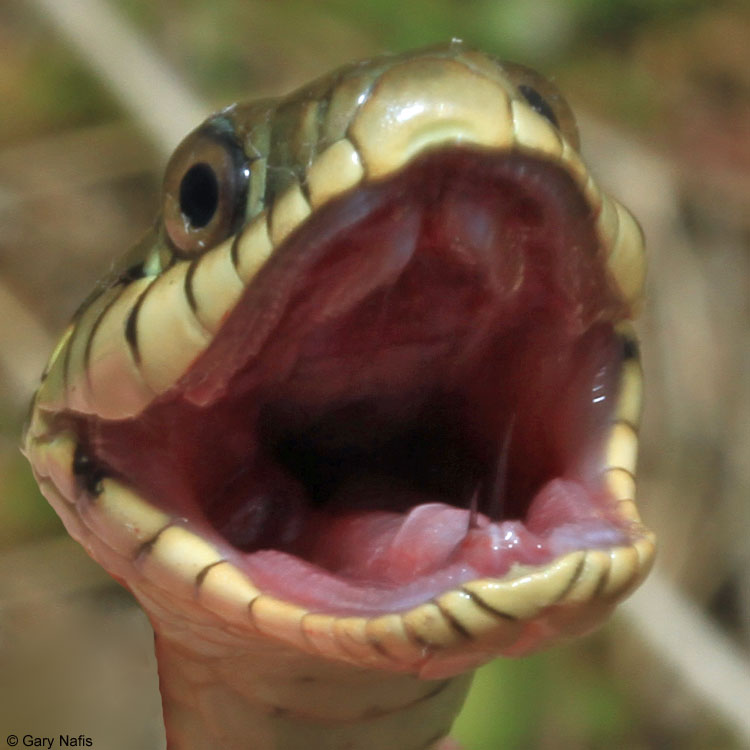
When threatened, some Two-striped Gartersnakes assume a defensive pose with the head flattened into a triangular shape that makes it look like the head of a venomous snake, such as a rattlesnake, to scare away the threat. |
| Diet and Feeding |
Eats fish, fish eggs, tadpoles, newt larvae, small frogs and toads, leeches, and earthworms.
Garden Slender Salamanders - Batrachoseps major (and their detached tails) and aquatic leeches hava also been found in the stomach contents of T. hammondii. (Edward L. Irvin, et al. Herpetological Review 34)1), 2003.
Forages for food in and under water.
An adult T. hammondii was observed in an underwater ambush position about 15 cm below the surface, compressing its body into side-by-side loops while using its tail to anchor itself in stable aquatic vegetation. From this position it periodically quickly lunged forward at its prey. (Edward L. Ervin and Robert N. Fisher, Herpetological Review 38(3), 2007.
|
| Reproduction |
Mating has been observed in late March and early April.
Females are ovoviviparous. After mating with a male they carry the eggs internally until the young are born live.
An average litter of about 15 live young are born from July to October.
Females are known to store sperm for later use.
|
| Habitat |
Among the most aquatic of the gartersnakes. Generally found near water sources - pools, creeks, cattle tanks, and others, often in rocky areas. Associated vegetation: oak woodland, willow, coastal sage scrub, scrub oak, sparse pine, chaparral, and brushland.
|
| Geographical Range |
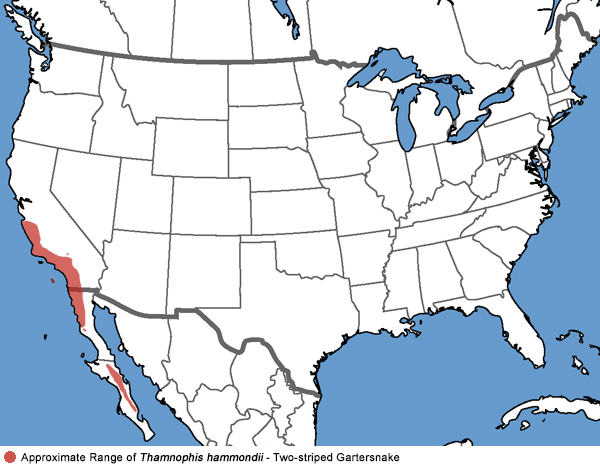
Ranges continuously from near Salinas in Monterey County south along the coast mostly west of the south Coast Ranges, to southern California where it ranges east through the Transverse Ranges, and south through the coastal area and the Peninsular Ranges into northern Baja California. Occurs in some perennial desert slope streams north of the Transverse Ranges and east of the Peninsular Ranges, and into the Mohave Desert in Victorville. Also occurs on Catalina Island.
Occurs along the western part of northern Baja California, and in parts of Baja California Sur.
|
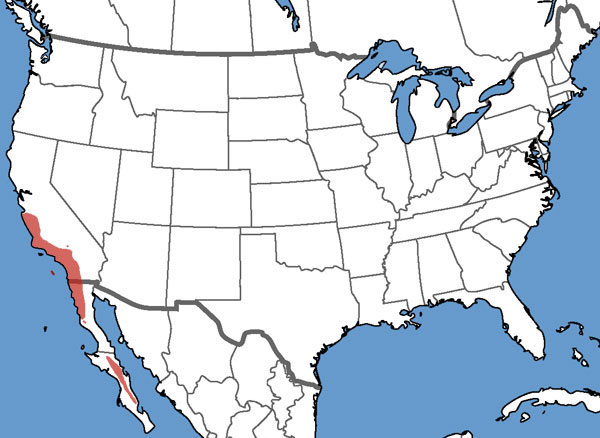 |
Range shown in red
|
| Elevational Range |
At elevations from sea Level to 6,988 ft. (2130 m).
|
| Notes on Taxonomy |
Formerly classified as a subspecies of Thamnophis couchii.
------------------------------------------------------------------------------------------------------------------------------------------------------------------------------------------------------------------------------
T. digueti was synonymized with T. hammondii by McGuire and Grismer (1993, Herpetologica 49:354-365).
------------------------------------------------------------------------------------------------------------------------------------------------------------------------------------------------------------------------------
Santa Catalina Island
Two-striped Gartersnakes
Two-striped Gartersnakes - Thamnophis hammondii, that inhabit Santa Catalina Island have been classified as a separate subspecies by some researchers, but recognition of this subspecies is not common.
"...the garter snakes on Santa Catalina Island look very different from mainland two-striped garters. Actually, the name "two-striped,'' which has been applied to the subspecies hammondi, is totally inappropriate for island specimens, which lack any markings whatever. Instead, they are a uniform olive-brown on top; their undersides are also olive-brown, but slightly clouded with orange. Only their chins, lip scales, and throats are pale olive-buff. By. contrast, most mainland specimens are blackish-brown on top with a well-defined yellow stripe along each side. Their lips, chins, and undersides are usually buff-yellow, Occasionally, a dark mainland snake can be found which approaches the coloration of the island specimens, but this is atypical. Aside from coloration, island and mainland forms seem basically alike. Meristics of the Santa Catalina examples fall within the range of hammondi as a whole. "
"For 33 years, only two specimens of the garter snake (Thamnophis couchi hammondi) were recorded for Santa Catalina Island and the status of this species remained unknown. In August 1974, a small population was discovered in the stream and reservoir in Cottonwood Canyon.
The species apparently occurs nowhere else on the island. Unlike most two-striped mainland specimens, garter snakes on Santa Catalina lack any pattern, being a uniform olive-brown with pale buff lips and chins. In this respect they most closely resemble a different species from central Baja California and a conspecific population near Lompoc on the California mainland.
The ecology of Cottonwood and other stream canyons on Santa Catalina is discussed, as are human impacts on garter snakes, and recommendations for conservation measures.
Finally, rafting is proposed as a mechanism by which garter snakes from the Lompoc region might have founded the population on Santa Catalina Island."
Brown, Timothy W. The Present Status of the Garter Snake on Santa Catalina Island, California. In: 2nd California Islands Multidisciplinary Symposium. 1978. 585-595.
------------------------------------------------------------------------------------------------------------------------------------------------------------------------------------------------------------------------------
Alternate and Previous Names (Synonyms)
Thamnophis hammondii - Two-striped Garter Snake (Stebbins 1985, 2003, 2012)
Thamnophis couchi hammondii - Two-striped Garter Snake (Stebbins 1966)
Thamnophis elegans hammondii (Stebbins 1954)
Thamnophis elegans hammondii - Southern California garter snake (Klauber 1934)
Thamnophis ordinoides hammondii - California Garter Snake (Eutaenia Hammondii; Eutaenia couchii, part; Eutaenia elegans couchii, part; Tropidonotus ordinatus var. hammondii; Tropidonotus ordinatus; Eutaenia mardiana, part; Tropidonotus vagrans. Hammond's Garter Snake, part; Water Snake; Couch's Garter Snake; Marcy's Garter Snake, part) (Grinnell and Camp 1917)
California garter snake (Van Denburgh 1897)
Thamnophis hammondii - (Kennicott, 1860)
Pacific garter snake;
Water snake
|
| Conservation Issues (Conservation Status) |
Designated a California Species of Special Concern and protected by the state.
Loss of wetland habitats have contributed to a reduction in the range of this snake.
Declines in population of the species have been attributed to human impacts, including urban development and flood control in the southern part of its range, and habitat modification by livestock, drought, loss of native prey and predation by alien species in its northern range.
(Jennings and Hayes 1994)
"...restoration of aquatic habitat and supplementation with artificial wetlands should be explored as a management option in extirpated sites." Terrestrial habitat surrounding the aquatic habitats, especially rodent burrows, are utilized for overwintering and should also be protected.
(Thomson, Wright, and Shaffer, 2016)
There is a description and conservation status summary of this taxon with a dot-locality distribution map in an online .pdf from the California Department of Fish and Wildlife book California Amphibian and Reptile Species of Special Concern (Thomson, Wright, and Shaffer 2016). Below are some of the threats to this species discussed in the book:
"Declines in the south are thought to be due to urbanization, reservoir construction, and flood control (Jennings and Hayes 1994a). Further north, declines are suspected to have been caused by a combination of factors including habitat modification by livestock, predation by introduced vertebrates, loss of native prey, and drought (Jennings and Hayes 1994a). However, negative interactions with nonnative species have not been well documented, and in some cases T. hammondii may benefit from availability of introduced prey. Reliance on aquatic habitat and prey may contribute to drought sensitivity in this species."
"Thamnophis hammondii has undergone declines and extirpations and occurs in an area of high human population density and development, resulting in a Priority 2 Species of Special Concern status."
|
|
| Taxonomy |
| Family |
Colubridae |
Colubrids |
Oppel, 1811 |
| Genus |
Thamnophis |
North American Gartersnakes |
Fitzinger, 1843 |
Species
|
hammondii |
Two-striped Gartersnake |
(Kennicott, 1860) |
|
Original Description |
Thamnophis hammondii - (Kennicott, 1860) - Proc. Acad. Nat. Sci. Philadelphia, Vol. 12, p. 332
from Original Description Citations for the Reptiles and Amphibians of North America © Ellin Beltz
|
|
Meaning of the Scientific Name |
Thamnophis - Greek - thamnos = shrub or bush + ophis = snake, serpent
hammondii - honors Hammond, William A.
from Scientific and Common Names of the Reptiles and Amphibians of North America - Explained © Ellin Beltz
|
|
Alternate Names |
None
|
| Other California Gartersnakes |
T. a. atratus - Santa Cruz Gartersnake
T. a. hydrophilus - Oregon Gartersnake
T. a. zaxanthus - Diablo Range Gartersnake
T. couchii - Sierra Gartersnake
T. gigas - Giant Gartersnake
T. e. elegans - Mountain Gartersnake
T. e. terrestris - Coast Gartersnake
T. e. vagrans - Wandering Gartersnake
T. m. marcianus - Marcy's Checkered Gartersnake
T. ordinoides - Northwestern Gartersnake
T. s. fitchi - Valley Gartersnake
T. s. infernalis - California Red-sided Gartersnake
T. s. tetrataenia - San Francisco Gartersnake
|
|
More Information and References |
California Department of Fish and Wildlife
There is a description and conservation status summary of this taxon with a dot-locality distribution map in an online .pdf from the California Department of Fish and Wildlife book California Amphibian and Reptile Species of Special Concern (Thomson, Wright, and Shaffer 2016).
Rossman, Douglas A., Neil B, Ford, & Richard A. Siegel. The Garter Snakes - Evolution and Ecology. University of Oklahoma press, 1996.
Robert C. Thomson, Amber N. Wright, and H. Bradley Shaffer. California Amphibian and Reptile Species of Special Concern. University of California Press, 2016.
Mark R. Jennings and Marc P. Hayes. Amphibian and Reptile Species of Special Concern in California. Report to California Department of Fish and Game. 1994.
Hansen, Robert W. and Shedd, Jackson D. California Amphibians and Reptiles. (Princeton Field Guides.) Princeton University Press, 2025.
Stebbins, Robert C., and McGinnis, Samuel M. Field Guide to Amphibians and Reptiles of California: Revised Edition (California Natural History Guides) University of California Press, 2012.
Stebbins, Robert C. California Amphibians and Reptiles. The University of California Press, 1972.
Flaxington, William C. Amphibians and Reptiles of California: Field Observations, Distribution, and Natural History. Fieldnotes Press, Anaheim, California, 2021.
Nicholson, K. E. (ed.). 2025. Scientific and Standard English Names of Amphibians and Reptiles of North America North of Mexico, with Comments Regarding Confidence in Our Understanding. Ninth Edition. Society for the Study of Amphibians and Reptiles. [SSAR] 87pp.
Samuel M. McGinnis and Robert C. Stebbins. Peterson Field Guide to Western Reptiles & Amphibians. 4th Edition. Houghton Mifflin Harcourt Publishing Company, 2018.
Stebbins, Robert C. A Field Guide to Western Reptiles and Amphibians. 3rd Edition. Houghton Mifflin Company, 2003.
Behler, John L., and F. Wayne King. The Audubon Society Field Guide to North American Reptiles and Amphibians. Alfred A. Knopf, 1992.
Robert Powell, Roger Conant, and Joseph T. Collins. Peterson Field Guide to Reptiles and Amphibians of Eastern and Central North America. Fourth Edition. Houghton Mifflin Harcourt, 2016.
Powell, Robert., Joseph T. Collins, and Errol D. Hooper Jr. A Key to Amphibians and Reptiles of the Continental United States and Canada. The University Press of Kansas, 1998.
Bartlett, R. D. & Patricia P. Bartlett. Guide and Reference to the Snakes of Western North America (North of Mexico) and Hawaii. University Press of Florida, 2009.
Bartlett, R. D. & Alan Tennant. Snakes of North America - Western Region. Gulf Publishing Co., 2000.
Brown, Philip R. A Field Guide to Snakes of California. Gulf Publishing Co., 1997.
Ernst, Carl H., Evelyn M. Ernst, & Robert M. Corker. Snakes of the United States and Canada. Smithsonian Institution Press, 2003.
Taylor, Emily. California Snakes and How to Find Them. Heyday, Berkeley, California. 2024.
Wright, Albert Hazen & Anna Allen Wright. Handbook of Snakes of the United States and Canada. Cornell University Press, 1957.
Joseph Grinnell and Charles Lewis Camp. A Distributional List of the Amphibians and Reptiles of California. University of California Publications in Zoology Vol. 17, No. 10, pp. 127-208. July 11, 1917.
|
|
|
The following conservation status listings for this animal are taken from the July 2025 State of California Special Animals List and the July 2025 Federally Listed Endangered and Threatened Animals of California list (unless indicated otherwise below.) Both lists are produced by multiple agencies every year, and sometimes more than once per year, so the conservation status listing information found below might not be from the most recent lists, but they don't change a great deal from year to year.. To make sure you are seeing the most recent listings, go to this California Department of Fish and Wildlife web page where you can search for and download both lists:
https://www.wildlife.ca.gov/Data/CNDDB/Plants-and-Animals.
A detailed explanation of the meaning of the status listing symbols can be found at the beginning of the two lists. For quick reference, I have included them on my Special Status Information page.
If no status is listed here, the animal is not included on either list. This most likely indicates that there are no serious conservation concerns for the animal. To find out more about an animal's status you can also go to the NatureServe and IUCN websites to check their rankings.
Check the current California Department of Fish and Wildlife sport fishing regulations to find out if this animal can be legally pursued and handled or collected with possession of a current fishing license. You can also look at the summary of the sport fishing regulations as they apply only to reptiles and amphibians that has been made for this website.
The 2019 Special Animals List lists the population on Santa Catalina Island as a separate subspecies, Thamnophis hammondii pop. 1. - Santa Catalina gartersnake. The listing for pop. 1 of this snake is shown below the listings for the main populations of T. hammondii.
These are the listings for Thamnophis hammondii - Two-striped Gartersnake:
|
| Organization |
Status Listing |
Notes |
| NatureServe Global Ranking |
G4 |
Apparently Secure |
| NatureServe State Ranking |
S3S4
|
Vulnerable-Apparently Secure
|
| U.S. Endangered Species Act (ESA) |
None |
|
| California Endangered Species Act (CESA) |
None |
|
| California Department of Fish and Wildlife |
SSC |
Species of Special Concern |
| Bureau of Land Management |
S |
Sensitive |
| USDA Forest Service |
S |
Sensitive |
| IUCN |
LC |
Least Concern |
These are the listings for Thamnophis hammondii pop.1 - Santa Catalina Gartersnake: |
Organization
|
Status Listing |
Notes |
| NatureServe Global Ranking |
G4
T1? |
The species is: Apparently Secure.
This subspecies is Critically Imperiled?
|
| NatureServe State Ranking |
S1 |
Critically imperiled |
| U.S. Endangered Species Act (ESA) |
None |
|
| California Endangered Species Act (CESA) |
None |
|
| California Department of Fish and Wildlife |
None |
|
| Bureau of Land Management |
None |
|
| USDA Forest Service |
None |
|
| IUCN |
None |
|
|
|