|
 |
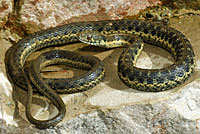
| Sub-adult, Sierra County |
 |
 |
 |
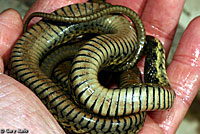
| Adult, 300 ft., Yuba County 6,000 |
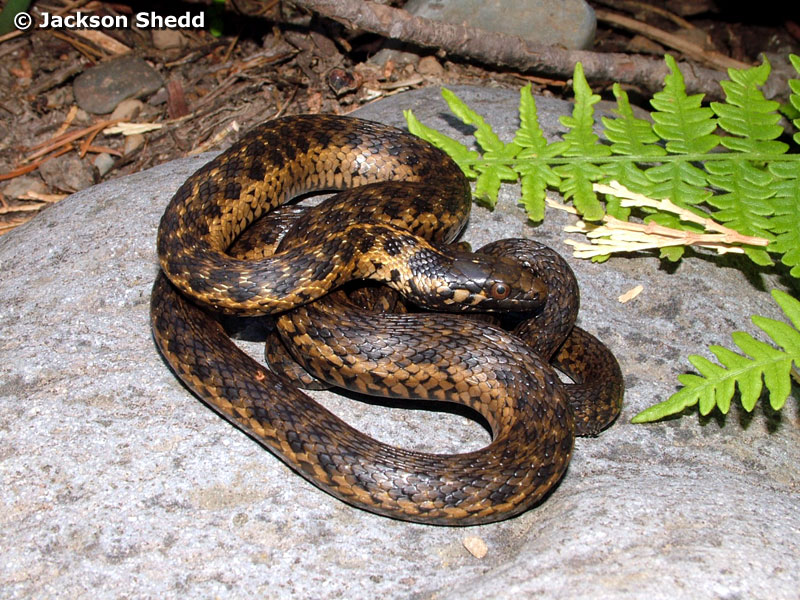
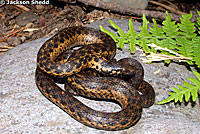
Adult, Butte County
© Jackson Shedd |
|
 |
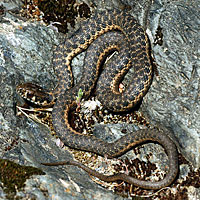 |
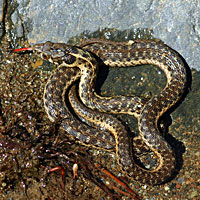
| Adult, 2,600 ft., Sierra County |
Adult, Sierra County |
 |
 |
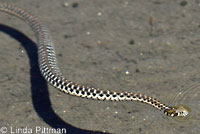 |
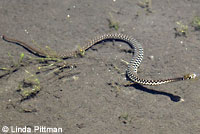
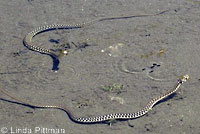
| Adults in an Amador County reservoir © Linda Pittman |
 |
 |
 |
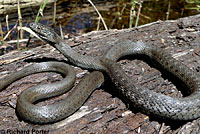
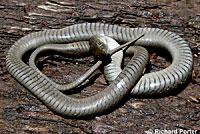
| Adult, El Dorado County © Richard Porter |
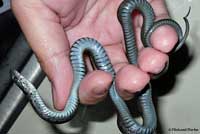
Dark snake from El Dorado County with bluish belly. © Richard Porter |
 |
 |
 |
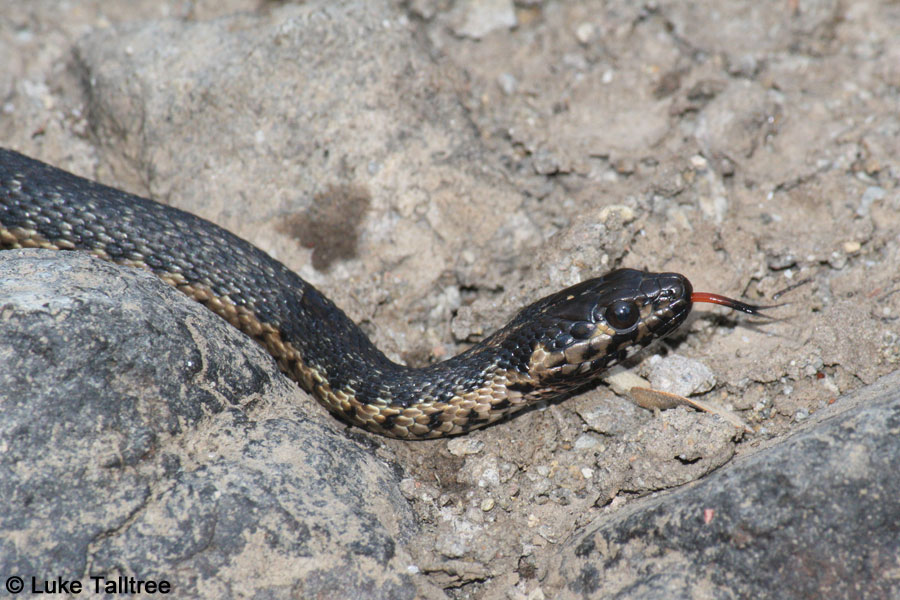
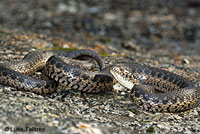
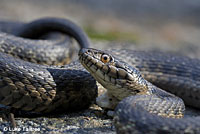
| Adult, El Dorado County © Luke Talltree |
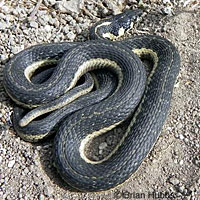
Adult from the Tehachapi Mountains, Los Angeles County, where the species is sympatric with the Two-striped Gartersnake, T. hammondii
© Brian Hubbs
|
 |
 |
 |
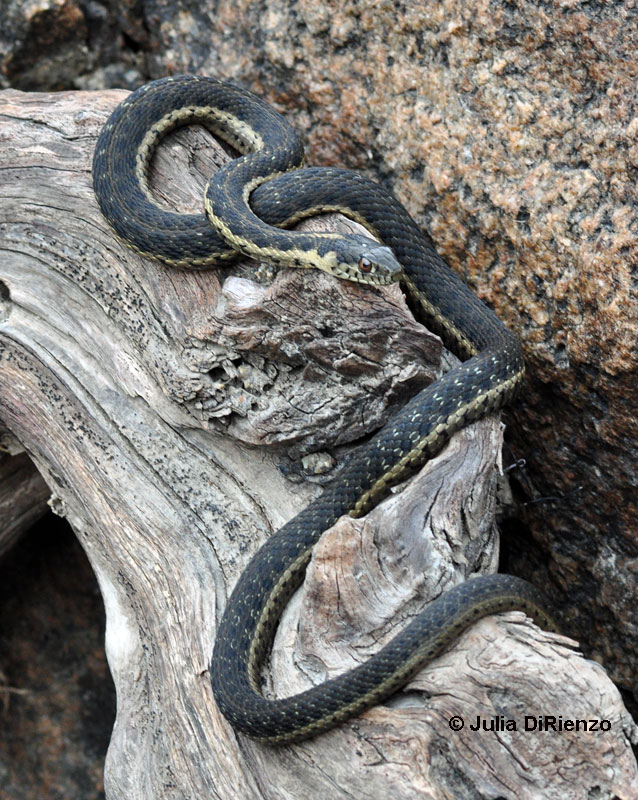
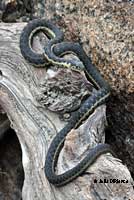
Adult, Walker River, Mono County
© Julia DiRienzo |
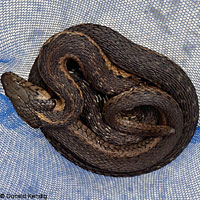
Adult, Fresno County
© Donald Kendig
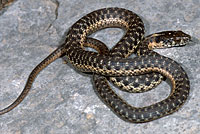
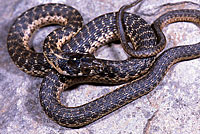
The triangular head of a large adult Sierra Gartersnake such as this one sometimes makes it appear to be a venomous snake.
|
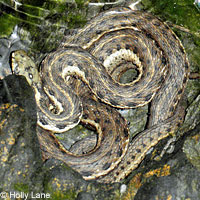
Startled when sunning itself on a rock by a creek, this adult Sierra Gartersnake dove into a pool then curled up in a shallow depression in a rock just below the surface of the water in Mariposa County. © Holly Lane |
 |
 |
 |
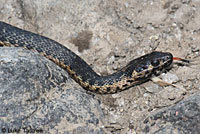
| Sub-adult, Sierra County |
Sub-adult, Sierra County |
Sub-adult, Sierra County |
 |
 |
 |
| Adult, Shasta County © Luke Talltree |
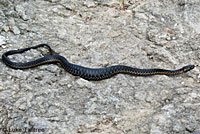
Sub-adult, Sierra County |
| |
 |
|
| |
Sub-adult, Sierra County |
|
| |
|
|
| Juveniles |
 |
 |
|
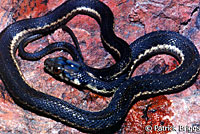
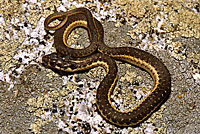
Juvenile, Tulare County
© Patrick Briggs |
Juvenile, 4,500 ft., Kern County |
|
| |
|
|
| Feeding |
 |
 |
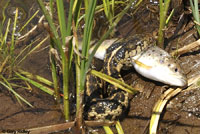 |
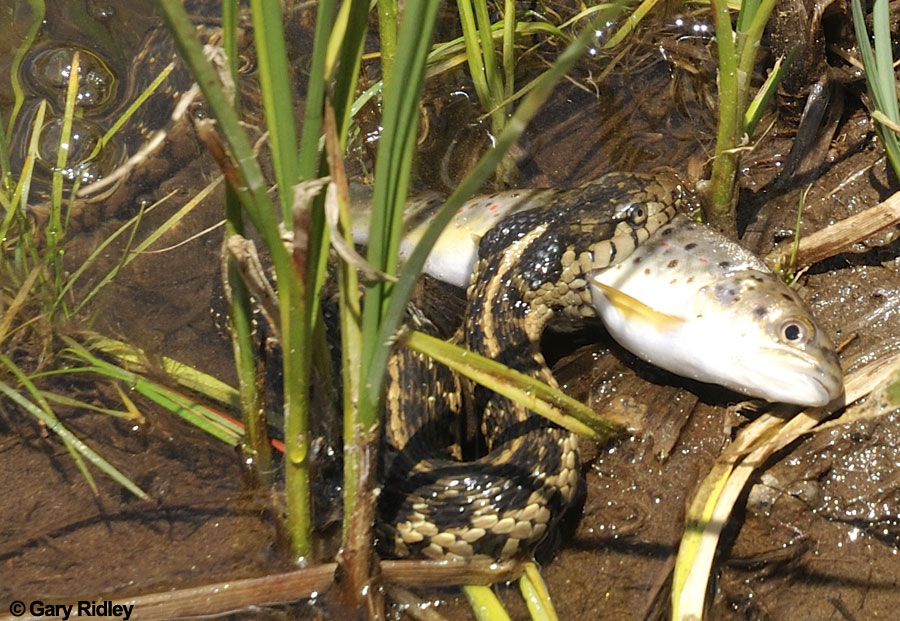
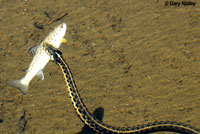
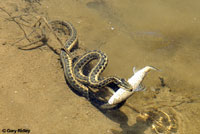
| This adult Sierra Gartersnake saw a brown trout rising in a creek in
El Dorado County, raced across the creek, grabbed the trout, and dragged it to the shore. Fortunately for us Gary Ridley © got it on his camera. |
| |
 |
|
| |
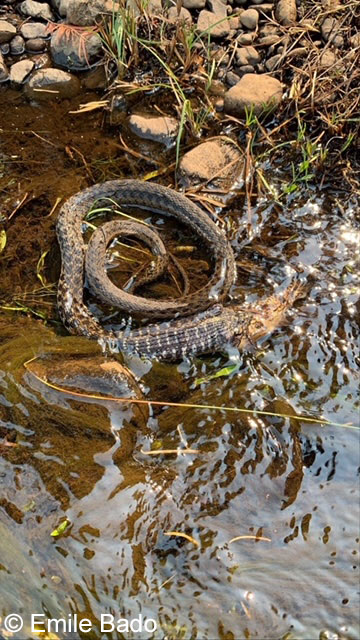
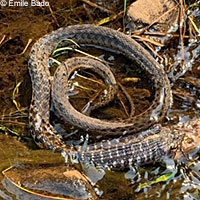
Large adult eating a rainbow trout, Tuolumne County © Emile Bado |
|
| |
| Habitat |
 |
 |
 |
Habitat, mountain river, 2,600 ft.,
Sierra County |
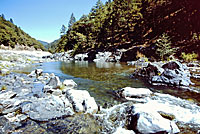
Habitat, stream flowing from the eastern Sierras, 4,200 ft., Inyo County |
Habitat, creek, 5,600 ft.
Tuolumne County |
 |
 |
 |
Habitat, mountain river, 2,600 ft.,
Sierra County |
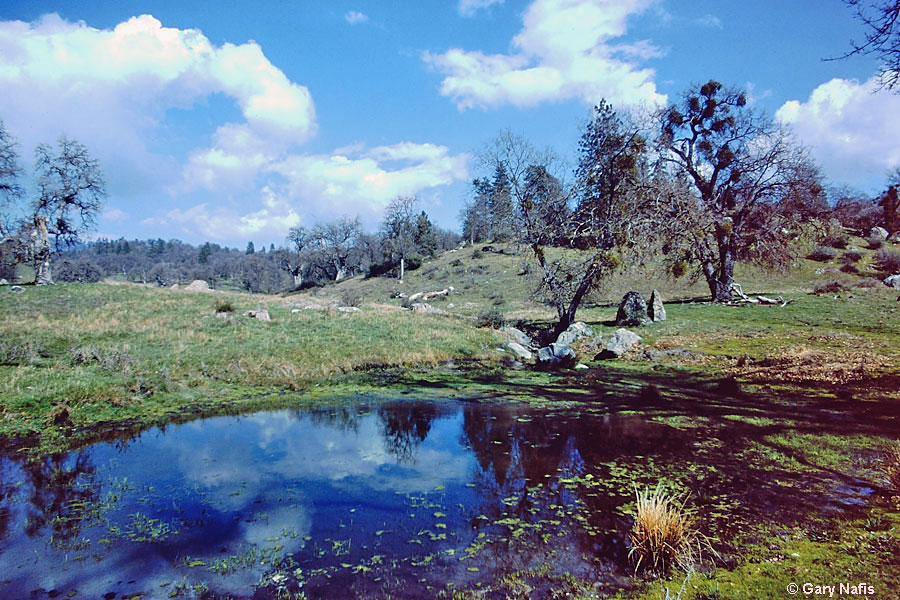
Habitat, mountain pond, 4,500 ft.,
Kern County |
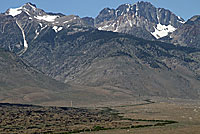
Habitat, creek flowing from east side of the Sierra Nevada Mountains,
Inyo County
|
 |
 |
|
| Snake in habitat, Yuba County |
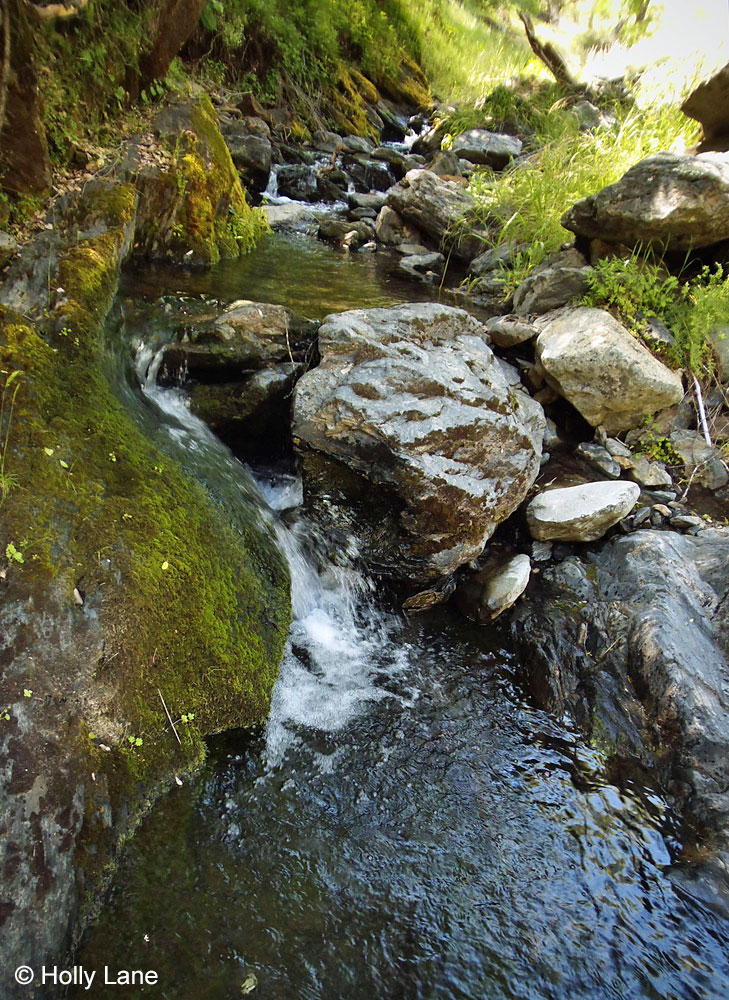
Habitat, small creek at 1,100 ft. elevation, Mariposa County
© Holly Lane |
|
| |
|
|
| Short Video |
| |
 |
|
| |
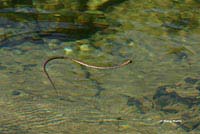
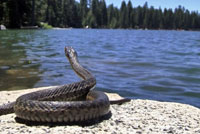
A Sierra Gartersnake crawls and swims in a Tuolumne County lake. |
|
|
|
|
|
Description |
Not Dangerous - This snake may produce a mild venom that does not typically cause death or serious illness or injury in most humans, but its bite should be avoided.
Commonly described as "harmless" or "not poisonous" to indicate that its bite is not dangerous, but "not venomous" is more accurate since the venom is not dangerous. (A poisonous snake can hurt you if you eat it. A venomous snake can hurt you if it bites you.)
Long-considered non-venomous, discoveries in the early 2000s revealed that gartersnakes produce a mild venom that can be harmful to small prey but is not considered dangerous to most humans, although a bite may cause slight irritation and swelling around the puncture wound. Enlarged teeth at the rear of the mouth are thought to help spread the venom.
|
| Size |
18 - 38 inches long (46 - 96 cm). Neonates are 5 - 6.5 inches long (12.7 - 16.5 cm).
|
| Appearance |
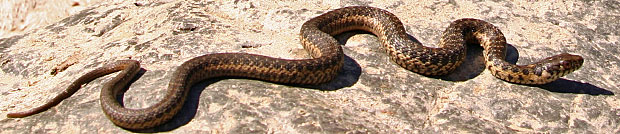
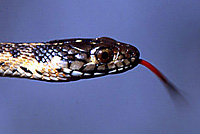
A medium-sized slender snake with a head barely wider than the neck, a narrow snout, small eyes, and keeled dorsal scales.
Some average scale counts: Average of 8 upper labial scales, the 6th is wider than the 7th.
The rear pair of chin shields is longer than the front.
The internasals are longer than wide and pointed in front.
Average scale count at mid-body is 19 or 21.
|
| Color and Pattern |
This snake is variable in appearance.
The ground color is olive brown, dark brown, or blackish, and there are dark blotches on the back and upper sides which are obscured when the ground color is very dark.
A light dorsal stripe may be present, but it is not distinct except on the neck.
Light lateral stripes may or may not be present on the 2nd and 3rd scale rows.
Northern populations of this snake have mottled black coloring below. This mottling is not present in southern populations.
Populations in streams draining into the Sacramento River all tend to lack lateral stripes.
A melanistic population exists in Plum Creek, Tehama County. |
Key to Identifying California Gartersnake Species
|
| Life History and Behavior |
Activity |
Active during daylight.
A highly-aquatic snake - more likely than most garter snake species to be found in the water.
Can also be found basking at the edge of water or lying on mats of floating vegetation.
Can be active 10 months of the year at lower elevations, but as few as 3 - 3.5 months per year at very high elevations.
Able to crawl on stream bottoms.
|
| Defense |
| When threatened, this snake will often strike repeatedly and release cloacal contents. |
| Diet and Feeding |
Eats mainly fish and amphibians and their larvae, including frogs, tadpoles, and aquatic salamander larvae.
Sierra Gartersnakes have an immunity to newt toxins as they have been observed consuming juvenile Taricha torosa in Tulare and Calaveras Counties. (Herpetological Review 38(3), 2007)
Forages for food in slow-moving water and usully drags its captures on to shore to eat.
Toxic Newts
This species has been observed eating adult Pacific Newts (genus Taricha) which are deadly poisonous to most predators.
Gartersnakes Can Become Poisonous
There is evidence that when Common Gartersnakes (Thamnophis sirtalis) eat Rough-skinned Newts (Taricha granulosa) they retain the deadly neurotoxin found in the skin of the newts called tetrodotoxin for several weeks, making the snakes poisonous (not venomous) to predators (such as birds or mammals) that eat the snakes. Since California Newts (Taricha torosa) also contain tetrodotoxin in their skin, and since gartersnake species other than T. sirtalis also eat newts, it is not unreasonable to conclude that any gartersnake that eats either species of newt is poisonous to predators.
Williams, Becky L.; Brodie, Edmund D. Jr.; Brodie, Edmund D. III (2004). "A Resistant Predator and Its Toxic Prey: Persistence of Newt Toxin Leads to Poisonous (Not Venomous) Snakes." Journal of Chemical Ecology. 30 (10): 1901–1919.) https://doi.org/10.1023/B:JOEC.0000045585.77875.09
|
| Reproduction |
Not much is known about the breeding habits of this species.
Females are ovoviviparous. After mating with a male they carry the eggs internally until the young are born live, apparently in late July.
Obligate parthenogenesis (when a female reproduces only asexually - without mating with a male) is extremely rare in snakes, and is thought to be limited to the Brahminy Blindsnake. Germano and Smith discuss examples of parthenogenesis in Thamnophis couchii.
Germano DJ, Smith PT. 2010. Molecular evidence for parthenogenesis in the Sierra garter snake, Thamnophis couchii (colubrodae). Southwestern Naturalist 55: 280–282.
|
| Habitat |
Associated with water - seasonal creeks, large mountain rivers, meadow ponds, and small lakes, in montane coniferous forests, oak woodlands, chaparral, pine juniper, and sagebrush. Prefers areas with rocks and vegetation.
|
| Geographic Range |
This snake ranges from the Pitt and Sacramento rivers south along the Sierra Nevada Mountains to the western end of the Tehachapi Mountains, with outlier populations along major rivers in west-central Nevada and the Owens Valley.
(Rossman, Ford, and Siegel, 1996)
There is an old museum record from approximately 13 miles northwest of Red Bluff.
Stebbins and McGinnis, 2012, note that a population of gartersnakes at California City may also be this species.
|
 |
| Elevational Range |
Found at elevations from 300 - 8,000 ft. (91 - 2440 m) (Stebbins 2003)
(I have also received an undocumented report of a Sierra Gartersnake found at 8,200 ft.(2500 m) in the Desolation Wilderness, El Dorado County, where they might be found even higher in elevation.)
|
| Notes on Taxonomy |
According to Stebbins, 2013, T. couchi hybridizes with the Oregon Gartersnake -Thamnophis atratus hydrophilus, in the Pit River drainage and with the Two-striped Gartersnake -Thamnophis hammondii, at the western end of the Tehachapi Mountains.
T. couchii was formerly a composite of four species of gartersnakes: T. atratus, T. couchii, T. gigas, and T. hammondii, until 1987.
Alternate and Previous Names (Synonyms)
Thamnophis couchii - Sierra Garter Snake (Stebbins 2003, 2012)
Thamnophis couchii couchii - Sierra Garter Snake (Stebbins 1966, 1985)
Thamnophis elegans couchii (Stebbins 1954)
Thamnophis elegans couchii - Couch's garter snake (Cooper 1896)
Thamnophis couchii - Sierra Gartersnake (Kennicott, 1859)
Sierra Nevada garter snake
Black water snake
Couch water snake
Fish snake
Moccasin garter snake
|
| Conservation Issues (Conservation Status) |
| Not known to be threatened, but may be negatively impacted by competition with introduced bullfrogs and non-native fish in some areas. |
|
Hansen, Robert W. and Shedd, Jackson D. California Amphibians and Reptiles. (Princeton Field Guides.) Princeton University Press, 2025.
Stebbins, Robert C., and McGinnis, Samuel M. Field Guide to Amphibians and Reptiles of California: Revised Edition (California Natural History Guides) University of California Press, 2012.
Stebbins, Robert C. California Amphibians and Reptiles. The University of California Press, 1972.
Flaxington, William C. Amphibians and Reptiles of California: Field Observations, Distribution, and Natural History. Fieldnotes Press, Anaheim, California, 2021.
Nicholson, K. E. (ed.). 2025. Scientific and Standard English Names of Amphibians and Reptiles of North America North of Mexico, with Comments Regarding Confidence in Our Understanding. Ninth Edition. Society for the Study of Amphibians and Reptiles. [SSAR] 87pp.
| Taxonomy |
| Family |
Colubridae |
Colubrids |
Oppel, 1811 |
| Genus |
Thamnophis |
North American Gartersnakes |
Fitzinger, 1843 |
Species
|
couchii |
Sierra Gartersnake |
(Kennicott, 1859) |
|
Original Description |
Thamnophis couchii - (Kennicott, 1859)
|
|
Meaning of the Scientific Name |
Thamnophis - Greek - thamnos = shrub or bush + ophis = snake, serpent
couchii - honors Couch, Darius N.
from Scientific and Common Names of the Reptiles and Amphibians of North America - Explained © Ellin Beltz
|
|
Alternate Names |
Western Aquatic Garter Snake,
Sierra Garter Snake
|
| Other California Gartersnakes |
T. a. atratus - Santa Cruz Gartersnake
T. a. hydrophilus - Oregon Gartersnake
T. a. zaxanthus - Diablo Range Gartersnake
T. gigas - Giant Gartersnake
T. e. elegans - Mountain Gartersnake
T. e. terrestris - Coast Gartersnake
T. e. vagrans - Wandering Gartersnake
T. hammondii - Two-striped Gartersnake
T. m. marcianus - Marcy's Checkered Gartersnake
T. ordinoides - Northwestern Gartersnake
T. s. fitchi - Valley Gartersnake
T. s. infernalis - California Red-sided Gartersnake
T. s. tetrataenia - San Francisco Gartersnake
|
|
More Information and References |
California Department of Fish and Wildlife
1 Rossman, Douglas A., Neil B, Ford, & Richard A. Siegel. The Garter Snakes - Evolution and Ecology. University of Oklahoma press, 1996.
2Bartlett, R. D. & Patricia P. Bartlett. Guide and Reference to the Snakes of Western North America (North of Mexico) and Hawaii. University Press of Florida, 2009.
Bartlett, R. D. & Alan Tennant. Snakes of North America - Western Region. Gulf Publishing Co., 2000.
Brown, Philip R. A Field Guide to Snakes of California. Gulf Publishing Co., 1997.
Ernst, Carl H., Evelyn M. Ernst, & Robert M. Corker. Snakes of the United States and Canada. Smithsonian Institution Press, 2003.
Taylor, Emily. California Snakes and How to Find Them. Heyday, Berkeley, California. 2024.
Wright, Albert Hazen & Anna Allen Wright. Handbook of Snakes of the United States and Canada. Cornell University Press, 1957.
Samuel M. McGinnis and Robert C. Stebbins. Peterson Field Guide to Western Reptiles & Amphibians. 4th Edition. Houghton Mifflin Harcourt Publishing Company, 2018.
Stebbins, Robert C. A Field Guide to Western Reptiles and Amphibians. 3rd Edition. Houghton Mifflin Company, 2003.
Behler, John L., and F. Wayne King. The Audubon Society Field Guide to North American Reptiles and Amphibians. Alfred A. Knopf, 1992.
Robert Powell, Roger Conant, and Joseph T. Collins. Peterson Field Guide to Reptiles and Amphibians of Eastern and Central North America. Fourth Edition. Houghton Mifflin Harcourt, 2016.
Powell, Robert., Joseph T. Collins, and Errol D. Hooper Jr. A Key to Amphibians and Reptiles of the Continental United States and Canada. The University Press of Kansas, 1998.
|
|
|
The following conservation status listings for this animal are taken from the July 2025 State of California Special Animals List and the July 2025 Federally Listed Endangered and Threatened Animals of California list (unless indicated otherwise below.) Both lists are produced by multiple agencies every year, and sometimes more than once per year, so the conservation status listing information found below might not be from the most recent lists, but they don't change a great deal from year to year.. To make sure you are seeing the most recent listings, go to this California Department of Fish and Wildlife web page where you can search for and download both lists:
https://www.wildlife.ca.gov/Data/CNDDB/Plants-and-Animals.
A detailed explanation of the meaning of the status listing symbols can be found at the beginning of the two lists. For quick reference, I have included them on my Special Status Information page.
If no status is listed here, the animal is not included on either list. This most likely indicates that there are no serious conservation concerns for the animal. To find out more about an animal's status you can also go to the NatureServe and IUCN websites to check their rankings.
Check the current California Department of Fish and Wildlife sport fishing regulations to find out if this animal can be legally pursued and handled or collected with possession of a current fishing license. You can also look at the summary of the sport fishing regulations as they apply only to reptiles and amphibians that has been made for this website.
This snake is not included on the Special Animals List, which indicates that there are no significant conservation concerns for it in California.
|
| Organization |
Status Listing |
Notes |
| NatureServe Global Ranking |
|
|
| NatureServe State Ranking |
|
|
| U.S. Endangered Species Act (ESA) |
None |
|
| California Endangered Species Act (CESA) |
None |
|
| California Department of Fish and Wildlife |
None |
|
| Bureau of Land Management |
None |
|
| USDA Forest Service |
None |
|
| IUCN |
|
|
|
|