
A Guide to the Amphibians
and Reptiles of California
Click on a picture for a larger view

California Rattlesnakes

A Rattlesnake Rattle
Click on the picture to listen to
what it sounds like when a rattlesnake shakes its tail.

Rarely, when the end of its tail is removed in an unusual event, a rattlesnake will not have any rattles.

| All rattlesnakes in California have medically-significant venom which is potentially dangerous. (Commonly called poisonous snakes) A bite by any rattlesnake can be very dangerous without immediate medical treatment. Treatment can require hospitalization and great expense. |
||||
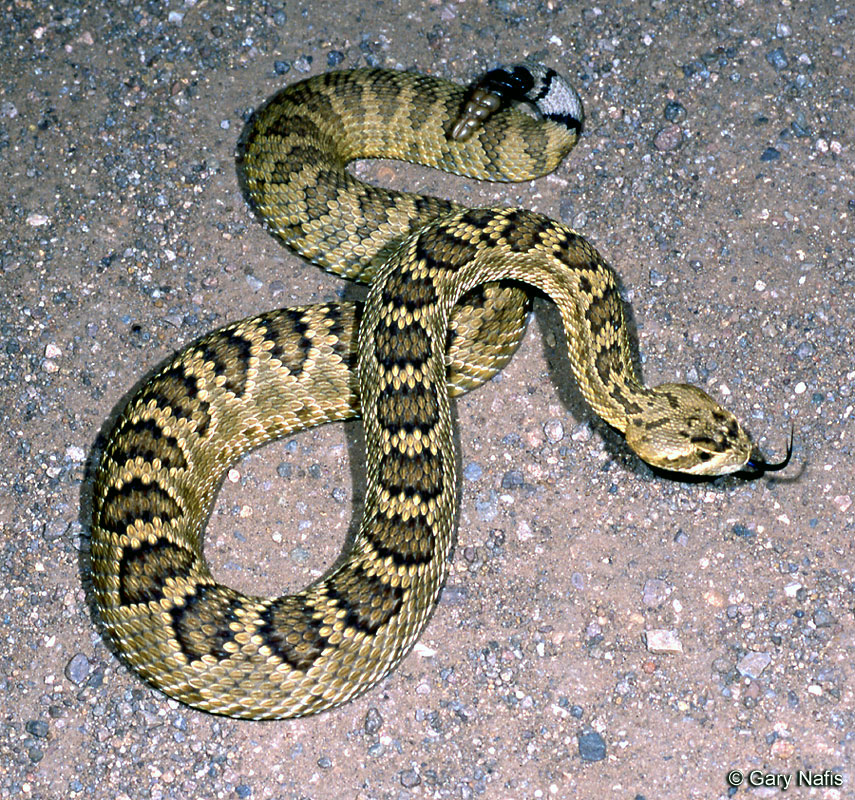
There are 7 different species of rattlesnakes found in California. Two of these species are made up of more than one subspecies. This makes a total of 10 different forms of rattlesnakes found in the state. All rattlesnakes in California have a blotched pattern on the back and a rattle on the end of the tail which is often used as a warning sound. |
||||
| To identify the species of rattlesnake you have seen, look for a picture that is similar to the snake you want to identify, clicking on it to enlarge it if necessary. Read the brief descriptions of behavior and habitat, and if it fits your snake's appearance, click on the link to continue your search. All of these forms of rattlesnakes can vary in appearance, so if you don't see one here that looks like the rattlesnake you want to identify, check the range maps to see which species of rattlesnakes occur in your area, then look at the pictures found on the page for each individual snake. |
||||
| California Rattlesnakes | ||||
| Forms | Genus, Species, Subspecies | Common Names | ||
| Family Viperidae | Vipers | |||
| Genus Crotalus | Rattlesnakes | Linnaeus, 1758 | ||
| 1 | Crotalus atrox | Western Diamond-backed Rattlesnake | Baird and Girard, 1853 | |
| Crotalus cerastes | Sidewinder | Hallowell, 1854 | ||
| 2 | Crotalus cerastes cerastes | Mojave Desert Sidewinder | Hallowell, 1854 | |
| 3 | Crotalus cerastes laterorepens | Colorado Desert Sidewinder | Klauber, 1944 | |
| Crotalus oreganus | Western Rattlesnake | Holbrook, 1840 | ||
| 4 | Crotalus oreganus helleri | Southern Pacific Rattlesnake | Meek, 1905 | Crotalus helleri |
| 5 | Crotalus oreganus lutosus | Great Basin Rattlesnake | Klauber, 1930 | Crotalus lutosus |
| 6 | Crotalus oreganus oreganus | Northern Pacific Rattlesnake | Holbrook, 1840 | Crotalus oreganus |
| 7 | Crotalus pyrrhus | Southwestern Speckled Rattlesnake | (Cope, 1867 “1866”) | |
| 8 | Crotalus ruber | Red Diamond Rattlesnake | Cope, 1892 | |
| Crotalus scutulatus | Mojave Rattlesnake | (Kennicott, 1861) | ||
| 9 | Crotalus scutulatus scutulatus | Northern Mojave Rattlesnake | (Kennicott, 1861) | |
| 10 | Crotalus stephensi | Panamint Rattlesnake | Klauber, 1930 | |
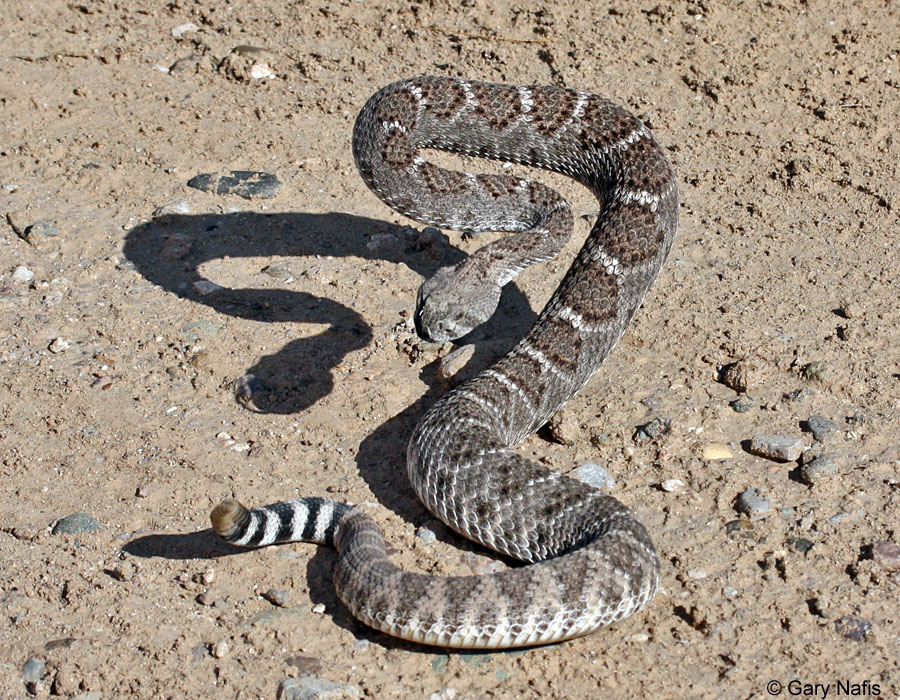
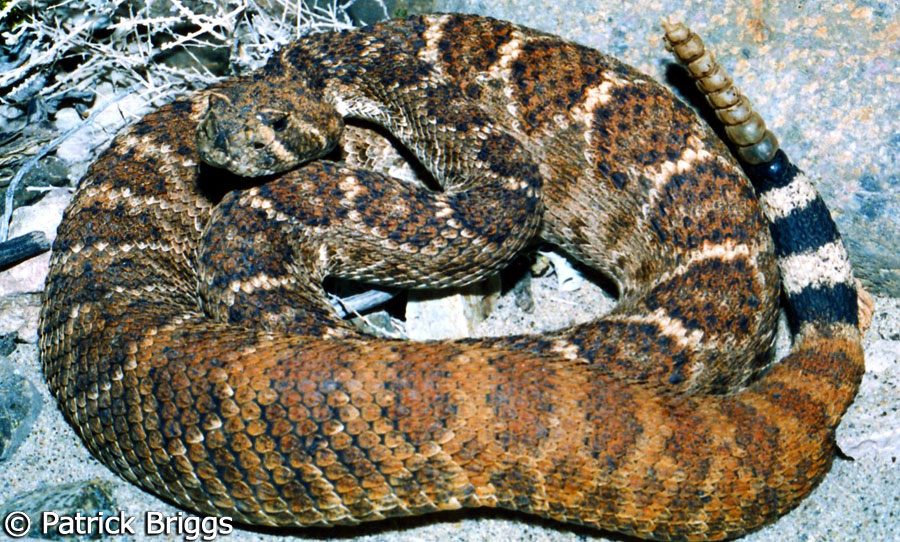
| 1. Western Diamond-backed Rattlesnake A large rattlesnake, found in the southern deserts in the southeast corner of the state. This rattlesnake has black and white rings around the tail. The rings are about equal in width. Active day and night. Notes on distinguishing this species from the similar Northern Mojave Rattlesnake. Notes on distinguishing this species from the similar Red Diamond Rattlesnake. |
||||
 |
 |
 |
 |
|
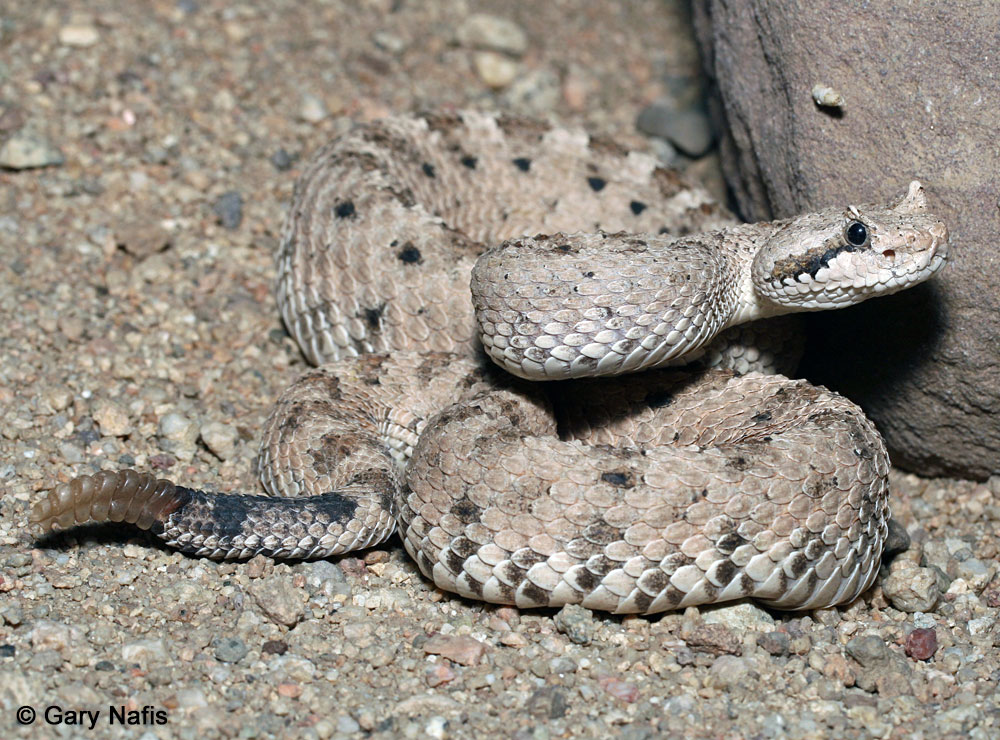
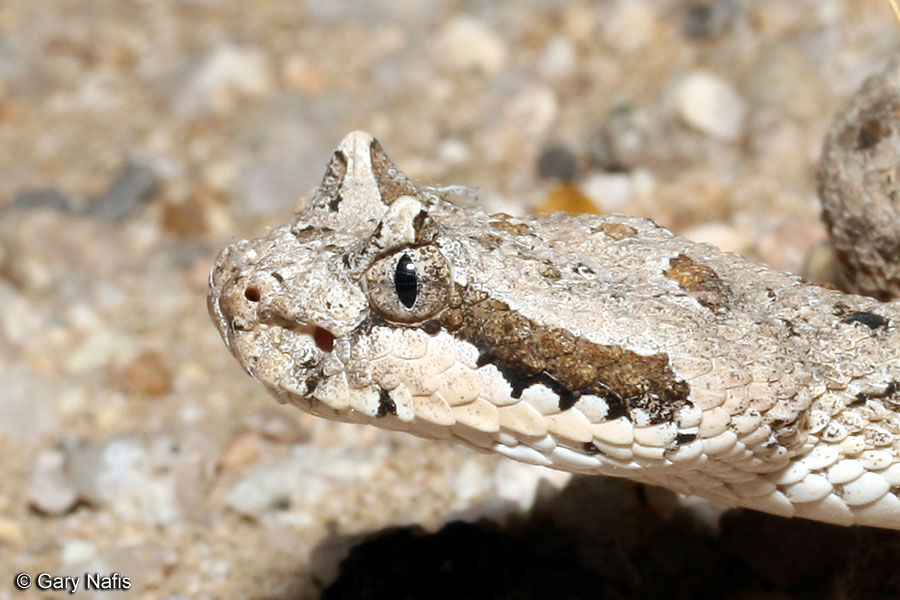
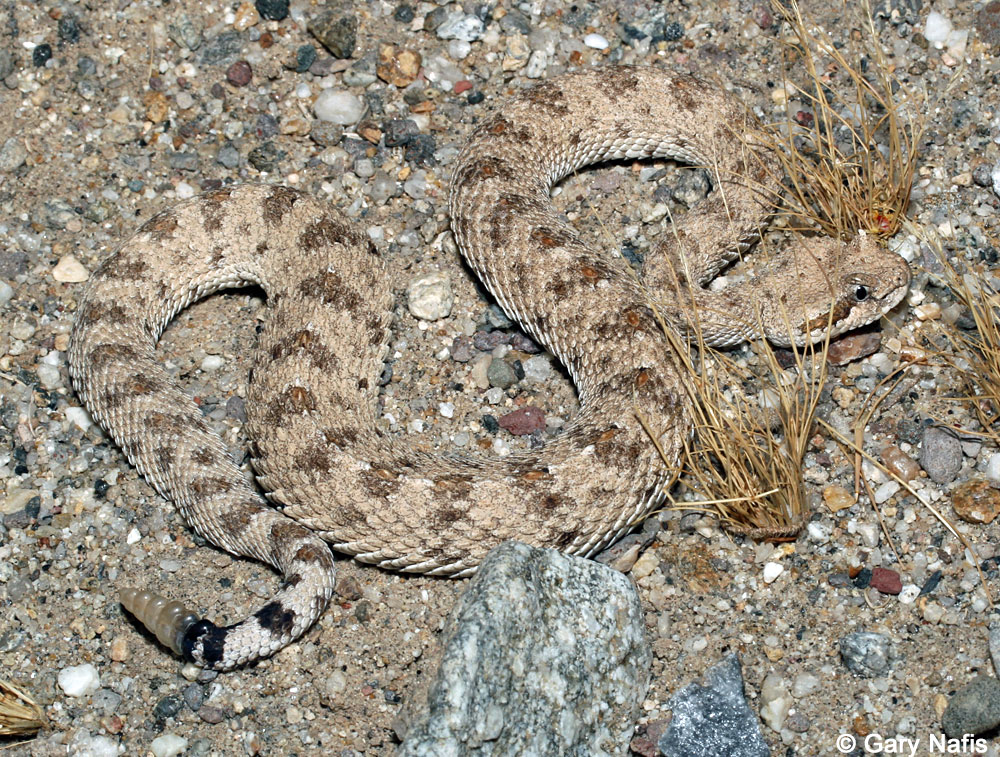
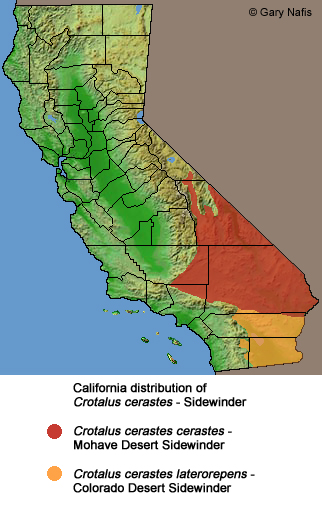
| Sidewinders Small rattlesnakes with unique sideways locomotion. Found in open sandy areas in the southern deserts. Active at night and sometimes during the day. A small horn-like projection is visible above each eye. |
||||
 |
 |
 |
 |
|
| 2. Mojave Desert Sidewinder | ||||
 |
 |
 |
 |
|
| 3. Colorado Desert Sidewinder | ||||
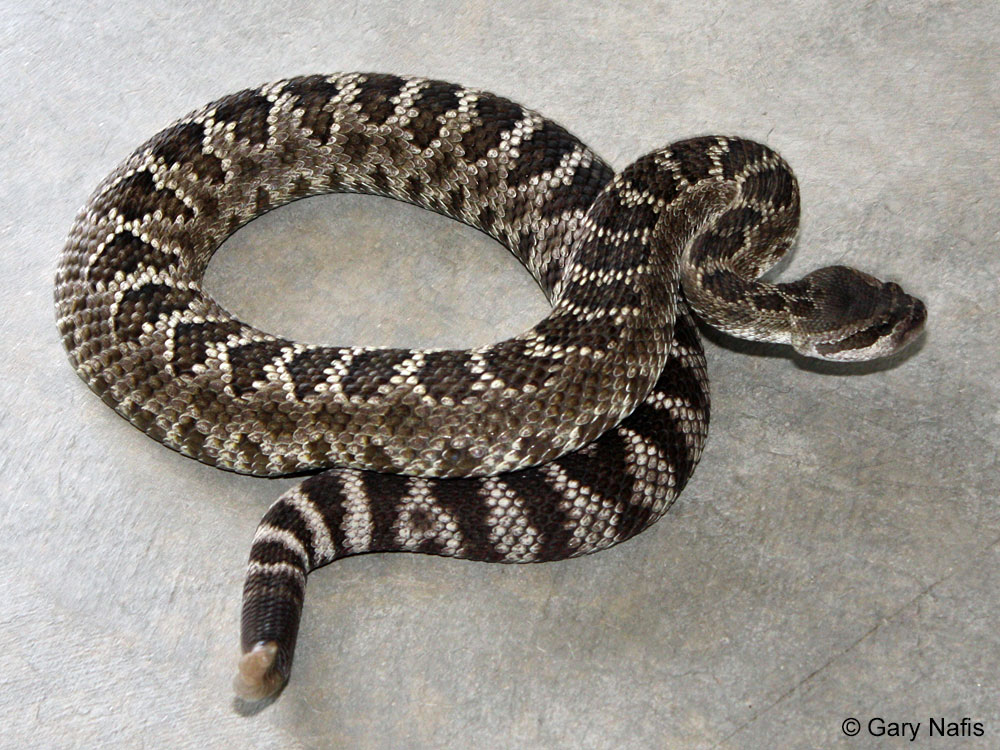
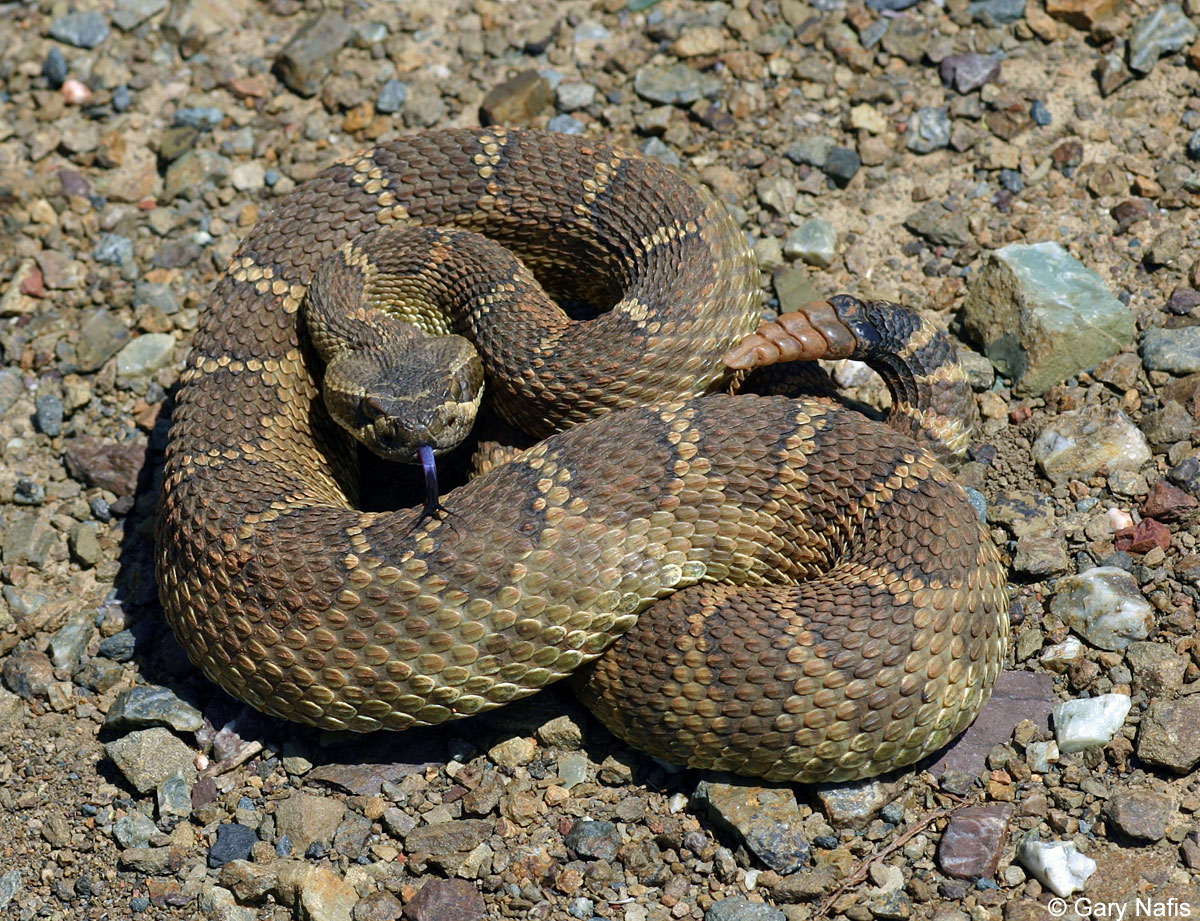
| Western Rattlesnakes The most commonly seen rattlesnake in California, found throughout the state, except the southern deserts. Active day and night. Often seen while hiking in undisturbed areas, or on roads at night. These rattlesnakes do not have black and white rings around the tail. They may have dark and light rings, but not black and white. Notes on identifying the three subspecies of Western Rattlesnakes, Crotalus oreganus, found in California |
||||
 |
 |
 |
 |
|
| 4. Southern Pacific Rattlesnake | ||||
 |
 |
 |
 |
|
| 5. Great Basin Rattlesnake | ||||
 |
 |
 |
 |
|
| 6. Northern Pacific Rattlesnake | ||||
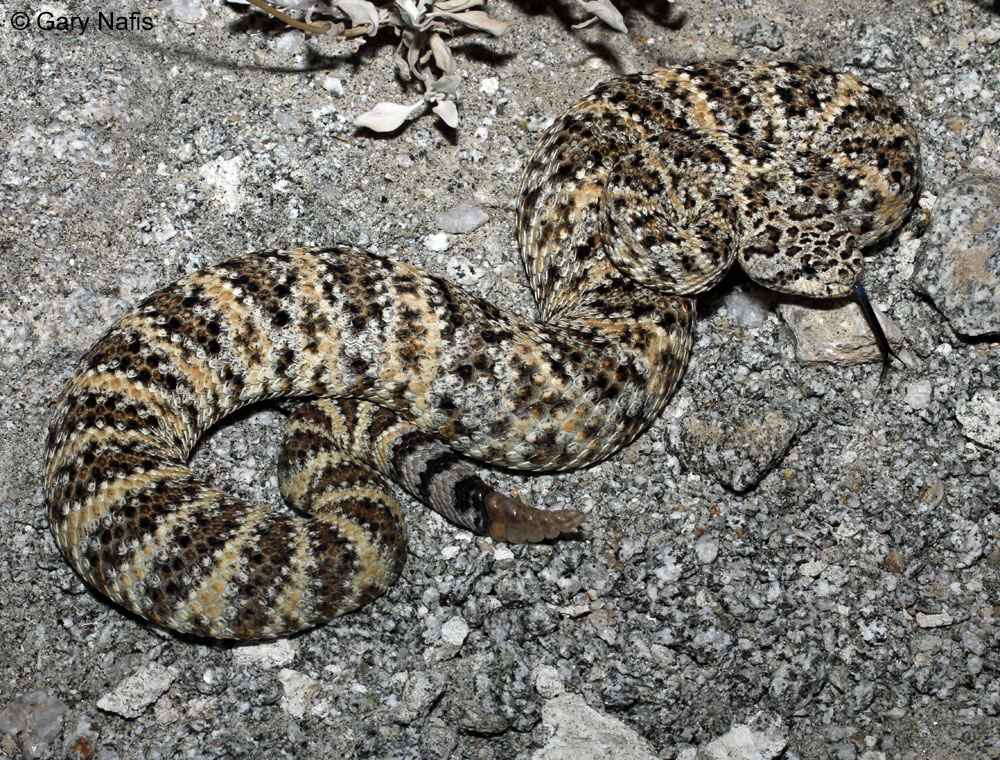
| 7. Southwestern Speckled Rattlesnake A large rattlesnake, found mainly in rocky areas in the southern deserts and south coast. Saddled pattern on adults appears slightly faded, not distinctly outlined, unlike other rattlesnakes in its range. Color changes to match the rocks in its habitat. Active at night and day. Notes on distinguishing this species from the similar Panamint Rattlesnake |
||||
 |
 |
 |
 |
|
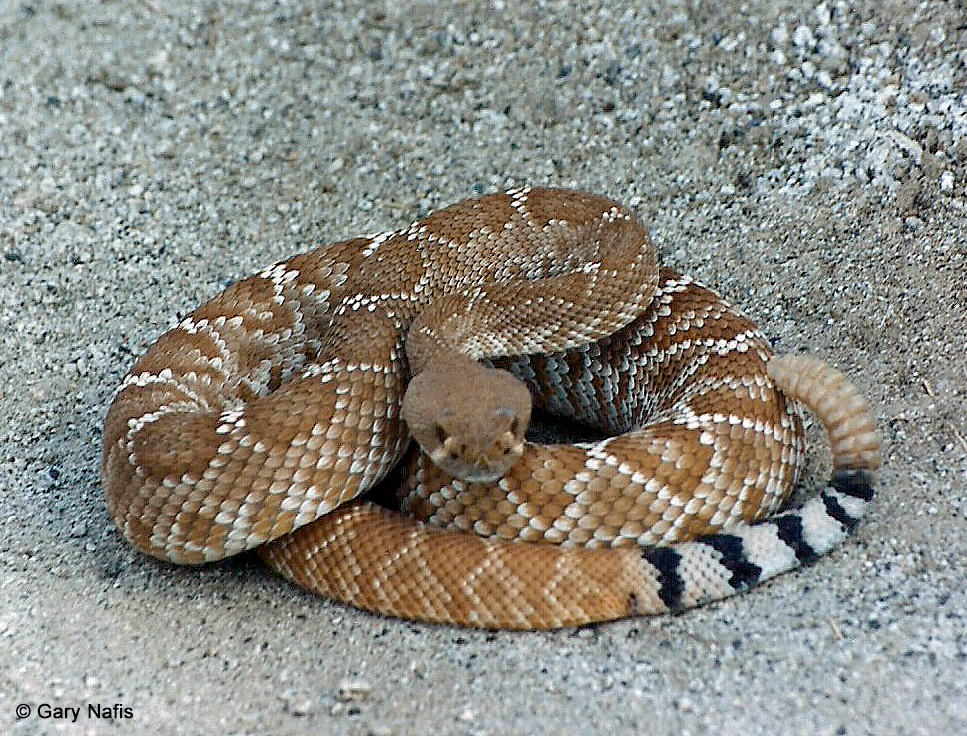
| 8. Red Diamond Rattlesnake A large rattlesnake, found in the Colorado desert and south coastal region. Active day and night. |
||||
 |
 |
 |
 |
|
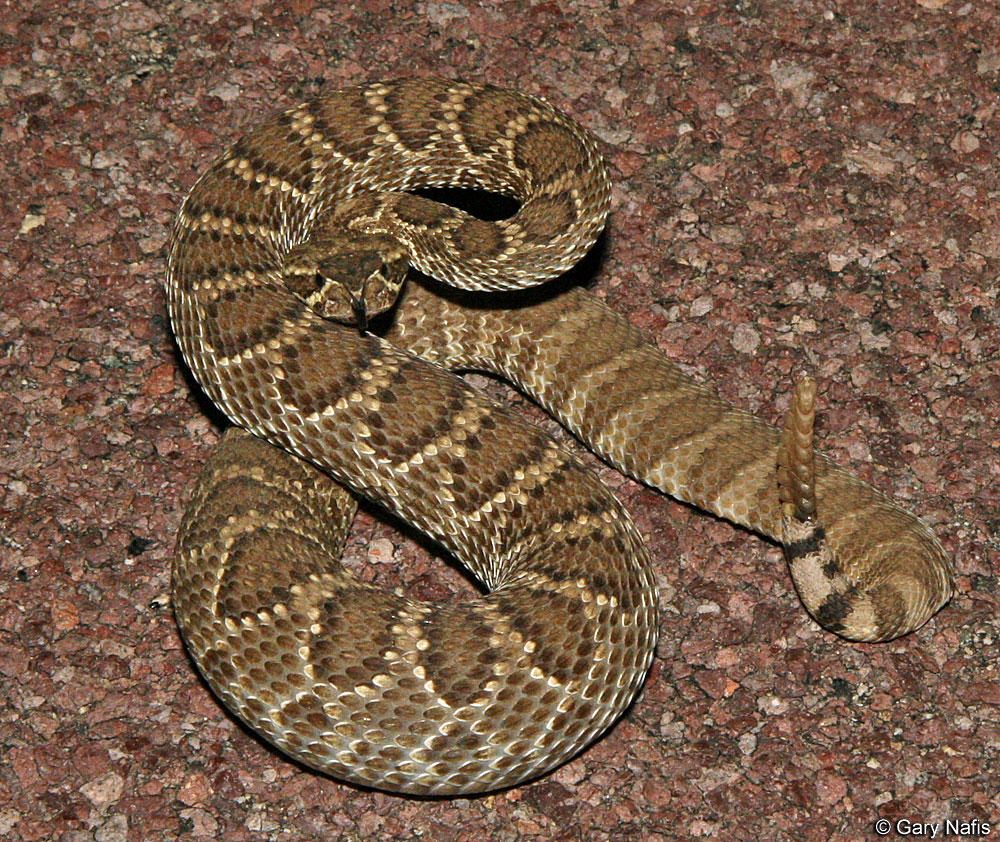
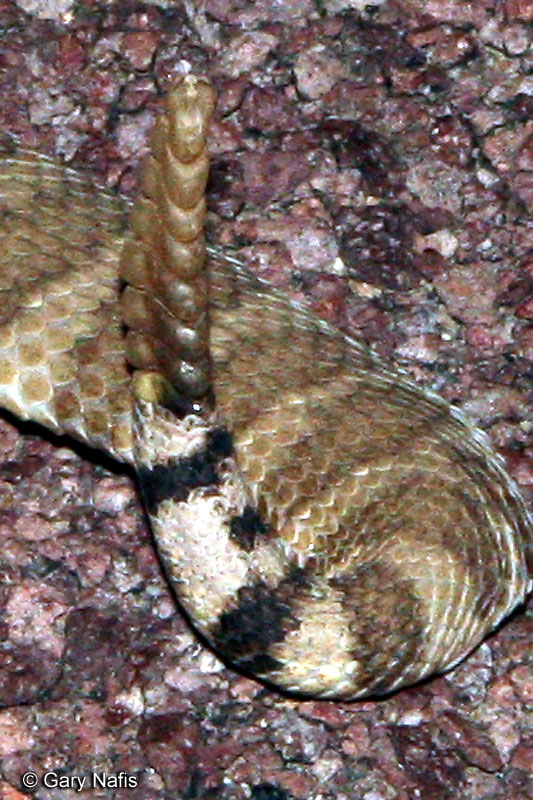
| 9. Northern Mojave Rattlesnake A large rattlesnake found in the Mojave Desert. Active at night, and sometimes during the day. This rattlesnake has black and white rings around the tail. The black bands are smaller than the white bands. Notes on distinguishing this species from the similar Western Diamond-backed Rattlesnake |
||||
 |
 |
 |
 |
|
| 10. Panamint Rattlesnake A large rattlesnake, found mainly in rocky areas in the northern and eastern Mojave Desert. Saddled pattern on adults appears slightly faded, not distinctly outlined, unlike other rattlesnakes in its range. Color changes to match the rocks in its habitat. Active at night and day. Notes on distinguishing this species from the similar Southwestern Speckled Rattlesnake |
||||
 |
 |
 |
 |
|
 |
 |
|||
| Western Diamond-backed Rattlesnake | Sidewinder - Crotalus cerastes | |||
| 1. Red: Crotalus atrox | 2. Red: Crotalus cerastes cerastes - Mojave Desert Sidewinder 3. Orange: Crotalus cerastes laterorepens - Colorado Desert Sidewinder |
|||
 |
 |
|||
| Southwestern Speckled Rattlesnake | Western Rattlesnake - Crotalus oreganus (viridis) |
|||
| 4. Red: Crotalus pyrrhus (Orange = Crotalus stephensi, formerly thought to be the same species) |
5. Blue: Crotalus oreganus helleri Southern Pacific Rattlesnake 6. Orange: Crotalus oreganus lutosus Great Basin Rattlesnake 7. Red: Crotalus oreganus oreganus Northern Pacific Rattlesnake |
|||
 |
 |
|||
| Red Diamond Rattlesnake | Northern Mojave Rattlesnake | |||
| 8. Red: Crotalus ruber | 9. Red: Crotalus scutulatus scutulatus |
|||
|
||||
| Panamint Rattlesnake | ||||
| 10. Orange: Crotalus stephensi (Red = Crotalus pyrrhus, formerly thought to be the same species) |
||||
| Frank Buchter contributed this chart to help identify rattlesnakes in California. (This chart does not include sidewinders. It also omits Crotalus oreganus lutosus, and after after it was made, Crotalus mitchellii pyrrhus was changed to Crotalus pyrhus.)  |
||||
 |
||||
|
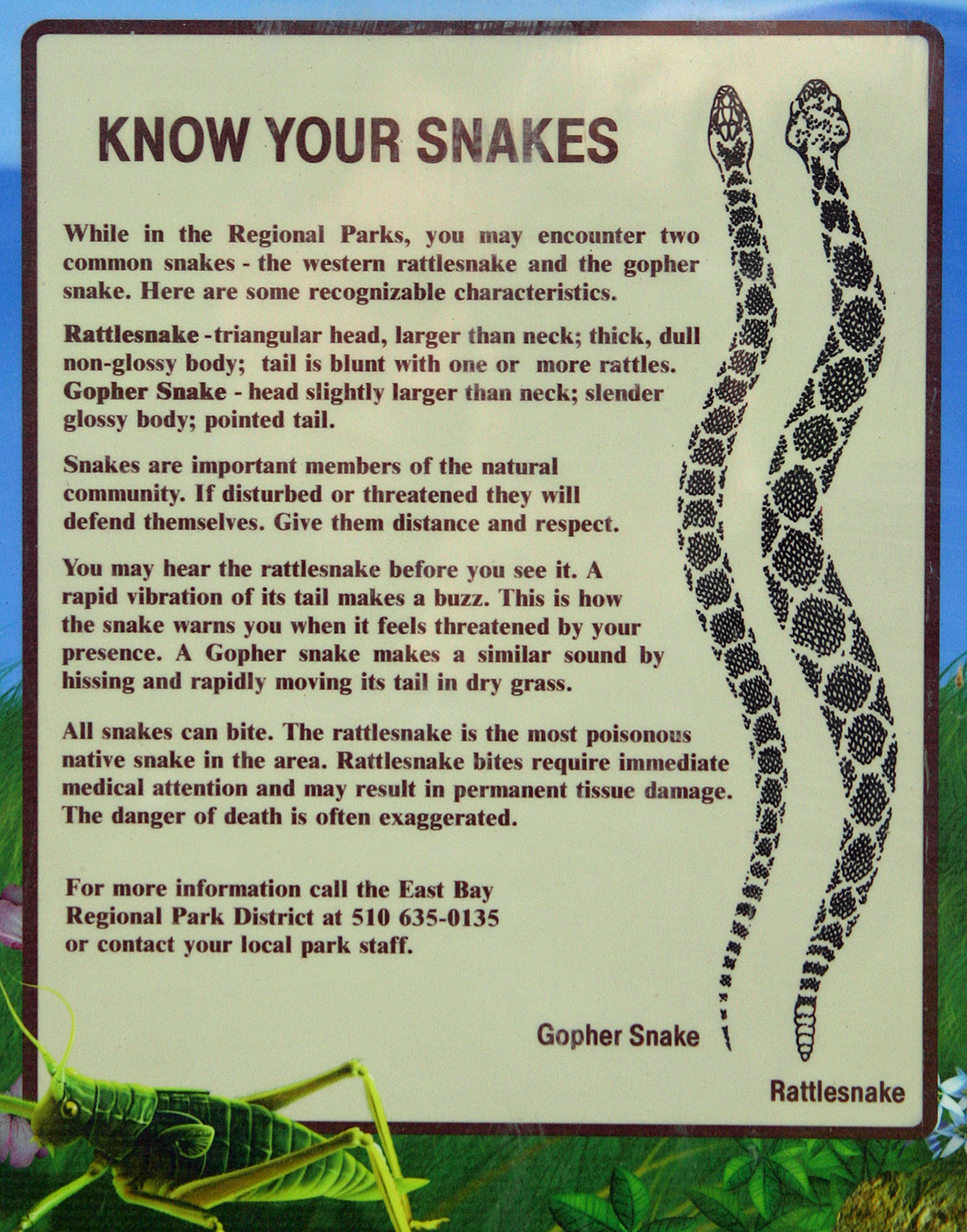
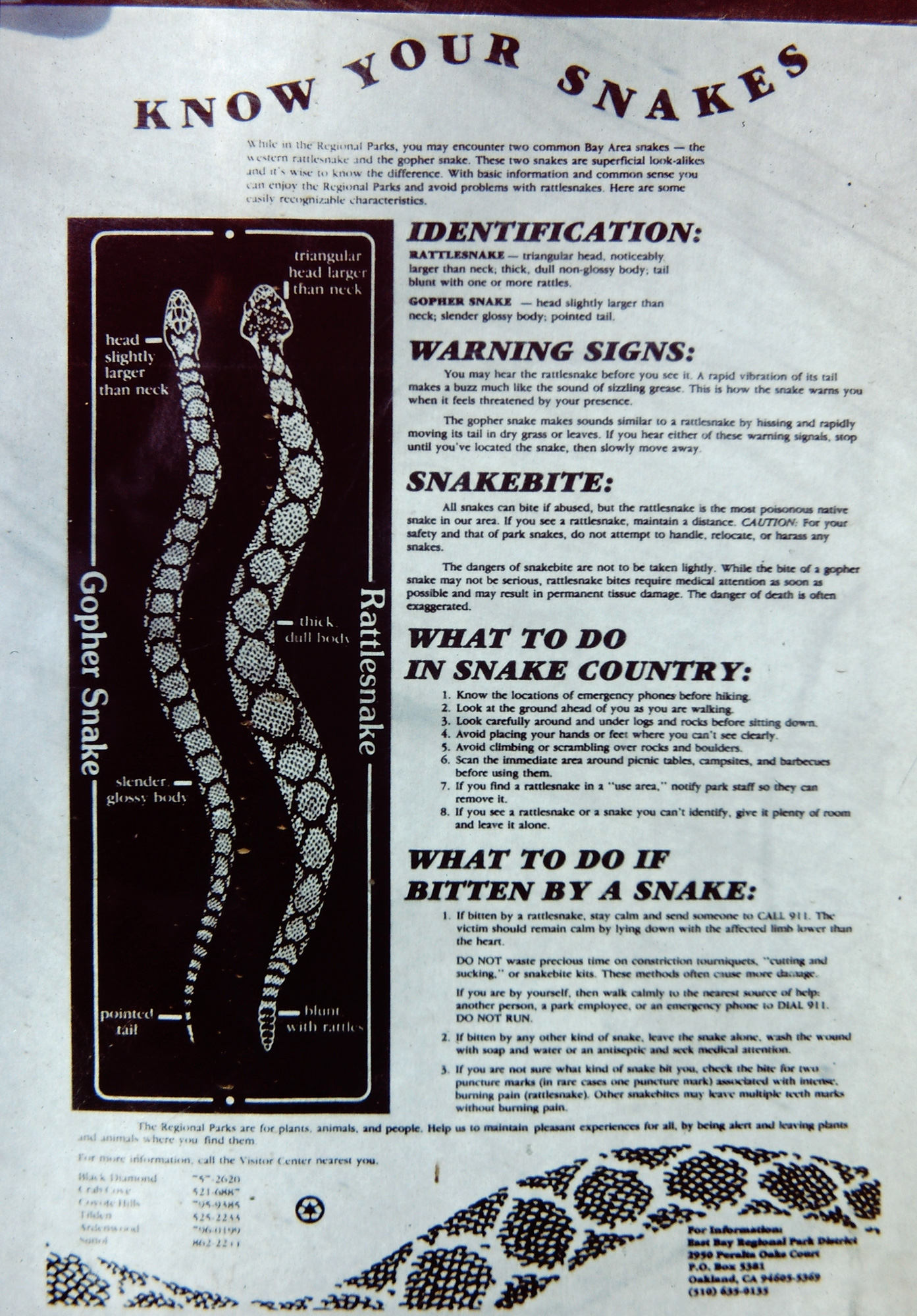
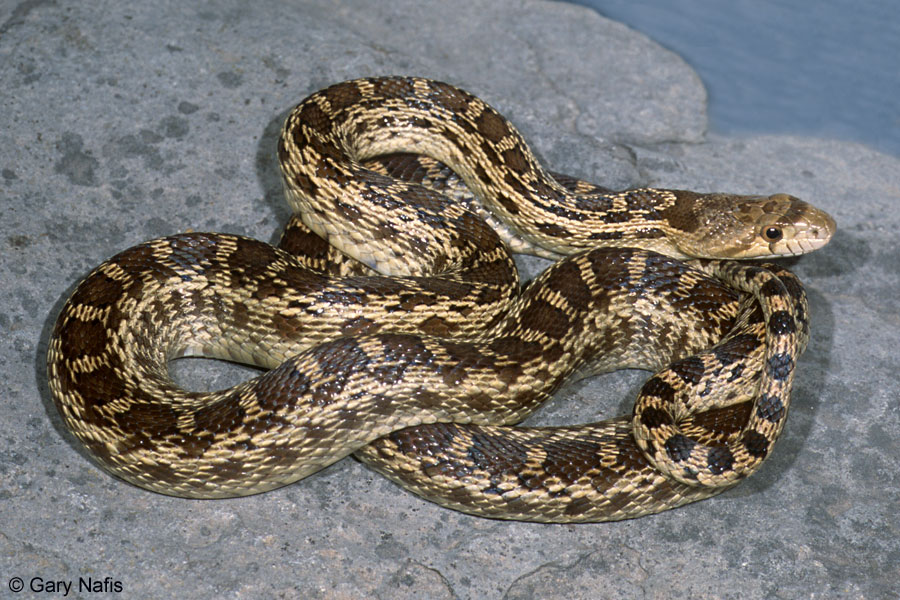
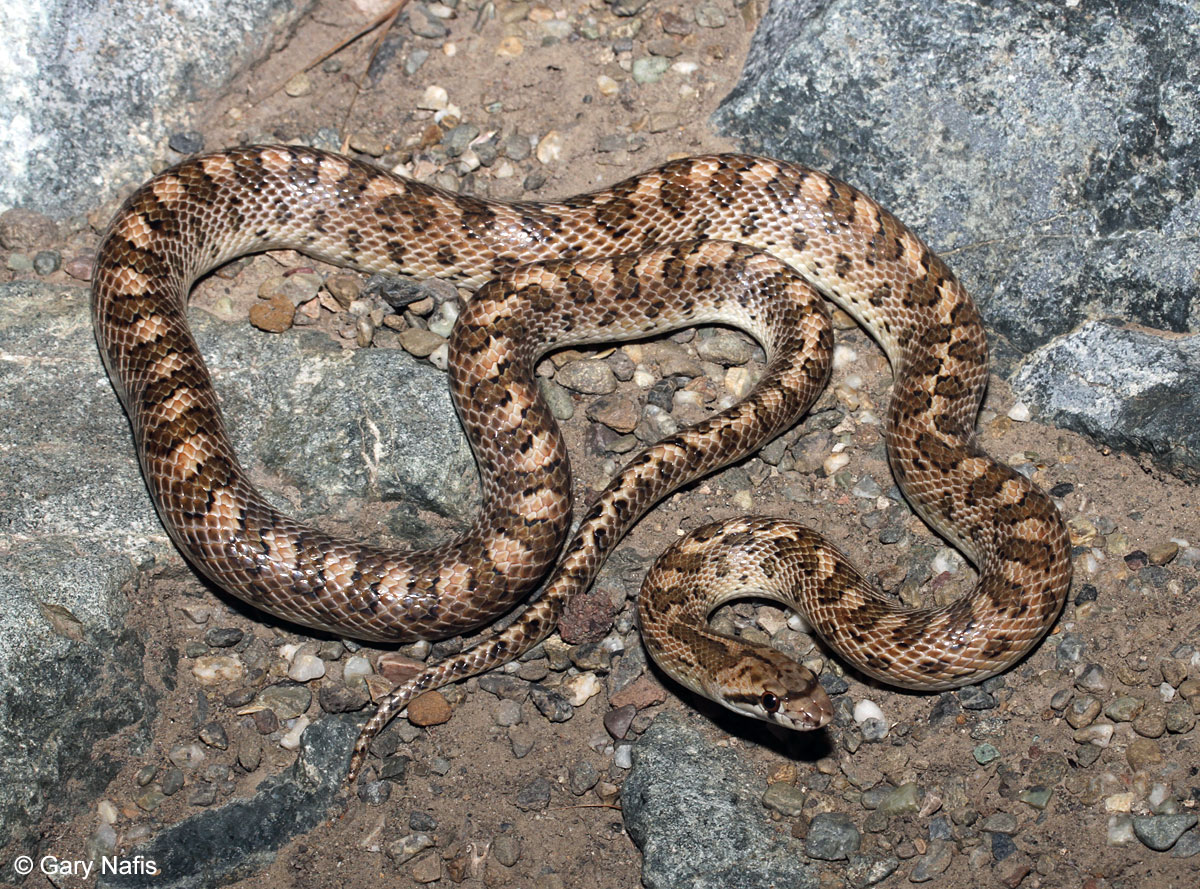
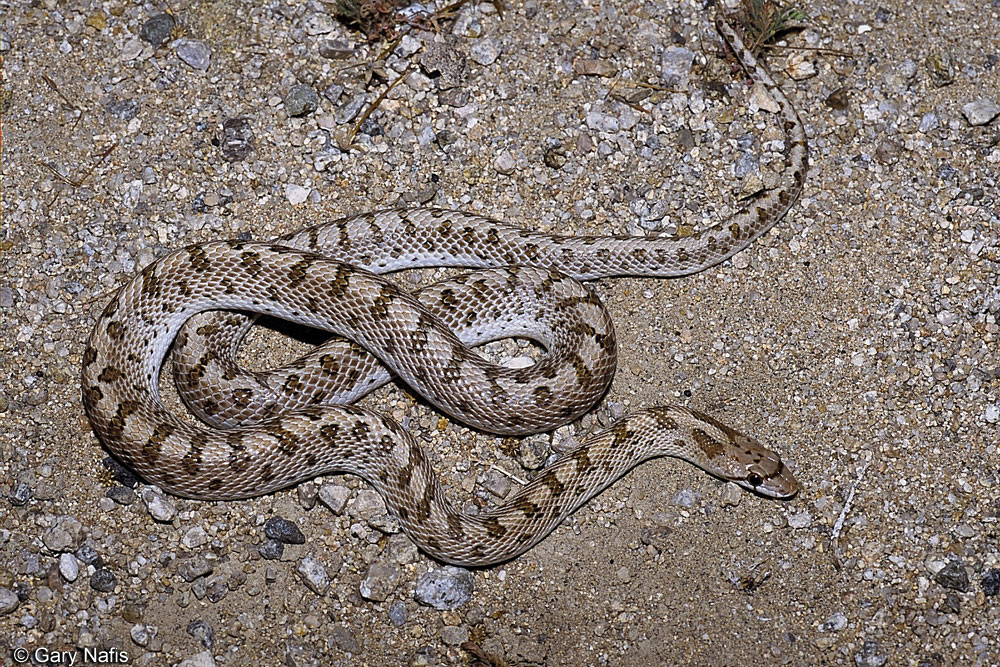
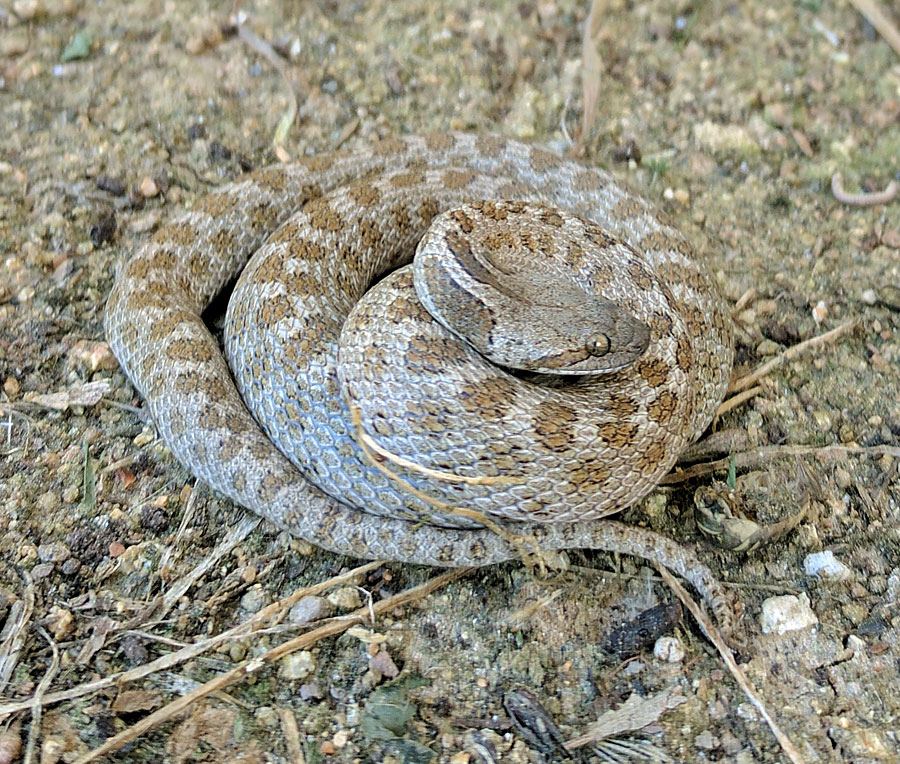
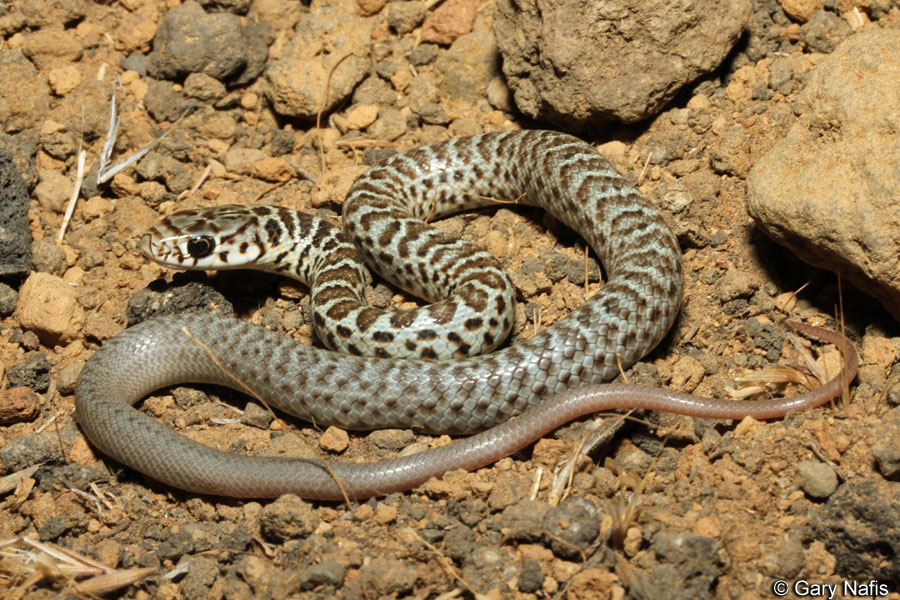
Harmless and beneficial gophersnakes are sometimes mistaken for dangerous rattlesnakes. Gophersnakes are often killed unnecessarily because of this confusion. (It's also not necessary to kill every rattlesnake.) It is easy to avoid this mistake by learning to tell the difference between the two families of snakes. The informational signs shown above can help to educate you about these differences. (Click to enlarge). If you can't see enough detail on a snake to be sure it is not a rattlesnake or if you have any doubt that it is harmless, leave it alone. You should never handle a snake unless you are absolutely sure that it is not dangerous. |
||||
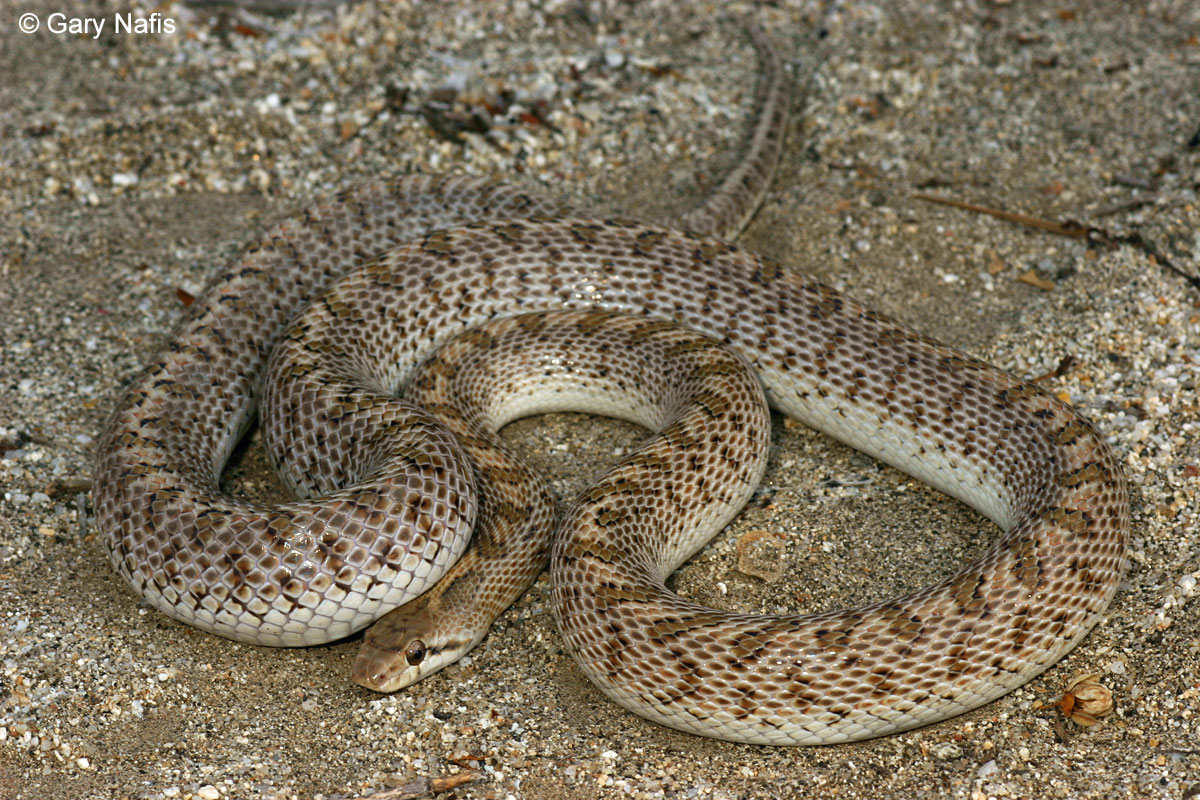
California Snakes with a Blotched Pattern that are Sometimes Mistaken for Rattlesnakes |
||||
| Gophersnakes | ||||
 |
 |
 |
 |
|
| Pacific Gophersnake | San Diego Gophersnake | |||
 |
 |
 |
 |
|
| Great Basin Gophersnake | Great Basin Gophersnake © Noah Morales |
Sonoran Gophersnake | ||
 |
 |
|||
| Santa Cruz Island Gophersnake | ||||
| Glossy Snakes | ||||
 |
 |
 |
 |
|
| Desert Glossy Snake |
California Glossy Snake |
Mojave Glossy Snake | ||
| Lyresnakes | ||||
 |
 |
 |
 |
|
| Sonoran Lyresnake | California Lyresnake | |||
| Nightsnakes | ||||
 |
 |
 |
 |
|
| San Diego Nightsnake | San Diego Nightsnake © Douglas Brown |
Desert Nightsnake | ||
 |
 |
|||
| California Nightsnake | ||||
| Juvenile Western Yellow-bellied Racer | ||||
 |
 |
|||
| Juvenile Western Yellow-Bellied Racer | ||||
 |
||||
|
||||
|
||||
| More Information About Rattlesnakes | ||||
| Living With Rattlesnakes | Rattlesnake Signs and Art | Rattlesnake Sounds | ||
Return to the Top
© 2000 -