
A Guide to the Amphibians
and Reptiles of California
Click on a picture for a larger view

Salamander Behavior and Life History

| These are pictures and videos that illustrate some of the interesting behavior and or natural history of salamanders from California and around the world. This is not an attempt to illustrate everything, only what is depicted elsewhere on this website. |
|||
| Miscellaneous Salamander Observations | |||
 |
 |
 |
 |
| This incredible collection of hundreds or perhaps thousands of juvenile newts was found in Napa County in late September under a boat near a lake that had a small amount of water remaining in it during a year of severe drought. No newts were found at the same location four days previously. Two species of newts are found at the location, California Newts, and Rough-skinned Newts. Some of them appear to be California Newts, but it's not possible to know the species of all of them. Recently-transformed newts sometimes gather into masses in order to help them retain moisture which can be lost through the skin. © Anonymous |
A large mass of Rough-skinned Newts underwater in early September in southern Oregon © David Mikkelsen There are aproximately 2000 newts in this mass, according to David Mikkelsen. He has observed that after the spring breeding season the newts congregate in underwater leaf litter in the shaded still water at the edge of this river and stay there until the beginning of the fall rains when they once again return to the surrounding forest. |
During the dry season, Arboreal Salamanders seek out cool moist areas underground or in trees to rest until the rainy season. Eric Boyer discovered this large group of estivating adult and juvenile Arboreal salamanders underneath some wood while remodeling a backyard in Santa Barbara County in June. © Eric Boyer | |
 |
 |
 |
 |
| California Slender Salamander | California Slender Salamander | Yellow-eyed Ensatina |
Coast Range Newt |
| This adult slender salamander is coiled in a defensive pose. I have seen millipedes coiled in a similar manner where these salamanders are found. It's possible that the coiling behavior is meant to make the salamander look like the foul tasting millipede to avoid predation. | This short video shows a few short looks at several slender salamanders sitting still, coiled up, and quickly wriggling away. | One theory suggests that the reason the Yellow-eyed Ensatina has large yellow patches on its eyes, while other subspecies of Ensatina do not, is that the non-toxic Ensatina is mimicking the dangerously toxic Coast Range Newt, which lives in the same habitat, in order to avoid attacks from predators that have evolved to avoid newts. The Ensatina's body color is also similar to that of the newt. |
|
 |
 |
 |
 |
| An adult male White-spotted Slimy Slamander showing a mental gland under its chin. Some male salamanders rub their mental gland on a female during courtship to stimulate her with his pheramones. |
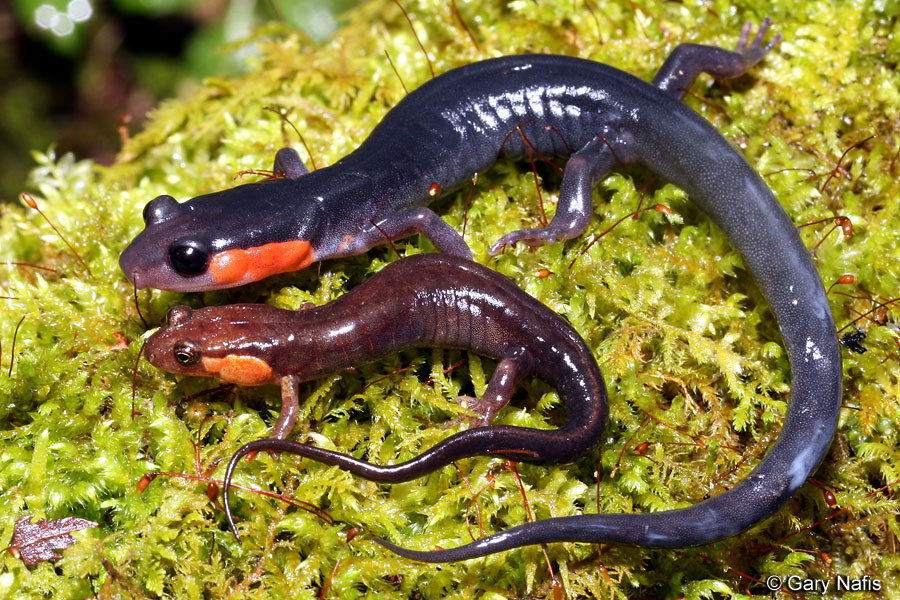
Western Red-backed Salamander showing its nasolabial grooves, which are grooves that run from the nose to the mouth. These salamanders communicate through chemical stimuli. These grooves are thought to aid the salamander in sensing these chemicals, which is probably very important in reproductive behavior. | Hydromantes salamanders, which include the Mount Lyell Salamander have the longest tongues of any salamanders. They can extend the tongue more than half the length of their entire bodies, including the tail. You can see a slow-motion movie of one shooting out its tongue to feed here. | The red-cheeked Imitator Salamander (bottom) is thought to imitate the warning red cheek color of the Red-cheeked Salamander (top) which lives in the same habitat. In an imitation situation such as this, the salamander being imitated is usually more toxic than the imitator. |
 |
 |
 |
|
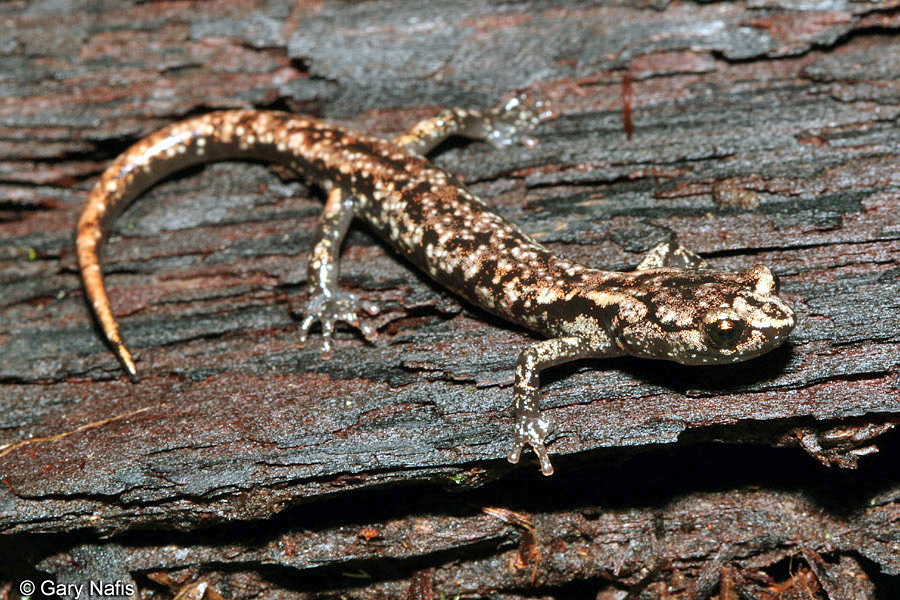
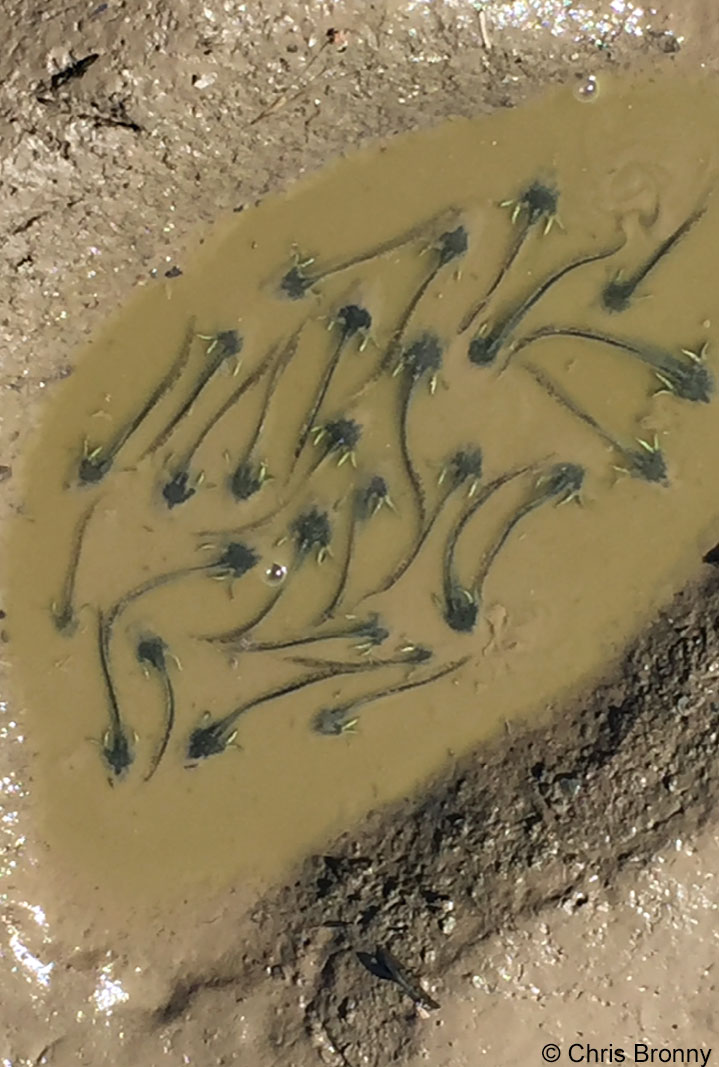
| A gilled metamorph Rough-skinned Newt photographed underwater. This newt was found on land at the edge of the water, but still has its gills, so it is in the process of matamorphosing from an aquatic larva to a land-dwelling newt. | Wandering Salamanders inhabit fallen trees on the ground as well as the canopies of massive redwood trees several hundred feet tall. The salamanders in the canopies probably spend their whole life in the tree. | The downside to breeding in ephemeral waters is that sometimes the water disappears before the larvae are ready to leave. These California Tiger Salamander larvae were stranded in an evaporating stock pond in San Benito County and were not able to transform into terrestrial salamanders before the water dried up. © Chris Bronny | |
| The three Coastal Giant Salamanders below were born in streams where they breathe with gills until they transform. When they transform, they lose their gills and develop lungs and move onto land to live. They will return to the water occasionally to feed and to breed. |
|||
 |
 |
 |
 |
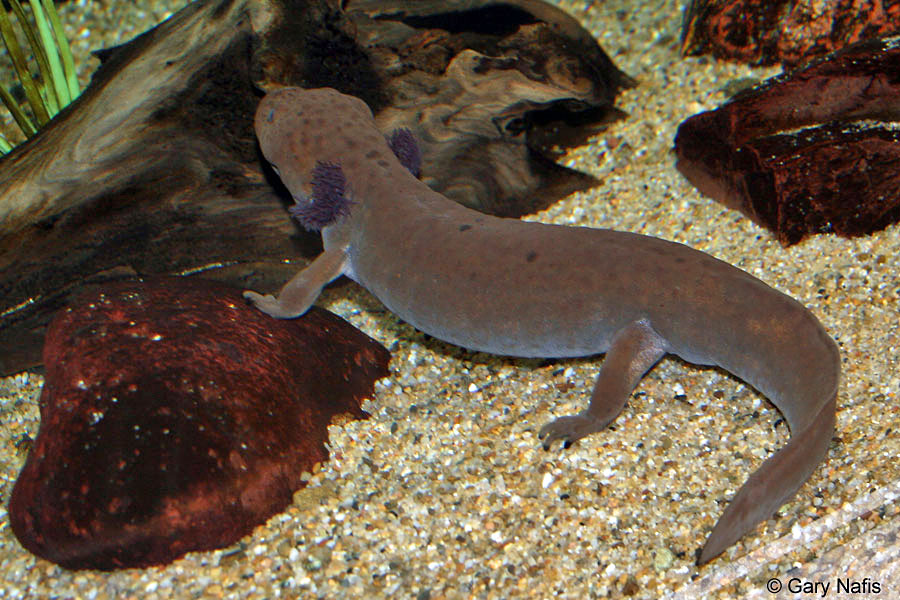
| In this short video, you can see the gills working on this tiny Coastal Giant Salamander larva shown underwater in a small aquarium. | A Coastal Giant Salamander where it was found under a rock at the quiet edge of a stream. | A very large captive neotenic Coastal Giant Salamander, shown underwater. Sometimes, salamanders which begin in an aquatic phase, do not transform into the land phase. They become neotenic (or paedomorphic) adults which retain the juvenile characteristics of gills and finned tail. |
Short Video of a neotenic Coastal Giant Salamander in water, Siskiyou County, pumping its gills and gulping air. © Ryan Aberg |
| Body Part Regeneration | |||
| Salamanders can regenerate many of their body parts, sometimes in less than a month, including their limbs, tail, upper and lower jaws, eye lenses and retina, their intestines, and even their brains. Neuroscientists have removed the brain of a salamander, ground it up, then re-inserted it into the salamander's skull and the brain connections grew back. The salamander was able to function again soon. (From: Karen Shanor & Jagneet Kanwal. Bats Sing, Mice Giggle - The Surprising Science of Animals' Inner Lives.) Watch a YouTube timelapse video showing a salamander's leg growing back. |
|||
 |
 |
 |
 |
| This adult Tellico Salamander from Tennessee has lost its left rear foot and a new one is growing back. You can see the new toes developing in the picture on the right. |
Sometimes a tail regenerates in two forks or, as it looks like has happened to this California Slender Salamander, a new tail will start growing where a tail is damaged even when the original tail heals and doesn't break off. © Zach Lim |
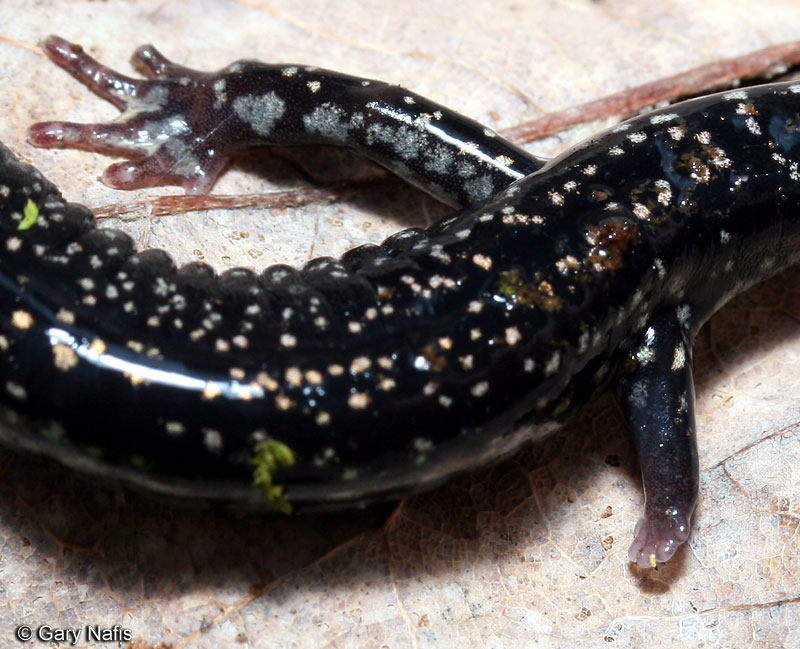
This Chattahoochee Slimy Salamander is regenerating its left front hand and fingers. | |
 |
 |
 |
 |
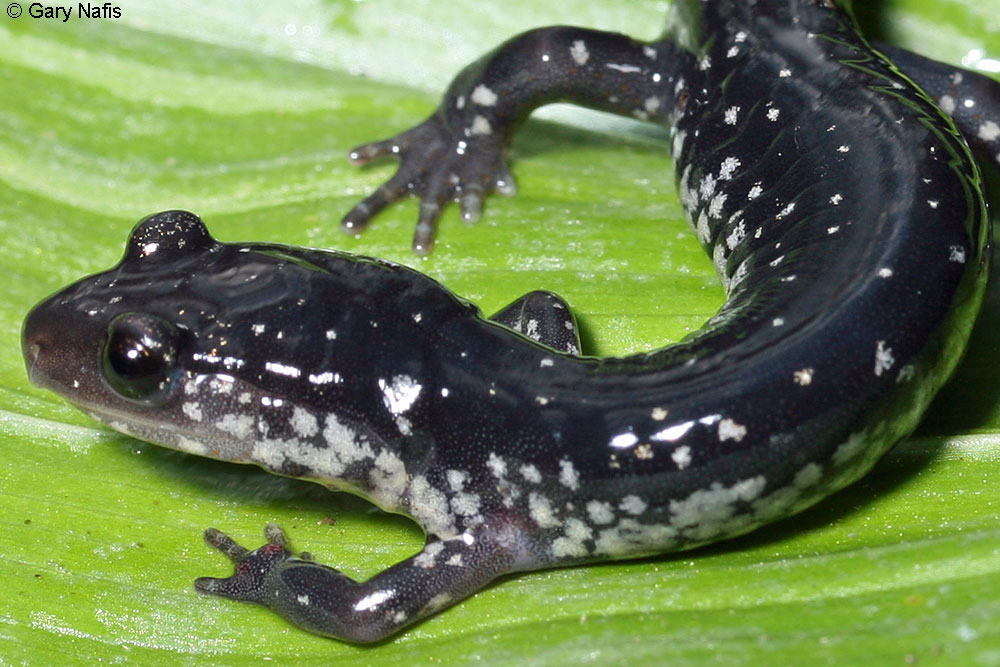
| This Southern Long-toed Salamander is missing the fingers on its right hand, but they will grow back. |
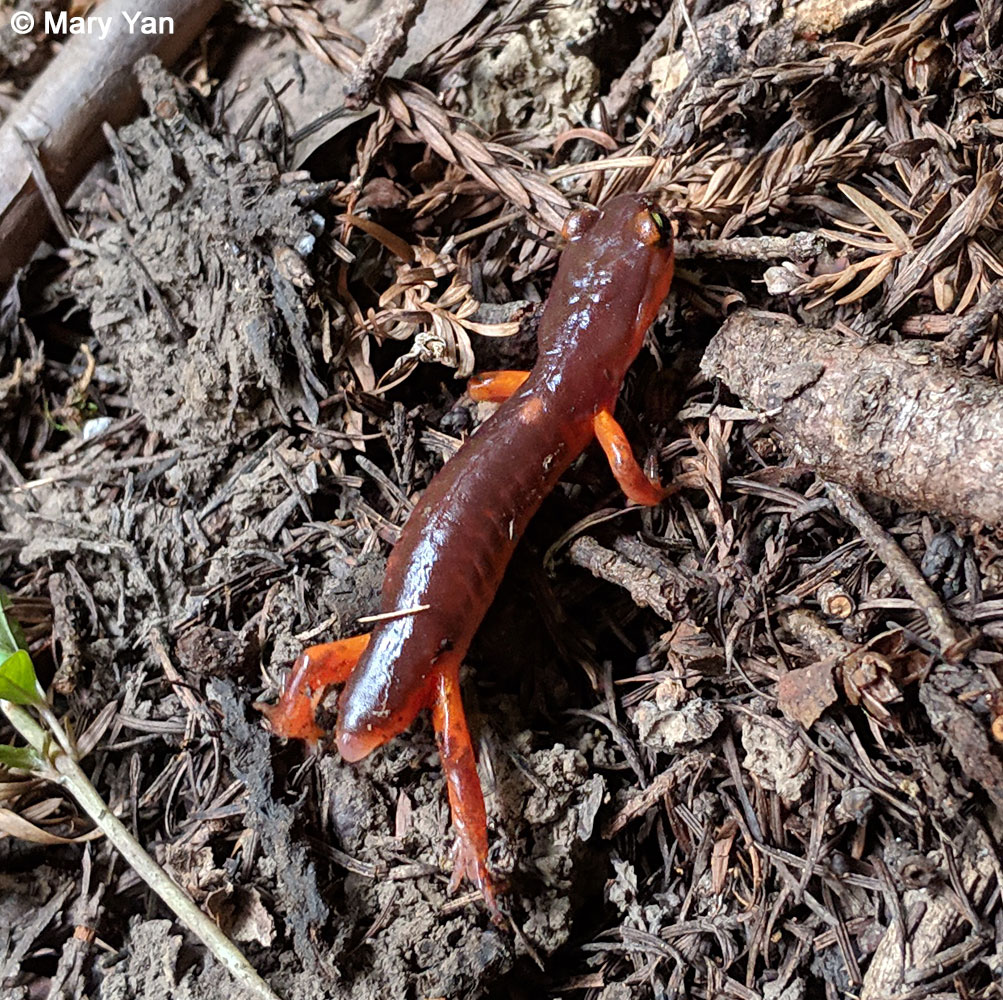
This San Simeon Slender Salamander lost much of its tail but it is growing back. | This Yellow-eyed Ensatina has lost its tail but you can see a small pink area on the tip where the tail is beginning to grow back. © Mary Yan | |
 |
 |
 |
 |
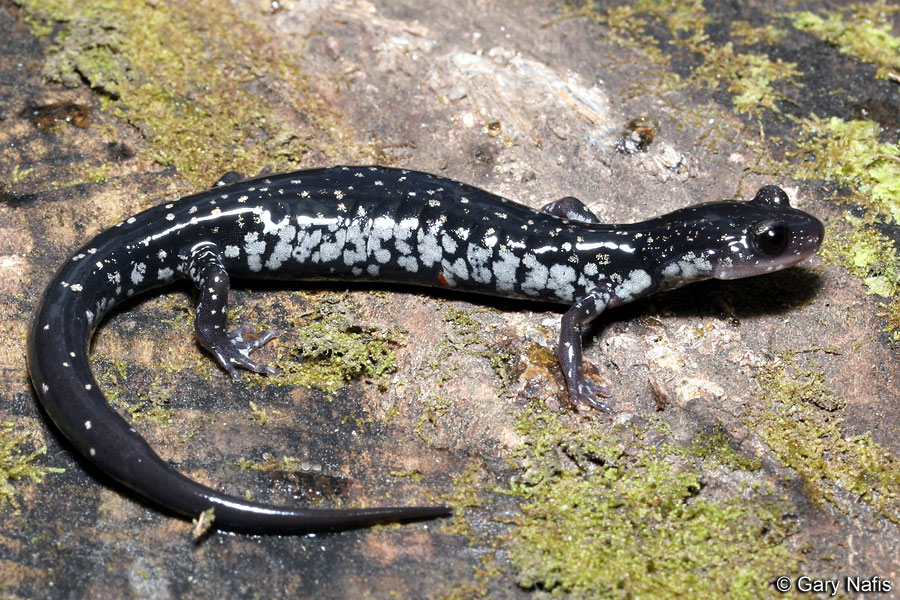
| This Del Norte Salamander is growing its tail back. |
This Arboreal Salamander has lost the end of its tail. | This Tellico Salamander appears to have grown back most of its lost tail. | This Red-cheeked Salamander has a recently broken tail. |
| Movement | |||
 |
 |
 |
 |
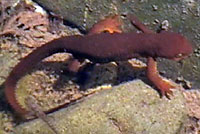
Rough-skinned Newts move around the rocky shallow margins of a river, occasionally coming up for air, in this short video. |
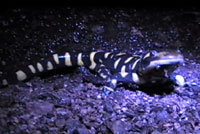
In this short video, a Barred Tiger Salamander crosses a wet road on a rainy summer night in Arizona. |
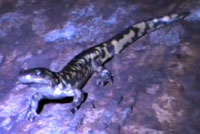
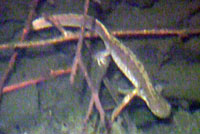
This video shows an Arizona Tiger Salamander crossing a road on a rainy summer night in the mountains of Arizona. | Western Long-toed Salamanders swim around underwater at night in a breeding pond during the breeding season in early February. |
 |
 |
 |
 |
| Some salamanders lay eggs on land and the young are born as miniature versions of the adults. Others, like the Southern Long-toed Salamander, lay eggs in water. The young hatch as tiny swimming fish-like creatures, with gills and a large fin-like tail. As you can see in this short video, they eventually develop legs. One day, these aquatic larvae will lose their gills and walk onto the land, using lungs to breathe instead of gills. | Thios video shows a Western Long-toed Salamander crawling into the breeding pond on a cold February night in King County, Washington, | This video shows some Sierra Newts in motion. |
In this video, male Sierra Newts move around a shallow breeding pool in the Sierra Nevada foothills in early March. |
 |
 |
||
| In this video, a Sierra Newt crosses a road in the afternoon in Fresno County. | This larval Southern Long-toed Salamander is seen tucking its front and rear feet into the body when it swims to reduce drag, using its tail for propulsion. | ||
| Color and Pattern Differences Between Adults and Juveniles | |||
 |
   |
||
| Juvenile Scott Bar Salamanders have a reddish stripe along the back that is missing on adults. © Tim Burkhardt |
Juvenile Black Salamanders vary in color and pattern from adults. | ||
  |
  |
||
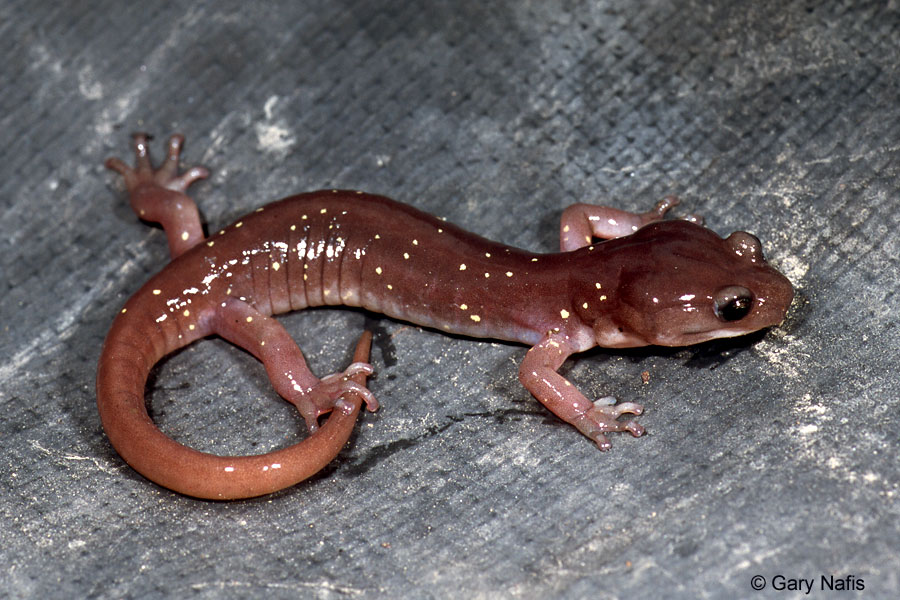
| Juvenile (left) and adult (right) Arboreal Salamanders found at the same Santa Cruz County location |
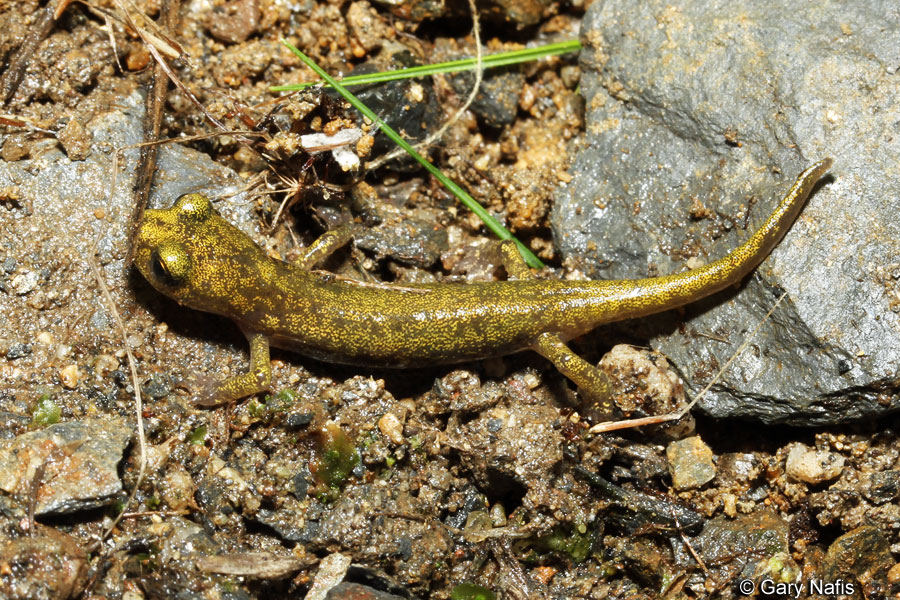
Ensatina juveniles often look the same as adults, but with brighter colors on the upper legs, but the hatchling Sierra Nevada Ensatina on the right is much different from the large juvenile on the left, both from Tulare County. It has not yet developed the large orange markings associated with the subspecies. |
||
  |
  |
||
| The juvenile Limestone Salamander on the left differs in color from the adult on the right, both were seen at the same location in Mariposa County. |
The juvenile Mt. Lyell Salamander on the left differs in color from the adult on the right, both were seen at the same location in Tuolumne County. |
||
  |
|||
| Like the other species of Web-toed salamanders, the juvenile Samwel Shasta Salamander on the left differs in color from the adult on the right. |
|||
| Salamanders With Aquatic Young | |||
  |
  |
||
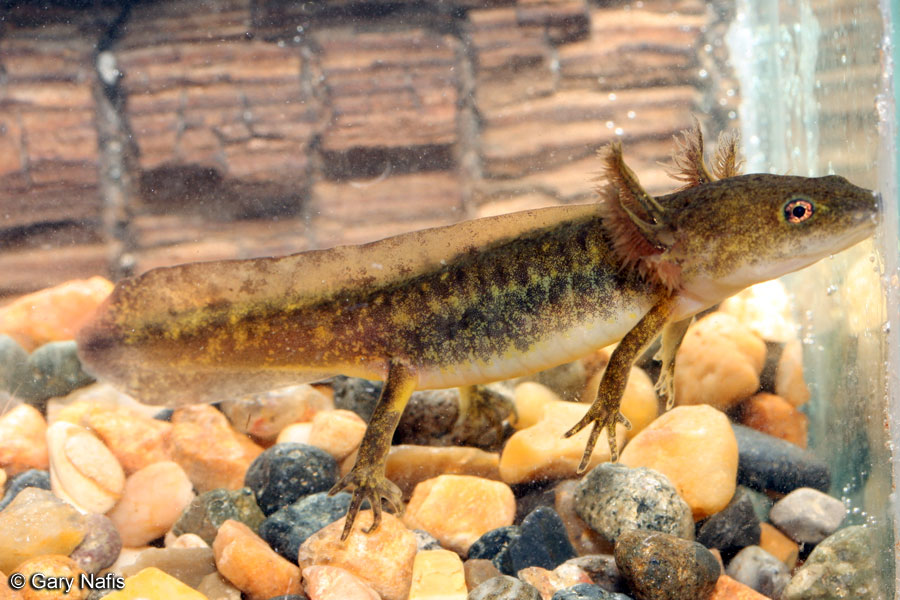
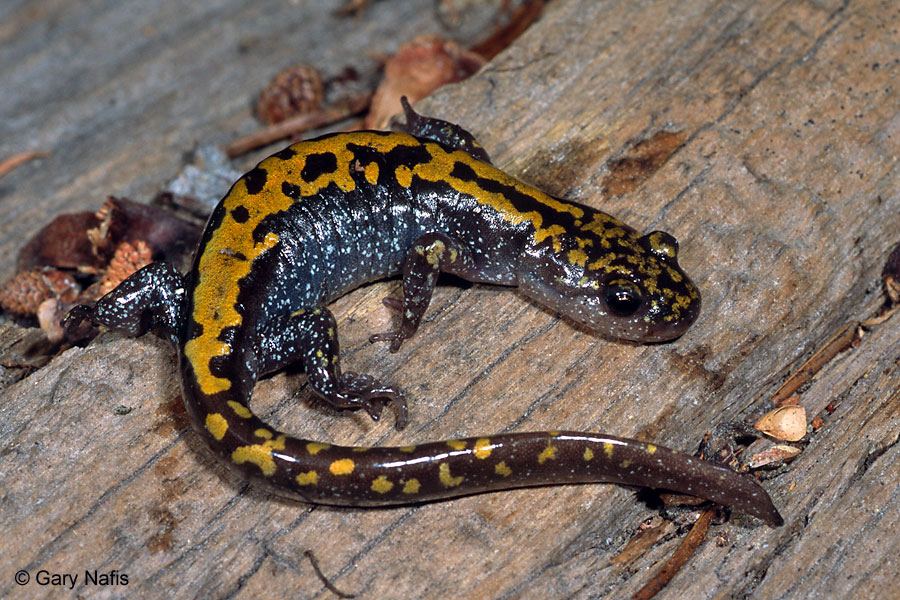
| On the left is a Southern Long-toed Salamander larva, living in water with gills. On the right is an adult, living on land breathing through lungs. |
A juvenile Red-spotted Newt (left) is also known as a "Red Eft" because it is bright red or orange in color compare d to the greenish color of an adult (right). |
||
  |
  |
||
| On the left is a Red-bellied Newt larva, living in water with gills. On the right is an adult, living on land and breathing through lungs. |
On the left is a California Newt larva, living in water with gills. On the right is an adult, living on land and breathing through lungs. |
||
  |
  |
||
| On the left is a Sierra Newt larva, living in water with gills. On the right is an adult, living on land and breathing through lungs. |
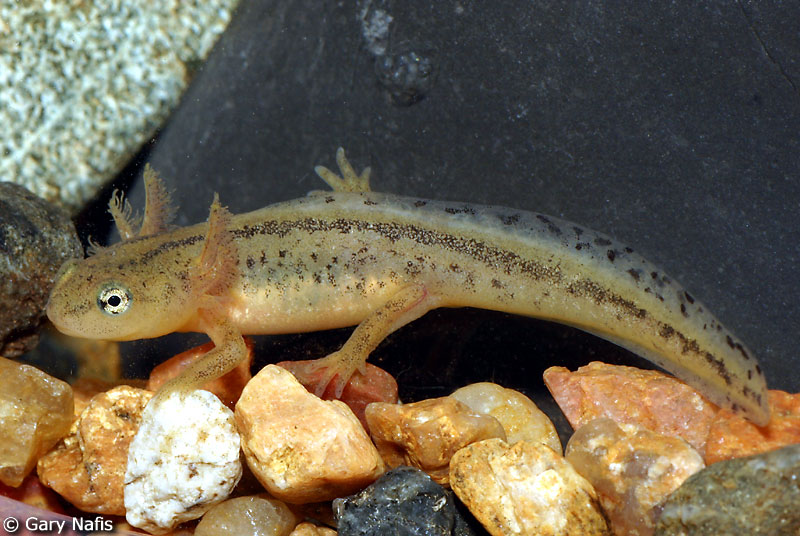
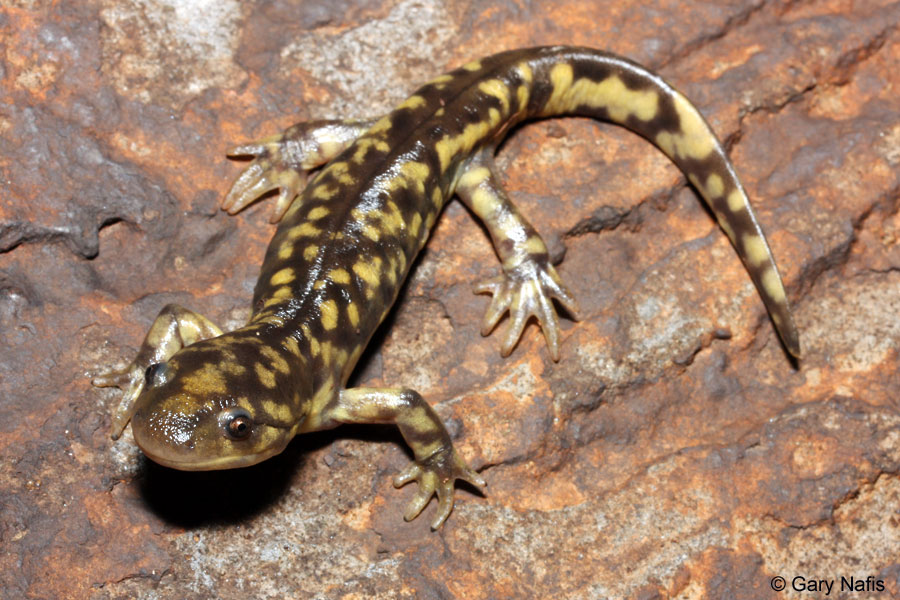
On the left is a tiger salamander larva, living in water with gills. On the right is an adult, living on land and breathing through lungs. |
||
  |
  |
||
| On the left is a Rough-skinned Newt larva, living in water with gills. On the right is an adult, living on land and breathing through lungs. |
On the left is a Coastal Giant Salamander larva, living in water with gills. On the right is an adult, living on land and breathing through lungs. |
||
  |
  |
||
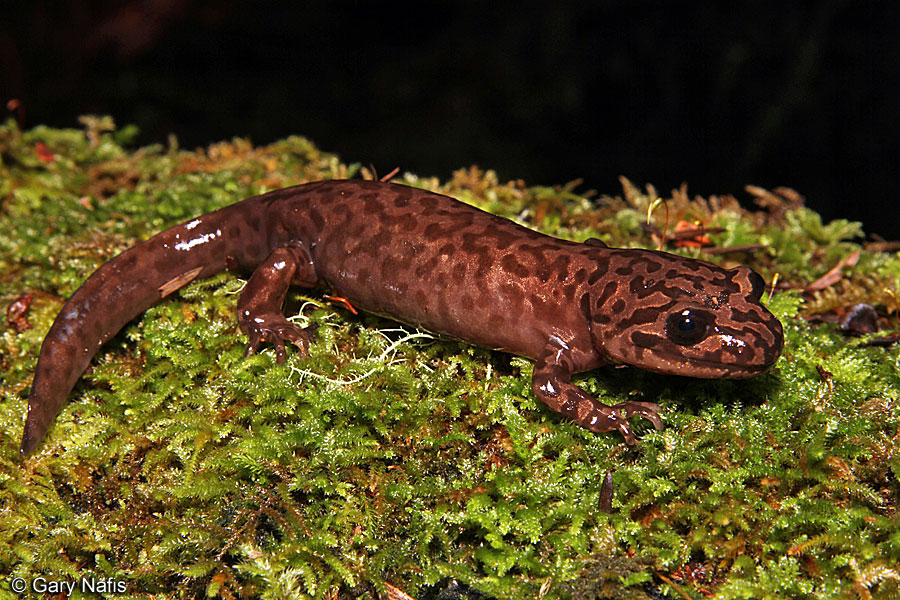
| Juveniles of many species of salamanders are aquatic, with an entirely different shape, color, and physiology that that of adults. When they leave the water, they lose their gills, devlop lungs, and begin to breathe air. This aquatic larva on the left is a California Giant Salamander. An adult is shown on the right. |
Juveniles of many species of salamanders are aquatic, with an entirely different shape, color, and physiology that that of adults. When they leave the water, they lose their gills, devlop lungs, and begin to breathe air. The aquatic larva seen on the left is a California Tiger Salamander. An adult is shown on the right. | ||

Return to the Top
© 2000 -