|
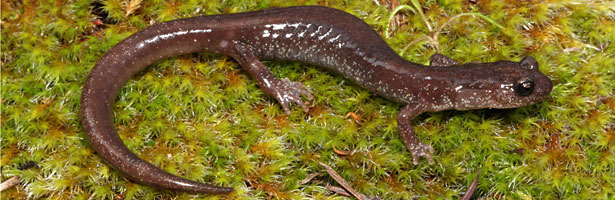 |
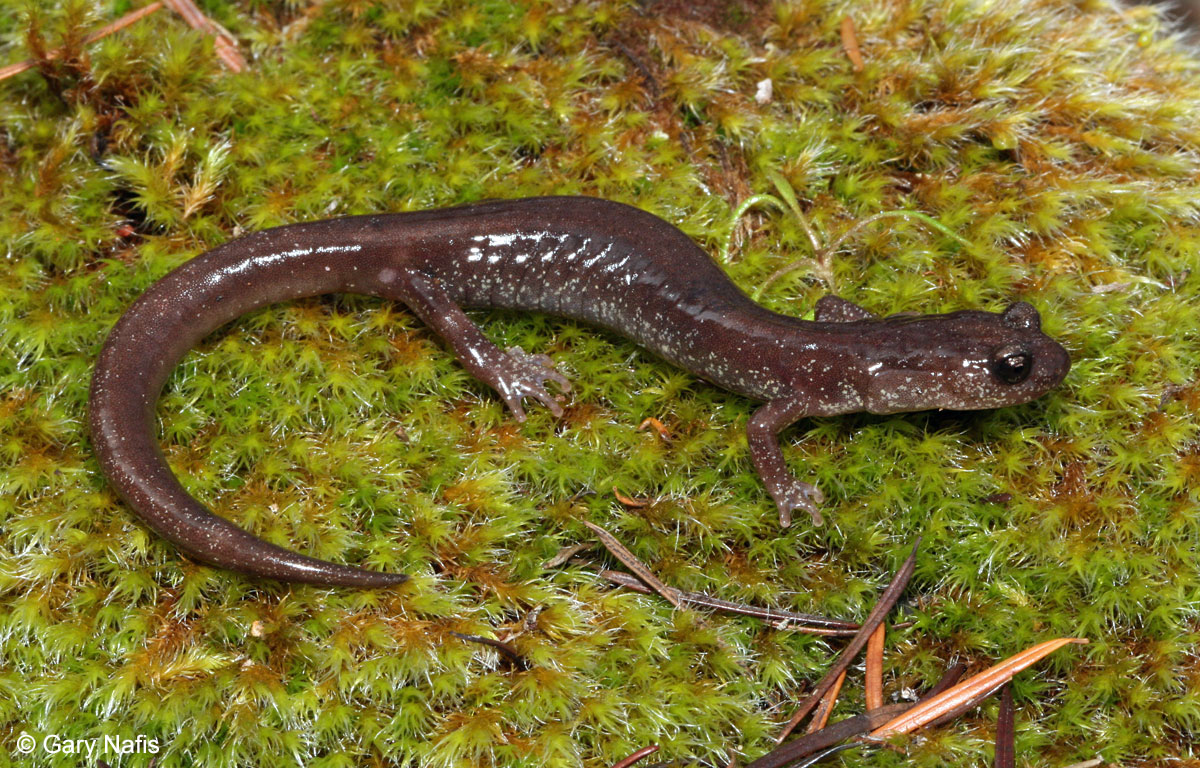
| Adult, Siskiyou County |
 |
 |
 |
| |
Adult, Siskiyou County |
|
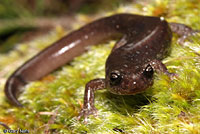 |
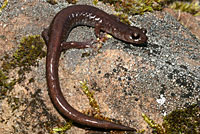 |
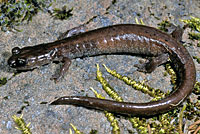 |
| Adult, Siskiyou County |
Adult, Siskiyou County |
Adult, Siskiyou County |
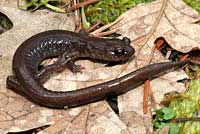 |
 |
 |
| Adult, Siskiyou County |
Adult, Siskiyou County © Alan Barron |
 |
 |
 |
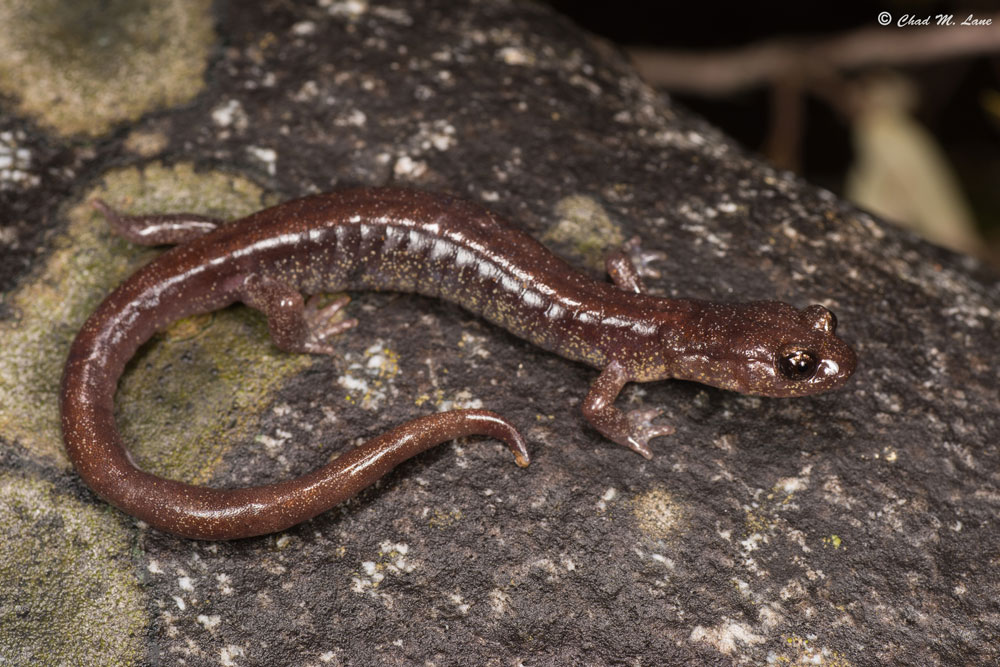
| Adult, Siskiyou County © Chad Lane |
 |
 |
|
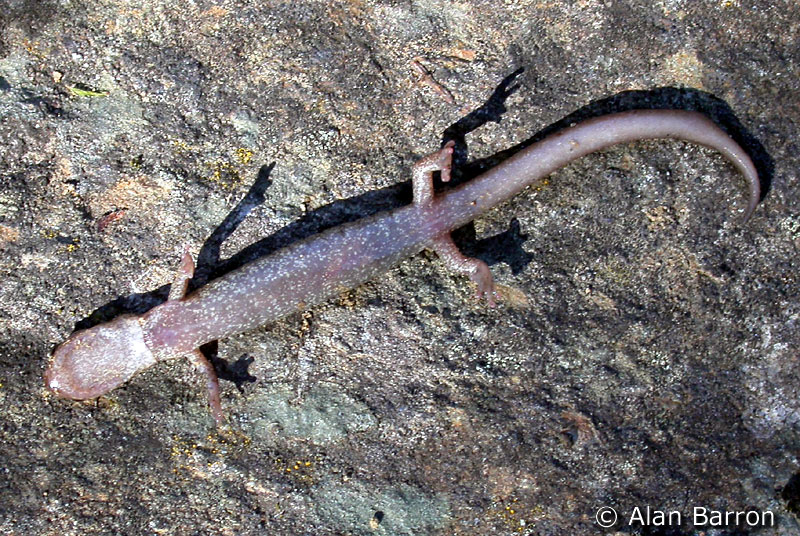
| Underside of adult, Siskiyou County |
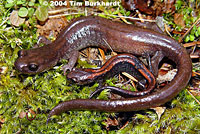
Adult, and juvenile, Siskiyou County
© Tim Burkhardt
|
|
| |
|
|
| Juveniles |
 |
 |
 |
| Juvenile, Siskiyou County |
Juvenile, Siskiyou County
© Alan Barron |
Sub-adult, Siskiyou County
|
 |
 |
 |
| |
Juvenile, Siskiyou County |
|
| |
|
|
| Habitat |
 |
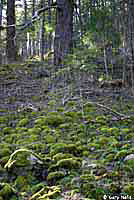 |
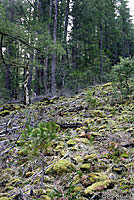 |
Habitat, Siskiyou County
|
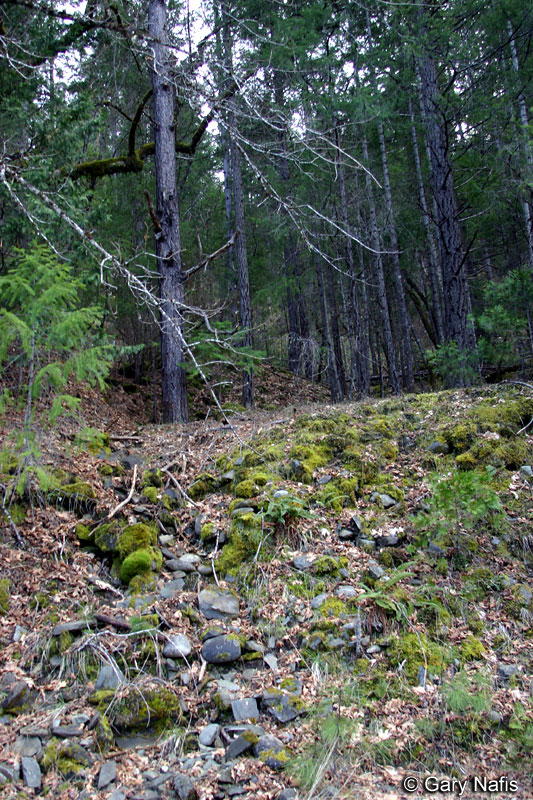
Habitat, Siskiyou County |
Habitat, Siskiyou County |
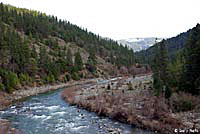 |
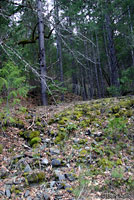 |
|
| Scott River, Siskiyou County |
Habitat, Siskiyou County |
|
|
|
|
| Description |
| |
| Size |
Adults are approximately 2.24 inches long (5.7 cm) from snout to vent length.
|
| Appearance |
Similar in appearance to and closely related to P. elongatus and P. stormi.
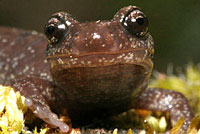
A medium-sized salamander, more robust with a wider head and longer limbs than P. elongatus and P. stormi.
17 costal grooves with 2.5 - 3.5 intercostal folds between adpressed limbs.
The tail is slightly more than 80% of the snout to vent length (compared to 85 - 90% for P. elongatus and P. stormi.)
|
| Color and Pattern |
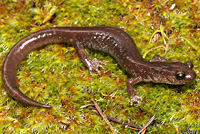
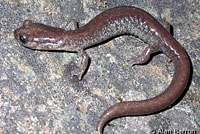
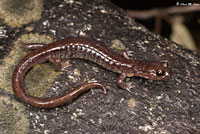
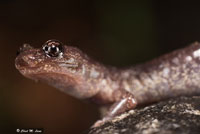
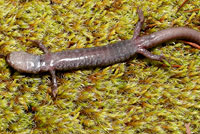
The sides of the body are chocolate brown, with brown and black pigmentation.
The upper back and head are distinguished from the sides with a brown and bronze dorsal stripe, which extends from the head to the tail tip.
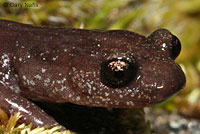
White and yellow flecks cover most of the body, and are concentrated on the sides and limbs.
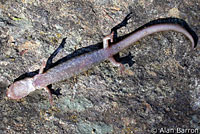
The venter is mottled, with light gray patches on a dark gray to purplish background, and white flecking, especially on the throat.
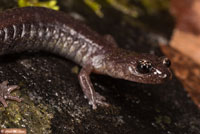
Eyes are black with varying amounts of gold flecking on the upper and lower surface.
|
| Juveniles |
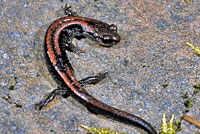
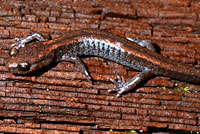
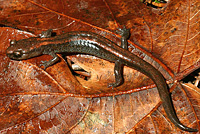
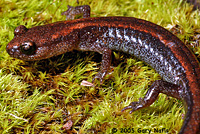
Juveniles have two orange to reddish-brown stripes extending from just behind the eyes to the tail.
Just below the vent region the stripes fuse into a single stripe.
The sides of the stripes are black with the sides of the body dark brown.
|
| Life History and Behavior |
A member of family Plethodontidae, the Plethodontid or Lungless Salamanders.
Plethodontid salamanders do not breathe through lungs. They conduct respiration through their skin and the tissues lining their mouth. This requires them to live in damp environments on land and to move about on the ground only during times of high humidity. (Plethodontid salamanders native to California do not inhabit streams or bodies of water but they are capable of surviving for a short time if they fall into water.)
Plethodontid salamanders are also distinguished by their nasolabial grooves, which are vertical slits between the nostrils and upper lip that are lined with glands associated with chemoreception.
All Plethodontid Salamanders native to California lay eggs in moist places on land.
The young develop in the egg and hatch directly into a tiny terrestrial salamander with the same body form as an adult.
(They do not hatch in the water and begin their lives as tiny swimming larvae breathing through gills like some other types of salamanders.) |
| Activity |
Little is known about this species.
Behavior is presumed to be similar to P. stormi and P. elongatus: active on rainy or wet nights.
Activity period is probably limited to late winter and early spring, and possibly early fall, due to the summer dryness and winter freezing of the habitat. |
| Diet and Feeding |
Little is known about the diet of this species.
The diets of the related allopatric species P. elongatus and P. stormi consist primarily of small invertebrates, including spiders, mites, beetles, and moths. |
| Reproduction |
Little is known about the breeding behavior of this species.
Reproduction is terrestrial.
If breeding in P. asupak is similar to the related allopatric species P. stormi, mating probably occurs in the spring, with females laying eggs in underground nests in spring or early summer and brooding them until fall.
|
| Eggs |
| Females lay eggs. |
| Young |
Young develop completely in the egg, hatch fully formed and probably remain underground until the following spring.
|
| Habitat |
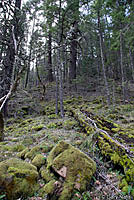
Associated with rocky forested areas, especially thick moss-covered talus.
|
| Geographical Range |
Endemic to California.
Found in a very small area of the Siskiyou Mountains in extreme northern Siskiyou county near the confluence of the Klamath and Scott Rivers.
This range is only a few miles east of the range of P. stormi. |
 |
Pink - Plethodon asupak - Scott Bar Salamander
Red: Plethodon stormi - Siskiyou Mountains Salamander
|
| Elevational Range |
The elevation of the known range is approximately 1500 - 2000 ft. (460 - 610 m).
|
| Notes on Taxonomy |
Described in 2005.
Closely related to, but determined to be morphologically and genetically distinct enough from closely-occurring P. elongatus and P. stormi, to be given full species status.
Alternate and Previous Names (Synonyms)
Before being separated as a unique species in 2005, this species would have been know as either
Plethodon stormi - Siskiyou Mountains Salamander or
Plethodon elongatus - Del Norte Salamander
|
| Conservation Issues (Conservation Status) |
| The range of this salamander is smaller than that of any other Northwest amphibian. It's fragile forest talus microhabitat could be easily destroyed. |
|
| Taxonomy |
| Family |
Plethodontidae |
Lungless Salamanders |
Gray, 1850 |
| Genus |
Plethodon |
Woodland Salamanders |
Tschudi, 1838 |
Species
|
asupak |
Scott Bar Salamander |
Mead, Clayton, Nauman, Olson and Pfrender, 2005 |
|
Original Description |
Herpetologica, 61(2), 2005, 158–177: Louise S. Mead, David R. Clayton, Richard S. Naumann, Deanna H. Olson, and Michael E. Pfrender
|
|
Meaning of the Scientific Name |
Plethodon - Greek- plethore = fullness or full of + odon = teeth - refers to the number of vomerine & pre-vomerine teeth
asupak - The Shasta Indian name for Scott Bar, the type locality
from Scientific and Common Names of the Reptiles and Amphibians of North America - Explained © Ellin Beltz
|
|
Similar Neighboring Salamanders |
Plethodon stormi - Siskiyou Mountains Salamander
Plethodon elongatus - Del Norte Salamander
|
|
More Information and References |
California Department of Fish and Wildlife
AmphibiaWeb
Herpetologica, 61(2), 2005, 158–177
NEWLY DISCOVERED POPULATIONS OF SALAMANDERS FROM SISKIYOU COUNTY CALIFORNIA REPRESENT A SPECIES DISTINCT FROM PLETHODON STORMI
Louise S. Mead 1,5,6, David R. Clayton 2, Richard S. Naumann 3, Deanna H. Olson 3, and Michael E. Pfrender 4
1Department of Zoology, 3029 Cordley Hall, Oregon State University, Corvallis, OR 97331, USA
2U.S. Fish and Wildlife Service, Roseburg Field Office, 2900 NW Stewart Parkway, Roseburg, OR 97470, USA
3USDA Forest Service, Pacific Northwest Research Station, 3200 SW Jefferson Way, Corvallis, OR 97331, USA
4Department of Biology, Utah State University, 5305 Old Main Hill road, Logan, UT 84322, USA
Jones, Lawrence L. C. , William P. Leonard, Deanna H. Olson, editors. Amphibians of the Pacific Northwest. Seattle Audubon Society, 2005. (This book has photos and a description.)
Hansen, Robert W. and Shedd, Jackson D. California Amphibians and Reptiles. (Princeton Field Guides.) Princeton University Press, 2025.
Stebbins, Robert C., and McGinnis, Samuel M. Field Guide to Amphibians and Reptiles of California: Revised Edition (California Natural History Guides) University of California Press, 2012.
Stebbins, Robert C. California Amphibians and Reptiles. The University of California Press, 1972.
Flaxington, William C. Amphibians and Reptiles of California: Field Observations, Distribution, and Natural History. Fieldnotes Press, Anaheim, California, 2021.
Nicholson, K. E. (ed.). 2025. Scientific and Standard English Names of Amphibians and Reptiles of North America North of Mexico, with Comments Regarding Confidence in Our Understanding. Ninth Edition. Society for the Study of Amphibians and Reptiles. [SSAR] 87pp.
Before its discovery, P. asupak was included with P. stormi or P. elongatus, which are described in the books below:
Samuel M. McGinnis and Robert C. Stebbins. Peterson Field Guide to Western Reptiles & Amphibians. 4th Edition. Houghton Mifflin Harcourt Publishing Company, 2018.
Stebbins, Robert C. A Field Guide to Western Reptiles and Amphibians. 3rd Edition. Houghton Mifflin Company, 2003.
Behler, John L., and F. Wayne King. The Audubon Society Field Guide to North American Reptiles and Amphibians. Alfred A. Knopf, 1992.
Robert Powell, Roger Conant, and Joseph T. Collins. Peterson Field Guide to Reptiles and Amphibians of Eastern and Central North America. Fourth Edition. Houghton Mifflin Harcourt, 2016.
Powell, Robert., Joseph T. Collins, and Errol D. Hooper Jr. A Key to Amphibians and Reptiles of the Continental United States and Canada. The University Press of Kansas, 1998.
American Museum of Natural History - Amphibian Species of the World 6.2
Bartlett, R. D. & Patricia P. Bartlett. Guide and Reference to the Amphibians of Western North America (North of Mexico) and Hawaii. University Press of Florida, 2009.
Bishop, Sherman C. Handbook of Salamanders. Cornell University Press, 1943.
Lannoo, Michael (Editor). Amphibian Declines: The Conservation Status of United States Species. University of California Press, June 2005.
Petranka, James W. Salamanders of the United States and Canada. Smithsonian Institution, 1998.
|
|
|
The following conservation status listings for this animal are taken from the July 2025 State of California Special Animals List and the July 2025 Federally Listed Endangered and Threatened Animals of California list (unless indicated otherwise below.) Both lists are produced by multiple agencies every year, and sometimes more than once per year, so the conservation status listing information found below might not be from the most recent lists, but they don't change a great deal from year to year.. To make sure you are seeing the most recent listings, go to this California Department of Fish and Wildlife web page where you can search for and download both lists:
https://www.wildlife.ca.gov/Data/CNDDB/Plants-and-Animals.
A detailed explanation of the meaning of the status listing symbols can be found at the beginning of the two lists. For quick reference, I have included them on my Special Status Information page.
If no status is listed here, the animal is not included on either list. This most likely indicates that there are no serious conservation concerns for the animal. To find out more about an animal's status you can also go to the NatureServe and IUCN websites to check their rankings.
Check the current California Department of Fish and Wildlife sport fishing regulations to find out if this animal can be legally pursued and handled or collected with possession of a current fishing license. You can also look at the summary of the sport fishing regulations as they apply only to reptiles and amphibians that has been made for this website.
|
| Organization |
Status Listing |
Notes |
| NatureServe Global Ranking |
G2G3 |
Imperiled-Vulnerable |
| NatureServe State Ranking |
S3 |
Vulnerable |
| U.S. Endangered Species Act (ESA) |
None |
|
| California Endangered Species Act (CESA) |
ST |
Listed as Threatened 6/27/1971
Since this newly described species was formerly considered to be a subpopulation of Plethodon stormi (Mead et al. 2005), and since Plethodon stormi is listed as threatened under CESA, Plethodon asupak retains the designation as a threatened species under CESA (Calif. Regulatory Notice Register, No. 21-Z, p.916, 25 May 2007).
|
| California Department of Fish and Wildlife |
None |
|
| Bureau of Land Management |
None |
|
| USDA Forest Service |
None |
|
| IUCN |
VU |
Vulnerable |
|
|
|