|
 |
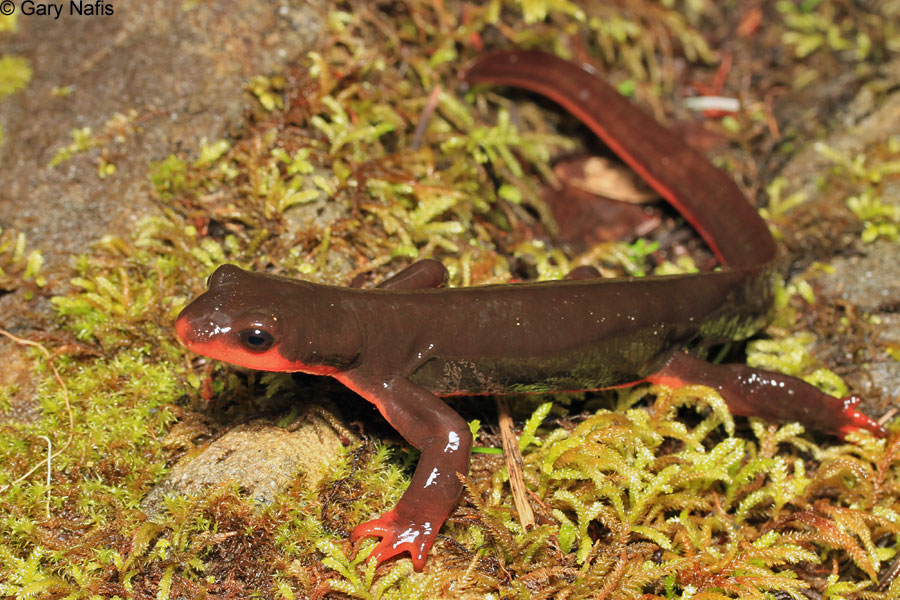
| Smooth-skinned aquatic phase adult, Mendocino County |
 |
 |
 |
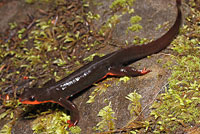 |
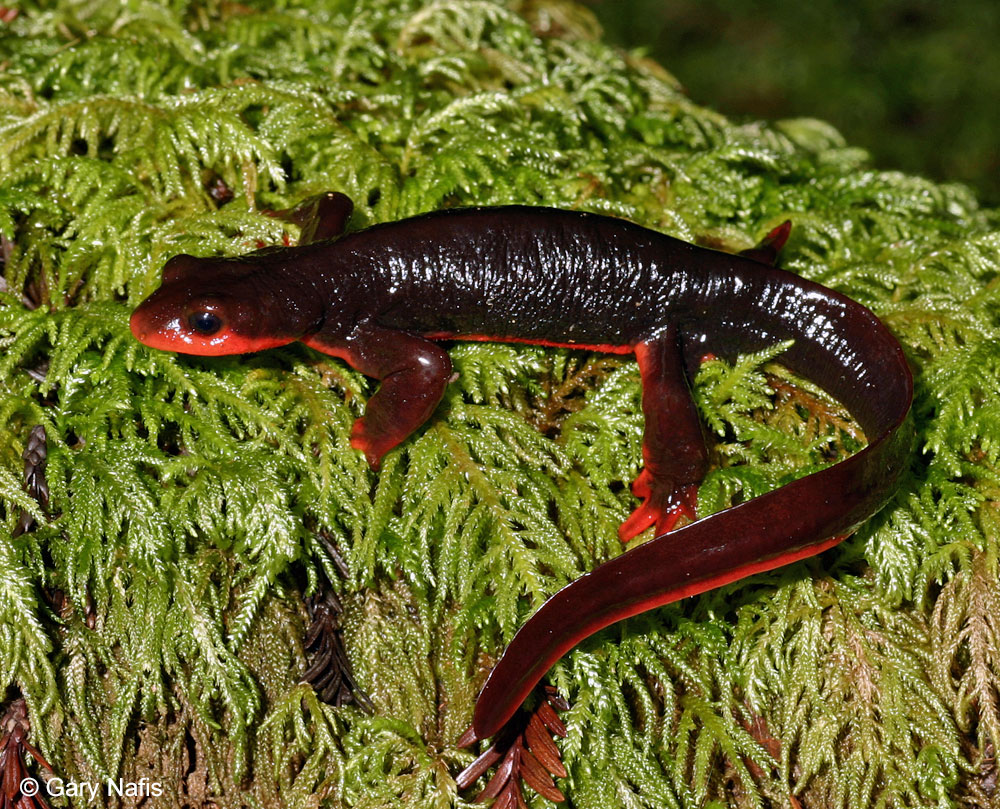
Aquatic phase adult,
Mendocino County |
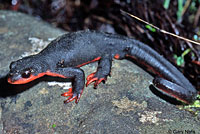
Aquatic phase adult,
Mendocino County |
Aquatic phase adult,
Mendocino County |
Aquatic phase adult,
Mendocino County |
 |
 |
 |
 |
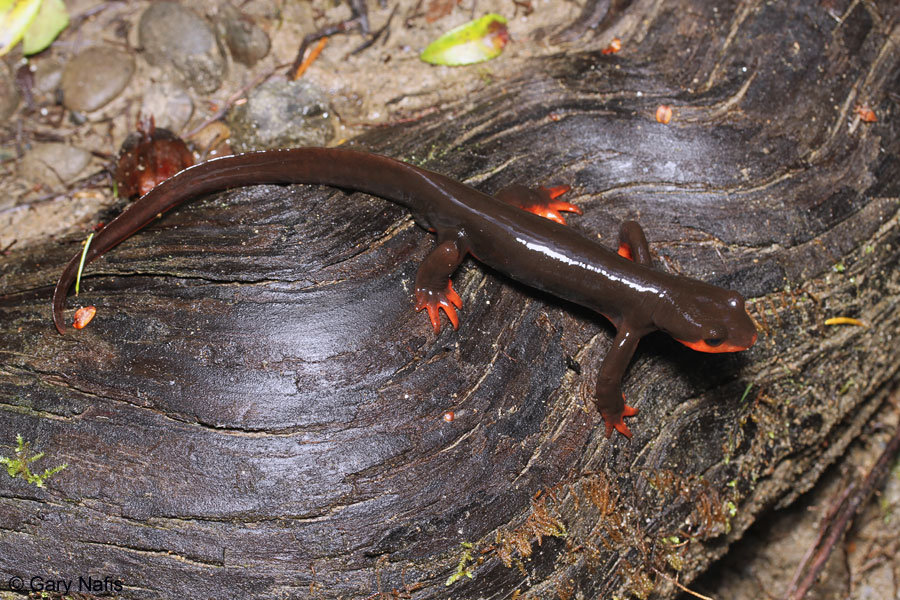
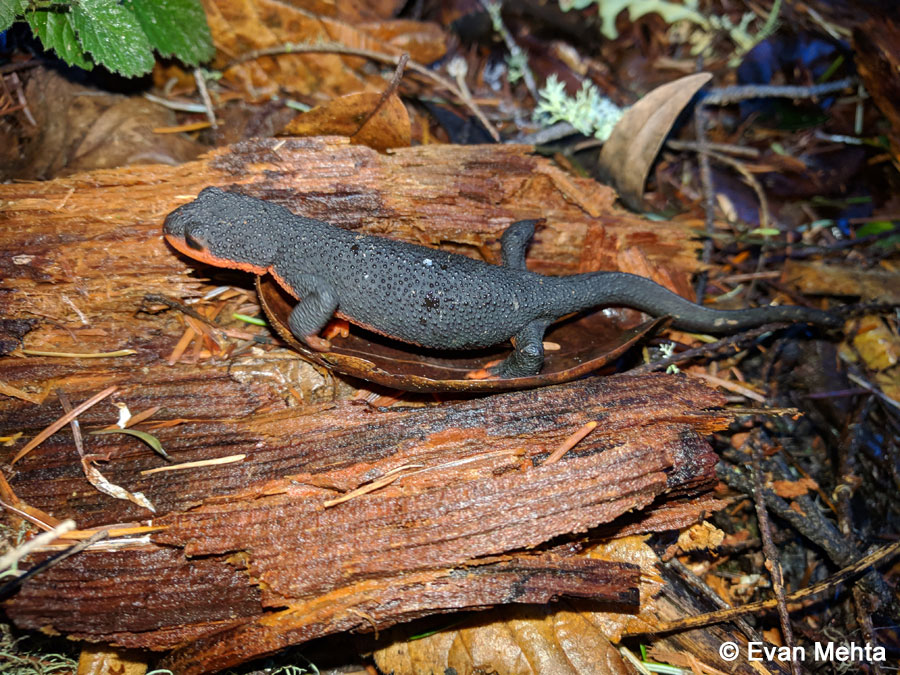
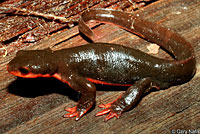
Terrestrial phase adult,
Mendocino County |
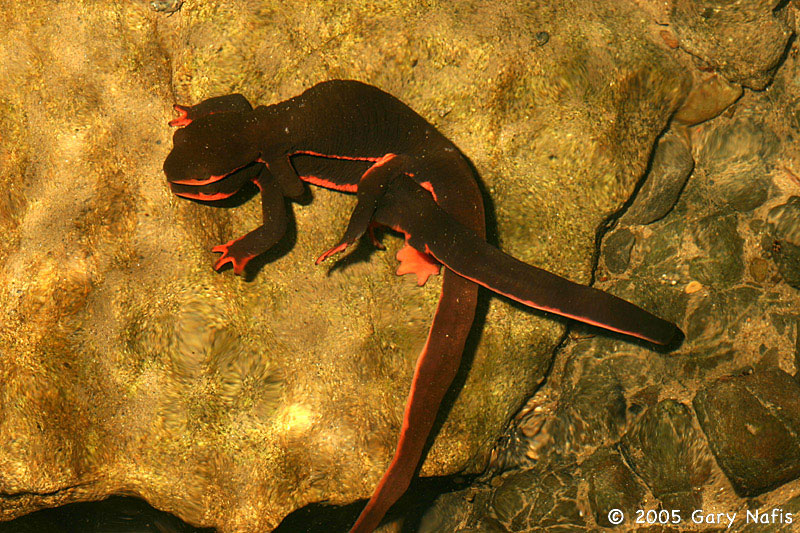
Aquatic phase adult male underwater, Mendocino County |
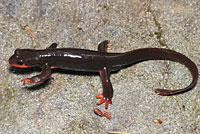
Aquatic phase adult,
Mendocino County |
Aquatic phase adult,
Mendocino County |
 |
 |
 |
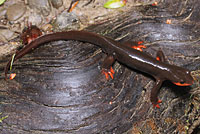 |
Aquatic phase adult,
Mendocino County |
Aquatic phase adult,
Mendocino County |
Aquatic phase adult,
Mendocino County |
Aquatic phase adult,
Mendocino County |
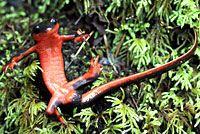 |
 |
 |
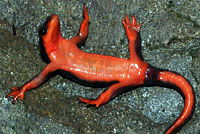 |
| Aquatic phase breeding adult male, Mendocino County |
Aquatic phase breeding adult male, Mendocino County |
Aquatic phase breeding adult male, Mendocino County |
Underside of aquatic phase breeding adult male, Mendocino County |
 |
 |
 |
 |
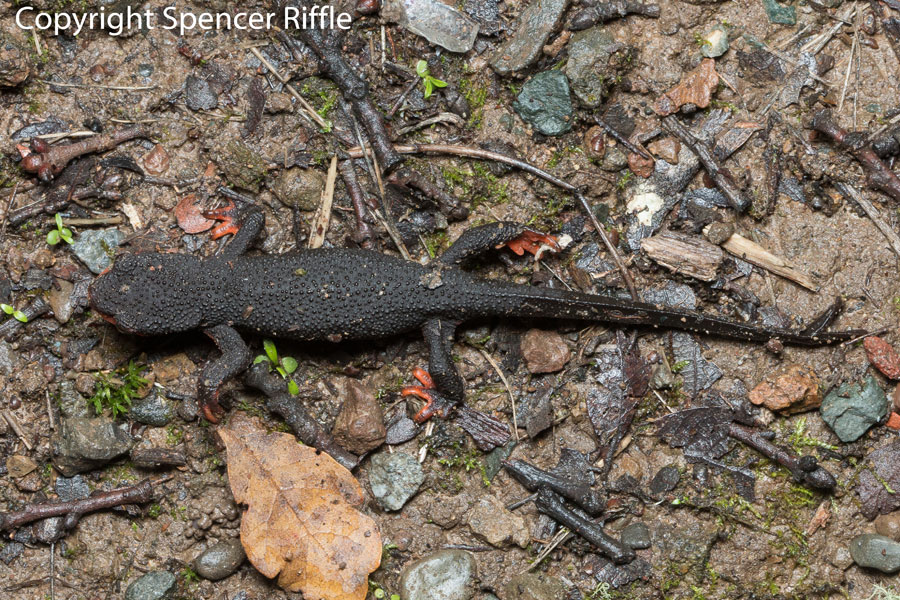
| Terrestrial phase adult, Mendocino County © Spencer Riffle |
Terrestrial phase adult, Mendocino County © Spencer Riffle |
Terrestrial phase adult, Mendocino County © Spencer Riffle |
Adult, Mendocino County
© Benjamin Genter |
 |
|
|
|
| During the breeding season, adult males develop nuptial pads on the toes to improve their ability to hold onto females during amplexus. |
|
|
|
| |
|
|
|
| Comparisons With Sympatric Newts - See also Newt Identification |
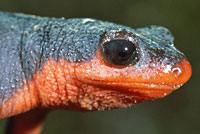 |
 |
 |
|
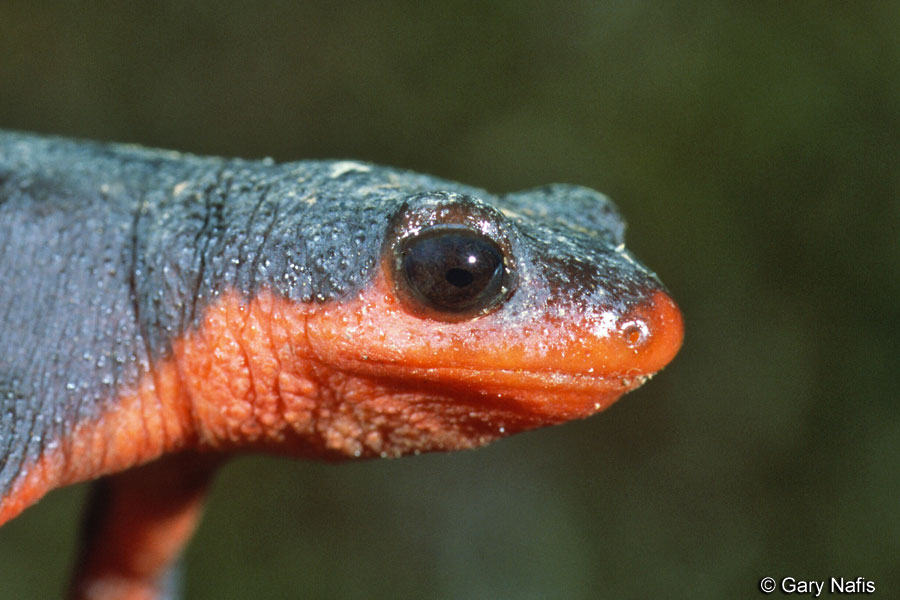
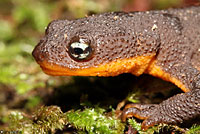
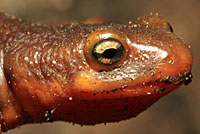
Red-bellied Newts have solid black eyes.
Compare with the Rough-skinned and California Newts to the right.) |
Sympatric Rough-skinned Newts (left) and California Newts (right) have patches of yellow coloring in their eyes. |
|
 |
|
|
Comparison of Newt larvae (click to view)
California Newt - Sierra Newt
Rough-skinned Newt - Red-belied Newt |
|
|
| |
|
|
|
| Juveniles |
 |
 |
 |
 |
| Juvenile, Mendocino County |
| |
|
|
|
| Red-bellied Newts from the disjuct population in Santa Clara County |
 |
Left: California Newt - Taricha torosa, Santa Clara County
Right: Red-bellied Newt - Taricha rivularis, Santa Clara County
© James Maughn |
 |
 |
 |
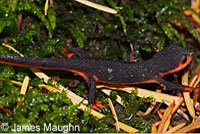 |
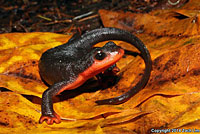
Adult, Santa Clara County
© James Maughn
|
Adult, Santa Clara County © Zachary Lim |
Juvenile, Santa Clara County
© James Maughn |
 |
 |
 |
 |
| Adult, Santa Clara County © Evan Mehta |
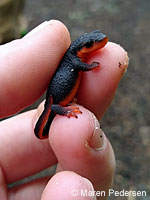
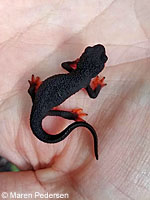
Juvenile, Santa Clara County © Maren Pedersen |
| |
|
|
|
| Breeding Activity |
 |
 |
 |
 |
| Adults amplexing in shallow water |
Adults amplexing underwater |
in situ adults as found hiding under a log, Sonoma County. © Kate Britsch |
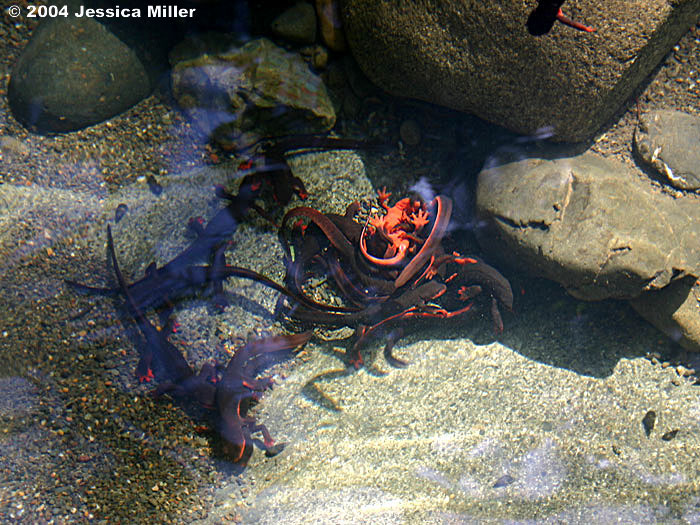
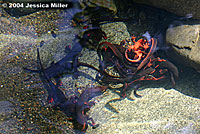
Mass of breeding adults underwater, Mendocino County © Jessica Miller |
 |
 |
 |
 |
| Aquatic phase male newts patrolling the shallow waters of a Mendocino County breeding creek before the females arrive. |
 |
 |
 |
 |
| Aquatic male newts patrolling the shallow waters of a Mendocino County breeding creek before the females arrive. |
| |
|
|
|
| Eggs |
 |
 |
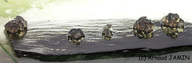 |
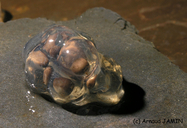 |
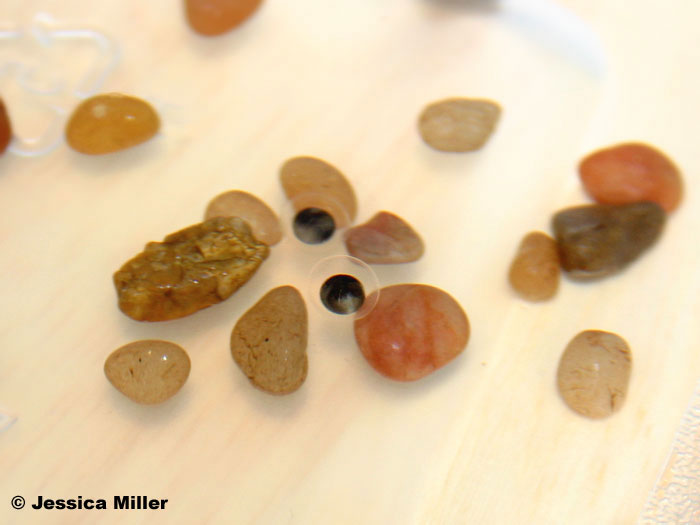
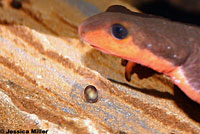
Adult newt and single egg,
Mendocino County © Jessica Miller |
Eggs, Mendocino County
© Jessica Miller |
Eggs, Sonoma County. © 2008 Arnaud Jamin.
From the CalPhotos collection. |
| |
|
|
|
| Larvae |
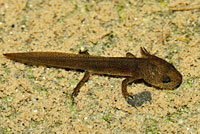 |
 |
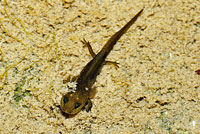 |
 |
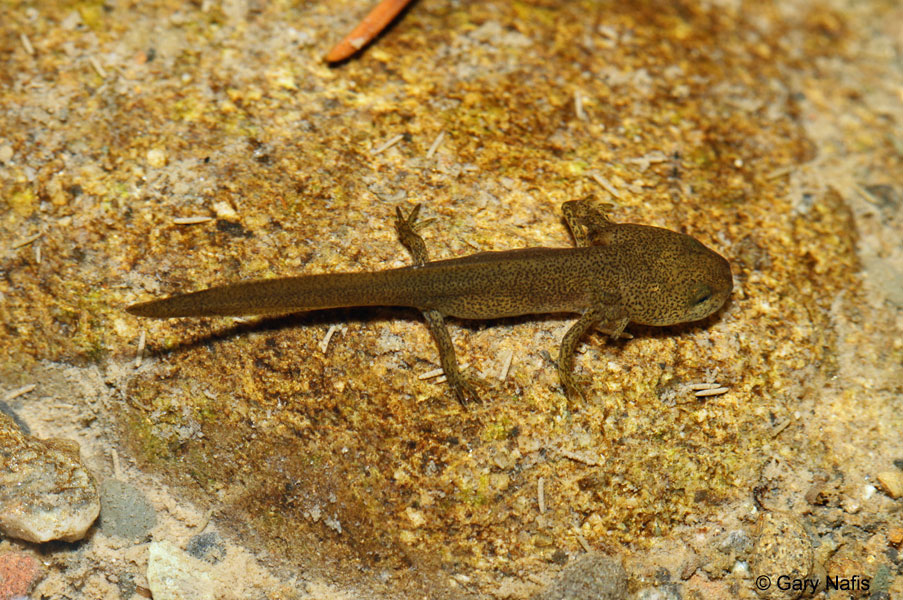
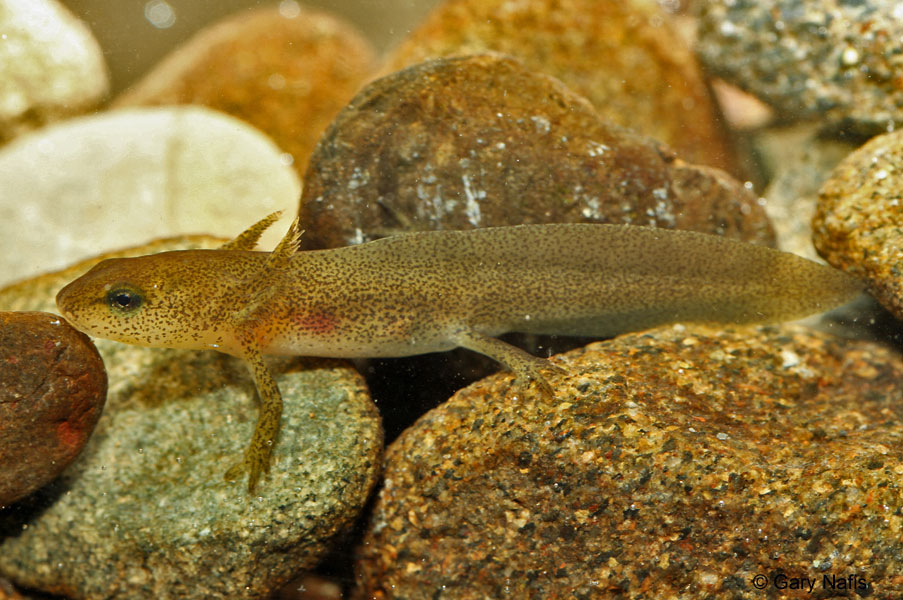
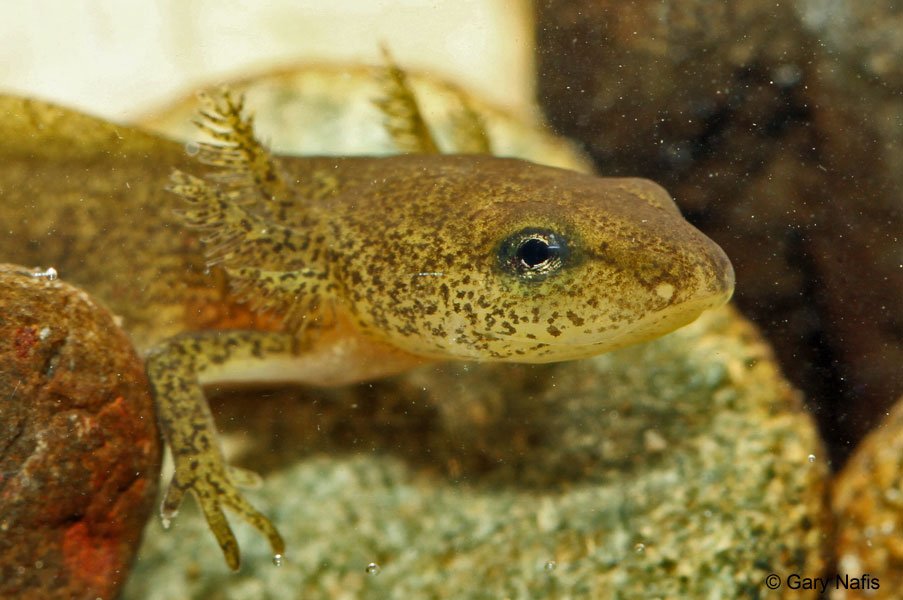
| Larvae underwater in creek, late August, Mendocino County |
Larva, temporarily removed from water for photograph, in late August, Mendocino County |
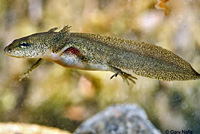 |
 |
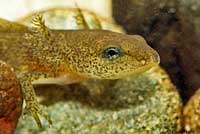 |
 |
| Larvae underwater in aquarium, late August, Mendocino County |
 |
 |
 |
 |
| Larvae underwater in aquarium, late August, Mendocino County |
Larvae underwater in creek, late August, Mendocino County |
 |
|
|
|
| Larvae underwater in creek, late August, Mendocino County |
|
|
|
| |
| Habitat |
 |
 |
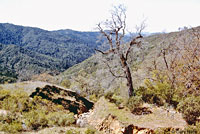 |
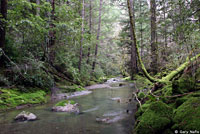 |
| Habitat, creek during early breeding season, March, Mendocino County |
Habitat, creek during early breeding season, March, Mendocino County |
Habitat, Sonoma County |
Habitat, creek during breeding season, late February,
Mendocino County
|
 |
 |
 |
 |
| Habitat, creek during early breeding season, March, Mendocino County |
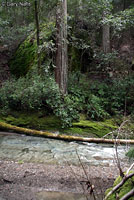
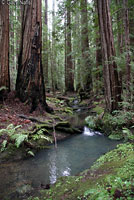
Habitat, Mendocino County |
Habitat, Mendocino County |
 |
 |
 |
 |
Habitat, creek during breeding season, early March,
Mendocino County
|
Habitat, creek during breeding season, early March,
Mendocino County
|
Habitat, redwood forest,
Mendocino County |
Breeding creek in late August,
Mendocino County
|
| |
|
|
|
| Recently-Described (2013) Santa Clara County Habitat |
 |
 |
 |
|
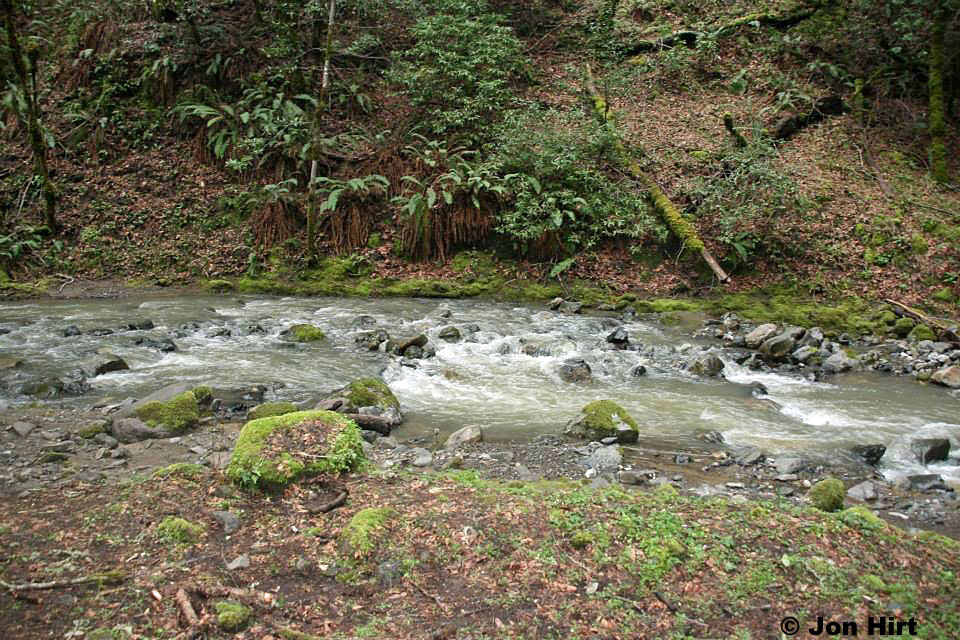
Habitat, Santa Clara County
© Jon Hirt |
Habitat, Santa Clara County
© Zachary Lim |
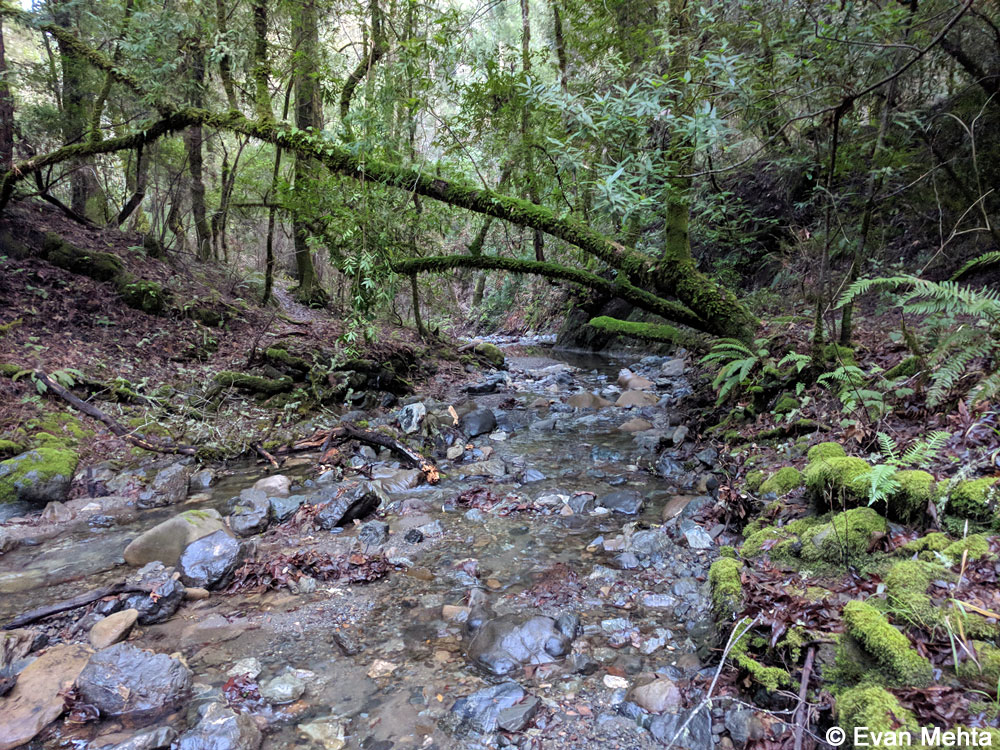
Habitat, Santa Clara County
© Evan Mehta |
|
| |
|
|
|
| Short Videos |
 |
 |
 |
 |
| Red-bellied newts at their breeding creek in the redwood forest in Mendocino County. |
Male Red-bellied newts walking around a creek at the beginning of the breeding season, waiting for females to arrive. |
Two male Red-bellied newts try to steal a female away from a male in amplexus with her, but they do not succeed. |
Breeding male newts move around underwater in a small aquarium. |
 |
 |
|
|
| Red-bellied Newt Larvae only about an inch in length swim and crawl around in an aquarium. |
Red-bellied Newt Larvae only about an inch in length crawl around on the bottom of a rocky creek in Mendocino County in late August. |
|
|
|
|
|
|
| Description |
| |
| Size |
Adults are 2 3/4 - 3 1/2 inches long (7 - 8.9 cm) from snout to vent, and 5 1/2 - 7 1/2 inches (14 - 19.5 cm) in total length.
|
| Appearance |
A stocky, medium-sized, salamander with grainy skin, no costal grooves, and dark eyes.
(Other Taricha species have yellow in the eye.)
Breathes through lungs.
Larvae have numerous, fine black spots along the sides and back. The dorsal fin and balancers are not well-developed, compared to other Taricha species, but the hind limb development is more advanced at hatching.
|
| Color and Pattern |
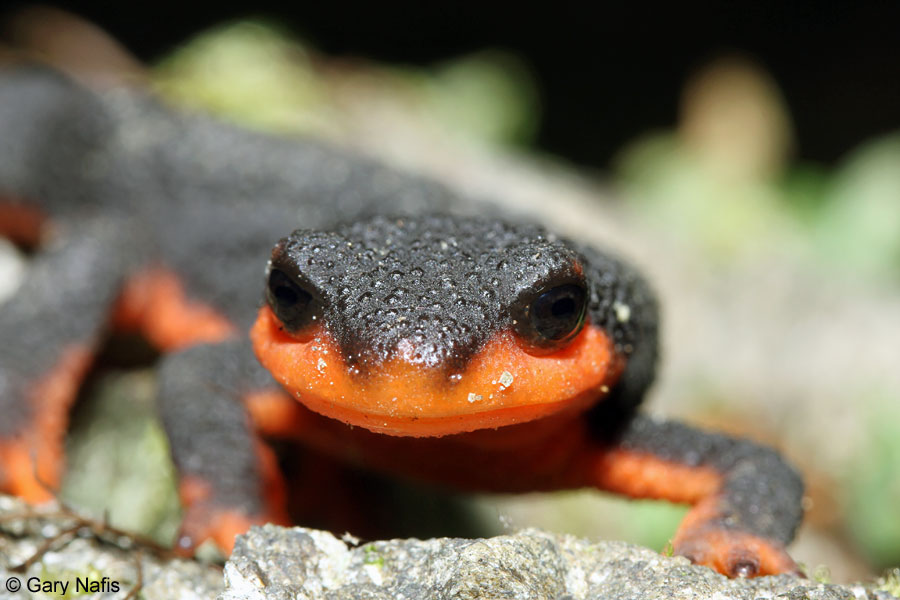
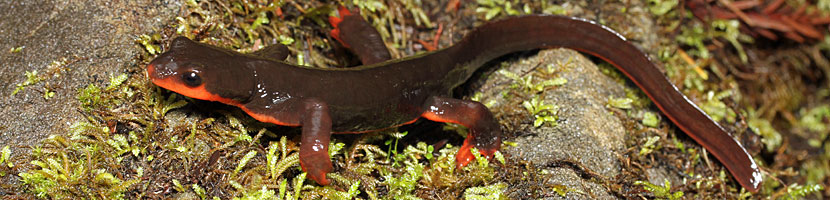
Brownish black above, tomato red below.
There is dark coloring on the undersides of the limbs and a dark band across the vent.
|
| Male / Female Differences |
Breeding males develop smooth skin that looks wrinkled and baggy underwater, a flattened tail to aid with swimming, a swollen vent, and rough nuptial pads on the undersides of the feet to aid in holding onto females during amplexus.
Dark coloring across the vent is especially broad in males and often absent in females.
|
| Comparison With Similar Species of Newts |
Identifying Species of Pacific Newts - Genus Taricha
|
| Life History and Behavior |
Rough-skinned when in the terrestrial phase.
Breathes through lungs. |
| Activity |
Adults are terrestrial, becoming aquatic when breeding.
Adults emerge after a few fall rains and move around feeding for a period before migrating to the breeding stream. (Adults that are not breeding that year, continue to forage on the forest floor.)
Acitivity typically occurs at night and in the late afternoon, but newts are also found active in streams and on the surface in daylight during the breeding season and during rains.
Often seen moving in large numbers to breeding sites during breeding season.
Terrestrial animals spend the dry summer in moist habitats under woody debris, rocks, in animal burrows.
Juveniles apparently spend most of their time underground and are not active on the surface until near sexual maturity. Coexists with T. granulosa but unlike that species, T. rivularis breeds in flowing, not still, water.
Sometimes hybridizes with T. granulosa.
At one time, Red-bellied Newts were very abundant at some locations. One estimate from the early 1960's was that there were 58,000 - 60,000 breeding newts in a 1.5 mile (2.5 km) long stretch of Pepperwood Creek.
|
| Longevity |
| Longevity is estimated to be 20 - 30 years. (Amphibiaweb) |
| Defense |
When threatened, this newt assumes a swaybacked defensive pose, closing its eyes, extending its limbs to the sides.
Unlike the other Taricha species, Red-bellied newts do not elevate or curl the tail. They sometimes lift the entire front of the body up off the ground, keeping the tail, pelvis, and hind limbs on the ground. This "unken reflex" exposes its bright red ventral surface coloring which is a warning to potential predators that the newt is poisonous.
Toxic Secretions
Red-bellied Newts have poisonous skin secretions containing the powerful neurotoxin tetrodotoxin that repel most predators. The poison is widespread throughout the skin, muscles, and blood, and even the eggs. It can cause death in many animals, including humans, if eaten in sufficient quantity. (One study estimated that 25,000 mice could be killed from the skin of one Rough-skinned newt, the most toxic of the Taricha species.)
The poison can also be ingested through a mucous membrane or a cut in the skin, so care should always be taken when handling newts.
Newt Predators
In most locations the Common Gartersnake, Thamnophis sirtalis, has a high resistance to tetrodotoxin which allows it to prey on Pacific Newts, genus Taricha. Thamnophis atratus and Thamnophis couchii have also been found with a strong resistance to tetrodotoxin that allows them to eat Pacific Newts.
Thamnophis elegans has also been found eating Taricha torosa in San Luis Obispo County.
(Feldman, Hansen, & Sikola. Herpetological Review 51[3] 2020.)
An arms race between T. sirtalis and the tetrodoxin poison contained in Taricha has been documented, with newt toxicity varying by location and snake resistance to the toxin also varying by location.
(Edmund D. Brodie III. Patterns, Process, and the Parable of the Coffeepot Incident: Arms Races Between Newts and Snakes from Landscapes to Molecules. From In the Light of Evolution: Essays from the Laboratory and Field edited by Jonathan Losos (Roberts and Company Publishers). 2010.)
The Bay Area is the Center of an Evolutionary Race Between Hungry Snakes and Toxic Newts.
by Anton Sorokin. Bay Nature, April 6, 2022
|
| Diet and Feeding |
| Eats a variety of invertebrates. Larvae most likely eat anything they can fit in their mouth. |
| Reproduction |
Reproduction is aquatic.
Breeding migration begins as early as late January, with adult males entering the water as early as early February.
Very heavy rainfall inhibits migration, as the newts need to wait until the streams recede from winter floods.
Mating takes place from late February to May, peaking in March, in clean rocky streams and rocky rivers with moderate to fast flow.
Adults will leave the water during heavy rains when the flow is high.
Ponds, lakes, and other standing waters are avoided.
Newts typically return to the same part of the same creek throughout their life.
Experiments have shown that they have an excellent homing ability to find their native stream segment using their sense of smell.
There is no evidence that they are territorial and defend their stream segment from others.
Males breed more frequently than females - usually every year or every 2 years, while females breed every 2 or more years.
Males arrive at the streams 1-3 weeks before females.
In the water, they transform into their aquatic phase, with loose skin, swolen cloacal lips, and an enlarged and flattened tail that aids them in swimming. They patrol the edges of the stream waiting for females to arrive. When they arrive, the females are sometimes mobbed by a group of males until one has grabbed onto her back in amplexus and cannot be wrestled off by the other males.
Males develop nuptial pads on the fingers and toes to help their grip during amplexus.
The male hangs on to the female in amplexus until she is ready to fertilize her eggs. At that time, the male deposits a spermatophore and the female picks it up with her cloaca. |
| Eggs |
The female lays and attaches a flattened egg mass usually only one egg layer thick under stones in the middle of the creek or rocks overhanging the creek, or onto submerged roots.
Clutch size is about 10 eggs.
Many egg masses are sometimes found under one stone.
Temperature determines how long the eggs take to hatch.
In a laboratory, eggs hatched faster at a higher temperature (16 - 20 days) than at a lower temperature (30 - 34 days.) |
| Larvae |
The larval stage lasts about 4 - 6 months.
In one population, the larvae hatched in late April, and transformed in late August.
Metamorphosis typically occurs in late summer and early fall.
Transformed juveniles leave the stream and go into hiding in underground shelters where they spend most of their life until they are old enough to breed (4 - 6 years.)
|
| Habitat |
A stream or river dweller.
Found in coastal woodlands and redwood forest along the coast of northern California.
Larvae retreat into vegetation and under stones during the day.
|
| Geographical Range |
Endemic to California.
Occurs along the coast from near Bodega, Sonoma county, to near Honeydew, Humboldt county, and inland to Lower lake and Kelsey Creek, Lake County.
The most limited in distribution of the three species of Taricha.
Disjunct Population in Santa Clara County
In 2014 an isolated population of Red-bellied Newts was documented in the Stevens Creek watershed in Santa Clara County, California, more than 80 miles (130 km) south of the former known range of the species. The population was not found to be genetically divergent from the main population, which has the lowest genetic diversity of any coastal California salamander species, so researchers were unable to determine if the population is natural or introduced.
(Sean B. Reilly, Daniel M. Portik, Michelle S. Koo, and David B. Wake (2014) Discovery of a New, Disjunct Population of a Narrowly Distributed Salamander (Taricha rivularis) in California Presents Conservation Challenges. Journal of Herpetology: September 2014, Vol. 48, No. 3, pp. 371-379.)
In December 2014 Cindy Roessler posted a blog about the discovery and recognition of this disjunct population of newts: Mystery of the Red-Bellied Newt. One of the comments points out that Stanford University biologist Victor Twitty (who first described this species in 1935) performed experiments on newts in the genus Taricha, including Red-bellied Newts, by cross-breeding different species and hatching the young in a laboratory then releasing hundreds of thousands of larvae into a creek in Sonoma County where he studied the results of the hybridization. (The results produced surprisingly fertile adults which continued to reproduce in the wild. You can read the paper he published in 1961 about this on PNAS.) The fact that Twitty performed experiments on newts in the wild as well as the proximity of his Stanford lab to the Santa Cruz Mountains leads to speculation that perhaps he or his students may have been responsible for introducing the newts in the Santa Clara population.
|
 |
Green: Taricha rivularis - Red-bellied Newt
Orange: Taricha sierrae - Sierra Newt
Red: Taricha torosa - California Newt
|
| Notes on Taxonomy |
Alternate and Previous Names (Synonyms)
Triturus rivularis - Red-bellied Newt (Bishop 1943, Stebbins 1966, 1985, 2003, 2012)
Triturus rivularis - Western Red-bellied Newt (Bishop 1943, Stebbins 1954)
Triturus torosus - Pacific Coast Newt (Brown Water Dog) (Storer 1925)
Taricha laevis (Baird & Girard 1853)
Notophthalmus torosus (Baird 1850)
Salamandra Beecheyi (Gray 1839)
Triturus torosus - (Rathke 1833)
|
| Conservation Issues (Conservation Status) |
Development of forests and grassland habitats for agriculture and housing may pose a serious threat by drying out the land and degrading streams, and creating more vehicular traffic with corresponding road mortality of terrestrial newts, especially during breeding migrations.
------------------------------------------------------------------------------------------------------------------------------------------------------------------------------------------------------------------------------
Road mortality causes population declines in areas where newts must cross well-travelled roads during their breeding migrations. Slowly-moving newts on a road are hard to see and avoid, especially when they are moving at night,
A newt mortality study published in 2021 showed that more than 39 percent of newts crossing a road in Santa Clara County were killed and predicted they might be extirpated there in 57 years.
(Alma Bridge Road-Related Newt Mortality Study. H. T. Harvey & Associates, November 12, 2021.)
------------------------------------------------------------------------------------------------------------------------------------------------------------------------------------------------------------------------------
Community Efforts to Help Migrating Newts
(These are studying and helping other species of Newts, but Red-bellied Newts also suffer from road mortality during migrations.)
The Chileno Valley Newt Brigade was created to help ferry migrating newts across a road in Marin County by local activists.
The East Bay Regional Park District has closed South Park Drive in Tilden Park to all motor vehicle traffic every year during the rainy season for several decades.
Newt Patrol is a group of South Bay citizens who have studied and counted the substantial number of newts killed on roads around Lexington Reservoir in Santa Clara County since 2017 with the goal of raising awareness of the imperiled salamanders. They have counted from 4-5,000 and more dead newts per year on a 4.2 mile section of road, mostly between December and March.
------------------------------------------------------------------------------------------------------------------------------------------------------------------------------------------------------------------------------
There is a description and conservation status summary of this taxon with a dot-locality distribution map in an online .pdf from the California Department of Fish and Wildlife book California Amphibian and Reptile Species of Special Concern (Thomson, Wright, and Shaffer 2016). Below is part of the discussion of the threats to this species in the book:
"The paucity of distribution and abundance data makes it difficult to determine the status of most Taricha rivularis populations. However, the species has a small range in an area that has experienced high levels of habitat conversion to vineyards and subdivisions, rendering them vulnerable to habitat loss and fragmentation (Marks and Doyle 2005). Taricha rivularis may also be experiencing increasing mortality from vehicular traffic (Marks and Doyle 2005), especially during breeding migrations. Climate change poses potential risks to T. rivularis through increased temperatures, changes in hydrology, changes in fire regime, and vegetation shifts." |
|
| Taxonomy |
| Family |
Salamandridae |
Newts |
Goldfuss, 1820 |
| Genus |
Taricha |
Pacific Newts |
Gray, 1850 |
Species
|
rivularis |
Red-bellied Newt |
(Twitty, 1935) |
|
Original Description |
Twitty, 1935 - Copeia, p. 73
from Original Description Citations for the Reptiles and Amphibians of North America © Ellin Beltz
|
|
Meaning of the Scientific Name |
Taricha - Greek = preserved mummy, possibly referring to the rough skinned appearance
rivularis - Latin = of a brook or stream
from Scientific and Common Names of the Reptiles and Amphibians of North America - Explained © Ellin Beltz
|
|
Related California Salamanders |
Taricha torosa torosa - Coast Range Newt
Taricha torosa sierrae - Sierra Newt
Taricha granulosa - Rough-skinned Newt
|
|
More Information and References |
California Department of Fish and Wildlife
There is a description and conservation status summary of this taxon with a dot-locality distribution map in an online .pdf from the California Department of Fish and Wildlife book California Amphibian and Reptile Species of Special Concern (Thomson, Wright, and Shaffer 2016).
AmphibiaWeb
Hansen, Robert W. and Shedd, Jackson D. California Amphibians and Reptiles. (Princeton Field Guides.) Princeton University Press, 2025.
Stebbins, Robert C., and McGinnis, Samuel M. Field Guide to Amphibians and Reptiles of California: Revised Edition (California Natural History Guides) University of California Press, 2012.
Stebbins, Robert C. California Amphibians and Reptiles. The University of California Press, 1972.
Flaxington, William C. Amphibians and Reptiles of California: Field Observations, Distribution, and Natural History. Fieldnotes Press, Anaheim, California, 2021.
Nicholson, K. E. (ed.). 2025. Scientific and Standard English Names of Amphibians and Reptiles of North America North of Mexico, with Comments Regarding Confidence in Our Understanding. Ninth Edition. Society for the Study of Amphibians and Reptiles. [SSAR] 87pp.
Samuel M. McGinnis and Robert C. Stebbins. Peterson Field Guide to Western Reptiles & Amphibians. 4th Edition. Houghton Mifflin Harcourt Publishing Company, 2018.
Stebbins, Robert C. A Field Guide to Western Reptiles and Amphibians. 3rd Edition. Houghton Mifflin Company, 2003.
Behler, John L., and F. Wayne King. The Audubon Society Field Guide to North American Reptiles and Amphibians. Alfred A. Knopf, 1992.
Robert Powell, Roger Conant, and Joseph T. Collins. Peterson Field Guide to Reptiles and Amphibians of Eastern and Central North America. Fourth Edition. Houghton Mifflin Harcourt, 2016.
Powell, Robert., Joseph T. Collins, and Errol D. Hooper Jr. A Key to Amphibians and Reptiles of the Continental United States and Canada. The University Press of Kansas, 1998.
American Museum of Natural History - Amphibian Species of the World 6.2
Bartlett, R. D. & Patricia P. Bartlett. Guide and Reference to the Amphibians of Western North America (North of Mexico) and Hawaii. University Press of Florida, 2009.
Bishop, Sherman C. Handbook of Salamanders. Cornell University Press, 1943.
Lannoo, Michael (Editor). Amphibian Declines: The Conservation Status of United States Species. University of California Press, June 2005.
Petranka, James W. Salamanders of the United States and Canada. Smithsonian Institution, 1998.
Jones, Lawrence L. C. , William P. Leonard, Deanna H. Olson, editors. Amphibians of the Pacific Northwest. Seattle Audubon Society, 2005.
|
|
|
The following conservation status listings for this animal are taken from the July 2025 State of California Special Animals List and the July 2025 Federally Listed Endangered and Threatened Animals of California list (unless indicated otherwise below.) Both lists are produced by multiple agencies every year, and sometimes more than once per year, so the conservation status listing information found below might not be from the most recent lists, but they don't change a great deal from year to year.. To make sure you are seeing the most recent listings, go to this California Department of Fish and Wildlife web page where you can search for and download both lists:
https://www.wildlife.ca.gov/Data/CNDDB/Plants-and-Animals.
A detailed explanation of the meaning of the status listing symbols can be found at the beginning of the two lists. For quick reference, I have included them on my Special Status Information page.
If no status is listed here, the animal is not included on either list. This most likely indicates that there are no serious conservation concerns for the animal. To find out more about an animal's status you can also go to the NatureServe and IUCN websites to check their rankings.
Check the current California Department of Fish and Wildlife sport fishing regulations to find out if this animal can be legally pursued and handled or collected with possession of a current fishing license. You can also look at the summary of the sport fishing regulations as they apply only to reptiles and amphibians that has been made for this website.
Protected from take with a sport fishing license in 2013.
|
| Organization |
Status Listing |
Notes |
| NatureServe Global Ranking |
G2 |
Imperiled |
| NatureServe State Ranking |
S2 |
Imperiled in the state because of rarity due to very restricted range, very few populations (often 20 or fewer), steep declines, or other factors making it very vulnerable to extirpation from the state. |
| U.S. Endangered Species Act (ESA) |
None |
|
| California Endangered Species Act (CESA) |
None |
|
| California Department of Fish and Wildlife |
SSC |
California Species of Special Concern |
| Bureau of Land Management |
None |
|
| USDA Forest Service |
None |
|
| IUCN |
LC |
Least Concern |
|
|
|