
A Guide to the Amphibians
and Reptiles of California
Click on a picture for a larger view

Identifying California Turtles
California Turtles: |

| This is not a detailed key to identifying turtles found in California, just a simple guide for someone who wants to identify a turtle by color, pattern, and other physical characteristics as well as by geographical location within the state. You can read more information about each turtle by clicking on the blue name links. Besides sea turtles, there are only three species of native California turtles, and four non-natives which have established themselves with breeding populations in the state, mostly around populated areas. A turtle found in the wild in California may not be a native turtle or even one of the established non-natives seen here. In populated areas, especially in ponds and lakes in city parks, you will often find exotic turtles which have been released by irresponsible pet owners. These turtles may be similar in appearance to the turtles shown here. In order to identify them you will need a comprehensive guide to turtles of the world, since these pet turtles can originate from just about anywhere. When identifying a turtle here, it is good idea to start by looking at the California Turtles Range Maps to see which turtles occur in the area where the turtle was found. To compare the general appearance of all of the established California turtles, you can look at the California Turtles Photo Index. You can also start by looking at a few basic field marks that are found on some California turtles. If you cannot find a turtle here, you can also look at our page of Escaped Pets which lists some common pet herps which have been reported to me. |
||||||
A few diagnostic field marks to look for when identifying a turtle found in California |
||||||
| Red stripe on head Rear of shell serrated |
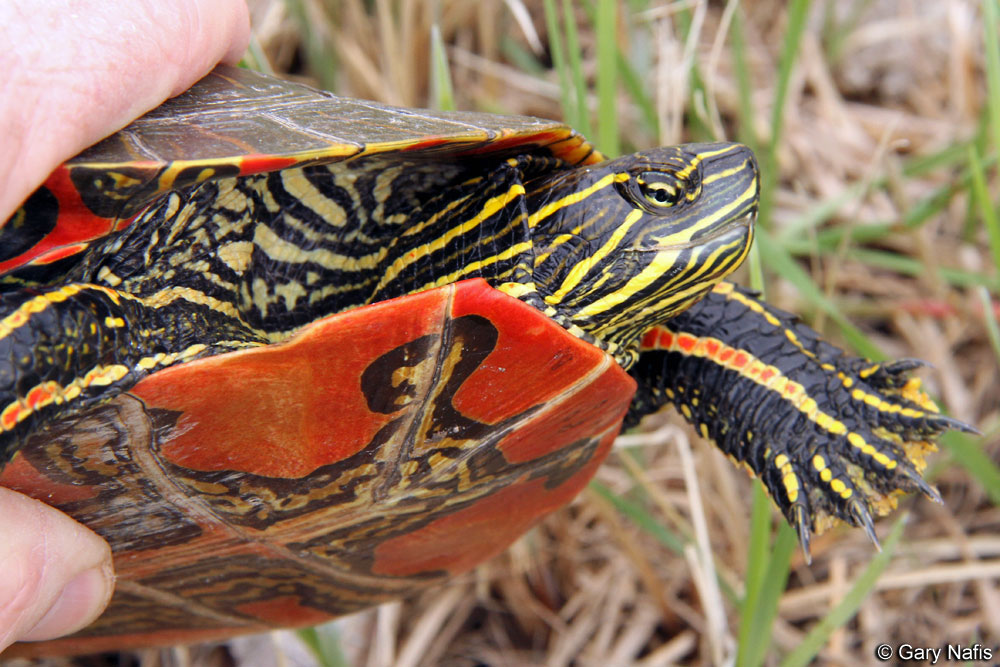
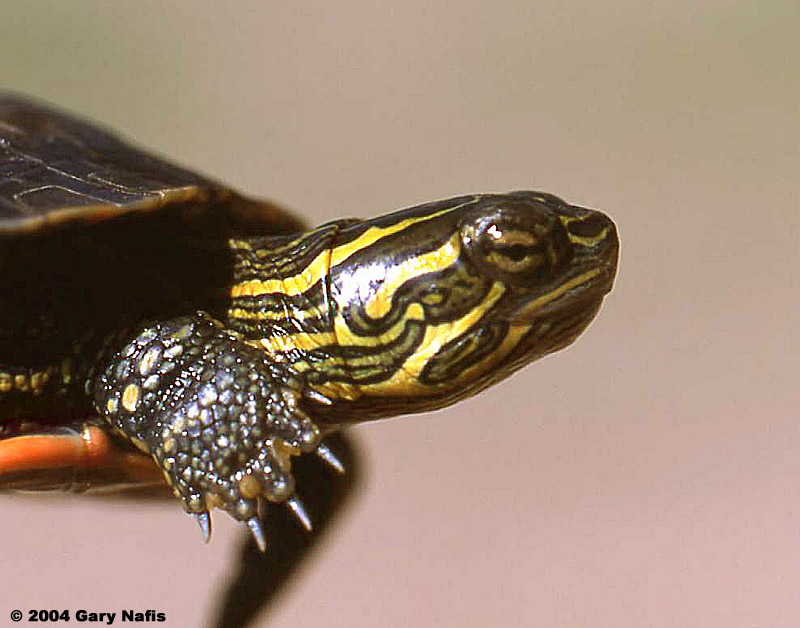
Yellow stripes on head Red coloring on shell |
Long thin snout |
||||
 |
 |
 |
||||
| Red-eared Slider | Western Painted Turtle | Spiny Softshell | ||||
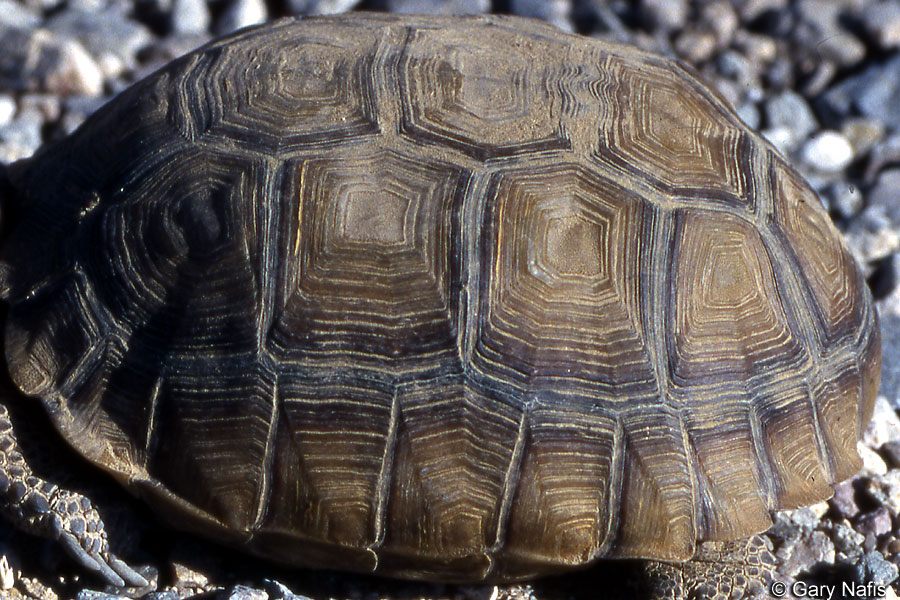
| HIgh domed shell with prominent growth lines. Found in desert |
LInes radiating on scales of shell |
Smooth flat shell |
||||
 |
 |
 |
||||
| Desert Tortoise | Western Pond Turtle | Spiny Softshell | ||||
| Large legs shaped like flippers, with no toes |
Large size, jagged shell barely covering body |
|||||
 |
 |
|||||
| Sea Turtles | Snapping Turtle | |||||
Most Commonly-Observed Freshwater Turtles in California There are very few species of turtles found in California, so if you see one at the edge of a pond or stream in the majority of the state, it is almost always one of the following three species. From a distance, these three species all look pretty much the same, with a fairly low, smooth shell with no keel along the top, that often appears a solid dark color when seen at a distance. If you can get a good look at the head, that should be all you need to do to differentiate them, but there are some characteristics of the shells which can help also. |
||||||
| Red-eared Slider Trachemys scripta elegans (Non-native Species) |
Western Painted Turtle Chrysemys picta bellii (Non-native Species) |
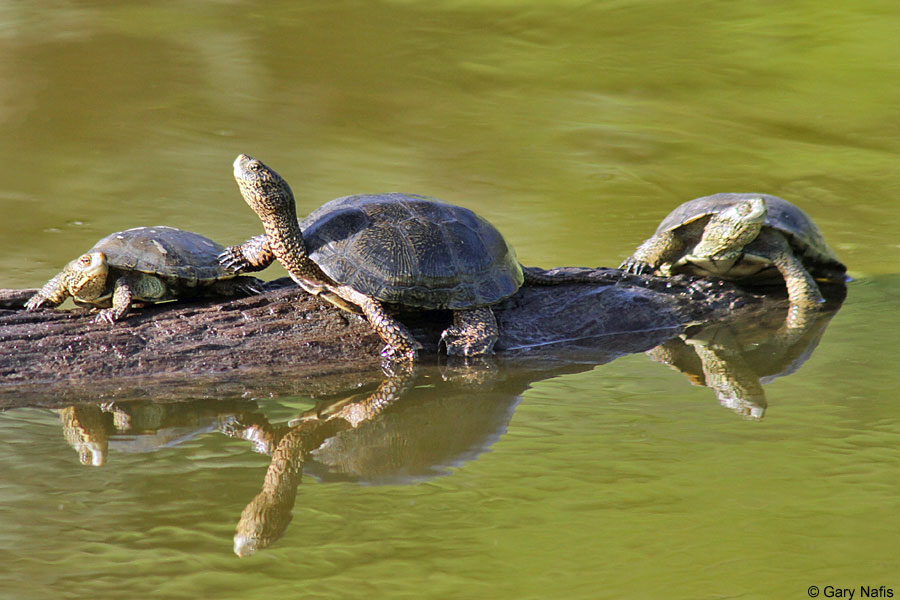
Western Pond Turtle Actinemys marmorata Actinemys pallida |
||||
 |
 |
 |
||||
| HEAD | ||||||
|
 © Justin © Justin |
 |
||||
 |
|
 |
||||
 © Will Kohn © Will Kohn |
 |
 © Jackson Shedd © Jackson Shedd |
||||
| Red stripes behind the eyes will identify this turtle, but be aware that some do not have the red stripes, so check the rear edge of the shell, too. | Yellow stripes on the head with no red coloring behind the eyes. | Mottled dark markings on the head without red stripes behind the eye. | ||||
| REAR EDGE OF SHELL | ||||||
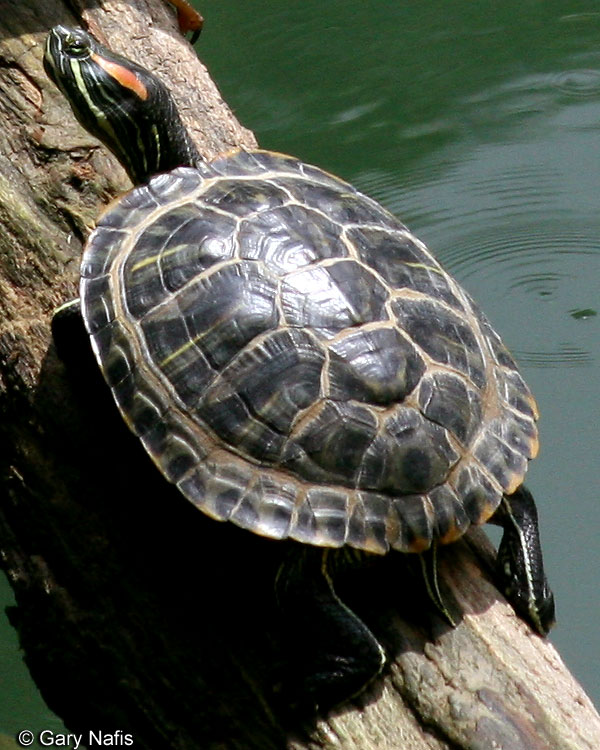 |
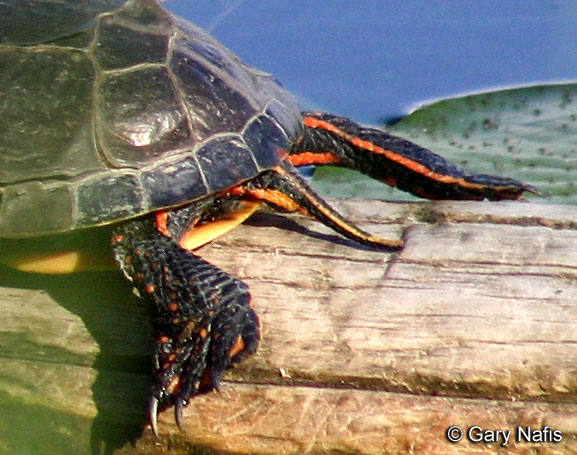 |
 |
||||
 |
 |
 |
||||
| Rear edge of shell is serrated and not marked with red. |
Rear edge of shell is smooth, not serrated, and usually marked with red. | Rear edge of shell is smooth, not serrated, not marked with red. | ||||
| CARAPACE (Shell) |
||||||
 |
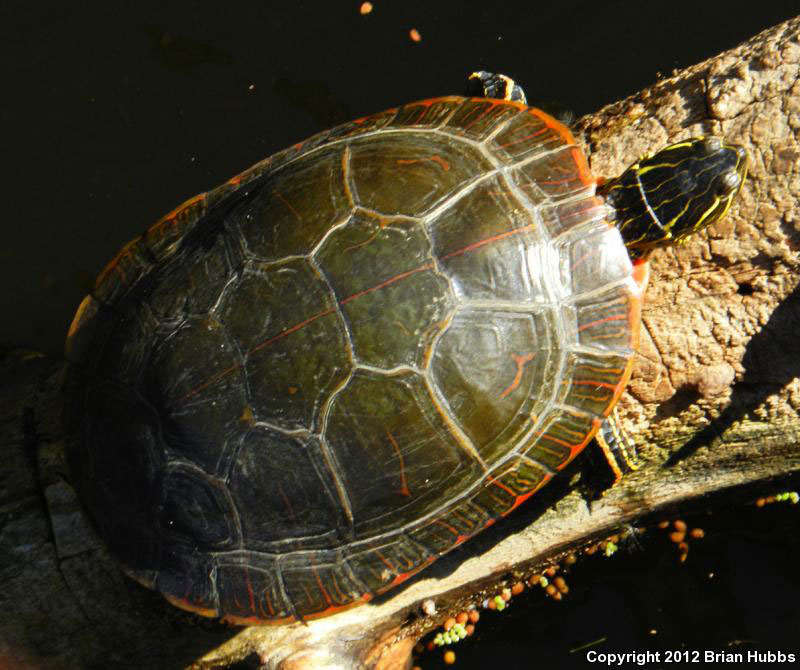 © Brian Hubbs © Brian Hubbs |
|
||||
|
|
 © Adam G. Clause © Adam G. Clause |
||||
| Shell usually has a network of yellow lines, though often they are not visible. There is no red coloring on the shell or plastron. |
The front edge of the shields are bordered with red or yellow. Red is usually seen on the underside and edges of the shell. | A pattern of spots or lines radiates from the centers of the scutes on the shell, though these are not always visible. There is no red coloring on the shell or plastron. |
||||
| PLASTRON (Underside) |
||||||
 |
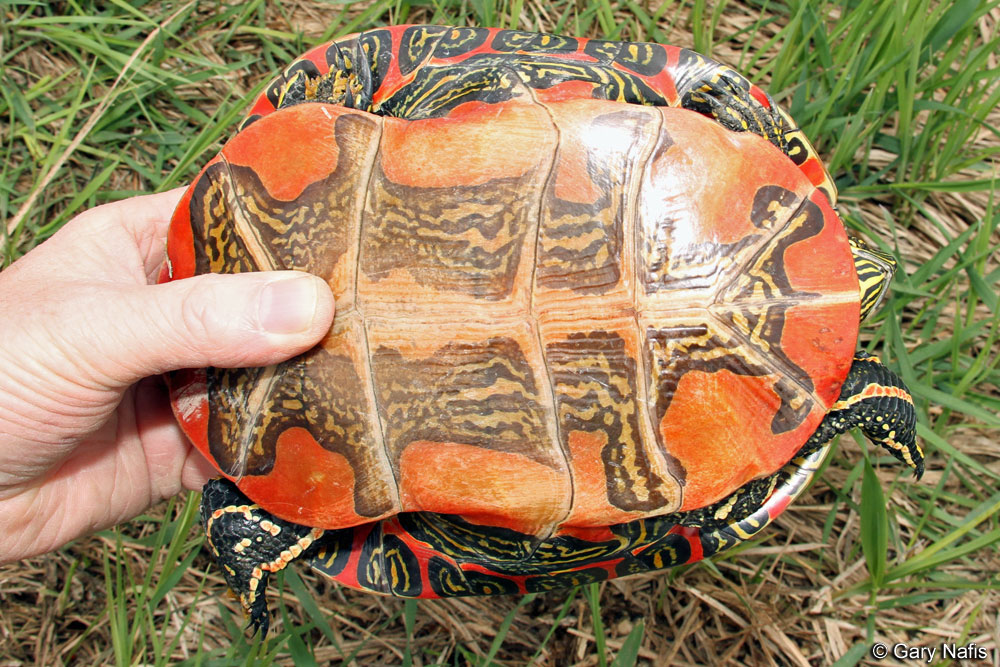 |
 |
||||
| The plastron has no red. | The plastron is red with a large dark marking in the center. | The plastron has no red. | ||||
| RANGE | ||||||
 |
 |
 |
||||
| Red: Distribution in California of non-native Red-eared Slider |
Red: Distribution in California of non-native Western Painted Turtle |
Red and Orange: Distribution in California of native Western Pond Turtle |
||||
| (Click on maps for a larger view) | ||||||
The location in California where you see a turtle can also help to identify it, since most species have a limited distribution in the state, but beware that the non-native turtles can show up near almost any water source, including areas not shown on these maps, especially near populated areas. |
||||||
| Take Care Distinguishing Between old Red-eared Sliders and Western Pond Turtles | ||||||
 |
 |
 |
||||
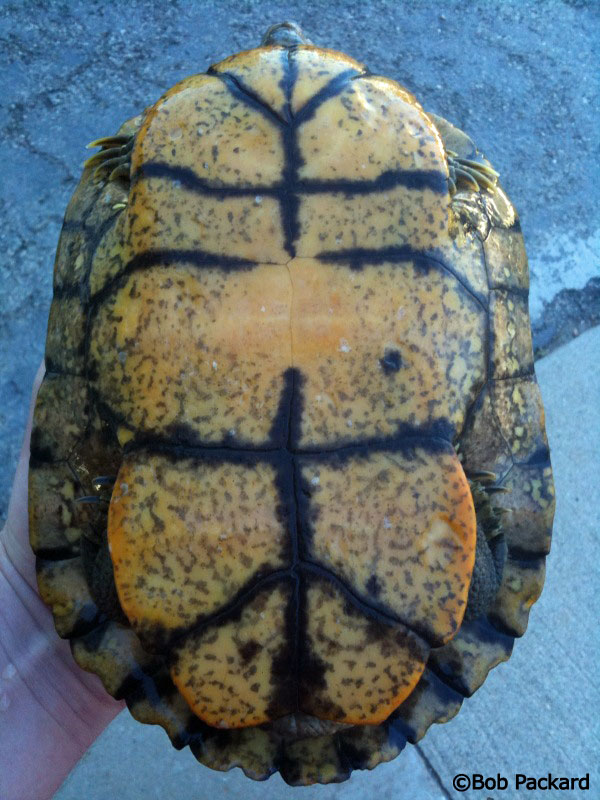
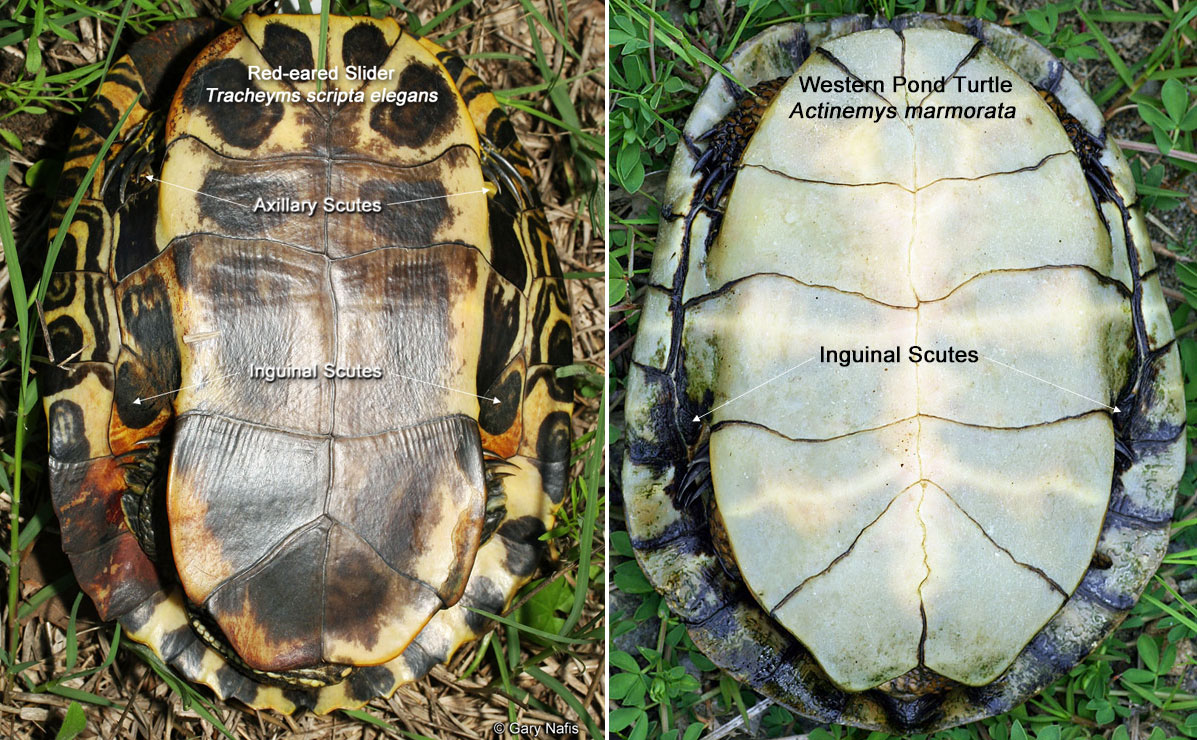
| Melanistic adult Red-eared slider - Trachemys scripta elegans, (without red on the head) Riverside County. © Bob Parkard Introduced melanistic sliders and old sliders whose red "ears" have faded, are often difficult to distinguish from the California native Pacific Pond Turtles - Actinemys marmorata, especially at a distance in the field, and even in hand. According to Bob Packard, with the Western Riverside County MSHCP Biological Monitoring Program, they confirm the identification based on the presence of large inguinal and axillary scutes on the sliders, which are absent on the pond turtles, and by an interesting behavioral clue: the majority of sliders tend to be aggressive, biting readily, while pond turtles are far more reluctant to bite. Of course, to use either of these identification clues, you need to have the turtle in hand, so take caution when identifying a turtle at a distance that has no red on the sides of the head. |
||||||
|
||||||
These next four turtles should be fairly easy to differentiate since they are all significantly distinct in appearance, range, habitat, or behavior from any other established California turtle. |
||||||
| Snapping Turtle - Chelydra serpentina (Non-native Species) | ||||||
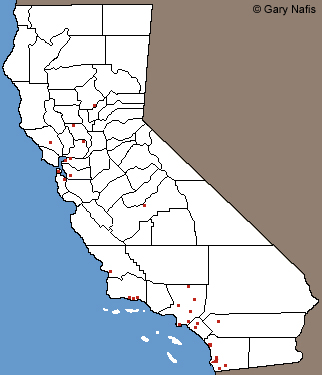
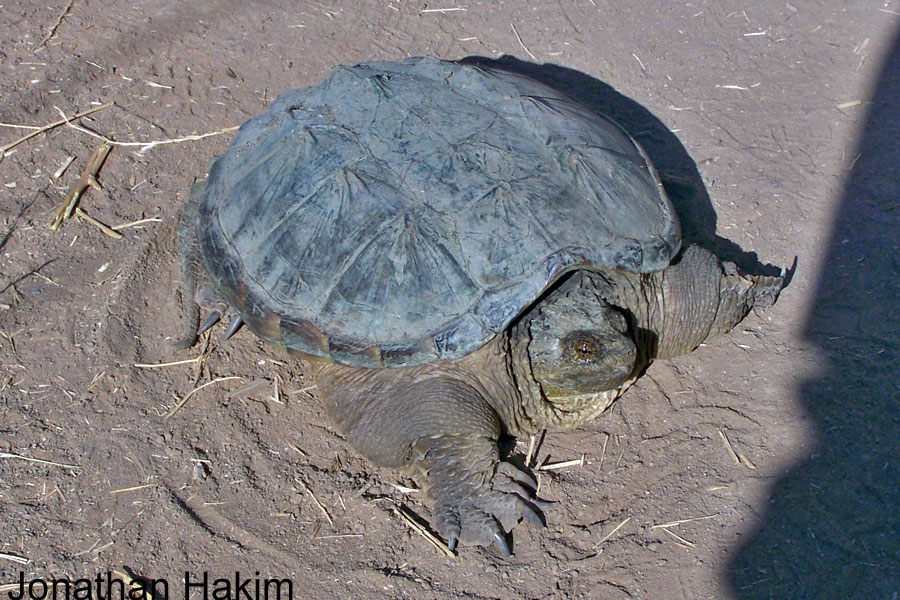
This non-native turtle can be identified by its heavily serrated shell, massive head, tail with a sawtoothed crest, and its large shell which looks like it is too small for the body. This turtle is rarely seen since it does not usually bask outside the water, and its range is not widespread. The map shows some general locations where this turtle has been seen, but probably not all of them. |
||||||
 |
 |
 |
||||
| Heavily serrated shell - adult | Massive head without strong colored stripes or dark mottling - adult |
|||||
 © 2001 William Flaxington © 2001 William Flaxington |
||||||
| Heavily serrated shell - juvenile | Massive head without strong colored stripes or dark mottling - juvenile |
|||||
 |
||||||
| Red: Non-native Snapping Turtles have been found in these locations in California, and may be found elsewhere | ||||||
| Desert Mud Turtle - Kinosternon sonoriense sonoriense (No longer found in California) | ||||||
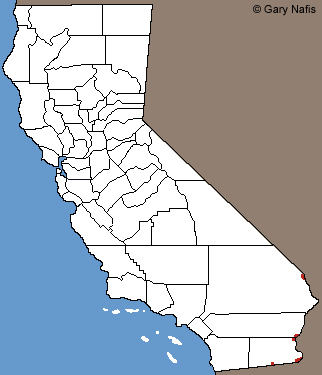
This small native turtle (formerly named the Sonora Mud Turtle) was once found along the Colorado River, but after the river was significantly altered by agriculture and dams, it has not been seen in the area and can be considered either extinct or at best extremely rare in the state. It can be identified by its small size, its elongated domed carapace, its mottled head, and its range. There are no other turtles with a similar appearance in its area. A plastron with 11 scutes and two hinges are also unique among similar California turtles which have 12 scutes on an unhinged plastron. |
||||||
 |
 |
 |
||||
| Elongated domed shell | Mottled head with nipple-like projections on the throat. | Hinged plastron with 11 scutes. | ||||
 |
||||||
| Red: Historic California distribution of Desert Mud Turtles | ||||||
| Texas Spiny Softshell - Apalone spiniera emoryi (Non-native Species) | ||||||
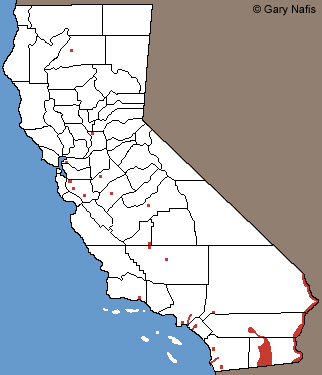
The non-native Texas Spiny Softshell has been introduced and established along the Colorado River and the Imperial Valley, and in San Diego County. It has also been reported from other scattered locations, but most likely it has not been established in these areas. This turtle can be easily identified by its very flat, smooth, shell, it's long snout, and its range. Be aware, though, that there are many species of turtles in the word with soft shells, and sometimes they are released into California waters. |
||||||
|
 |
|
||||
| Flat, olive-gray shell with no visible plates or scutes | Long thin snout with nostrils at the end | |||||
 |
||||||
| Red: California distribution of non-native Texas Spiny Softshells | ||||||
| Mojave Desert Tortoise - Gopherus agassizii | ||||||
This native tortoise is limited to hot dry desert regions. It can be identified by its terrestrial lifestyle, its large unwebbed limbs, its high domed shell with prominent growth lines on the scutes, its unwebbed toes and elephant-like skin, and by its occurance in the desert away from water sources. Nevertheless, it was once a popular pet and released animals can be found anywhere. (I saw one at a golf course in San Francisco.) |
||||||
 |
 |
 |
||||
| Head is unmarked, with large scales. | ||||||
 |
|
|
||||
| Some adults and juveniles have light patches on the scutes. | High domed shell. | Growth lines on the scutes. | ||||
 |
||||||
| Red: Historic California distribution of Mojave Desert Tortoise | ||||||



Return to the Top
© 2000 -