|
 |
 |
| Adult, Siskiyou County |
Adult, Siskiyou County |
 |
 |
 |
 |
| Adult, Siskiyou County |
Adult, Siskiyou County |
Adult, Siskiyou County |
Adult, Siskiyou County |
 |
 |
|
|
Adult, Siskiyou County
© James R. Buskirk |
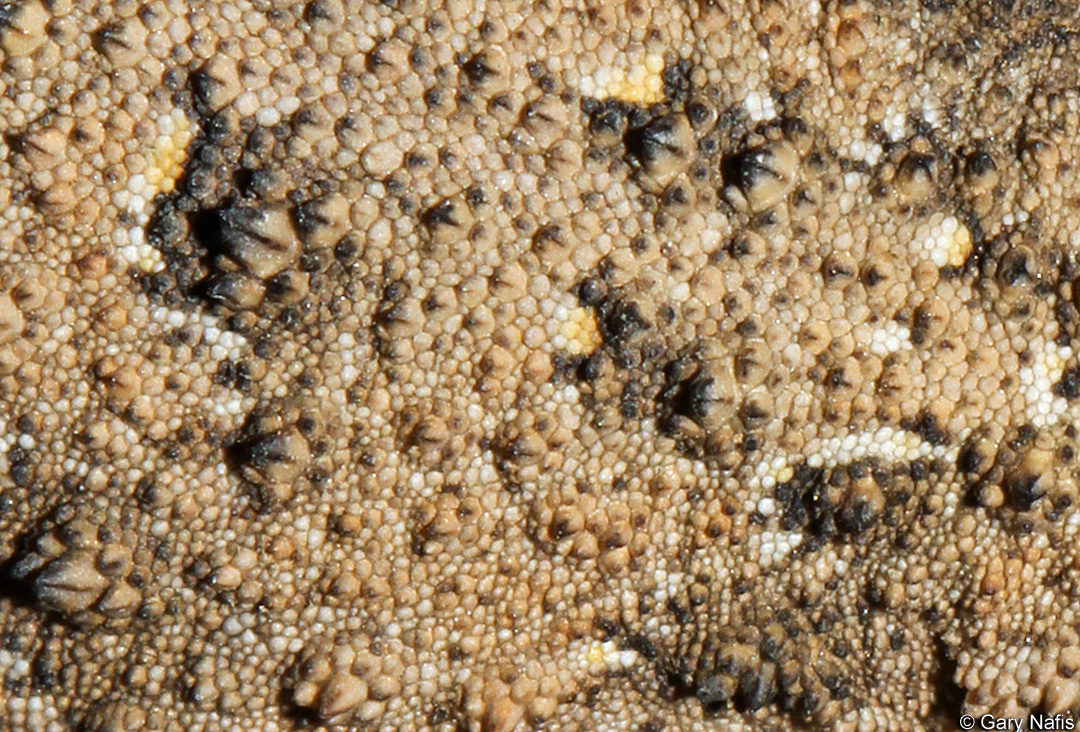
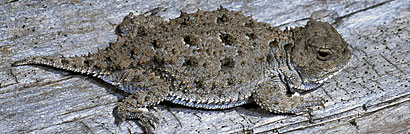
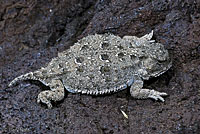
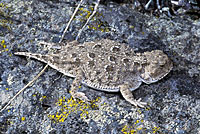
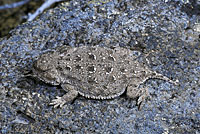
Pygmy Short-horned Lizards are covered with small granular scales interspersed with larger pointed scales on the dorsal surfaces. |
|
|
| |
|
|
|
| Juveniles |
 |
 |
 |
|
Neonate, Siskiyou County
© James R. Buskirk |
Two well-camouflaged neonates, Siskiyou County © James R. Buskirk
|
Tiny juvenile next to U.S. one penny coin, Siskiyou County © Noah Morales
A U.S. penny is .75 inches in diameter (19.05 mm). The lizard is approximately .9 inches (22.86 mm) from snout to vent. |
|
| |
|
|
|
| Adult Pygmy Short-Horned Lizards From Outside California |
 |
 |
 |
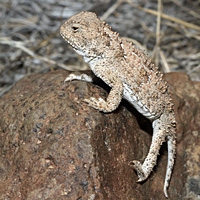 |
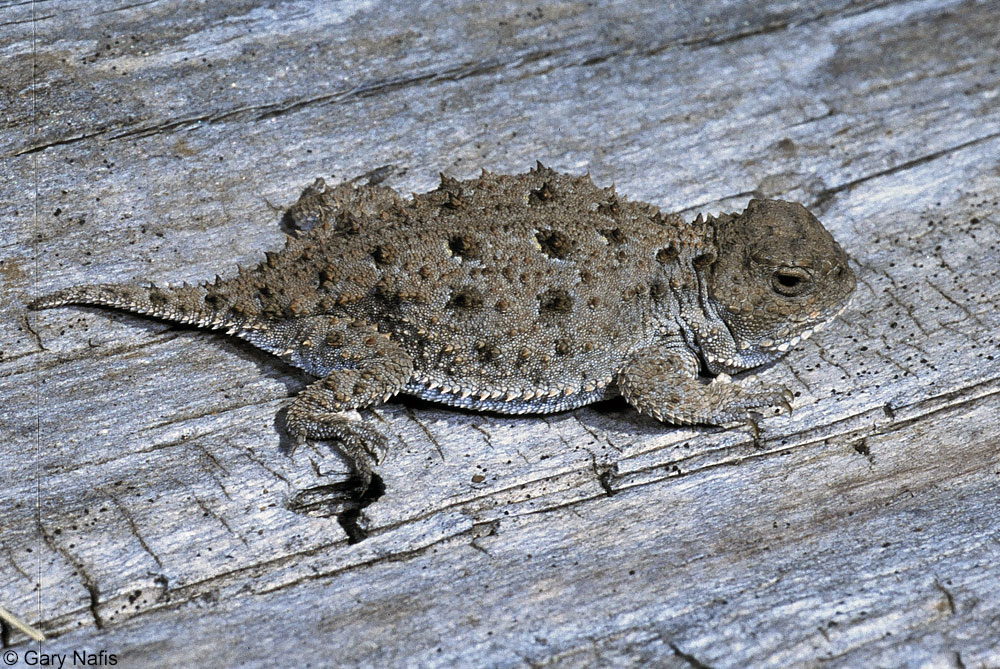
| Adult, Kittitas County, Washington |
Adult, Kittitas County, Washington |
Adult, Kittitas County, Washington |
 |
 |
 |
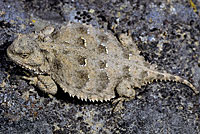 |
| Adult, 2,700 ft. Kittitas Co., Washington |
 |
 |
 |
 |
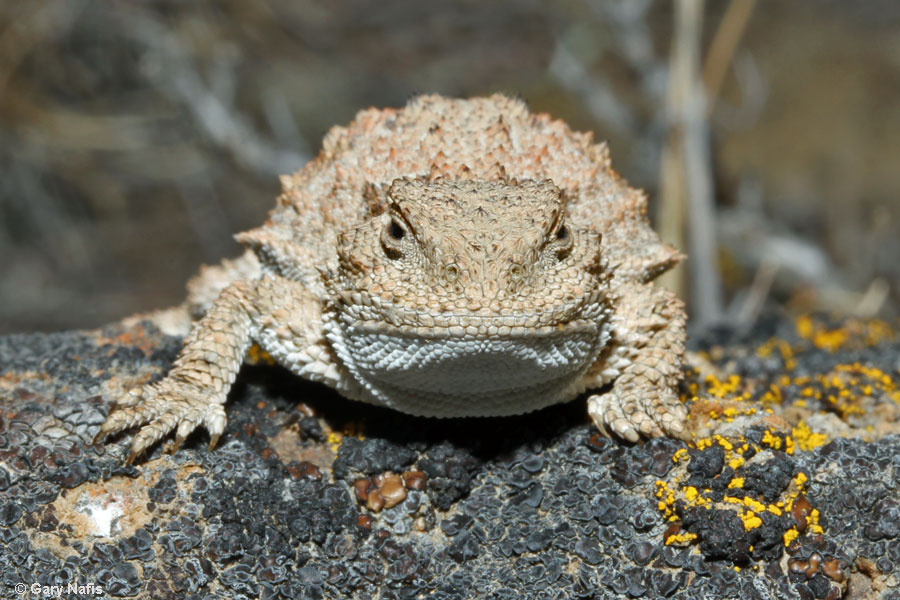
Adult, Kittitas County, Washington
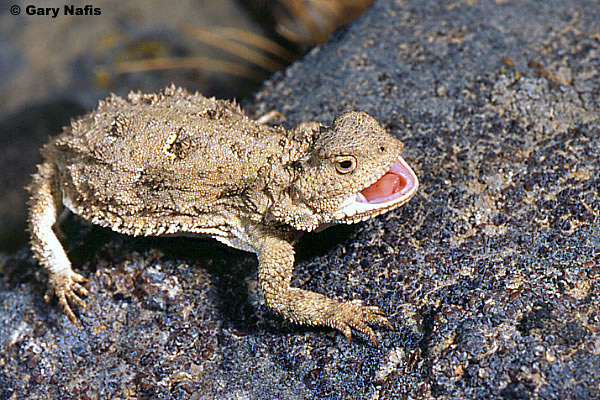
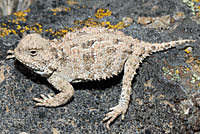
The horns are small and inconspicuous |
Adult, Kittitas County, Washington |
Adult in hunting stance, Kittitas County, Washington |
 |
 |
 |
|
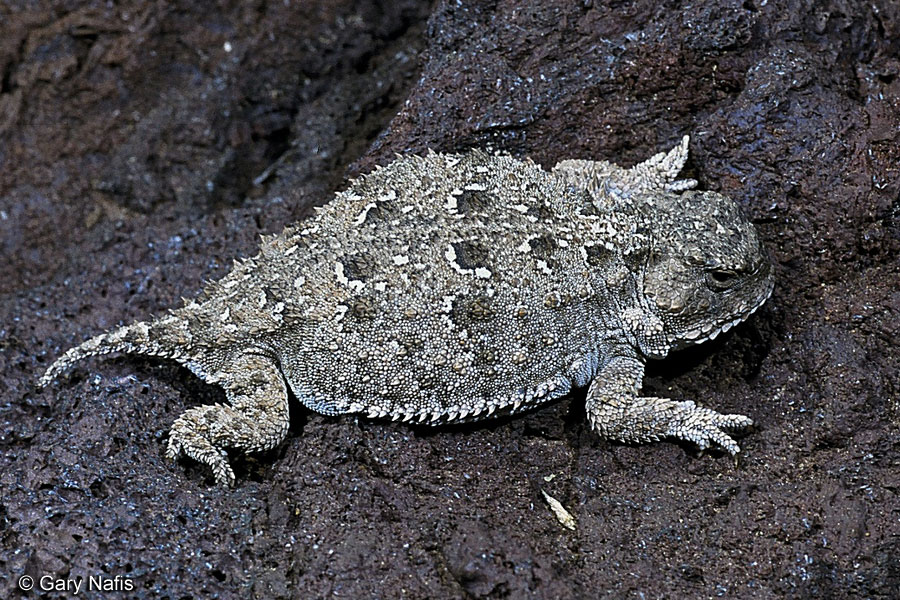
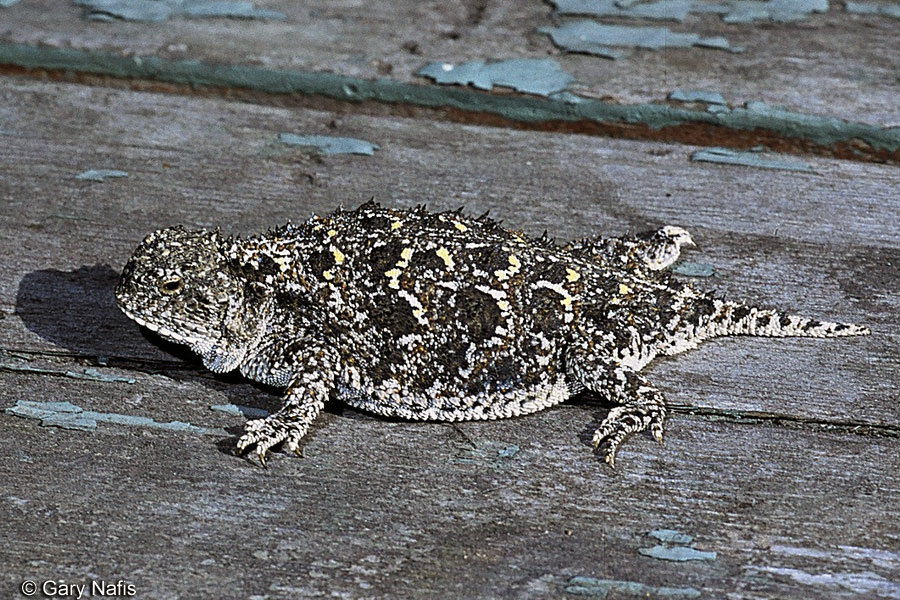
Adult from dark lava rock habitat, Lake County, Oregon.
© Gary Nafis, specimen courtesy of Richard Hoyer |
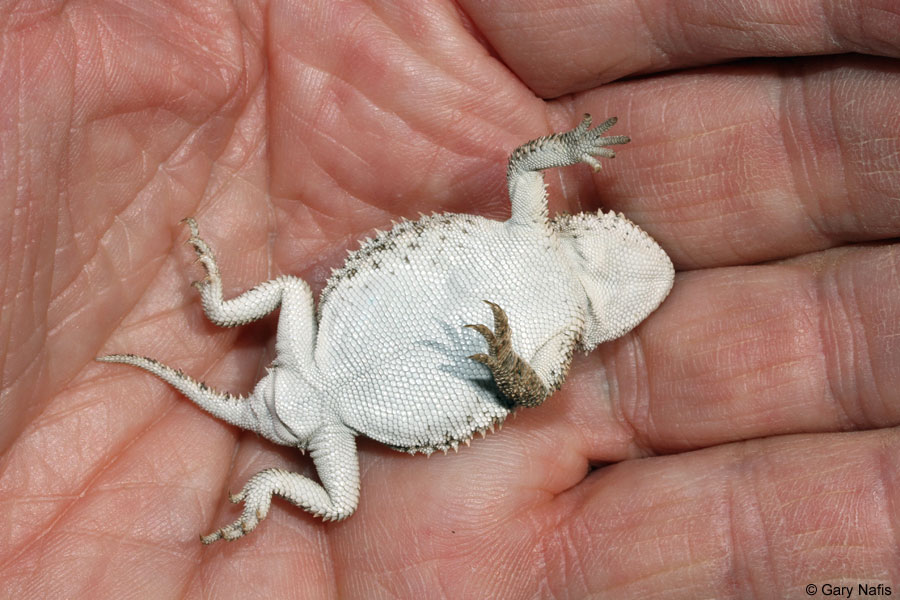
Underside of adult,
Kittitas County, Washington |
|
| |
|
|
|
| Juvenile Pygmy Short-Horned Lizards From Outside California |
 |
 |
 |
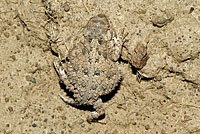 |
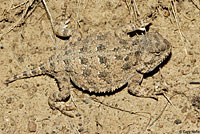
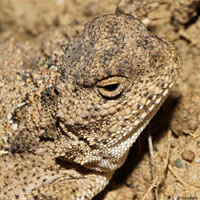
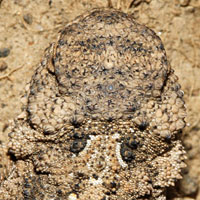
Juvenile, Kittitas County, Washington.
This lizard's color matches the soil perfectly allowing it to avoid observation when it remains still. |
 |
 |
 |
|
| Juvenile, Kittitas County, Washington |
Juvenile next to a U.S. ten cent coin.
Linn County, Oregon
© Marcus Rehrman
The dime is .705 inches in diameter (17.91 mm) which makes the body of this lizard, excluding the tail, approx. one inch long (25 mm).
|
|
| |
|
|
|
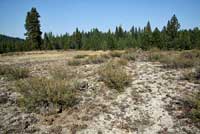
| Habitat |
 |
 |
 |
 |
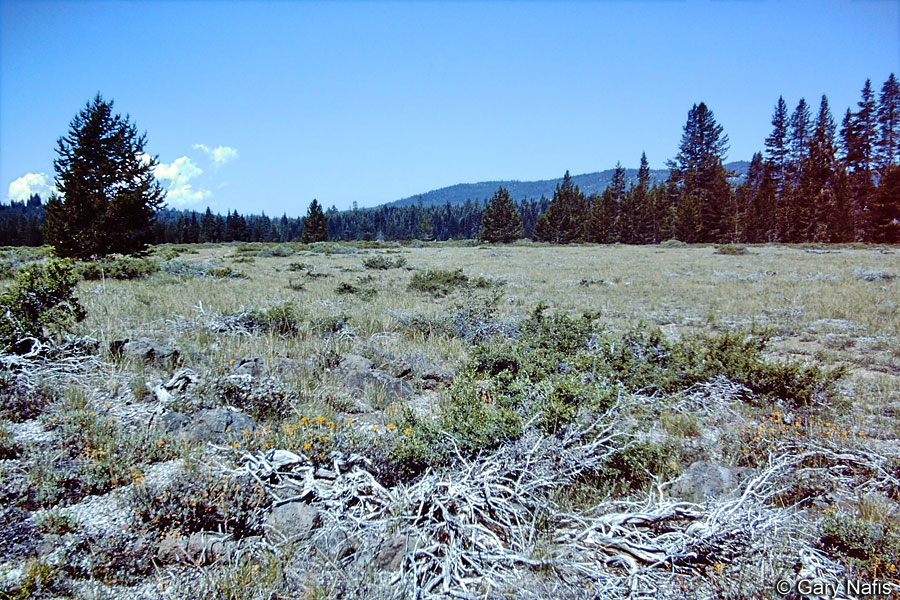
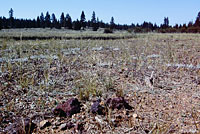
Habitat, forest clearing, 5,600 ft.
Siskiyou County
|
Habitat, forest clearing, 5,600 ft.
Siskiyou County |
Habitat, forest clearing, 5,600 ft.
Siskiyou County
|
Habitat, forest clearing, 5,600 ft.
Siskiyou County
|
 |
|
|
|
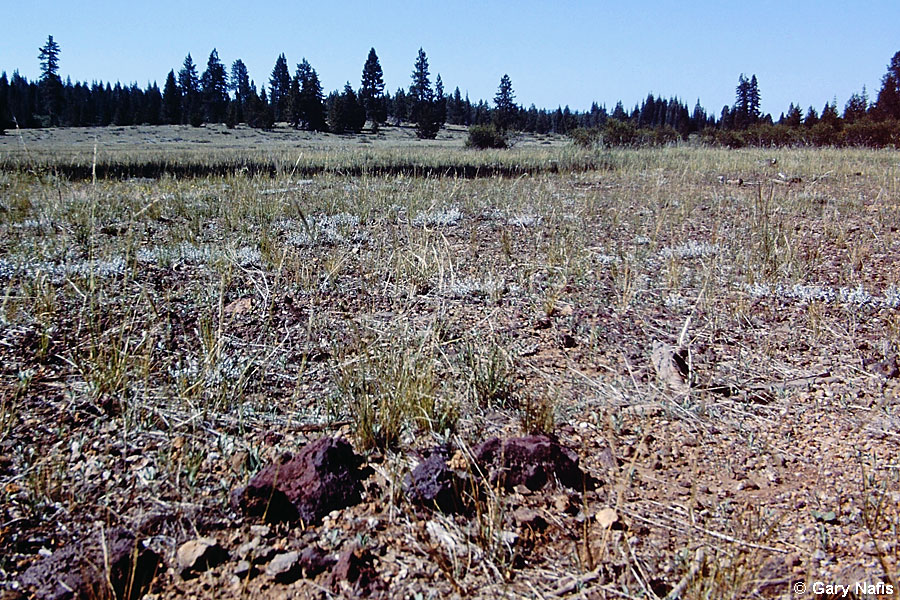
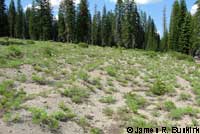
Habitat, 5,900 ft., Siskiyou County.
© James R. Buskirk |
|
|
|
| |
|
|
|
| Short Videos |
 |
 |
 |
 |
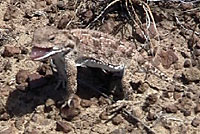
| On a sunny June day a small adult Pygmy Short-horned Lizard let me follow it around closely as it searched for food, running from one slightly-elevated perch to another, then raising up on all fours and cocking its head from side to side to scan for ants. When an ant was spotted, the lizard quickly ran to it, opened its mouth, and grabbed it with its big sticky tongue. In this video I have edited together several short feeding instances, with most of the running around, searching and waiting for ants to appear removed. |
More views of the same Pygmy Short-horned Lizard on the left hunting, feeding on ants, and trying to catch flying bugs. |
More views of the same Pygmy Short-horned Lizard on the left running from place to place hunting and doing what looks like tasting or smelling the ground. |
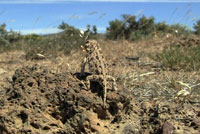
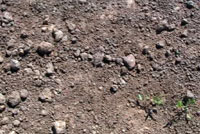
Every time I picked up a tiny Pygmy Short-horned Lizard and set it down to try to film it in motion, it ran away quickly then stopped only a few feet away, where it remained still until I went to pick it up again, even though there were small bushes nearby that it could have run into to hide. The lizard was not relying on speed to escape, it was relying on its ability to blend in quickly with the background, expecting that I would not see it since it blends so well into the ground, as you can see here. |
 |
 |
 |
|
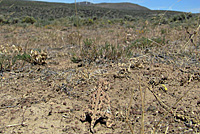
| Several views of a tiny juvenile Pygmy Short-horned Lizard in the sagebrush desert of central Washington, beginning with a zoom in that shows how hard it is to see when it is sitting still on the ground. |
Short video of an adult in Linn County, Oregon © Marcus Rehrman |
Short video of an adult in Linn County, Oregon © Marcus Rehrman |
|
|
|
|
|
| Description |
| |
| Size |
1.25 - 2.5 inches long from snout to vent (3.2 - 6.3 cm).
|
| Appearance |
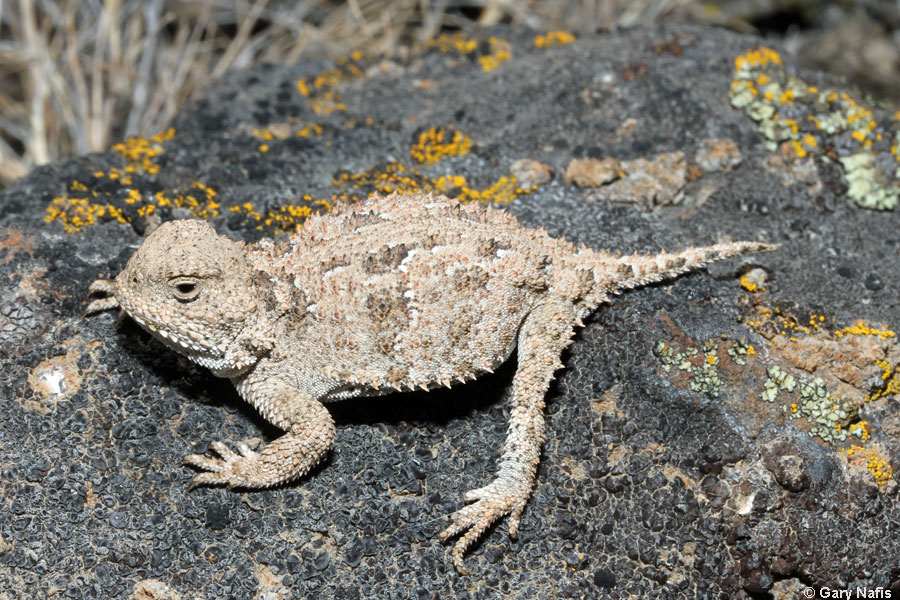
A small flat-bodied lizard with a wide oval-shaped body and scattered enlarged pointed scales on the upper body and tail.
Horns on back of the head are very small and inconspicuous, extending out horizontally.
There is one row of fringe scales on the sides.
|
| Color and Pattern |
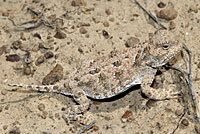
Coloring matches the color of the soil and rocks.
Color can be almost white, gray, pale gray, yellowish, reddish brown, tan, brownish, or mostly black, with random white speckling and two rows of large dark spots edged at the rear with white or yellow on the back.
The belly is white or cream in color with smooth scales.
|
| Male / Female Differences |
Males have enlarged post-anal scales and a swollen tail base during the breeding season.
Females are larger in size than males.
|
| Life History and Behavior |
Activity |
Diurnal. Adapted to living in a colder environment than other species of horned lizard.
Most active during midday warmth spring through fall. Inactive during periods of extended cold or heat.
Burrows into the ground at night or goes into rodent burrows.
Horned lizards roam a home range, which may overlap with others and change seasonally, but male horned lizards do not defend their territory aggressively like other kinds of lizards. They don't have patches of brightly-colored scales to display to other males. Because they don't combat other males during the breeding season, their bodies are smaller than the bodies of female horned lizards, which lets them use their energy in searching for females instead of maintaining a large body size.
(Sherbrooke, 2003)
|
| Defense |
When threatened, this lizard is capable of running away quickly for only a short distance, and usually runs under a low bush or into a rodent burrow.
Its main defense is remaining motionless using its cryptic coloring to blend into the background and make it difficult to see.
It will crouch down low to prevent shadows that could make it easier to see, sit still to avoid detection, and will sometimes shake the body from side to side to partially bury itself in loose soil.
|
| Diet and Feeding |
Ants make up the majority of the diet, along with small grasshoppers and a variety of other small invertebrates and their larvae, including spiders, beetles, termites, flies, honeybees, moth larvae, and grasshoppers.
Although horned lizards may be desirable pets, captive animals normally do not live very long due to the difficulties of feeding them a proper diet of ants.
|
| Reproduction |
Mating takes place in the spring soon after emergence.
Females bear young live, with 3-15 young born July to September.
|
| Habitat |
Open rocky or sandy flats, sagebrush and bunch grass plains, pinyon juniper woodlands, open pine forests.
Prefers areas with loose soil for burrowing.
|
| Geographical Range |
Found in extreme northeast California.
Outside of California, Pygmy Short-horned Lizards are found in northwestern Nevada, southern Idaho, Oregon and Washington east of the Cascade mountains, and at an isolated location in British Columbia just north of the border with Washington State.
Most California records I can find are from Siskiyou County, with an isolated record from Lassen County. Due to the lack of records for much of the range I show on the map for Modoc County, I have included some broad dark marks at the locations of these records to show both how limited and how broad the range of this species could be in the state.
The University of Nebraska State Museum has a specimen labeled from Clear Lake, Siskiyou County, 1891. James R. Buskirk told me that Clear Lake was once part of Siskiyou County before it was partitioned and Modoc County was created. That would have happened between 1872 and 1891 and it is probably why the county listed is Siskiyou, not Modoc. Other than that record, I can find no records at all from Modoc County, even though every range map shown for this species in California (including mine) shows much of or all of Modoc County. That might be only because the habitat appears suitable.
The University of Nebraska State Museum also has three specimens labeled from Baird which is a town that was once beside the McCloud River below Shasta Caverns, but which now is under Shasta Lake. I think it could be likely that these are either mislabeled or they are actually Phrynosoma blainvillii as the San Diego Natural History Museum has a specimen from Shasta County that is from a location about 7 miles south of Baird, and that species is more likely from that area than P. douglassi. If someone inspects the Nebraska State Museum specimens, let me know what you determine. And as always, if anyone has any range information for this species that I lack, please email me.
|
 |
| Elevational Range |
From 1,000 to 7218 ft. (300 - 2200 m). elevation. (Maximum elevation record from Lake County, Oregon - Megan E. Lahti Herpetological Review 38(4), 2007).
|
| Notes on Taxonomy |
Formerly Phrynosoma douglasii douglasii, until recognized as a full species in 1997.
Leache and McGuire (2006, Molecular Phylog. Evolution 39:628-644) named four subclades of Phrynosoma - 3 in our area: Anota, Doliosaurus, and Tapaja.
2015 Taxonomic Revision
In his 2015 monograph - A taxonomic revision of the Phrynosoma douglasii species complex (Squamata: Phrynosomatidae) Zootaxa 4015 (1): 001-177 Copyright 2015 Magnolia Press - Richard R. Montanucci found that the short-horned lizard species Phrynosoma douglasii and Phrynosoma hernandesi consist of 6 different species, with two of them divided into two subspecies, for a total of 8 forms:
P. bauri sp. nov.
P. brevirostris
P. diminutum sp. nov.
P. douglasii
P. hernandesi hernandesi
P. hernandesi ornatum
P. ornatissimum ornatissimum
P. ornatissimum brachycercum
P. douglasii remains the only species found in California, but those formerly present in the southeast corner of Oregon, and the southwest corner of Idaho become
P. h. ornatum. Then there is a separate population of P. douglasii in eastern Idaho.

Alternate and Previous Names (Synonyms)
Horned lizards are sometimes called horned toads or horny toads.
Phrynosoma douglassii - Pigmy Short-horned Lizard (Stebbins 2003)
Phrynosoma douglassii - Short-horned Lizard (Stebbins 1985)
Phrynosoma douglassii douglassii - Pigmy Horned Lizard (Smith 1946, Stebbins 1966)
Phrynosoma douglassii douglassii - Pigmy Horned-toad (Phrynosoma douglassi pygmaea; Tapaya douglassii. Pigmy Horned Lizard; Douglass's Horned Toad) (Grinnell and Camp 1917)
|
| Conservation Issues (Conservation Status) |
| None |
|
|
Taxonomy |
| Family |
Phrynosomatidae |
Zebra-tailed, Earless, Fringe-toed, Spiny, Tree, Side-blotched, and Horned Lizards |
Fitzinger, 1843 |
| Genus |
Phrynosoma |
Horned Lizards |
Wiegmann, 1828 |
Species
|
douglasii |
Pygmy Short-horned Lizard |
Bell, 1829 |
|
Original Description |
Phrynosoma douglasii - (Bell, 1833) - Trans. Linn. Soc. London, Vol. 16, p. 105, pl. 10
from Original Description Citations for the Reptiles and Amphibians of North America © Ellin Beltz
|
|
Meaning of the Scientific Name |
Phrynosoma - Greek - phrynos = toad + soma = body - refers to the squat, toad-like appearance
douglasii - honors David Douglas.
from Scientific and Common Names of the Reptiles and Amphibians of North America - Explained © Ellin Beltz
|
|
Related or Similar California Lizards |
Phrynosoma platyrhinos calidiarum - Southern Desert Horned Lizard
Phrynosoma platyrhinos platyrhinos - Northern Desert Horned Lizard
Phrynosoma mcallii - Flat-tail Horned Lizard
Phrynosoma blainvillii - Coast Horned Lizard
|
|
More Information and References |
California Department of Fish and Wildlife
Horned Lizard Conservation Society
Hansen, Robert W. and Shedd, Jackson D. California Amphibians and Reptiles. (Princeton Field Guides.) Princeton University Press, 2025.
Stebbins, Robert C., and McGinnis, Samuel M. Field Guide to Amphibians and Reptiles of California: Revised Edition (California Natural History Guides) University of California Press, 2012.
Stebbins, Robert C. California Amphibians and Reptiles. The University of California Press, 1972.
Flaxington, William C. Amphibians and Reptiles of California: Field Observations, Distribution, and Natural History. Fieldnotes Press, Anaheim, California, 2021.
Nicholson, K. E. (ed.). 2025. Scientific and Standard English Names of Amphibians and Reptiles of North America North of Mexico, with Comments Regarding Confidence in Our Understanding. Ninth Edition. Society for the Study of Amphibians and Reptiles. [SSAR] 87pp.
Samuel M. McGinnis and Robert C. Stebbins. Peterson Field Guide to Western Reptiles & Amphibians. 4th Edition. Houghton Mifflin Harcourt Publishing Company, 2018.
Stebbins, Robert C. A Field Guide to Western Reptiles and Amphibians. 3rd Edition. Houghton Mifflin Company, 2003.
Behler, John L., and F. Wayne King. The Audubon Society Field Guide to North American Reptiles and Amphibians. Alfred A. Knopf, 1992.
Robert Powell, Roger Conant, and Joseph T. Collins. Peterson Field Guide to Reptiles and Amphibians of Eastern and Central North America. Fourth Edition. Houghton Mifflin Harcourt, 2016.
Powell, Robert., Joseph T. Collins, and Errol D. Hooper Jr. A Key to Amphibians and Reptiles of the Continental United States and Canada. The University Press of Kansas, 1998.
Bartlett, R. D. & Patricia P. Bartlett. Guide and Reference to the Turtles and Lizards of Western North America (North of Mexico) and Hawaii. University Press of Florida, 2009.
Jones, Lawrence, Rob Lovich, editors. Lizards of the American Southwest: A Photographic Field Guide. Rio Nuevo Publishers, 2009.
Smith, Hobart M. Handbook of Lizards, Lizards of the United States and of Canada. Cornell University Press, 1946.
Taylor, Emily. California Lizards and How to Find Them. Heyday, Berkeley, California. 2025.
Sherbrooke, Wade C. Horned Lizards, Unique Reptiles of Western North America. Southwest Parks and Monuments Association, 1981.
Sherbrooke, Wade C. Introduction to Horned Lizards of North America. University of California Press, 2003.
Brown et. al. Reptiles of Washington and Oregon. Seattle Audubon Society,1995.
Nussbaum, R. A., E. D. Brodie Jr., and R. M. Storm. Amphibians and Reptiles of the Pacific Northwest. Moscow,
Idaho: University Press of Idaho, 1983.
St. John, Alan D. Reptiles of the Northwest: Alaska to California; Rockies to the Coast. 2nd Edition - Revised & Updated. Lone Pine Publishing, 2021.
Joseph Grinnell and Charles Lewis Camp. A Distributional List of the Amphibians and Reptiles of California. University of California Publications in Zoology Vol. 17, No. 10, pp. 127-208. July 11, 1917.
|
|
|
The following conservation status listings for this animal are taken from the July 2025 State of California Special Animals List and the July 2025 Federally Listed Endangered and Threatened Animals of California list (unless indicated otherwise below.) Both lists are produced by multiple agencies every year, and sometimes more than once per year, so the conservation status listing information found below might not be from the most recent lists, but they don't change a great deal from year to year.. To make sure you are seeing the most recent listings, go to this California Department of Fish and Wildlife web page where you can search for and download both lists:
https://www.wildlife.ca.gov/Data/CNDDB/Plants-and-Animals.
A detailed explanation of the meaning of the status listing symbols can be found at the beginning of the two lists. For quick reference, I have included them on my Special Status Information page.
If no status is listed here, the animal is not included on either list. This most likely indicates that there are no serious conservation concerns for the animal. To find out more about an animal's status you can also go to the NatureServe and IUCN websites to check their rankings.
Check the current California Department of Fish and Wildlife sport fishing regulations to find out if this animal can be legally pursued and handled or collected with possession of a current fishing license. You can also look at the summary of the sport fishing regulations as they apply only to reptiles and amphibians that has been made for this website.
This animal is not included on the Special Animals List, which indicates that there are no significant conservation concerns for it in California.
|
| Organization |
Status Listing |
Notes |
| NatureServe Global Ranking |
|
|
| NatureServe State Ranking |
|
|
| U.S. Endangered Species Act (ESA) |
None |
|
| California Endangered Species Act (CESA) |
None |
|
| California Department of Fish and Wildlife |
None |
|
| Bureau of Land Management |
None |
|
| USDA Forest Service |
None |
|
| IUCN |
|
|
|
|