
A Guide to the Amphibians
and Reptiles of California
Click on a picture for a larger view

Identifying California Snakes
California Snakes: |

| This is not a scientific key to identifying snakes found in California. It is meant to be used as a basic tool for non-experts who want to identify a snake primarily by appearance and location. Look Here First: Commonly Encountered California Snakes (This list is based largely on emails that have been sent to me over the years asking me to help identify various species of snakes.) There is an excellent chance you'll find your snake here, and you can skip the rest of this section. For a brief overview of pictures of all of California's snakes, check our California Snakes Photo Index. Keep in mind that many species of snakes are similar in appearance, and may be hard to tell apart. Any species of snake can vary in appearance, and our galleries do not show all possible variations of all species, so your snake might not match our pictures exactly. Snakes of the same species don't always have the exact same color and pattern, though they do look similar, so you need to also consider the body shape, the size, and the behavior of the snake. There can even be several color and pattern variations within one litter, so you can't always use only those characteristics to identify them. The camera can sometimes change the color, too, depending on the light and the color of the background. Snakes can also look much different in motion than they do in still photos (where they are usually coiled up to fit in the picture.) When snakes move, the pattern and colors often blend together making them difficult to observe accurately. Often we only see a part of a snake, which may not be enough information to identify it. In these cases, noting the location, habitat, and behavior may be helpful. There is always the slight chance that a snake you find may not be a native species or a known established alien species, it might be a feral pet, which is not depicted in this identification section. If you cannot find a snake here, you can also look at our page of Feral Pet Snakes which lists some common pet snakes which have been reported to me as found in the wild in California. There are definitely lots of other species not shown there. Maybe the snake you want to identify is not actually a snake. See our list of animals sometimes mistaken for snakes below. |
||||||||||||||||||||||||||||
Important Observations To Make |
||||||||||||||||||||||||||||
| There are several observations you can make that will help you to identify a California snake. Color and Pattern Note the color and pattern - whether there are bands, stripes, blotches, spots, or the snake is plain in color. Check the chart of general categories below to narrow down your search using these criteria. Remember that the appearance of most snakes will change when they are moving, especially if they are moving quickly. The pattern will blur and your impression of the animal will not be accurate enough to identify it by appearance alone. Geographical Location Many snakes occur only in certain parts of the state. Check our California Snakes Range maps page to find out what snakes occur in your general area. Habitat Note where the snake occurs - desert, forest, mountains, marsh, in water, grassland, etc. Many snakes have a preferred type of habitat within their range. Size, Shape, and Texture Look at the body and head - is the body slim and round or heavy and thick, and is there an obvious neck setting off the head from the body. Note if the scales are small and smooth and shiny, or large and dull. Behavior Note how the snake moves, and how fast it moves, if it is climbing, hissing, making a rattling sound, and whether it is active during the day or at night. |
||||||||||||||||||||||||||||
General Categories |
||||||||||||||||||||||||||||
| To make them easier to identify, California snakes have been separated into the following general categories based on overall appearance. (There is some overlap between categories with some species, and some individuals have characteristics of more than one category - some may have stripes and blotches, or no pattern and one band, etc.) When you determine which category the snake you want to identify fits into, click on the link to look at pictures of all of the snakes in that category. |
||||||||||||||||||||||||||||
|
||||||||||||||||||||||||||||
Animals and Things that are Sometimes Mistaken for Snakes |
||||||||||||||||||||||||||||
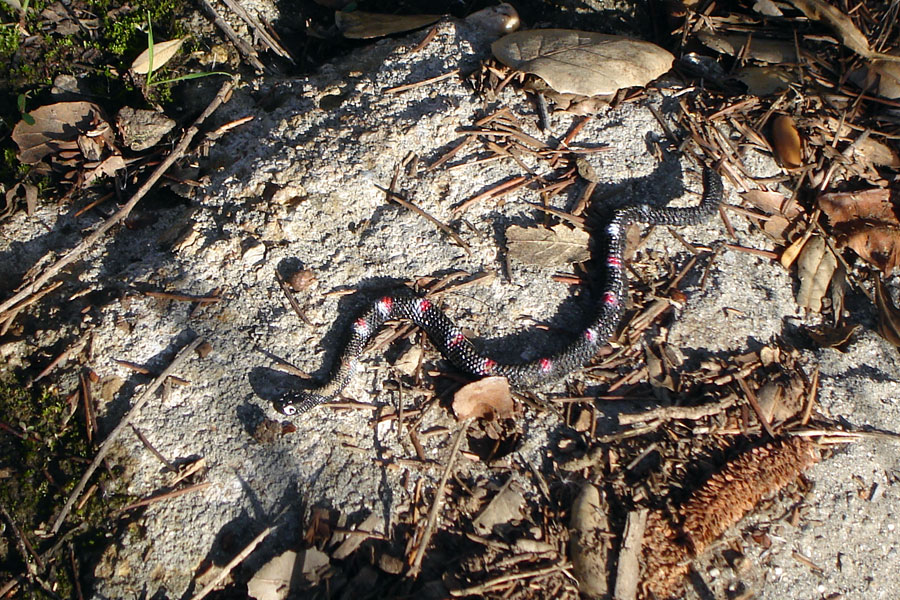
I have received email asking me to identify the following animals and objects which were thought to be snakes, including more than one plastic toy snake. |
||||||||||||||||||||||||||||
|
||||||||||||||||||||||||||||
Encounters With Dangerous Snakes |
||||||||||||||||||||||||||||
Always be cautious of a snake if you don't know for certain that it is harmless. Some snakes carry dangerous venom which can be harmful and even fatal to humans. (Most of us call these snakes poisonous, which is actually a misnomer, since they do not inflict harm when they are consumed. It is more accurate to call them venomous.) The only dangerously venomous native snakes found in California are the seasnake, which occurs in the ocean off southern California and is rarely encountered, and the rattlesnakes, which occur throughout the state and have a rattle on the end of the tail. However, be aware that sometimes the rattle may be missing or broken off. The bite of non-dangerously venomous snakes, such as the Lyre Snake, may also cause a minor reaction in some people. Non-venomous snakes can also cause a minor injury with their bite, especially if it draws blood and the wound is never disinfected. Snakes do not aggressively attack humans. They attack only in self-defense or when feeding. If you find a venomous snake, your best option is to leave it alone. For your own comfort and safety, and the well-being of the snake, try to avoid being bitten by any snake, including those that are non-venomous. If you want to have a dangerous snake removed from your property, contact someone in your area with experience in snake removal and re-location. There is no reasonable need to kill any snake that is encountered, which often occurs due to our instinctive and emotional fear of snakes. Snakes are a natural and necessary part of any healthy environment. They play an important role in the food chain, and can be especially beneficial to humans when they consume and control rodent populations. If you think you have a dangerous snake on you property, instead of trying to kill it, risking your own safety, and needlessly destroying an innocent wild animal, a better option is to have a professional come and catch and remove the snake. Some of them are free, but many of them charge a fee. You can find information about venomous snake removal and relocation along with a good list of some of the venomous snake relocators in California at anapsid.org. |
||||||||||||||||||||||||||||











Return to the Top
© 2000 -