|
 |
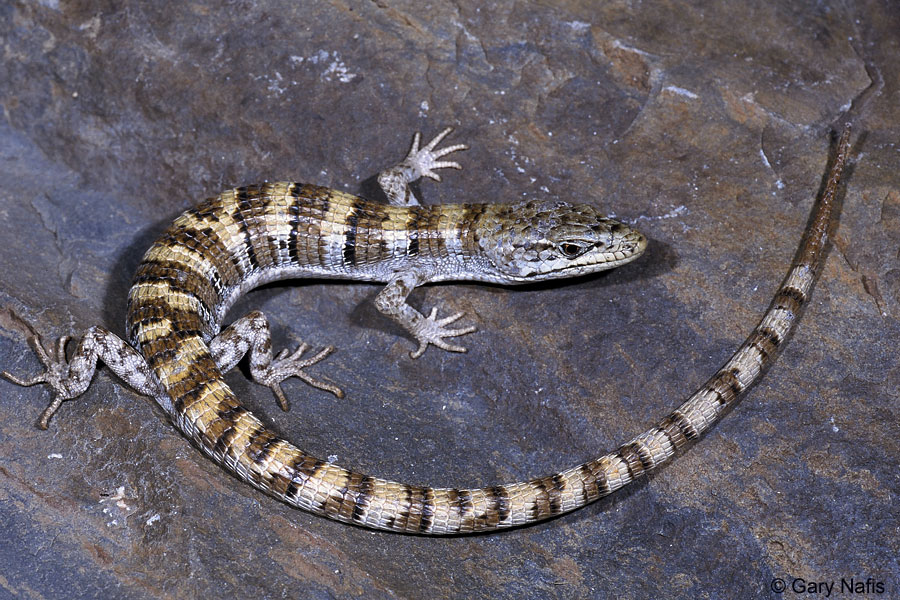
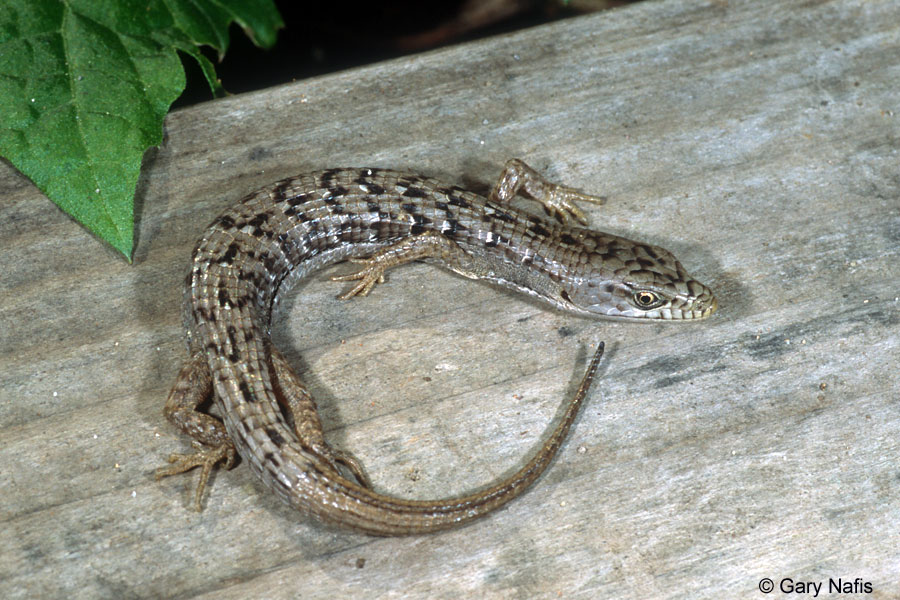
| Adult, Inyo County |
 |
 |
 |
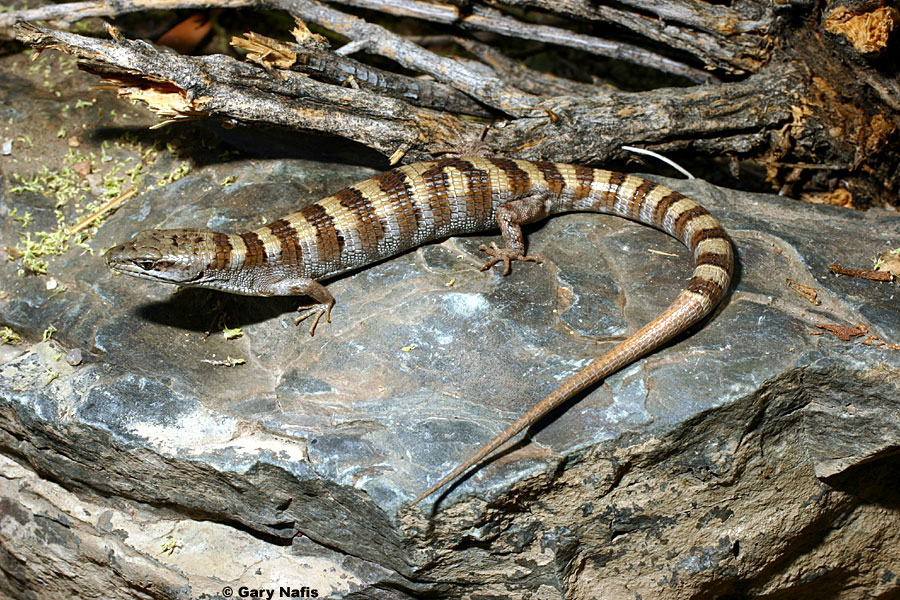
| Adult, Inyo County |
|
|
 |
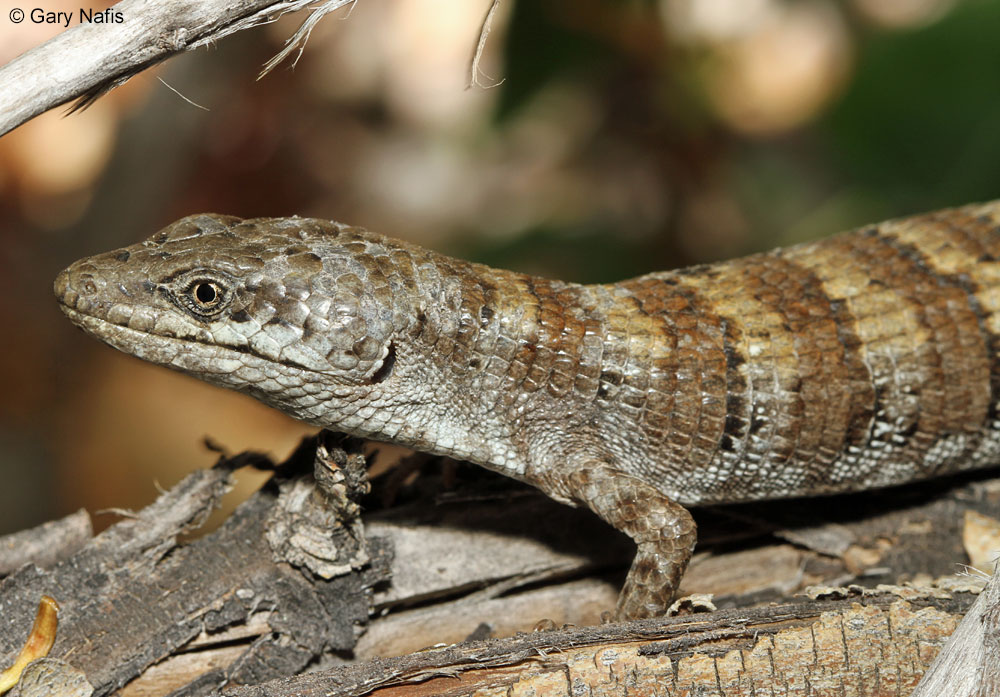
| Adult, Inyo County |
Adult, Inyo County |
Adult, Inyo County |
 |
 |
 |
| |
Adult, Inyo County |
|
 |
 |
 |
| |
Adult, Inyo County |
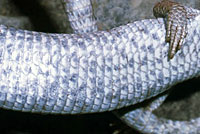
Adult underside, Inyo County
|
 |
 |
 |
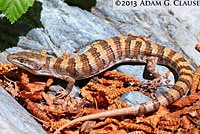
| Adult, Inyo County. © Adam Clause. (Animal captured and handled under state Scientific Collecting Permit and released at point of capture.) |
Adults, Inyo County. © Adam Clause. (Animals captured and handled under state Scientific Collecting Permit and released at point of capture.) |
Adult, Inyo County. © Adam Clause. (Animal captured and handled under state Scientific Collecting Permit and released at point of capture.) |
 |
 |
 |
Adult, Inyo County, note the different color pattern from others shown here.
© Adam Clause. (Animal captured and handled under state Scientific Collecting Permit.) |
Adult with a complete, un-regenerated tail, Inyo County. © Adam Clause.
(Animal captured and handled under state Scientific Collecting Permit.) |
Young adult male, Mono County
© Adam Clause.
(Animal captured and handled under state Scientific Collecting Permit.) |
 |
 |
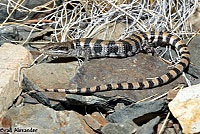 |
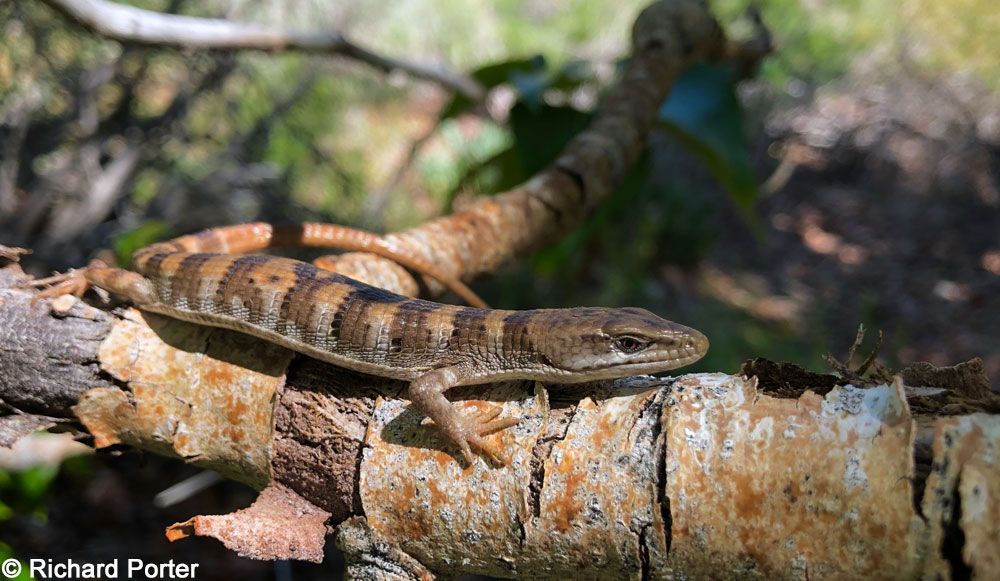
| Adult, in habitat, Inyo County © Richard Porter |
Juvenile, Inyo County
© Brad Alexander |
| |
 |
|
| |
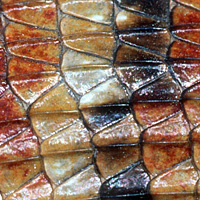
Western Alligator Lizards, genus Elgaria, have large rectangular keeled scales on the back that are reinforced with bone.
(Elgaria multicarinata multicarinata is shown here). |
|
| |
|
|
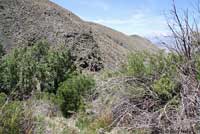
| Habitat |
 |
 |
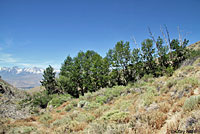 |
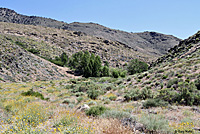
Habitat, 6,000 ft. Inyo County
|
Habitat, 6,300 ft. Inyo County |
Habitat, 6,000 ft. Inyo County |
 |
|
|
| Habitat, 6,000 ft. Inyo County |
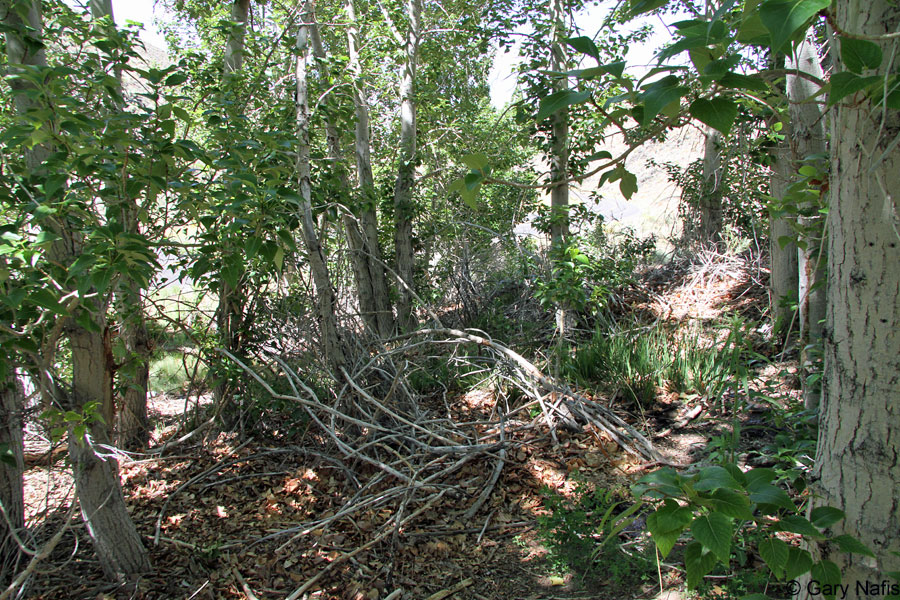
Microhabitat, Inyo County |
|
| |
|
|
| Short Video |
| |
 |
|
| |
A large old Panamint Alligator Lizard crawls around in a brush pile at a desert spring in Inyo County, then jumps off and hangs from his tail and hind legs before dropping to the ground. |
|
| |
|
|
| Description |
| |
| Size |
3 5/8 - 6 inches long from snout to vent (9.2 - 15.2 cm).
|
| Appearance |
Alligator lizards, genus Elgaria, are members of the family Anguidae, a family of lizards found in the Americas, Europe, Asia, and Africa.
Large bony scales, a large head on an elongated body and powerful jaws probably give the lizards their common name.
They are characterized by a slim body with short limbs and long tail.
The tail can reach twice the length of its body if it has never been broken off and regenerated.
|
| Color and Pattern |
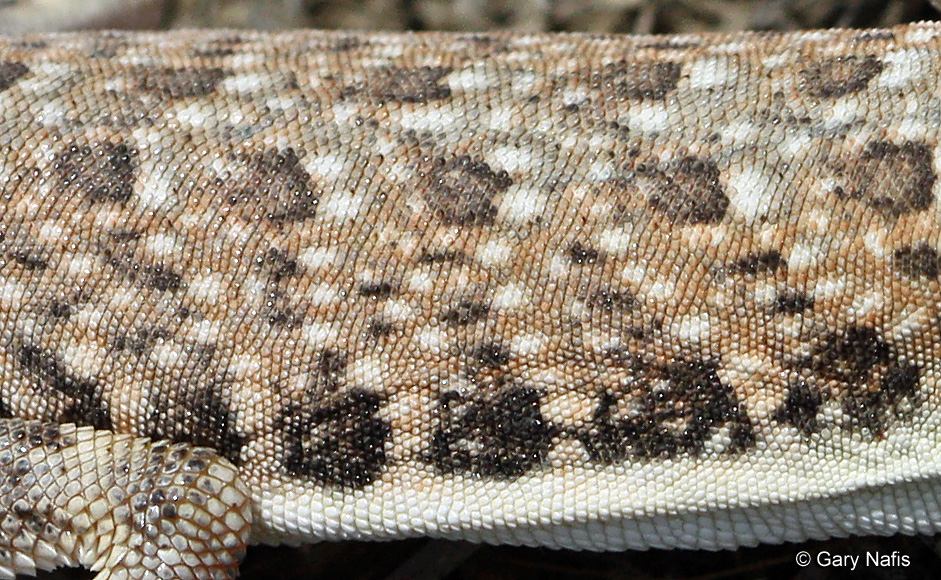
Color is light yellow, beige, or gray with broad light or dark brown bands circling the top and sides, and white marks on the sides behind each band.
The underside is cream colored with gray flecks.
The tail is banded.
The eyes are pale yellow.
Male heads are broader and more triangular than that of females. |
Identifying Alligator Lizards in California |
| Young |
The dark bands of juveniles contrasts strongly with their light background.
|
| Life History and Behavior |
Activity |
Diurnal, crepuscular, and sometimes nocturnal.
Secretive and not frequently seen, spending much time in dense rock piles and plant growth. |
| Movement |
Moves with a snake-like undulating motion, often tucking the rear legs up against the side of the body and pulling itself along on its belly with the front feet.
The slightly prehensile tail can be used to wrap around vegetation when climbing.
|
| Defense |
The tail of an alligator lizard is easily broken off, as it is with many lizards.
The tail will grow back, although generally not as perfectly as the original.
A lizard may detach its tail deliberately as a defensive tactic. When first detached, the tail will writhe around for several minutes, long enough to distract a hungry predator away from the lizard.
More information about tail loss and regeneration.
Males sometimes also extrude the hemipenes when threatened.
Often when an alligator lizard is observed lying still or basking, it will tuck its legs back toward the body. This is probably a defensive measure to break up the outline of the lizard's body so that a predator can't tell that it's an animal with legs. This might be to give it the appearance of a stick or shadow or something not alive, or it might be to imitate a snake, since many animals are naturally afraid of snakes and will hesitate to approach or attack a snake.
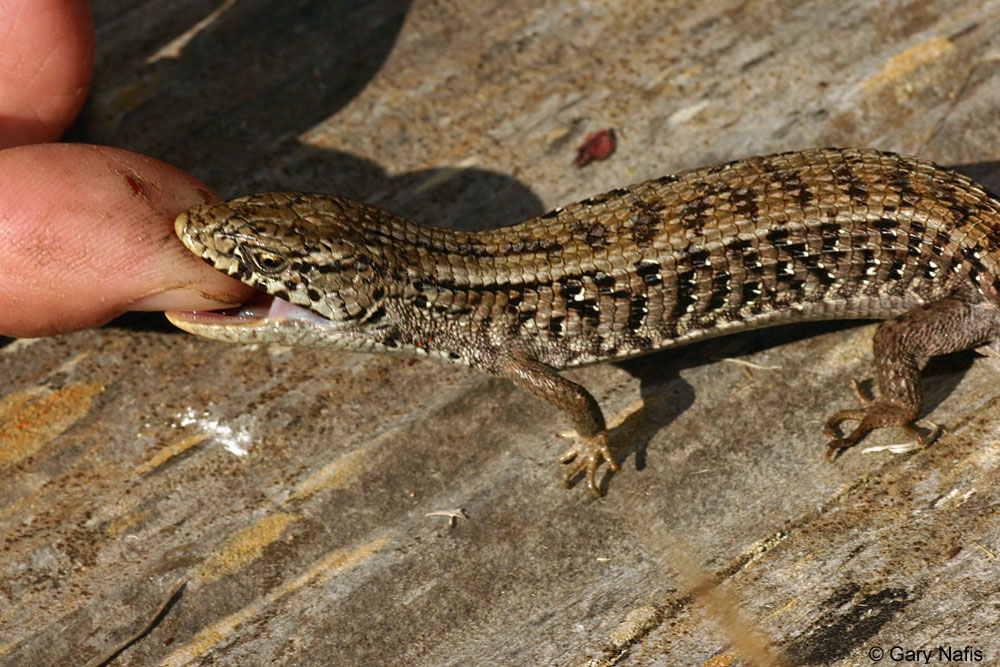
Other defensive tactics used by alligator lizards are smearing the contents of the cloaca on the enemy and biting.
They often bite onto a predatory snake, on the neck or the head, rendering the snake unable to attack.
Samuel M. McGinnis (Stebbins & McGinnis, 2012)
reports seeing a juvenile southern alligator lizard bite onto its own tail making itself impossible to be swallowed by a juvenile Alameda Striped Racer, which eventually gave up. |
| Diet and Feeding |
| Eats small invertebrates. |
| Reproduction |
Not well known.
Probably lays eggs. Mating has been observed in May.
|
| Habitat |
A relict species inhabiting limited riparian areas in the desert, mostly rocky canyon bottoms near streams and springs, grown with creosote bush, sagebrush, and at the lower edge of the piñon-juniper zone. Found in dense vegetation near damp soil, and also in rocky talus outside of riparian areas.
|
| Geographical Range |
Endemic to California.
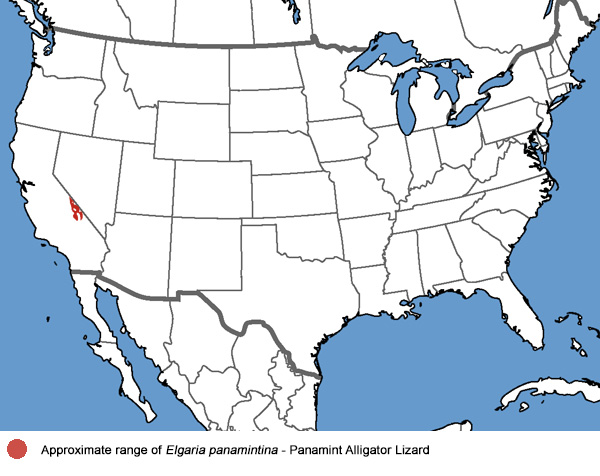
Found in Inyo and Mono Counties in desert mountain ranges, including the Panamint Mountains, the White Mountains, the Inyo Mountains, the Nelson Mountains, and the Cosos Mountains. |
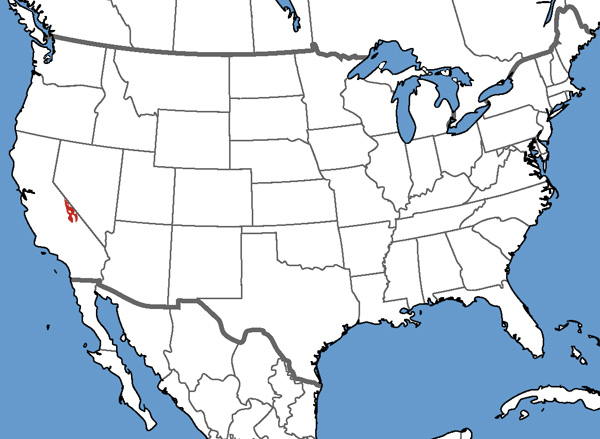 |
Red: Elgaria panamintina - Panamint Alligator Lizard
|
| Elevational Range |
From 2,500 to 7,513 ft. (760 - 2,290 meters).
|
| Notes on Taxonomy |
Formerly Gerrhonotus panamintinus
---------------------------------------------------------------------------------------------------------------------------------------------------------------------
First discovered in 1954 in the Panamint Mountains. Occurs about 10 miles from Elgaria multicarinata, but more closely related to Elgaria kingii, (found in Arizona) from which it was isolated during the drying of the deserts.
---------------------------------------------------------------------------------------------------------------------------------------------------------------------
"The results of Feldman and Spicer (2006, Molecular Ecology 15: 2201–2222), based on mtDNA, indicating that E. panamintina is derived from within E. multicarinata, was corroborated by Leavitt et al. (2017, Molecular Phylogenetics and Evolution 110: 104–121) using both mitochondrial and nuclear DNA sequences."
(Nicholson, K. E. (ed.). 2025 SSAR Scientific and Standard English Names List)
---------------------------------------------------------------------------------------------------------------------------------------------------------------------
Alternate and Previous Names (Synonyms)
Gerrhonotus panamintinus - Panamint Alligator Lizard (Stebbins 1958, 1966, 1985)
|
| Conservation Issues (Conservation Status) |
Considered to be threatened due to alteration of its limited available habitat from mining, livestock grazing, and off-road vehicle use.
There is a description and conservation status summary of this taxon with a dot-locality distribution map in an online .pdf from the California Department of Fish and Wildlife book California Amphibian and Reptile Species of Special Concern (Thomson, Wright, and Shaffer 2016). The book describes the threats to this species:
"The primary threat to this species is habitat loss or alteration in its already small range. Many of the known localities occur on private land and are vulnerable to mining, livestock grazing, off-highway vehicle use, and/or diversion of the water sources. Climate change could potentially impact this species if changes in hydrology cause springs to dry up or become less regular in their flow regimes."
|
|
|
Taxonomy |
| Family |
Anguidae |
Alligator Lizards & Allies |
Gray, 1825 |
| Genus |
Elgaria |
Western Alligator Lizards |
Gray, 1838 |
Species
|
panamintina |
Panamint Alligator Lizard |
(Stebbins, 1958) |
|
Original Description |
(Stebbins, 1958) - Amer. Mus. Nov., No. 1883, p. 2
from Original Description Citations for the Reptiles and Amphibians of North America © Ellin Beltz
|
|
Meaning of the Scientific Name |
Elgaria - obscure - possibly named for an "Elgar" or a pun on "alligator."
panamintina - Panamint Mountains, in east central CA
from Scientific and Common Names of the Reptiles and Amphibians of North America - Explained © Ellin Beltz
|
|
Alternate Names |
Formerly Gerrhonotus panamintinus
|
|
Related or Similar California Lizards |
E. c. palmeri - Sierra Alligator Lizard
E. c. shastensis - Shasta Alligator Lizard
E. c. principis - Northwestern Alligator Lizard
E. multicarinata - Southern Alligator Lizard
E. c. coerulea - San Francisco Alligator Lizard
|
|
More Information and References |
California Department of Fish and Wildlife
There is a description and conservation status summary of this taxon with a dot-locality distribution map in an online .pdf from the California Department of Fish and Wildlife book California Amphibian and Reptile Species of Special Concern (Thomson, Wright, and Shaffer 2016).
Biology, Ecology and Current Research
Hansen, Robert W. and Shedd, Jackson D. California Amphibians and Reptiles. (Princeton Field Guides.) Princeton University Press, 2025.
Stebbins, Robert C., and McGinnis, Samuel M. Field Guide to Amphibians and Reptiles of California: Revised Edition (California Natural History Guides) University of California Press, 2012.
Stebbins, Robert C. California Amphibians and Reptiles. The University of California Press, 1972.
Flaxington, William C. Amphibians and Reptiles of California: Field Observations, Distribution, and Natural History. Fieldnotes Press, Anaheim, California, 2021.
Nicholson, K. E. (ed.). 2025. Scientific and Standard English Names of Amphibians and Reptiles of North America North of Mexico, with Comments Regarding Confidence in Our Understanding. Ninth Edition. Society for the Study of Amphibians and Reptiles. [SSAR] 87pp.
Samuel M. McGinnis and Robert C. Stebbins. Peterson Field Guide to Western Reptiles & Amphibians. 4th Edition. Houghton Mifflin Harcourt Publishing Company, 2018.
Stebbins, Robert C. A Field Guide to Western Reptiles and Amphibians. 3rd Edition. Houghton Mifflin Company, 2003.
Behler, John L., and F. Wayne King. The Audubon Society Field Guide to North American Reptiles and Amphibians. Alfred A. Knopf, 1992.
Robert Powell, Roger Conant, and Joseph T. Collins. Peterson Field Guide to Reptiles and Amphibians of Eastern and Central North America. Fourth Edition. Houghton Mifflin Harcourt, 2016.
Powell, Robert., Joseph T. Collins, and Errol D. Hooper Jr. A Key to Amphibians and Reptiles of the Continental United States and Canada. The University Press of Kansas, 1998.
Macey, J. Robert and Theodore Papenfuss."Herpetology." The Natural History of the White-Inyo Range Eastern California.
Ed. Clarence Hall. University of California Press, 1991.
|
|
|
The following conservation status listings for this animal are taken from the July 2025 State of California Special Animals List and the July 2025 Federally Listed Endangered and Threatened Animals of California list (unless indicated otherwise below.) Both lists are produced by multiple agencies every year, and sometimes more than once per year, so the conservation status listing information found below might not be from the most recent lists, but they don't change a great deal from year to year.. To make sure you are seeing the most recent listings, go to this California Department of Fish and Wildlife web page where you can search for and download both lists:
https://www.wildlife.ca.gov/Data/CNDDB/Plants-and-Animals.
A detailed explanation of the meaning of the status listing symbols can be found at the beginning of the two lists. For quick reference, I have included them on my Special Status Information page.
If no status is listed here, the animal is not included on either list. This most likely indicates that there are no serious conservation concerns for the animal. To find out more about an animal's status you can also go to the NatureServe and IUCN websites to check their rankings.
Check the current California Department of Fish and Wildlife sport fishing regulations to find out if this animal can be legally pursued and handled or collected with possession of a current fishing license. You can also look at the summary of the sport fishing regulations as they apply only to reptiles and amphibians that has been made for this website.
|
| Organization |
Status Listing |
Notes |
| NatureServe Global Ranking |
G3 |
Vulnerable
|
| NatureServe State Ranking |
S3 |
Vulnerable
|
| U.S. Endangered Species Act (ESA) |
None |
|
| California Endangered Species Act (CESA) |
None |
|
| California Department of Fish and Wildlife |
SSC |
Species of Special Concern |
| Bureau of Land Management |
S |
Sensitive |
| USDA Forest Service |
S |
Sensitive |
| IUCN |
VU |
Vulnerable |
|
|