|
 |
 |
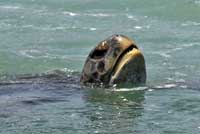 |
| Adult turtles in the San Gabriel River, Los Angeles County |
 |
 |
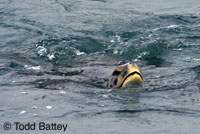 |
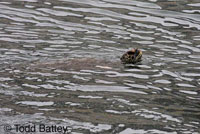
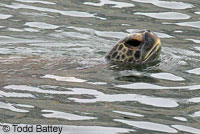
| Adult turtles in the San Gabriel River, Los Angeles County © Todd Battey |
 |
 |
 |
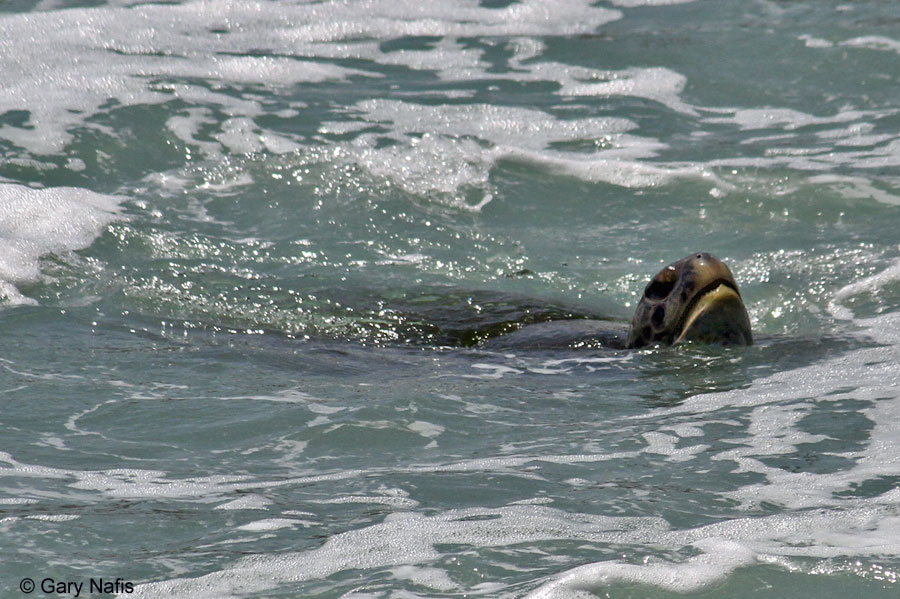
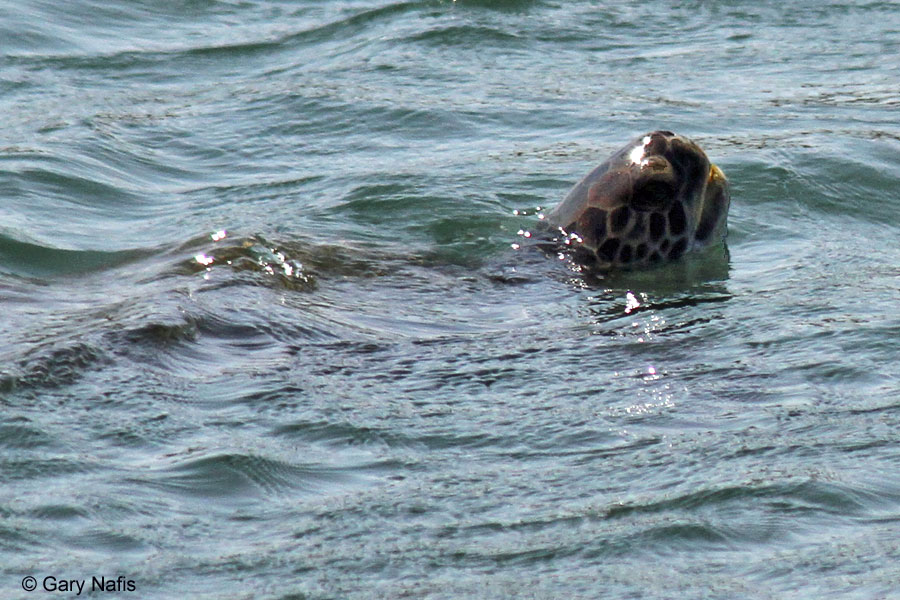
Adult female photographed in September swimming in the Matlahuayl State Marine Reserve near
La Jolla, San Diego County. © Lindsay Marston |
 |
 |
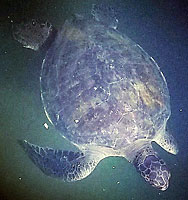 |
| Adult female photographed in September swimming in the Matlahuayl State Marine Reserve near La Jolla, San Diego County. © Lindsay Marston |
This Green sea turtle was photographed in Marina Del Rey harbor in Los Angeles County in late July. |
 |
 |
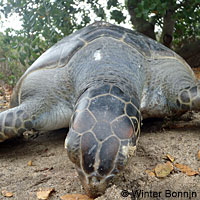 |
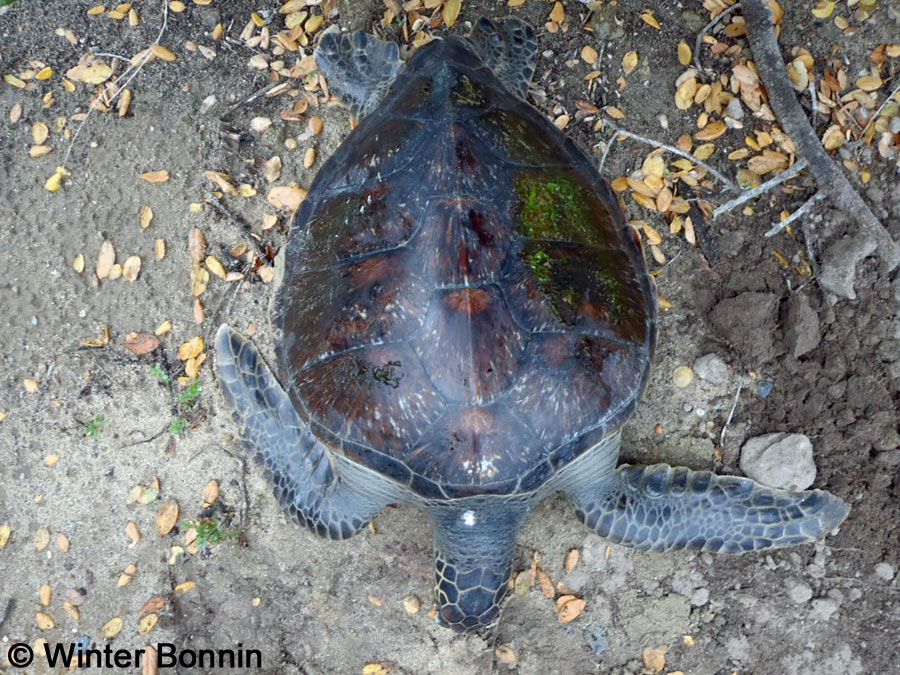
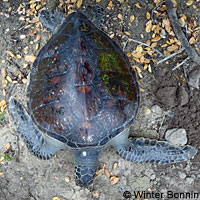
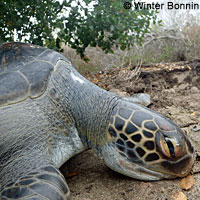
This recently-deceased adult turtle washed up ashore at Crystal Cove State Park
in Laguna Beach, Orange County, in early December 2014. © Winter Bonnin |
| |
| Green Sea Turtles From Outside California Waters |
 |
 |
 |
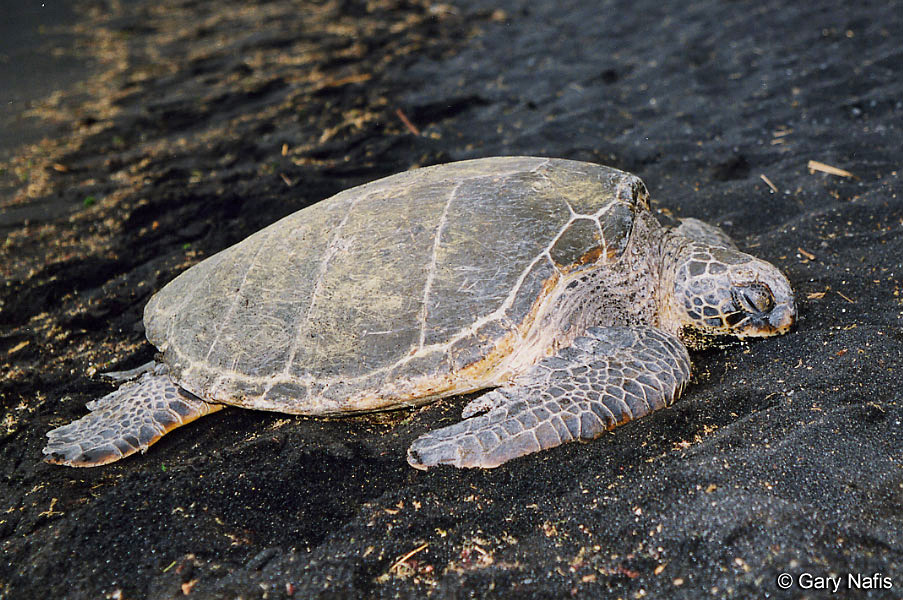
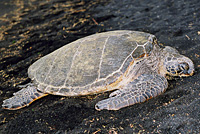
| Adult basking on black sand beach on the island of Hawaii, Hawaii |
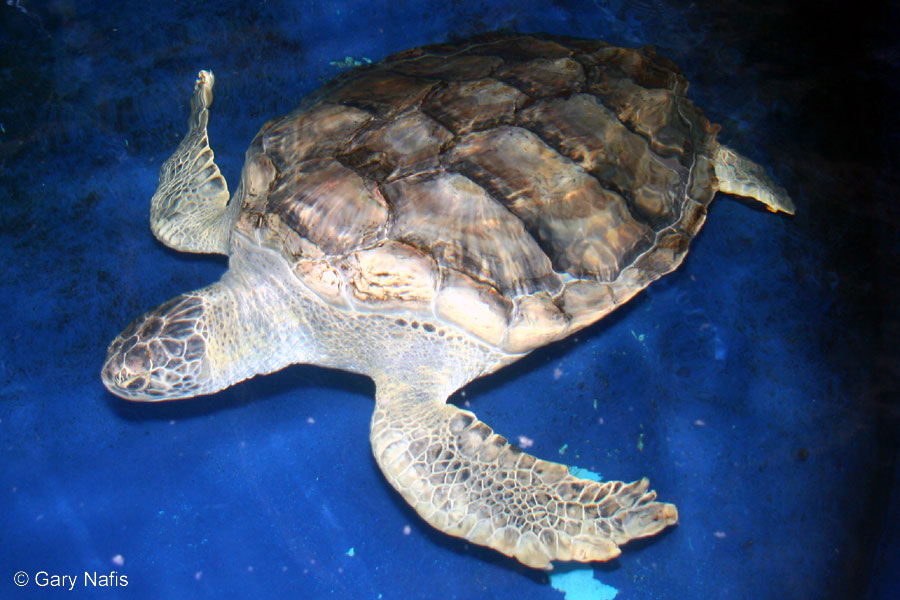
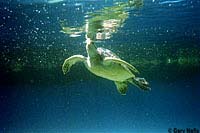
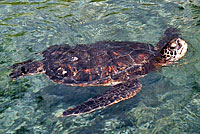
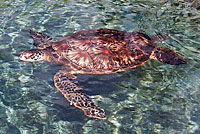
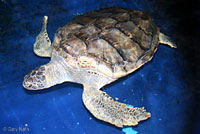
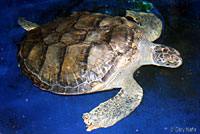
Captive underwater in aquarium,
Maui, Hawaii |
 |
 |
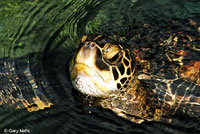 |
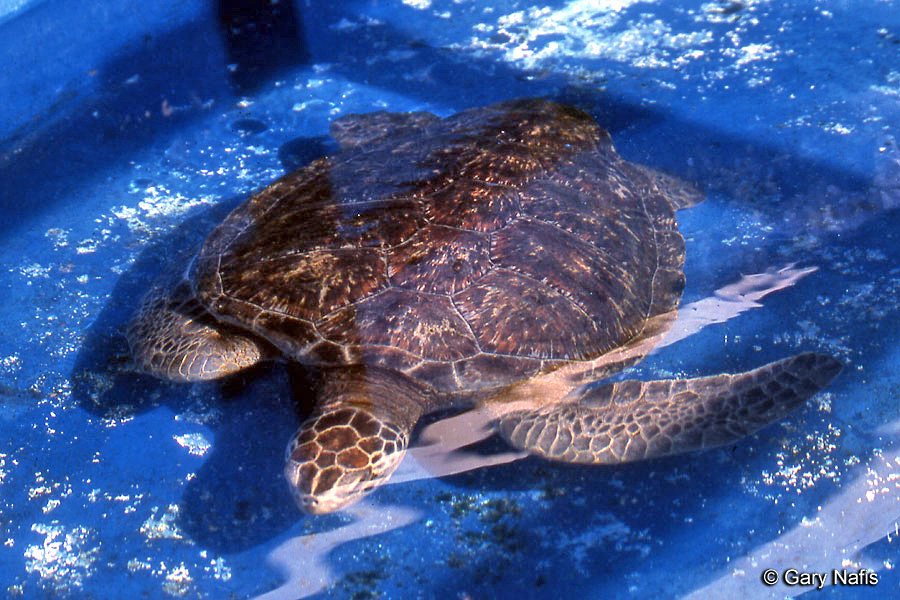
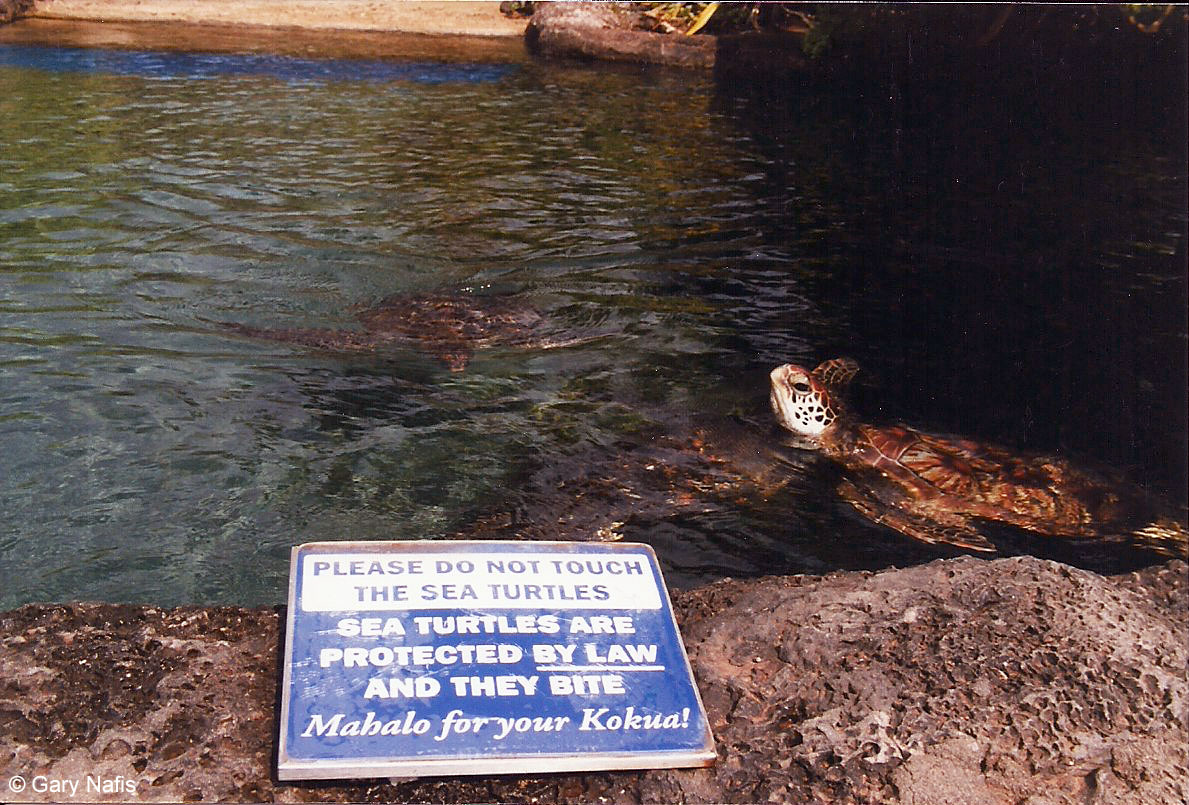
| Captives in an aquarium on the island of Maui, Hawaii |
|
|
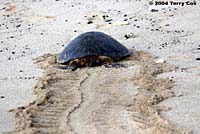 |
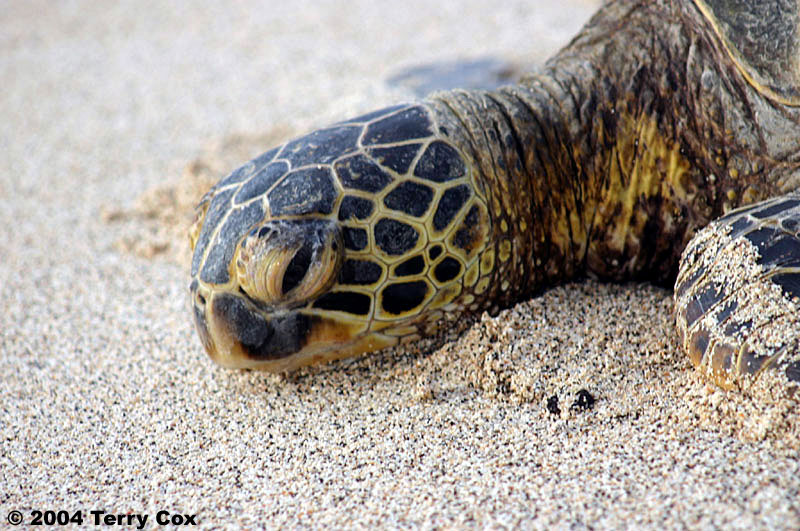
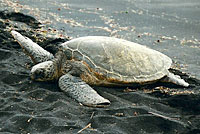
| Adult, Hawaii, Hawaii © 2004 Terry Cox |
 |
 |
 |
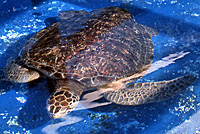
Captive rescued adult from the Gulf of Mexico.
Sea Turtle Rescue Center, Sea Turtle Inc., South Padre Island, Texas |
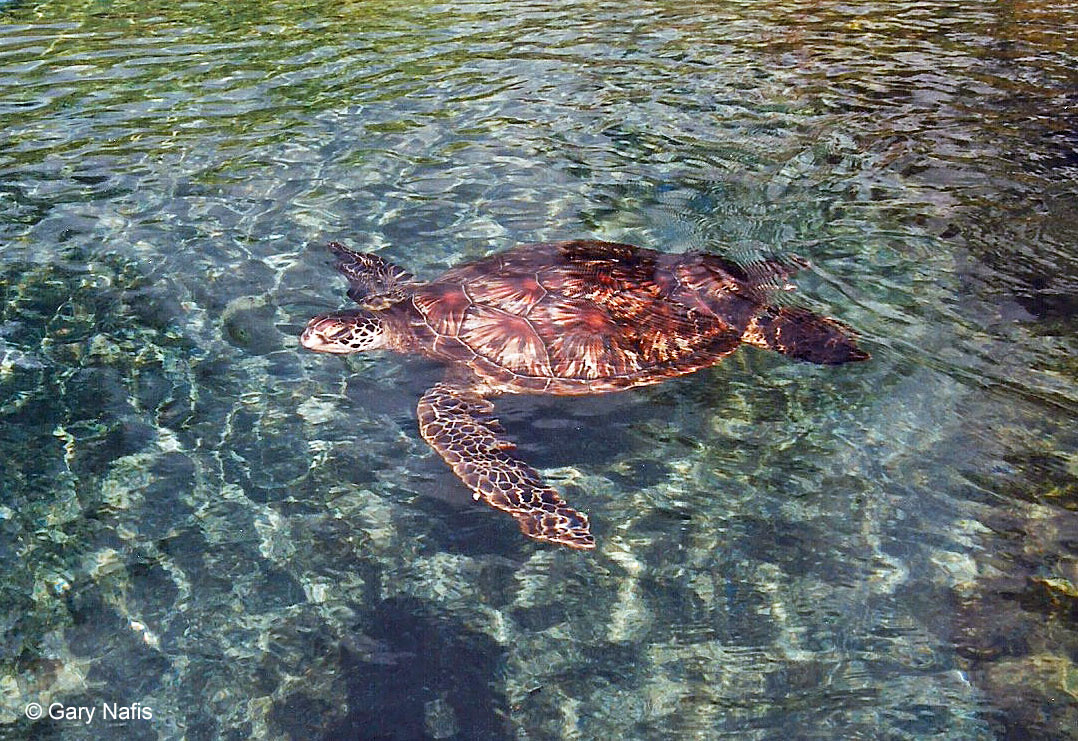
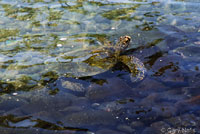
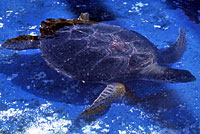
Adult swimming near shore,
Hawaii, Hawaii |
 |
 |
 |
Captive adult "Black Sea Turtles" in rehabilitation, from the Bay of Cortez.
Sea Turtle Preservation Center, Bahia de los Angeles, Baja California, Mexico
|
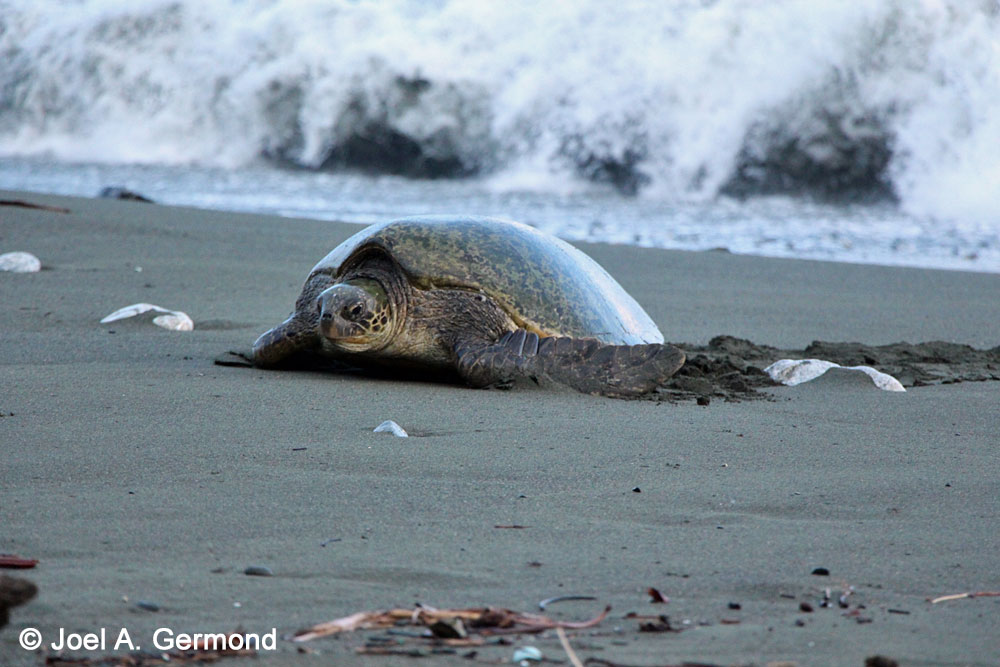
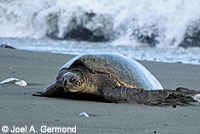
Adult, Carate Beach, Osa Peninsula, Costa Rica © Joel A. Germond |
 |
 |
 |
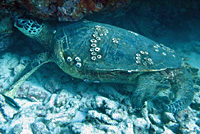
| Adult with barnacles on its shell, Kona, Island of Hawai'i © Anonymous |
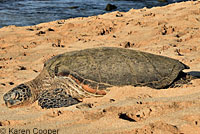
Adult on beach, Hawai'i
© Karen Cooper |
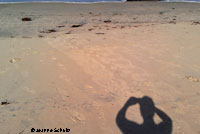
Faint turtle tracks on the sand in late May on Silver Strand State Beach, San Diego County. © Jeanne Schultz |
 |
 |
 |
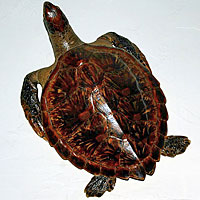
Preserved adult, Santa Barbara
Museum of Natural History |
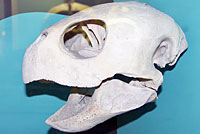
Green Sea Turtle skull,
National Museum of Natural History
|
|
| |
|
|
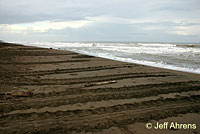
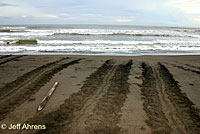
| Nesting |
 |
 |
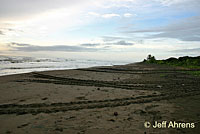 |
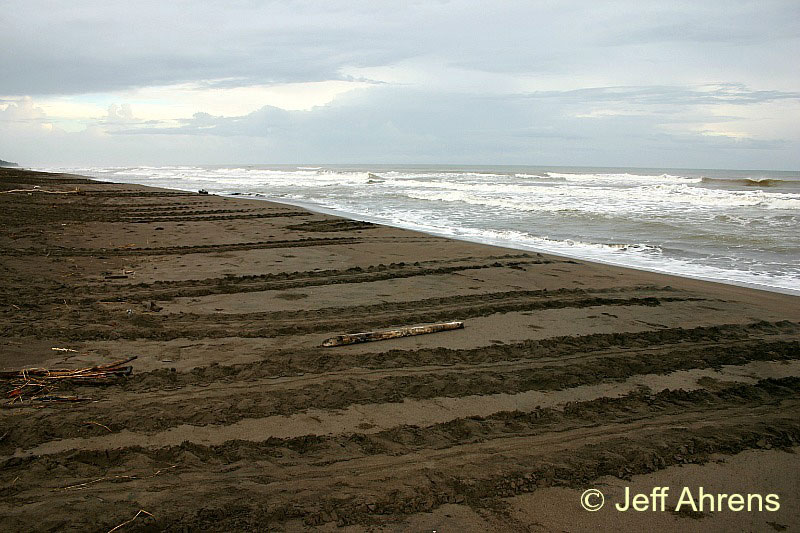
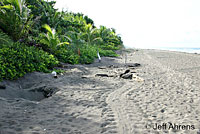
| Green Sea Turtle tracks on the beach at Sea Turtle Conservancy, Tortuguero National Park, Costa Rica. © Jeff Ahrens |
 |
 |
|
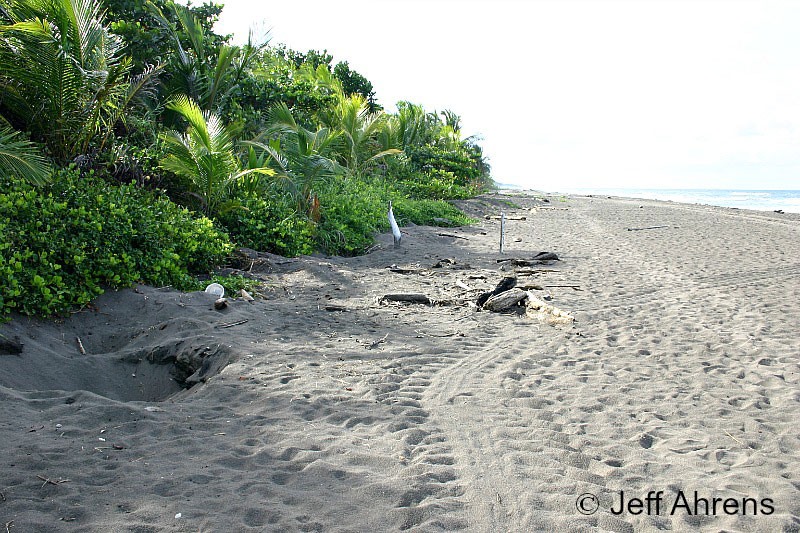
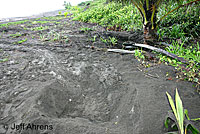
| Green Sea Turtle nesting evidence on the beach at Sea Turtle Conservancy, Tortuguero National Park, Costa Rica. © Jeff Ahrens |
|
 |
 |
|
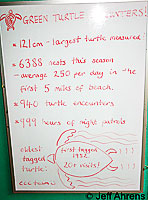
Green Sea Turtle nesting signs at Sea Turtle Conservancy,
Tortuguero National Park, Costa Rica. © Jeff Ahrens |
|
| |
|
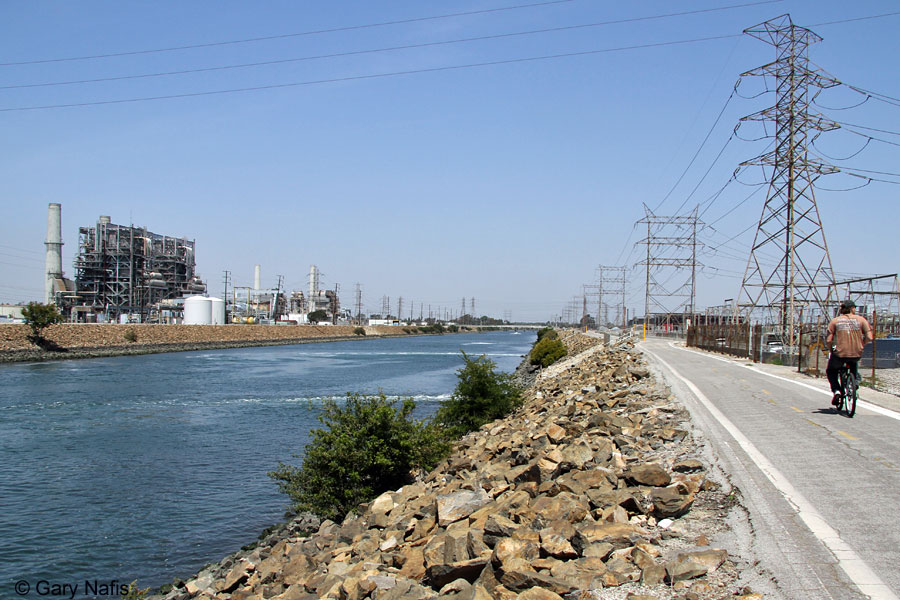
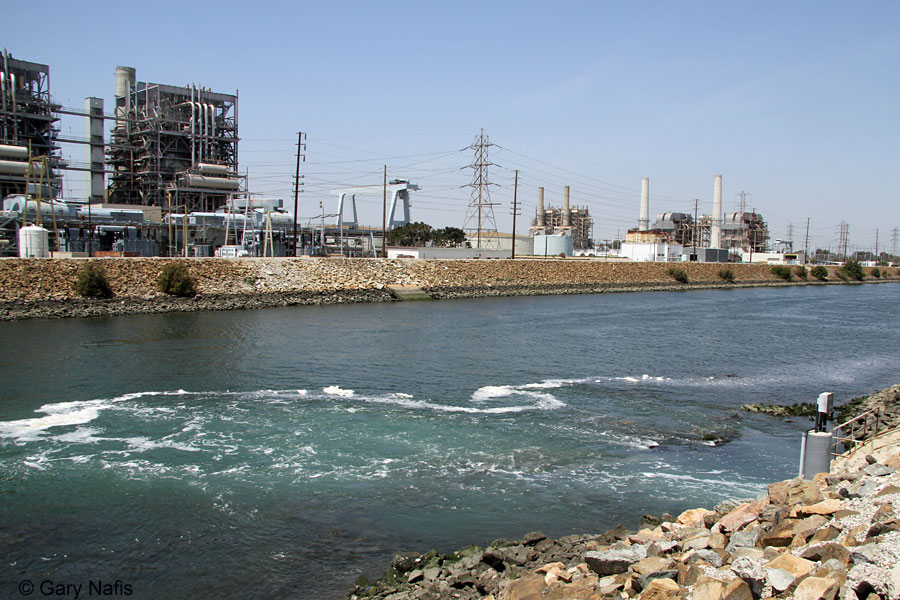
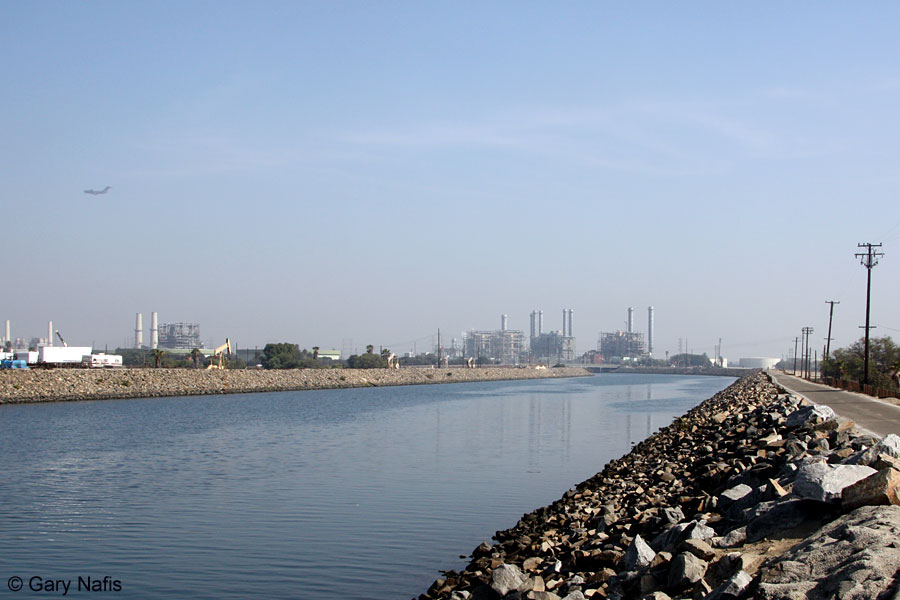
| Habitat in California Waters |
 |
 |
 |
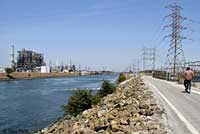
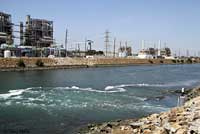
| Habitat, warm water discharge area in brackish water of the San Gabriel River, Los Angeles County |
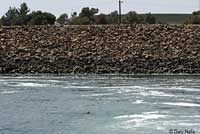 |
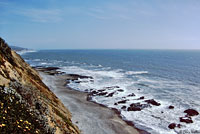 |
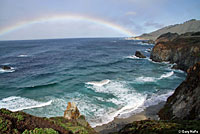 |
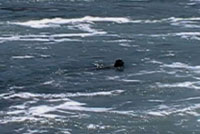
| Distant turtle in habitat, San Gabriel River, Los Angeles County |
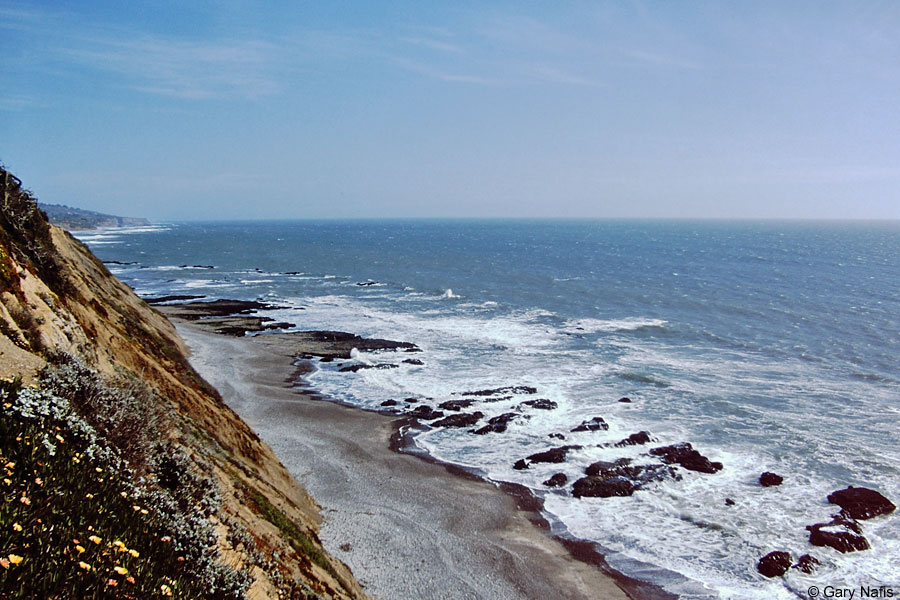
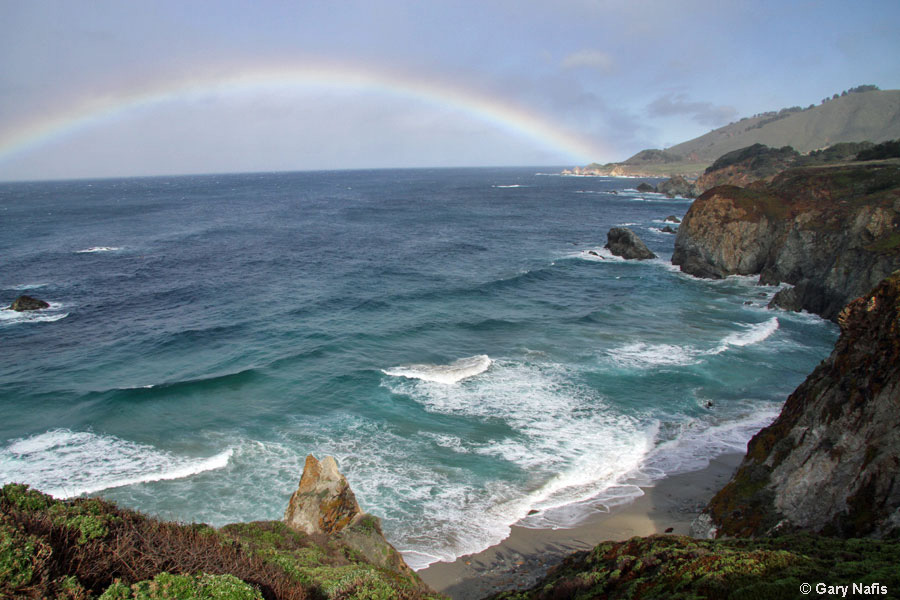
Pacific Ocean habitat, San Mateo County |
Habitat in California - the Pacific Ocean |
| |
|
|
| Short Video |
| |
 |
 |
| |
Green Sea Turtles surface while feeding near the mouth of the San Gabriel River. About every 5 minutes I saw one of these turtles surface to breathe air for just a few seconds, but there was no way to tell when and where one would come up, which made it difficult to photograph them and impossible to zoom in close. My only solution was to put the video camera on a tripod, aim it at the place where they were likely to be, start recording, and hope a turtle would surface where the lens was pointed. |
Here's a YouTube video of Green Sea Turtles in the San Gabriel River made by someone with a better zoom than mine. |
| |
|
|
| Description |
| |
| Size |
Adults are 30 - 60+ inches in shell length (75 - 152+ cm). (Stebbins 2003)
|
| Appearance |
A large marine turtle with powerful paddle-like forelimbs and a broad, low, smooth, heart-shaped, un-serrated carapace with 4 costal shields on each side.
The first costal shield does not touch the nuchal.
There is a single pair of prefrontals, the large scales between the upper eyelids.
This species typically weighs from 120 - 200 lbs., but some have weighed over 600 lbs. |
| Color and Pattern |
| The carapace is greenish, olive, brown, gray, or black, sometimes with a mottled or radiating pattern, especially on younger turtles. The name of this turtle derives from its green fat, not its external coloration. The plastron is pale yellow or whitish and unmarked. The head plates are olive with yellow edges. |
| Male / Female Differences |
Males have a longer and narrower carapace than females, a long prehensile tail with a flat nail at the tip, and an enlarged curved claw on the front flipper.
A female's tail barely reaches the rim of the shell. |
| Young |
Young turtles have a vertebral keel and a pair of keels on the plastron. Their flippers are edged with white.
|
| Life History and Behavior |
Activity |
Aquatic, living in the ocean and rarely coming onto land, though this species is more prone to bask onshore than other Sea Turtles. Often found far out at sea, especially during migration to and from breeding sites.
Diurnal. Forages in daylight.
Basks on isolated shores, or while floating at the surface where solar heat can be absorbed through the dark carapace.
Hatchlings spend a year or more out at sea. This period has been called the "lost years" because researchers did not know where the turtles went or what they did during this period. In 2007, a study has determined that they spend these years out in the open ocean, feeding carnivorously on jellyfish and other animals. After this period, they appear in shallow waters where they feed on vegetation until reaching maturity. |
| Predators |
| Adult turtles have few predators in the open ocean. Humans, tiger sharks, and groupers are a few. |
| Diet and Feeding |
| Omnivorous. Eats seaweed, algae, and marine invertebrates including sponges and jellyfish. Juveniles are more carnivorous than adults. |
| Reproduction |
Adults take from 19 - 24 years to reach sexual maturity. After maturing, they return to the beach where they hatched [which might involve a long migration of as far as 2,000 miles (3,200 km)]. Nesting sites are communal and re-used each season. Most California turtles probably hatched at nesting sites on the Pacific Coast of the Americas - Panama, Costa Rica, Nicaragua, Guatemala, El Salvador, Michoacan, Chiapas, and Baja California.
Mating takes place in shallow water off the nesting beach. In the eastern Pacific, breeding occurs any time between February and January, with peak periods depending on location - April to June in Hawaii. Most females breed every third year, with others breeding every 2 - 4 years. After a female turtle mates, she crawls at night onto the flat or gradually-sloped sandy nesting beach and finds a spot where the coarseness and moisture content of the sand arejust right for the eggs to survive. There she digs a nest cavity with her hind feet, lays her eggs, then covers them up. After laying her eggs, the female turtle crawls back into the sea.
A female will lay from 1 - 7 clutches of eggs per nesting season. The average size of a clutch is 100 - 120 eggs.
Eggs in the nest are in constant danger of predation by crabs, beetles, maggots, ants, vultures, shorebirds, seabirds, and various mammals such as skunks, pigs, opossums, mongooses, and humans. After about 2 months, the eggs hatch, and the hatchlings struggle to dig themselves out of the sand. They emerge at night and crawl towards the ocean, again suffering attacks from many predators, including crabs, ants, snakes, vultures, ravens, gulls and other ocean-going birds, and mammals including feral cats and dogs, skunks, and peccaries. After entering the water, they continue to be under attack, by dolphin fish, groupers and other fish, and bottlenose dolphins. Few hatchlings ever survive the first year.
Sea Turtle Navigation
A study published in 2018 * shows that Loggerhead Sea Turtles use the earth's magnetic fields to navigate back to within about 50 miles of where they were born. They learn the magnetic signature of their natal beach through geomagnetic imprinting.
* J. Roger Brothers, Kenneth J. Lohmann. Evidence that Magnetic Navigation and Geomagnetic Imprinting Shape Spatial Genetic Variation in Sea Turtles. Current Biology Volume 28, Issue 8, 23 April 2018.
|
| Habitat |
Inhabits the shallow waters of lagoons, bays, estuaries, mangroves, eelgrass and seaweed beds.
Prefers areas with abundant aquatic vegetation, such as pastures of sea grasses and algae, in shallow, protected water.
|
| Geographical Range |
Ranges all over the world in tropical waters, moving into temperate zones in the summer.
Recorded along the pacific coasts of the Americas from Alaska to Chile. Common as far north as San Quintin Bay in Baja California, but uncommon along the California coast.
Occurrence in California
Sea turtles can show up almost anywhere on the coast of California, but most sightings are not documented. The locations mentioned here probably represent only a small percentage of sightings. For example, I have heard of sea turtle sightings by scuba divers diving at some of the Channel Islands, but few of those sightings are recorded.
This is a 11/19/12 YouTube video of a turtle at Catalina Island.
This is an illustrated web page about snorkeling with Green Sea Turtles near La Jolla: Scuba Diver Girls 9/26/15.
Green Sea Turtles are occasionally seen along the California Coast, often in El Niño years when the ocean temperature is higher than normal. Some locations where Green Sea Turtles have been seen in California waters that I have found include San Francisco, San Clemente Island, Newport Beach, Marina Del Rey harbor, San Diego Bay, La Jolla, Ventura, Seal Cove and Año Nuevo State Reserve in San Mateo County, Monterey County (Monterey? 1818), the San Gabriel River, and Bodega Bay.
From November to April, a small population of Green Sea Turtles has been observed in the warm water effluent channel of the San Diego Gas & Electric power plant in San Diego Bay. (Stebbins 2003) A study by Marge Stinson of Southwestern College revealed that the colony includes at least 100 turtles, all permanent residents. In 2009 some of the power units that create the warm water effluent were shut down and fewer turtles were captured during net capture studies. The South San Diego Bay power plant was shut down 12/31 2010 eliminating the warm water effluent altogether and the plant was torn down in 2013. This makes it doubtful that the Green Sea Turtle population in San Diego Bay continues.
(www.seaturtle.org)
Another small colony has taken up residence where warm-water is discharged into the brackish mouth of the San Gabriel River from a Long Beach power plant (the Los Angeles Department of Water and Power’s Haynes Generating Station.) It is possible that these turtles are now stranded there due to cold ocean temperatures which prevent their leaving. If the seawater warms considerably during another El Nino year, they might leave.
L.A. Times 8/30/2008
In mid November of 2015, during one of the strongest El Ninos ever recorded, a Green Sea Turtle was filmed swimming in the San Joaquin River in Lathrop near Manteca, which by my rough calculations is approximately
90 miles upriver from the Golden Gate bridge. It is possible that the warm El Nino waters lured the turtle north where it swam into the San Francisco bay, became disoriented, and continued up the river instead of back to sea.
The Modesto Bee, November 17, 2015
During the fall of 2015 a Green Sea Turtle was found on Canada's Vancouver Island. It was flown to San Diego the following April. According to the U.S. Dept. of Fish and Wildlife, ten turtles (species not indicated, but including at least one Green and one Olive Ridley) were found on shores in Oregon, Washington, and Northern California during the winter of 2015/2016.
Orange County Register 4/22/16.
|
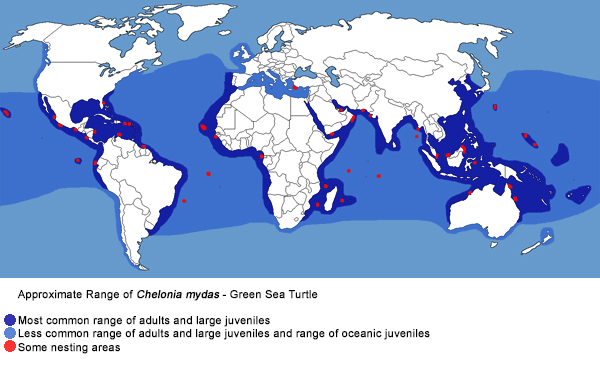
Click Map to Enlarge
|
| Notes on Taxonomy |
Some researchers consider the Pacific Ocean population of Chelonia mydas to be a separate species, Chelonia agassizii. Others consider it a separate subspecies, Chelonia mydas agassizii.
Some refer to turtles found in the eastern Pacific as C. agassizii, the Black Sea Turtle.
---------------------------------------------------------------------------------------------------------------------------------------------------------------------
Regarding the Black Turtle of the Pacific Ocean (C. agassizii or C. m. agassizii) , the SSAR (2012 Herpetological Circular No. 39) chooses to "follow Parham and Zug (1996, Marine Turtle Newsl. 72: 2-5) and Karl and Bowen (1999, Cons. Biol. 13:990-999) in not recognizing it taxonomically until more work is done."
---------------------------------------------------------------------------------------------------------------------------------------------------------------------
You can read a more detailed summary of some of the issues in C. mydas taxonomy in a 1996 article found at Seaturtle.org.
---------------------------------------------------------------------------------------------------------------------------------------------------------------------
"Hedges et al. (2019, Caribbean Herpetology (67): 1-53) used the English name to "Green Seaturtle(s)" for all members of this genus. We have followed the traditional English name usage of Turtle Taxonomy Working Group (2021, Chelonian Research Monographs (8): 1–472)."
(Nicholson, K. E. (ed.). 2025 SSAR Scientific and Standard English Names List)
---------------------------------------------------------------------------------------------------------------------------------------------------------------------
"Okamoto and Kamezaki (2014, Current Herpetology 33: 46–56) demonstrated the presence of two phenotypes and argued that one form represented Chelonia agassizii. Turtle Taxonomy Working Group (2021, Chelonian Research Monographs (8): 1–472) considered C. agassizii to be a synonym of C. mydas. Naro-Maciel et al. (2014, Journal of Experimental Marine Biology and Ecology 461: 306–316) revealed a barrier to dispersal between the northern and southern Atlantic populations but made no taxonomic recommendations. Álvarez-Varas et al. (2021, Proceedings of the Royal Society of London B. 288:1-10) found a genetic divergence between morphotypes supporting their evolutionary distinctness but made no taxonomic recommendations pending more extensive sampling."
(Nicholson, K. E. (ed.). 2025 SSAR Scientific and Standard English Names List)
---------------------------------------------------------------------------------------------------------------------------------------------------------------------
Alternate and Previous Names (Synonyms)
Chelonia mydas - Green Sea Turtle (Stebbins & McGinnis 2012)
Chelonia mydas - Green Turtle (Stebbins 1954, 1966, 1985, 2003)
Eastern Pacific Green Sea Turtle
Chelonia agassizii
Chelonia mydas agassizii - Pacific Green Sea Turtle
|
| Conservation Issues (Conservation Status) |
Seriously threatened.
The worldwide population of this sea turtle has declined aprpoximately 90 percent in the last 50 years. (Stebbins 2003)
A major cause of the decline is overexploitation of the turtles for meat and for their eggs by humans. The Green Seaturtle is of great economic importance worldwide, especially in many third world nations where it is an important source of protein. The turtle soup industry has also supported commercial fisheries since the 17th century. At one time there was even a commercial turtle processing industry in Florida.
Other causes for the decline of sea turtles include the development and degradation of nesting beaches, degradation of feeding habitats, entanglement of turtles in fishing nets, including discarded nets, and ingestion of plastic garbage, especially plastic grocery bags (which look like jellyfish floating on the surface) and offshore boats moving so quickly that turtles are not able to move out of the way fast enough to avoid being killed or injured. Some authorities also question whether humans handling nesting females and doing research on nesting beaches is stressing the turtles and lowering reproduction and survivorship.
A study in Hawaii published in 2014 by scientists at Duke University, the University of Hawaii, and the National Oceanic and Atmospheric Administration linked Fibropapillomatosis, which causes lethal tumors and is the leading known cause of death in Green Turtles, to excess nitrogen in urban and farm pollution runoff.
Increased warming due to global climate change might be creating too many female sea turtles.
The sex of a sea turtle is determined by the temperature of the egg when it is incubating buried in the sand. Warmer temperatures produce a higher number of females. Jensen et al * found that the increase in temperature caused by global climate change is making the sex of most of the Green Sea Turtles they studied female, including over 99% of all juveniles and subadults. It is not known how few males are required to sustain sea turtle populations. A lack of a sufficient number of males to perpetuate a population could eventually be catastrophic.
* Michael P. Jensen, Camryn D. Allen, Tomoharu Eguchi, Ian P. Bell, Erin L. LaCasella, William A. Hilton, Christine A.M. Hof, Peter H. Dutton. Environmental Warming and Feminization of One of the Largest Sea Turtle Populations in the World. Current Biology Volume 28, Issue 1, 8 January 2018.
National Geographic article, 8 January 2018.
|
|
|
Taxonomy |
| Family |
Cheloniidae |
Sea Turtles |
Oppel, 1811 |
| Genus |
Chelonia |
Green Sea Turtles |
Brongniart, 1800 |
Species
|
mydas |
Green Sea Turtle |
(Linnaeus, 1758) |
|
Original Description |
Chelonia mydas - (Linnaeus, 1758) - Syst. Nat., 10th ed., Vol. 1, p. 197
from Original Description Citations for the Reptiles and Amphibians of North America © Ellin Beltz
|
|
Meaning of the Scientific Name |
Chelonia - Greek - chelone = tortoise
mydas - Greek - mydos = wetness, dampness - refers to its aquatic habitat
from Scientific and Common Names of the Reptiles and Amphibians of North America - Explained © Ellin Beltz
|
|
Related or Similar California Turtles |
C. caretta - Loggerhead Sea Turtle
E. i. bissa - Pacific Hawksbill Sea Turtle
L. olivacea - Olive Ridley Sea Turtle
D. coriacea -Leatherback Sea Turtle
|
|
More Information and References |
National Oceanic and Atmospheric Administration - Green Sea Turtle
California Department of Fish and Game
Hansen, Robert W. and Shedd, Jackson D. California Amphibians and Reptiles. (Princeton Field Guides.) Princeton University Press, 2025.
Stebbins, Robert C., and McGinnis, Samuel M. Field Guide to Amphibians and Reptiles of California: Revised Edition (California Natural History Guides) University of California Press, 2012.
Stebbins, Robert C. California Amphibians and Reptiles. The University of California Press, 1972.
Flaxington, William C. Amphibians and Reptiles of California: Field Observations, Distribution, and Natural History. Fieldnotes Press, Anaheim, California, 2021.
Nicholson, K. E. (ed.). 2025. Scientific and Standard English Names of Amphibians and Reptiles of North America North of Mexico, with Comments Regarding Confidence in Our Understanding. Ninth Edition. Society for the Study of Amphibians and Reptiles. [SSAR] 87pp.
Samuel M. McGinnis and Robert C. Stebbins. Peterson Field Guide to Western Reptiles & Amphibians. 4th Edition. Houghton Mifflin Harcourt Publishing Company, 2018.
Stebbins, Robert C. A Field Guide to Western Reptiles and Amphibians. 3rd Edition. Houghton Mifflin Company, 2003.
Behler, John L., and F. Wayne King. The Audubon Society Field Guide to North American Reptiles and Amphibians. Alfred A. Knopf, 1992.
Robert Powell, Roger Conant, and Joseph T. Collins. Peterson Field Guide to Reptiles and Amphibians of Eastern and Central North America. Fourth Edition. Houghton Mifflin Harcourt, 2016.
Powell, Robert., Joseph T. Collins, and Errol D. Hooper Jr. A Key to Amphibians and Reptiles of the Continental United States and Canada. The University Press of Kansas, 1998.
Bartlett, R. D. & Patricia P. Bartlett. Guide and Reference to the Turtles and Lizards of Western North America (North of Mexico) and Hawaii. University Press of Florida, 2009.
Carr, Archie. Handbook of Turtles: The Turtles of the United States, Canada, and Baja California. Cornell University Press, 1969.
Ernst, Carl H., Roger W. Barbour, & Jeffrey E. Lovich. Turtles of the United States and Canada. Smithsonian Institution 1994.
(2nd Edition published 2009)
Lemm, Jeffrey. Field Guide to Amphibians and Reptiles of the San Diego Region (California Natural History Guides). University of California Press, 2006.
Don Bartletti, Los Angeles Times, August 30, 2008
Range and Nesting Information has been adapted from a number of sources, including:
Sea Turtle Conservancy
National Oceanic and Atmospheric Administration
Wikipedia
Witherington, Blair E. Sea Turtles: An Extraordinary Natural History of Some Uncommon Turtles. Voyageur Press, 2006.
Spotila, James R. Sea Turtles: A Complete Guide to Their Biology, Behavior, and Conservation. The Johns Hopkins University Press and Oakwood Arts, 2004.
Perrine, Doug. Sea Turtles of the World. Voyageur Press, Inc., 2003.
Arnold, E. Nicholas, and Denys W. Ovenden. Reptiles and Amphibians of Europe. Princeton University Press and Oxford, 2002.
|
|
|
The following conservation status listings for this animal are taken from the July 2025 State of California Special Animals List and the July 2025 Federally Listed Endangered and Threatened Animals of California list (unless indicated otherwise below.) Both lists are produced by multiple agencies every year, and sometimes more than once per year, so the conservation status listing information found below might not be from the most recent lists, but they don't change a great deal from year to year.. To make sure you are seeing the most recent listings, go to this California Department of Fish and Wildlife web page where you can search for and download both lists:
https://www.wildlife.ca.gov/Data/CNDDB/Plants-and-Animals.
A detailed explanation of the meaning of the status listing symbols can be found at the beginning of the two lists. For quick reference, I have included them on my Special Status Information page.
If no status is listed here, the animal is not included on either list. This most likely indicates that there are no serious conservation concerns for the animal. To find out more about an animal's status you can also go to the NatureServe and IUCN websites to check their rankings.
Check the current California Department of Fish and Wildlife sport fishing regulations to find out if this animal can be legally pursued and handled or collected with possession of a current fishing license. You can also look at the summary of the sport fishing regulations as they apply only to reptiles and amphibians that has been made for this website.
This turtle is listed as C. mydas - Green Turtle.
State and Federally Listed Endangered and Threatened Animals of California April 2022 Notes:
Also known as green sea turtle. Originally listed as Federally Threatened in 1978. In 2016,
Distinct Population Segments were detailed and the East Pacific DPS was confirmed as Federally Threatened.
|
| Organization |
Status Listing |
Notes |
| NatureServe Global Ranking |
G3 |
Vulnerable |
| NatureServe State Ranking |
S1 |
Critically Imperiled |
| U.S. Endangered Species Act (ESA) |
FT
FT
|
Threatened 5/6/2016 - East Pacific DPS
Threatened 7/28/1978 - All populations |
| California Endangered Species Act (CESA) |
None |
|
| California Department of Fish and Wildlife |
None |
|
| Bureau of Land Management |
None |
|
| USDA Forest Service |
None |
|
| IUCN |
EN |
Endangered |
|
|