|
 |
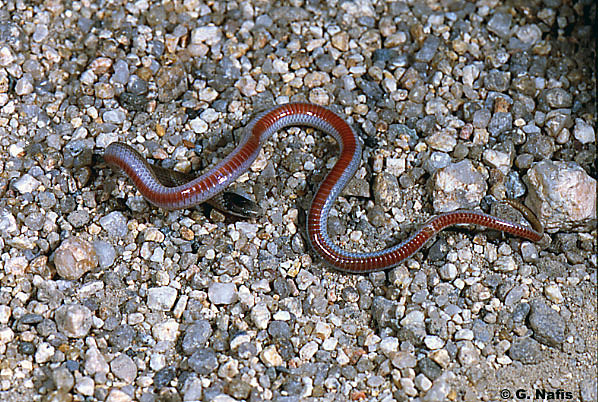
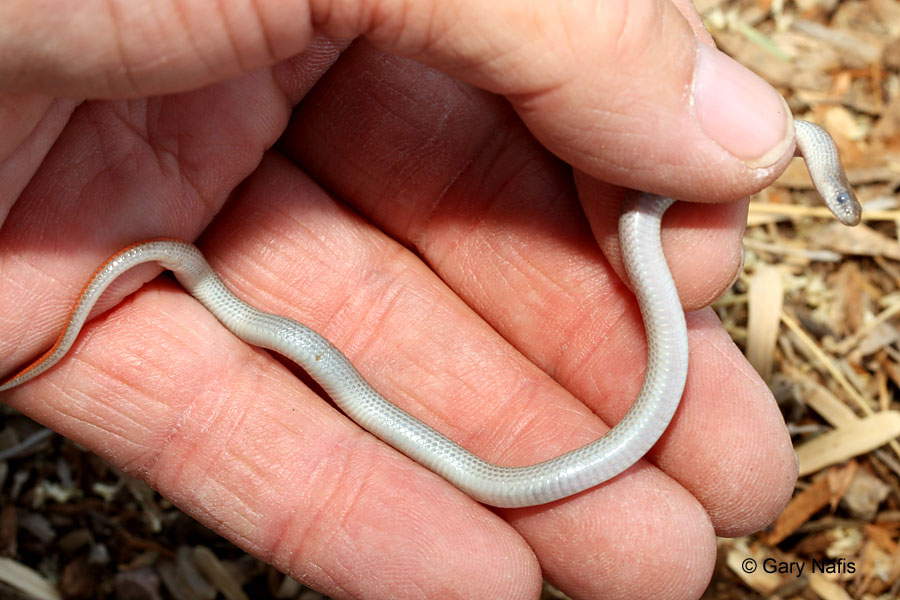
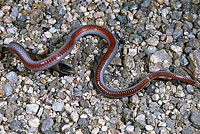
| Adult, Inyo County |
 |
 |
 |
| Adult missing the end of its tail, Inyo County |
(underside) |
 |
 |
 |
| Adult, Inyo County |
Underside of adult, Inyo County |
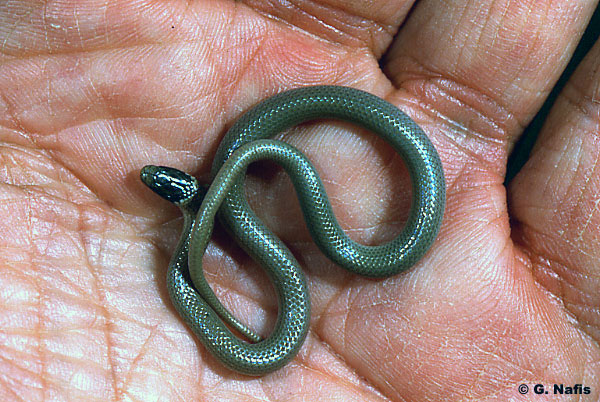
Sub-adult, Inyo County |
 |
 |
 |
| Adult, Inyo County © Ryan Sikola |
 |
 |
 |
| Adult, Inyo County © Ryan Sikola |
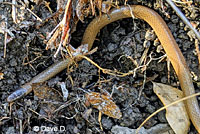
Adult, Fresno County © Dave D. |
 |
 |
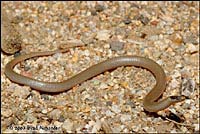 |
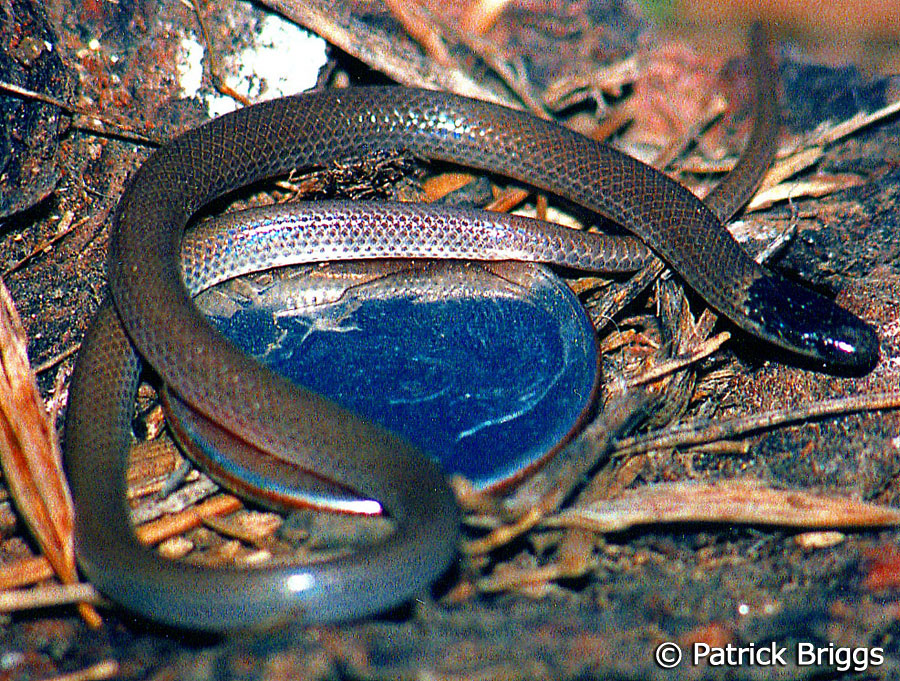
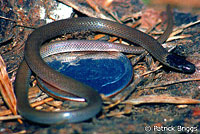
Tulare County © Patrick Briggs
|
Adult, Inyo County © Brad Alexander
|
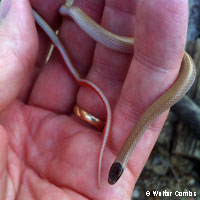 |
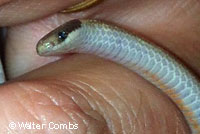 |
 |
| Adult, 29 Palms, San Bernardino County © Walter Combs |
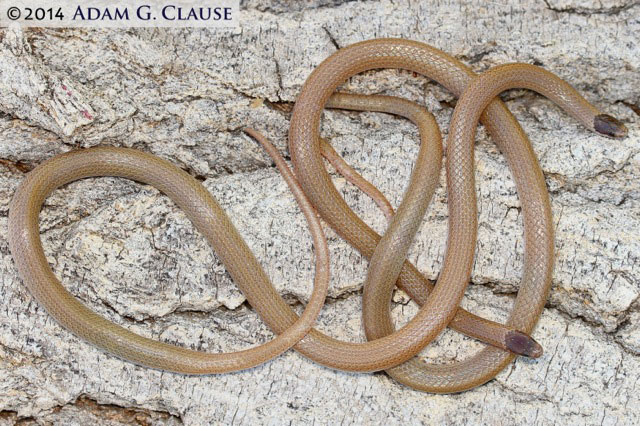
Two adults with a relatively pale dorsal color, San Bernardino County
© Adam G. Clause |
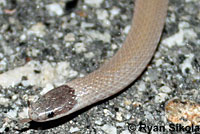 |
 |
 |
| Adult, Kern County © Ryan Sikola |
Adult, Kern County © Ryan Sikola |
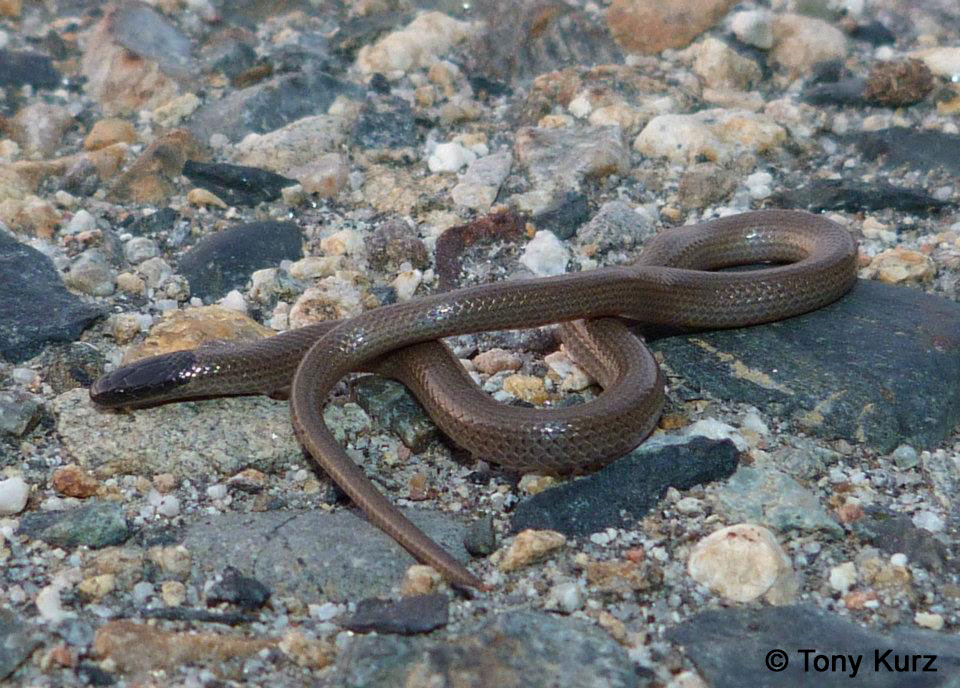
This snake was found taking shelter under a piece of concrete in mid December in Tulare County © Tony Kurz |
| |
|
|
| Southwestern Black-headed Snake From Outside California |
 |
 |
 |
| |
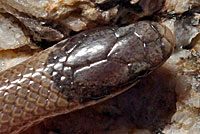
Adult, Pima County, Arizona |
|
| |
|
|
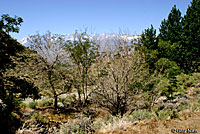
| Habitat |
 |
 |
 |
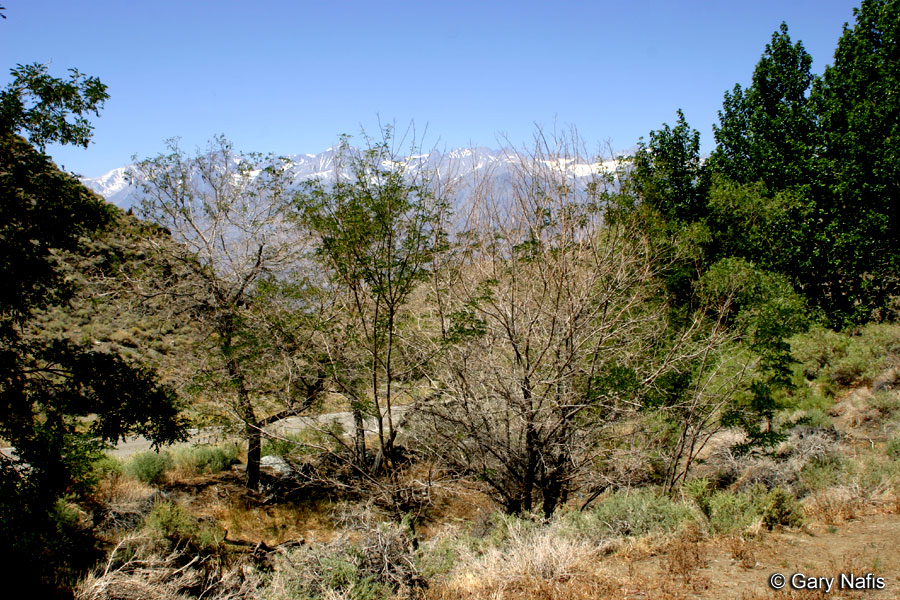
| Habitat, Inyo County |
Habitat, Inyo County |
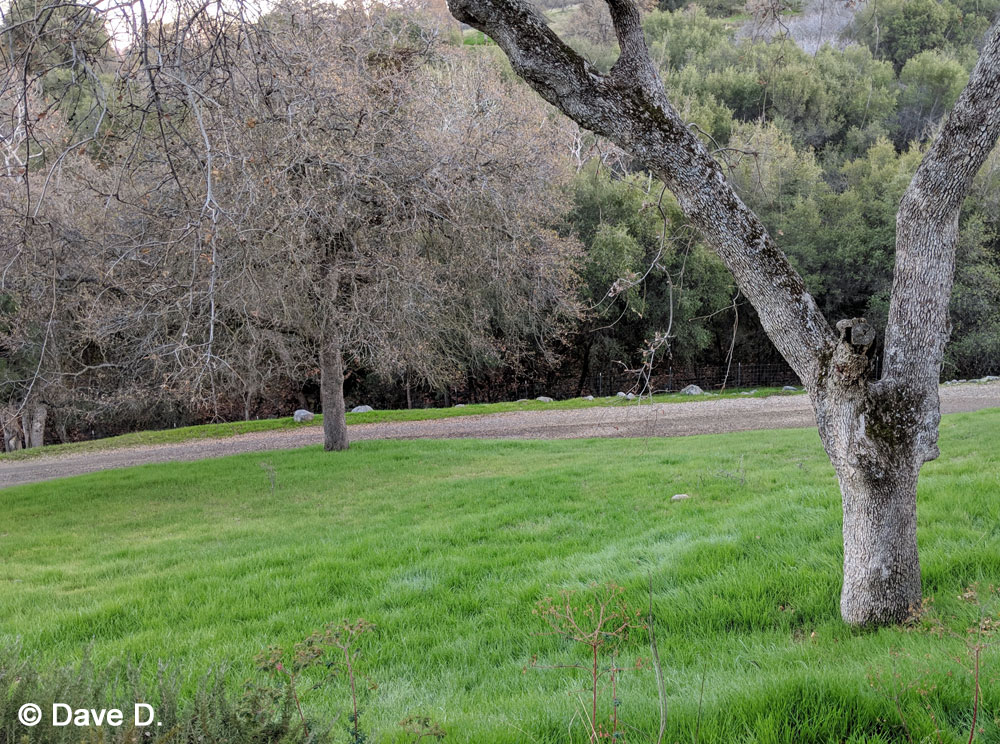
Habitat, Fresno County © Dave D. |
| |
|
|
| Short Video |
| |
 |
|
A tiny Southwestern Black-headed snake crawls across a paved road at night.
|
| |
| Similar Species |
Comparison Chart of Tantilla hobartsmithi - Southwestern Black-headed Snake and Tantilla planiceps - California Black-headed Snake.
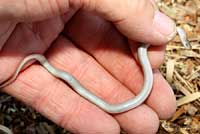
A plain-colored Variable Ground Snake with black on the head is sometimes confused with a Black-headed Snake, but the ground snake has a loreal scale, which is not present in Tantilla, and lacks the red coloring on the belly. |
 |
 |
|
| |
Underside of Variable Groundsnake |
Underside of
Southwestern Black-headed Snake |
|
|
Description |
Not Dangerous - This snake may produce a mild venom that does not typically cause death or serious illness or injury in most humans, but its bite should be avoided.
Commonly described as "harmless" or "not poisonous" to indicate that its bite is not dangerous, but "not venomous" is more accurate since the venom is not dangerous. (A poisonous snake can hurt you if you eat it. A venomous snake can hurt you if it bites you.)
Rear teeth on the upper jaw are enlarged and grooved to aid in injecting mild venom into prey.
|
| Size |
One of the smallest snakes in California, about 4.5 - 15 inches long (11.5 - 38 cm).
|
| Appearance |
| A small, thin, snake with a flat head and smooth, shiny scales. |
| Color and Pattern |
The body color is brownish or beige and unmarked.
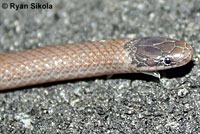
The top of the head is dark brown or black, with a light collar between the dark cap and the body color.
The dark color usually does not extend lower on the head than the bottom of the eye and does not extend below the mouth line behind the corner of the jaw.
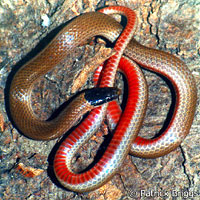
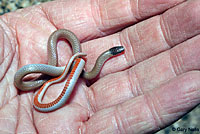
The belly is whitish with a reddish stripe that does not extend all the way to the edge of the ventral scales.
This stripe may fade out toward the head.
|
| Life History and Behavior |
Activity |
Secretive - spends much of its time underground or underneath surface objects.
A good burrower, able to disappear quickly into loose soil.
Typically it is found beneath surface debris.
Mostly nocturnal, but sometimes active in daylight.
|
| Diet and Feeding |
| Eats a variety of invertebrates and their larvae including millipedes and centipedes. |
| Reproduction |
Females are oviparous, laying up to 3 eggs in summer.
|
| Habitat |
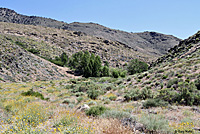
Found in desert, grassland, sagebrush, creosote bush, chaparral, juniper scrub, open coniferous forests. Prefers canyon bottoms and the rocky edges of streams and washes. Often found beneath rocks, plant debris, and other surface cover.
|
| Geographical Range |
The known range of this species in California and elsewhere is spotty due to its secretive nature.
Its range is probably less disjointed than the records show.
It has been recorded from the southern Sierra Nevada foothills and in the southern San Joaquin Valley, in the Owens Valley north to the White Mountains, through the Death Valley region, and in isolated locations in the eastern Mojave desert.
I have received an unconfirmed report of a Tantilla, presumably this species, found in the Imperial Valley at the southern end of the Salton Sea.
Outside of California, it occurs in Nevada, Utah, Colorado, Arizona, New Mexico, Texas, and Mexico.
|
 |
Approximate range shown in red
|
| Notes on Taxonomy |
The common name "Smith's" Black-headed snake is still in use, but "Southwestern" is more descriptive, so I now use that here.
-------------------------------------------------------------------------------------------------------------------------------------------------------------------Formerly classified with Tantilla planiceps. There are around 50 species of Tantilla from North America to Argentina, with two occurring in California, including T. planiceps.
--------------------------------------------------------------------------------------------------------------------------------------------------------------------
"The name was changed to “Smith’s Black-headed Snake” starting with the 7th edition (2012). “Southwestern” confers some geographic information about its range, and therefore we are returning to the previous name."
(Nicholson, K. E. (ed.). 2025 SSAR Scientific and Standard English Names List)
--------------------------------------------------------------------------------------------------------------------------------------------------------------------
Alternate and Previous Names (Synonyms)
Tantilla hobartsmithi - Southwestern Black-headed Snake (Smith's Black-headed Snake) (Stebbins 2003)
Tantilla hobartsmithi - Southwestern Black-headed Snake (Stebbins 1985)
Tantilla planiceps utahensis - Utah Black-headed Snake (Stebbins 1966)
Tantilla planiceps transmontana - Desert Black-headed Snake (Stebbins 1966)
Tantilla utahensis - Utah black-headed snake (Stebbins 1954) (Panamint Mountains and Sequoia National Park populations.)
Tantilla eiseni - California Black-headed snake (Stebbins 1954)
Tantilla utahensis - Utah black-headed snake (Blanchard 1938)
Tantilla hobartsmithi - Smith's Black-headed Snake (Taylor, 1937)
Tantilla eiseni - California Tantilla (Tantilla nigriceps. Eisen's Black-headed Snake; Black-headed Tantilla) (Grinnell and Camp 1917)
Tantilla eiseni eiseni - California Tantilla (Stejneger 1896)
Sonoran tantilla (Van Denburgh 1922)
Blanchard's black-headed snake
California tantilla
|
| Conservation Issues (Conservation Status) |
| None |
|
| Taxonomy |
| Family |
Colubridae |
Colubrids |
Oppel, 1811 |
| Genus |
Tantilla |
Black-headed Snakes |
Baird and Girard, 1853 |
Species
|
hobartsmithi |
Southwestern Black-headed Snake |
Taylor, 1937 |
|
Original Description |
Tantilla hobartsmithi - Taylor, "1936" 1937 - Trans. Kansas Acad. Sci., Vol. 39, p. 340
from Original Description Citations for the Reptiles and Amphibians of North America © Ellin Beltz
Eponyms
First described by Taylor in 1936, the specific name "Tantilla hobartsmithi" and the former common name "Smith's Black-headed Snake" honor Hobart Muir Smith (1912-2013) an American herpetologist who described more than 100 species of American reptiles and amphibians.
See: Biographies of Persons Honored in the Herpetological Nomenclature © Ellin Beltz
|
|
Meaning of the Scientific Name |
Tantilla - Latin - tantillum = so small a thing - refers to the small size
hobartsmithi - honors Smith, Hobart M.
from Scientific and Common Names of the Reptiles and Amphibians of North America - Explained © Ellin Beltz
|
|
Related or Similar California Snakes |
T. planiceps - Western Black-headed Snake
H. t. nuchalata - California Nightsnake
H. t. deserticola - Desert Nightsnake
Diadophis punctatus amabilis - Pacific Ring-necked Snake
Diadophis punctatus pulchellus - Coral-bellied Ring-necked Snake
|
|
More Information and References |
California Department of Fish and Wildlife
Hansen, Robert W. and Shedd, Jackson D. California Amphibians and Reptiles. (Princeton Field Guides.) Princeton University Press, 2025.
Stebbins, Robert C., and McGinnis, Samuel M. Field Guide to Amphibians and Reptiles of California: Revised Edition (California Natural History Guides) University of California Press, 2012.
Stebbins, Robert C. California Amphibians and Reptiles. The University of California Press, 1972.
Flaxington, William C. Amphibians and Reptiles of California: Field Observations, Distribution, and Natural History. Fieldnotes Press, Anaheim, California, 2021.
Nicholson, K. E. (ed.). 2025. Scientific and Standard English Names of Amphibians and Reptiles of North America North of Mexico, with Comments Regarding Confidence in Our Understanding. Ninth Edition. Society for the Study of Amphibians and Reptiles. [SSAR] 87pp.
Samuel M. McGinnis and Robert C. Stebbins. Peterson Field Guide to Western Reptiles & Amphibians. 4th Edition. Houghton Mifflin Harcourt Publishing Company, 2018.
Stebbins, Robert C. A Field Guide to Western Reptiles and Amphibians. 3rd Edition. Houghton Mifflin Company, 2003.
Behler, John L., and F. Wayne King. The Audubon Society Field Guide to North American Reptiles and Amphibians. Alfred A. Knopf, 1992.
Robert Powell, Roger Conant, and Joseph T. Collins. Peterson Field Guide to Reptiles and Amphibians of Eastern and Central North America. Fourth Edition. Houghton Mifflin Harcourt, 2016.
Powell, Robert., Joseph T. Collins, and Errol D. Hooper Jr. A Key to Amphibians and Reptiles of the Continental United States and Canada. The University Press of Kansas, 1998.
Bartlett, R. D. & Patricia P. Bartlett. Guide and Reference to the Snakes of Western North America (North of Mexico) and Hawaii. University Press of Florida, 2009.
Bartlett, R. D. & Alan Tennant. Snakes of North America - Western Region. Gulf Publishing Co., 2000.
Brown, Philip R. A Field Guide to Snakes of California. Gulf Publishing Co., 1997.
Ernst, Carl H., Evelyn M. Ernst, & Robert M. Corker. Snakes of the United States and Canada. Smithsonian Institution Press, 2003.
Taylor, Emily. California Snakes and How to Find Them. Heyday, Berkeley, California. 2024.
Wright, Albert Hazen & Anna Allen Wright. Handbook of Snakes of the United States and Canada. Cornell University Press, 1957.
Joseph Grinnell and Charles Lewis Camp. A Distributional List of the Amphibians and Reptiles of California. University of California Publications in Zoology Vol. 17, No. 10, pp. 127-208. July 11, 1917.
|
|
|
The following conservation status listings for this animal are taken from the July 2025 State of California Special Animals List and the July 2025 Federally Listed Endangered and Threatened Animals of California list (unless indicated otherwise below.) Both lists are produced by multiple agencies every year, and sometimes more than once per year, so the conservation status listing information found below might not be from the most recent lists, but they don't change a great deal from year to year.. To make sure you are seeing the most recent listings, go to this California Department of Fish and Wildlife web page where you can search for and download both lists:
https://www.wildlife.ca.gov/Data/CNDDB/Plants-and-Animals.
A detailed explanation of the meaning of the status listing symbols can be found at the beginning of the two lists. For quick reference, I have included them on my Special Status Information page.
If no status is listed here, the animal is not included on either list. This most likely indicates that there are no serious conservation concerns for the animal. To find out more about an animal's status you can also go to the NatureServe and IUCN websites to check their rankings.
Check the current California Department of Fish and Wildlife sport fishing regulations to find out if this animal can be legally pursued and handled or collected with possession of a current fishing license. You can also look at the summary of the sport fishing regulations as they apply only to reptiles and amphibians that has been made for this website.
This snake is not included on the Special Animals List, which indicates that there are no significant conservation concerns for it in California.
|
| Organization |
Status Listing |
Notes |
| NatureServe Global Ranking |
|
|
| NatureServe State Ranking |
|
|
| U.S. Endangered Species Act (ESA) |
None |
|
| California Endangered Species Act (CESA) |
None |
|
| California Department of Fish and Wildlife |
None |
|
| Bureau of Land Management |
None |
|
| USDA Forest Service |
None |
|
| IUCN |
|
|
|
|