|
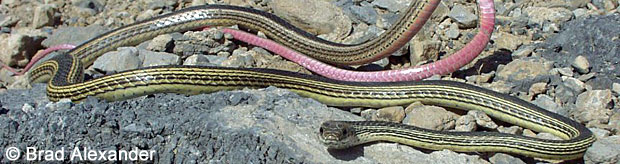 |
| Adult, San Bernardino County © Brad Alexander |
 |
 |
 |
| Adult, Inyo County. © William Flaxington |
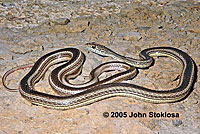
Adult, Inyo County © John Stoklosa |
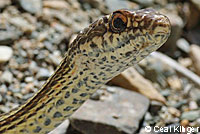
Old adult with brown coloring
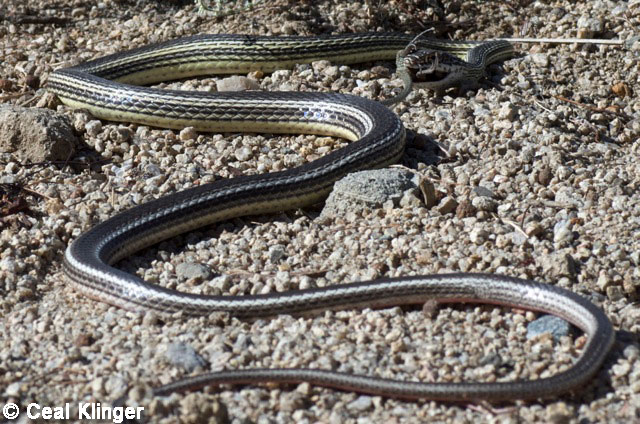
Inyo County © Ceal Klinger |
 |
 |
 |
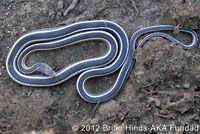
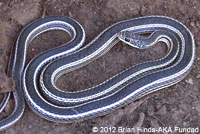
| Adult, Kennedy Meadows, Tulare County © Brian Hinds |
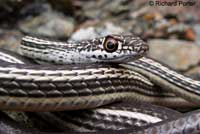
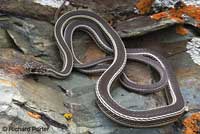
Adult, Inyo County © Ceal Klinger |
 |
 |
 |
Adult, Inyo County © Richard Porter
|
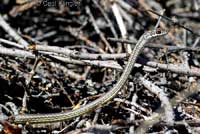
Adult, foraging in brush, 6,000 ft.
Inyo Co. © Ceal Klingler |
 |
 |
 |
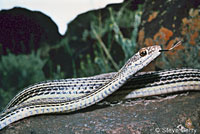
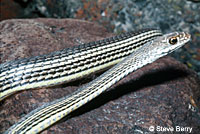
Jim Buskirk and Steve Berry caught and photographed this
adult whipsnake in Modoc County in 1980 © Steve Berry
|
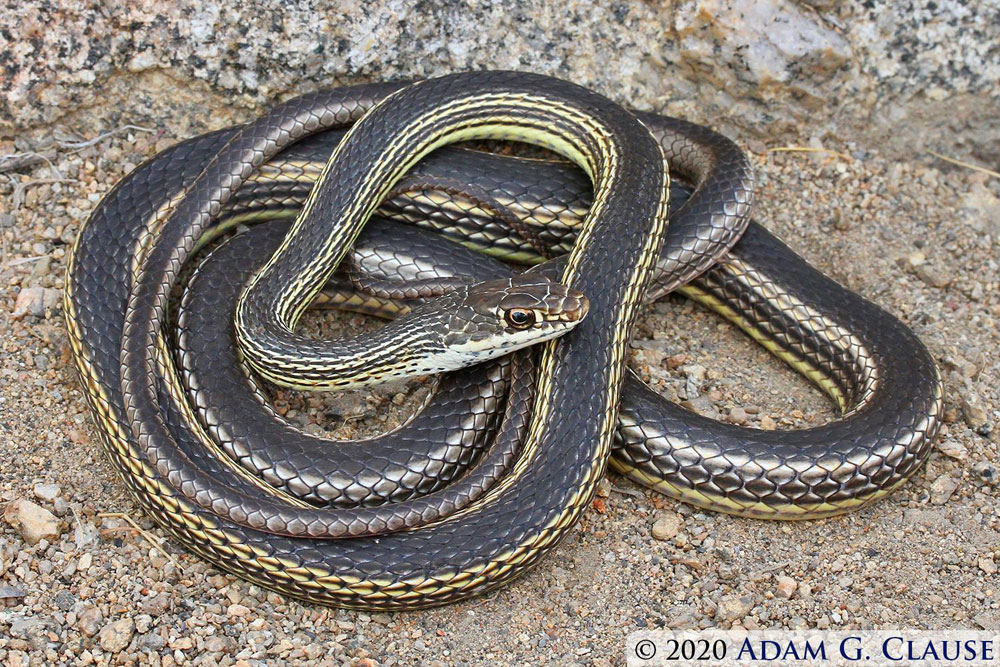
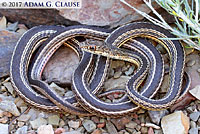
Adult female, Mono County
© Adam Clause |
 |
 |
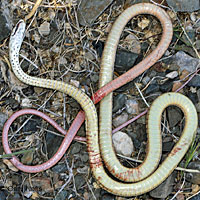 |
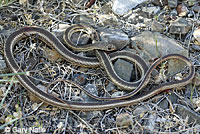
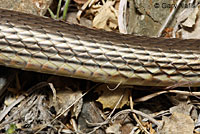
| Road-killed adult, Inyo County |
 |
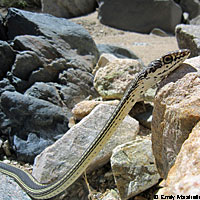 |
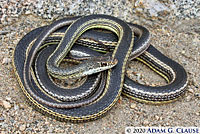 |
| Adult, Inyo County © Emily Mastrelli |
Adult female, Mono County
© Adam G. Clause |
| |
|
| |
|
|
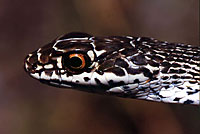 |
 |
 |
 |
 |
|
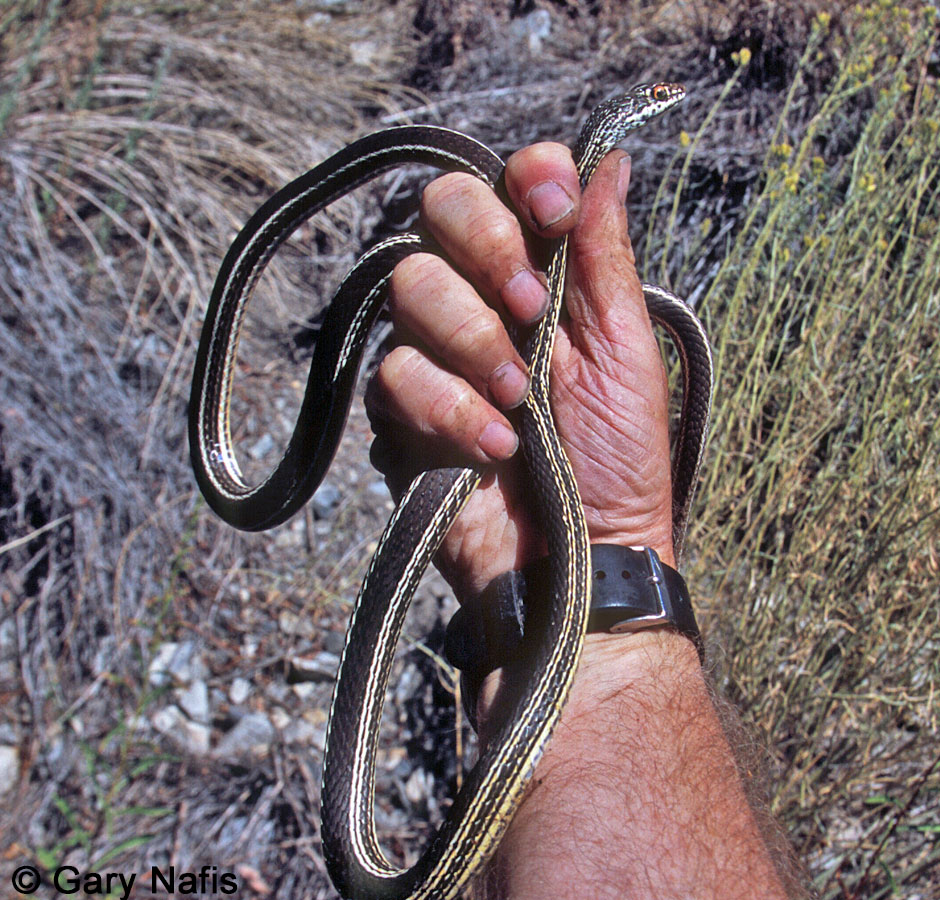
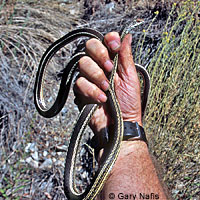
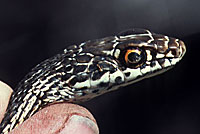
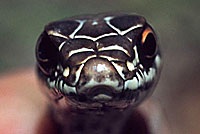
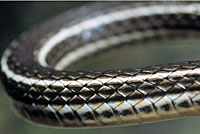
After years of seeing several of these fast-moving snakes but failing to catch or photograph one, I stumbled across one laying still in the grass beside an Inyo County desert spring, and quickly grabbed it before it raced off. After it stopped striking viciously at me I took several quick pictures while holding it in one hand. Then I put it on the ground very slowly, to try to get a picture of its full-body, but before I could even take one shot, it raced into the dense brush out of my reach. Sometimes that's just the way it goes with herp photography. Fortunately, a few other photographers on this page have had better luck than me.
|
| |
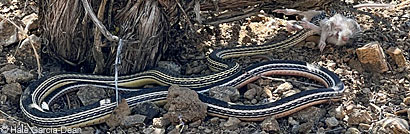
| Feeding |
 |
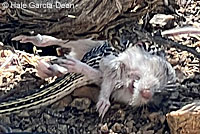 |
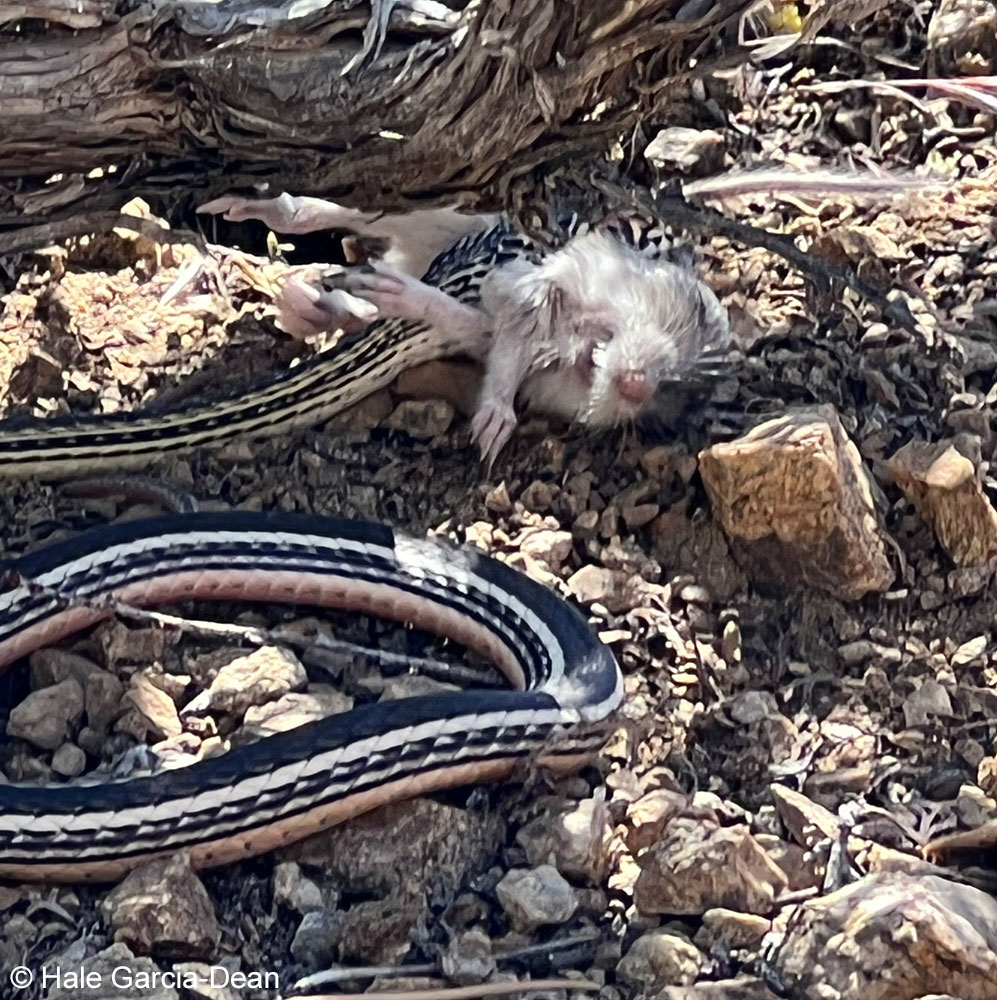
| Adult eating a pocket mouse in San Bernardino County © Hale Garcia-Dean |
| |
 |
|
| |
Adult, eating a Great Basin Whiptail,
Inyo County © Ceal Klinger |
|
| |
|
|
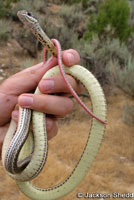
| Desert Striped Whipsnakes From Outside California |
 |
 |
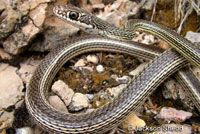 |
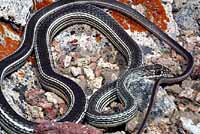
| Adult, Iron County, Utah. © Jackson Shedd |
 |
 |
|
Adult, Esmeralda Co. Nevada
© Brad Alexander
|
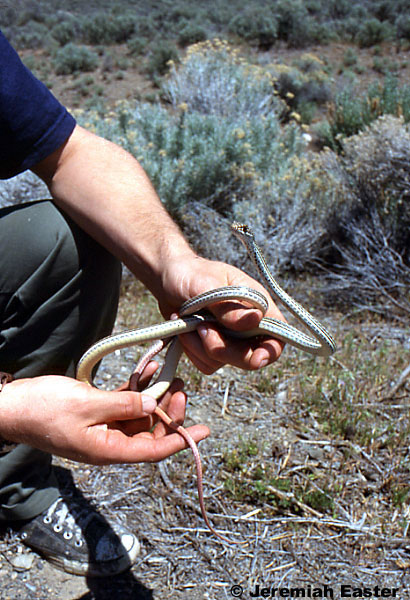
Adult, SE Oregon © Jeremiah Easter |
|
| |
|
|
| Habitat |
 |
 |
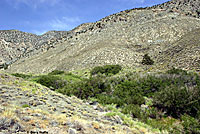 |
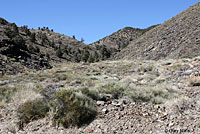
| Habitat, Inyo County desert |
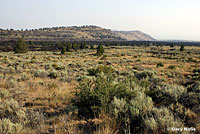
Habitat, 4,400 ft. Siskiyou county desert |
Desert Riparian Habitat,
Inyo Mountains, Inyo County
|
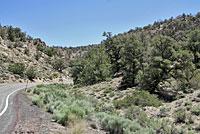 |
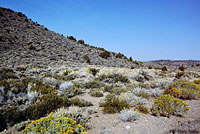 |
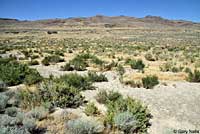 |
| Habitat, White Mountains, Inyo County |
Habitat, Mono County desert |
Habitat, Great Basin desert,
4,000 ft.,
Lassen County |
 |
 |
 |
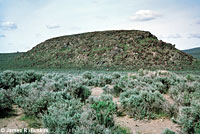
| Habitat, Surprise Valley, Modoc County |
Habitat, Modoc County © James Buskirk |
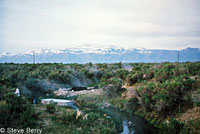
Habitat, Modoc County © Steve Berry |
|
|
|
| Description |
Not Dangerous - This snake does not have venom that can cause death or serious illness or injury in most humans.
Commonly described as "harmless" or "not poisonous" to indicate that its bite is not dangerous, but "not venomous" is more accurate. (A poisonous snake can hurt you if you eat it. A venomous snake can hurt you if it bites you.)
|
| Size |
Adults are 24 - 67 inches long (61 - 170 cm.) hatchlings are about 14 inches long ( 36 cm.)
|
| Appearance |
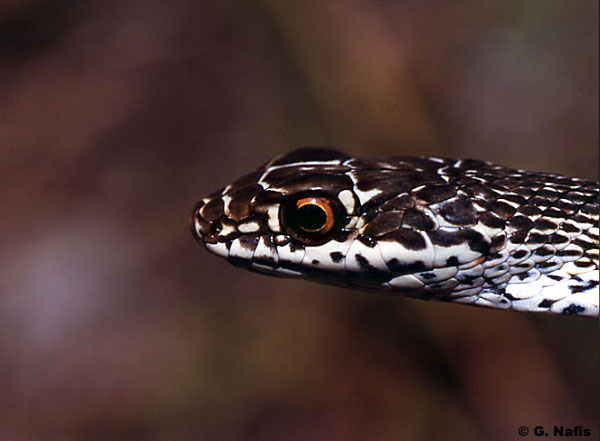
A fast-moving snake with a long thin body and tail, a broad elongated head, large eyes, a slender neck, and smooth scales.
|
| Color and Pattern |
| Olive, blackish, brown or dark gray on top and cream below which becomes yellow or pink toward the tail. Grayish white or cream stripes runing lengthwise along the sides with narrow dark lines, often broken into dashes, running down the middle of the light stripes. |
| Similar Snakes |
Comparison chart of
Masticophis taeniatus taeniatus - Desert Striped Whipsnake with the similar species
Masticophis lateralis - Striped Racer.
|
| Life History and Behavior |
Activity |
A very fast-moving alert diurnal snake with good vision that is difficult to approach.
Often crawls away very quickly when frightened, but when cornered will strike fiercely.
Forages with the head elevated off the ground using vision more than scent to find prey.
A good climber, often moving quickly through bushes. |
| Diet and Feeding |
Eats lizards, snakes, small mammals, birds and bird eggs, amphibians. Juveniles will eat insects.
Overpowers and bites but does not constrict its prey.
One hypothesis is that this species might actually have venom that is released from rear fangs and chewed into the prey to help with subduing it. (Taylor, Emily. California Snakes and How to Find Them. 2024)
Rain-Harvesting: A striped whipsnake was observed on a paved road in Inyo County after a thunderstorm with its “…head directed upward and mouth agape. It appeared to be capturing large raindrops, which were then swallowed."
(Richard Porter, Robert Hansen. Herp Review 46(4), 2015
|
| Reproduction |
Mating begins soon after emergence in the spring.
Males will engage in combat for access to females.
Females are oviparous, laying eggs in June and July which hatch in 2 - 3 months.
|
| Habitat |
Occurs in open brushy country - desert scrub, sagebrush flats, mixed woodlands.
Often found along the edges of rivers or ponds.
|
| Geographical Range |
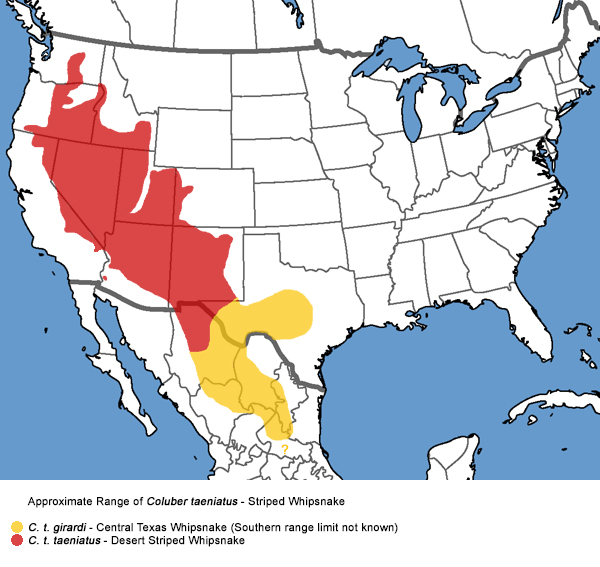
In California, occurs from Siskiyou county, near the junction of the north and south forks of the Salmon river, east into the Great Basin region of the northeast corner, and south of Lake Tahoe along the California Nevada border down the eastern side of the Sierra Nevada Mountains south into the Owens Valley and up onto the Kern Plateau at Kennedy Meadows.
Although range maps for this species since at least 1954 have shown it occurring in all of Modoc County, there are very few museum records for the species from the county. The first I have found is from 6 miles north of Eagleville, 1963. I have also seen a photo voucher from 1980 from about 5 miles east of Cedarville near Surprise Valley Mineral Wells-hot spring that was not recorded in any museum (Jim Buskirk).
A
range extension and new Mono county record was just published in 2007 (Devitt & Cameron. Herp Review38(2), 2007.) This lack of Modoc County information could indicate that the species is not found throughout the entire county or it could simply indicate a lack of academic collection or documentation of the species.
Outside California this species ranges into Oregon, eastern Washington, Idaho, Nevada, Utah, Colorado, Arizona, New Mexico, west Texas and south into Mexico.
|
 |
| Elevational Range |
Occurs as high as 10,100 feet (3077 m) in the White Mountains. (Stebbins & McGinnis 2012)
|
| Notes on Taxonomy |
There is one other subspecies of Masticophis taeniatus - M. t. ornatus - Central Texas Whipsnake, which occurs east of the range of M. t. taeniatus.
--------------------------------------------------------------------------------------------------------------------------------------------------------------------
In a study published in 2017, Myers et al found that the genus Masticophis is monophyletic with respect to Coluber. Following this taxonomy Coluber constrictor mormon will remain but the species previously placed in the genus Masticophis on this website have been returned to that genus:
Coluber flagellum - is now Masticophis flagellum
Coluber fuloginosus - is now Masticophis fuliginosus
Coluber lateralis - is now Masticophis lateralis
Coluber taeniatus - is now Masticophis taeniatus
(Edward A. Myers, Jamie L. Burgoon, Julie M. Ray, Juan E. Martinez-Gomez, Noemi Matias-Ferrer, Daniel G. Mulcahy, and Frank T. Burbrink.
Coalescent Species Tree Inference of Coluber and Masticophis. Copeia 105, No. 4, 2017, 642–650)
--------------------------------------------------------------------------------------------------------------------------------------------------------------------
Former Taxonomy Used Here
North American snakes formerly placed in the genus Masticophis were changed to the genus Coluber based on a 2004 paper * by Nagy et al. Utiger et al. (2005, Russian Journal of Herpetology 12:39-60) supported Nagy et al. and synonymized Masticophis with Coluber. This has not been universally accepted. The most recent SSAR list has hinted that the genus Masticophis might be re-instated: "Burbrink (pers. comm.) has data to reject Nagy et al.’s hypothesis but we await publication of these data before reconsidering the status of Masticophis."
--------------------------------------------------------------------------------------------------------------------------------------------------------------------"Myers et al. (2017, Copeia 2017: 642–650), using combined mtDNA and nDNA data, demonstrated that C. constrictor and Masticophis spp. were sister taxa. Therefore, we recognize Masticophis as a genus. The standard English name was changed to reflect this. Myers et al (2024, Zoological Journal of the Linnean Society, zlae018) did not find strong support for some of these subspecies but further research is required to clarify species delineations."
(Nicholson, K. E. (ed.). 2025 SSAR Scientific and Standard English Names List)
--------------------------------------------------------------------------------------------------------------------------------------------------------------------
Alternate and Previous Names (Synonyms)
M. t. taeniatus - Desert Striped Whipsnake (Stebbins 1966, 1985, 2003, 2012)
M. t. taeniatus - Western striped racer (Van D. 1922)
Coluber taeniatus - Nevada Striped Racer (Leptophis taeniata; Zamenis taeniatus; Masticophis taeniatus; Bascanion taeniatum; Drymobius taeniatus. Many-striped Whip Snake; Striped Racer; Pacific Coach-whip Snake; Striped Whip Snake) (Grinnell and Camp 1917)
Striped racer (Hallowell 1852)
|
| Conservation Issues (Conservation Status) |
| None |
|
| Taxonomy |
| Family |
Colubridae |
Colubrids |
Oppel, 1811 |
| Genus |
Masticophis |
Coachwhips and Whipsnakes |
Baird & Girard, 1853 |
| Species |
taeniatus |
Striped Whipsnake |
(Hallowell, 1852) |
Subspecies
|
taeniatus |
Desert Striped Whipsnake |
(Hallowell, 1852) |
|
Original Description |
Masticophis taeniatus - (Hallowell, 1852) - Proc. Acad. Nat. Sci. Philadelphia, Vol. 6, p. 181
from Original Description Citations for the Reptiles and Amphibians of North America © Ellin Beltz
|
|
Meaning of the Scientific Name |
Masticophis - Greek - mastix = whip + ophis = referring to the body shape and braided appearance of the tail
taeniatus - Latin = striped - refers to the ribbon-like striped pattern
from Scientific and Common Names of the Reptiles and Amphibians of North America - Explained © Ellin Beltz
|
|
Related or Similar California Snakes |
S. h. mojavensis - Mojave Patch-nosed Snake
M. l. lateralis - California Striped Racer
M. f. piceus - Red Racer
|
|
More Information and References |
California Department of Fish and Wildlife
Hansen, Robert W. and Shedd, Jackson D. California Amphibians and Reptiles. (Princeton Field Guides.) Princeton University Press, 2025.
Stebbins, Robert C., and McGinnis, Samuel M. Field Guide to Amphibians and Reptiles of California: Revised Edition (California Natural History Guides) University of California Press, 2012.
Stebbins, Robert C. California Amphibians and Reptiles. The University of California Press, 1972.
Flaxington, William C. Amphibians and Reptiles of California: Field Observations, Distribution, and Natural History. Fieldnotes Press, Anaheim, California, 2021.
Nicholson, K. E. (ed.). 2025. Scientific and Standard English Names of Amphibians and Reptiles of North America North of Mexico, with Comments Regarding Confidence in Our Understanding. Ninth Edition. Society for the Study of Amphibians and Reptiles. [SSAR] 87pp.
Samuel M. McGinnis and Robert C. Stebbins. Peterson Field Guide to Western Reptiles & Amphibians. 4th Edition. Houghton Mifflin Harcourt Publishing Company, 2018.
Stebbins, Robert C. A Field Guide to Western Reptiles and Amphibians. 3rd Edition. Houghton Mifflin Company, 2003.
Behler, John L., and F. Wayne King. The Audubon Society Field Guide to North American Reptiles and Amphibians. Alfred A. Knopf, 1992.
Robert Powell, Roger Conant, and Joseph T. Collins. Peterson Field Guide to Reptiles and Amphibians of Eastern and Central North America. Fourth Edition. Houghton Mifflin Harcourt, 2016.
Powell, Robert., Joseph T. Collins, and Errol D. Hooper Jr. A Key to Amphibians and Reptiles of the Continental United States and Canada. The University Press of Kansas, 1998.
Bartlett, R. D. & Patricia P. Bartlett. Guide and Reference to the Snakes of Western North America (North of Mexico) and Hawaii. University Press of Florida, 2009.
Bartlett, R. D. & Alan Tennant. Snakes of North America - Western Region. Gulf Publishing Co., 2000.
Brown, Philip R. A Field Guide to Snakes of California. Gulf Publishing Co., 1997.
Ernst, Carl H., Evelyn M. Ernst, & Robert M. Corker. Snakes of the United States and Canada. Smithsonian Institution Press, 2003.
Taylor, Emily. California Snakes and How to Find Them. Heyday, Berkeley, California. 2024.
Wright, Albert Hazen & Anna Allen Wright. Handbook of Snakes of the United States and Canada. Cornell University Press, 1957.
* Z. T. Nagy, Robin Lawson, U. Joger and M. Wink. Molecular systematics of Racers, Whipsnakes and relatives (Reptilia: Colubridae) using Mitochondrial and Nuclear Markers. Journal of Zoological Systematics and Evolutionary Research (Volume 42 pages 223–233). 2004
Joseph Grinnell and Charles Lewis Camp. A Distributional List of the Amphibians and Reptiles of California. University of California Publications in Zoology Vol. 17, No. 10, pp. 127-208. July 11, 1917.
|
|
|
The following conservation status listings for this animal are taken from the July 2025 State of California Special Animals List and the July 2025 Federally Listed Endangered and Threatened Animals of California list (unless indicated otherwise below.) Both lists are produced by multiple agencies every year, and sometimes more than once per year, so the conservation status listing information found below might not be from the most recent lists, but they don't change a great deal from year to year.. To make sure you are seeing the most recent listings, go to this California Department of Fish and Wildlife web page where you can search for and download both lists:
https://www.wildlife.ca.gov/Data/CNDDB/Plants-and-Animals.
A detailed explanation of the meaning of the status listing symbols can be found at the beginning of the two lists. For quick reference, I have included them on my Special Status Information page.
If no status is listed here, the animal is not included on either list. This most likely indicates that there are no serious conservation concerns for the animal. To find out more about an animal's status you can also go to the NatureServe and IUCN websites to check their rankings.
Check the current California Department of Fish and Wildlife sport fishing regulations to find out if this animal can be legally pursued and handled or collected with possession of a current fishing license. You can also look at the summary of the sport fishing regulations as they apply only to reptiles and amphibians that has been made for this website.
This snake is not included on the Special Animals List, which indicates that there are no significant conservation concerns for it in California.
|
| Organization |
Status Listing |
Notes |
| NatureServe Global Ranking |
|
|
| NatureServe State Ranking |
|
|
| U.S. Endangered Species Act (ESA) |
None |
|
| California Endangered Species Act (CESA) |
None |
|
| California Department of Fish and Wildlife |
None |
|
| Bureau of Land Management |
None |
|
| USDA Forest Service |
None |
|
| IUCN |
|
|
|
|