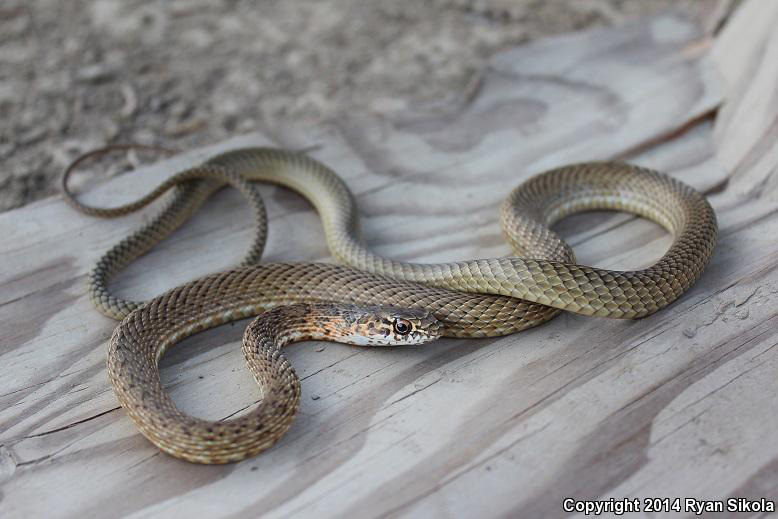
|
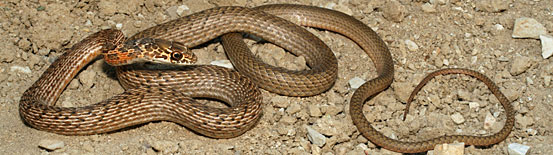 |
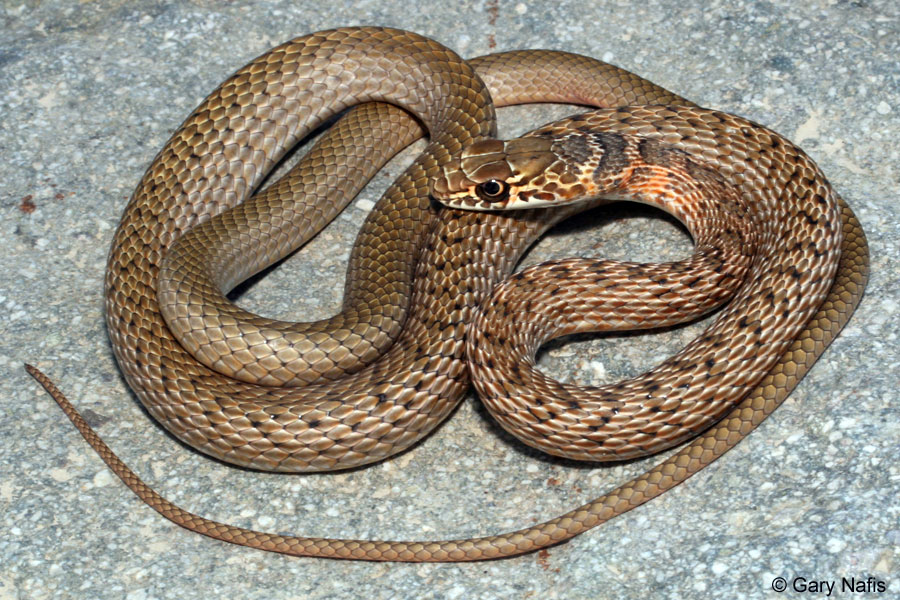
| Sub-adult, San Luis Obispo County |
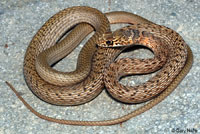 |
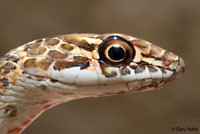 |
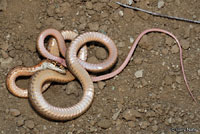 |
 |
| Sub-adult, San Luis Obispo County |
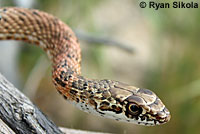
Adult, Kern County © Ryan Sikola |
 |
 |
 |
 |
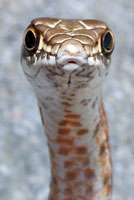
Sub-adult,
San Luis Obispo County |
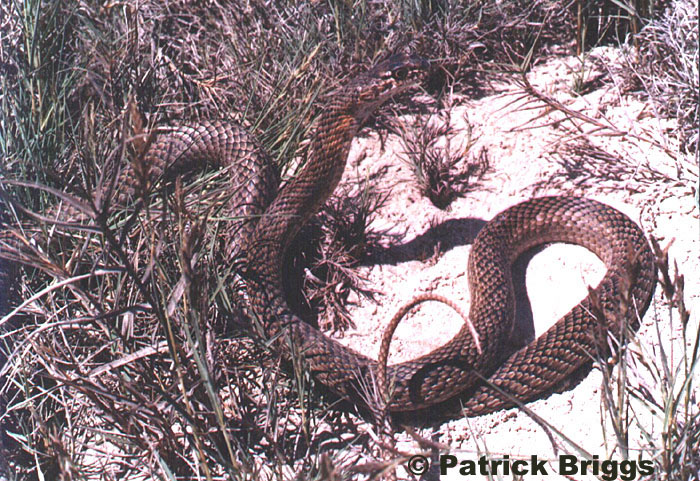
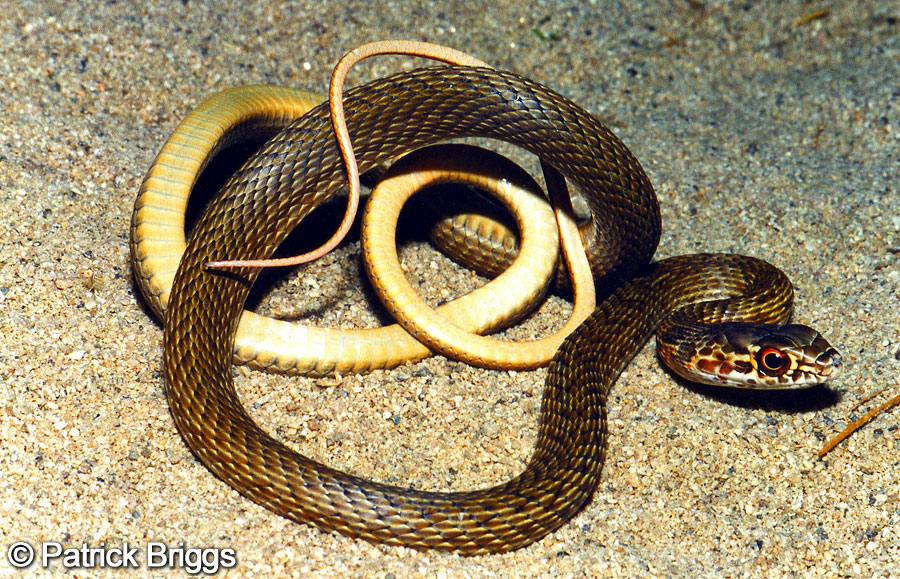
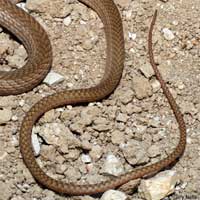
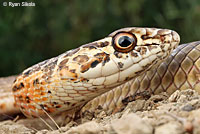
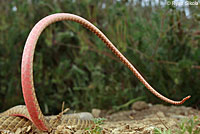
Coachwhips have a long thin tail that has been compared to a braided whip.
|
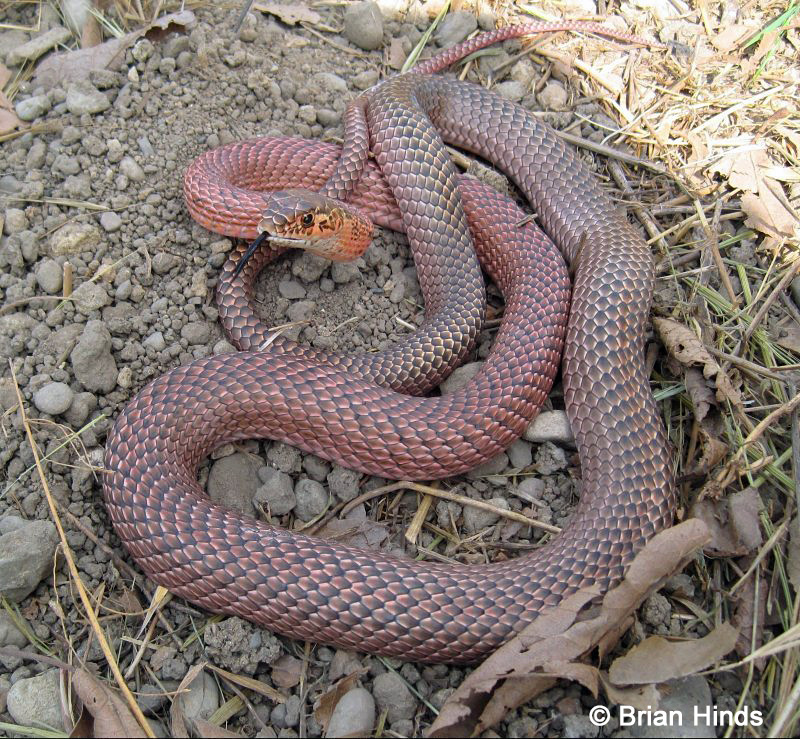
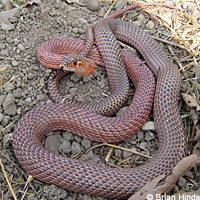
Adult, Stanislaus County © Brian Hinds |
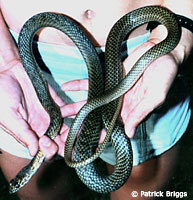
Adult, Kings County, courtesy of
R. Johnson © Patrick H. Briggs |
 |
 |
 |
 |
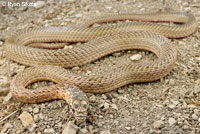
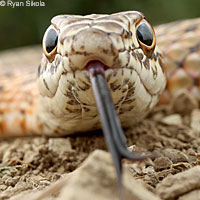
| Adult, San Luis Obispo County © Ryan Sikola |
This tail shows why it's called a "coachwhip" © Ryan Sikola
|
 |
 |
 |
 |
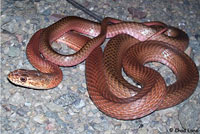
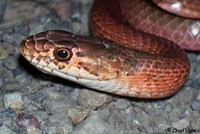
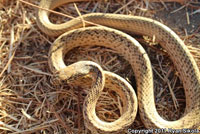
| Adult, San Joaquin County © Chad Lane |
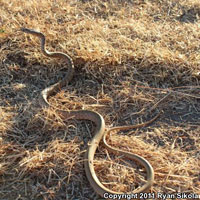
Adult, Kern County © Ryan Sikola |
 |
 |
 |
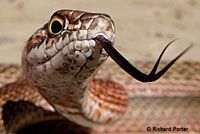 |
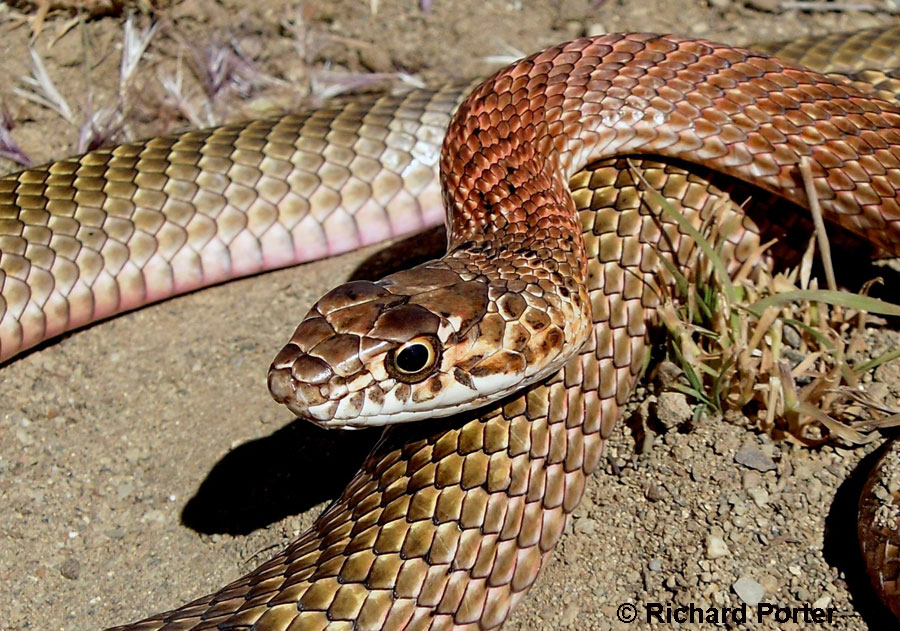
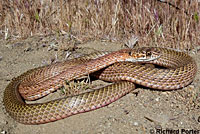
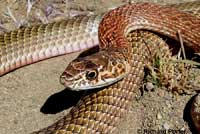
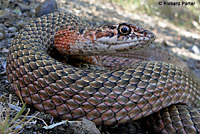
| Adult, Fresno County © Richard Porter |
 |
 |
 |
 |
Adult, Kings County
© Patrick H. Briggs |
Adult, Kings County
© Patrick H. Briggs |
Adult, Kings County
© Patrick H. Briggs |
Adult, Kings County
© Patrick H. Briggs |
 |
 |
 |
 |
| Adult, Fresno County © James R. Buskirk |
Adult, Kings County
© Patrick H. Briggs |
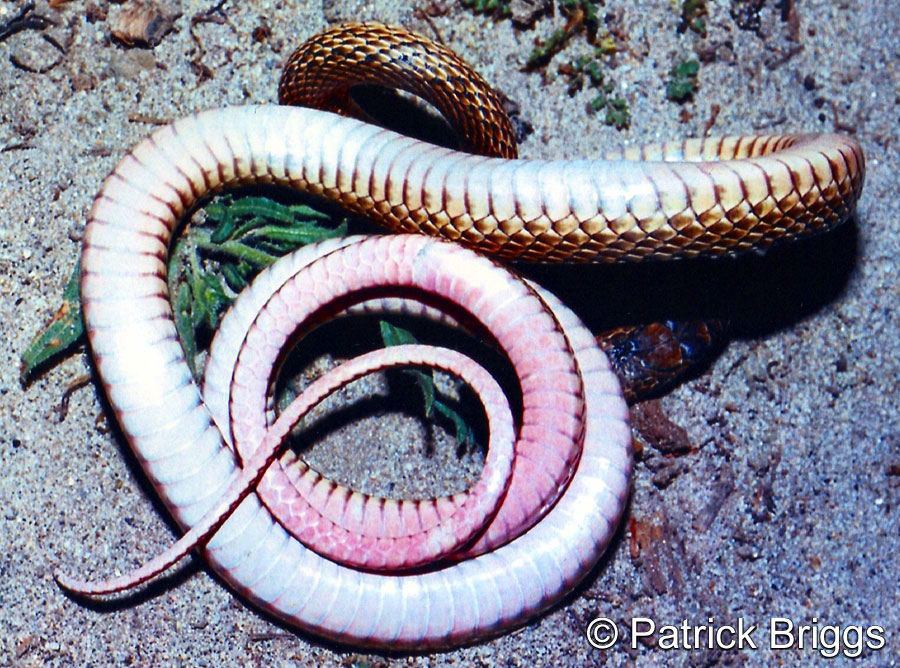
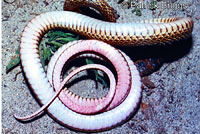
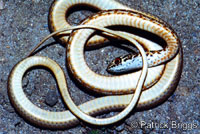
Adult underside, Kings County
© Patrick H. Briggs |
 |
 |
 |
 |
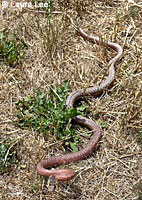
Adult, Sutter Buttes, Sutter County
© Laura Lee |
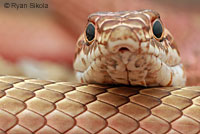
Head of adult, Kern County
© Ryan Sikola |
Adult, Kern County
© Matthias Lemm |
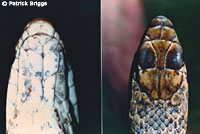
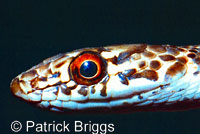
Top and bottom of head
© Patrick H. Briggs |
| |
|
|
|
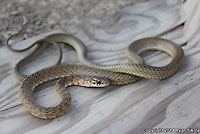
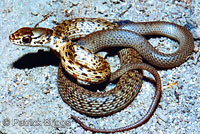
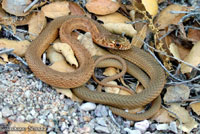
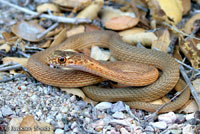
| Juveniles |
 |
 |
 |
 |
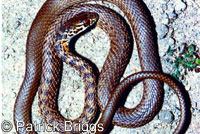
| Juvenile, Kern County, found near downtown Bakersfield. © Ryan Sikola |
Juvenile, Kings County
© Patrick H. Briggs |
Juvenile, San Benito County © Jackson Shedd |
 |
 |
 |
|
| Juvenile, Kings County © Patrick H. Briggs |
|
| |
|
|
|
| Habitat |
 |
 |
 |
 |
| Habitat, Kings County |
Habitat, San Joaquin County |
Habitat, San Luis Obispo County
|
Habitat, Kings County |
 |
 |
 |
 |
Habitat, Kings County
© Patrick Briggs |
Habitat, San Joaquin County |
Habitat, Fresno County
|
Habitat, Alameda County |
 |
 |
 |
 |
Habitat, Kern County
|
Habitat, Kern County
|
Habitat, Monterey County
© Mark Hannah |
Habitat, Bakersfield, Kern County |
| |
|
|
|
| Short Video |
 |
 |
|
|
A very fast San Joaquin Coachwhip races across a dirt road in San Luis Obispo County.
|
A brief look at an adult San Joaquin Coachwhip in the Sutter Buttes, Sutter County. © Kevin Lee |
|
|
|
|
|
|
| Description |
Not Dangerous - This snake does not have venom that can cause death or serious illness or injury in most humans.
Commonly described as "harmless" or "not poisonous" to indicate that its bite is not dangerous, but "not venomous" is more accurate.
(A poisonous snake can hurt you if you eat it. A venomous snake can hurt you if it bites you.)
|
| Length |
Adults are 36 - 66 inches long (91 - 167 cm.) (Stebbins & McGinnis, 2012)
The only longer snake in California is the Gophersnake.
Hatchlings are about 13 inches long.
|
| Appearance |
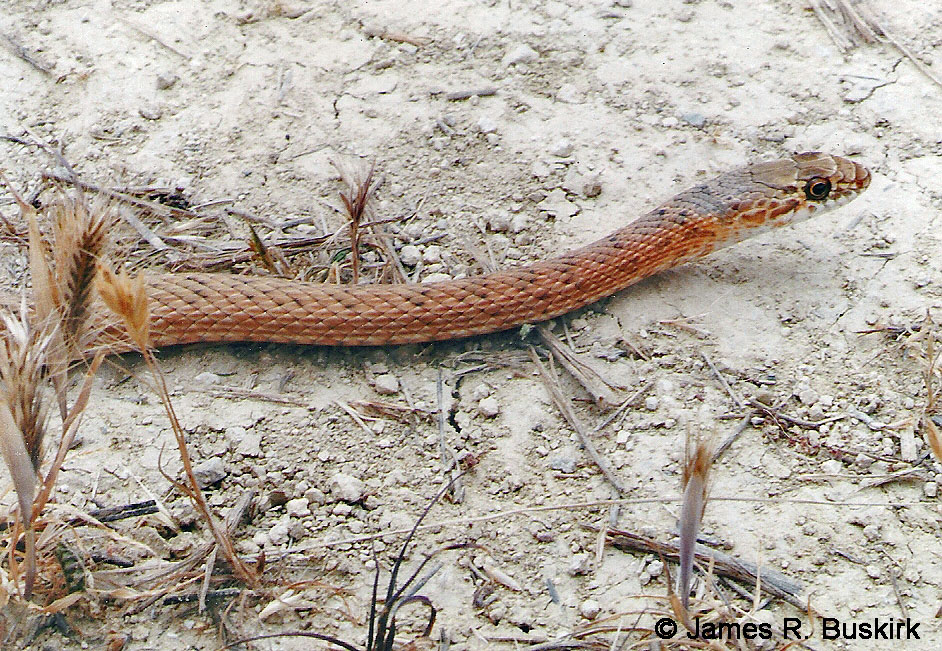
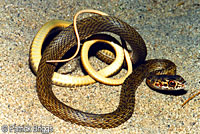
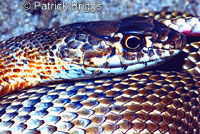
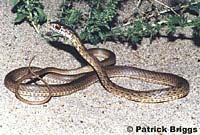
A slender fast-moving snake with smooth scales, a large head and eyes, a thin neck, and a long thin tail.
(There is no well-defined stripe lengthwise on the body in this species.)
Large scales above the eyes.
17 rows of scales at midbody.
The braided appearance of scales on the tail (like a whip) gives this species its common name.
|
| Color and Pattern |
Color is tan, olive brown, yellowish brown, or pinkish red.
Lacks the very dark head and neckbands of the other subspecies of Masticophis flagellum found in California - Masticophis flagellum piceus - Red Racer
|
| Life History and Behavior |
Activity |
Active in the daytime. Able to tolerate high temperatures.
Moves very quickly.
Emerges from winter site relatively late (April - May) due to the species preference for warm temperatures.
Coachwhips are good climbers, able to climb bushes and trees.
Often seen moving quickly even on hot sunny days, but often seen basking on roads in early morning or resting underneath boards or other surface objects.
Frequently run over by vehicles and found dead on the road, partly due to the tendency of this snake to stop and eat small road-killed animals. |
| Defense |
| Often strikes aggressively when threatened or handled. |
| Diet and Feeding |
Eats small mammals including bats, nestling and adult birds, bird eggs, lizards, snakes, amphibians, and carrion. Hatchlings and juveniles will eat large invertebrates.
The ability to tolerate high temperatures enables
this snake to hunt heat-dependent lizards when they are active. High speed allows it to run down the fast-moving
lizards.
Hunts crawling with head the held high above the ground, occasionally moving it from side to side to aid in binocular vision and depth perception.
The prey is overcome and crushed with the jaws or crushed beneath loops of the body then eaten without constriction. |
| Reproduction |
Presumably mates in May.
Females are oviparous, laying a clutch of 4 - 20 eggs in early Summer (June - July). (Stebbins, 2003)
|
| Habitat |
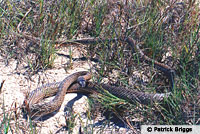
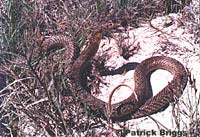
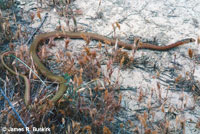
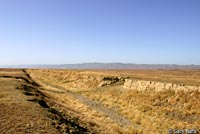
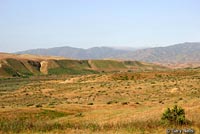
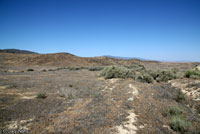
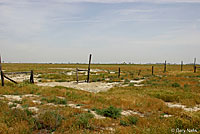
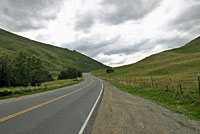
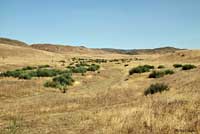
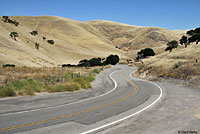
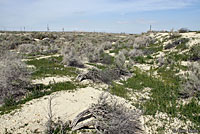
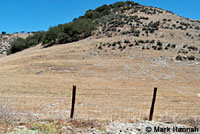
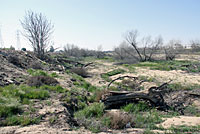
Occurs in open, dry, treeless areas with little or no cover, including valley grassland and saltbush scrub.
Avoids dense vegetation where it cannot move quickly, including mixed oak chaparral woodland.
Takes refuge in rodent burrows, under shaded vegetation, and under surface objects.
|
| Geographical Range |
The species Masticophis flagellum - Coachwhip, occurs very widely across the southern half of the U.S. from southern California east to Florida, and far south into Mexico, including northeast Baja California.
California Endemic
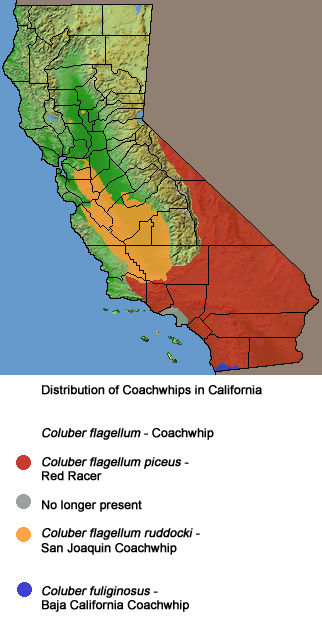
This subspecies, Masticophis flagellum ruddocki - San Joaquin Coachwhip, is endemic to California, ranging from the Grapevine in the Kern County portion of the San Joaquin Valley north into the inner South Coast Ranges and north to Alameda County. An isolated population occurs in Sutter County at the Sutter Buttes. Stebbins & McGinnis (2018) also mention another isolated population in Arbuckle, Colusa County.
Apparently intergrades with M. f. piceus in eastern Kem County.
|
 |
Approximate range of Masticophis flagellum - Coachwhip
Yellow: Masticophis flagellum ruddocki - San Joaquin Coachwhip
Blue: Masticophis flagellum piceus - Red Coachwhip (Red Racer)
- Not found in California
Orange: Masticophis flagellum cingulum - Sonoran Coachwhip
Red: Masticophis flagellum flagellum - Eastern Coachwhip
Green: Masticophis flagellum lineatulus - Lined Coachwhip
Purple: Masticophis flagellum testaceus - Western Coachwhip
|
| Notes on Taxonomy |
In a study published in 2017, Myers et al found that the genus Masticophis is monophyletic with respect to Coluber. Following this taxonomy Coluber constrictor mormon will remain but the species previously placed in the genus Masticophis on this website have been returned to that genus:
Coluber flagellum - is now Masticophis flagellum
Coluber fuloginosus - is now Masticophis fuliginosus
Coluber lateralis - is now Masticophis lateralis
Coluber taeniatus - is now Masticophis taeniatus
(Edward A. Myers, Jamie L. Burgoon, Julie M. Ray, Juan E. Martinez-Gomez, Noemi Matias-Ferrer, Daniel G. Mulcahy, and Frank T. Burbrink.
Coalescent Species Tree Inference of Coluber and Masticophis. Copeia 105, No. 4, 2017, 642–650)
-----------------------------------------------------------------------------------------------------------------------------------------------------------------------------------------------------------------------------
(Some researchers recognize Masticophis fuliginosus - Baja Coachwhip, which also occurs in California, as a subspecies of M. flagellum - M f. fuliginosus.)
-----------------------------------------------------------------------------------------------------------------------------------------------------------------------------------------------------------------------------
Former Taxonomy Used Here
North American snakes formerly placed in the genus Masticophis were changed to the genus Coluber based on a 2004 paper * by Nagy et al. Utiger et al. (2005, Russian Journal of Herpetology 12:39-60) supported Nagy et al. and synonymized Masticophis with Coluber. This has not been universally accepted. The most recent SSAR list has hinted that the genus Masticophis might be re-instated: "Burbrink (pers. comm.) has data to reject Nagy et al.’s hypothesis but we await publication of these data before reconsidering the status of Masticophis."
-----------------------------------------------------------------------------------------------------------------------------------------------------------------------------------------------------------------------------
"Myers et al. (2017, Copeia 2017: 642–650), using combined mtDNA and nDNA data, demonstrated that C. constrictor and Masticophis spp. were sister taxa. Therefore, we recognize Masticophis as a genus. The standard English name was changed to reflect this. Myers et al (2024, Zoological Journal of the Linnean Society, zlae018) did not find strong support for some of these subspecies but further research is required to clarify species delineations."
(Nicholson, K. E. (ed.). 2025 SSAR Scientific and Standard English Names List)
-----------------------------------------------------------------------------------------------------------------------------------------------------------------------------------------------------------------------------
Alternate and Previous Names (Synonyms)
Mastiophis piceus ruddocki - San Joaqjin Coachwhip (Nicholson, K. E. (ed.). 2025 SSAR Scientific and Standard English Names List)
Coluber flagellum ruddocki (Nagy et al 2004)
Masticophis flagellum ruddocki - San Joaquin Coachwhip (Stebbins 1985, 2003, 2012)
Masticophis flagellum ruddocki - San Joaquin Whipsnake (Stebbins 1966)
Masticophis flagellum ruddocki - San Joaquin Racer (Wright & Wright 1957)
Masticophis flagellum piceus - ssp. of Common Whipsnake (Stebbins 1954)
Masticophis flagellum ruddocki (Brattstrom and Warren 1953)
Coluber flagellum frenatus - Red Racer (Bascanion flagellum frenatum; Zamensis flagellum flagellum; Zamenis flagellum; Zameis flagelliformis frenatus; Bascanion flagellum frenatum; Bascanium flagelliforme; Bascanium flagelliforme testaceum, part; Bascanium testaceum; Bascanium flagelliforme piceum; Herpetodryas flavigularis; Drymobius testaceus. Western Whip Snake; Yellow Coach-whip Snake, part; Arizona Coach-whip Snake; Coppery Whip Snake) (Grinnell and Camp 1917)
Masticophis flagellum (Shaw 1802)
|
| Conservation Issues (Conservation Status) |
Designated a Species of Special Concern by the state of California due to extensive habitat loss and fragmentation in its restricted range, including conversion of large areas of suitable habitat to agricultural use in the San Joaquin Valley and urban development in areas of the inner Coast Ranges, both of which eliminate the snake's food base and the mammal burrows it uses for refuge.
"Much of this subspecies' historic range has undergone dramatic land use changes from grassland to intensive agriculture in the Central Valley. Masticophis flagellum ruddocki is thought to be sensitive to disturbance and does not persist in cultivated areas (Ernst and Ernst 2003; S.Barry, pers. comm.). It has therefore suffered a severe range contraction in its Central Valley range."
(Robert C. Thomson, Amber N. Wright, and H. Bradley Shaffer. California Amphibian and Reptile Species of Special Concern. University of California Press, 2016.)
There is a description and conservation status summary of this taxon with a dot-locality distribution map in an online .pdf from the California Department of Fish and Wildlife book California Amphibian and Reptile Species of Special Concern (Thomson, Wright, and Shaffer 2016). Below are some of the threats to this species discussed in the book:
"Habitat loss and fragmentation due to agriculture and urbanization are the major threats to Masticophis flagellum ruddocki. As with other diurnally active, highly mobile snakes, road mortality is probably a significant source of mortality, although its overall impact requires more study. The greatest potential threats from climate change are due to changes in fire regime. In the more coastal parts of the range, the area burned is expected to increase by up to 50%."
"Masticophis flagellum ruddocki is a California endemic with a small range and is restricted to a heavily disturbed part of the state, resulting in a Priority 2 designation."
|
|
| Taxonomy |
| Family |
Colubridae |
Colubrids |
Oppel, 1811 |
| Genus |
Masticophis |
Coachwhips and Whipsnakes |
Baird & Girard, 1853 |
| Species |
flagellum |
Coachwhip |
Shaw, 1802 |
Subspecies
|
ruddocki |
San Joaquin Coachwhip |
(Brattstrom and Warren, 1953) |
|
Original Description |
Masticophis flagellum - (Shaw, 1802) - Gen. Zool., Vol. 3, p. 475
Masticophis flagellum ruddocki - Brattstrom and Warren, 1953 - Herpetologica, Vol. 9, p. 177
from Original Description Citations for the Reptiles and Amphibians of North America © Ellin Beltz
|
|
Meaning of the Scientific Name |
Masticophis - Greek - mastix = whip + ophis = referring to the body shape and braided appearance of the tail
flagellum - Latin = whip - refers to the body shape and braided look of tail
ruddocki - honors Ruddock, John C.
from Scientific and Common Names of the Reptiles and Amphibians of North America - Explained © Ellin Beltz
|
|
Related or Similar California Snakes |
M. f. piceus - Red Racer
M. fuliginosus - Baja California Coachwhip
S. h. hexalepis - Desert Patch-nosed Snake
S. h. mojavensis - Mojave Patch-nosed Snake
S. h. virgultea - Coast Patch-nosed Snake
|
|
More Information and References |
California Department of Fish and Wildlife
There is a description and conservation status summary of this taxon with a dot-locality distribution map in an online .pdf from the California Department of Fish and Wildlife book California Amphibian and Reptile Species of Special Concern (Thomson, Wright, and Shaffer 2016).
Hansen, Robert W. and Shedd, Jackson D. California Amphibians and Reptiles. (Princeton Field Guides.) Princeton University Press, 2025.
Stebbins, Robert C., and McGinnis, Samuel M. Field Guide to Amphibians and Reptiles of California: Revised Edition (California Natural History Guides) University of California Press, 2012.
Stebbins, Robert C. California Amphibians and Reptiles. The University of California Press, 1972.
Flaxington, William C. Amphibians and Reptiles of California: Field Observations, Distribution, and Natural History. Fieldnotes Press, Anaheim, California, 2021.
Nicholson, K. E. (ed.). 2025. Scientific and Standard English Names of Amphibians and Reptiles of North America North of Mexico, with Comments Regarding Confidence in Our Understanding. Ninth Edition. Society for the Study of Amphibians and Reptiles. [SSAR] 87pp.
Samuel M. McGinnis and Robert C. Stebbins. Peterson Field Guide to Western Reptiles & Amphibians. 4th Edition. Houghton Mifflin Harcourt Publishing Company, 2018.
Stebbins, Robert C. A Field Guide to Western Reptiles and Amphibians. 3rd Edition. Houghton Mifflin Company, 2003.
Behler, John L., and F. Wayne King. The Audubon Society Field Guide to North American Reptiles and Amphibians. Alfred A. Knopf, 1992.
Robert Powell, Roger Conant, and Joseph T. Collins. Peterson Field Guide to Reptiles and Amphibians of Eastern and Central North America. Fourth Edition. Houghton Mifflin Harcourt, 2016.
Powell, Robert., Joseph T. Collins, and Errol D. Hooper Jr. A Key to Amphibians and Reptiles of the Continental United States and Canada. The University Press of Kansas, 1998.
Bartlett, R. D. & Patricia P. Bartlett. Guide and Reference to the Snakes of Western North America (North of Mexico) and Hawaii. University Press of Florida, 2009.
Bartlett, R. D. & Alan Tennant. Snakes of North America - Western Region. Gulf Publishing Co., 2000.
Brown, Philip R. A Field Guide to Snakes of California. Gulf Publishing Co., 1997.
Ernst, Carl H., Evelyn M. Ernst, & Robert M. Corker. Snakes of the United States and Canada. Smithsonian Institution Press, 2003.
Taylor, Emily. California Snakes and How to Find Them. Heyday, Berkeley, California. 2024.
Wright, Albert Hazen & Anna Allen Wright. Handbook of Snakes of the United States and Canada. Cornell University Press, 1957.
* Z. T. Nagy, Robin Lawson, U. Joger and M. Wink. Molecular systematics of Racers, Whipsnakes and relatives (Reptilia: Colubridae) using Mitochondrial and Nuclear Markers. Journal of Zoological Systematics and Evolutionary Research (Volume 42 pages 223–233). 2004
Robert C. Thomson, Amber N. Wright, and H. Bradley Shaffer. California Amphibian and Reptile Species of Special Concern. University of California Press, 2016.
Joseph Grinnell and Charles Lewis Camp. A Distributional List of the Amphibians and Reptiles of California. University of California Publications in Zoology Vol. 17, No. 10, pp. 127-208. July 11, 1917. s
|
|
|
The following conservation status listings for this animal are taken from the July 2025 State of California Special Animals List and the July 2025 Federally Listed Endangered and Threatened Animals of California list (unless indicated otherwise below.) Both lists are produced by multiple agencies every year, and sometimes more than once per year, so the conservation status listing information found below might not be from the most recent lists, but they don't change a great deal from year to year.. To make sure you are seeing the most recent listings, go to this California Department of Fish and Wildlife web page where you can search for and download both lists:
https://www.wildlife.ca.gov/Data/CNDDB/Plants-and-Animals.
A detailed explanation of the meaning of the status listing symbols can be found at the beginning of the two lists. For quick reference, I have included them on my Special Status Information page.
If no status is listed here, the animal is not included on either list. This most likely indicates that there are no serious conservation concerns for the animal. To find out more about an animal's status you can also go to the NatureServe and IUCN websites to check their rankings.
Check the current California Department of Fish and Wildlife sport fishing regulations to find out if this animal can be legally pursued and handled or collected with possession of a current fishing license. You can also look at the summary of the sport fishing regulations as they apply only to reptiles and amphibians that has been made for this website.
The California Special Animals List shows this snake as Masticophis flagellum ruddocki - San Joaquin coachwhip.
|
| Organization |
Status Listing |
Notes |
| NatureServe Global Ranking |
G5
T2T3 |
The species is: Secure—Common; widespread and abundant.
This subspecies is Imperiled - Vulnerable. |
| NatureServe State Ranking |
S3 |
Vulnerable |
| U.S. Endangered Species Act (ESA) |
None |
|
| California Endangered Species Act (CESA) |
None |
|
| California Department of Fish and Wildlife |
SSC |
Species of Special Concern |
| Bureau of Land Management |
None |
|
| USDA Forest Service |
None |
|
| IUCN |
None |
|
|
|