|
 |
 |
 |
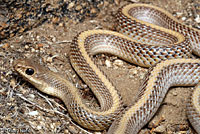 |
| |
Adult, San Diego County |
|
 |
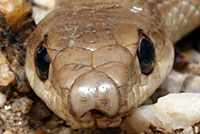 |
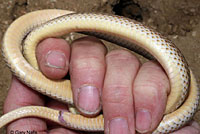 |
| |
Adult, San Diego County |
|
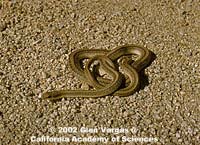 |
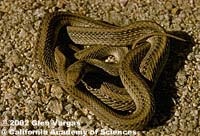 |
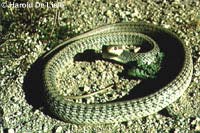 |
Adult, Riverside County
© Glen Vargas |
Adult, Riverside County
© Harold DeLisle |
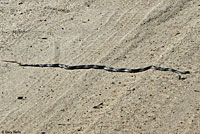 |
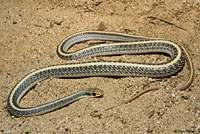 |
 |
 |
 |
 |
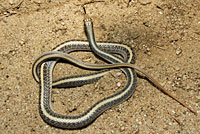
| The snake above was found at 4,000 ft. in San Diego County in an area where snakes with the appearance of both S. h. hexalepis and S. h. virgultea are found, but the broken side stripes, the mostly 3 scale wide middorsal stripe, and the pale color of the top of the head indicate that it is a Desert Patch-nosed Snake. |
 |
 |
 |
Adult, San Bernardino County
© Bo Zaremba |
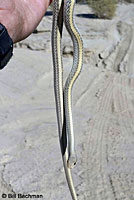
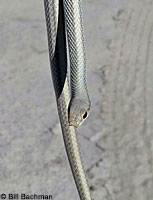
Adult, Imperial County © Bill Bachman |
 |
 |
 |
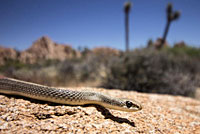
| Adult, Riverside County © Huck Triggs |
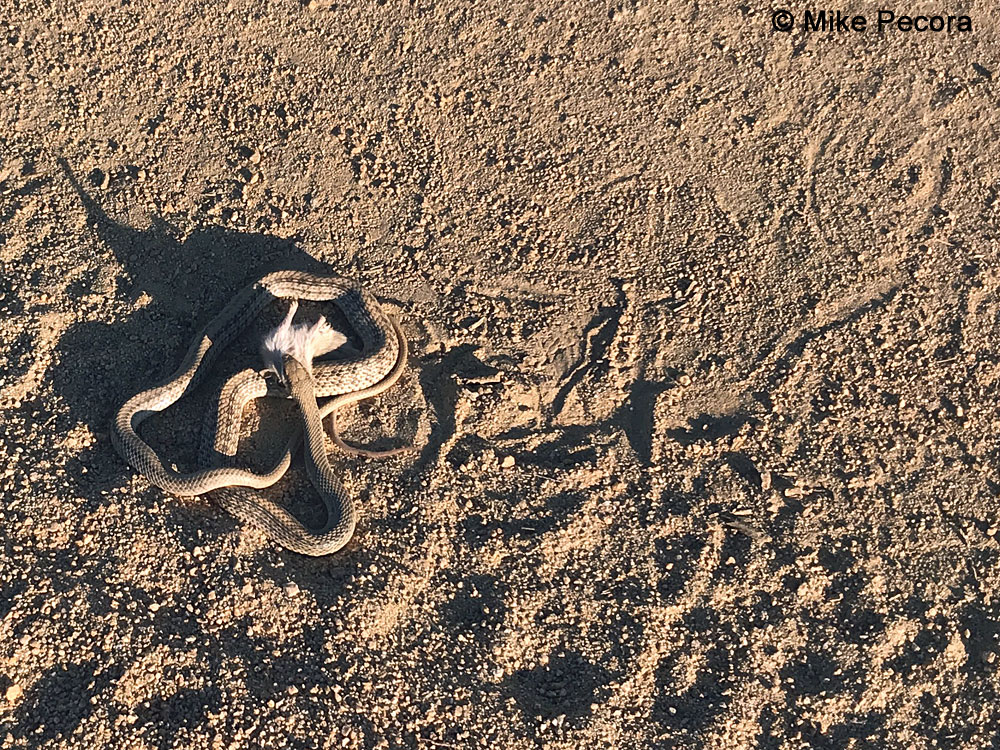
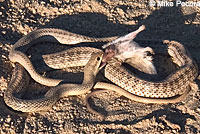
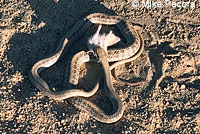
A Desert Patch-nosed Snake eating a rodent (probably a kangaroo rat) in the middle of a dirt road in San Bernardino County. The snake probably flushed the nocturnal rodent from its burrow then caught it on the road. © Mike Pecora |
 |
 |
|
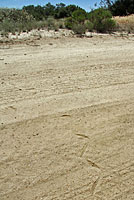
| Patch-nosed Snake tracks on a dirt road, San Diego County |
|
| |
|
|
| Desert Patch-nosed Snakes From Outside California |
 |
 |
 |
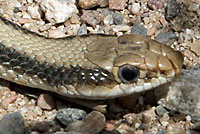
| Adult, Maricopa County, Arizona |
Detail of side stripes |
 |
 |
 |
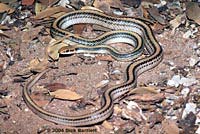
| Adult, Maricopa County, Arizona |
Detail of side stripes |
 |
 |
|
Adult, La Paz Co., Arizona
© Dick Bartlett |
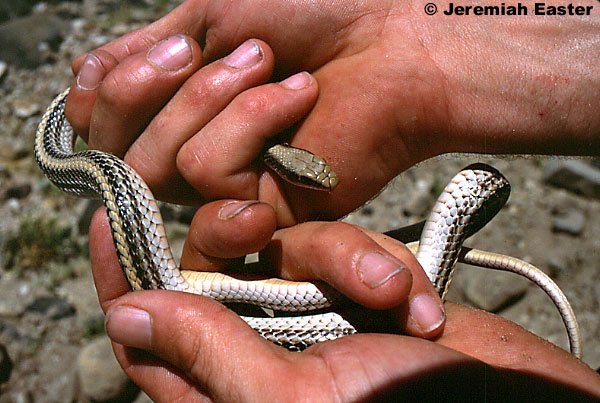
Adult, Arizona
© Jeremiah Easter |
|
| |
|
|
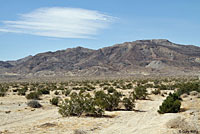
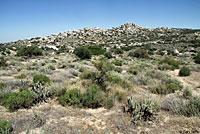
| Habitat |
 |
 |
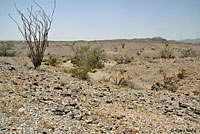 |
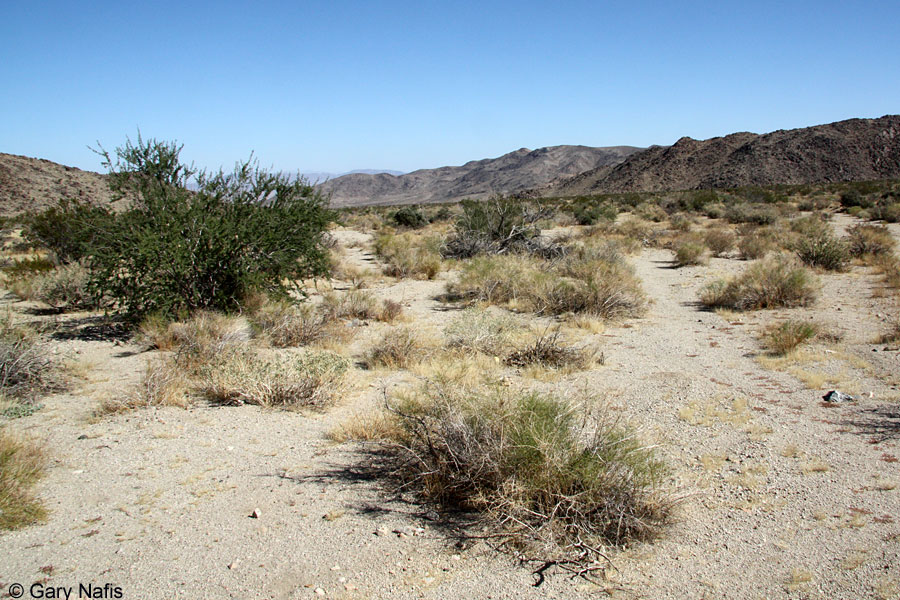
| Habitat, Riverside County desert |
Habitat, Imperial County desert |
Habitat, Imperial County desert |
 |
 |
 |
| Habitat, San Diego County desert |
Habitat, San Bernardino County desert |
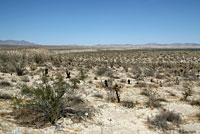
Intergrade habitat,
San Diego County mountains
|
 |
 |
|
| Habitat, San Diego County desert |
Habitat, Imperial County © Bill Bachman |
|
| |
|
|
| Short Videos |
 |
 |
|
| A cold and sluggish Desert Patch-nosed Snake is gently prodded with a stick to encourage it to move for the camera, but the snake retaliates by racing away in a blur in typical patch-nosed snake fashion. |
An intergrade patch-nosed snake on a dirt road in the morning makes a few attempts to get away from me, then after waiting patiently for the right moment, finally dashes across the road to freedom. |
|
|
|
|
|
Description |
Not Dangerous - This snake does not have venom that can cause death or serious illness or injury in most humans.
Commonly described as "harmless" or "not poisonous" to indicate that its bite is not dangerous, but "not venomous" is more accurate. (A poisonous snake can hurt you if you eat it. A venomous snake can hurt you if it bites you.)
Observations of lizard predation have provided evidence that Western Patch-nosed Snake might use a prey-specific venom that is introduced through chewing with the rear teeth.
(Brian K. Sullivan and Scott A. Weinstein. Foraging and Prey Handling in the Western Patch-nosed Snake (Salvadora hexalepis), and Consideration of Venom Use in Non-front-fanged Colubroid Snakes. Herpetological Review 48(1), 2017.)
|
| Size |
Salvadora hexalepis ranges in size from 10 - 46 inches long (25 - 117 cm).
Most snakes seen will be around 26 - 36 inches (66 - 91 cm).
|
| Appearance |
A fast, moderately-sized slender striped snake with smooth scales, large eyes, and an enlarged rostral (the scale over the tip of the snout.)
There are 9 upper labial scales, usually only the sixth one reaches the eye.
|
| Color and Pattern |
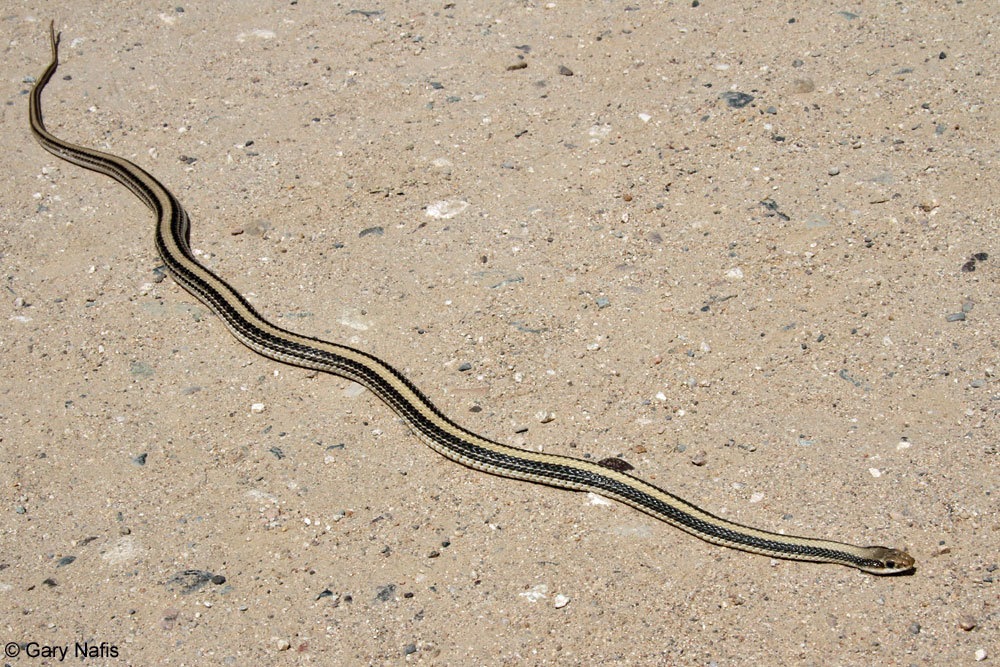
Well-camouflaged, this snake is pale gray with a broad yellow or tan stripe down the middle of the back, and dark stripes on the sides.
The middorsal stripe is usually 3 scales wide.
The underside is cream, sometimes shading to pale orange at the tail end.
The top of the head is gray. |
| Similar Subspecies |
Comparison of the 3 subspecies of Salvadora hexalepis found in California.
|
| Life History and Behavior |
| Little is known about the natural history of this species. These notes are based on observations of the species as a whole. |
Activity |
Diurnal - active during daylight, even in times of extreme heat.
Terrestrial, but also climbs shrubs in pursuit of prey.
Burrows into loose soil.
Able to move very quickly.
Acute vision allows this snake to escape quickly when threatened, making it sometimes difficult to observe or capture during the heat of the day.
Enlarged back teeth might be used to envenomate prey. (Grismer, 2002)
The enlarged rostral scale (on the tip of the nose) is thought to be useful in excavating buried lizard eggs.
It may also be used to dig into underground burrows: A Western Patch-nosed Snake in San Bernardino County was observed in an apparent attempt to catch a small rodent by forcefully ramming its head into the dirt at the base of a Creosote bush which opened a small hole in the ground, and crawling into the hole. A small rodent emerged from a different hole under the bush and ran away. (Herpetological Review 44(2), 2013)
|
| Defense |
| When When cornered, will inflate the body and strike. |
| Diet and Feeding |
Eats mostly lizards, especially whiptails, along with small mammals, and possibly small snakes, nestling birds, reptile eggs, and amphibians.
|
| Reproduction |
Females are oviparous, laying 4-12 eggs, probably between May and August. (Stebbins, 2003)
|
| Habitat |
Inhabits open arid and semi-arid areas - deserts, brushland, grassland, and scrub in canyons, rocky hillsides, sandy plains.
|
| Geographical Range |
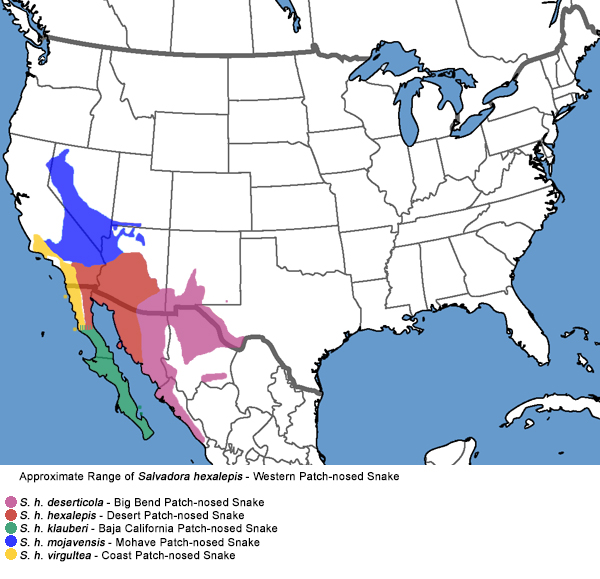
The species Salvadora hexalepis - Western Patch-nosed Snake, is found in southern California, Nevada, extreme southwestern Utah, Arizona, southeastern New Mexico, west Texas, and south into western Mexico, including Baja California.
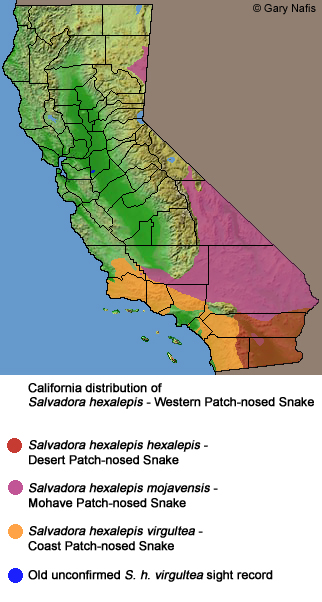
This subspecies, Salvadora hexalepis hexalepis - Desert Patch-nosed Snake, occurs in California in the southeast, from the desert slopes of the mountains north to roughly Riverside County, and beyond the state south into Baja California and Sonora, Mexico, and east into southeastern Arizona.
|
 |
| Elevational Range |
Salvadora hexalepis occurs at elevations from below sea level to around 7,000 ft. (2,130 m.) (Stebbins, 2003)
|
| Notes on Taxonomy |
There are five subspecies of Salvadora hexalepis, with three occurring in California:
S. h. hexalepis - Desert Patch-nosed Snake,
S. h. mojavensis - Mohave Patch-nosed Snake,
S. h. virgultea - Coast Patch-nosed Snake,
S. h. klauberi - Baja California Patch-nosed Snake, and
S. h. deserticola - Big Bend Patch-nosed Snake,
which occurs in the Southwest, is recognized by some taxonomists as a unique species, Salvadora deserticola.
---------------------------------------------------------------------------------------------------------------------------------------------------------------------
"Taxonomy follows Hernández-Jiménez et al. (2021, European Journal of Taxonomy 764: 85–118), who produced a phylogeny of the genus using parsimony analysis of morphological characters. They re-elevate S. deserticola and S. lineata to species. See also Myers et al. (2017, Journal of Biogeography 44: 461–474) and Myers et al. (2019, Molecular Ecology 2019: 1–14)."
(Nicholson, K. E. (ed.). 2025 SSAR Scientific and Standard English Names List)
--------------------------------------------------------------------------------------------------------------------------------------------------------------------
Alternate and Previous Names (Synonyms)
Salvadora hexalepis - Patch-nosed Snake (Phimothyra hexalepis; Salvadora grahamiae hexalepis; Zamenis grahami Salvadora grahamiae. Banded Flat-nosed Snake; Graham's Flat-nosed Snake) (Grinnell and Camp 1917)
Patchnose Snake
|
| Conservation Issues (Conservation Status) |
| None |
|
| Taxonomy |
| Family |
Colubridae |
Colubrids |
Oppel, 1811 |
| Genus |
Salvadora |
Patch-nosed Snakes |
Baird and Girard, 1853 |
| Species |
hexalepis |
Western Patch-nosed Snake |
(Cope, 1866) |
Subspecies
|
hexalepsis |
Desert Patch-nosed Snake |
(Cope, 1866) |
|
Original Description |
Salvadora hexalepis - (Cope, "1866" 1867) - Proc. Acad. Nat. Sci. Philadelphia, Vol. 18, p. 304
from Original Description Citations for the Reptiles and Amphibians of North America © Ellin Beltz
|
|
Meaning of the Scientific Name |
Salvadora - Latin - salvus = whole, sound, well preserved + dura = hide or skin - refers to the body covered with smooth scalesw
hexalepis - Greek - hex = six + lepisma = scale - refers to the 6th supralabial scale reaching the eye in the holotype
from Scientific and Common Names of the Reptiles and Amphibians of North America - Explained © Ellin Beltz
|
|
Related or Similar California Snakes |
S. h. mojavensis - Mohave Patch-nosed Snake
S. h. virgultea - Coast Patch-nosed Snake
M. f. piceus - Red Racer
|
|
More Information and References |
California Department of Fish and Wildlife
Hansen, Robert W. and Shedd, Jackson D. California Amphibians and Reptiles. (Princeton Field Guides.) Princeton University Press, 2025.
Stebbins, Robert C., and McGinnis, Samuel M. Field Guide to Amphibians and Reptiles of California: Revised Edition (California Natural History Guides) University of California Press, 2012.
Stebbins, Robert C. California Amphibians and Reptiles. The University of California Press, 1972.
Flaxington, William C. Amphibians and Reptiles of California: Field Observations, Distribution, and Natural History. Fieldnotes Press, Anaheim, California, 2021.
Nicholson, K. E. (ed.). 2025. Scientific and Standard English Names of Amphibians and Reptiles of North America North of Mexico, with Comments Regarding Confidence in Our Understanding. Ninth Edition. Society for the Study of Amphibians and Reptiles. [SSAR] 87pp.
Samuel M. McGinnis and Robert C. Stebbins. Peterson Field Guide to Western Reptiles & Amphibians. 4th Edition. Houghton Mifflin Harcourt Publishing Company, 2018.
Stebbins, Robert C. A Field Guide to Western Reptiles and Amphibians. 3rd Edition. Houghton Mifflin Company, 2003.
Behler, John L., and F. Wayne King. The Audubon Society Field Guide to North American Reptiles and Amphibians. Alfred A. Knopf, 1992.
Robert Powell, Roger Conant, and Joseph T. Collins. Peterson Field Guide to Reptiles and Amphibians of Eastern and Central North America. Fourth Edition. Houghton Mifflin Harcourt, 2016.
Powell, Robert., Joseph T. Collins, and Errol D. Hooper Jr. A Key to Amphibians and Reptiles of the Continental United States and Canada. The University Press of Kansas, 1998.
Bartlett, R. D. & Patricia P. Bartlett. Guide and Reference to the Snakes of Western North America (North of Mexico) and Hawaii. University Press of Florida, 2009.
Bartlett, R. D. & Alan Tennant. Snakes of North America - Western Region. Gulf Publishing Co., 2000.
Brown, Philip R. A Field Guide to Snakes of California. Gulf Publishing Co., 1997.
Ernst, Carl H., Evelyn M. Ernst, & Robert M. Corker. Snakes of the United States and Canada. Smithsonian Institution Press, 2003.
Taylor, Emily. California Snakes and How to Find Them. Heyday, Berkeley, California. 2024.
Wright, Albert Hazen & Anna Allen Wright. Handbook of Snakes of the United States and Canada. Cornell University Press, 1957.
Joseph Grinnell and Charles Lewis Camp. A Distributional List of the Amphibians and Reptiles of California. University of California Publications in Zoology Vol. 17, No. 10, pp. 127-208. July 11, 1917.
|
|
|
The following conservation status listings for this animal are taken from the July 2025 State of California Special Animals List and the July 2025 Federally Listed Endangered and Threatened Animals of California list (unless indicated otherwise below.) Both lists are produced by multiple agencies every year, and sometimes more than once per year, so the conservation status listing information found below might not be from the most recent lists, but they don't change a great deal from year to year.. To make sure you are seeing the most recent listings, go to this California Department of Fish and Wildlife web page where you can search for and download both lists:
https://www.wildlife.ca.gov/Data/CNDDB/Plants-and-Animals.
A detailed explanation of the meaning of the status listing symbols can be found at the beginning of the two lists. For quick reference, I have included them on my Special Status Information page.
If no status is listed here, the animal is not included on either list. This most likely indicates that there are no serious conservation concerns for the animal. To find out more about an animal's status you can also go to the NatureServe and IUCN websites to check their rankings.
Check the current California Department of Fish and Wildlife sport fishing regulations to find out if this animal can be legally pursued and handled or collected with possession of a current fishing license. You can also look at the summary of the sport fishing regulations as they apply only to reptiles and amphibians that has been made for this website.
This snake is not included on the Special Animals List, which indicates that there are no significant conservation concerns for it in California.
|
| Organization |
Status Listing |
Notes |
| NatureServe Global Ranking |
G5 |
The species is: Secure—Common; widespread and abundant. |
| NatureServe State Ranking |
|
|
| U.S. Endangered Species Act (ESA) |
None |
|
| California Endangered Species Act (CESA) |
None |
|
| California Department of Fish and Wildlife |
None |
|
| Bureau of Land Management |
None |
|
| USDA Forest Service |
None |
|
| IUCN |
|
|
|
|