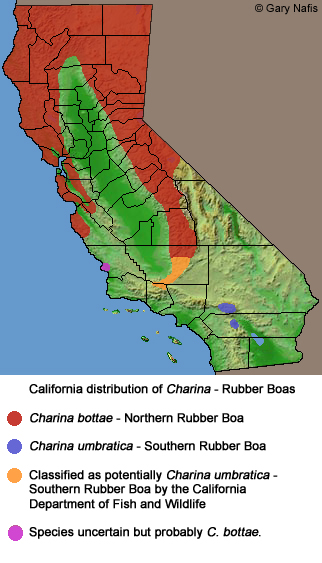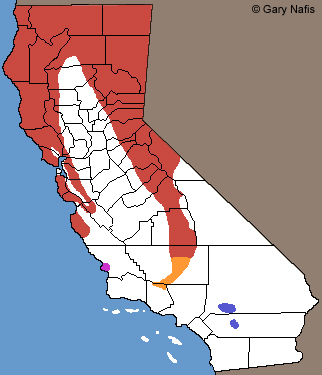
Dark Blue: Range of this species in California
Charina umbratica - Southern Rubber boa
Red: Range of Charina bottae - Northern Rubber Boa
Orange: area where the species of rubber boa
is recognized as potentially C. umbratica by the CDFW.
Purple: Area representing recently-discovered
boas of unexamined species, most likely C. bottae
Click on the map for a topographical view
Map with California County Names
|
 |
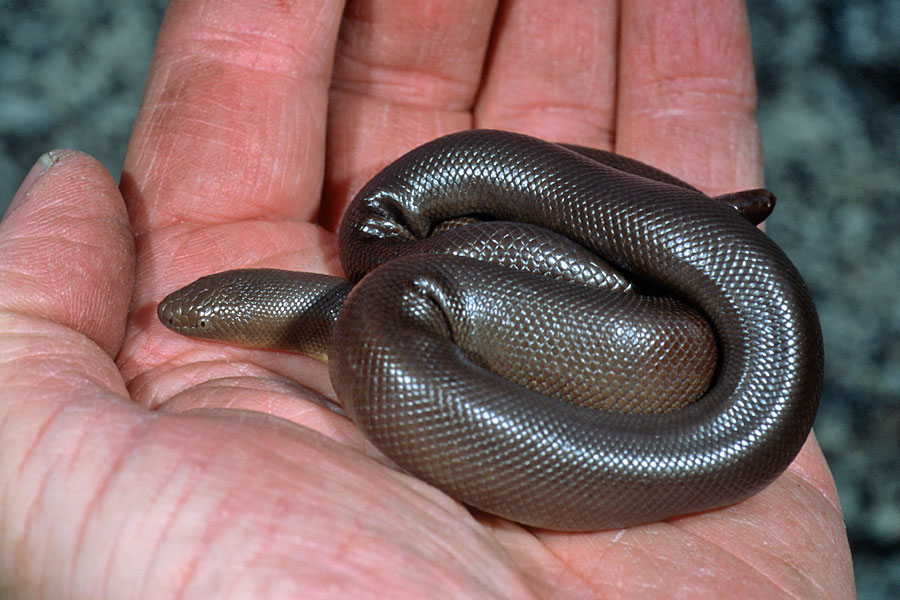
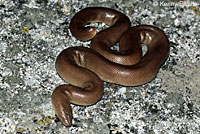
| Adult, San Bernardino Mountains, San Bernardino County |
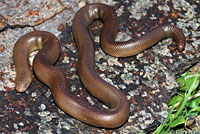 |
 |
 |
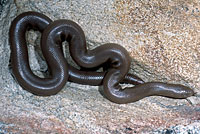
| Adult, San Bernardino Mountains, San Bernardino County |
 |
 |
 |
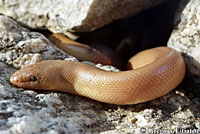
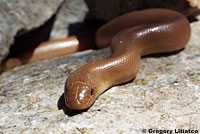
| Adult, San Bernardino County © Gregory Litiatco |
Adult, San Bernardino Mountains,
San Bernardino County |
 |
 |
 |
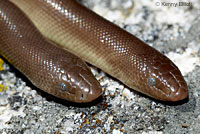
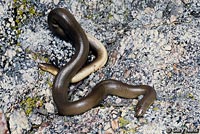
| Two adults found together in San Bernardino County © Kenny Elliott |
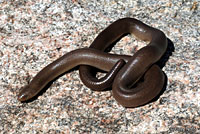
Adult, San Bernardino Mountains,
San Bernardino County |
 |
 |
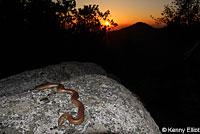 |
| Adult, Mt. San Jacinto, Riverside County © Kenny Elliott |
| |
 |
|
| |
Adult, San Bernardino Mountains,
San Bernardino County |
|
| |
|
|
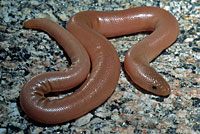
| Juveniles |
 |
 |
 |
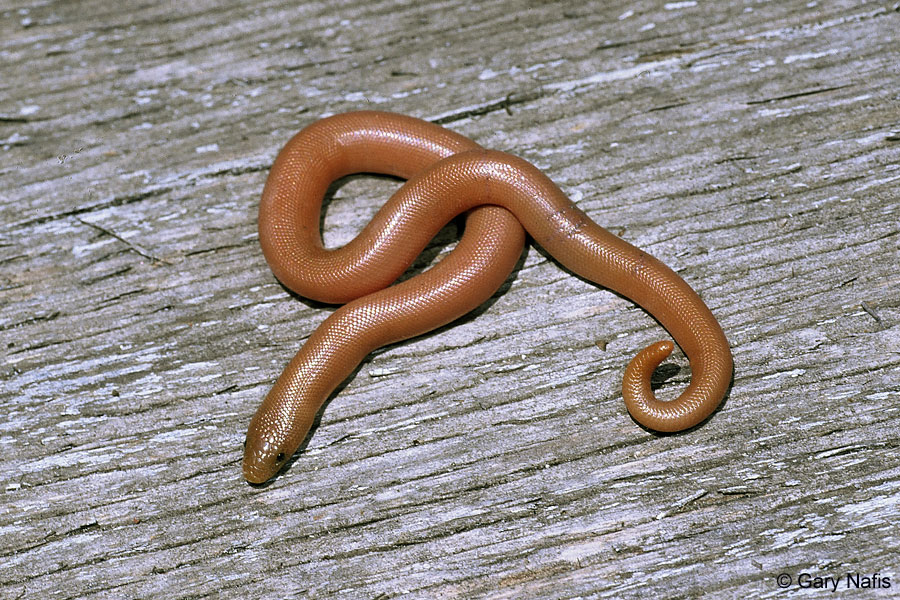
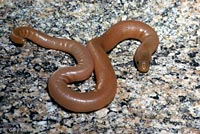
Juvenile, San Bernardino Mountains,
San Bernardino County
|
Juvenile, San Bernardino Mountains,
San Bernardino County
|
Juvenile, San Bernardino Mountains,
San Bernardino County
|
| |
|
|
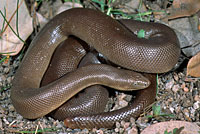
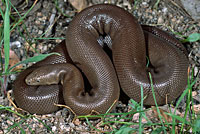
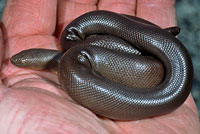
Adults and Juveniles from the Southern Sierra Nevada and Tehachapi Mountains and Mt.Pinos
classified as Charina umbratica - Southern Rubber Boa, by the California Department of Fish and Wildlife |
 |
 |
 |
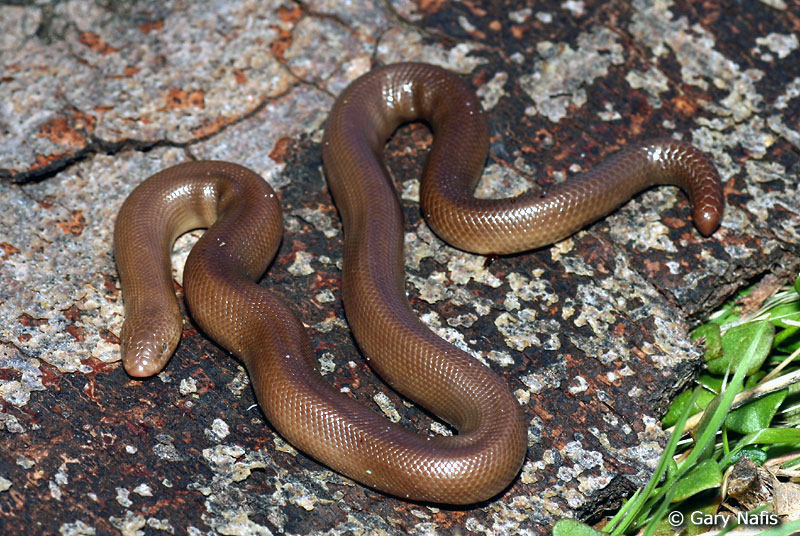
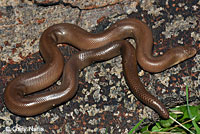
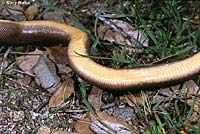
| Adult from a dwarf population, 4,600 feet elevation, Southern Sierra Nevada Mountains, Kern County. |
 |
 |
 |
| Underside of adult, Southern Sierra Nevada Mountains, Kern County |
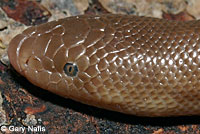
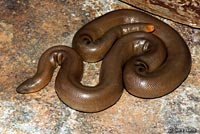
Adult, Mt. Pinos, Kern County.
© Gary Nafis Specimen courtesy of Richard Hoyer |
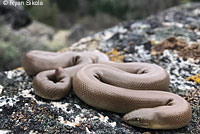
Adult from a dwarf population in
Kern County © Ryan Sikola |
 |
 |
 |
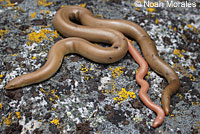
Adult and juvenile, Kern County
© Noah Morales
|
Juvenile from a dwarf population in the Tehachapi Mountains in Kern County
© Ryan Sikola |
| |
 |
|
| |
Adult, Kern/Ventura County line
© Zeev Nitzan Ginsburg |
|
| |
|
|
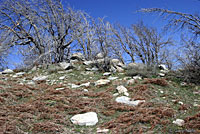
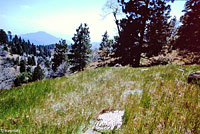
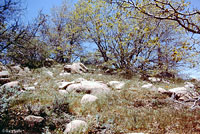
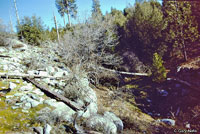
| Habitat |
 |
 |
 |
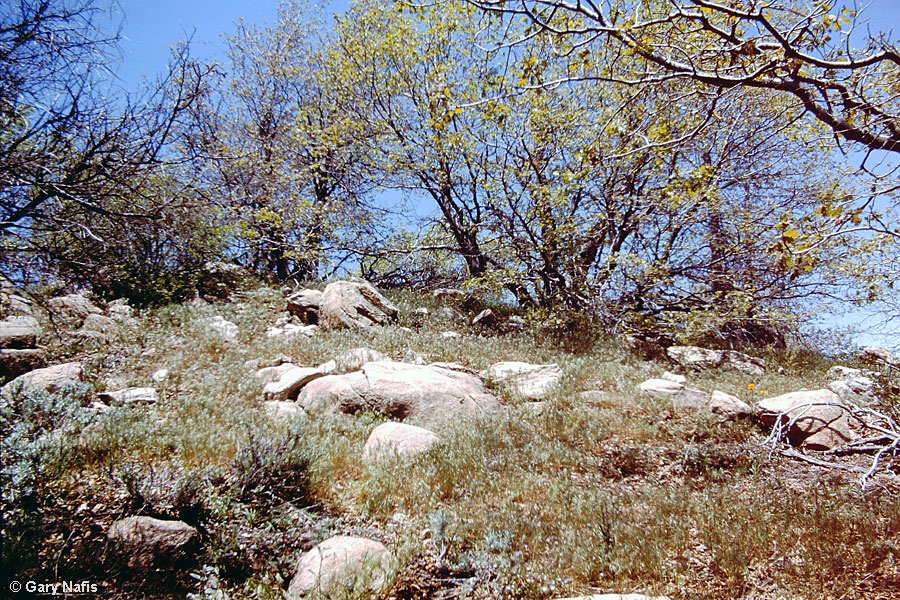
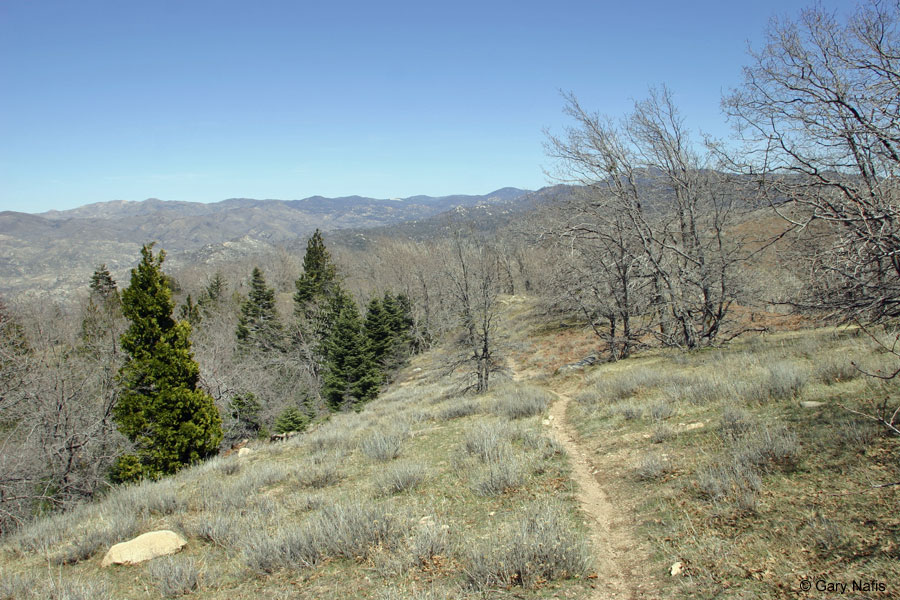
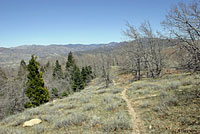
Habitat,6,200 ft.
San Bernardino County |
Habitat, 5,800 ft.
San Bernardino County |
Habitat,6,200 ft.
San Bernardino County |
 |
 |
|
Habitat, 4,600 ft., Kern County
|
Habitat, 5,800 ft.
San Bernardino County |
|
|
|
|
|
Description |
Not Dangerous - This snake does not have venom that can cause death or serious illness or injury in most humans.
Commonly described as "harmless" or "not poisonous" to indicate that its bite is not dangerous, but "not venomous" is more accurate.
(A poisonous snake can hurt you if you eat it. A venomous snake can hurt you if it bites you.)
|
| Size |
The maximum total length of males in the San Bernardino mountains is about 19.5 inches, and females about 22 inches.
|
| Appearance |
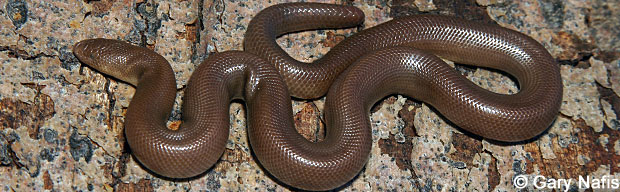
A small constrictor with a stout body and smooth shiny small-scaled loose and wrinkled skin which gives the snake a rubbery look and feel.
Eyes are small with vertically elliptical pupils.
The tail is short and blunt and looks like a head.
The top of the head is covered with large scales.
|
| Color and Pattern |
Uniform in dorsal color - light brown, dark brown, pink, tan, or olive-green above, and yellow, orange, or cream colored below.
There is usually no pattern below, but sometimes there is dark mottling.
|
| Young |
Young snakes are pink or tan, and some can be brightly-colored.
|
| Morphological Traits to Help Differentiate Charina bottae and Charina umbratica |
|
| |
| Life History and Behavior |
Activity |
Nocturnal and crepuscular, sometimes active in daylight.
Sometimes active in weather that would be too cold for most reptiles, with surface temperatures in the 50s.
A good burrower, climber and swimmer.
Often found under logs, boards and other debris, sometimes on roads at dusk. |
| Defense |
When threatened, the snake hides its head in its coiled body, and elevates the tail to fool the predator into attacking the tail. Snakes with scarred tails are common. |
| Diet and Feeding |
| Eats mostly small mammals, birds, and, lizards. |
| Reproduction |
Mates from April to June.
Females are viviparous, giving birth to 2 - 8 live young in late summer or early autumn.
|
| Habitat |
Inhabits Oak-conifer and mixed-conifer forests at elevations between roughly 5,000 to 8,200 ft. where rocks and logs or other debris provide shelter.
|
| Geographical Range |
Endemic to California.
The range of this species is unclear and somewhat controversial because of its protected status.
It is definitely found in a few disjunct areas in montane southern California in the San Bernardino and San Jacinto Mountains. (Oddly, it is missing from the San Gabriel Mountains, where the habitat appears to be the same.) Boas occurring in the southern Sierra Nevada, the Tehachapi Mountains, and on Mt. Pinos, Mt. Abel, Mt. Alamo, and Frazier Mountain are protected as C. umbratica by the California Department of Fish and Wildlife. Nevertheless, their species status is still unclear. Pending more DNA studies, these could turn out to be C. umbratica or C. bottae or hybrids.
Since the species of Charina occurring in the southern Sierra Nevada, the Tehachapi Mountains, Mt. Pinos, and in San Luis Obispo County has not been determined, and because C. umbratica is a species protected by the state, I will show a separate area in purple on my range map of Charina that are of unknown species, and another in orange of Charina that appear to be classified as C. umbratica by the CDFW, until I learn of new scientific studies that change this.
1/15
---------------------------------------------------------------------------------------------------------------------------------------------------------------------
Rubber boas were found in 2006 and 2010 at Montana de Oro on the coast of San Luis Obispo County, with photo confirmation in 2010. It seems most likely they would be C. bottae, but Stebbins & McGinnis (2012) state that C. umbratica occurs in the "northern part of the South Coast Range" which should include Montana de Oro, but until someone gets a permit to take a DNA sample from one of these snakes, which are found in a State Park, then finds another snake (which is not easy) and gets the sample tested, the species will remain unknown.
---------------------------------------------------------------------------------------------------------------------------------------------------------------------
Description of the range of C. umbratica from Stebbins, Robert C., and McGinnis, Samuel M. Field Guide to Amphibians and Reptiles of California: Revised Edition (California Natural History Guides) University of California Press, 2012 : "C. umbratica is found in the northern part of the South Coast Range and at selected sites in Kern, San Bernardino, and Riverside Counties. These include Mount Pinos, Mount Abel, and the Tehachapi, San Bernardino, and San Jacinto mountains…."
---------------------------------------------------------------------------------------------------------------------------------------------------------------------
In his paper describing the new "Southern California Rubber Snake" which he called C. b. umbratica subsp. nov., Laurence M. Klauber discusses the range here:
"Range. - While at present known only from the localities where the type and paratype were collected [Mt. San Jacinto, Riverside County and San Bernardino Mountains, San Bernardino County.**], this subspecies may well be expected from moist areas throughout the San Jacinto and San Bernardino mountains, and possibly in the San Gabriels and other southern California ranges.
Discussion. - So far C. bottae has not been collected in the Coast Range south of Carmel, Monterey County, nor in the Sierra Nevada south of Sequoia National Park, Tulare County. The latter point is about 180 miles from Switzer Canyon, the nearest of the umbratica localities. But as the characters separating this form from the other subspecies are differences of degree rather than innovation, and as intervening mountains make an almost-continuous range possible, I deem it best not to consider it a full species. 1"
"1 Charina is known to occur on Mt. Pinos, northern Ventura County, but as no specimens from there are presently available. it is not known to which subspecies this area should be assigned."
** "Type.-No. 12,101 in the collection of the San Diego Society of Natural History. Collected in Fern Valley, near Idyllwild, Riverside County, California, by Clyde Searl, July 1, 1929. Fern Valley is in the San Jacinto Mountains at elevation 5800 ft. The snake was found under a slab of fallen pine bark."
...
"Paratype.-A single paratype is available. This is No. 39 in the collection
of Pasadena Junior College. It was taken in Switzer Canyon, near Lake Arrowhead, San Bernardino County, California, by H. C. James, May, 1925. "
---------------------------------------------------------------------------------------------------------------------------------------------------------------------
The California Department of Fish and Wildlife described the range of the Southern Rubber Boa (Charina umbratica) in a
Status of Rare, Threatened, and Endangered Plants and Animals of California 2000-2004 document (download the Reptiles PDF).
"The southern rubber boa is known from several localities in the San Bernardino Mountains in San Bernardino County, near Idyllwild in Riverside County, and on Mount Pinos in Kern County.
Recent genetic studies support separation of the southern rubber boa from all other populations of rubber boa. The subspecies appears to have diverged from the more widespread rubber boa between 12.3 and 4.4 million years ago. Possible intergrades between the southern rubber boa and the rubber boa found in the Tehachapi Mountains and on Mt. Pinos warrant further study."
No other CDFW documents that I can find as of 1/15
mention boas in the Tehachapi Mountains or in the Southern Sierra Nevada in their range descriptions. The most current fishing regulations protect all Kern County boas from take, but that could be because of the Mt. Pinos Kern County population.
---------------------------------------------------------------------------------------------------------------------------------------------------------------------
Richard Hoyer
has made extensive
studies of Charina. His position on the distribution of the Southern Rubber Boa (SRB) was explained to me in a 1/15 peronal communication:
"The only valid Scientific study that identifies the distribution of the SRB is the 1943 paper by L. Klauber in which he proposed adoption of the new SRB subspecies. That is, the SRB only occurs in the San Bernardino and San Jacinto Mts."
---------------------------------------------------------------------------------------------------------------------------------------------------------------------MtDNA work has shown that most (but not all) Charina in the southern Sierra Nevada and the Tehachapis are more closely related to Charina bottae than to Charina umbratica.
"Morphologically, the Kern Plateau, Breckenridge Mountain, Piute Mountains, Scodie Mountains, and Tehachapi Mts populations all are comprised of "dwarf-morph" snakes [similar to C. umbratica] but that trait does not track with the mtDNA." (R.Hansen Pers. Comm. 4/13) Because the morphology does not correspond to the mtDNA findings, there is not enough evidence to support an argument that these populations belong to either species.
--------------------------------------------------------------------------------------------------------------------------------------------------------------------- NatureServe Explorer Accessed 1/10/15.
Charina umbratica - Klauber, 1943 Southern Rubber Boa Distribution:
"Global Range: (1000-5000 square km (about 400-2000 square miles)) Range encompasses the San Bernardino Mountains and San Jacinto Mountains of southern California; populations in the Tehachapi Mountains and Mount Pinos area have some umbratica characteristics but are included in the C. bottae (northern rubber boa) clade (Rodriguez-Robles et al. 2001, Stebbins 2003). Elevational range is 1,540-2,460 meters (Stewart 1988). Twenty-six of the 40+ localities in the San Bernardino Mountains are in a 16-kilometer strip between Twin Peaks on the west and Green Valley on the east (Stewart 1988). Extent of occurrence is less than 5,000 square kilometers."
|
 |
Dark Blue: Charina umbratica - Southern Rubber Boa
Yellow: Area where the species of rubber boa is recognized as Charina umbratica by the CA Dept. of Fish and Wildlife
Bright Green: Rubber boas of unidentified species, most likely Charina bottae
Red: Charina bottae - Northern Rubber Boa
|
| Notes on Taxonomy |
First described by Laurence M. Kaluber in 1943 as Charina bottae umbratica subsp. nov. Southern California Rubber Snake
Formerly, one species of Charina was recognized, Charina bottae, which was comprised of three subspecies:
C. b. bottae - Northern Rubber Boa,
C. b. umbratica - Southern Rubber Boa, and
C. b. utahensis - Rocky Mountain Rubber Boa.
Some herpetologists still only recognize only one species - Charina bottae, with either no subspecies or with two subspecies:
C. b bottae - Northern Rubber Boa
C. b umbratica - Southern Rubber Boa.
Others recognize two full species of Charina :
Charina bottae - Northern Rubber Boa
Charina umbratica - Southern Rubber Boa
--------------------------------------------------------------------------------------------------------------------------------------------------------------------
IUCN Charina bottae Taxonomy Notes
Published in 2007.
Accessed 1/10/15
"Nussbaum and Hoyer (1974) showed that subspecies utahensis is indistinguishable from subspecies bottae, and they regarded the concept "umbratica" as meaningless; Collins (1990) apparently agreed with this view and did not recognize any subspecies. In contrast, Erwin (1974) proposed that subspecies umbratica warrants species status; this suggestion did not gain the support of other herpetologists. Stewart (1977) recognized two subspecies (bottae and umbratica) and, pending further study, regarded populations from Mt. Pinos and the Tehachapi Mountains, California, as intergrades between these two subspecies. Stebbins (1985) continued to recognize three subspecies (bottae, utahensis, and umbratica). Rodriguez-Robles et al. (2001) used mtDNA data to examine phylogeography of C. bottae and concluded that "C. b. umbratica is a genetically cohesive, allopatric taxon that is morphologically diagnosable" [using a suite of traits] and that "it is an independent evolutionary unit that should be recognized as a distinct species, Charina umbratica". The authors acknowledged that a mixture of bottae and umbratica traits exists in populations in the Tehachapi Mountains and Mount Pinos, but they interpreted this as persistent ancestral polymorphisms. They also found no support for recognizing utahensis as a valid taxon. Crother et al. (2003) listed C. umbratica as a species whereas Stebbins (2003) mentioned the proposal but did not adopt the split. In this database we maintain umbratica as a subspecies of C. bottae until a concensus on the taxonomy of this group emerges."
--------------------------------------------------------------------------------------------------------------------------------------------------------------------
NatureServe Explorer Accessed 1/10/15
Charina umbratica - Klauber, 1943 Southern Rubber Boa
Distribution: "Global Range: (1000-5000 square km (about 400-2000 square miles)) Range encompasses the San Bernardino Mountains and San Jacinto Mountains of southern California; populations in the Tehachapi Mountains and Mount Pinos area have some umbratica characterisitcs but are included in the C. bottae (northern rubber boa) clade (Rodriguez-Robles et al. 2001, Stebbins 2003). Elevational range is 1,540-2,460 meters (Stewart 1988). Twenty-six of the 40+ localities in the San Bernardino Mountains are in a 16-kilometer strip between Twin Peaks on the west and Green Valley on the east (Stewart 1988). Extent of occurrence is less than 5,000 square kilometers."
--------------------------------------------------------------------------------------------------------------------------------------------------------------------
U.S. Fish & Wildlife Service
page accessed 1/10/15 shows
Charina bottae umbratica - Southern Rubber boa
-------------------------------------------------------------------------------------------------------------------------------------------------------------------- Notes from SSAR Herpetologican Circular No. 39, 2012:
"Kluge (1993, Zool. J. Linn. Soc. 107: 293-351) placed Lichanura in the synonymy of Charina because they formed sister taxa. Burbrink (2005, Mol. Phylogenet. Evo. 34: 167-180) corroborated the relationship found by Kluge. However, Rodriguez-Robles et al. (2001, Mol. Phylogenet. Evol. 18:227-237) found C. b. umbratica to represent a morphologically distinct, allopatric lineage that they elevated to species status based on mitochondrial sequences, along with allozyme data from a previous study (Weisman, 1988, MS Thesis, CSU Polytechnic Pomona). With the recognition of C. umbratica and fossil species referred to both Charina and Lichanura (Holman, 2000, Fossil Snakes of north America, Indiana Univ. Press) neither genus is monotypic and they are treated here as separate genera."
--------------------------------------------------------------------------------------------------------------------------------------------------------------------
Nicholson, K. E. (ed.). 2025 SSAR Scientific and Standard English Names List:
"Based on morphological data from hundreds of additional specimens, Hoyer et al. (2019, The Southwestern Naturalist 64: 23–30) expanded the geographical distribution of C. umbratica, which was corroborated by Grismer et al. (2022, Molecular Phylogenetics and Evolution 174: 1–17) using a genome-wide SNP dataset. Grismer et al. (op. cit.) found that C. umbratica was morphologically distinct from C. bottae, but recognizing umbratica as a species would make bottae paraphyletic. Additionally, they found that C. umbratica was composed of several distinct lineages occurring in sky islands across southern California. The authors recognized umbratica at least as a subspecies in the interest of having it as a recognized taxon, listed under the Federal Endangered Species Act."
--------------------------------------------------------------------------------------------------------------------------------------------------------------------
Alternate and Previous Names (Synonyms)
Charina bottae umbratica - Southern Rubber Boa (Nicholson, K. E. (ed.). 2025 SSAR Scientific and Standard English Names List)
Charina umbratica - Southern Rubber Boa (Stebbins & McGinnis 2012, SSAR 2012)
Charina bottae - Rubber Boa (Stebbins 2003)
Charina bottae umbratica - Southern Rubber Boa (Stebbins 1966, 1985)
Charina bottae umbratica - Southern California Rubber Snake (Wright & Wright 1957)
Charina bottae umbratica - Rubber Snake (Stebbins 1954)
Charina bottae umbratica (Klauber 1943)
Charina bottae - Rubber Snake (Tortrix Bottae; Charina brachyops; Charina plumbea; Pseudoeryx bottae. Two-headed Snake; Lead-colored Worm Snake; Wood Snake; Rubber Boa, part) (Grinnell and Camp 1917)
Charina bottae (Blainville 1835)
|
| Conservation Issues (Conservation Status) |
| Common where it occurs, this snake is considered a threatened species due to threats from habitat loss and degredation due to human activities in its limited range. |
|
| Taxonomy |
| Family |
Boidae |
Boas and Pythons |
Gray, 1842 |
| Genus |
Charina |
Rubber Boas |
(Gray 1849) |
Species
|
umbratica |
Southern Rubber Boa |
Klauber, 1943 |
|
Original Description |
Charina bottae - (Blainville, 1835) - Nouv. Ann. Mus. Hist. Nat. Paris, Vol. 4, p. 289, pl. 26, figs. 1, 1B
from Original Description Citations for the Reptiles and Amphibians of North America © Ellin Beltz
|
|
Meaning of the Scientific Name |
Charina - Greek - charieis = graceful, delightful
from Scientific and Common Names of the Reptiles and Amphibians of North America - Explained © Ellin Beltz
umbratica - Latin - umbraticus = belonging to shade, belonging to seclusion
from Jaeger, Edmund C. A Source-book of Biological Names and Terms Third Edition. Charles C. Thomas Publisher, 1962.
|
| The Common Name |
"The common name [rubber boa] is derived from their skin which is often loose and wrinkled and consists of small scales that are smooth and shiny. These characteristics give the snakes a rubber-like look and texture."
(Wickipedia)
|
|
Related or Similar California Snakes |
C. bottae - Northern Rubber Boa
|
|
More Information and References |
California Department of Fish and Wildlife
Klauber, Laurence M. The Subspecies of the Rubber Snake, Charina. Transactions of the San Diego Society of Natural History Vol. X, No. 7, pp. 83-90 December 30, 1943.
Hansen, Robert W. and Shedd, Jackson D. California Amphibians and Reptiles. (Princeton Field Guides.) Princeton University Press, 2025.
Stebbins, Robert C., and McGinnis, Samuel M. Field Guide to Amphibians and Reptiles of California: Revised Edition (California Natural History Guides) University of California Press, 2012.
Stebbins, Robert C. California Amphibians and Reptiles. The University of California Press, 1972.
Flaxington, William C. Amphibians and Reptiles of California: Field Observations, Distribution, and Natural History. Fieldnotes Press, Anaheim, California, 2021.
Nicholson, K. E. (ed.). 2025. Scientific and Standard English Names of Amphibians and Reptiles of North America North of Mexico, with Comments Regarding Confidence in Our Understanding. Ninth Edition. Society for the Study of Amphibians and Reptiles. [SSAR] 87pp.
Samuel M. McGinnis and Robert C. Stebbins. Peterson Field Guide to Western Reptiles & Amphibians. 4th Edition. Houghton Mifflin Harcourt Publishing Company, 2018.
Stebbins, Robert C. A Field Guide to Western Reptiles and Amphibians. 3rd Edition. Houghton Mifflin Company, 2003.
Behler, John L., and F. Wayne King. The Audubon Society Field Guide to North American Reptiles and Amphibians. Alfred A. Knopf, 1992.
Robert Powell, Roger Conant, and Joseph T. Collins. Peterson Field Guide to Reptiles and Amphibians of Eastern and Central North America. Fourth Edition. Houghton Mifflin Harcourt, 2016.
Powell, Robert., Joseph T. Collins, and Errol D. Hooper Jr. A Key to Amphibians and Reptiles of the Continental United States and Canada. The University Press of Kansas, 1998.
Bartlett, R. D. & Patricia P. Bartlett. Guide and Reference to the Snakes of Western North America (North of Mexico) and Hawaii. University Press of Florida, 2009.
Bartlett, R. D. & Alan Tennant. Snakes of North America - Western Region. Gulf Publishing Co., 2000.
Brown, Philip R. A Field Guide to Snakes of California. Gulf Publishing Co., 1997.
Ernst, Carl H., Evelyn M. Ernst, & Robert M. Corker. Snakes of the United States and Canada. Smithsonian Institution Press, 2003.
Taylor, Emily. California Snakes and How to Find Them. Heyday, Berkeley, California. 2024.
Wright, Albert Hazen & Anna Allen Wright. Handbook of Snakes of the United States and Canada. Cornell University Press, 1957.
Thelander, Carl G., editor in chief. Life on the Edge - A Guide to California's Endangered Natural Resources - Wildlife. Berkeley: Bio Systems Books, 1994.
Mitochondrial DNA-Based Phylogeography of North American Rubber Boas, Charina bottae (Serpentes: Boidae)
Molecular Phylogenetics and Evolution Vol. 18, No. 2, February, pp. 227–237, 2001
Joseph Grinnell and Charles Lewis Camp. A Distributional List of the Amphibians and Reptiles of California. University of California Publications in Zoology Vol. 17, No. 10, pp. 127-208. July 11, 1917.
|
|
|
The following conservation status listings for this animal are taken from the July 2025 State of California Special Animals List and the July 2025 Federally Listed Endangered and Threatened Animals of California list (unless indicated otherwise below.) Both lists are produced by multiple agencies every year, and sometimes more than once per year, so the conservation status listing information found below might not be from the most recent lists, but they don't change a great deal from year to year.. To make sure you are seeing the most recent listings, go to this California Department of Fish and Wildlife web page where you can search for and download both lists:
https://www.wildlife.ca.gov/Data/CNDDB/Plants-and-Animals.
A detailed explanation of the meaning of the status listing symbols can be found at the beginning of the two lists. For quick reference, I have included them on my Special Status Information page.
If no status is listed here, the animal is not included on either list. This most likely indicates that there are no serious conservation concerns for the animal. To find out more about an animal's status you can also go to the NatureServe and IUCN websites to check their rankings.
Check the current California Department of Fish and Wildlife sport fishing regulations to find out if this animal can be legally pursued and handled or collected with possession of a current fishing license. You can also look at the summary of the sport fishing regulations as they apply only to reptiles and amphibians that has been made for this website.
Federally Listed list note: Synonymous with Charina bottae umbratica.
|
| Organization |
Status Listing |
Notes |
| NatureServe Global Ranking |
G2G3 |
Imperiled - Vulnerable |
| NatureServe State Ranking |
S2 |
Imperiled |
| U.S. Endangered Species Act (ESA) |
None |
|
| California Endangered Species Act (CESA) |
ST |
Listed as Threatened 6/27/1971 |
| California Department of Fish and Wildlife |
None |
|
| Bureau of Land Management |
None |
|
| USDA Forest Service |
S |
Sensitive |
| IUCN |
VU |
Vulnerable |
|
|