|
Only one dead snake of this species has been documented in California.
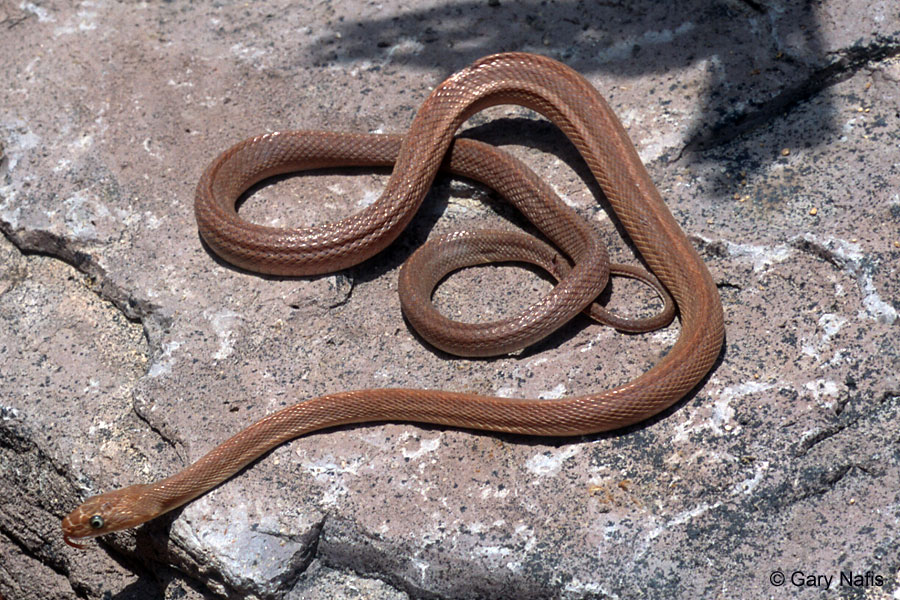
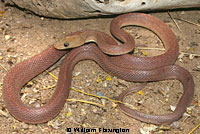
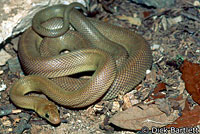
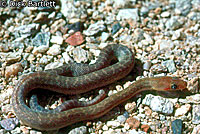
All of the snakes shown here are from Baja California. |
 |
 |
 |
| Very thin adult, Baja California. © Gary Nafis. Specimen courtesy of Victor Valasquez, El Serpentario de La Paz |
 |
 |
 |
| Adult, Baja California © Jason Jones |
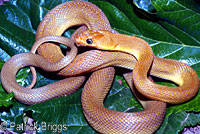
Adult, Baja California © Patrick Briggs |
Adult, Baja California.
© William Flaxington.
Specimen courtesy of El Serpentario de La Paz |
 |
 |
 |
Adult, Baja California, © Dick Bartlett
|
Juvenile, Baja California, © Dick Bartlett |
Adult, near Loreto, Baja California Sur
© William Flaxington |
 |
 |
|
| Adult, Loreto, Baja California Sur © Stuart Young |
|
| |
|
|
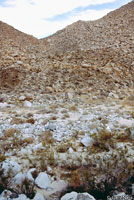
| Possible Habitat in California |
 |
 |
 |
The Baja California Ratsnake is listed as present in California from only one specimen that was found dead on a road in Imperial County 2.4 miles east of Mountain Springs.*
These pictures show the wash and rocky habitat near that location.
Rumors that other Baja California Ratsnakes have been found in other locations in California are unconfirmed but possible.
|
|
| Description |
Not Dangerous - This snake does not have venom that can cause death or serious illness or injury in most humans.
Commonly described as "harmless" or "not poisonous" to indicate that its bite is not dangerous, but "not venomous" is more accurate.
(A poisonous snake can hurt you if you eat it. A venomous snake can hurt you if it bites you.)
|
| Length |
Adults 34 - 60 inches (85 - 152 cm) in length. (Stebbins, 2003)
Averages 3 - 4 feet (91 - 122 cm).
|
| Appearance |
A slender snake with a long broad head distinct from the slender neck.
The eyes are large and protuberant.
The anal scale is divided and there are 33 - 34 rows of scales on the body.
|
| Color and Pattern |
Adults are nearly uniform in color with a brownish ground color and no dark markings.
Sometimes the dorsal scales appear to be edged with dark color.
The color lightens on the sides, and the underside is light with no pattern.
The tongue is pink.
|
| Young |
Females are oviparous - laying eggs.
Young are described by Stebbins (2003) as pale with light streaks across back, but as you can see in the picture above, they can also be brown with faint light bars or bands on the back.
|
| Life History and Behavior |
Activity |
Primarily nocturnal and crepuscular, but sometimes observed active in daylight.
Active from at least late February through October in the northern part of its range and all year long in the southernmost part of its range. (Grismer, 2002)
A very good climber.
A strong constrictor.
May strike viciously when threatened. |
| Diet and Feeding |
| Probably preys mostly on small mammals, but has also been found to consume bats and lizards. |
| Reproduction |
Lays a clutch of 2 - 10 eggs (Stebbins, 2003) in the spring.
Eggs
probably hatch from early June through late October. (Grismer, 2002)
|
| Habitat |
Associated with dry rocky habitats in Baja California, including canyons, bajadas, thorn scrub, palm groves, springs and streams.
|
| Geographical Range |
Listed as present in California from only one specimen that was found dead on Interstate Highway 8, 2.4 miles (3.86 km) east of Mountain Springs in Imperial County, May 26th 1984.
San Diego Natural History Museum Record:
Catalog Number: 64416
Latitude: 32.6465"
Longitude: -116.10508
Locality: Mountain Springs; 2.4 mi E of, on I-8 Imperial County, California
Date Collected: May 26th 1984
Collector: Unknown
Record: Preserved Specimen
[The GPS coordinates listed for this record are approximately 2.4 mi west of Mountain Springs, on I-8, not east as the description states, so either the coordinates are wrong, or the description is wrong. My maps show a location approximately 2.4 miles east of Mountain Springs on I-8 as the description indicates.]
South of California, this species occurs on the eastern slope of Baja California south to the entire cape region. Distribution is spotty and not well known throughout the northern part of its range.
---------------------------------------------------------------------------------------------------------------------------------------------------------------------
Controversy about the Natural Occurrence of this Species in California
The natural occurrance of the Baja California Ratsnake in California has been a popular topic of speculation and rumor among herpers, especially here on the internet. Robert Stebbins in his 1985, 1993, and 2012 field guides accepts that the record is valid, but some other herpetologists doubt its validity.
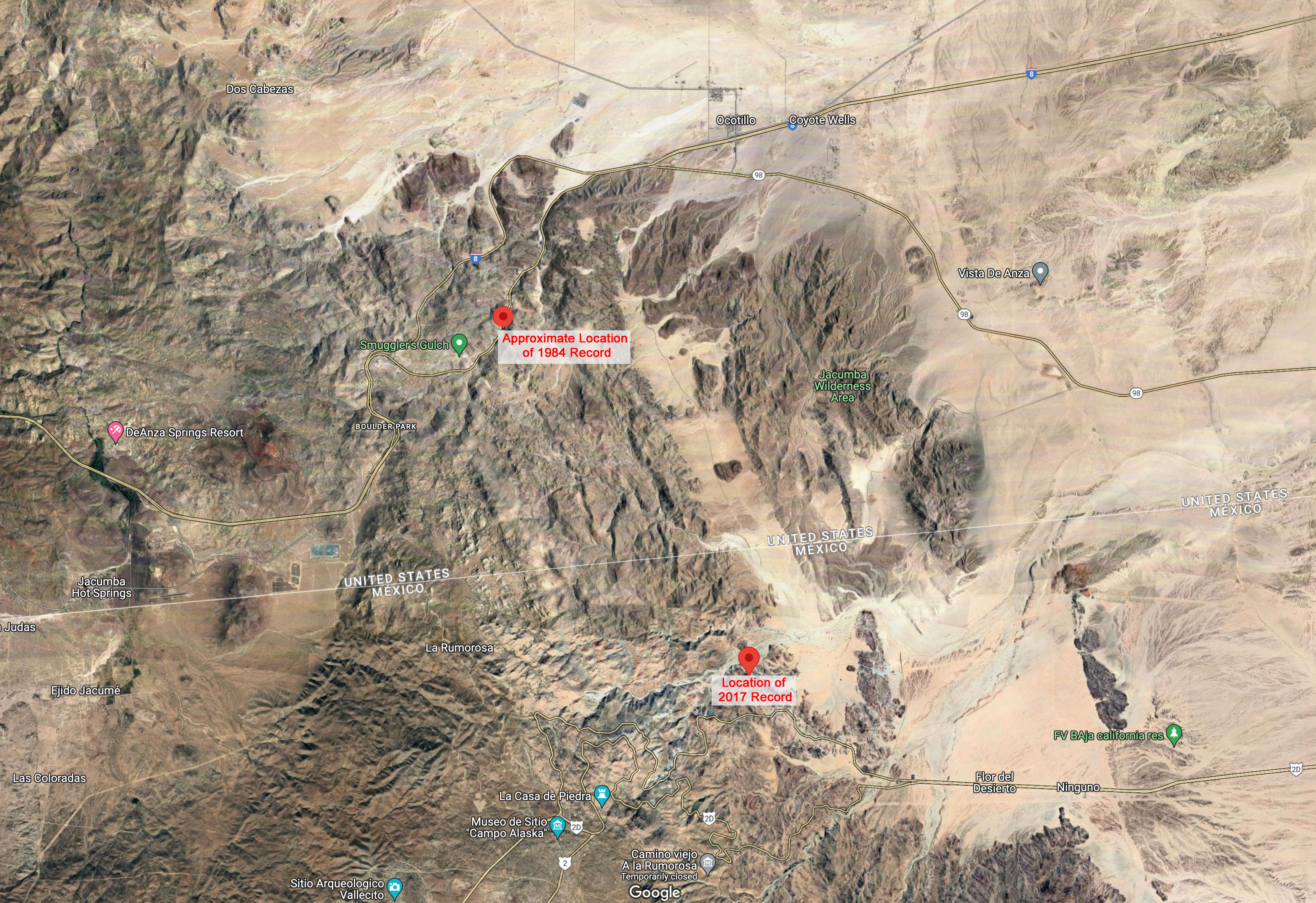
In December 2019, Sam S. Murraay & Aaron M. Mills reported (Herpetological Review 50-4, 2019) that in May 2017 they observed a Baja California Ratsnake 3.6 km (2.24 miles) south of the USA-Mexico border. (32.59478°N, 115.99038°W ) The distance between this location and the location of the lone California specimen is approx. 7.6 miles (12.2 km) and the rocky montane habitat is continuous between the two locations. This discovery supports the validity of the California record and the natural occurrence of this species in the state. [Here's a map that shows both locations.]
There is also an iNaturalist observation from the town of La Rumorosa in Baja California, which is approximately 10.4 miles south of the California location and 5 miles southwest of the location reported in Herp Review in 2019.
These are some of the arguments I've encountered over the years (before the 2017 specimen was reported in 2019.)
Arguments against the validity of the California record:
- Since very few specimens have been found in Baja California near the California border, it is unlikely the species ranges as far north as California.
- The habitat is marginal or too high in elevation for this species.
- Some veteran California snake hunters say they have searched in vain for this snake in California for many years but found them fairly easily not too far south of the border so they believe that means the record is not valid.
- It's more likely that someone intentionally dumped a rat snake in the area where the dead specimen was found, either a snake that they smuggled across the border from Baja California, or a captive snake. The dumped snake could have been alive or dead. It might not have been put on the road, but released alive nearby, perhaps left there with others in an attempt to introduce the species into California. It might have been a dead snake put on the road in hope that someone would find it, know what it was, and deposit it into a museum, thereby adding the species to the state list. This is very far-fetched, but the motive for doing so could have been either as a prank, or it could have been egotistical - someone was hoping to get credit for finding a species new to the state, or it could have been economic - by establishing that the species is native to California they might then justify that their snakes, illegally smuggled from Baja California, were natives, which they could then sell as captive-bred or maybe as legally-collected.
Arguments for the validity of the California record:
- A Baja California Ratsnake was found 3.6 km (2.24 miles) south of the USA-Mexico border in habitat that continues up to the location of the California specimen, approx. 7.6 miles away.
- Since extreme southeast California is the northernmost edge of the range of the species, there will naturally be fewer snakes there to be found, which explains why only one confirmed specimen has been found so far.
-
The rough terrain in the area where the specimen was found also discourages hunting for the snake as does the difficulty of searching for snakes on the busy freeway where the specimen was found. Besides the difficult terrain, the presence of illegal immigrants, smugglers, and law enforcement in the area also make it difficult to search in this area, especially at night.
- Baja Ratsnakes have been found recently south of the border on Highway 2 at La Rumerosa (the Cantu Grade) which is only a couple of miles south of California. (I don't know the source of this claim or if it is backed up by any records.) They have also been found at Guadalupe Canyon which is approximately 30 miles south of the border.
-
Some herpers say that Baja ratsnakes were found in the past in California at a location near the border that is now difficult to get to because the road has been closed by the Border Patrol. Since importation of the species from Baja California into California is not allowed, people with knowledge of snake found in California and those who collected them will not talk about them either to avoid the appearance that they smuggled the snakes into the state or to keep others from finding about about the locations where the snake has been found.
-
Since the species is protected by the state, anyone without special permission who finds this snake in California will never collect it and deposit it in a museum, because doing so would be illegal, so we can never get an accurate report on the abundance of this species in the state. (This argument is weak because museums would probably accept a photograph of the species as a voucher and a photo voucher would not imply any illegal collecting.)
- According to an online source who referenced a personal communication with Lee Grismer, the author of the definitive book on the herpetofauna of Baja California, a good argument for the acceptance of the natural occurrence of this snake in California is the examination of the number of scales counted on snakes found along the entire range of the species, from north to south. (But I don't know how accurate this information is.)
1. The lateral scale count is highest for this species at the southernmost part of its range and the scale size is smallest.
2. The lateral scale count decreases and the scale size increases in specimens as you travel north.
3. The California specimen has the lowest lateral scale count and largest scale size recorded for this species (even lower and larger than snakes found in northern Baja California.)
4. Therefore the scale-count data shows that the snake comes from the extreme northernmost part of its range
which could be extreme southeast California (but it could also be extreme northeast Baja California.)
There certainly are and will be more arguments for and against the natural occurrence of the snake in California as this discussion continues.
|
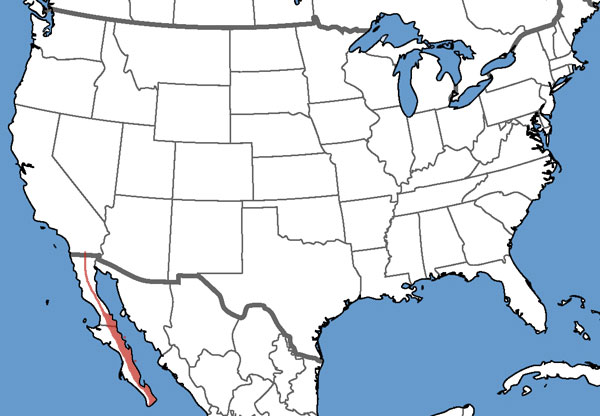 |
Range shown in red
|
| Notes on Taxonomy |
Alternate and Previous Names (Synonyms)
Bogertophis rosaliae - (Mocquard, 1899, Stebbins 2003, 2012)
|
| Conservation Issues (Conservation Status) |
| A California Species of Special Concern. |
|
|
Taxonomy |
| Family |
Colubridae |
Colubrids |
Oppel, 1811 |
| Genus |
Bogertophis |
Desert Ratsnakes |
Dowling and Price, 1988 |
Species
|
rosaliae |
Baja California Ratsnake |
(Mocquard, 1899) |
|
Original Description |
Bogertophis rosaliae - (Mocquard, 1899) - Nouv. Arch. Mus. Hist. Natur. Paris, 4th Series, Vol. 1 (2nd fasc), p. 321
from Original Description Citations for the Reptiles and Amphibians of North America © Ellin Beltz
|
|
Meaning of the Scientific Name |
Bogertophis - honors Bogert, Charles M.
rosaliae - refers to the type locality- Santa Rosalia, Baja California Sur, Mexico
from Scientific and Common Names of the Reptiles and Amphibians of North America - Explained © Ellin Beltz
|
|
Related or Similar California Snakes |
There are no similar or related snakes in the potential range for this snake, but under some conditions, for example at a distance on a road at night, these snakes, and possibly others, might be confused for the Baja California Ratsnake:
Masticophis flagellum piceus - Red Coachwhip
Arizona elegans
eburnata - Desert Glossy Snake
Pituophis catenifer annectens - San Diego Gophersnake
Salvadora hexalepis hexalepis - Desert Patch-nosed Snake
|
|
More Information and References |
California Department of Fish and Wildlife
Jennings, Mark R.
and Marc P. Hayes. Amphibian and Reptile Species of Special Concern in California. California Department of Fish and Game, published November 1, 1994.
Hansen, Robert W. and Shedd, Jackson D. California Amphibians and Reptiles. (Princeton Field Guides.) Princeton University Press, 2025.
Stebbins, Robert C., and McGinnis, Samuel M. Field Guide to Amphibians and Reptiles of California: Revised Edition (California Natural History Guides) University of California Press, 2012.
Stebbins, Robert C. California Amphibians and Reptiles. The University of California Press, 1972.
Flaxington, William C. Amphibians and Reptiles of California: Field Observations, Distribution, and Natural History. Fieldnotes Press, Anaheim, California, 2021.
Nicholson, K. E. (ed.). 2025. Scientific and Standard English Names of Amphibians and Reptiles of North America North of Mexico, with Comments Regarding Confidence in Our Understanding. Ninth Edition. Society for the Study of Amphibians and Reptiles. [SSAR] 87pp.
Samuel M. McGinnis and Robert C. Stebbins. Peterson Field Guide to Western Reptiles & Amphibians. 4th Edition. Houghton Mifflin Harcourt Publishing Company, 2018.
Stebbins, Robert C. A Field Guide to Western Reptiles and Amphibians. 3rd Edition. Houghton Mifflin Company, 2003.
Behler, John L., and F. Wayne King. The Audubon Society Field Guide to North American Reptiles and Amphibians. Alfred A. Knopf, 1992.
Robert Powell, Roger Conant, and Joseph T. Collins. Peterson Field Guide to Reptiles and Amphibians of Eastern and Central North America. Fourth Edition. Houghton Mifflin Harcourt, 2016.
Powell, Robert., Joseph T. Collins, and Errol D. Hooper Jr. A Key to Amphibians and Reptiles of the Continental United States and Canada. The University Press of Kansas, 1998.
Bartlett, R. D. & Patricia P. Bartlett. Guide and Reference to the Snakes of Western North America (North of Mexico) and Hawaii. University Press of Florida, 2009.
Bartlett, R. D. & Alan Tennant. Snakes of North America - Western Region. Gulf Publishing Co., 2000.
Brown, Philip R. A Field Guide to Snakes of California. Gulf Publishing Co., 1997.
Ernst, Carl H., Evelyn M. Ernst, & Robert M. Corker. Snakes of the United States and Canada. Smithsonian Institution Press, 2003.
Taylor, Emily. California Snakes and How to Find Them. Heyday, Berkeley, California. 2024.
Wright, Albert Hazen & Anna Allen Wright. Handbook of Snakes of the United States and Canada. Cornell University Press, 1957.
Grismer, L. Lee. Amphibians and Reptiles of Baja California, Including Its Pacific Islands and the Islands in the Sea of Cortés. The University of California Press, 2002.
McPeak, Ron H. Amphibians and Reptiles of Baja California. Sea Challengers, 2000.
Samuel M. McGinnis and Robert C. Stebbins. Peterson Field Guide to Western Reptiles & Amphibians. 4th Edition. Houghton Mifflin Harcourt Publishing Company, 2018.
Stebbins, Robert C. A Field Guide to Western Reptiles and Amphibians. 3rd Edition. Houghton Mifflin Company, 2003.
The Reptile Database
|
|
|
The following conservation status listings for this animal are taken from the July 2025 State of California Special Animals List and the July 2025 Federally Listed Endangered and Threatened Animals of California list (unless indicated otherwise below.) Both lists are produced by multiple agencies every year, and sometimes more than once per year, so the conservation status listing information found below might not be from the most recent lists, but they don't change a great deal from year to year.. To make sure you are seeing the most recent listings, go to this California Department of Fish and Wildlife web page where you can search for and download both lists:
https://www.wildlife.ca.gov/Data/CNDDB/Plants-and-Animals.
A detailed explanation of the meaning of the status listing symbols can be found at the beginning of the two lists. For quick reference, I have included them on my Special Status Information page.
If no status is listed here, the animal is not included on either list. This most likely indicates that there are no serious conservation concerns for the animal. To find out more about an animal's status you can also go to the NatureServe and IUCN websites to check their rankings.
Check the current California Department of Fish and Wildlife sport fishing regulations to find out if this animal can be legally pursued and handled or collected with possession of a current fishing license. You can also look at the summary of the sport fishing regulations as they apply only to reptiles and amphibians that has been made for this website.
|
| Organization |
Status Listing |
Notes |
| NatureServe Global Ranking |
G4 |
Apparently Secure—Uncommon but not rare; some cause for long-term concern due to declines or other factors. |
| NatureServe State Ranking |
S1 |
Critically Imperiled—Critically imperiled in the state because of extreme rarity (often 5 or fewer populations) or because of factor(s) such as very steep declines making it especially vulnerable to extirpation from the state.
|
| U.S. Endangered Species Act (ESA) |
None |
|
| California Endangered Species Act (CESA) |
None |
|
| California Department of Fish and Wildlife |
WL |
Watch List |
| Bureau of Land Management |
None |
|
| USDA Forest Service |
None |
|
| IUCN |
LC |
Least Concern |
|
|