
A Guide to the Amphibians
and Reptiles of California
Click on a picture for a larger view

Identifying Species of Pacific Newts - Genus Taricha

| Four species of newts of the genus Taricha are found in California. All are similar in appearance. In some areas you can use the range maps to identify the species that occurs in your area: South of Santa Cruz, north of Pt. Arena, in the central part of the Sierra Nevada mountains, and in a few other regions, only one species occurs. In areas where more than one species occur you will need to observe some differences in appearance. In some cases the differences between T. torosa and T. granulosa are so slight that even expert herpetologists have difficulties identifying them by sight. |
||
| Identifying Adults | Identifying Larvae | Identifying Eggs |
| Distribution of the Four Species of Newts in California, Showing Overlapping Ranges | ||
 |
||
| Red: Rough-skinned Newt - Taricha granulosa Yellow: Red-bellied Newt - Taricha rivularis (The entire range is shared with other species.) Green: Sierra Newt - Taricha sierrae Dark Blue: California Newt - Taricha torosa Striped Areas: Overlap of two species of newts Gray: Area where three species of newts can be found - T. granulosa, T. rivularis, and T. torosa. |
||
| Rough-skinned Newt - Taricha granulosa granulosa | ||
 |
 |
|
 |
||
 |
||
| Range shown in Red | ||
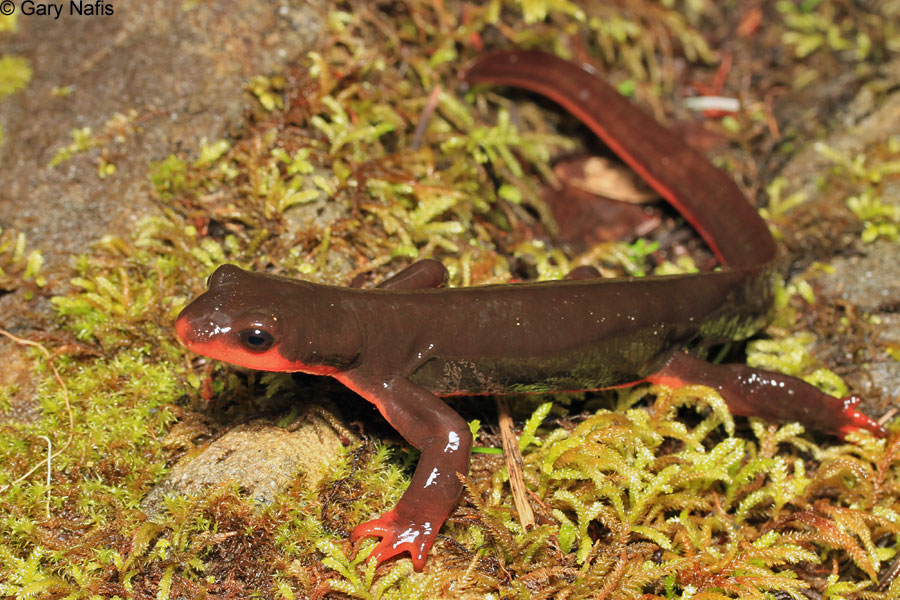
| Red-bellied Newt - Taricha rivularis | ||
 |
 |
|
 |
||
 |
||
| Range shown in Red |
||
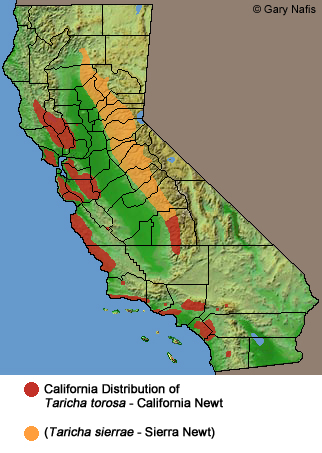
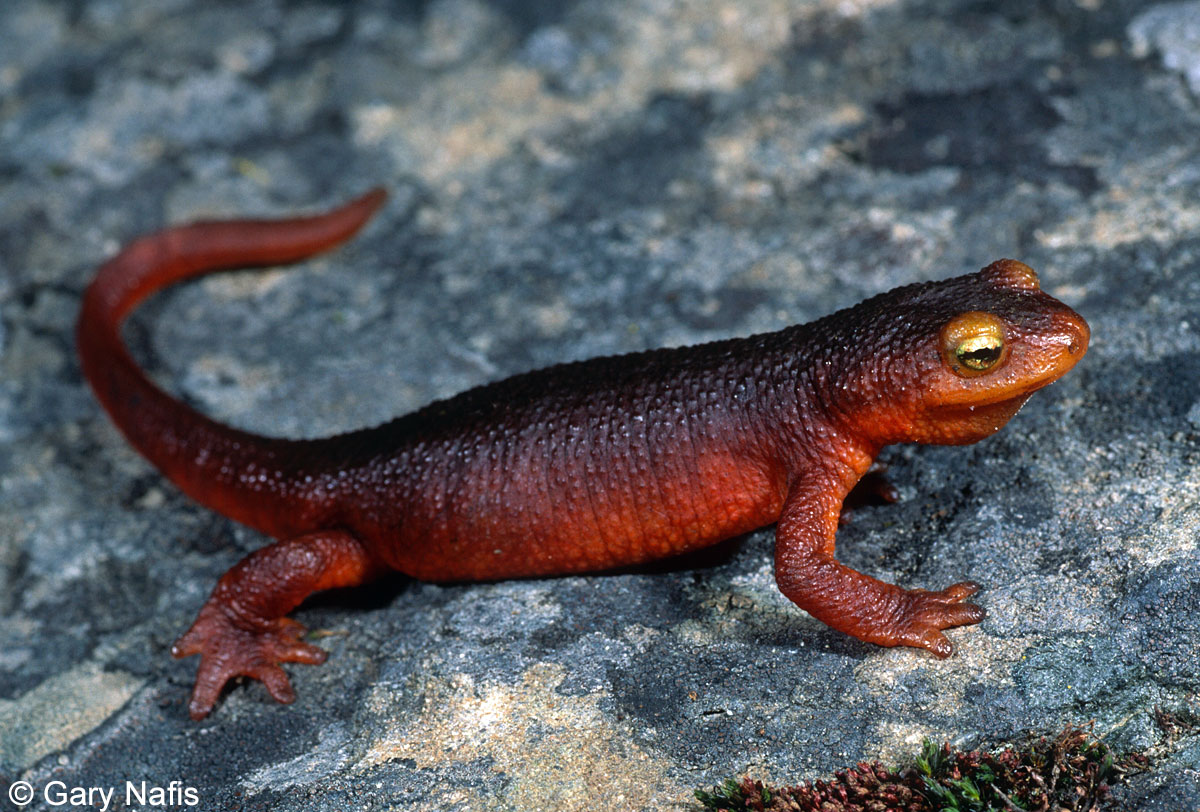
| Sierra Newt - Taricha sierrae | ||
 |
 |
|
 |
||
 |
||
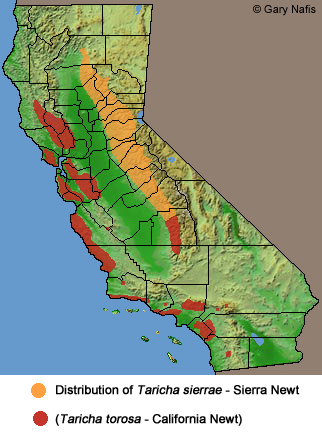
| Range shown in Orange (Range shown in Red: California Newt - Taricha torosa) |
||
| California Newt - Taricha torosa | ||
|
 |
|
 |
||
 |
||
| Range shown in Red (Range shown in Orange: Sierra Newt - Taricha sierrae) |
||
| The range maps can help to identify a species only in areas where only one species Is present. In areas where more than one species is present, the following physical characteristics of adult newts can be used to identify the species. |
||
In areas where more than one species occurs, there are some physical differences that can help you to identify them. The color of the body and the underside is variable and will not help you much with identification, but the color of the eyes and the eyelids and the placement of the eyes on the head should allow you to identify a newt (outside of the southern Sierra Nevada where only range will differentiate the two types of newts found there.) |
||
| Dark Eye Color Can differentiate T. rivularis from T. granulosa and T. torosa |
||
| You can differentiate a Red-bellied Newt, T. rivularis, from a Coast Range Newt, T. t. torosa, or a Rough-skinned Newt, T. granulosa, by looking at the eyes: the Red-bellied Newt has black eyes with no yellow patches on them. The other species have yellow patches on their eyes. |
 |
|
 |
 |
 |
| Red-bellied Newt - Taricha rivularis The eyes are solid black with no yellow |
California Newt - Taricha torosa (and Sierra Newt -Taricha sierra) The eyes have patches of yellow |
Rough-skinned Newt - Taricha granulosa The eyes have patches of yellow |
 |
||
| Left: California Newt - Taricha torosa Right: Red-bellied Newt - Taricha rivularis © James Maughn |
||
Eye Position and Eyelid Color Can usually (but not always) help to differentiate T. granulosa from T. torosa & T. sierrae (T. sierrae and T. torosa look alike.) |
||
 |
 |
 |
| When seen from above, the small eyes of the Rough-skinned Newt usually do not extend past the margin of the head. When seen from above, the larger eyes of the California Newt and the Sierra Newt usually extend to or past the margin of the head. |
The lower eyelid and upper lip below the eye of the California Newt and the Sierra Newt are usually light in color. The lower eyelid and upper lip below the eye of the Rough-skinned Newt are usually dark in color. |
© Regan Sikola Top: Rough-skinned Newt Bottom: California Newt This is a good illustration of how the eyes don't extend past the margin of the head on T. granulosa but they do on T. torosa. |
 |
 |
 |
| California Newt | Sierra Newt | Rough-skinned Newt |
| Defensive Posturing Can differentiate T. torosa and T. sierrae from T. granulosa |
||
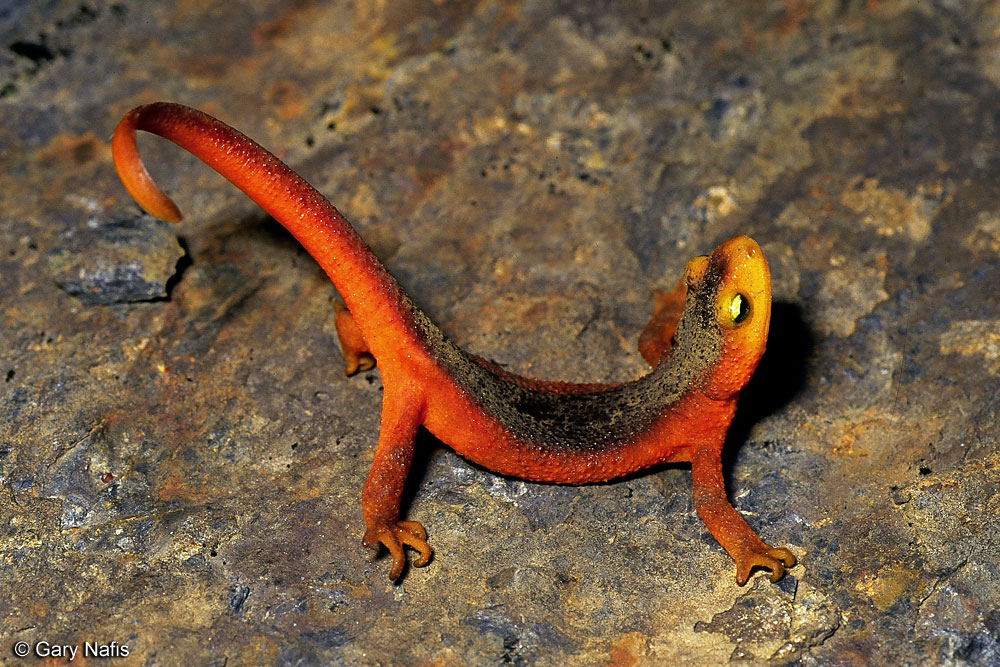
The defensive posture of Rough-skinned Newts - T. granulosa, and California Newts - T. torosa, is similar, but the positioning of the tail is usually different, although not in all areas. T. granulosa usually curls the tail over the body and curls the tip of the tail, while T. torosa and T. sierrae usually do not curl the tail over the body, and often hold it straight out. |
||
  |
||
| Defensive Rough-skinned Newts - T. granulosa, typically curl the tail over the body. | ||
 |
 |
|
| Defensive Sierra Newts - T. sierrae, typically do not curl the tail over the body. |
Defensive California Newts - T. torosa, typically do not curl the tail over the body. |
|
| Underside Markings Can differentiate T. rivularis from T. granulosa and T. torosa |
||
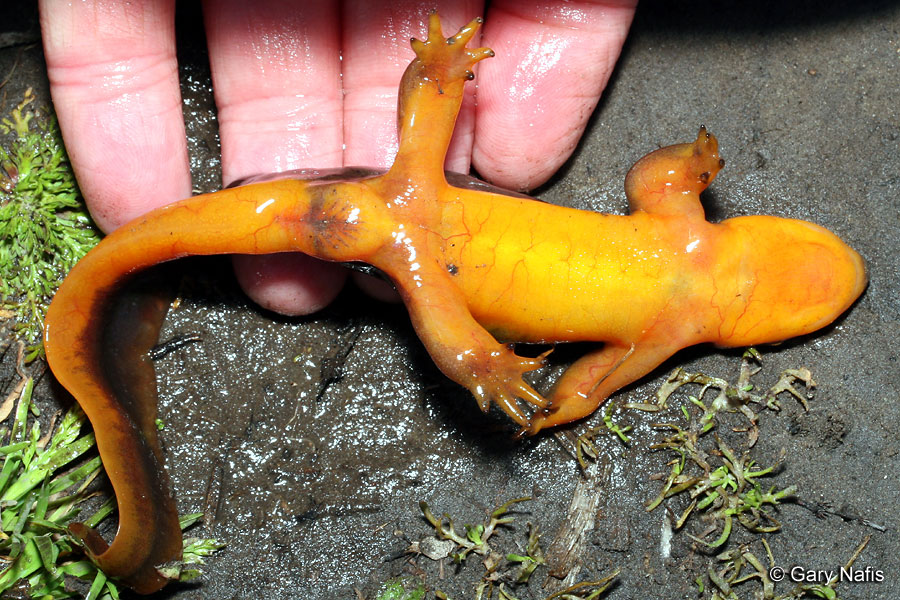
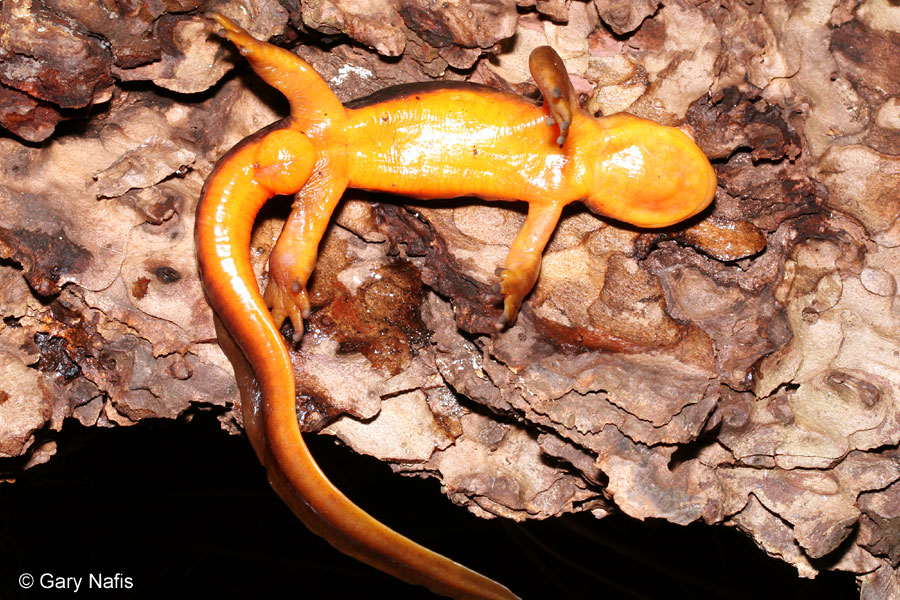
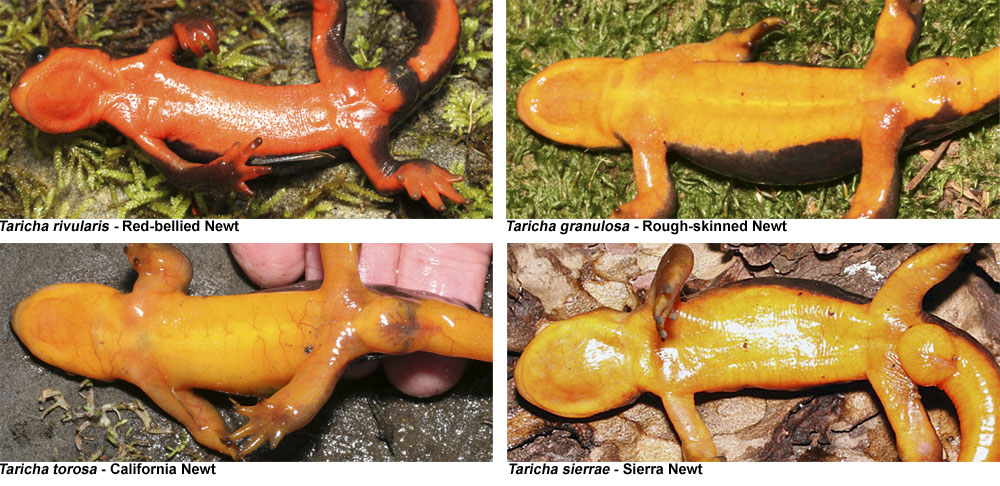
The underside of the Red-bellied Newt - T. rivularis, is reddish, but the underside of the Rough-skinned Newt is also sometimes a deep orange color, and without seeing both newts together, it can be difficult to tell them apart based on the underside color alone. Male T. rivularis have a dark band around the tail at the vent which is not present on other Taricha newts and this marking can identify them. The underside of the forelimbs of T. rivularis also have more dark coloring around the elbows than T. torosa. There is also a sharper contrast between the underside color and the body color of the Rough-skinned Newt - T. granulosa, then there is on the California Newt - T. torosa, but this is variable and difficult to observe without having a representative of each species at hand. |
||
 |
 |
 |
| Breeding Male Rough-skinned Newt - Taricha granulosa with unmarked venter. |
Breeding Male California Newt - Taricha torosa with unmarked venter. |
Breeding Male Sierra Newt - Taricha sierrae with unmarked venter. |
 |
 |
|
| Breeding Male Red-bellied Newt - Taricha rivularis with a dark band around the vent. |
Comparison of the undersides of breeding male newts. (Click picture for a larger view.) |
|
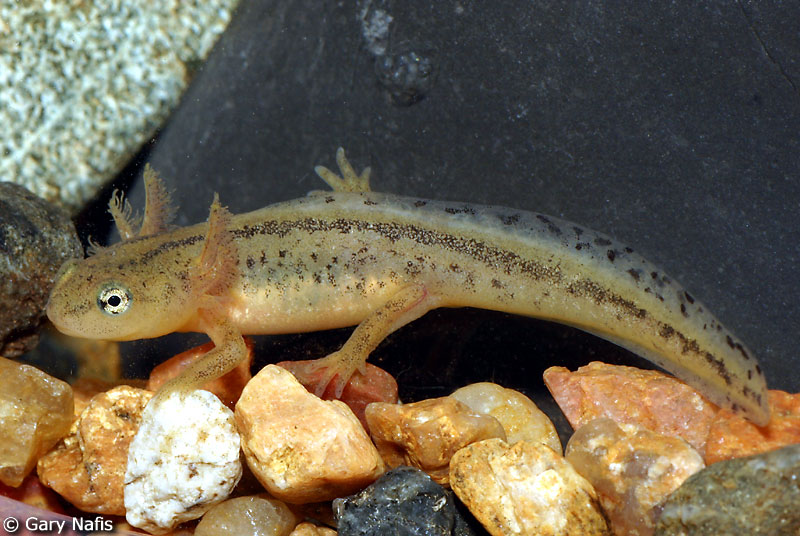
Larvae Dark side stripes can distinguish larval T. torosa and T. sierrae from larval T. granulosa and T. rivularis |
||
Larvae of California Newt - T. torosa and Sierra Newt - T. sierrae have a dark horizontal stripe along the sides of the body. Larvae of T. granulosa and T. rivularis do not have a dark horizontal side stripe. |
||
 |
 |
|
| California Newt - Taricha torosa Dark horizontal side stripe |
Sierra Newt - Taricha sierrae Dark horizontal side stripe |
|
 |
 |
|
| Rough-skinned Newt - Taricha granulosa Without a dark horizontal side stripe |
Red-bellied Newt - Taricha rivularis Without a dark horizontal side stripe |
|
 |
||
| Comparison of Newt larvae (click to view) California Newt - Sierra Newt Rough-skinned Newt - Red-belied Newt |
||
Eggs Can differentiate T. torosa from T. granulosa |
||
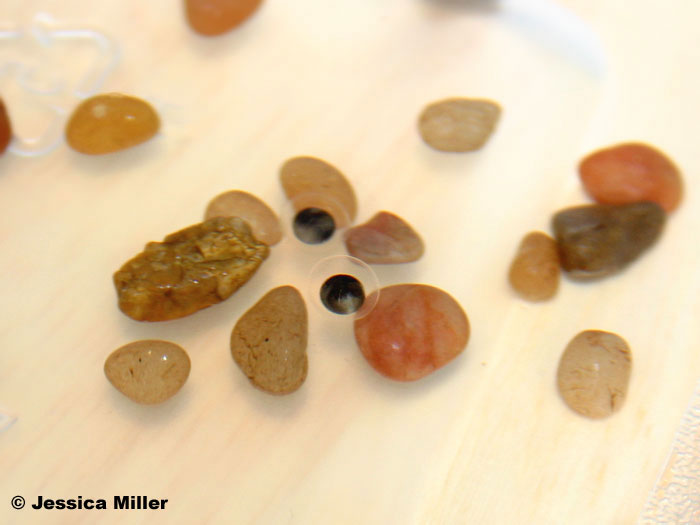
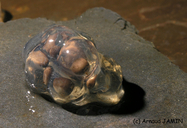
During the breeding season, typically winter and early spring, you can differentiate some species by their eggs (if you can find them or if you can watch a female laying them.) |
||
 |
 |
 |
| T. sierrae eggs are laid in a spherical mass. |
T. torosa eggs are laid in a spherical mass. |
T. granulosa lays eggs singly. |
 |
 |
|
| T. rivularis lays eggs singly or in a flattened mass. (This mass may look similar to the egg mass of T. torosa.) |
||
| Teeth Pattern on Roof of Mouth Can differentiate T. torosa from T. granulosa. |
||
Examination of the tooth pattern on the roof of the mouth will differentiate T. granulosa from T. torosa. The teeth on the roof of the mouth of T. granulosa are usually arranged in a V shape. The teeth on the roof of the mouth of T. torosa are usually arranged in a Y shape. |
||
 (Illustration based on a drawing in A Field Guide to Western Reptiles and Amphibian,.3rd Edition. Robert C. Stebbins. 2003). |
||

Return to the Top
© 2000 -