|
| Adults and Juveniles from California |
 |
 |
 |
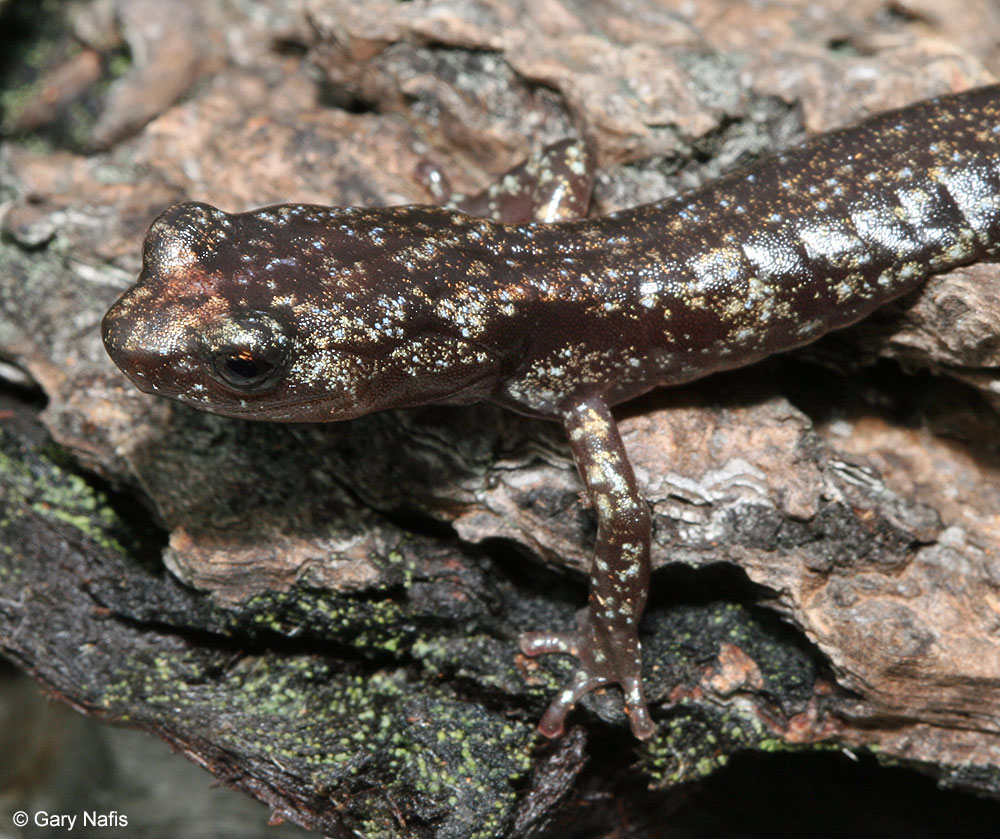
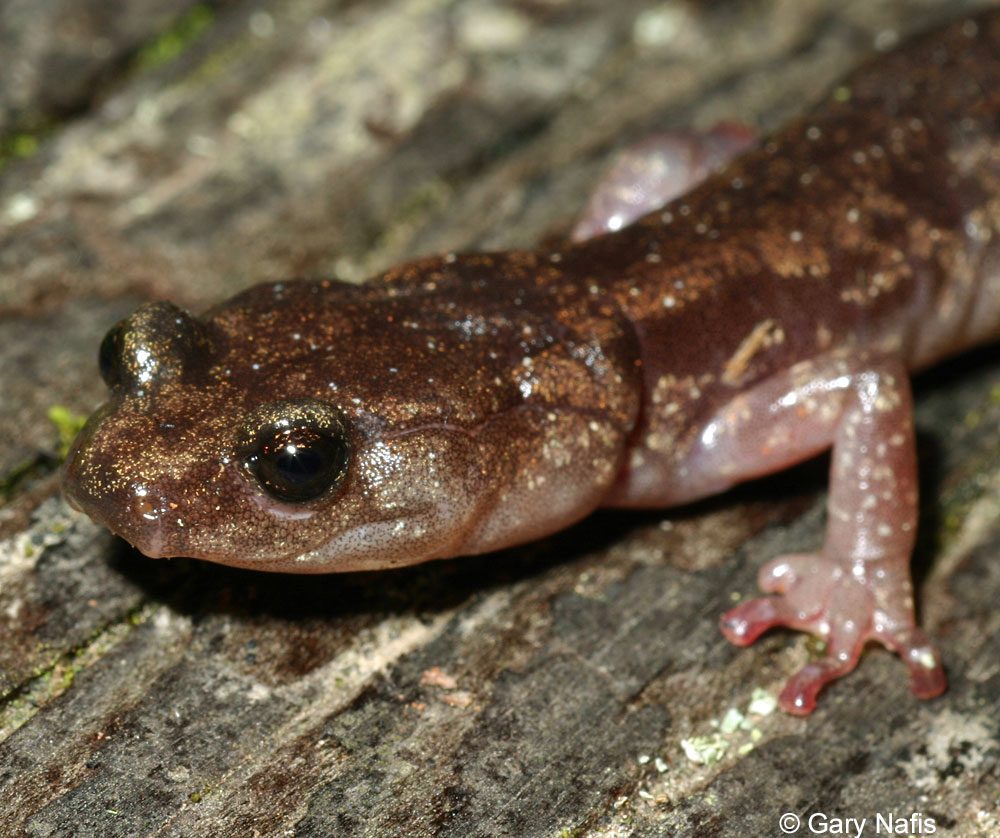
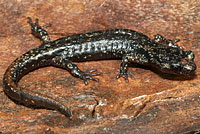
| Sub-adult, Del Norte County, north of Rowdy Creek. |
 |
 |
 |
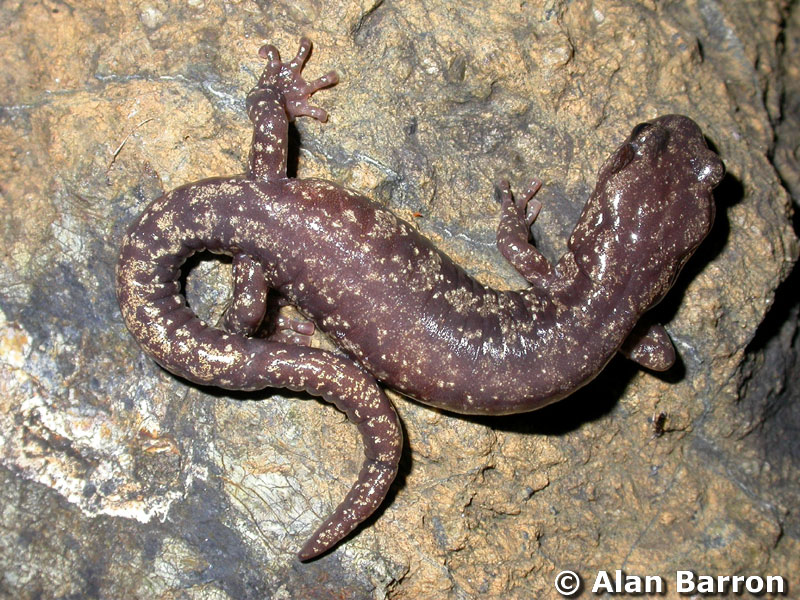
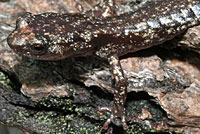
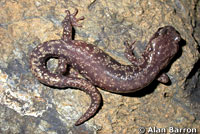
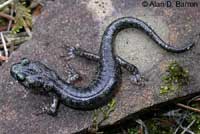
| Adult, northern Del Norte County, light variation. © Alan Barron |
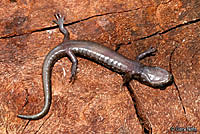
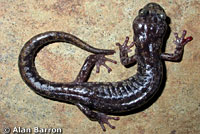
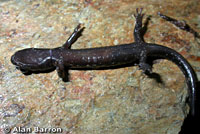
Adult, northern Del Norte County, dark variation. © Alan Barron |
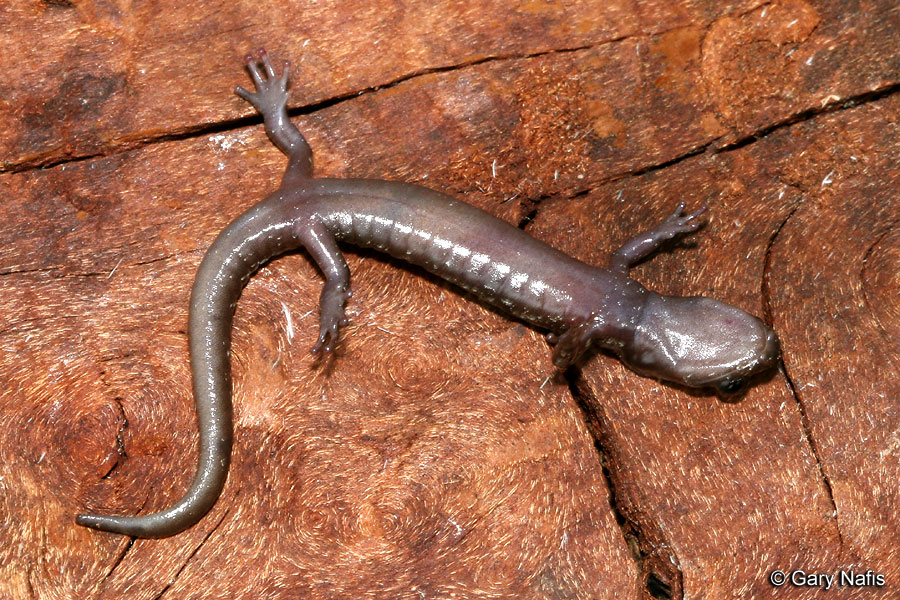
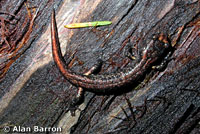
Juvenile, northern Del Norte County
© Alan Barron |
 |
 |
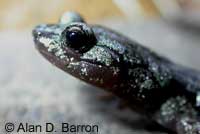 |
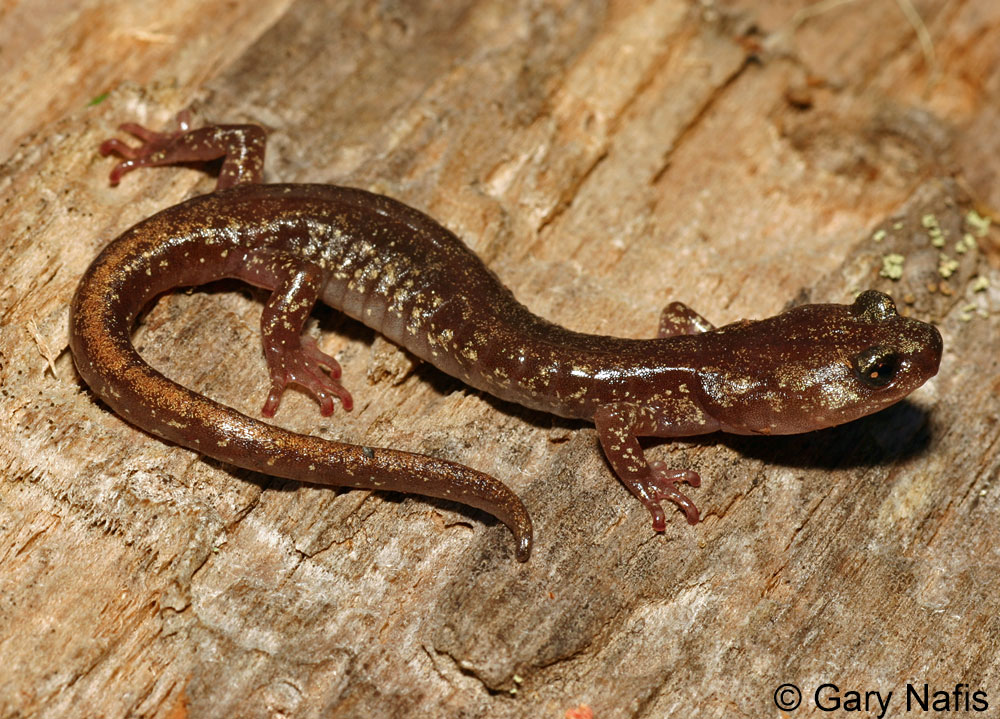
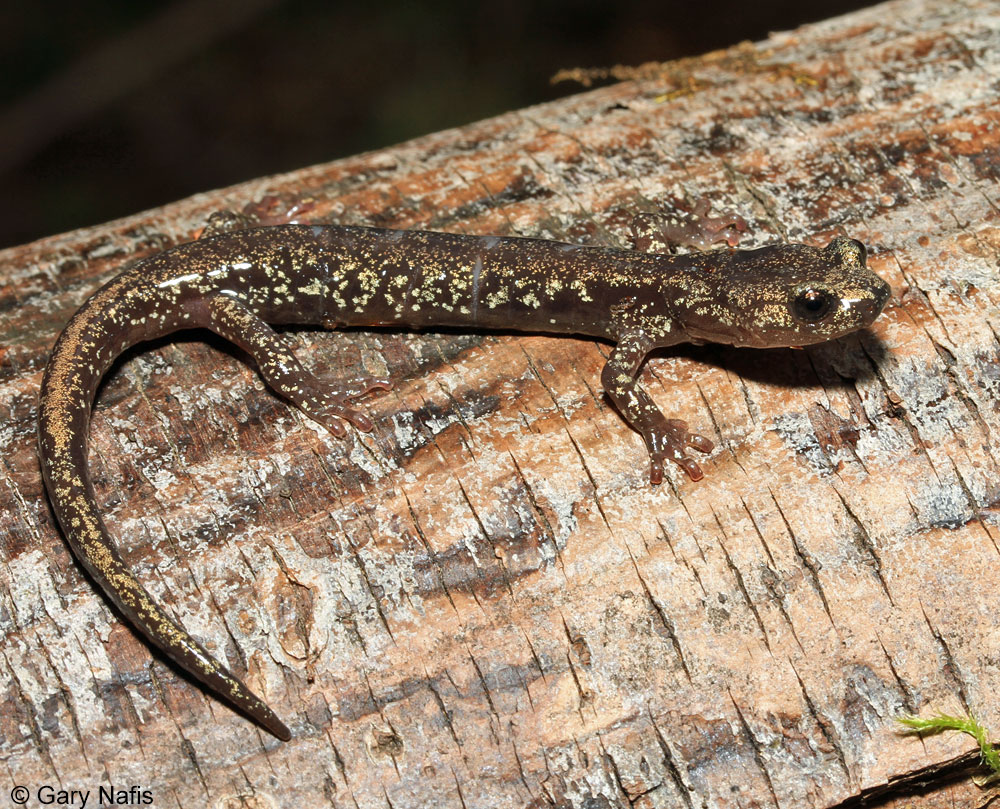
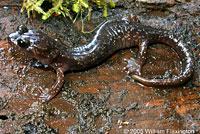
Adult, northern Del Norte County
© 2005 William Flaxington |
Adult with gray-green coloring, north of Smith River, Del Norte County
© Alan Barron |
 |
 |
 |
| Underside of juvenile, northern Del Norte County © Alan Barron |
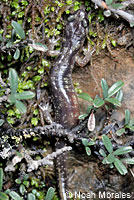
Adult, Del Norte County
© Noah Morales |
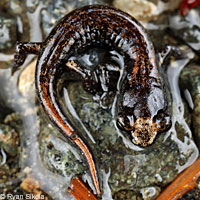
Juvenile, Del Norte County
© Ryan Sikola |
 |
 |
|
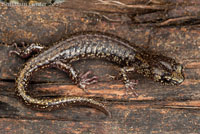
Adult, Del Norte County
© Benjamin Genter
|
Clouded Salamander toe tips are squared-off. Compare with the more rounded toe tips of Black Salamanders. |
|
| |
|
|
| Clouded Salamanders From Oregon |
| Adults |
 |
 |
 |
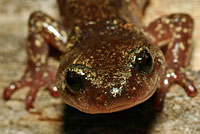 |
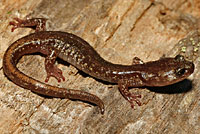
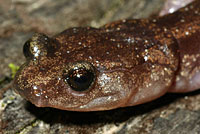
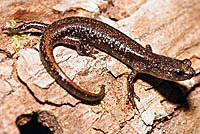
| Adult, Linn County, Oregon |
 |
 |
 |
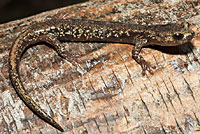
| Adult, Curry County, Oregon |
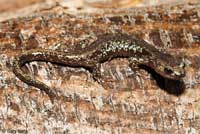
Sub-adult, Lane County, Oregon |
| |
|
|
| Juveniles |
 |
 |
 |
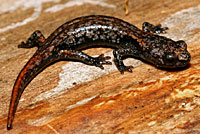
| Juvenile, Lane County, Oregon |
Juvenile, Lane County, Oregon |
Juveniles, Lane County, Oregon |
| |
|
|
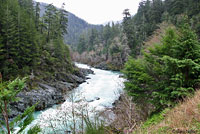
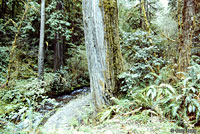
| Habitat in California |
 |
 |
 |
| Habitat, clearcut north of Rowdy Creek, Del Norte County |
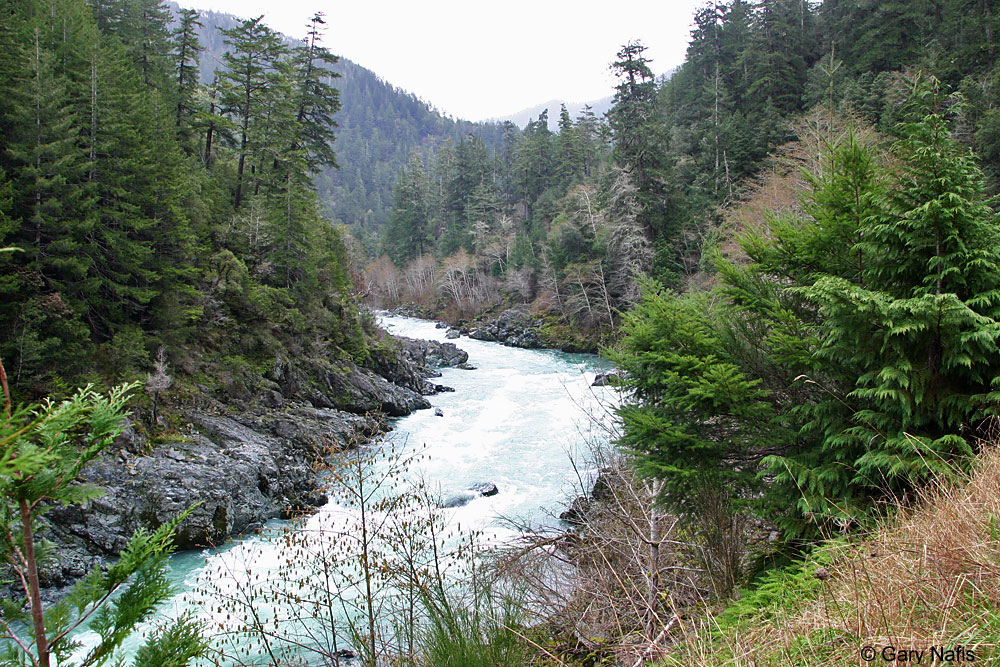
Smith River, Del Norte County |
Habitat, Del Norte County |
More pictures of this salamander and its natural habitat in Oregon are available on our Northwest Herps page.
|
| Short Video |
| |
 |
|
| |
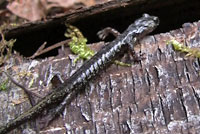
A small Clouded Salamander is discovered under some loose bark in the woods. |
|
|
|
|
| Description |
| |
| Size |
Adults measure 1 4/5 - 3 inches long (4.6 - 7.6 cm) from snout to vent, 3 - 5 inches (7.5 -13 cm) total length.
|
| Appearance |
A medium-sized plethodontid salamander which breathes through thin moist skin instead of lungs.
Slim, long-legged, adapted for climbing with long squared-off toes and rounded prehensile tail.
Usually 16 costal grooves and two nasolabial grooves.
Morphologically, very similar to Aneides vagrans. |
| Color and Pattern |
| Dark brown, to pale gray ground color, clouded with greenish gray, pale gold, or reddish blotches scattered with brassy flecks. |
| Male / Female Differences |
| Males have broader, more triangular heads than females. |
| Young |
Young have a copper or brassy dorsal stripe.
|
| Life History and Behavior |
A member of family Plethodontidae, the Plethodontid or Lungless Salamanders.
Plethodontid salamanders do not breathe through lungs. They conduct respiration through their skin and the tissues lining their mouth. This requires them to live in damp environments on land and to move about on the ground only during times of high humidity. (Plethodontid salamanders native to California do not inhabit streams or bodies of water but they are capable of surviving for a short time if they fall into water.)
Plethodontid salamanders are also distinguished by their nasolabial grooves, which are vertical slits between the nostrils and upper lip that are lined with glands associated with chemoreception.
All Plethodontid Salamanders native to California lay eggs in moist places on land.
The young develop in the egg and hatch directly into a tiny terrestrial salamander with the same body form as an adult.
(They do not hatch in the water and begin their lives as tiny swimming larvae breathing through gills like some other types of salamanders.) |
| Activity |
Nocturnal.
One of the most arboreal salamanders in California, found up to 40 m. above ground.
|
| Territoriality |
| Males appear to be aggressive and territorial, fighting with other males, and using chemical signals from fecal pellets to mark their territorial boundaries. |
| Defense |
| Defense tactics include crawling away quickly, remaining motionless, raising up on the legs and waving the tail, and making fast jerky motions, then remaining still. |
| Diet and Feeding |
A generalist feeder, consuming a variety of small invertebrates, including sow bugs, ants, termites, mites spiders, centipedes, and millipedes.
Juveniles eat small prey items at first, with the size of prey increasing as the juveniles grow larger.
Often forages from beneath bark or logs, sitting still and waiting for prey to come close. |
| Reproduction |
Reproduction is terrestrial.
Males mature during their second year, females first reproduce during their third year.
Breeding males have a well-developed mental gland. |
| Eggs |
In late June and July, females lay a clutch of 9 - 17 eggs in moist places on land, including decomposing logs, and possibly in the forest canopy (where brood sites of A. vagrans have been found.)
Adults may brood the eggs - clutches have been found with a female attending them, with a male and female attending them, and with no adults in attendance. |
| Young |
Young develop completely in the egg and hatch fully formed in late August or September. Juveniles prefer bark litter to rock and leaf litter.
|
| Habitat |
Occurs in wet coastal forests of Douglas fir, cedar, alder, and redwood, often at the borders of clearings. Prefers wetter, less dense stands of forest to dry dense stands. Shelters under bark of standing or fallen dead trees, in rotten logs, under loose bark on the ground, under rocks, in crevices in cliffs, and in road cuts and talus. Prefers decaying Douglas fir logs over other types of wood. Often abundant in recently burned or logged areas having numerous stumps and large amounts of woody debris, and in areas where rock faces or talus provide deep cracks. Tends to shelter under rocks or on rocky slopes more than A. vagrans. It is possible that A. ferreus occupy forest canopy habitat similar to A. vagrans.
In northwestern California, it appears that A. ferreus is associated with decaying logs and rocky areas, while A. vagrans almost exclusively prefers decaying logs. Where this species occurs with A. flavipuncatus, it is found in cooler wetter regions than A. flavipunctatus.
|
| Geographical Range |
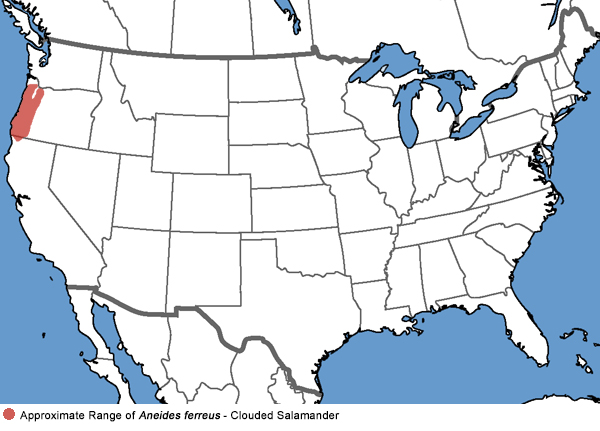
In California, Clouded Salamanders occur only in Del Norte County and northwest Siskiyou County north of
"near the junctions of Hurdygurdy Creek and Goose Creek with the South Fork of the Smith River near the coast, and north of the junction of the Salmon and Klamath rivers further inland." (Staub and Wake, Lannoo, 2005.)
The species ranges north of California along the Oregon coast and the Cascade Mountains to the Columbia River between Washington and Oregon.. |
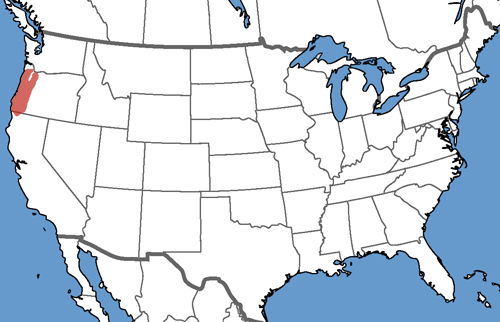 |
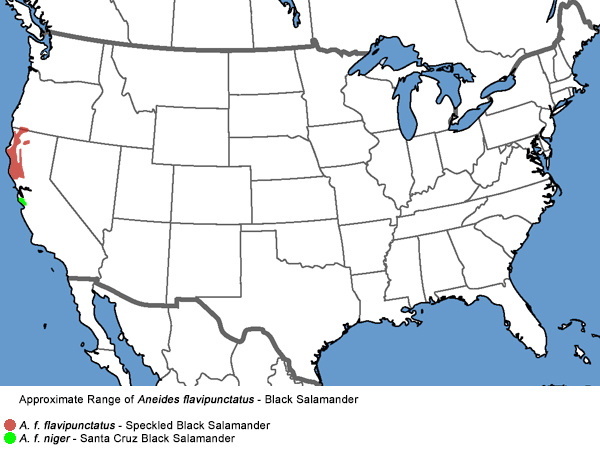
Red: Approximate range of Aneides ferreus - Clouded Salamander
Map of all Aneides except the Black Salamanders
Map of the Black Salamanders
|
| Elevational Range |
From near sea level to 5,400 ft. (1,700 m.)
|
| Notes on Taxonomy |
| In a 1987 paper Sessions and Kezer were the first to provide evidence that Aneides ferreus was composed of two chromosomally distinct species, later described as A. ferreus and A. vagrans.
(Sessions and Kezer (1987) Cytogenetic evolution in the plethodontid salamander genus Aneides. Chromosoma 95:17-30)
Based on biochemical analysis, Aneides ferreus was split into two species - A. vagrans and A. ferreus, which are similar in appearance and behavior.
(Wake, David and Jackman, Todd - Description of a new species of plethodontid salamander from California
Canadian Journal of Zoology Vol. 76, 1998)
Old sources show the range of A. ferreus to continue all the way south to northwest Sonoma County, but populations in California south of extreme northwest Del Norte County that were previously labelled as A. ferreus are now known to be a separate species, Aneides vagrans - Wandering Salamander.
Alternate and Previous Names
Aneides ferreus - Clouded Salamander (Stebbins 1954, 1966, 1985, 2003, 2012)
Aneides ferreus - Clouded Salamander (Rusty Salamander) (Bishop 1943(
Aneides ferreus - Rusty Salamander (Storer 1925)
Aneides ferreus - Rusty Salamander (Grinnell and Camp 1917)
Autodax ferreus (Van Denburgh 1916)
Anaides ferreus (Cope 1869)
|
| Conservation Issues (Conservation Status) |
| Listed as protected in Oregon due to its occurance in highest densites in old growth forests. Populations are assumed to have been lost due to forestry management practices that don't allow the formation of older trees which creates drier forests. |
|
| Taxonomy |
| Family |
Plethodontidae |
Lungless Salamanders |
Gray, 1850 |
| Genus |
Aneides |
Climbing Salamanders |
Baird, 1851 |
Species
|
ferreus |
Clouded Salamander |
Cope, 1869 |
|
Original Description |
Cope, 1869 - Proc. Acad. Nat. Sci. Philadelphia, Vol. 21, p. 109
from Original Description Citations for the Reptiles and Amphibians of North America © Ellin Beltz
|
|
Meaning of the Scientific Name |
Aneides - Greek = lacking form or shape
ferreus - Latin = iron colored; referring to dorsal mottling, clouded color phase.
from Scientific and Common Names of the Reptiles and Amphibians of North America - Explained © Ellin Beltz
|
|
Related or Similar California Salamanders |
Aneides flavipunctatus - Speckled Black Salamander
Aneides iecanus - Shasta Black Salamander
Aneides klamathensis - Klamath Black Salamander
Aneides lugubris - Arboreal Salamander
Aneides niger - Santa Cruz Black Salamander
Aneides vagrans - Wandering Salamander
|
|
More Information and References |
California Department of Fish and Wildlife
AmphibiaWeb
Hansen, Robert W. and Shedd, Jackson D. California Amphibians and Reptiles. (Princeton Field Guides.) Princeton University Press, 2025.
Stebbins, Robert C., and McGinnis, Samuel M. Field Guide to Amphibians and Reptiles of California: Revised Edition (California Natural History Guides) University of California Press, 2012.
Stebbins, Robert C. California Amphibians and Reptiles. The University of California Press, 1972.
Flaxington, William C. Amphibians and Reptiles of California: Field Observations, Distribution, and Natural History. Fieldnotes Press, Anaheim, California, 2021.
Nicholson, K. E. (ed.). 2025. Scientific and Standard English Names of Amphibians and Reptiles of North America North of Mexico, with Comments Regarding Confidence in Our Understanding. Ninth Edition. Society for the Study of Amphibians and Reptiles. [SSAR] 87pp.
Samuel M. McGinnis and Robert C. Stebbins. Peterson Field Guide to Western Reptiles & Amphibians. 4th Edition. Houghton Mifflin Harcourt Publishing Company, 2018.
Stebbins, Robert C. A Field Guide to Western Reptiles and Amphibians. 3rd Edition. Houghton Mifflin Company, 2003.
Behler, John L., and F. Wayne King. The Audubon Society Field Guide to North American Reptiles and Amphibians. Alfred A. Knopf, 1992.
Robert Powell, Roger Conant, and Joseph T. Collins. Peterson Field Guide to Reptiles and Amphibians of Eastern and Central North America. Fourth Edition. Houghton Mifflin Harcourt, 2016.
Powell, Robert., Joseph T. Collins, and Errol D. Hooper Jr. A Key to Amphibians and Reptiles of the Continental United States and Canada. The University Press of Kansas, 1998.
American Museum of Natural History - Amphibian Species of the World 6.2
Bartlett, R. D. & Patricia P. Bartlett. Guide and Reference to the Amphibians of Western North America (North of Mexico) and Hawaii. University Press of Florida, 2009.
Bishop, Sherman C. Handbook of Salamanders. Cornell University Press, 1943.
Lannoo, Michael (Editor). Amphibian Declines: The Conservation Status of United States Species. University of California Press, June 2005.
Petranka, James W. Salamanders of the United States and Canada. Smithsonian Institution, 1998.
Corkran, Charlotte & Chris Thoms. Amphibians of Oregon, Washington, and British Columbia. Lone Pine Publishing, 1996.
Jones, Lawrence L. C. , William P. Leonard, Deanna H. Olson, editors. Amphibians of the Pacific Northwest. Seattle Audubon Society, 2005.
Leonard et. al. Amphibians of Washington and Oregon. Seattle Audubon Society, 1993.
Nussbaum, R. A., E. D. Brodie Jr., and R. M. Storm. Amphibians and Reptiles of the Pacific Northwest. Moscow, Idaho: University Press of Idaho, 1983.
Joseph Grinnell and Charles Lewis Camp. A Distributional List of the Amphibians and Reptiles of California. University of California Publications in Zoology Vol. 17, No. 10, pp. 127-208. July 11, 1917.
|
|
|
The following conservation status listings for this animal are taken from the July 2025 State of California Special Animals List and the July 2025 Federally Listed Endangered and Threatened Animals of California list (unless indicated otherwise below.) Both lists are produced by multiple agencies every year, and sometimes more than once per year, so the conservation status listing information found below might not be from the most recent lists, but they don't change a great deal from year to year.. To make sure you are seeing the most recent listings, go to this California Department of Fish and Wildlife web page where you can search for and download both lists:
https://www.wildlife.ca.gov/Data/CNDDB/Plants-and-Animals.
A detailed explanation of the meaning of the status listing symbols can be found at the beginning of the two lists. For quick reference, I have included them on my Special Status Information page.
If no status is listed here, the animal is not included on either list. This most likely indicates that there are no serious conservation concerns for the animal. To find out more about an animal's status you can also go to the NatureServe and IUCN websites to check their rankings.
Check the current California Department of Fish and Wildlife sport fishing regulations to find out if this animal can be legally pursued and handled or collected with possession of a current fishing license. You can also look at the summary of the sport fishing regulations as they apply only to reptiles and amphibians that has been made for this website.
This salamander is not included on the Special Animals List, meaning there are no significant conservation concerns for it in California according to the California Department of Fish and Game.
|
| Organization |
Status Listing |
Notes |
| NatureServe Global Ranking |
|
|
| NatureServe State Ranking |
|
|
| U.S. Endangered Species Act (ESA) |
None |
|
| California Endangered Species Act (CESA) |
None |
|
| California Department of Fish and Wildlife |
None |
|
| Bureau of Land Management |
None |
|
| USDA Forest Service |
None |
|
| IUCN |
|
|
|
|
|