|
 |
| Adult female, Riverside County |
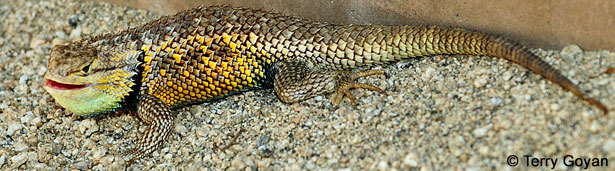 |
| Adult male, Riverside County © Terry Goyan |
 |
 |
 |
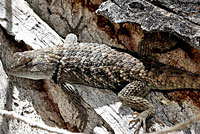
| Adult male, Riverside County |
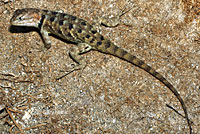
Adult female, Riverside County |
Adult female, Riverside County |
 |
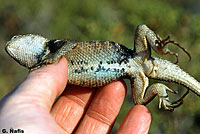 |
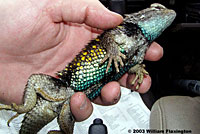 |
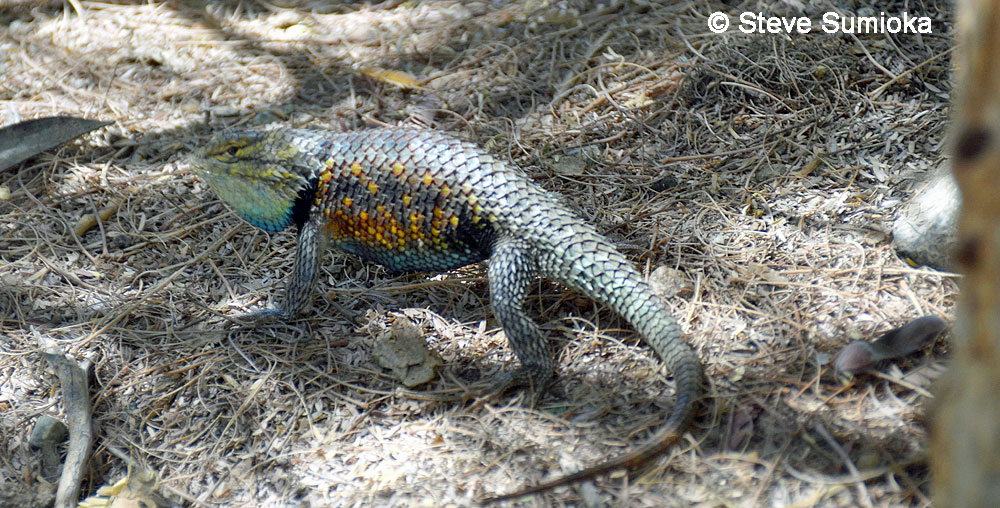
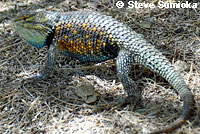
Displaying adult male, Riverside County
© Steve Sumioka |
Adult male, San Diego County |
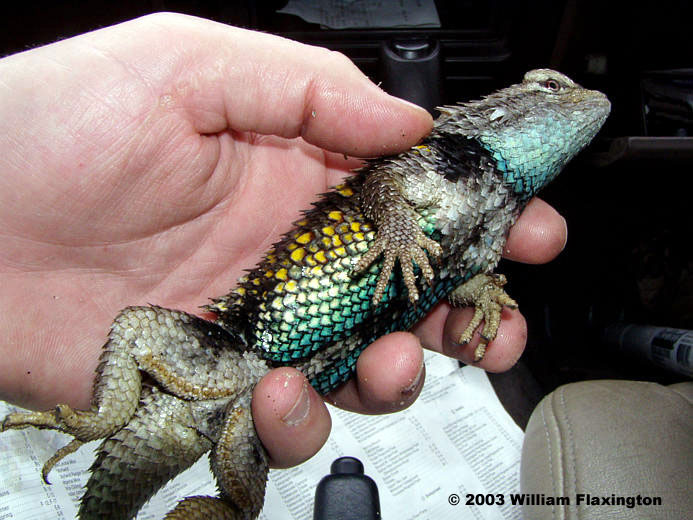
Adult male, Riverside County
© 2003 William Flaxington |
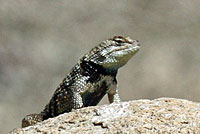 |
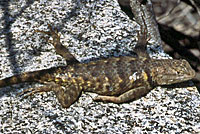 |
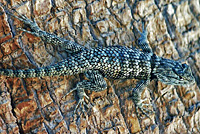 |
| Adult male, San Diego County |
Adult, Riverside County |
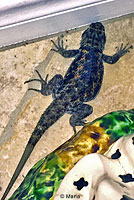
Adult female, Riverside County |
 |
 |
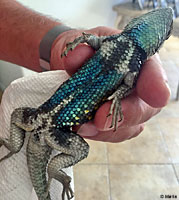 |
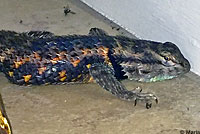
| Adult male, Rancho Mirage, Riverside County © Marla |
 |
 |
 |
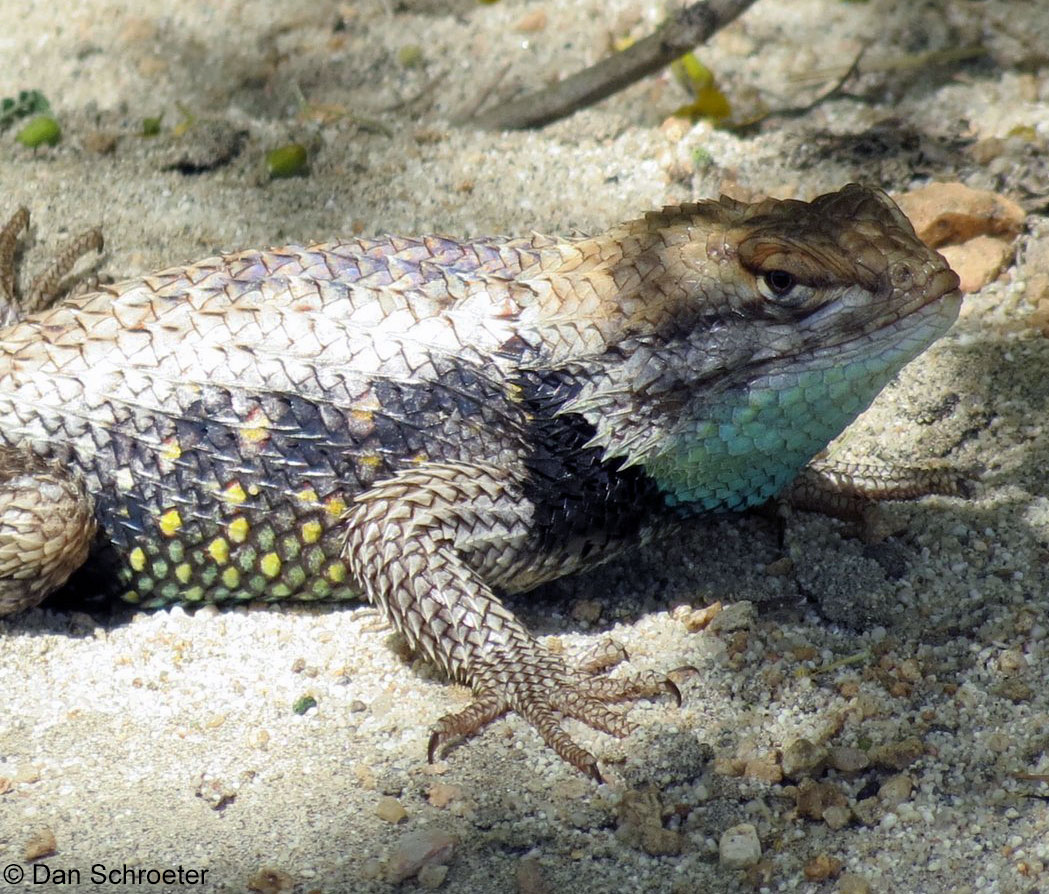
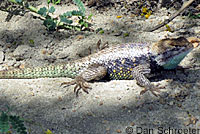
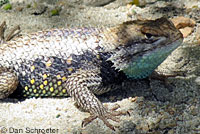
| Adult male, Palm Desert, Riverside County © Dan Schroeter |
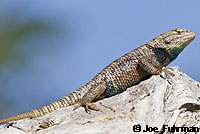
Adult male, Desert Center, Riverside County © Joe Fuhrman
(The exact area where Sceloporus uniformis and Sceloporus magister come into contact is not certain. Desert Center is somewhere in that area. I have put this lizard with S. magister based on its appearance although I am not certain which species it is.) |
 |
 |
 |
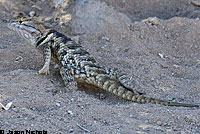
Adult, Imperial County
© Jason Nichols |
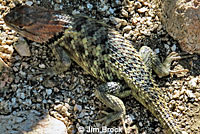
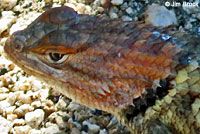
This apparently gravid Riverside County female shows breeding season red coloring on her head. © Jim Brock |
 |
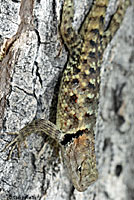 |
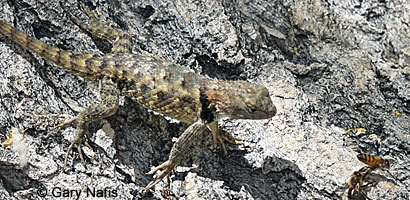
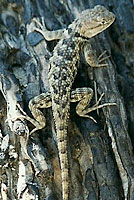
Adult female, Riverside County
I watched this lizard wait just above a beehive in the trunk of a cottonwood tree (the dark spot on the right). When she saw her chance, she ran down, stopped for a moment, then grabbed a bee and ate it. In the picture on the left, you can see her just about to grab a bee. |
 |
 |
 |
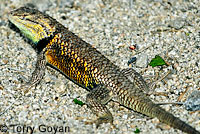
Adult male, Riverside County
© Terry Goyan |
Juvenile, Riverside County |
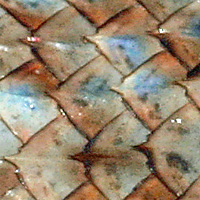
The Desert Spiny Lizard has overlapping scales on the back with sharp spines.
|
| |
|
|
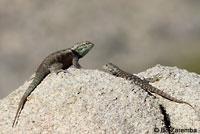
Large Sceloporus from the contact area between S. magister and S. uniformis
(I'm not sure which species these are.) |
 |
 |
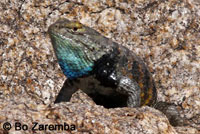 |
| Adults, Morongo Valley, San Bernardino County © Bo Zaremba |
Adults, Morongo Valley, San Bernardino County © Bo Zaremba |
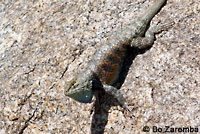
Adult, Northern Joshua Tree National Park, San Bernardino County
© Bo Zaremba |
 |
 |
|
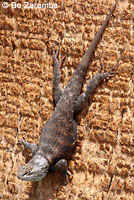
Adult, Northern Joshua Tree National Park, San Bernardino County
© Bo Zaremba |
Adult, Northern Joshua Tree National Park, San Bernardino County
© Bo Zaremba |
|
| |
|
|
| Sonoran Desert Spiny Lizards From Outside California |
 |
 |
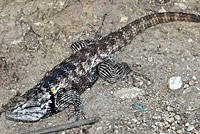 |
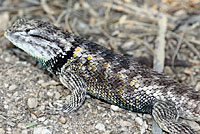
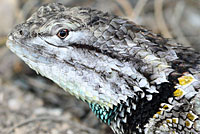
| Adult male, Pima County, Arizona |
 |
 |
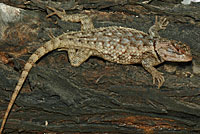 |
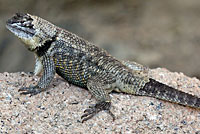
Adult male, in shed,
Pima County, Arizona. |
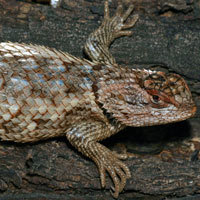
Adult, Pinal County, Arizona
|
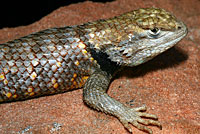 |
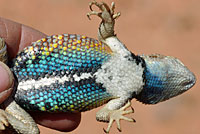 |
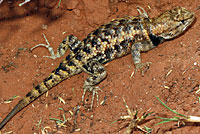 |
Adult male, Coconino County, Arizona
|
Adult male, Garfield County, Utah |
| |
|
|
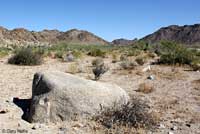
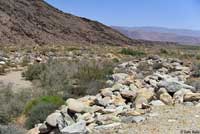
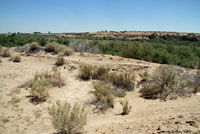
| Habitat |
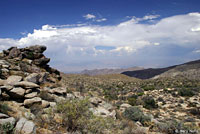 |
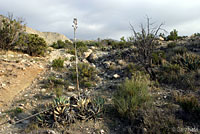 |
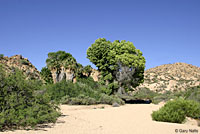 |
| Habitat, Riverside County |
Habitat, San Diego County
|
Habitat, Riverside County |
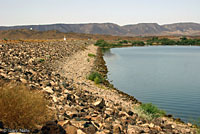 |
 |
 |
| Habitat, Imperial County |
Habitat, Riverside County |
Habitat, San Diego County |
 |
 |
 |
| Habitat, San Diego County |
Habitat, Imperial County |
Habitat, San Diego County |
| |
|
|
Short Video
|
| |
 |
|
| |
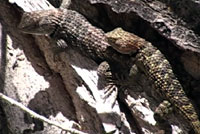
A male and a gravid female Sonoran Desert Spiny lizard meet way up a tree and greet each other with push-up displays, nuzzling, and other interactions during the May breeding season. |
|
|
|
|
| Description |
| |
| Size |
Adults grow up to 5.5 inches from snout to vent (14 cm..)
The tail is slightly longer than the snout-to-vent length.
|
| Appearance |
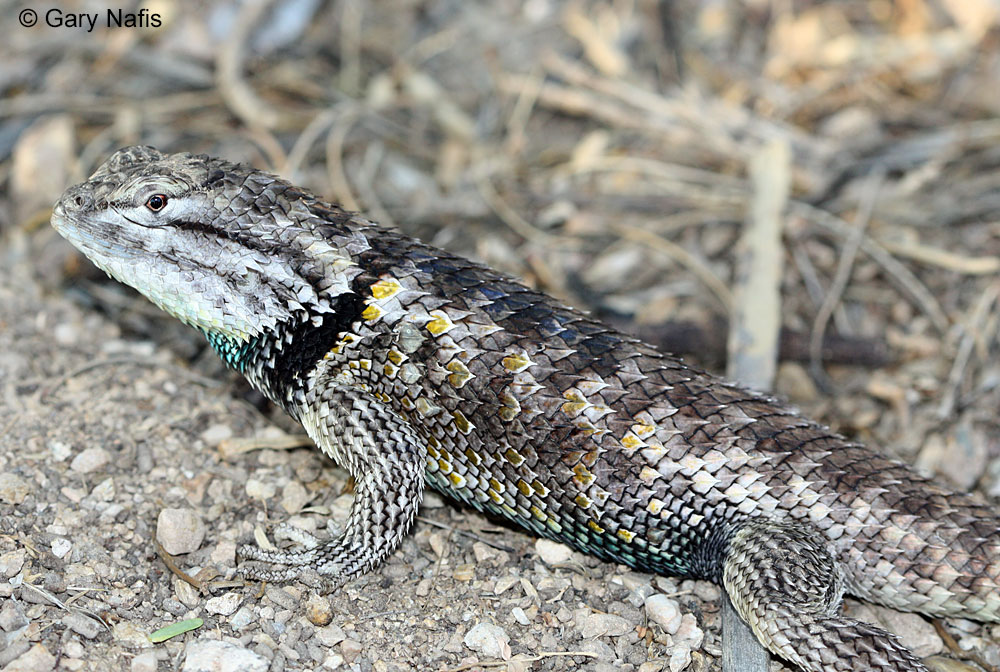
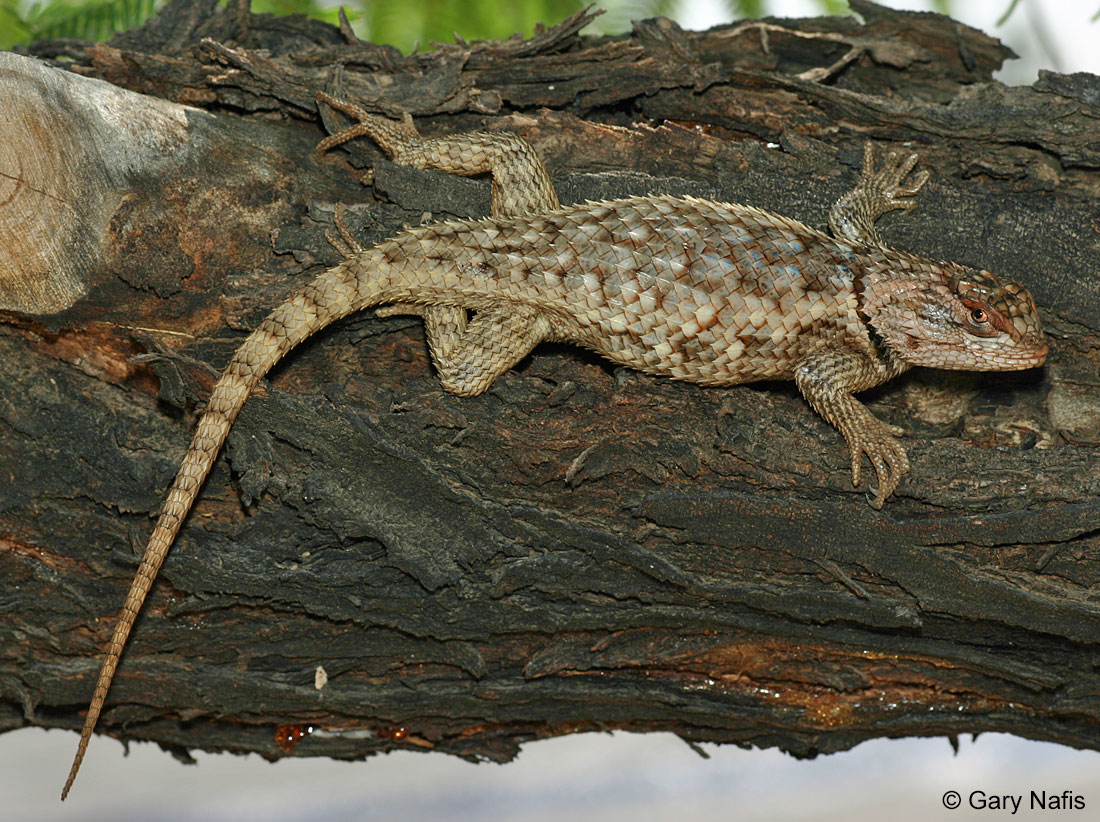
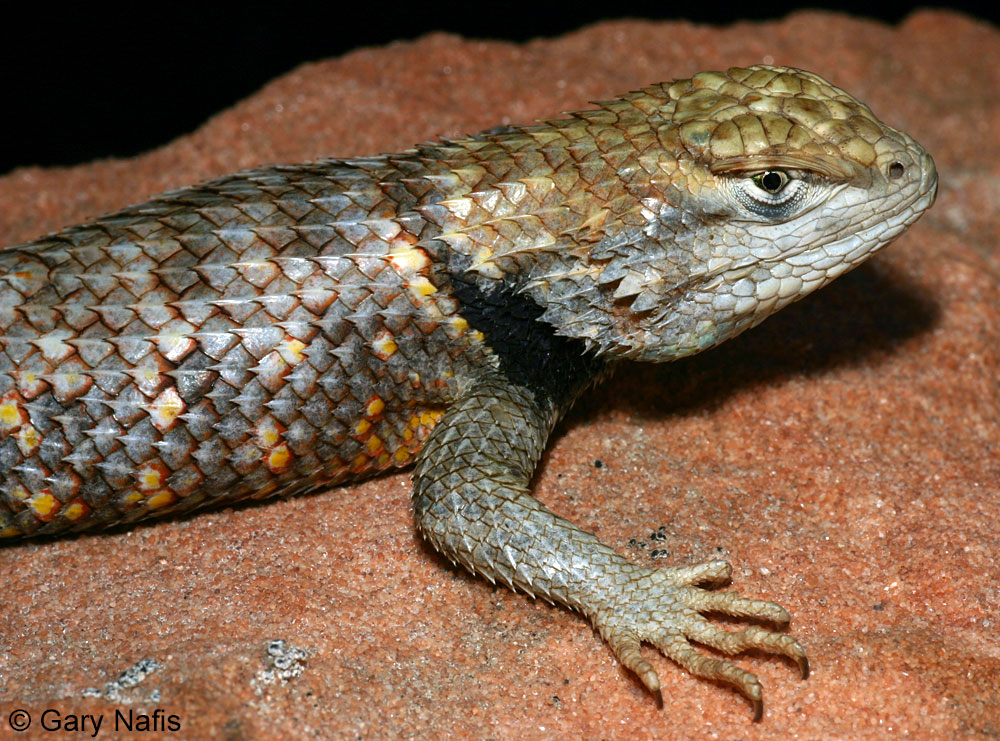
A robust, stocky lizard with large pointed keeled scales.
|
| Color and Pattern |
Color is variable - light tan, yellowish, or brownish above with indistinct dark spots or cross-bands.
There is a black wedge on the sides of the neck.
Dark coloring may fade as the animal grows older.
Thin dark lines extend from the rear of the eye and mouth towards the posterior. |
| Male / Female Differences |
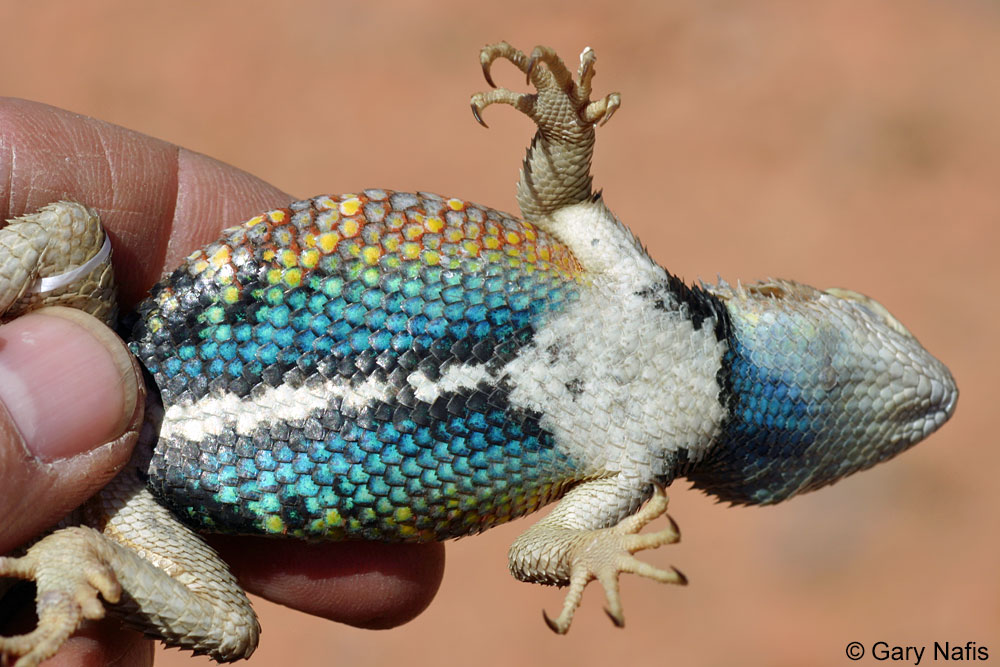
Males have enlarged post-anal scales and femoral pores, a swollen tail base, and a bluish patch on the throat and on the sides of the belly with black on the edges.
Males often have a dark purple to blackish band with light borders down the center of the back.
Females are pale in color underneath with faint or no blue markings.
The head of a female becomes orange or reddish in the breeding season. |
| Young |
Juveniles lack the dark wedge markings on the neck and have dark and light spots on the back.
|
| Similar Species |
Sceloporus magister magister and Sceloporus magister uniformis were once considered different species, and some herpetologists still consider this to be true. The appearance of both forms is so similar that it is difficult to tell them apart, and the area where their ranges overlap is uncertain.
According to Jones, et al. in Lizards of the American Southwest, 2009
"Desert Spiny Lizards [S. magister] are somewhat larger, and adult males will have a black, deep purple, or red middorsal longitudinal stripe bordered by light stripes…."
S. uniformis "…tends to be yellow to tan above, without markings or with less distinctive markings than the Desert Spiny Lizard."
|
| Life History and Behavior |
Activity |
Diurnal.
Active generally from March or April through October, taking shelter during periods of excessive heat and cold.
Sometimes seen basking in the winter.
A good climber, often seen on rocks, trees and walls, as well as on the ground.
Shelters under rocks, logs and other surface objects, and in cracks, burrows, and wood rat nests.
Very wary.
|
| Territoriality |
Males stand tall, extend the throat to expose the blue coloring, and do a push-up display to demonstrate their presence and command of the territory, pushing the body up and down repeatedly.
Short movie of push-up display. |
| Defense |
Escapes by running away quickly into brush, rocks, or burrows.
The tail detaches easily, but it will regenerate.
The tail wriggles after
becoming detached which can distract a predator from the body of the lizard allowing it time to escape.
More information about tail loss and regeneration.
|
| Diet and Feeding |
Eats a variety of small invertebrates and their larvae including ants, beetles, grasshoppers, spiders, centipedes, and caterpillars, and occasionally small lizards, nestling birds, leaves, flowers and berries.
A sit-and-wait predator, though sometimes they will actively forage. |
| Reproduction |
Adults are sexually mature at 2 - 3 years.
Breeds in spring and early summer, generally May and June sometimes until August.
Females lay a clutch of 3 - 19 eggs between May and August.
Young are typically seen in August and September, sometimes October.
Females may lay more than one clutch during favorable years.
|
| Habitat |
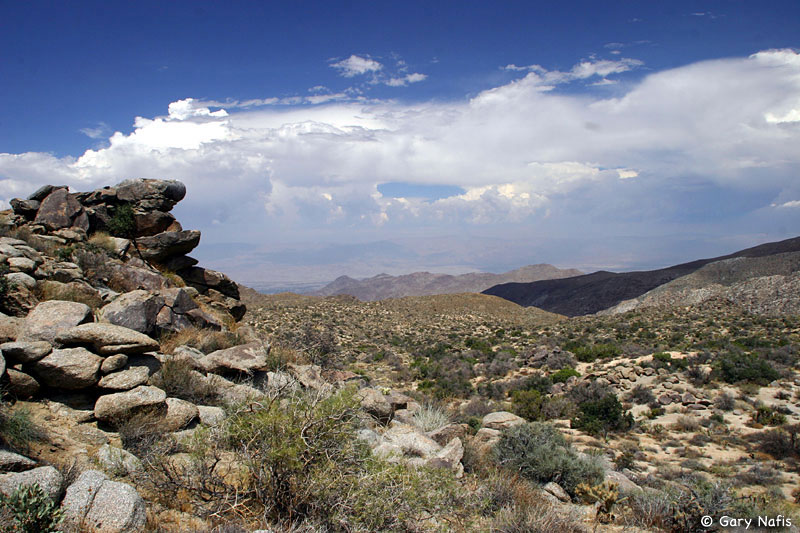
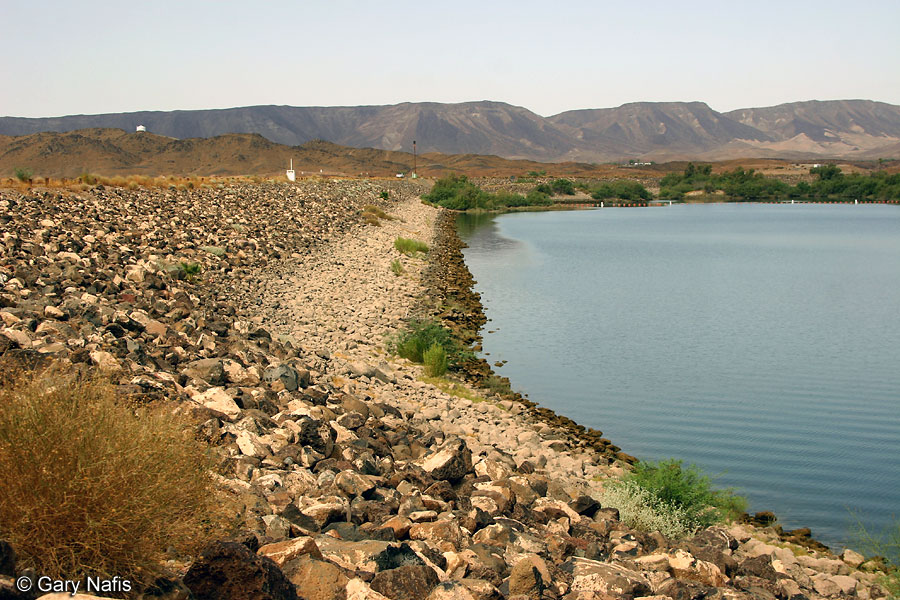
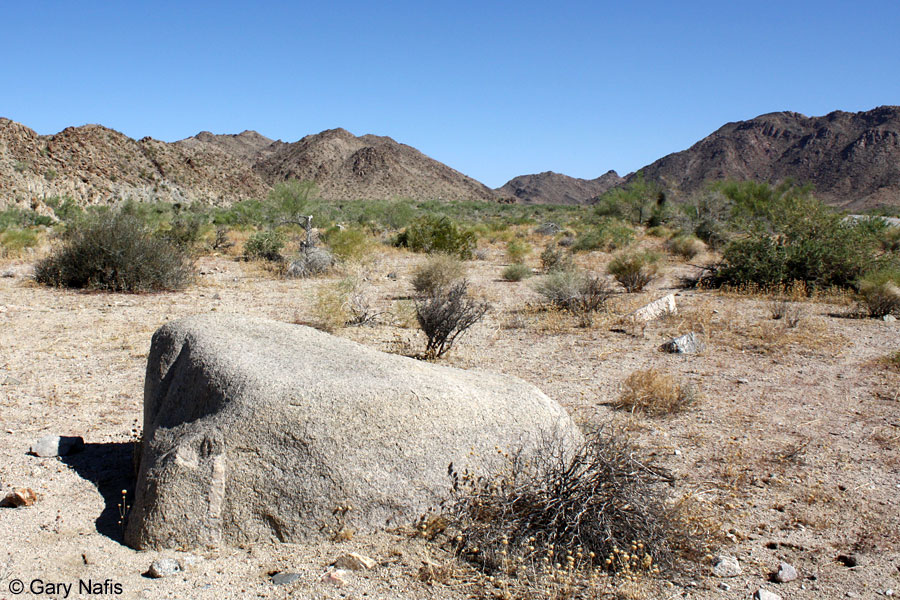
Inhabits desert flats, semiarid plains, low mountain slopes, palm oases, riparian woods, including areas grown with Joshua trees, creosote bush, mesquite, yucca, and grasses.
|
| Geographical Range |
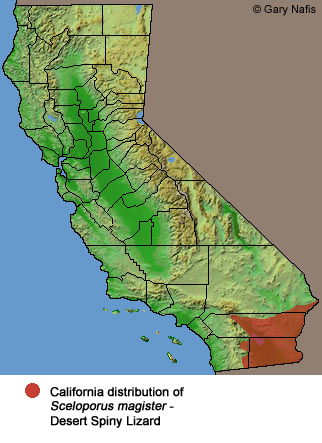
In California, found primarily in the Sonoran Desert region from Riverside County south, from the desert slopes of the peninsular mountains east to the Colorado River, south to the Baja California border. Ranges farther east over west central and southern Arizona into southwestern New Mexico and south along the west coast of Mexico. On the Colorado Plateau in northern Arizona and southeast Utah and parts of Colorado and New Mexico, another subspecies, S. m. cephaloflavus - Orange-headed Spiny Lizard, takes over.
A population on the coastal side of the southern California mountains at the lower Sweetwater River, may be introduced. (Lemm, 2006)
Determining the northernmost limit of the range of this species is not possible using the locality data of the specimens used in the Schulte, Macy, and Papenfuss 20061 study, or the 2007 Leache, Mulcahy study 2 because there are not enough samples in the entire area across San Bernardino County where S. uniformis meets S. magister. My range map may not be accurate in that area. Lizards in Cabazon group with S. magister, and a specimen from Riverside County in Joshua Tree National Park groups with S. magister, so I show the two species meeting near the junction of Riverside and San Bernardino Counties in that area based on the general description that S. uniformis is associated with the Mojave Desert and S. magister the Sonoran Desert. There maybe some overlap between the species, also.
|
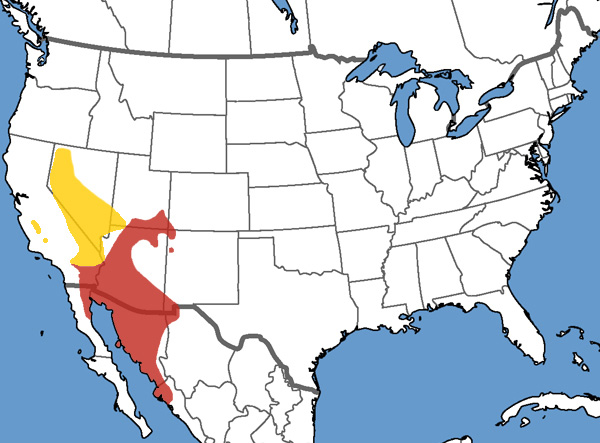 |
Approximate distribution of Sceloporus magister - Desert Spiny Lizard
Red: Sceloporus magister magister - Sonoran Desert Spiny Lizard
Yellow: Sceloporus magister uniformis - Northern Desert Spiny Lizard
|
| Notes on Taxonomy |
Sceloporus magister taxonomy has been very confusing in recent years. As things stand, Sceloporus magister in California represents either one species, possibly with two subspecies, or two full species, the distributions of which do not follow the distributions of the long-accepted subspecies.
In 1996, Grismer & McGuire (1996 Herpetologica 52(3): 416-427) recommended that no subspecies of S. magister should be recognized.
------------------------------------------------------------------------------------------------------------------------------------------------------------------
In 2006, Schulte, Macey, and Papenfuss split S. magister into three species - S. magister, S. uniformis, and S. bimaculosus, with two subspecies of S. magister - S. m. magister, and S. m. cephaloflavus. However, their sample size was very small which makes it difficult to determine the ranges of these new species in California.
--------------------------------------------------------------------------------------------------------------------------------------------------------------------
In 2008, the S.S.A.R. adopted the 3 species taxonomy of Schulte et al in the sixth edition of their Scientific and Standard English Names of Amphibians and Reptiles of North America north of Mexico list.
The taxonomy used on this site now follows this re-organization:
S. m. uniformis - Yellow-backed Spiny Lizard and S. m. transversus - Barred Spiny Lizard, has been re-arranged into two species: S. magister - Desert Spiny Lizard, and S. uniformis - Yellow-backed Spiny Lizard.
S. uniformis now contains the entire former S. m. transversus subspecies and part of the S. m. uniformis subspecies - those lizards from the Mojave Desert north into Nevada and the extreme southwest corner of Utah and the extreme northwestern corner of Arizona and two small areas near the Colorado River. The remaining former S. m. uniformis from the Sonoran desert in California east into Arizona and south into Baja California are now S. magister - Desert Spiny Lizard. The subspecies S. m. bimaculosus - Twin-spotted Spiny Lizard has been elevated to full species - S. bimaculosus - Twin-spotted Spiny Lizard.
Subspecies of S. magister are no longer recognized because specimens from closer to the type locality of S. m. cephaloflavus have been found to be part of S. uniformis rather than S. magister.
------------------------------------------------------------------------------------------------------------------------------------------------------------------
In 2007, Leaché and Mulcahy concluded that "S. magister appears to represent a single geographically variable and widespread species."
In 2009, Collins & Taggart submitted the 2006 3 species proposal by Schulte, Macey, and Papenfuss to a lizard systematist group which disagreed, leaving them to continue to recognize one species - S. magister - Desert Spiny Lizard.
------------------------------------------------------------------------------------------------------------------------------------------------------------------
Hansen and Shedd (2025) follow Leaché & Mulcahy (2007) "...in considering the Yellow-Backed Spiny Lizard (S. uniformis) as falling within S. magister and in not recognizing traditional pattern-based subspecies for this group."
"Several subspecies of S. magister have been described based on pattern differences. Additionally, some experts favored elevation of one of these CA subspecies to full species (Yellow-backed Spiny Lizard, S. uniformis). However, phylogenetic studies do not support recognition of subspecies or species status for S. uniformis..."
------------------------------------------------------------------------------------------------------------------------------------------------------------------
The 2025 SSAR Names List reverts to the two subspecies arrangement of S. magister in California:
S. m. magister - Sonoran Desert Spiny Lizard
S. m. uniformis - Northern Desert Spiny Lizard
"Pavón-Vázquez et al. (2024, Systematic Biology 73: 323–342) inferred three lineages within the part of the Sceloporus magister complex that occurs north of Mexico: one in the Mojave Desert, Great Basin Desert, and Colorado Plateau, a second in the Sonoran Desert, and a third in the Chihuahuan Desert. Their results indicated both earlier divergence and less gene flow between the Chihuahuan Desert lineage and the other two lineages than between those two lineages. Although the authors treated all three lineages as a monotypic S. magister, their results would seem more accurately summarized by continuing (from the previous version of this list) to recognize the Chihuahuan Desert lineage as a separate species, S. bimaculosus, and the other two lineages (which were treated as separate species in the previous version of this list) as subspecies of S. magister. The standard English names of the subspecies have been changed to reflect the geographic distributions of the lineages."
(Nicholson, K. E. (ed.). 2025 SSAR Scientific and Standard English Names List)
------------------------------------------------------------------------------------------------------------------------------------------------------------------
It's now seen that Sceloporus magister - Desert Spiny Lizard and Sceloporus uniformis - Yellow-backed Spiny Lizard, are actually the same species, S. magister - Desert Spiny Lizard, as they were recognized before they were split in 2008. The 2025 SSAR names list returns to the one species view for S. magister with the former S. magister subspecies S. m. bimaculosus kept as the full species S. bimaculosus - Twin-spotted Spiny Lizard. The SSAR recognizes two subspecies of S. magister, Sceloporus magister magister - Sonoran Desert Spiny Lizard, and Sceloporus magister uniformis - Northern Desert Spiny Lizard. This is the taxonomy I have chosen to use here since it shows the diversity in the species that was once considered enough to view them as two species, and because the new common names make more sense.
------------------------------------------------------------------------------------------------------------------------------------------------------------------
Alternate and Previous Names (Synonyms)
Sceloporus magister - Desert Spiny Lizard (including S. uniformis) (Hansen and Shedd 2025)
Sceloporus magister - Desert Spiny Lizard (2008, 2012, & 2017 SSAR lists)
Sceloporus magister - Desert Spiny Lizard (Stebbins & McGinnis 2018)
Sceloporus magister - Desert Spiny Lizard (Stebbins & McGinnis 2012)
Sceloporus magister magister - Purple-backed Spiny Lizard
Sceloporus magister - Desert Spiny Lizard (Smith 1946)
Sceloporus magister transversus - Barred Spiny Lizard
Sceloporus magister - Desert Rough-scaled Lizard (Sceloporus clarkii; Sceloporus spinosus var. clarkii; Sceloporus orcutti, part. Scaly Lizard; Clark's Alligator Lizard; Fence Lizard, part; Clark's Lizard; Great Fence Lizard) (Grinnell and Camp 1917)
|
| Conservation Issues (Conservation Status) |
| None |
|
|
Taxonomy |
| Family |
Phrynosomatidae |
Zebra-tailed, Earless, Fringe-toed, Spiny, Tree, Side-blotched, and Horned Lizards |
Fitzinger, 1843 |
| Genus |
Sceloporus |
Spiny Lizards |
Wiegmann, 1828 |
Species
|
magister |
Desert Spiny Lizard |
Hallowell, 1854 |
Subpecies
|
magister magister |
Sonoran Desert Spiny Lizard |
Hallowell, 1854 |
|
Original Description |
Sceloporus magister - Hallowell, 1854 - Proc. Acad. Nat. Sci. Philadelphia, Vol. 7, p. 93 Z
Sceloporus magister magister - Hallowell, 1854
from Original Description Citations for the Reptiles and Amphibians of North America © Ellin Beltz
|
|
Meaning of the Scientific Name |
Sceloporus - Greek - skelos = leg + porus = pore or opening - refers to the femoral pores on hind legs
magister - Latin = teacher or master - probably refers to this lizard's large size
from Scientific and Common Names of the Reptiles and Amphibians of North America - Explained © Ellin Beltz
|
|
Related or Similar Neighboring California Lizards |
Sceloporus magister uniformis - Northern Desert Spiny Lizard
Sceloporus occidentalis longipes - Great Basin Fence Lizard
Sceloporus graciosus graciosus - Northern Sagebrush Lizard
|
|
More Information and References |
California Department of Fish and Wildlife
Hansen, Robert W. and Shedd, Jackson D. California Amphibians and Reptiles. (Princeton Field Guides.) Princeton University Press, 2025.
Stebbins, Robert C., and McGinnis, Samuel M. Field Guide to Amphibians and Reptiles of California: Revised Edition (California Natural History Guides) University of California Press, 2012.
Stebbins, Robert C. California Amphibians and Reptiles. The University of California Press, 1972.
Flaxington, William C. Amphibians and Reptiles of California: Field Observations, Distribution, and Natural History. Fieldnotes Press, Anaheim, California, 2021.
Nicholson, K. E. (ed.). 2025. Scientific and Standard English Names of Amphibians and Reptiles of North America North of Mexico, with Comments Regarding Confidence in Our Understanding. Ninth Edition. Society for the Study of Amphibians and Reptiles. [SSAR] 87pp.
Samuel M. McGinnis and Robert C. Stebbins. Peterson Field Guide to Western Reptiles & Amphibians. 4th Edition. Houghton Mifflin Harcourt Publishing Company, 2018.
Stebbins, Robert C. A Field Guide to Western Reptiles and Amphibians. 3rd Edition. Houghton Mifflin Company, 2003.
Behler, John L., and F. Wayne King. The Audubon Society Field Guide to North American Reptiles and Amphibians. Alfred A. Knopf, 1992.
Robert Powell, Roger Conant, and Joseph T. Collins. Peterson Field Guide to Reptiles and Amphibians of Eastern and Central North America. Fourth Edition. Houghton Mifflin Harcourt, 2016.
Powell, Robert., Joseph T. Collins, and Errol D. Hooper Jr. A Key to Amphibians and Reptiles of the Continental United States and Canada. The University Press of Kansas, 1998.
Bartlett, R. D. & Patricia P. Bartlett. Guide and Reference to the Turtles and Lizards of Western North America (North of Mexico) and Hawaii. University Press of Florida, 2009.
Jones, Lawrence, Rob Lovich, editors. Lizards of the American Southwest: A Photographic Field Guide. Rio Nuevo Publishers, 2009.
Smith, Hobart M. Handbook of Lizards, Lizards of the United States and of Canada. Cornell University Press, 1946.
Taylor, Emily. California Lizards and How to Find Them. Heyday, Berkeley, California. 2025.
Lemm, Jeffrey. Field Guide to Amphibians and Reptiles of the San Diego Region (California Natural History Guides). University of California Press, 2006.
Brown et. al. Reptiles of Washington and Oregon. Seattle Audubon Society,1995.
Nussbaum, R. A., E. D. Brodie Jr., and R. M. Storm. Amphibians and Reptiles of the Pacific Northwest. Moscow,
Idaho: University Press of Idaho, 1983.
St. John, Alan D. Reptiles of the Northwest: Alaska to California; Rockies to the Coast. 2nd Edition - Revised & Updated. Lone Pine Publishing, 2021.
James A. Schulte II, J. Robert Macey & Theodore J. Papenfuss. A genetic perspective on the geographic association of taxa among arid North American lizards of the Sceloporus magister complex (Squamata: Iguanidae: Phrynosomatinae) 2006. Molecular Phylogenetics and Evolution 39: 873-880
Adam D. Leaché and Daniel G. Mulcahy. Phylogeny, divergence times and species limits of spiny lizards (Sceloporus magister species group) in western North American deserts and Baja California Molecular Ecology (2007) doi: 10.1111/j.1365-294X.2007.03556.
Joseph Grinnell and Charles Lewis Camp. A Distributional List of the Amphibians and Reptiles of California. University of California Publications in Zoology Vol. 17, No. 10, pp. 127-208. July 11, 1917.
|
|
|
The following conservation status listings for this animal are taken from the July 2025 State of California Special Animals List and the July 2025 Federally Listed Endangered and Threatened Animals of California list (unless indicated otherwise below.) Both lists are produced by multiple agencies every year, and sometimes more than once per year, so the conservation status listing information found below might not be from the most recent lists, but they don't change a great deal from year to year.. To make sure you are seeing the most recent listings, go to this California Department of Fish and Wildlife web page where you can search for and download both lists:
https://www.wildlife.ca.gov/Data/CNDDB/Plants-and-Animals.
A detailed explanation of the meaning of the status listing symbols can be found at the beginning of the two lists. For quick reference, I have included them on my Special Status Information page.
If no status is listed here, the animal is not included on either list. This most likely indicates that there are no serious conservation concerns for the animal. To find out more about an animal's status you can also go to the NatureServe and IUCN websites to check their rankings.
Check the current California Department of Fish and Wildlife sport fishing regulations to find out if this animal can be legally pursued and handled or collected with possession of a current fishing license. You can also look at the summary of the sport fishing regulations as they apply only to reptiles and amphibians that has been made for this website.
This animal is not included on the Special Animals List, which indicates that there are no significant conservation concerns for it in California.
|
| Organization |
Status Listing |
Notes |
| NatureServe Global Ranking |
|
|
| NatureServe State Ranking |
|
|
| U.S. Endangered Species Act (ESA) |
None |
|
| California Endangered Species Act (CESA) |
None |
|
| California Department of Fish and Wildlife |
None |
|
| Bureau of Land Management |
None |
|
| USDA Forest Service |
None |
|
| IUCN |
|
|
|
|