|
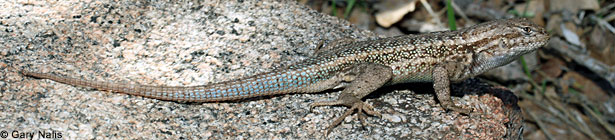 |
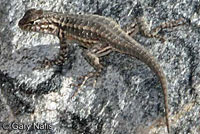
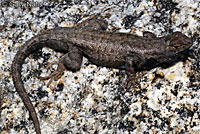
| Adult male, San Bernardino County |
 |
 |
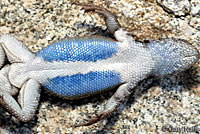 |
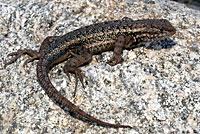
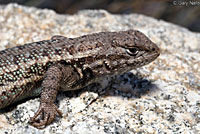
| Adult male, San Bernardino County |
 |
 |
 |
| Adult female, 9,600 ft. San Bernardino Mountains, San Bernardino County |
Adult Male San Diego County |
 |
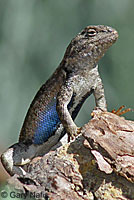 |
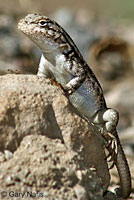 |
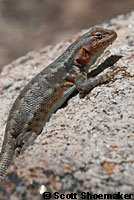
Gravid adult female, Riverside County.
© Scott Shoemaker |
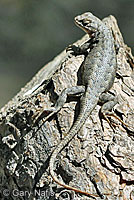
Adult, 6,900 ft. San Bernardino Mountains, San Bernardino County |
Adult, 6,900 ft. San Bernardino Mountains, San Bernardino County |
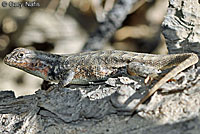 |
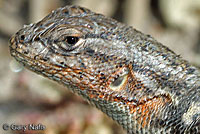 |
 |
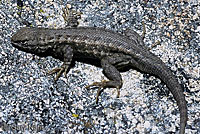
| Adult female, 6,800 ft. San Bernardino Mountains, San Bernardino County |
Adult, 6,800 ft. San Bernardino Mountains, San Bernardino County |
 |
 |
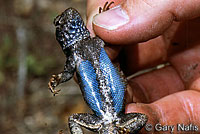 |
Adult male, 6,000 ft.,
San Bernardino County |
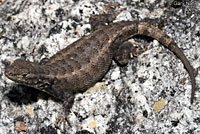
Adult male, 6,000 ft., San Bernardino County |
 |
 |
 |
| |
Adult female San Diego County |
|
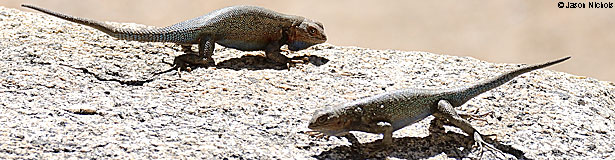 |
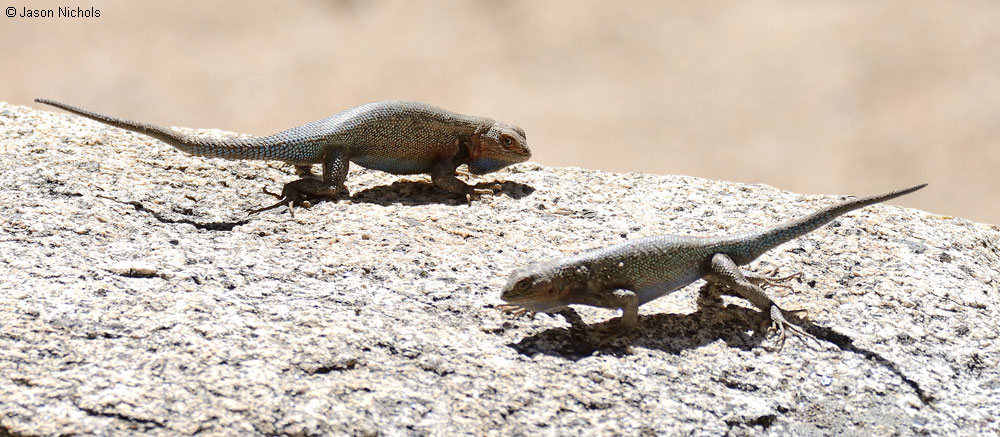
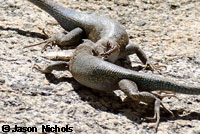
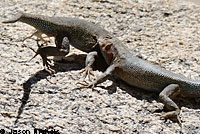
| Two males in combat on top of Mt. San Jacinto in Riverside County © Jason Nichols |
 |
 |
|
Two males in combat on top of Mt. San Jacinto in Riverside County
© Jason Nichols |
|
 |
 |
|
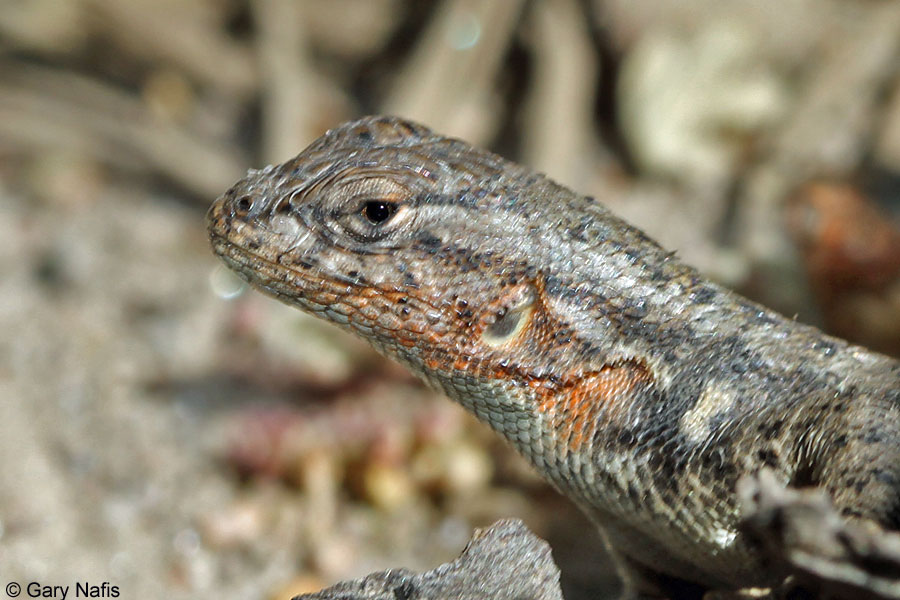
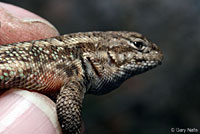
Close-up showing the orange coloring
behind front legs and the black mark in front of the front legs that is usually found on Sagebrush Lizards. |
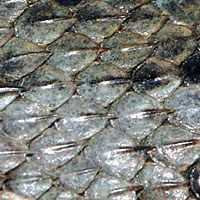
Sagebrush Lizards have overlapping scales with sharp spines on the back. |
|
| |
|
|
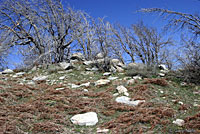
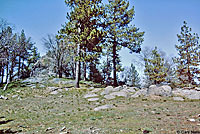
| Habitat |
 |
 |
 |
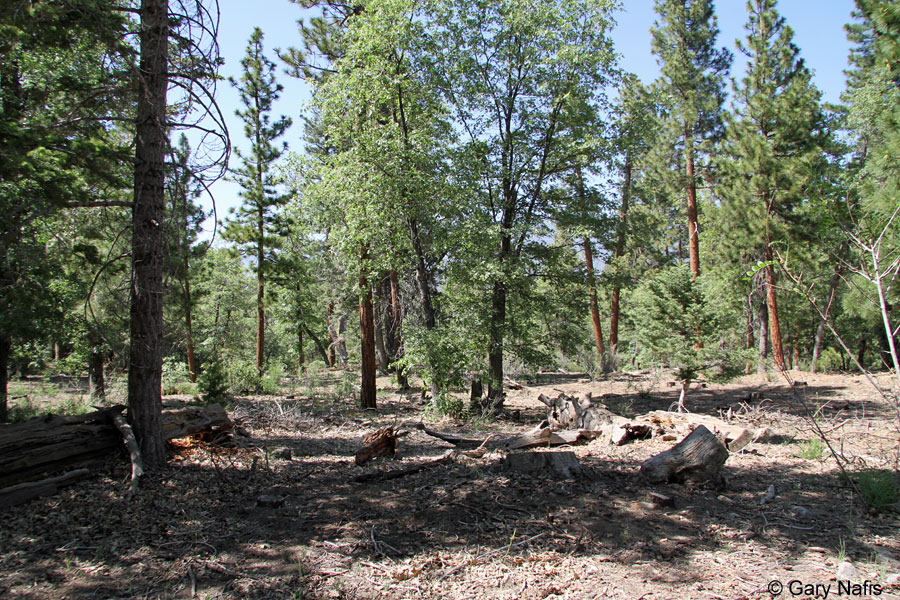
Habitat , 6,200 ft. San Bernardino Mountains, San Bernardino County
|
Habitat, 5,600 ft. San Diego County |
Habitat, San Jacinto Mountains,
Riverside County |
 |
 |
 |
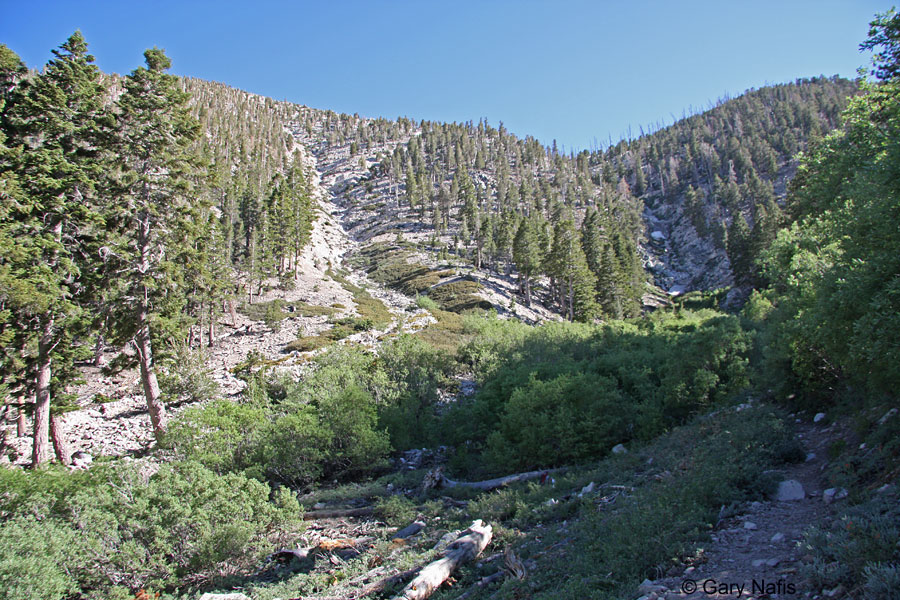
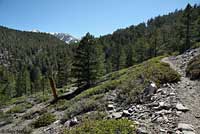
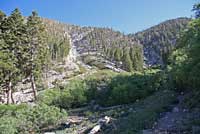
| Habitat, 9,600 ft. San Bernardino Mountains, San Bernardino County |
Habitat, 8,500 ft. San Bernardino Mountains, San Bernardino County |
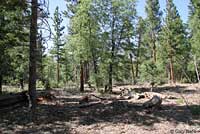
Habitat, 6,800 ft. San Bernardino Mountains, San Bernardino County |
| |
|
|
| Short Video |
| |
 |
|
| |
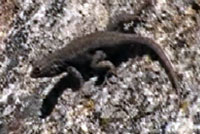
A sagebrush lizard runs over the rocks and does territorial push-up displays. |
|
|
|
|
| Description |
| |
| Size |
1.9 - 2.9 inches long from snout to vent (4.8 - 7.3 cm). (Stebbins & McGinnis 2012)
|
| Appearance |
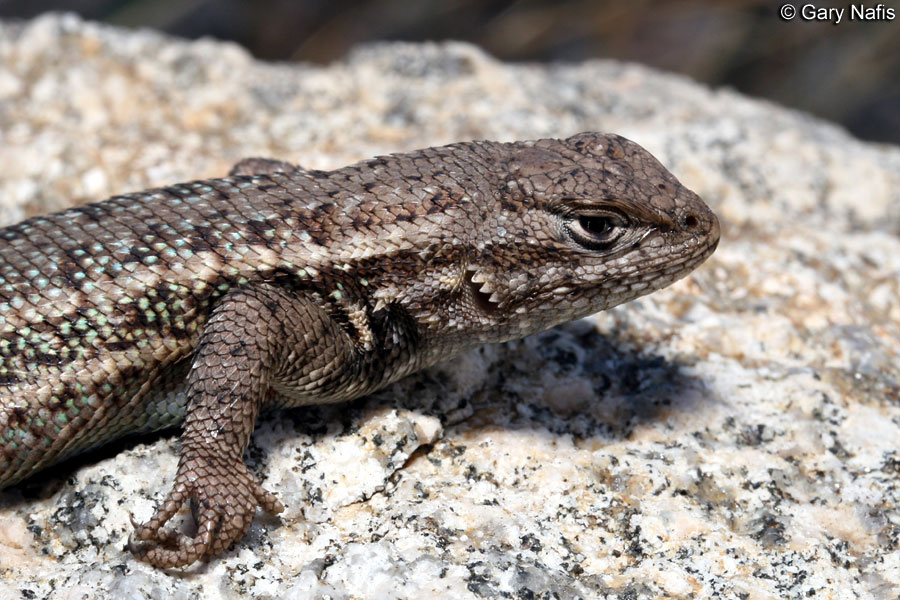
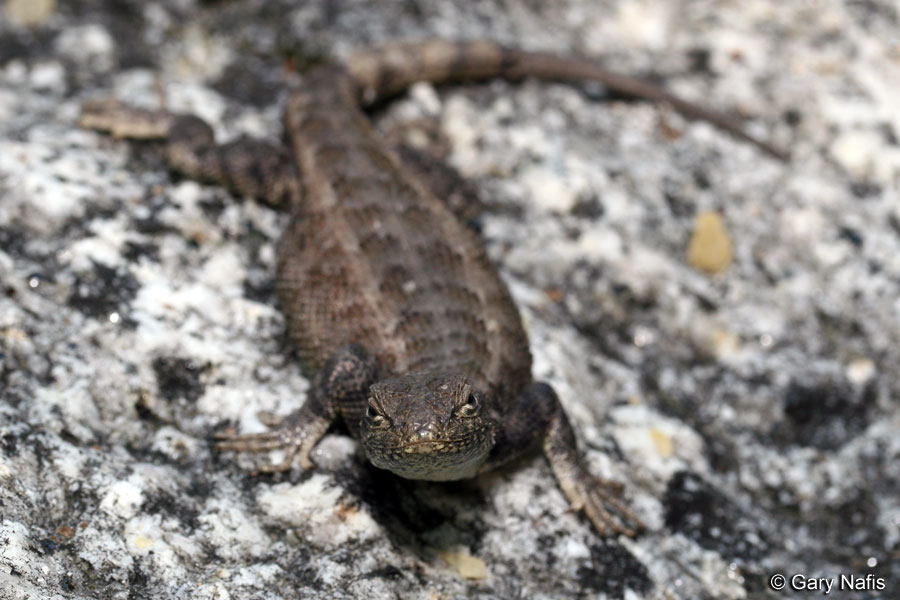
A small lizard with small keeled and pointed scales overlapping on the upper surfaces of the body and limbs.
These scales are not as large as they are on other lizards of the genus Sceloporus.
The gular fold is incomplete.
The scales on the back of the thigh are mostly granular, not keeled (as they are on the Western Fence Lizard.)
|
| Color and Pattern |
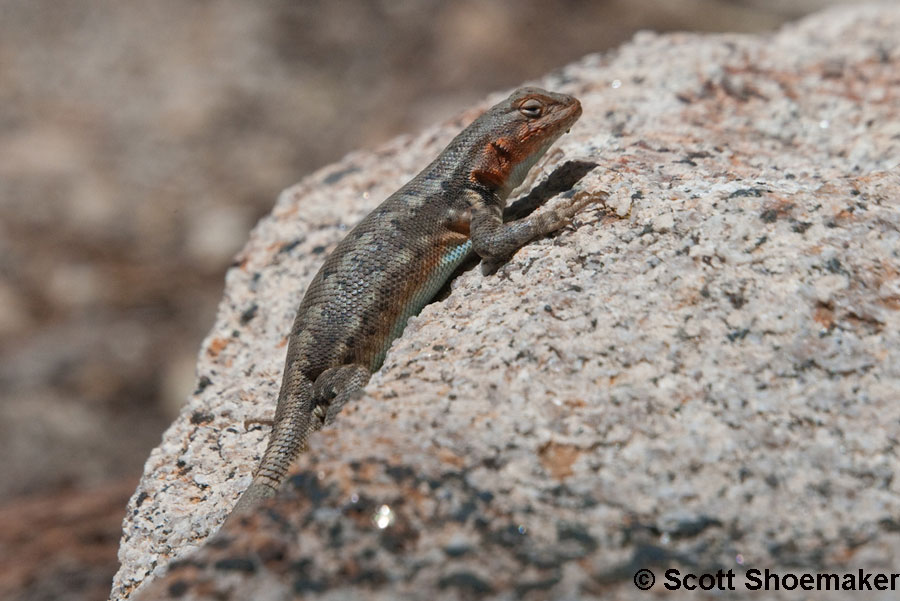
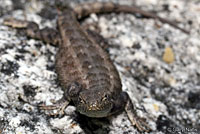
Color is gray or brown with dark blotches or irregular bands on the body and tail and light stripes along the sides and upper sides at the edge of the back.
There is usually a bar of black on the shoulder and rusty coloring on the armpits and sometimes on the sides of the body and the neck.
Unlike the Western Fence Lizard - Sceloporus occidentalis, there is normally no yellow coloring on the rear of the limbs. |
| Male / Female Differences |
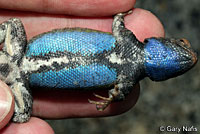
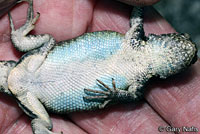
Males have a patch of blue color on each side of the belly and on the throat.
Blue patches usually meet across the belly and touch the throat coloring.
The underside of the tail and legs is also often blue.
Male post-anal scales are enlarged, and the base of the tail is broader than on the female.
The throat is light blue mottled with white spots.
Sometimes the blue patch is reduced or even absent.
Some males may develop bright orange breeding coloring.
Females have little or no blue on the belly, but belly may be dark. When breeding, females may develop orange coloring on the sides and neck and yellow underneath. |
| Young |
| Young lizards have little or no blue on the belly. |
| |
| Differences Between the Three Forms of Sagebrush Lizards found in California |
| |
| Differences Between Sagebrush Lizards and the Similar Western Fence Lizard in California |
| |
| Life History and Behavior |
Activity |
Diurnal.
Active from March or April to September or October depending on the weather.
Hibernates during winter in rock cracks and mammal burrows.
A good climber and jumper, able to quickly jump from rock to rock.
Lives mostly on the ground near bushes, logs, rocks, or brush piles.
Often observed basking on rocks and logs.
Escapes danger by running into rocks, rodent burrows, or brush or climbs up trees or rock outcrops.
|
| Territoriality |
| Males defend their territory with head-bobbing and by standing tall and displaying the blue belly and throat. |
| Defense |
Escapes danger by running into rocks, rodent burrows, or brush or climbs up trees or rock outcrops.
The tail can break off easily, but it will grow back. The detached tail wriggles on the ground which can distract a predator from the body of the lizard allowing it time to escape.
More information about tail loss and regeneration. |
| Diet and Feeding |
| Eats a variety of small invertebrates, including ants, termites, grasshoppers, flies, spiders, and beetles. |
| Reproduction |
Breeds from May to July.
Females lay
1 or 2 clutches of 2 - 7 eggs from June to August.
Eggs
hatch in August and September.
|
| Habitat |
Lives in shrublands such as chaparral, manzanita and ceanothus, as well as open pine and Douglas Fir forests, mainly in the mountains.
Prefers open areas with scattered low bushes and lots of sun.
Often occurs with the Western Fence Lizard, Sceloporus occidentalis.
|
| Geographical Range |
Sceloporus vandenburgianus is found in the Transverse and Peninsular mountains of southern California, and in the Sierra San Pedro Martir of northern Baja California.
Although it is not usually shown ranging in the Santa Ana Mountains, there is a museum specimen from the Santa Ana Mountains in Orange County, so I show this species as occurring there on my map.
Los Angeles County Museum of Natural History (LACM) - Vertebrate specimens
LACM Herps 95767 Reptilia: Sceloporus graciosus United States, California, Orange: "2.1 mi. NE Ranger Station on Ortega Hwy, 12 mi. NE San Juan Capistrano Mission, "Lazy W" 1966
Another museum specimen labeled S. graciosus was examined 9/14 and identified as S. occidentalis:
University of Kansas Biodiversity Institute - Herpetology Collection
KU KUH 40390 Reptilia: Sceloporus graciosus USA, California, Orange: 2.8 mi N Laguna Beach 1955)
S. vandenburgianus was formerly recognized as Sceloporus graciosus, which occurs farther north in California, Eastern oregon, central Washington, southern Idaho parts of Montana and North Dakota, in much of Wyoming, Utah, western Colorado, northwest New Mexico, northern Arizona, and in Baja California del Norte, Mexico.
|
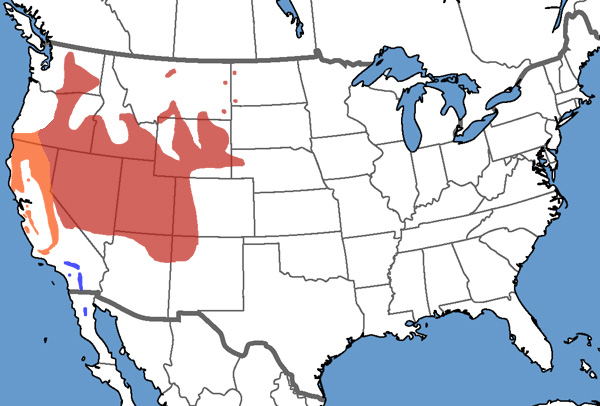 |
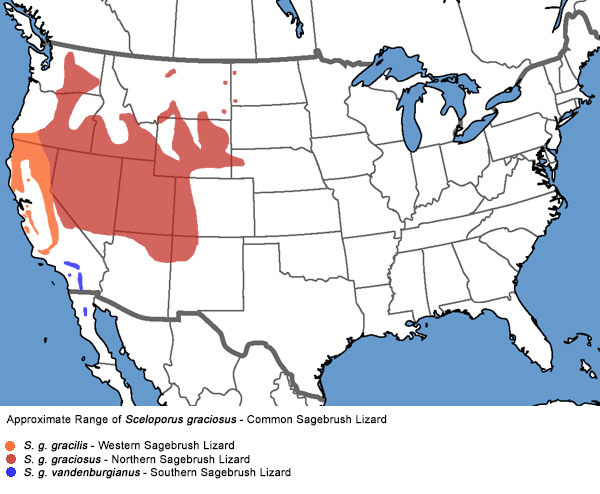
Approximate distribution of Sceloporus graciosus (and descendent species Sceloporus vandenburgianus)
Dark Blue: Sceloporus vandenburgianus - Southern Sagebrush Lizard
Orange: Sceloporus graciosus gracilis - Western Sagebrush Lizard
Red: Sceloporus graciosus graciosus - Northern Sagebrush
Lizard
|
| Elevational Range |
S. g. vandenburgianus is found from at least 4,500 ft. (2926 - 1371 m) to at least 9,600 ft.
|
| Notes on Taxonomy |
In 2025 I changed this taxa from the subspecies S. g. vandenburgianus to the full species S. vandenburgianus. based on a similar arrangement adopted by several other authorities, including iNaturalist, Wikipedia, the Reptile Database, Stebbins & McGinnis (201)2, and Hansen and Shedd (2025). Hansen and Shedd show this taxonomical note: "Using morphological and molecular data for Sceloporus, Wiens and Reeder (1997) presented results of an integrative analysis, in which they recognized three species making up the graciosus group (S. arenicolus, S. graciosus, and S. vandenburgianus), althought some later guides continued to regard these as conspecific. Based on the consensus of various recent studies (Wiens et al. 2010; Wiens et al. 2013; Leaché et al. 2016), we recognize S. vandenburgianus as species distinct from S. graciosus and acknowledge that this group needs taxonomic revision (Frabotta 2002; Chan et al. 2013)."
---------------------------------------------------------------------------------------------------------------------------------------------------------------------
Three subspecies of Sceloporus graciosus have been recognized in California:
Sceloporus graciosus gracilis - Western Sagebrush Lizard,
Sceloporus graciosus graciosus - Northern Sagebrush Lizard, and
Sceloporus graciosus vandenburgianus - Southern Sagebrush Lizard.
---------------------------------------------------------------------------------------------------------------------------------------------------------------------
In 1991, Collins (1991, Herpetol. Rev. 22: 42–43) proposed recognizing this taxon as a full species, - Sceloporus vandenburgianus. In 1997, Wiens & Reeder (1997 Herpetological Monographs 11: 1-101) followed Collins’ proposal but pointed out the morphological similarity and geographic proximity of S. vandenburgianus to populations of Sceloporus graciosus gracilis. In response, many researchers are awaiting further studies before elevating this taxon to full species.
---------------------------------------------------------------------------------------------------------------------------------------------------------------------
"Chan et al. (2013, Zootaxa 3664: 312–320) found that the currently recognized subspecies of S. graciosus are incongruent with mitochondrial haplotype clades, which often exhibit relatively deep divergences between geographically proximate samples, and that S. graciosus is paraphyletic relative to S. arenicolus. Although these findings suggest that S. graciosus is in need of taxonomic revision, those authors did not propose any taxonomic changes."
(SSAR Herpetological Circular No. 43, 2017)
---------------------------------------------------------------------------------------------------------------------------------------------------------------------
"This subspecies, as currently circumscribed, is incongruent with a mitochondrial haplotype phylogeny (see Chan et al. 2013, Zootaxa 3664: 312–320)."
(Nicholson, K. E. (ed.). 2025 SSAR Scientific and Standard English Names List)
---------------------------------------------------------------------------------------------------------------------------------------------------------------------
Alternate and Previous Names (Synonyms)
Sceloporus graciosus vandenburgianus - Southern Sagebrush Lizard (Stebbins & McGinnis 2018)
Sceloporus graciosus vandenburgianus - Southern Sagebrush Lizard (Jones et al. 2009)
Sceloporus vandenburgianus - Southern Sagebrush Lizard (Collins 1991)
Sceloporus graciosus vandenburgianus - Southern Sagebrush Lizard (Stebbins 1966, 1985, 2003)
Sceloporus graciosus vandenburgianus - Southern Mountain Lizard (Smith 1946)
Sceloporus graciosus vandenburgianus - Van Denburgh Lizard (Sceloporus vandenburgianus; Mountain Lizard, part; Van Denburgh's Swift; Sage-brush Swift, part) (Grinnell and Camp 1917)
|
| Conservation Issues (Conservation Status) |
| None |
|
|
Taxonomy |
| Family |
Phrynosomatidae |
Zebra-tailed, Earless, Fringe-toed, Spiny, Tree, Side-blotched, and Horned Lizards |
Fitzinger, 1843 |
| Genus |
Sceloporus |
Spiny Lizards |
Wiegmann, 1828 |
Species
|
vandenburgianus |
Southern Sagebrush Lizard |
Cope, 1896 |
|
Original Description |
Sceloporus vandenburgianus - Cope, 1896 - Amer. Nat., Vol. 30, p. 834
from Original Description Citations for the Reptiles and Amphibians of North America © Ellin Beltz
|
|
Meaning of the Scientific Name |
Sceloporus - Greek - skelos = leg + porus = pore or opening - refers to the femoral pores on hind legs
vandenburgianus - honors Van Denburgh, John
from Scientific and Common Names of the Reptiles and Amphibians of North America - Explained © Ellin Beltz
|
|
Related or Similar California Lizards |
Sceloporus graciosus gracilis - Western Sagebrush Lizard
Sceloporus graciosus graciosus - Northern Sagebrush Lizard
Uta. stansburiana - Common Side-blotched Lizard
Sceloporus occidentalis - Western Fence Lizard
Sceloporus magister magister - Sonoran Desert Spiny Lizard
|
|
More Information and References |
California Department of Fish and Wildlife
Hansen, Robert W. and Shedd, Jackson D. California Amphibians and Reptiles. (Princeton Field Guides.) Princeton University Press, 2025.
Stebbins, Robert C., and McGinnis, Samuel M. Field Guide to Amphibians and Reptiles of California: Revised Edition (California Natural History Guides) University of California Press, 2012.
Stebbins, Robert C. California Amphibians and Reptiles. The University of California Press, 1972.
Flaxington, William C. Amphibians and Reptiles of California: Field Observations, Distribution, and Natural History. Fieldnotes Press, Anaheim, California, 2021.
Nicholson, K. E. (ed.). 2025. Scientific and Standard English Names of Amphibians and Reptiles of North America North of Mexico, with Comments Regarding Confidence in Our Understanding. Ninth Edition. Society for the Study of Amphibians and Reptiles. [SSAR] 87pp.
Samuel M. McGinnis and Robert C. Stebbins. Peterson Field Guide to Western Reptiles & Amphibians. 4th Edition. Houghton Mifflin Harcourt Publishing Company, 2018.
Stebbins, Robert C. A Field Guide to Western Reptiles and Amphibians. 3rd Edition. Houghton Mifflin Company, 2003.
Behler, John L., and F. Wayne King. The Audubon Society Field Guide to North American Reptiles and Amphibians. Alfred A. Knopf, 1992.
Robert Powell, Roger Conant, and Joseph T. Collins. Peterson Field Guide to Reptiles and Amphibians of Eastern and Central North America. Fourth Edition. Houghton Mifflin Harcourt, 2016.
Powell, Robert., Joseph T. Collins, and Errol D. Hooper Jr. A Key to Amphibians and Reptiles of the Continental United States and Canada. The University Press of Kansas, 1998.
Bartlett, R. D. & Patricia P. Bartlett. Guide and Reference to the Turtles and Lizards of Western North America (North of Mexico) and Hawaii. University Press of Florida, 2009.
Jones, Lawrence, Rob Lovich, editors. Lizards of the American Southwest: A Photographic Field Guide. Rio Nuevo Publishers, 2009.
Smith, Hobart M. Handbook of Lizards, Lizards of the United States and of Canada. Cornell University Press, 1946.
Taylor, Emily. California Lizards and How to Find Them. Heyday, Berkeley, California. 2025.
Joseph Grinnell and Charles Lewis Camp. A Distributional List of the Amphibians and Reptiles of California. University of California Publications in Zoology Vol. 17, No. 10, pp. 127-208. July 11, 1917.
|
|
|
The following conservation status listings for this animal are taken from the July 2025 State of California Special Animals List and the July 2025 Federally Listed Endangered and Threatened Animals of California list (unless indicated otherwise below.) Both lists are produced by multiple agencies every year, and sometimes more than once per year, so the conservation status listing information found below might not be from the most recent lists, but they don't change a great deal from year to year.. To make sure you are seeing the most recent listings, go to this California Department of Fish and Wildlife web page where you can search for and download both lists:
https://www.wildlife.ca.gov/Data/CNDDB/Plants-and-Animals.
A detailed explanation of the meaning of the status listing symbols can be found at the beginning of the two lists. For quick reference, I have included them on my Special Status Information page.
If no status is listed here, the animal is not included on either list. This most likely indicates that there are no serious conservation concerns for the animal. To find out more about an animal's status you can also go to the NatureServe and IUCN websites to check their rankings.
Check the current California Department of Fish and Wildlife sport fishing regulations to find out if this animal can be legally pursued and handled or collected with possession of a current fishing license. You can also look at the summary of the sport fishing regulations as they apply only to reptiles and amphibians that has been made for this website.
This animal is not included on the Special Animals List, which indicates that there are no significant conservation concerns for it in California.
|
| Organization |
Status Listing |
Notes |
| NatureServe Global Ranking |
|
|
| NatureServe State Ranking |
|
|
| U.S. Endangered Species Act (ESA) |
None |
|
| California Endangered Species Act (CESA) |
None |
|
| California Department of Fish and Wildlife |
None |
|
| Bureau of Land Management |
None |
|
| USDA Forest Service |
None |
|
| IUCN |
|
|
|
|