|
 |
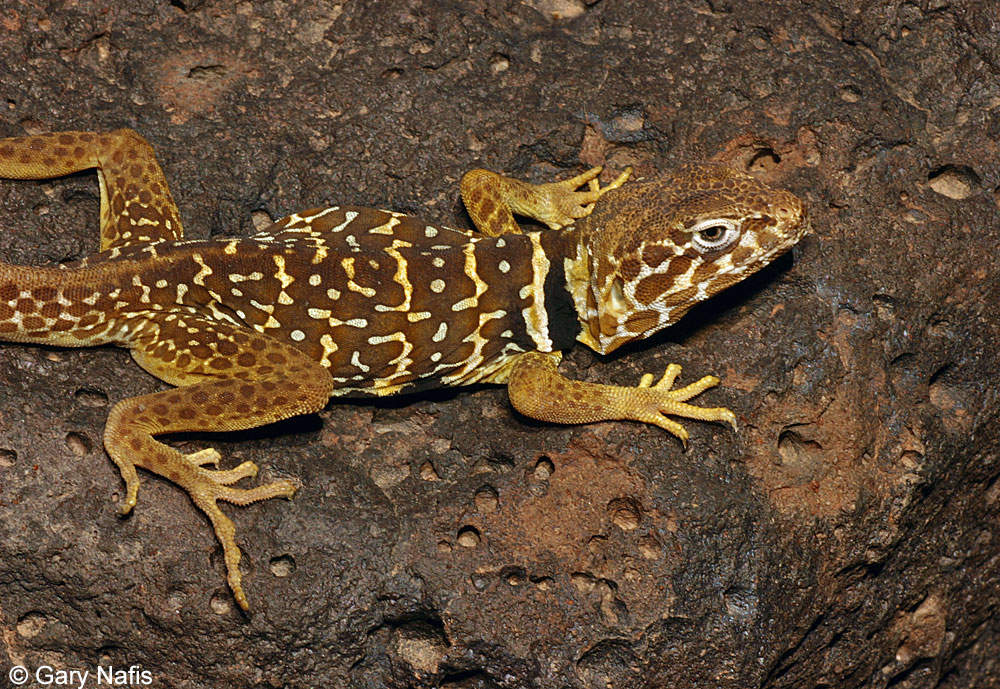
| Adult female, San Diego County |
 |
 |
 |
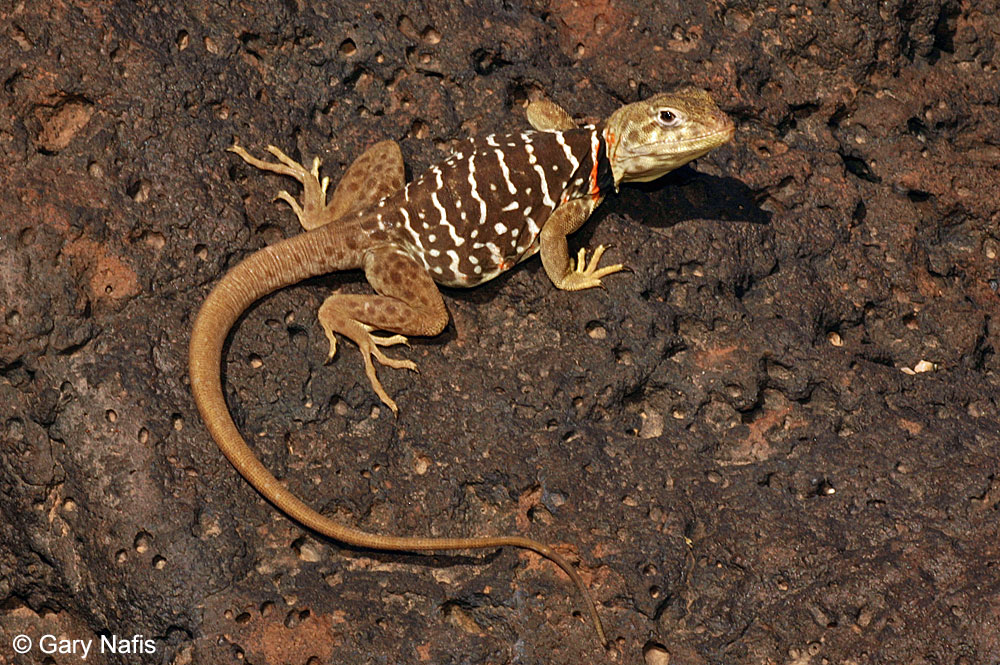
Adult male, San Diego County © Gary Nafis
Captive specimen courtesy of Will Wells |
Adult male, San Diego County |
 |
 |
 |
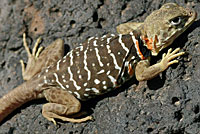
Adult female, San Diego County with some red breeding color.
© Gary Nafis Captive specimen courtesy of Will Wells |
Adult female, San Diego County
|
 |
 |
 |
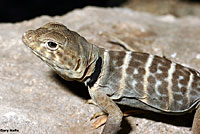
Adult female, San Diego County © Gary Nafis
Captive specimen courtesy of Gerold Merker |
 |
 |
 |
Juvenile male, San Diego County © Gary Nafis
Captive specimen courtesy of Gerold Merker |
Adult, San Diego County |
 |
 |
 |
Adult male, San Diego County
© Will Wells |
Adult, Imperial County
© Rob Schell
|
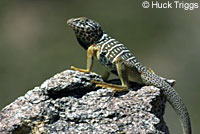
Adult, San Diego County © Huck Triggs |
 |
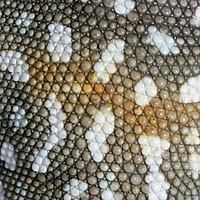 |
| Adult male from the northernmost part of the range of the species in Riverside County. © Jorah Wyer |
Collared lizards have
mostly granular scales. |
| |
|
|
| Juveniles |
 |
 |
| Juvenile, Riverside County © Grigory Heaton |
Juvenile, Imperial County
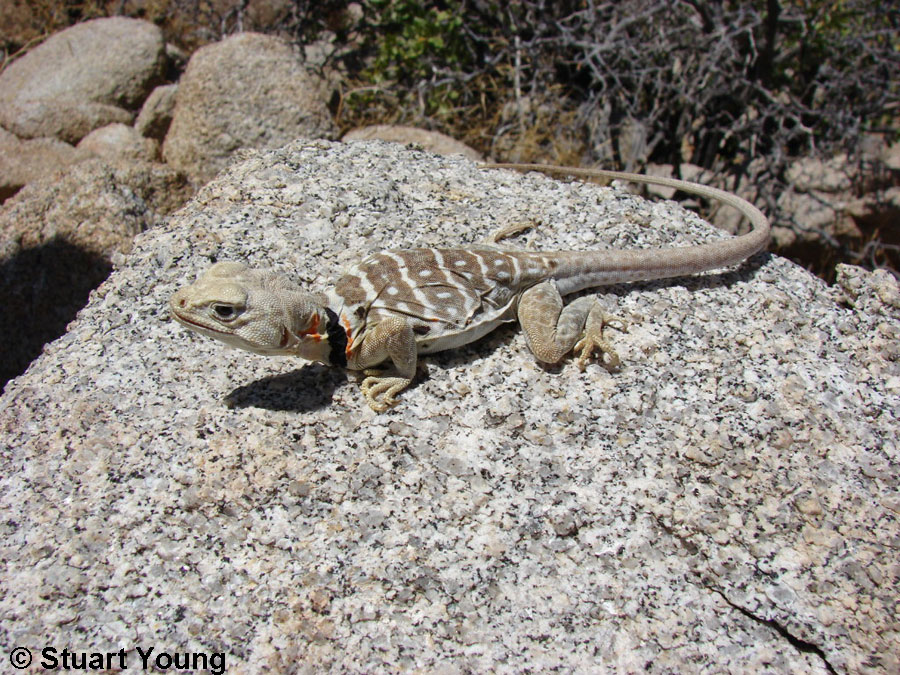
© Stuart Young |
 |
 |
|
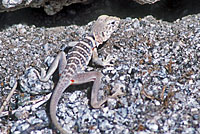
Recently-hatched juvenile,
San Diego County |
Recently-hatched juvenile,
San Diego County |
|
| |
|
|
| Habitat |
 |
 |
 |
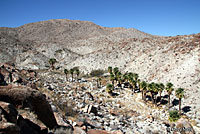
| Habitat, San Diego County |
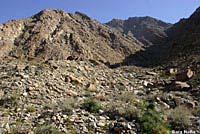
Habitat, San Diego County |
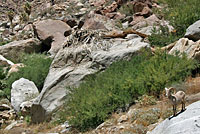
Habitat, San Diego County |
 |
 |
 |
| Habitat, San Diego County |
Habitat, San Diego County |
Habitat, San Diego County |
 |
 |
 |
Habitat, Imperial County
|
Habitat, Imperial County |
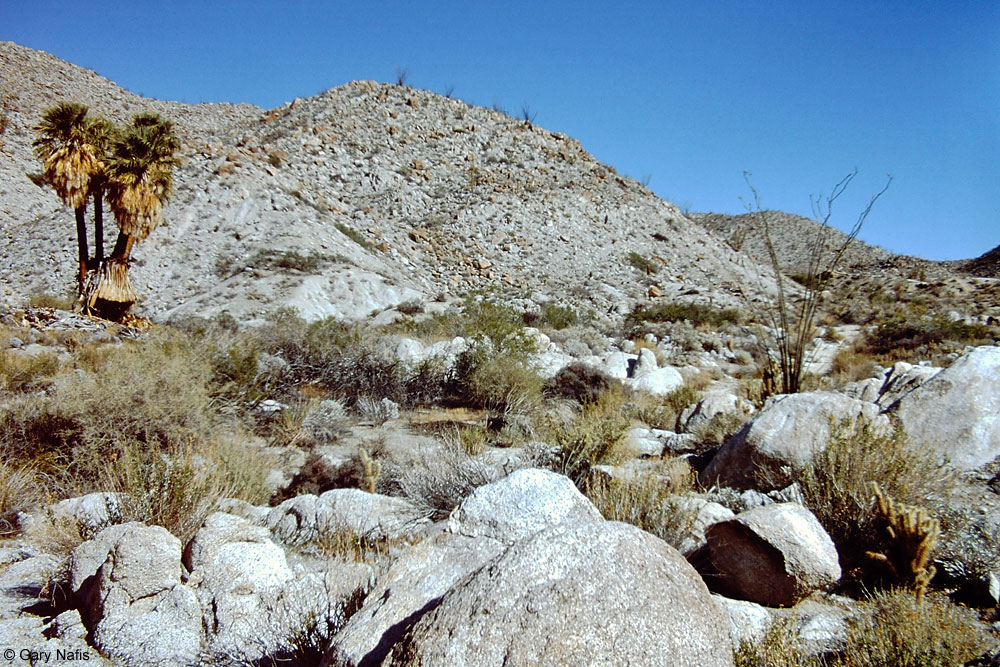
Habitat, San Diego County |
| |
|
|
| Short Video |
| |
 |
|
| A Baja California Collared Lizard sits on a rock above a palm oasis. |
| |
| Description |
| |
| Size |
Adults grow up to 5 inches in length from snout to vent (12.7 cm)
|
| Appearance |
A large lizard with a broad-head, a narrow-neck with a pair of black bands around it, large rear legs, and a long thick tail.
Often described as looking like a small "dinosaur".
The tail is flattened slightly vertically.
|
| Color and Pattern |
Brown or dark gray above, with thin white irregular crossbars and alternating crossbars consisting of white spots.
Two black bands on the neck with a white band in-between them create the "collar" for which this lizard is named.
The rear band has a wide gap on top of the back and is sometimes missing completely.
The underside is mostly white.
|
| Male / Female Differences |
Males have two black patches on the underside near the groin and a dark throat. Females with light throat.
The front black band coloring on the throat continues onto the underside of the throat on males, covering the throat and much of the chin.
The throats and chins of females lack this dark coloring.
Males also have a broader head than females
Female coloring is lighter and duller than male's except when breeding, when they develop orange-red bars on the head and body.
The tail has a light stripe on top on males, which is absent on females.
|
| Life History and Behavior |
Activity |
Active in daytime.
Very tolerant of heat.
Hibernates under rocks during cold temperatures in winter.
Often seen basking conspicuously on top of rocks.
May become bipedal when running quickly; raising up to run only on only the hind legs.
|
| Territoriality |
Males become aggressive and very territorial in the breeding season.
They are more approachable at this time, as they tend to stand their ground on top of a rock, often raising up on their legs, bobbing up and down, and extending a blue and black throat dewlap in a threat display (which may also be attractive to females). |
| Defense |
| When handled, this lizard is capable of biting very hard, and drawing blood with its strong jaws. |
| Diet and Feeding |
| Eats insects, spiders, small lizards, leaves and flowers. |
| Reproduction |
Lays eggs during summer, which hatch late July - August.
|
| Habitat |
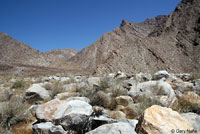
Arid, rocky desert hills and canyons with sparse vegetation. Prefers hillsides with moderately sized rocks.
|
| Geographical Range |
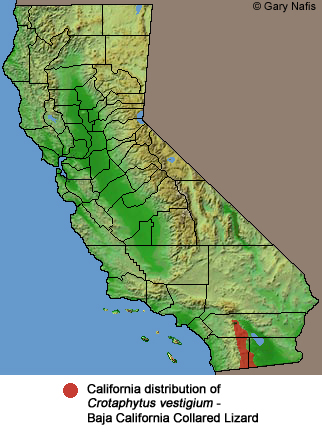
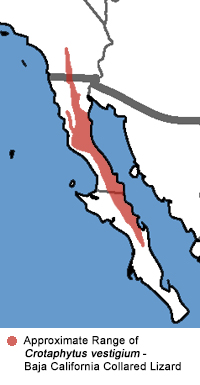
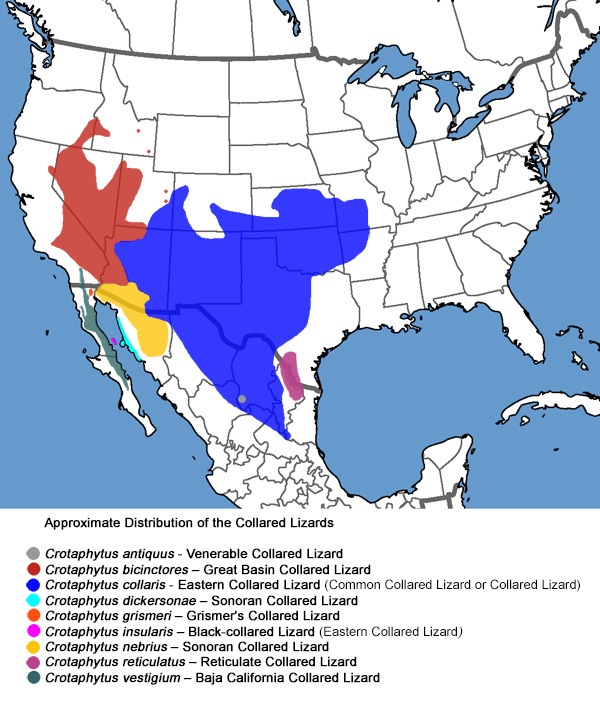
Inhabits the desert side of the Peninsular Ranges west of the Imperial Valley from south of San Gorgonio Pass on the north side of Mt. San Jacinto, south into Baja California Sur where it ranges as far south as just west of Loreto.
|

|
 |
| Elevational Range |
Found up to about 4,000 ft. (1,094 m.)
|
| Notes on Taxonomy |
Formerly known as the Baja California Collared Lizard - Crotaphytus insularis vestigium , a subspecies of Crotaphytus insularis, the Desert Collared Lizard, before the species was split into C. bicinctores - the Great Basin Collared Lizard and C. vestigium.
Alternate and Previous Names (Synonyms)
Crotaphytus vestigium - Baja California Collared Lizard (Stebbins 2003)
Cnemidophorus insularis vestigium - Baja California Collared Lizard (Stebbins 1985)
Cnemidophorus collaris baileyi - Western Collared Lizard (Smith 1946)
Crotaphytus collaris baileyi - Bailey Collared Lizard (Crotaphytus collaris) (Grinnell and Camp 1917)
|
| Conservation Issues (Conservation Status) |
| None |
|
|
Taxonomy |
| Family |
Crotaphytidae |
Collared and Leopard Lizards |
Smith & Brodie, 1982 |
| Genus |
Crotaphytus |
Collared Lizards |
Holbrook, 1842 |
Species
|
vestigium |
Baja black-collared Lizard |
Smith and Tanner, 1972 |
|
Original Description |
Smith and Tanner, 1972 - Great Basin Nat., Vol. 32, p. 29
from Original Description Citations for the Reptiles and Amphibians of North America © Ellin Beltz
|
|
Meaning of the Scientific Name |
Crotaphytus - Greek - krotaphos = side or temple of the head - refers to the presence of small polygonal plates on the whole surface of the head.
vestigium - Latin = footstep or trace
from Scientific and Common Names of the Reptiles and Amphibians of North America - Explained © Ellin Beltz
|
|
Related or Similar California Lizards |
C. bicinctores - Great Basin Collared Lizard
Gambelia wislizenii - Long-nosed Leopard Lizard
|
|
More Information and References |
California Department of Fish and Wildlife
Hansen, Robert W. and Shedd, Jackson D. California Amphibians and Reptiles. (Princeton Field Guides.) Princeton University Press, 2025.
Stebbins, Robert C., and McGinnis, Samuel M. Field Guide to Amphibians and Reptiles of California: Revised Edition (California Natural History Guides) University of California Press, 2012.
Stebbins, Robert C. California Amphibians and Reptiles. The University of California Press, 1972.
Flaxington, William C. Amphibians and Reptiles of California: Field Observations, Distribution, and Natural History. Fieldnotes Press, Anaheim, California, 2021.
Nicholson, K. E. (ed.). 2025. Scientific and Standard English Names of Amphibians and Reptiles of North America North of Mexico, with Comments Regarding Confidence in Our Understanding. Ninth Edition. Society for the Study of Amphibians and Reptiles. [SSAR] 87pp.
Samuel M. McGinnis and Robert C. Stebbins. Peterson Field Guide to Western Reptiles & Amphibians. 4th Edition. Houghton Mifflin Harcourt Publishing Company, 2018.
Stebbins, Robert C. A Field Guide to Western Reptiles and Amphibians. 3rd Edition. Houghton Mifflin Company, 2003.
Behler, John L., and F. Wayne King. The Audubon Society Field Guide to North American Reptiles and Amphibians. Alfred A. Knopf, 1992.
Robert Powell, Roger Conant, and Joseph T. Collins. Peterson Field Guide to Reptiles and Amphibians of Eastern and Central North America. Fourth Edition. Houghton Mifflin Harcourt, 2016.
Powell, Robert., Joseph T. Collins, and Errol D. Hooper Jr. A Key to Amphibians and Reptiles of the Continental United States and Canada. The University Press of Kansas, 1998.
Grismer, L. Lee. Amphibians and Reptiles of Baja California, Including Its Pacific Islands and the Islands in the Sea of Cortés. The University of California Press, 2002.
McPeak, Ron H. Amphibians and Reptiles of Baja California. Sea Challengers, 2000.
Samuel M. McGinnis and Robert C. Stebbins. Peterson Field Guide to Western Reptiles & Amphibians. 4th Edition. Houghton Mifflin Harcourt Publishing Company, 2018.
Stebbins, Robert C. A Field Guide to Western Reptiles and Amphibians. 3rd Edition. Houghton Mifflin Company, 2003.
The Reptile Database
Bartlett, R. D. & Patricia P. Bartlett. Guide and Reference to the Turtles and Lizards of Western North America (North of Mexico) and Hawaii. University Press of Florida, 2009.
Jones, Lawrence, Rob Lovich, editors. Lizards of the American Southwest: A Photographic Field Guide. Rio Nuevo Publishers, 2009.
Smith, Hobart M. Handbook of Lizards, Lizards of the United States and of Canada. Cornell University Press, 1946.
Taylor, Emily. California Lizards and How to Find Them. Heyday, Berkeley, California. 2025.
Joseph Grinnell and Charles Lewis Camp. A Distributional List of the Amphibians and Reptiles of California. University of California Publications in Zoology Vol. 17, No. 10, pp. 127-208. July 11, 1917.
|
|
|
The following conservation status listings for this animal are taken from the July 2025 State of California Special Animals List and the July 2025 Federally Listed Endangered and Threatened Animals of California list (unless indicated otherwise below.) Both lists are produced by multiple agencies every year, and sometimes more than once per year, so the conservation status listing information found below might not be from the most recent lists, but they don't change a great deal from year to year.. To make sure you are seeing the most recent listings, go to this California Department of Fish and Wildlife web page where you can search for and download both lists:
https://www.wildlife.ca.gov/Data/CNDDB/Plants-and-Animals.
A detailed explanation of the meaning of the status listing symbols can be found at the beginning of the two lists. For quick reference, I have included them on my Special Status Information page.
If no status is listed here, the animal is not included on either list. This most likely indicates that there are no serious conservation concerns for the animal. To find out more about an animal's status you can also go to the NatureServe and IUCN websites to check their rankings.
Check the current California Department of Fish and Wildlife sport fishing regulations to find out if this animal can be legally pursued and handled or collected with possession of a current fishing license. You can also look at the summary of the sport fishing regulations as they apply only to reptiles and amphibians that has been made for this website.
This animal is not included on the Special Animals List, which indicates that there are no significant conservation concerns for it in California.
|
| Organization |
Status Listing |
Notes |
| NatureServe Global Ranking |
|
|
| NatureServe State Ranking |
|
|
| U.S. Endangered Species Act (ESA) |
None |
|
| California Endangered Species Act (CESA) |
None |
|
| California Department of Fish and Wildlife |
None |
|
| Bureau of Land Management |
None |
|
| USDA Forest Service |
None |
|
| IUCN |
|
|
|
|