|
 |
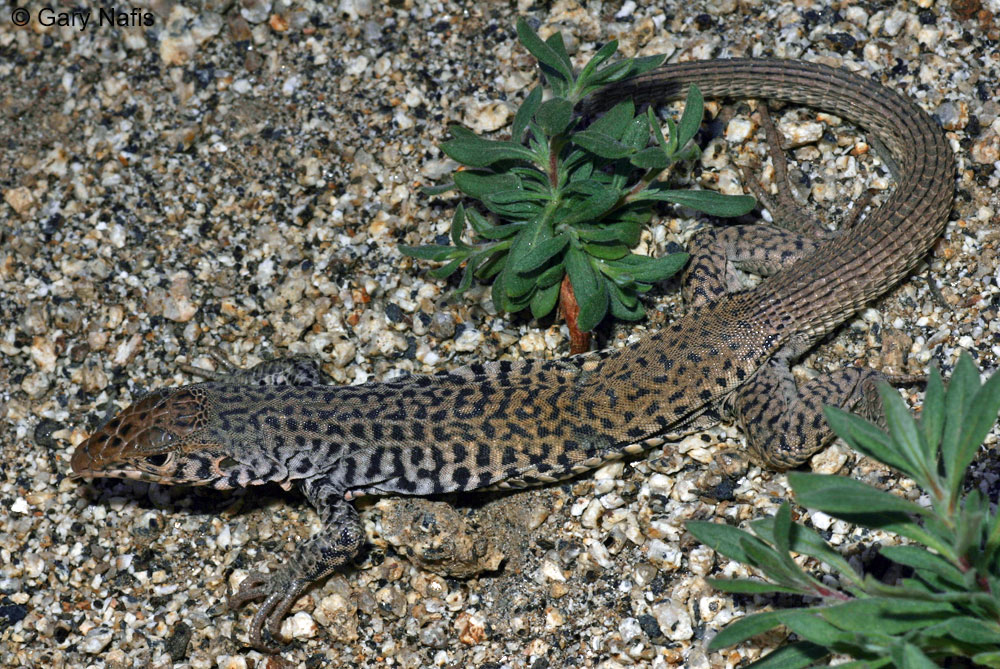
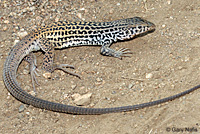
| Adult, San Diego County |
 |
 |
 |
 |
| |
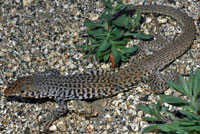
Adult, San Diego County |
|
 |
|
 |
 |
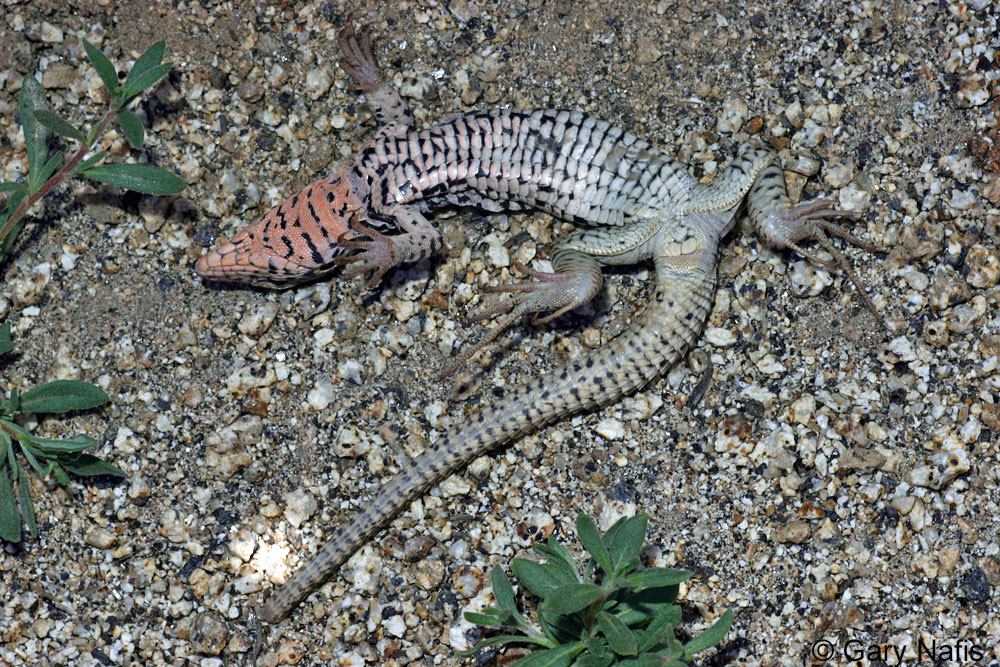
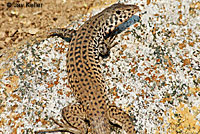
| Adult, San Diego County |
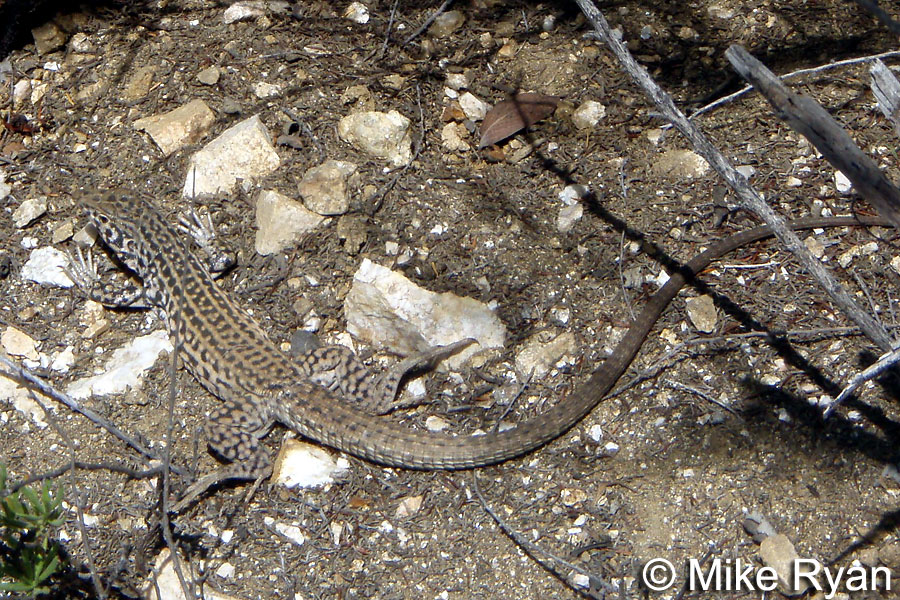
Adult, San Gabriel Mountains,
Los Angeles County |
Adult, San Diego County |
Adult, San Diego County |
 |
 |
 |
 |
| Adult, San Diego County. Specimen courtesy of Robert Applegate |
 |
 |
 |
 |
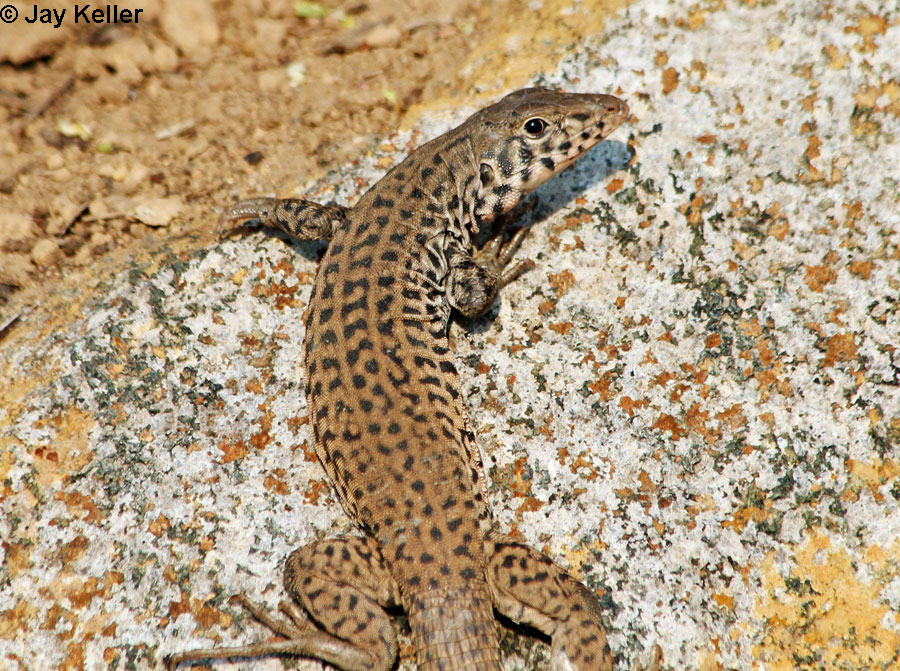
| Adult, San Diego County © Jay Keller |
Adult, San Gabriel Mountains, Los Angeles County. © Mike Ryan |
Adult, Ventura County
© Stacey Bergman |
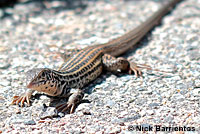
Adult, Riverside County
© Nick Barrientos
|
 |
 |
 |
 |
Adult San Diego County
© Matthias Lemm |
Eye open on the left, and eye closed, on the right,
showing the transparent lower eyelid of this species. |
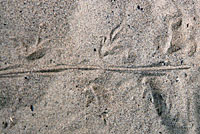
Whiptail Tracks in sand |
 |
|
|
|
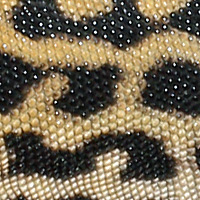
| Whiptails, genus Aspidoscelis, have small granular dorsal scales. |
|
|
|
| |
|
|
|
| Behavior |
 |
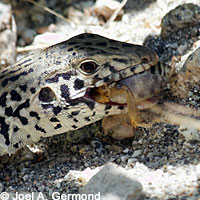 |
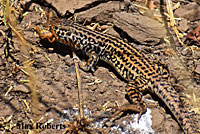 |
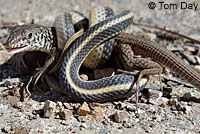 |
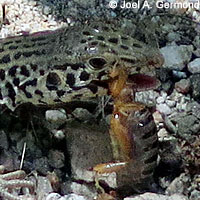
| Adult eating a potato bug, Los Angeles County © Joel A. Germond |
Adult eating a Jerusalem Cricket in the Santa Monica Mountains, Los Angeles County © Max Roberts |
A Coast Patch-nosed Snake trying to kill and eat a Coastal Whiptail in San Diego County © Tom Day
|
|
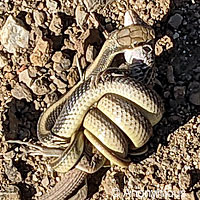 |
|
|
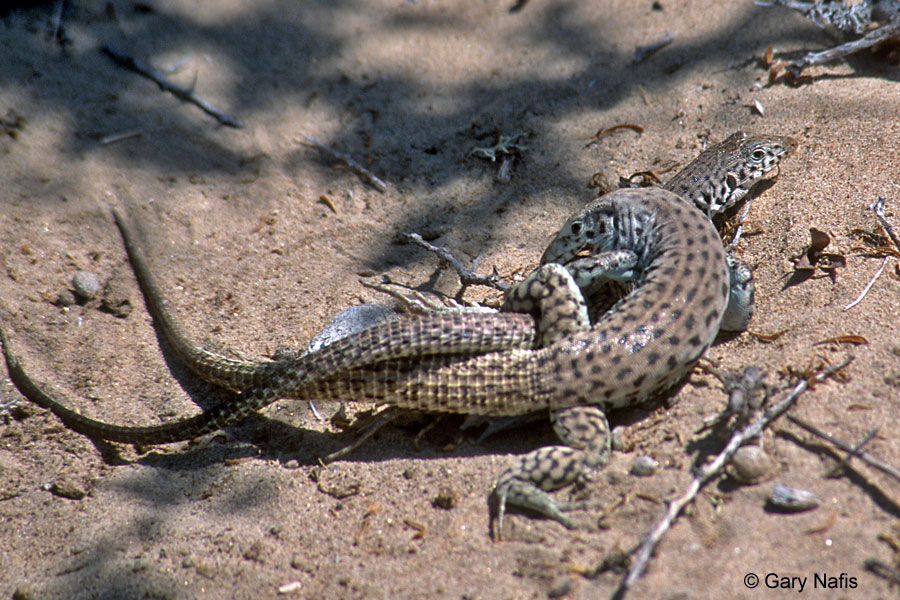
Copulating adults,
Baja California |
A Coast Patch-nosed Snake constricts a Coastal Whiptail in Los Angeles County © Anonymous, Picture courtesy of Brian Hubbs. |
|
|
| |
|
|
|
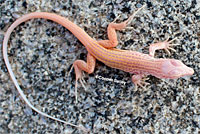
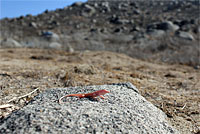
| Pigment Aberrations |
 |
 |
 |
|
| Albino juvenile, Riverside County © Cooper Bailey |
|
| |
|
|
|
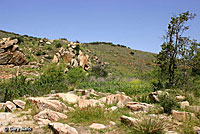
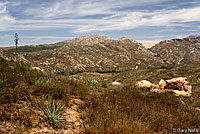
| Habitat |
 |
 |
 |
 |
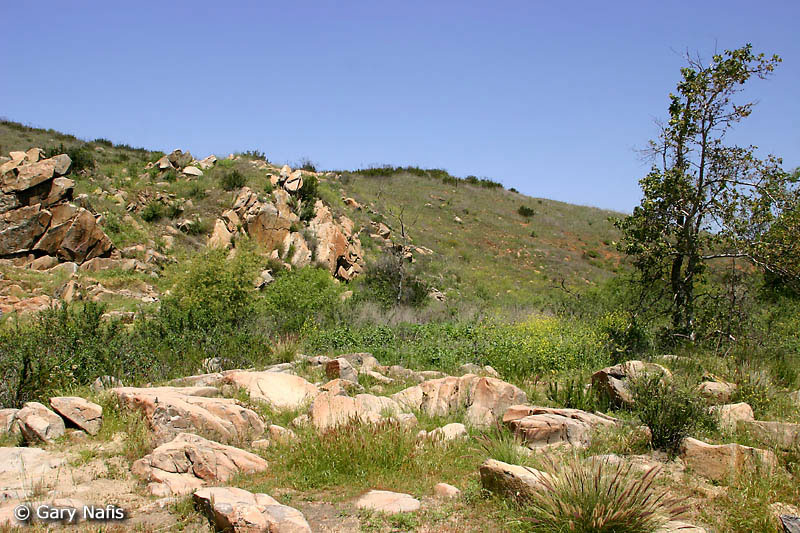
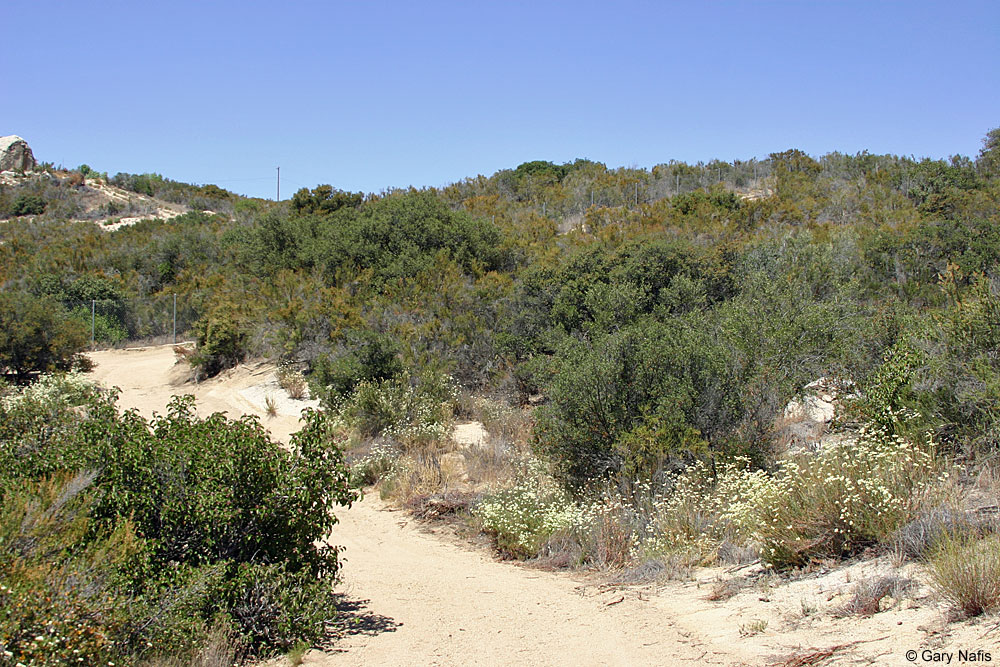
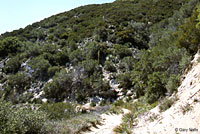
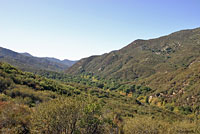
| Habitat, San Diego County |
Habitat, eastern San Diego County
|
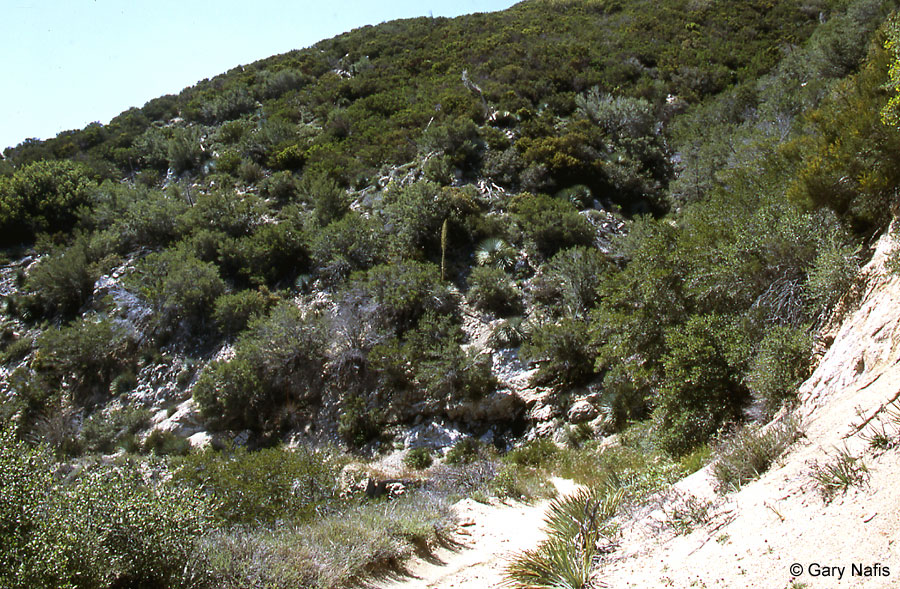
Habitat, 3000 ft., San Diego County |
Coastal habitat, San Diego County
|
 |
 |
 |
 |
| Habitat, Riverside County |
Habitat, San Gabriel Mountains,
Los Angeles County |
Habitat, San Gabriel Mountains,
Los Angeles County |
Habitat, western San Bernardino County |
 |
 |
|
|
Habitat, Santa Ana Mountains,
Riverside County |
Habitat, Santa Monica Mountains, Los Angeles County © Grigory Heaton |
|
|
| |
|
|
|
| Short Video |
 |
|
|
|
| After being released, a Coastal Whiptail remains motionless for a short time before it slowly comes to life and races into the bushes faster than the camera can track it. It was found in a pit trap, then measured and marked in case of re-capture. The shock of the ordeal and the morning chill must have contributed to its initial sluggishness and disorientation. |
|
|
|
| |
|
|
|
| Description |
| |
| Size |
Aspidoscelis tigris as a species is 2 3/8 - 5 inches inches long snout to vent (6 - 12.7 cm), up to around 13 inches (33 cm) total length.
|
| Appearance |
A slim-bodied lizard with a long slender tail, a pointed snout, and large symmetrical head plates.
Scales on the back are small and granular, and scales on the tail are keeled.
The belly is made of large, smooth, rectangular scales in 8 lengthwise rows.
The tail can reach up to two times the length of the body.
|
| Color and Pattern |
The back and sides are grey, tan, or brown, marked with dark spots or bars or mottling, which is often very sharply defined.
Dark marks on the side don't form vertical bars.
Usually 8 poorly-defined light brown stripes are present, but stripes on the side are less well-defined.
The throat is pale with with large black spots.
Often there are reddish patches on the sides of the belly.
The tail tip is dark or bluish.. |
| Young |
Some juveniles have fairly well-defined stripes, most notably in inland Orange County, but they also have other irregular spots and stripes that can be used to differentiate them from sympatric more fully-striped Aspidoscelis hyperythra.
In the San Diego area, juveniles are spotted.
The tail tip is bright blue on juveniles.
|
| Life History and Behavior |
Activity |
Diurnal.
Wary and very active, moving with abrupt stops and starts, side-to-side head movement, and tongue flicking.
Often seen digging rapidly when foraging.
Difficult to approach - typically foraging near cover, and capable of quick bursts of speed into heavy brush or holes. |
| Diet and Feeding |
| Small invertebrates, especially spiders, scorpions, centipedes, and termites, and small lizards. |
| Reproduction |
Unlike some species of whiptails which are all females, there are male and female western whiptails.
Males and females usually begin mating in May and females lay eggs shortly thereafter.
Females lay one clutch of eggs per year.
Eggs hatch from May to August.
|
| Habitat |
Found in a variety of ecosystems, primarily hot and dry open areas with sparse foliage - chaparral, woodland, and riparian areas.
|
| Geographical Range |
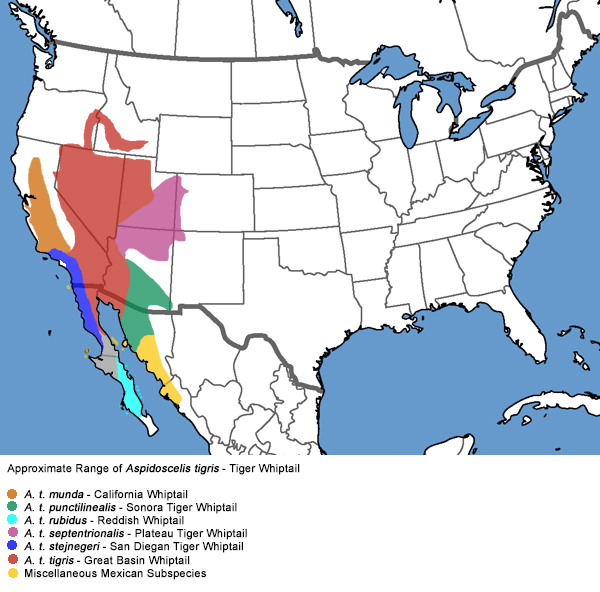
This subspecies is found in coastal Southern California, mostly west of the Peninsular Ranges and south of the Transverse Ranges, and north into Ventura County. Ranges south into Baja California.
The species (Aspidoscelis tigris) ranges from Oregon and southern Idaho, south through California and Nevada to Baja California, and east into Utah, Colorado, Arizona, and New Mexico and south into Sonora and Sinaloa, Mexico.
Occurrence in Northeast California
At one time I showed this species present in much of Shasta, Siskiyou, Modoc, and Lassen Counties. The California Dept. of Fish and Wildlife map shows the species present in these counties, but the 2012 and 2018 Stebbins & McGinnis field guides show a question mark in the area. I have looked for them in the area and searched museum records for them but I have found no records for them in Siskiyou or Modoc counties. There are no iNaturalist observations for the species from these counties, either, though that could be due to it being sparsely-populated. For these reasons my maps no longer show it occurring in Siskiyou and Modoc counties, except for in the desert east of the Warner Mountains where it's possible they occur since they're in similar habitat to the east in Nevada.
|
 |
Approximate distributiion of Aspidoscelis tigris - Western Whiptail
Dark Blue: Aspidoscelis tigris stejnegeri - Coastal Whiptail
Orange: Aspidoscelis tigris munda - California Whiptail
Red: Aspidoscelis tigris tigris - Great Basin Whiptail
- Not found in California
Green: Aspidoscelis tigris puctilinealis - Sonoran Tiger Whiptail
Bright Blue: Aspidoscelis tigris rubidus - Reddish Whiptail
Purple: Aspidoscelis tigris septentrionalis - Plateau Tiger Whiptail
Yellow: Miscelaneous Mexican subspecies
|
| Elevational Range |
The species is found at sea level to 7,000 ft. (2,130 m). This subspecies may differ somewhat.
|
| Notes on Taxonomy |
Reeder et al. (2002) re-examined the nomenclature for the genus Cnemidophorus and split it into the two genera Aspidoscelis and Cnemidophorus. Cnemidophorus tigris became Aspidoscelis tigris.
------------------------------------------------------------------------------------------------------------------------------------------------------------------------------------------------------------------------------
The common name of this subspecies of Tiger Whiptail has long been "Coastal Whiptail, including in the Sixth edition of the S.S.A.R. common and scientific names list published in 2008, which is the list I follow on this web site. In the Seventh edition of the S.S.A.R. list, published in 2012, the common name was changed to "San Diegan Tiger Whiptail" though the change was not explained. This common name is still in use (May 2019) on both the S.S.A.R. and the C.N.A.H. common names lists.
As
"Coastal Whiptail" is still most often used online and in the literature, as you can see below, I have changed back to it here in 2025.
Aspidoscelis tigris stejnegeri - Coastal Whiptail (Hansen and Shedd 2025)
Aspidoscelis tigris stejnegeri - Coastal Whiptail (iNaturalist, 2/25)
Aspidoscelis tigris stejnegeri - Coastal Whiptail (The Reptile Database 2/25)
Aspidoscelis tigris stejnegeri - Coastal [San Diego Tiger] Whiptail (Stebbins & McGinnis 2018)
Aspidoscelis tigris stejnegeri - Coastal Whiptail (Stebbins & McGinnis 2012)
Cnemidophorus tigris stejnegeri - Coastal Whiptail (Stebbins 2003)
------------------------------------------------------------------------------------------------------------------------------------------------------------------------------------------------------------------------------
"See de Queiroz et al. (2017, SSAR Herpetological Circular 43: 41) regarding the incomplete separation of this species from A. marmoratus. Mitochondrial clades inferred by Chafin et al. (2021, Frontiers of Biogeography 13.2, e49120) are largely congruent with the previously recognized subspecies A. t. mundus, A. t. punctilinealis, and A. t. septentrionalis, although A. t. punctilinealis would extend west of the Colorado River into southeastern California. A. t. tigris was sparsely sampled but may correspond to clade F, while A. t. stejnegeri was not sampled."
(Nicholson, K. E. (ed.). 2025 SSAR Scientific and Standard English Names List)
------------------------------------------------------------------------------------------------------------------------------------------------------------------------------------------------------------------------------
Alternate and Previous Names (Synonyms)
Aspidoscelis tigris stejnegeri - San Diegan Tiger Whiptail (SSAR scientific and standard English names list 8th edition 2017)
Aspidoscelis tigris - Tiger Whiptail (SSAR scientific and standard English names list 8th edition 2017)
Aspidoscelis tigris stejnegeri - Coastal Tiger Whiptail (Lemm 2006)
Cnemidophorus tigris multiscutatus - Coastal Whiptail (Stebbins 1954, 1966, 1985)
Cnemidophorus tessselatus tesselatus - Common Tesselated Racerunner (Smith 1946)
Cnemidophorus tigris stejnegeri - Stejneger Whip-tailed Lizard (Cnemidophorus grahamii stejnegerii; Cnemidophorus tessellatus tessellatus, part, Cnemidophorus grahamiii; Cnemidophorus tigris undulatus, part. Graham's Striped Lizard; Stejneger's Whip-tail) (Grinnell and Camp 1917)
|
| Conservation Issues (Conservation Status) |
This lizard inhabits habitats in coastal southern California which have been altered and fragmented by development.
------------------------------------------------------------------------------------------------------------------------------------------------------------------------------------------------------------------------------
There is a description and conservation status summary of this taxon with a dot-locality distribution map in an online .pdf from the California Department of Fish and Wildlife book California Amphibian and Reptile Species of Special Concern (Thomson, Wright, and Shaffer 2016). The book describes the threats to this taxon: "The primary threat facing Aspidoscelis tigris stejnegeri is habitat loss and fragmentation due to development. This species occurs in some of the largest population centers within California and requires relatively large habitat blocks, making it particularly susceptible to urbanization. Further, the increasing frequency and intensity of wildfires in southern California may convert large portions of its remaining habitat to suboptimal grassland, causing further declines in range and/or abundance (Lemm 2006, Rochester et al. 2010, R. Fisher, pers. comm.)."
|
|
|
Taxonomy |
| Family |
Teiidae |
Whiptails and Racerunners |
Gray, 1827 |
| Genus |
Aspidoscelis (formerly Cnemidophorus) |
Whiptails |
Fitzinger, 1843 |
| Species |
tigris |
Western Whiptail |
(Baird and Girard, 1852) |
Subspecies
|
stejnegeri |
Coastal Whiptail |
(Van Denburgh, 1894) |
|
Original Description |
Cnemidophorus tigris - Baird and Girard, 1852 - Proc. Acad. Nat. Sci. Philadelphia, Vol. 6, p. 69
Cnemidophorus tigris multiscutatus - Cope, "1892" 1893 - Trans. Amer. Philos. Soc., Vol. 17, p. 38
from Original Description Citations for the Reptiles and Amphibians of North America © Ellin Beltz
|
|
Meaning of the Scientific Name |
Aspidoscelis - Greek - aspido = shield + skelos = leg
tigris - Latin = of a tiger - refers to the dorsal pattern
stejnegeri - prob. honors Stejneger, Leonhard
Taken in part from Scientific and Common Names of the Reptiles and Amphibians of North America - Explained © Ellin Beltz
|
|
Related or Similar California Lizards |
Great Basin Whiptail - A. t. tigris
California Whiptail - A. t. munda
Belding's Orange-throated Whiptail - Aspidoscelis hyperythra beldingi
|
|
More Information and References |
California Department of Fish and Wildlife
There is a description and conservation status summary of this taxon with a dot-locality distribution map in an online .pdf from the California Department of Fish and Wildlife book California Amphibian and Reptile Species of Special Concern (Thomson, Wright, and Shaffer 2016).
Hansen, Robert W. and Shedd, Jackson D. California Amphibians and Reptiles. (Princeton Field Guides.) Princeton University Press, 2025.
Stebbins, Robert C., and McGinnis, Samuel M. Field Guide to Amphibians and Reptiles of California: Revised Edition (California Natural History Guides) University of California Press, 2012.
Stebbins, Robert C. California Amphibians and Reptiles. The University of California Press, 1972.
Flaxington, William C. Amphibians and Reptiles of California: Field Observations, Distribution, and Natural History. Fieldnotes Press, Anaheim, California, 2021.
Nicholson, K. E. (ed.). 2025. Scientific and Standard English Names of Amphibians and Reptiles of North America North of Mexico, with Comments Regarding Confidence in Our Understanding. Ninth Edition. Society for the Study of Amphibians and Reptiles. [SSAR] 87pp.
Samuel M. McGinnis and Robert C. Stebbins. Peterson Field Guide to Western Reptiles & Amphibians. 4th Edition. Houghton Mifflin Harcourt Publishing Company, 2018.
Stebbins, Robert C. A Field Guide to Western Reptiles and Amphibians. 3rd Edition. Houghton Mifflin Company, 2003.
Behler, John L., and F. Wayne King. The Audubon Society Field Guide to North American Reptiles and Amphibians. Alfred A. Knopf, 1992.
Robert Powell, Roger Conant, and Joseph T. Collins. Peterson Field Guide to Reptiles and Amphibians of Eastern and Central North America. Fourth Edition. Houghton Mifflin Harcourt, 2016.
Powell, Robert., Joseph T. Collins, and Errol D. Hooper Jr. A Key to Amphibians and Reptiles of the Continental United States and Canada. The University Press of Kansas, 1998.
Bartlett, R. D. & Patricia P. Bartlett. Guide and Reference to the Turtles and Lizards of Western North America (North of Mexico) and Hawaii. University Press of Florida, 2009.
Jones, Lawrence, Rob Lovich, editors. Lizards of the American Southwest: A Photographic Field Guide. Rio Nuevo Publishers, 2009.
Smith, Hobart M. Handbook of Lizards, Lizards of the United States and of Canada. Cornell University Press, 1946.
Taylor, Emily. California Lizards and How to Find Them. Heyday, Berkeley, California. 2025.
Joseph Grinnell and Charles Lewis Camp. A Distributional List of the Amphibians and Reptiles of California. University of California Publications in Zoology Vol. 17, No. 10, pp. 127-208. July 11, 1917.
|
|
|
The following conservation status listings for this animal are taken from the July 2025 State of California Special Animals List and the July 2025 Federally Listed Endangered and Threatened Animals of California list (unless indicated otherwise below.) Both lists are produced by multiple agencies every year, and sometimes more than once per year, so the conservation status listing information found below might not be from the most recent lists, but they don't change a great deal from year to year.. To make sure you are seeing the most recent listings, go to this California Department of Fish and Wildlife web page where you can search for and download both lists:
https://www.wildlife.ca.gov/Data/CNDDB/Plants-and-Animals.
A detailed explanation of the meaning of the status listing symbols can be found at the beginning of the two lists. For quick reference, I have included them on my Special Status Information page.
If no status is listed here, the animal is not included on either list. This most likely indicates that there are no serious conservation concerns for the animal. To find out more about an animal's status you can also go to the NatureServe and IUCN websites to check their rankings.
Check the current California Department of Fish and Wildlife sport fishing regulations to find out if this animal can be legally pursued and handled or collected with possession of a current fishing license. You can also look at the summary of the sport fishing regulations as they apply only to reptiles and amphibians that has been made for this website.
The Special Animals List shows this lizard as Aspidoscelis tigris stejnegeri - Coastal Whiptail.
|
| Organization |
Status Listing |
Notes |
| NatureServe Global Ranking |
G5T5 |
Secure |
| NatureServe State Ranking |
S3 |
Vulnerable |
| U.S. Endangered Species Act (ESA) |
None |
|
| California Endangered Species Act (CESA) |
None |
|
| California Department of Fish and Wildlife |
SSC |
Species of Special Concern |
| Bureau of Land Management |
None |
|
| USDA Forest Service |
None |
|
| IUCN |
None |
|
|
|

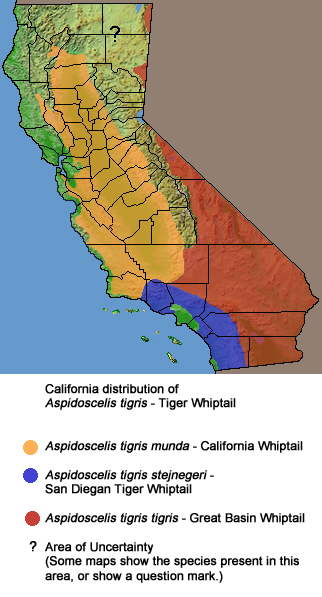 Dark Blue: Range of this subspecies in California