|
 |
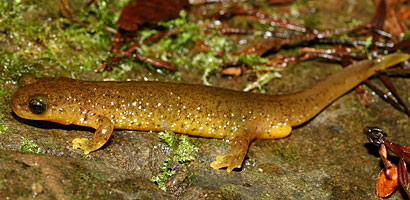 |
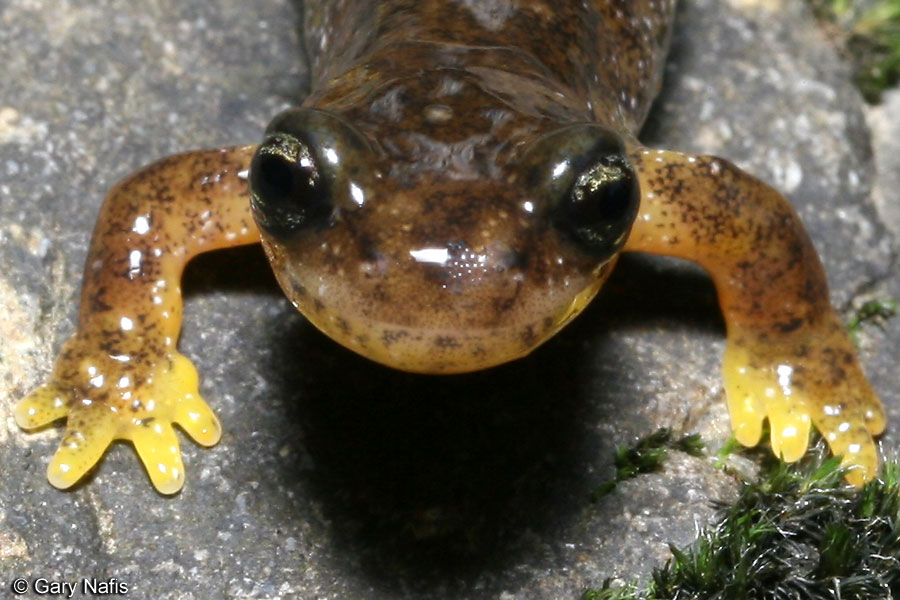
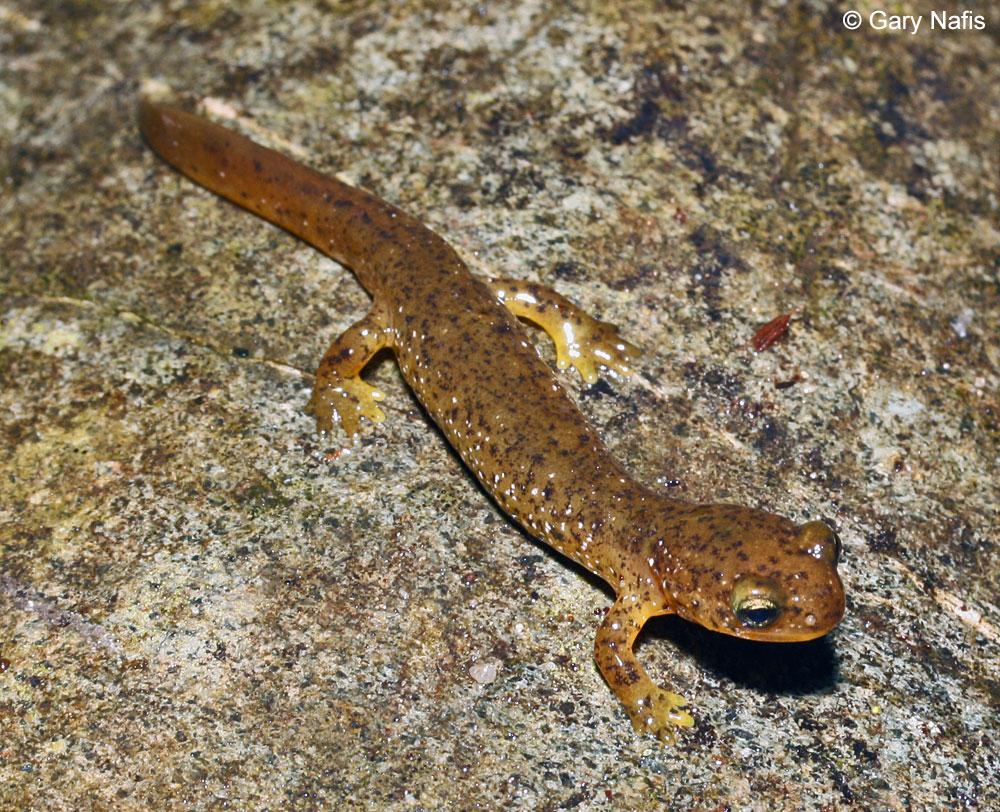
| Adult, Del Norte County |
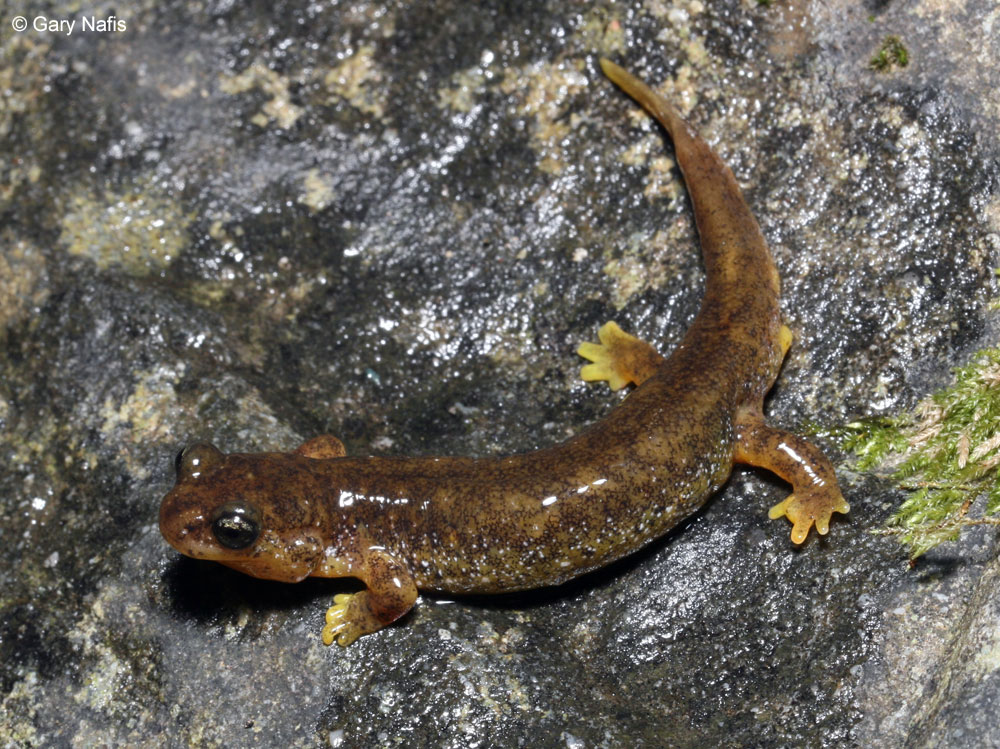
Adult, Del Norte County |
 |
 |
 |
 |
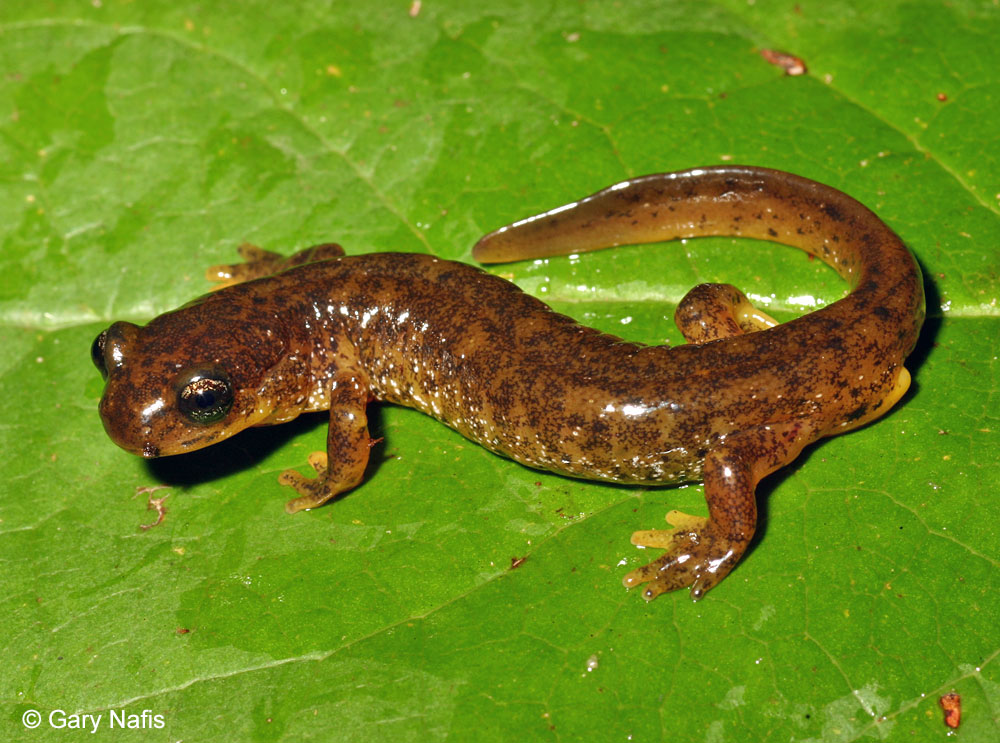
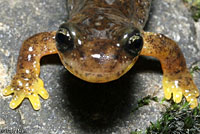
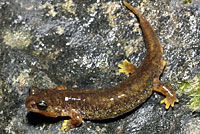
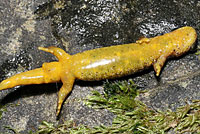
| Adult male, Del Norte County |
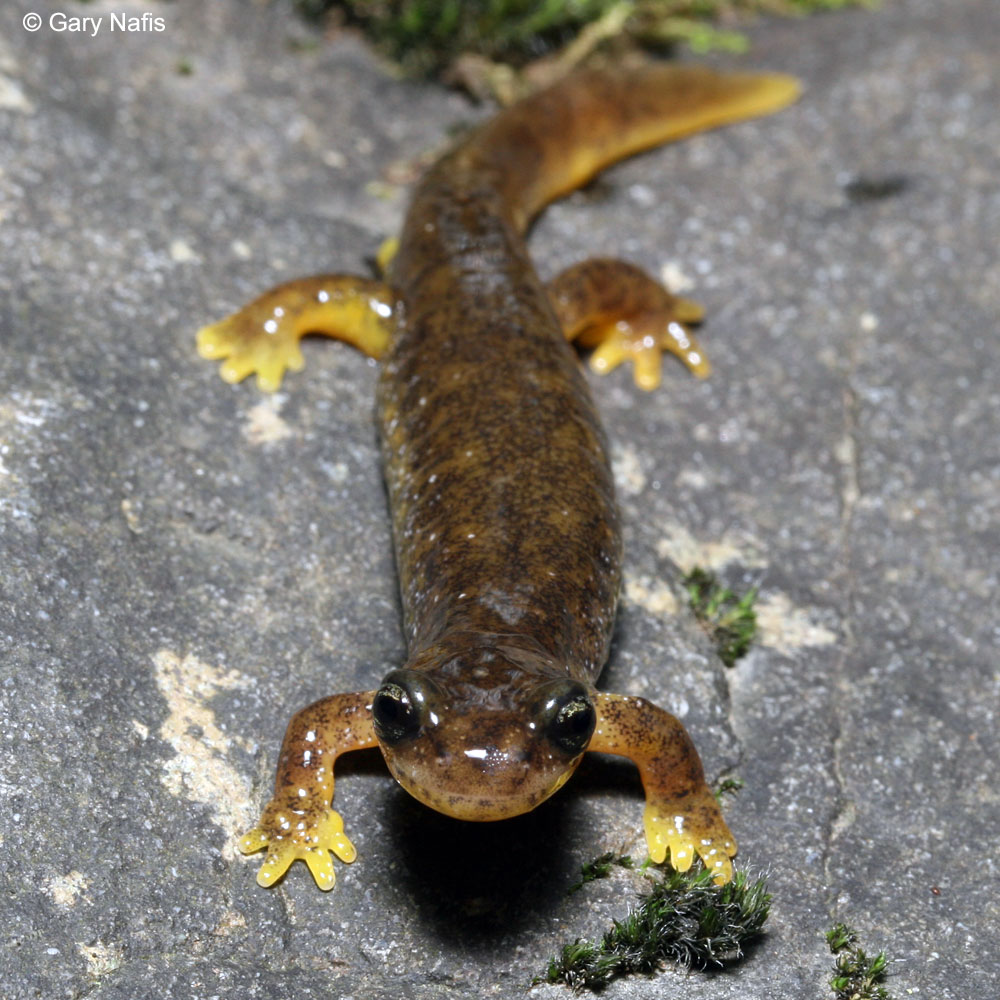
Adult, Del Norte County |
 |
 |
 |
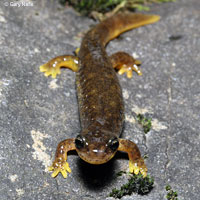 |
| |
Adult male, Del Norte County |
|
Adult male, Del Norte County |
 |
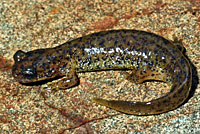 |
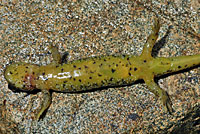 |
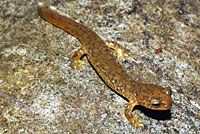 |
| |
Adult female, Del Norte County |
|
Adult female, Humboldt County |
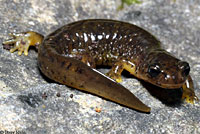 |
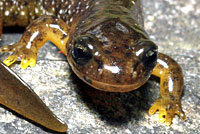 |
 |
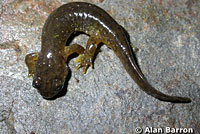 |
| |
Adult female, Del Norte County |
|
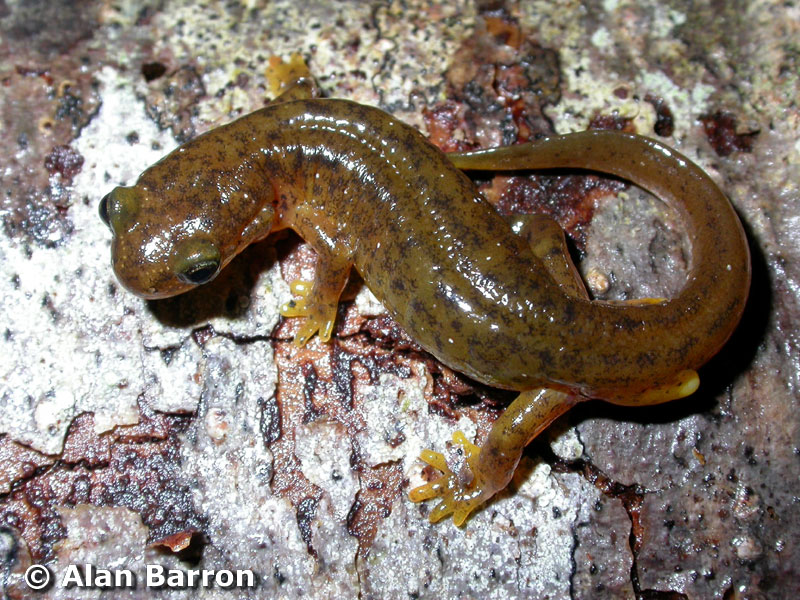
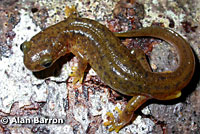
Dark adult male, Del Norte County, north of Smith River © Alan Barron |
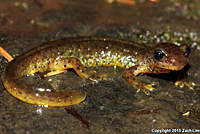 |
 |
 |
 |
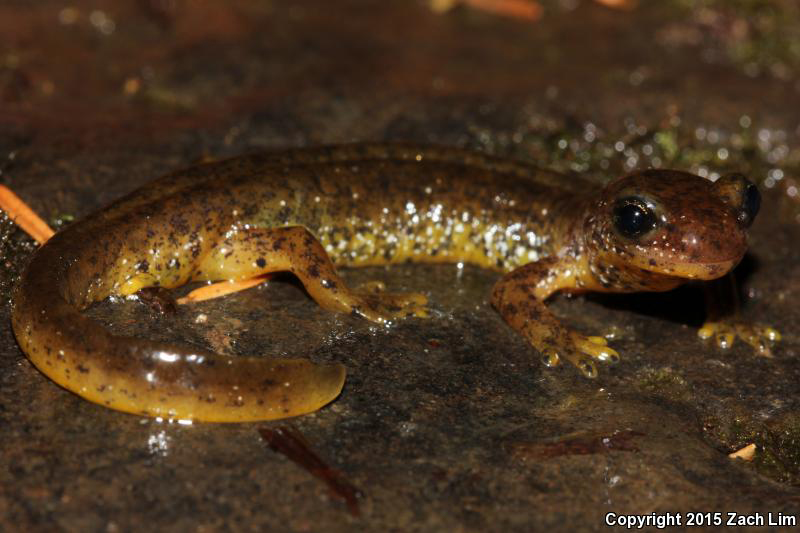
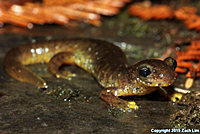
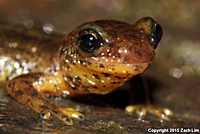
| Adult, Mendocino County © Zach Lim |
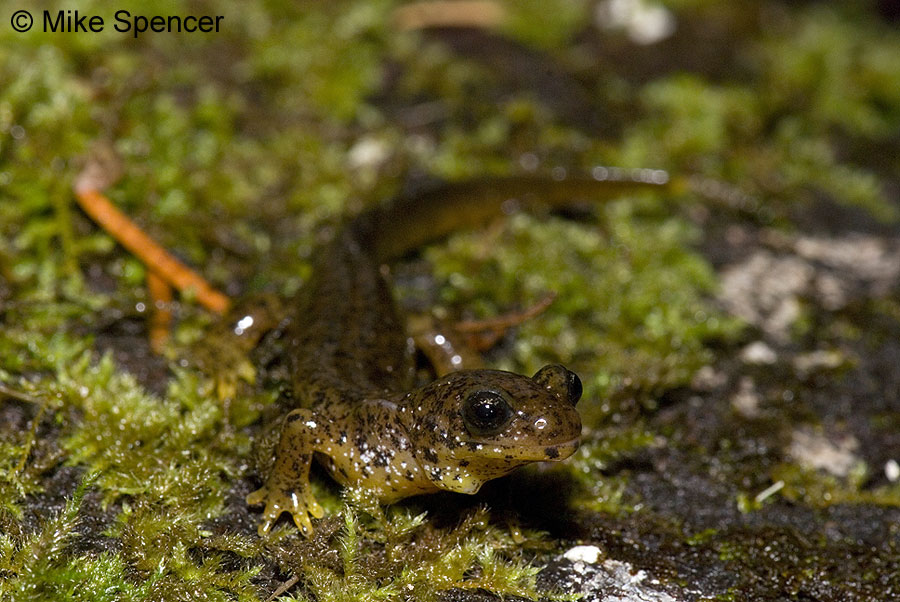
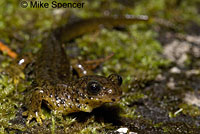
Adult, Mendocino County,
© Mike Spencer |
 |
 |
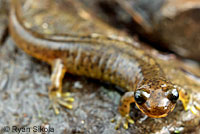 |
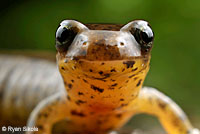 |
Adult male, Del Norte County, south of Crescent city
from a location far from permanent water. © Alan Barron |
Adult female, Mendocino County © Ryan Sikola |
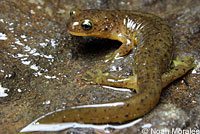 |
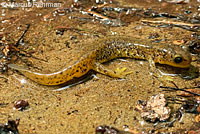 |
 |
|
Adult female, Humboldt County
© Noah Morales |
Adult, Benton County, Oregon
© Marcus Rehrman
|
Adult, Del Norte County
© Benjamin Genter |
|
| |
|
|
|
| Larvae |
 |
 |
 |
| Small larva in water |
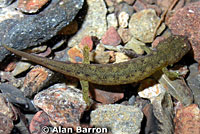 |
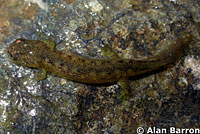 |
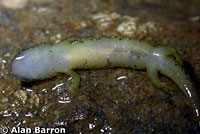 |
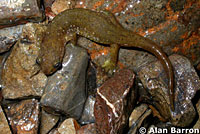 |
| Tiny hatchling underwater (note small gills) Del Norte County, north of Smith River © Alan Barron |
Larva out of water, Del Norte County, north of Smith River
© Alan Barron |
Underside of larvae, Del Norte County, north of Smith River © Alan Barron |
Large larvae, Del Norte County, north of Smith River © Alan Barron |
| |
|
|
|
| Habitat |
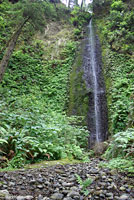 |
 |
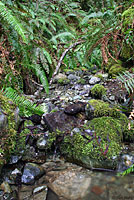 |
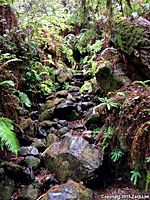 |
| Habitat, Humboldt County |
Habitat, Humboldt County |
Close-up of habitat, Del Norte County
|
Habitat, Mendocino County
© Zach Lim |
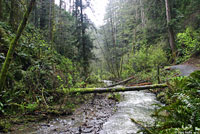 |
 |
 |
|
| Habitat, Mendocino County |
Habitat, Del Norte County |
Habitat, Del Norte County |
|
| |
|
|
|
| Short Video |
| |
 |
|
|
| |
In this short video I find a Southern Torrent Salamander under a rock next to a creek. The species is capable of a rapid burst of speed when it wants to escape, as we see here. |
|
|
|
|
|
|
| Description |
| |
| Size |
Adults are 1.5 - 2.4 inches long (4.0-6.2 cm) from snout to vent.
|
| Appearance |
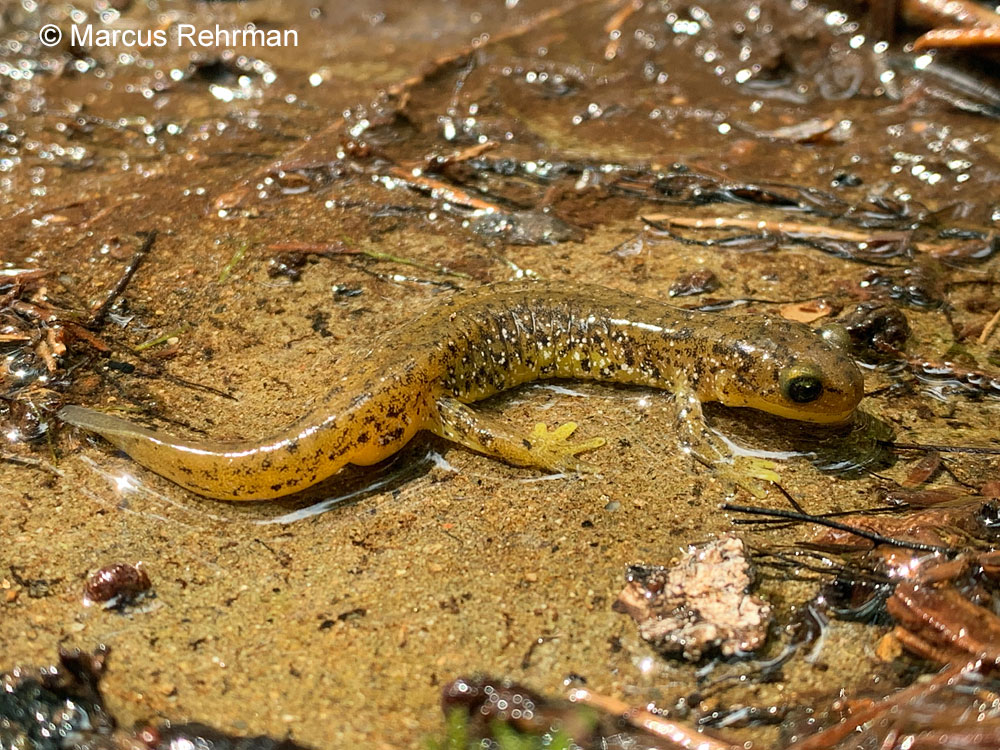
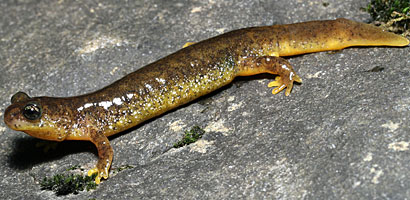
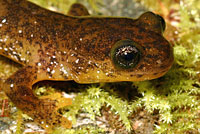
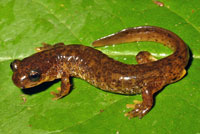
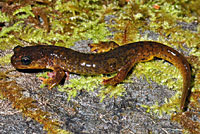
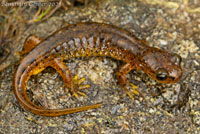
A medium-sized salamander with a slim body, a short tail, and a small head with large protuberant eyes.
|
| Color and Pattern |
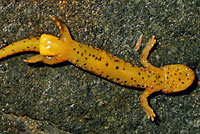
Coloring is olive to brown dorsally with dark and light speckling.
The ventral surface yellowish, similarly speckled.
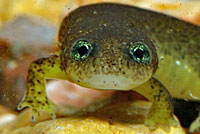
The eyes are large and dark, flecked with metallic gold. |
| Male / Female Differences |
Males have distinct square-ish cloacal lobes.
|
| Life History and Behavior |
| With highly reduced lungs, this species relies on its skin surfaces to take in oxygen, making it very intolerant of desiccation. |
| Activity |
Primarily aquatic, but also capable of terrestrial activity.
Adults are active even at very low temperatures, as cold as 41 - 50 degrees F (5 -10 degrees C), and are extremely moisture dependent.
When temperatures rise and stream flows decrease significantly, and when stream flows increase to levels too high for them to tolerate, salamanders burrow into stream bed substrates.
|
| Diet and Feeding |
| Diet consists primarily of aquatic and semi-aquatic invertebrates, including amphipods, and springtails. |
| Reproduction |
Reproduction is aquatic.
According to Thomson, Wright, and Shaffer (2016) sexual maturity takes approximately 4-5 years.
Breeding may occur throughout the year, but the peak oviposition period is in August and September;
|
| Eggs |
Eggs of this species are very difficult to find in the wild and there are few descriptions of them (and no pictures of any Rhyacotriton eggs that I can find.)
Eggs may be laid throughout the year, with the peak oviposition period taking place in August and September.
Approximately 4 to 16 non-pigmented eggs are laid in water singly (not in clusters) and attached underneath rocks in streams with gravel substrates.
According to Thomson, Wright, and Shaffer (2016) and Amphibiaweb "Karraker (1999) found a nest with 11 cream-colored eggs deposited singly beneath a small boulder in a first-order stream channel in Humboldt County in which large cobble was the predominant substrate. 8 eggs were also "... found beneath a 42-cm diameter (longest dimension) boulder in a small, coastal stream in Humboldt County, California."
Egg development is slow, taking about 8 months for eggs to hatch. Peak egg hatching occurs in the spring.
|
| Larvae |
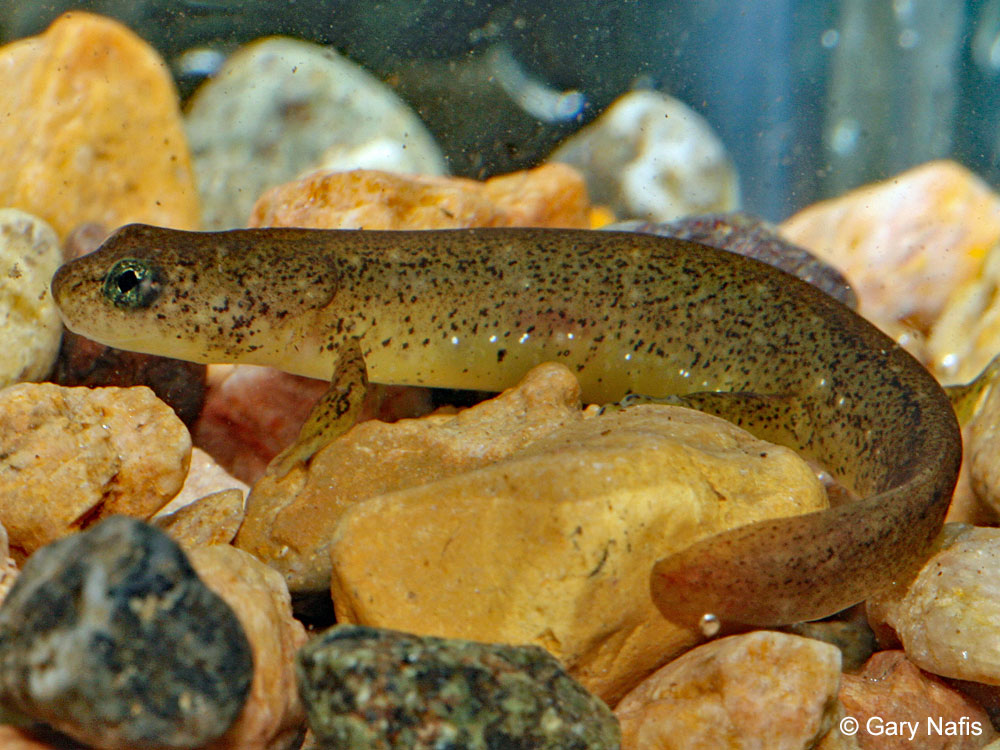
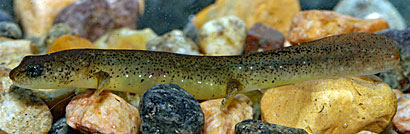
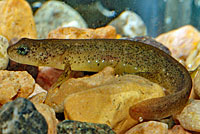
Larvae develop in the water, with short stubby gills and a tail fin that does not extend onto the back.
Larvae may take 2 - 2.5 years to metamorphose, at which time they are about 1 - 1.5 inches long (3.1-4.0 cm).
|
| Habitat |
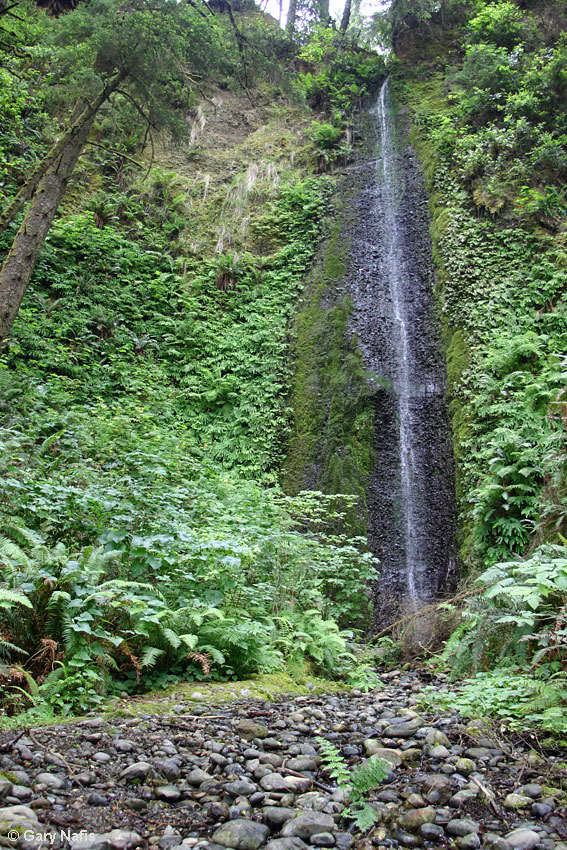
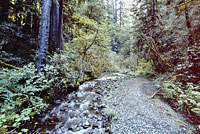
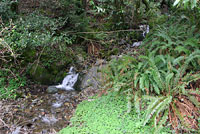
Found in shallow, cold, clear, well-shaded streams, waterfalls and seepages, particularly those running through talus and under rocks all year, in mature to old-growth forests. Occasionally found in riparian vegation adjacent to water, but usually found in contact with water.
Found primarily in waters on north-facing slopes in the southern part of their range where forests are warmer and drier.
Aquatic larvae live in clear shallow water and still, mucky water in creeks, often with accumulated leaves.
|
| Geographical Range |
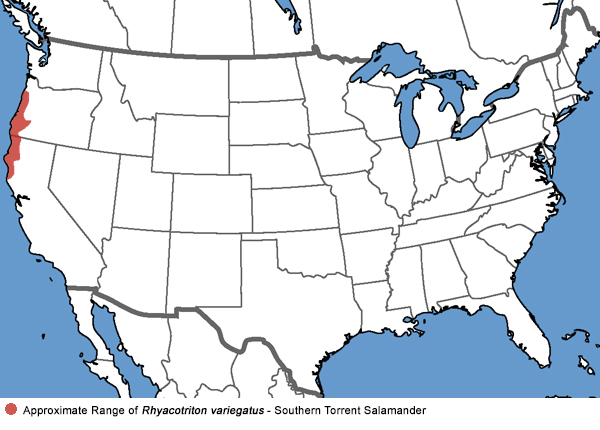
In California, this species occurs throughout humid coastal drainages from near Pt. Arena in southern Mendocino Co., to the Oregon border in the coniferous belt.
According to the book California Amphibian and Reptile Species of Special Concern: "A previously reported disjunct population in the McCloud River, Siskiyou County, appears to be based on incorrectly identified museum specimens of the southern long-toed salamander (Ambystoma macrodatylum sigillatum) in the California State University, Chico collection." (Robert C. Thomson, Amber N. Wright, and H. Bradley Shaffer. California Amphibian and Reptile Species of Special Concern. University of California Press, 2016, pg. 169.)
Outside of California occurs north in Oregon along the coast and inland into the Cascade Mountains.
An isolated population occurs east of the established range in the upper McCloud River drainage in Siskiyou County.
|
 |
| Elevational Range |
Occurs from sea level to from 4,500 ft. - 5,000 ft. (1,390 - 1,500 m).
|
| Notes on Taxonomy |
Previously recognized as a subspecies of Rhyacotriton olympicus. Good et al. (1987) found considerable genetic variation within the complex, which eventually led to the elevation of R. variegatus to full species status.
Highton (2000) proposed that R. variegatus is composed of four cryptic species.
Alternate and Previous Names (Synonyms)
Rhyacotriton variegatus - Southern Torrent Salamander (Stebbins 2003, 2012)
Rhyacotriton olympicus variegatus - Southern Olympic Salamander (Stebbins 1966, 1985)
Rhyacotriton olympicus variegatus - (ssp. of Olympic Salamander) (Stebbins 1954)
Rhyacotriton olympicus - Olympic Salamander (Bishop 1943)
|
| Conservation Issues (Conservation Status) |
Severely impacted by clear-cutting of old-growth forests near drainages. According to Stebbins (2003), approximately 50 - 90 percent of suitable habitat in California has been altered or eliminated through over-harvesting of old-growth forests and destruction of small seeps and springs.
Protected from take with a sport fishing license in 2013. |
|
| Taxonomy |
| Family |
Rhyacotritonidae |
Torrent or Seep Salamanders |
Tihen, 1958 |
| Genus |
Rhyacotriton |
Torrent Salamanders |
Dunn, 1920 |
Species
|
variegatus |
Southern Torrent Salamander |
Stebbins and Lowe, 1951 |
| Original Description |
Stebbins and Lowe, 1951 - Univ. California Publ. Zool. Vol. 50, No. 4, p. 471
from Original Description Citations for the Reptiles and Amphibians of North America © Ellin Beltz
|
| Meaning of the Scientific Name |
Rhyacotriton - Greek - rhyakos = stream + Triton = Greek sea god
variegatus - Latin = variegated, referring to the dorsal color/pattern
from Scientific and Common Names of the Reptiles and Amphibians of North America - Explained © Ellin Beltz
|
| Related Western Salamanders |
Rhyacotriton kezeri - Columbia Torrent Salamander
Rhyacotriton cascadae - Cascades Torrent Salamander
Rhyacotriton olympicus - Olympic Torrent Salamander
|
| More Information and References |
California Department of Fish and Wildlife
AmphibiaWeb
Hansen, Robert W. and Shedd, Jackson D. California Amphibians and Reptiles. (Princeton Field Guides.) Princeton University Press, 2025.
Stebbins, Robert C., and McGinnis, Samuel M. Field Guide to Amphibians and Reptiles of California: Revised Edition (California Natural History Guides) University of California Press, 2012.
Stebbins, Robert C. California Amphibians and Reptiles. The University of California Press, 1972.
Flaxington, William C. Amphibians and Reptiles of California: Field Observations, Distribution, and Natural History. Fieldnotes Press, Anaheim, California, 2021.
Nicholson, K. E. (ed.). 2025. Scientific and Standard English Names of Amphibians and Reptiles of North America North of Mexico, with Comments Regarding Confidence in Our Understanding. Ninth Edition. Society for the Study of Amphibians and Reptiles. [SSAR] 87pp.
Samuel M. McGinnis and Robert C. Stebbins. Peterson Field Guide to Western Reptiles & Amphibians. 4th Edition. Houghton Mifflin Harcourt Publishing Company, 2018.
Stebbins, Robert C. A Field Guide to Western Reptiles and Amphibians. 3rd Edition. Houghton Mifflin Company, 2003.
Behler, John L., and F. Wayne King. The Audubon Society Field Guide to North American Reptiles and Amphibians. Alfred A. Knopf, 1992.
Robert Powell, Roger Conant, and Joseph T. Collins. Peterson Field Guide to Reptiles and Amphibians of Eastern and Central North America. Fourth Edition. Houghton Mifflin Harcourt, 2016.
Powell, Robert., Joseph T. Collins, and Errol D. Hooper Jr. A Key to Amphibians and Reptiles of the Continental United States and Canada. The University Press of Kansas, 1998.
American Museum of Natural History - Amphibian Species of the World 6.2
Bartlett, R. D. & Patricia P. Bartlett. Guide and Reference to the Amphibians of Western North America (North of Mexico) and Hawaii. University Press of Florida, 2009.
Bishop, Sherman C. Handbook of Salamanders. Cornell University Press, 1943.
Lannoo, Michael (Editor). Amphibian Declines: The Conservation Status of United States Species. University of California Press, June 2005.
Petranka, James W. Salamanders of the United States and Canada. Smithsonian Institution, 1998.
Corkran, Charlotte & Chris Thoms. Amphibians of Oregon, Washington, and British Columbia. Lone Pine Publishing, 1996.
Jones, Lawrence L. C. , William P. Leonard, Deanna H. Olson, editors. Amphibians of the Pacific Northwest. Seattle Audubon Society, 2005.
Leonard et. al. Amphibians of Washington and Oregon. Seattle Audubon Society, 1993.
Nussbaum, R. A., E. D. Brodie Jr., and R. M. Storm. Amphibians and Reptiles of the Pacific Northwest. Moscow, Idaho: University Press of Idaho, 1983.
Robert C. Thomson, Amber N. Wright, and H. Bradley Shaffer. California Amphibian and Reptile Species of Special Concern. University of California Press, 2016.
|
|
|
The following conservation status listings for this animal are taken from the July 2025 State of California Special Animals List and the July 2025 Federally Listed Endangered and Threatened Animals of California list (unless indicated otherwise below.) Both lists are produced by multiple agencies every year, and sometimes more than once per year, so the conservation status listing information found below might not be from the most recent lists, but they don't change a great deal from year to year.. To make sure you are seeing the most recent listings, go to this California Department of Fish and Wildlife web page where you can search for and download both lists:
https://www.wildlife.ca.gov/Data/CNDDB/Plants-and-Animals.
A detailed explanation of the meaning of the status listing symbols can be found at the beginning of the two lists. For quick reference, I have included them on my Special Status Information page.
If no status is listed here, the animal is not included on either list. This most likely indicates that there are no serious conservation concerns for the animal. To find out more about an animal's status you can also go to the NatureServe and IUCN websites to check their rankings.
Check the current California Department of Fish and Wildlife sport fishing regulations to find out if this animal can be legally pursued and handled or collected with possession of a current fishing license. You can also look at the summary of the sport fishing regulations as they apply only to reptiles and amphibians that has been made for this website.
|
| Organization |
Status Listing |
Notes |
| NatureServe Global Ranking |
G3? |
Vulnerable ? |
| NatureServe State Ranking |
S2S3 |
Imperiled - Vulnerable |
| U.S. Endangered Species Act (ESA) |
None |
|
| California Endangered Species Act (CESA) |
None |
|
| California Department of Fish and Wildlife |
SSC |
California Species of Special Concern |
| Bureau of Land Management |
None |
|
| USDA Forest Service |
S |
Sensitive |
| IUCN |
LC |
Least Concern |
|
|
|